A new way to measure school quality
Education savings accounts in Texas. Open enrollment in Missouri. Each week seems to bring a new story and more education options for American students.


Close low-performing, underenrolled schools. Expand high-performing, in-demand schools.
American education is experiencing an historic shift. After more than a century of consolidation and standardization, a wave of pluralism is sweeping the country.
On this week’s Education Gadfly Show podcast, Brandon Brown, CE
The Gates Foundation’s support for education reform has done much good. As the Foundation expends vast sums during its final twenty years, Finn urges Bill Gates to use his resources—financial, yes, but also influence—to press for fundamental changes in K–12 policies and practices.
The last decade’s political shifts have banished many previously popular education reforms to the proverbial wilderness. Charter schools, perhaps the most successful and lasting education reform in recent history, are not immune to these changes.
Note to readers: This essay is adapted from a presentation I gave to policy advocates last week; I thought you might find it helpful as well.
Are Dana Goldstein and I watching the same state of education politics? She claims in the pages of the New York Times that, presently, “neither party, nor even a single major political figure,” wants to claim the mantle of education reformer.
On Tuesday, April 29, I gave the keynote presentation at an event titled “New Pathways for Teachers in the Age of School Choice,” hosted by the American Enterprise Institute and the University of Austin.
Early in my tenure at the education policy organization I founded, we barely had any money. No money meant no lobbyist, which left me, a complete stranger to the legislative process, to figure out how to pass meaningful policy.
Over the past few months, a quiet but intense debate has broken out among education-reform Democrats over whether the party should embrace private school choice—particularly the ESAs spreading kudzu-like across the country.
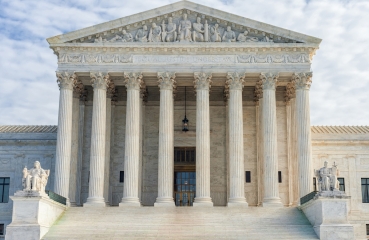
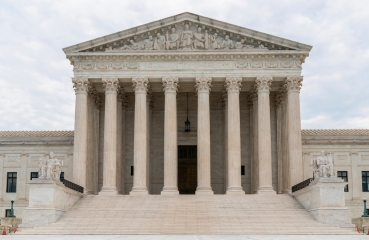
The last two weeks of April featured a rare doubleheader at the Supreme Court, as the justices took up two cases dealing with the intersection of religious liberty and public education. The Court has a path that would respect the secular nature of public schooling while guaranteeing parents their right of free expression, and that is to declare that states must provide taxpayer support to religious schools.
Three emerging issues—each unfolding in a different branch of government—offer a telling snapshot of where federal education policy could be headed. They involve religious charter schools, tax-credit scholarships, and ESSA waivers. On their own, each represents a flashpoint. Taken together, they provide a rare glimpse into the full machinery of federal influence—and a timely reminder that education policymaking in Washington still matters.
Ezra Klein’s new book has sparked an important discussion about how the left can provide more housing and transportation. However, one area that particularly needs self-reflection is education. The left has often obstructed the creation of new and innovative schools.
The Trump administration’s K–12 education policy prescriptions typically focus on ways to provide financial support for private schools, including federal vouchers and tax-credit scholarships.
Editor’s note: This was first published by The 74.
Editor’s note: This was first published on the author’s Substack, Governing Right
The Supreme Court agreed on Friday afternoon to hear a landmark religious charter schools case out of Oklahoma, and it’s a much bigger deal than you might imagine.
When I graduated from high school, the first charter schools in America were just opening their doors. But I have advocated for, worked with, and supported their right to serve families for more than twenty years now.
“A supernova is what happens when a star has reached the end of its life and explodes in a brilliant burst of light. Supernovas can briefly outshine entire galaxies and radiate more energy than our sun will in its entire lifetime.” —Nancy Taylor Tillman, Space.com
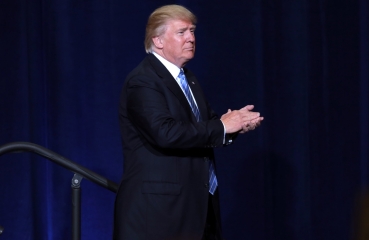
President-elect Donald Trump is about to return to Washington with a ragtag coalition, united in their rejection of the status quo. Yet this shared opposition has also led to a rash of infighting over a range of policy issues.
There has been a fierce and counterproductive backlash to “no excuses” charter schools, stemming from the idea that student discipline and orderly classrooms are culturally insensitive, particularly when imposed on students of color. This critique drove the rise of social justice education with its focus on reducing racial harm while functionally neglecting academic instruction and enshrining low expectations.
The Founding Fathers never envisioned that executive orders would be a major policymaking tool, circumventing legislative and executive deliberations, political stalemates, and partisanship. But recent history has deemed them essential levers if there is to be urgent action on the most important matters of the day.
Editor’s note: This was first published by CharterFolk.
One of the most interesting and significant findings about charter schools in the last decade—outside of the fact that they tend to outperform traditional public schools (TPS)—is that growin
The Greek poet Archilochus wrote that “the fox knows many things, but the hedgehog knows one big thing.” Finn’s experience has made him more like the fox: as keen as ever to overhaul and revitalize American education, but having come to “knows many things” about that enterprise, is more a wary realist regarding its difficulty.
I confess I approach the question of virtual education with more than a little skepticism. Kids spend enough time staring at screens, and I’ve developed a reflexive distrust bordering on cynicism for all things ed tech, which has a reliable history of overpromising and underdelivering. And, of course, student outcomes from virtual schools have been awful.
“Charter school laws have been arguably the most influential school reform efforts of the past several decades,” write economists
The macro trend that will have the greatest impact on the American education system over the next decade or two is our declining birth rate and the resulting enrollment crisis facing many public schools. We have too many schools for too few kids and, as a result, thousands of schools are going to need to close. But what we don’t have are enough excellent schools, and therefore the charter sector should keep growing anyway.
As the clock winds down towards Election Day, Colorado voters—myself included—face an important decision beyond the presidential contest: whether to amend the state constitution to enshrine a “right to school choice.” To be clear, the Centennial State has a long and proud record on the issue.