David Brooks is partly right about literary fiction
It’s often been noted, yet bears repeating: Americans are reading less than ever, and that includes kids.


In the wake of the Covid-19 pandemic, schools can’t seem to shake chronic absenteeism, behavioral challenges, and
Rigorous research shows that boys and girls exhibit similar core numerical skills during infancy
On this week’s Education Gadfly Show, Brian Jodice, National Press Secretary for the American Federation for Childr
Apprenticeships are available to only one-tenth of a percent of U.S. students, but Indiana and other states are leading efforts to bring more work-based learning opportunities to high school students.
Rigorous education is far less popular on the ground than many policy wonks believe. Of course, everyone pays lip service to high academic and behavioral expectations in general. But when it comes to the particulars, many people—parents, teachers, and administrators alike, most kids, too—bristle at what rigorous education means in practice.
Close low-performing, underenrolled schools. Expand high-performing, in-demand schools.
American education is experiencing an historic shift. After more than a century of consolidation and standardization, a wave of pluralism is sweeping the country.
Five years after the onset of the pandemic, schools continue to combat pandemic-era learning loss and chronic absenteeism. One evidence-based method to expedite learning recovery is high-impact tutoring.
On this week’s Education Gadfly Show podcast, Doug Harris, director of the National Center for Research on Education
Pandemic-era tutoring programs are boosting achievement and could spark more bipartisan support to help struggling students.
The Fourth of July this year—tomorrow, remember?—is far more than a one-shot holiday with fireworks and hot dogs. It’s the kickoff of a year in which many Americans will focus on the origins, meaning, and mission of the Declaration of Independence, as we prepare to observe its 250th anniversary—its semiquincentennial, if you insist—twelve months from tomorrow.
The Supreme Court’s decision last week in Mahmoud v. Taylor was cheered by conservatives and religious liberty advocates.
New York Times opinion columnist David French recently offered a tidy framework for understanding Donald Trump’s political durability: many voters support Trump’s objectives, but reject his methods.
College graduation rates have been steadily increasing among White, Black, and Hispanic populations for the last five decades, although both Black and Hispanic students lag far behind their White counterparts. Additionally, the graduation rates for men in all three groups have been on a much slower growth trajectory than for women.
Is the Indiana state legislature closing a tiny school district for performance reasons…or to reap the benefits of its big e-school money?
As recent college graduates stare down the “AI job apocalypse,” the K–12 education sector gains a golden opportunity to recruit talented new teachers. Smart school and district leaders will take steps to draw the best and brightest graduates into America’s neediest schools.
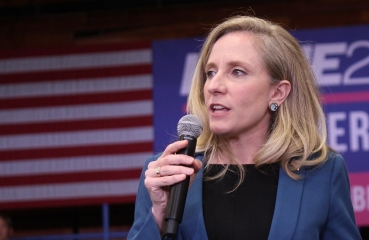
In Mikie Sherrill and Abigail Spanberger, Democrats have found two rising stars to carry the banner in this year’s marquee gubernatorial races.
When it comes to handling education issues, voters have consistently placed more confidence in Democrats than Republicans, according to surveys conducted by The Winston Group since 1999.
Since January 7—the day after Donald Trump’s election was certified—and escalating since Trump’s inauguration on January 20, U.S. Immigration and Customs Enforcement (ICE) and its sister agency U.S.
On this week’s Education Gadfly Show podcast, Mike flies solo to reflect on what’s happening across the education reform la
If you had walked into the classrooms at my Rockford, Illinois, elementary school a few years ago, you would have seen something very different from what happens there today. Back then, like many schools, students stayed in their grade-level classrooms throughout the day, and we delivered reading instruction accordingly.
The tension between public education as a civic institution and education as a vehicle for social justice is difficult to resolve. It doesn’t arrive as a policy change. It enters quietly, through teacher training programs, professional development, and curricular “recommendations.”
In an earlier post, I explained why high school teachers need more support to increase reading assignment length. So how might district and school leaders provide this support? Here are four suggestions.
After years of declining voter trust on education, the Democratic party is at a crossroads.
The “college wage premium” is typically defined as the difference between average wages earned by workers with a four-year degree versus those earned by workers with a high school diploma. For decades, the premium for degree completers has been substantial, and remains so today.