Since January 7—the day after Donald Trump’s election was certified—and escalating since Trump’s inauguration on January 20, U.S. Immigration and Customs Enforcement (ICE) and its sister agency U.S. Customs and Border Protection (CBP) have arrested over a hundred thousand people suspected of violating immigration laws. The daily average of 750 arrests is over twice the previous decade’s average, and the Trump administration wants to see that number rise to an unprecedented daily quota of three thousand. Historically, ICE and CBP focused on arresting those with other criminal histories and avoided making arrests in certain workplaces, schools, and other “sensitive places”; under the current administration, many of those guidelines have been chucked out the window. As a result, informal reports indicate, many adults have not only stayed home from work, but also kept their children home from school, either because the children are themselves undocumented or because they fear being deported without their U.S.-born children. Now, Stanford economist Thomas Dee has released a study that puts data and evidence behind media accounts of rising absenteeism in areas targeted by immigration enforcement.
Specifically, Dee analyzes student data from California’s Central Valley, one of the highest-profile targets of raids on immigrant communities. Although schools themselves were not subject to the January raids, many workplaces and other previously protected spaces became targets during this period. With data from five school districts, Dee uses regression to compare absences in January and February 2025 to absences in 2022–23, 2023–24, and the earlier part of the 2024–25 school year. In total, the sample includes 2,234 daily counts of student absences from the five districts, four of which allowed for breakdown by grade levels served within the district (pre-K, elementary, middle, and high school). Dee’s regression models control for several factors: pre-existing differences in attendance among the districts; the impact of “events” that may separately impact attendance (e.g., the last day before a vacation, holidays like Day of the Dead); and previous variations among each school year, month, and day of the week (e.g., absenteeism may be higher on Fridays than other days).
The findings are grim. In the period from January 8 (the day after the Central Valley raids began) to the end of February, overall absenteeism was 22 percent higher than would otherwise be expected, even with controls and in the context of the pre-existing absenteeism crisis. Although Dee does not identify the districts for safety reasons, he does confirm that those closest to the largest raids saw the highest rates of absenteeism. Also worth noting is that the raids did not continue throughout this time period, but the high absenteeism rates did; this finding indicates that the fear surrounding raids—and its impact on attendance—creates an impact that extends beyond the raids’ duration.
Further, the effect size is largest for the youngest students: The increased absenteeism rate was 31 percent higher for K–5 students and 35 percent higher for pre-K students. This variation is likely because the share of young children with undocumented parents is larger than that of older children, and because undocumented parents may have even greater fear of being separated from younger children.
The disproportionate impact on the youngest children is alarming. Missing school when young has a negative impact on academic outcomes and involvement in the justice system down the road. Research shows that absenteeism can be particularly harmful for elementary-aged children, since gaps in learning can snowball, making it harder and harder to recover. In addition, absenteeism is particularly detrimental to English learners, who are more likely than their peers to be the children of undocumented immigrants or themselves undocumented. As a result, longstanding achievement gaps are only likely to expand.
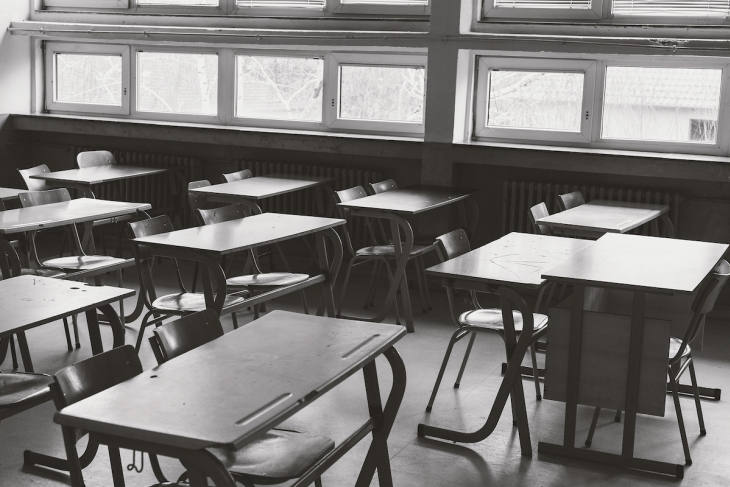
The educational and psychological damage is greatest to those children directly affected, but it’s also bad for their peers. Chronic absenteeism harms academic achievement among all children in a classroom—even those who continue attending—and it’s not a huge leap to understand that seeing classmates’ abandoned seats can cause distress to children of any background.
In fiscal terms, educating all children produces net economic benefits for everyone; conversely, failing to educate children results in economic costs to everyone. And yes, undocumented workers pay taxes, so yes, undocumented parents pay into the public education system. Finally, in one of the worst-case scenarios, when parents are deported without their children, not only are the children traumatized, but they also often enter the foster care system, which is costly to taxpayers and correlates with worse educational, economic, health, and criminality outcomes for the young people involved.
Although these raids aren’t officially blocking students from entering schools, that’s the practical effect they’re having—and denying children access to public education, whether they or their parents are undocumented, is illegal. Making this ruling over forty years ago, SCOTUS wrote that immigrant children “can neither affect their parents’ conduct nor their own undocumented status…the deprivation of education takes an inestimable toll on the social, economic, intellectual, and psychological wellbeing of the individual.” These realities are no less true today.
In recent days, the administration has dialed back and then resumed raids of agriculture sites, restaurants, and hotels—frequent workplaces of undocumented immigrants. Between the administration’s unpredictability and ICE’s sky-high quota of three thousand daily arrests, pervasive fear will endure. Rising absenteeism among vulnerable populations is just one of many reasons that these aggressive raids are wrong for children and for our country.
SOURCE: Thomas S. Dee, “Recent Immigration Raids Increased Student Absences,” Annenberg Institute at Brown University (June 2025).