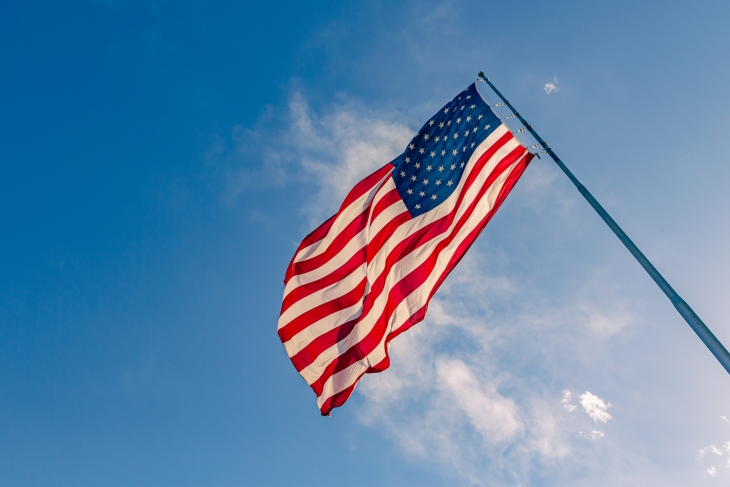
The Fourth of July this year—tomorrow, remember?—is far more than a one-shot holiday with fireworks and hot dogs. It’s the kickoff of a year in which many Americans will focus on the origins, meaning, and mission of the Declaration of Independence, as we prepare to observe its 250th anniversary—its semiquincentennial, if you insist—twelve months from tomorrow.
This has produced a lot of reflection, some excellent writing, at least one important new project announcement, and—underscored by the turmoil and discord around us, both domestic and global—renewed attention to what Tocqueville called “reflective patriotism.”
As you doubtless know, that’s the kind of patriotism—devotion to one’s country—that’s grounded in thoughtful appreciation of the benefits of living in a constitutional democracy that honors life, liberty, and the pursuit of happiness, along with reflection on what’s been achieved and what’s not yet right. Tocqueville contrasted it with the forms of patriotism he had seen in Europe, based mostly on tradition, blood (and tribal) ties, and one’s rootedness in the land itself.
Joanne Jacobs’s recent posting wraps together several recent writings on reflective patriotism that connect it with the civic mission of schools. Even more comprehensive is my colleague Bruno Manno’s tour-de-force Forbes essay, which emphasizes the urgency of stepped-up civic education while recognizing many of the groups and organizations that are doing important work in this realm (including some that I’m proudly associated with).
This week also brought an important new entry, as the Progressive Policy Institute announced a major initiative to strengthen “American identity,” led by my friend Richard (Rick) Kahlenberg. Advised by a stellar group that includes the likes of David Brooks, Danielle Allen, Larry Summers, and Linda Chavez, it kicks off with a worthy report by Kahlenberg and promises much more to come.
The PPI team stakes out a four-theme agenda that’s both ambitious and much needed: reflective patriotism for sure, but also social cohesion, deeper understanding of “what it means to be an American,” and a menu of policies and actions for the K–12 realm.
Put it together and—for me at least—in a moment when there’s plenty to worry and grumble about, a note of optimism can be detected in the ether, a well-timed challenge to do something about the tribulations that beset us, not to despair. May it last—and energize and focus us—for 366 more days and then years to follow. The 250th anniversary, after all, isn’t just a moment in time, a day of celebration. It also carries hope of rekindling. But now is when we have to collect the fuel.