Commentary

Prolonged school closures and shifting rhetoric have undermined Democrats' once-clear commitment to education as a transformative force. To regain their edge, Democrats must refocus on student learning and outcomes, rather than just education spending.

On this week’s Education Gadfly Show podcast, Jim Blew, co-founder of the Defense
On this week’s very serious Education Gladfly Show podcast, the adults take a backseat as Fordham’s next generation of thinkers—er, kids—grab the mic.
The writer Freddie deBoer makes one really important point about the ed reform movement: We have overpromised and underdelivered because we ignore the obvious truth that some kids are smarter than others. Where he’s wrong is in thinking that this one good point makes the whole reform enterprise a waste of time.

The latest Nation’s Report Card dashed hopes that U.S. students might have finally closed pandemic learning gaps. The results show reading scores are down nationally in both fourth and eighth grade, compounding declines on the 2022 National Assessment of Educational Progress or NAEP.
The pandemic gave the country a chance to rethink how states and school districts deliver quality education.

Education savings accounts (ESAs) are taxpayer-funded spending accounts with differing eligibility requirements and usage guidelines depending on the state. Between the 2021–22 and 2022–23 school years, participation in them nearly tripled nationally, rising to roughly 489,000 total students.


New research shows that Democrat-leaning states saw greater pandemic-related learning loss, especially in math, likely due to longer school closures.

On this week’s Education Gadfly Show podcast, Richard Kahlenberg, author of Class
Editor’s note: A different version of this essay was first published by The 74.

Set aside for a moment the debate about whether Elon Musk’s DOGE is an honest effort to cut waste, fraud, and abuse from the federal government. Let’s ask a different question: What would a serious effort to get more bang from our education buck look like?

For generations, the traditional public school has been a bedrock institution in American life.

Editor’s note: This was first published on the author’s Substack, Governing Right.

Reflecting on his own Hasidic education, this author argues that, while cultural preservation is important, public officials should ensure that all children gain basic skills to ensure that they have the freedom to choose their future.

On this week’s Education Gadfly Show podcast, Steven Wilson, senior fellow at the Pioneer Institute, joi
Trump administration officials announced on Tuesday that they are laying off 1,300 employees at the U.S. Department of Education. This is on top of nearly 600 people who had already taken early retirement or buyouts, as well as another 60 probationary employees who had already been fired. This brings the agency’s headcount down from about 4,100 to about 2,200, a major reduction. Here are some thoughts on the situation as we understand it now.
When my middle child was in high school, nothing I said or did could keep him from dropping out. But what if I’d tried paying him?

During a January 29 town hall in Washington to discuss dismal new test results, Harvard professor Marty West—who serves as the vice chair of the board that oversees na

Academic skills alone are not enough for students to find success later in life, whether in their career specifically or in their broader participation in s


Can the board game Taboo teach education policymakers an important lesson?

On this week’s Education Gadfly Show podcast, Charles Baron
The idea of “sending education back to the states” is a cornerstone of President Trump’s rhetoric on schooling, and it has strong support from many congressional Republicans.

Oregon professor Siegfried Engelmann wasn’t your typical education guru. He didn’t peddle feel-good platitudes or promote classroom fads—he treated teaching like a hard science, and he built Direct Instruction (DI) to prove it.
Earlier this month, the U.S.

Project STAR (Student/Teacher Achievement Ratio) is a widely-known experiment comparing class-size reduction and student achievement outcomes, conducted in the 1980s in Tennessee.
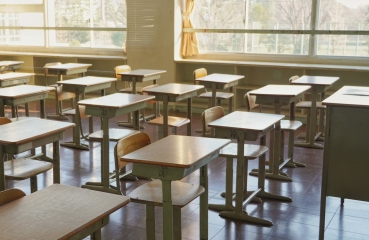
When we talk about achievement and discipline gaps in education, we customarily focus on teaching quality, school funding, and student behavior. But what if some of these disparities have less to do with what teachers or students are doing and more to do with something as basic as air conditioning?