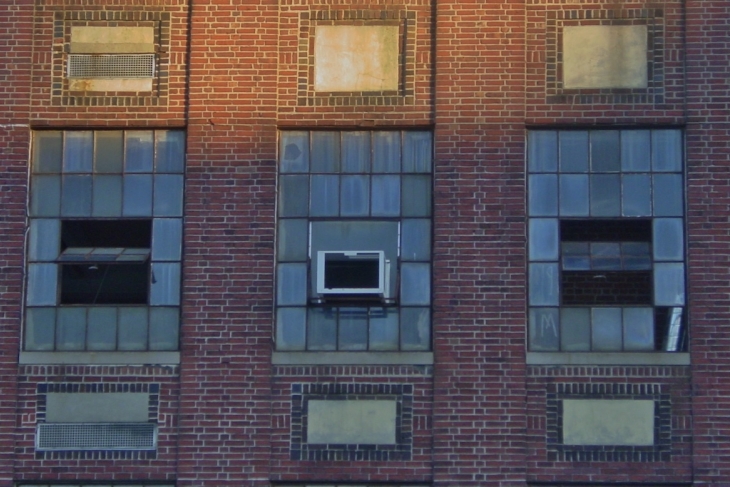
When we talk about achievement and discipline gaps in education, we customarily focus on teaching quality, school funding, and student behavior. But what if some of these disparities have less to do with what teachers or students are doing and more to do with something as basic as air conditioning?
Any teacher can tell you just how difficult it is to hold students’ attention when the classroom is unbearably cold or hot or when students aren’t feeling well. Public health and education research also support these claims.
In the wake of the Covid-19 pandemic, policymakers directed billions in federal relief funds toward schools through the Elementary and Secondary School Emergency Relief (ESSER) program. One approved use of ESSER funding was to upgrade HVAC systems to improve air quality and ventilation—a decision that only some districts prioritized. Now, new research suggests that investing in HVAC improvements may have yielded more than just cleaner air, it may have also improved student outcomes.
In a new study, researchers from SUNY Albany use a decade and a half of data from New York State to explore the impact that replacing or improving heating, ventilation, and air conditioning (HVAC) systems had on reading and math scores, as well as absenteeism and suspension rates. To assess HVAC systems, the researchers pulled data from the New York Building Conditions Surveys on cooling and heating systems (which control temperature) and ventilation systems (which control airflow). The HVAC systems were rated as either unsatisfactory or satisfactory. When a system moved from unsatisfactory to satisfactory, it was considered an improvement. They then linked these results with four student outcome measures on NYSED’s report cards: absenteeism rates, suspension rates, math scores, and reading scores. The researchers also examined student performance before and after HVAC systems were replaced.
Overall, the study found that poor HVAC system conditions negatively impact student outcomes, while improvements and replacements in these systems lead to measurable gains in attendance, behavior, and academic performance.
Cooling system replacements boosted math scores by 3 percent of a standard deviation while heating system replacements led to a rise of 4 percent. However, there was no evidence that ventilation system replacements (improving air flow) had a significant effect on student outcomes. The researchers theorize that this outcome may be due to many schools already having functional ventilation systems before they were replaced, resulting in modest impact from the upgrades.
Additionally, improved heating system conditions led to a 3 percent (of a standard deviation) decline in absenteeism, a 6 percent drop in suspension rates, and a 5 percent rise in math scores, all of which were statistically significant. Similarly, better ventilation systems led to a 2 percent reduction in absenteeism and a seven percent drop in suspension rates. Finally, improved cooling systems had no significant effect on absence, suspension, or reading scores, but did lead to a 3 percent increase in math scores.
The authors see at least three explanations for these positive outcomes: First, better ventilation improves air quality, which could reduce illnesses like asthma that contribute to absenteeism. Second, improved heating and cooling systems create more comfortable learning environments, enhancing focus and reducing classroom disruptions. And third, effective ventilation systems help prevent the transmission of airborne diseases, which could lead to fewer absences.
The study also highlights a concerning pattern: Schools serving larger proportions of economically disadvantaged students, as well as those with more Black and Hispanic students, were more likely to have unsatisfactory or non-functional HVAC systems. This disparity suggests that infrastructure shortcomings may reinforce existing achievement gaps, as students in under-resourced schools are likelier to experience the negative effects of poor air quality, extreme temperatures, and increased absenteeism.
While the effects of better HVAC systems are modest, they are consistent enough to support the argument that investments in school infrastructure—particularly HVAC systems—would boost educational outcomes and address longstanding inequities. The findings also align with a growing body of research that shows school building conditions, including air quality, temperature regulation, and overall maintenance, have positive effects on student success.
As policymakers and school districts decide where to allocate scarce funds, it’s important to note that school facility upgrades are not just about comfort, but also about educational equity and student success.
SOURCE: Lucy C. Sorensen, Moontae Hwang, and Marzuka Ahmad Radia, “The Effects of School Building HVAC System Conditions on Student Academic and Behavioral Outcomes,” nnenberg Institute at Brown University, EdWorkingPaper: 24 -1093 (2024).