Why 2025 was a good year for education reform
2025 will be remembered for a lot of bad news outside of education, but inside our little sandbox of ed-reform, there’s plenty to be grateful for—and more light than darkness


For my first four years in the classroom, I taught English as a second language to Somali refugees and Latin American immigrants in a small city in Wisconsin.
In the 1990s, Sweden overhauled its public education system. Previously run almost entirely by local governments, public schools could now be operated either by districts or by private providers—similar to U.S. charter schools.
This week, Mike Petrilli looks back at the highs and lows of educa
Our society is failing its most important task: fostering human flourishing. And schools aren’t helping. Far too many students graduate unprepared to think critically, navigate community, or develop the resilience needed to face life’s challenges.
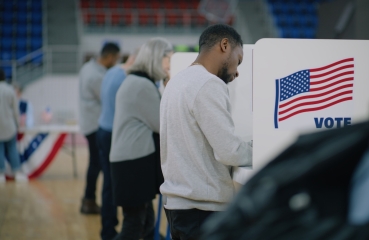
Like the other elections that took place last month, the one that decided who would serve on the Albuquerque Public Schools Board was characterized by record turnout.
Students in short-term workforce education programs will soon get some help covering tuition costs. The recently-passed One Big Beautiful Bill Act expands Pell Grants to workforce programs as short as eight weeks or 150 clock hours in duration.
Rod Paige passed away this week. A former United States Secretary of Education, he was also a visionary, a leader, a passionate and compassionate educator, and so much more. We miss you, Rod. We will continue to miss you. We thank you for your service—to us and to the children and educators of America—and for your friendship. May you rest in peace.
This week, we’re joined by Matt Barnum, Chalkbeat’s Ideas editor, to unpack whether college enro
The Trump administration recently proposed shifting Department of Education programs to other agencies, mostly the Labor Department. A few of the ideas makes sense. But overall, the proposal is nuts—and betrays conservative values, says a longtime GOP staffer.
Editor’s note: To read more about this topic from Mike Goldstein and Sean Geraghty, co-founders of the Center For Teen Flourishing, see “What are students doing between 6 p
Across the country, tens of thousands of high-achieving children are sitting at their desks, waiting for the challenge they deserve. But for many—and above all for those from low-income families—that wait won’t end.
There is a widely-held belief that the foremost mission of American public education is to provide a pathway to success for every student, including those who face considerable life obstacles. However, persistent achievement gaps along dimensions of race, income, family education level, and other factors challenge the truth—or at least the practicality—of this conviction.
As states continue to confront abysmal post-pandemic attendance patterns, understanding why students miss school has become increasingly impo
This week, we’re joined by Wonkathon winner Eric Tucker—CEO and presid
Editor’s note: This is the third in a three-part series in which Miriam Kurtzig Freedman reflects back on a half-century of special education law in the United States.
Editor’s note: This is the second in a three-part series in which Miriam Kurtzig Freedman reflects back on a half-century of special education law in the United States.
Recent national test scores show historic declines in American students’ academic achievement in reading and mathematics.
By all accounts, urban charter schools are an uncontested victory of the bipartisan education reform movement.
In recent years, homeschooling has quietly become one of the fastest-growing corners of the school choice movement.
Bold teacher pay reforms are needed. But to maximize the long-term impact of such policies, it’s important to address the root causes of stagnant salaries. Examining data both before and after the pandemic reveals structural problems in K–12 finance that keep dollars out of teacher paychecks.
For better or worse, AI, and especially chatbots associated with large language models, are already changing the daily rhythms of education here and around the world.
Over at Slow Boring, Matthew Yglesias has been writing a series on immigration and arguing that Democrats can’t just “go back” to Obama-era policies. Yglesias makes the convincing case that the world has changed, and immigration policies need to change with it.
This week, Mike Petrilli returns for a solo episode to dig into artificial intelligence—not
Editor’s note: This is the first in a three-part series in which Miriam Kurtzig Freedman reflects back on a half-century of special education law in the United States.
The science of reading (SoR) movement has driven states and districts to improve teacher preparation, adopt evidence-based materials, and clarify for K‒3 instruction. Yet one critical tier remains missing: early childhood education (ECE).
Editor’s note: This essay is an entry in Fordham’s 2025 Wonkathon, which asked contributors to answer this question: “What needs to happen next—at the state, district, and school levels—for the science of reading revolution to fulfill its promise and ensure that fa
Editor’s note: This essay is an entry in Fordham’s 2025 Wonkathon, which asked contributors to answer this question: “What needs to happen next—at the state, district, and school levels—for the science of reading revolution to fulfill its promise and ensure that far more