Mobile Navigation

  • National
    • Policy
      • High Expectations
      • Quality Choices
      • Personalized Pathways
    • Research
    • Commentary
      • Gadfly Newsletter
      • Flypaper Blog
    • Events
    • Scholars Program
  • Ohio
    • Policy
      • Priorities
      • Media & Testimony
    • Research
    • Commentary
      • Ohio Education Gadfly Biweekly
      • Ohio Gadfly Daily
  • Charter Authorizing
    • Application
    • Sponsored Schools
    • Resources
  • About
    • Mission
    • Board
    • Staff
    • Career
Home
Home
Advancing Educational Excellence

Main Navigation

  • National
  • Ohio
  • Charter Authorizing
  • About

National Menu

  • Topics
    • Accountability & Testing
    • Advanced Education
    • Career & Technical Education
    • Charter Schools
    • Curriculum & Instruction
    • ESSA
    • Evidence-Based Learning
    • Facilities
    • Governance
    • Personalized Learning
    • Private School Choice
    • School Finance
    • Standards
    • Teachers & School Leaders
    • Think Again
  • Research
  • Commentary
    • Gadfly Newsletter
    • Flypaper Blog
    • Gadfly Podcast
  • Events
  • Scholars Program

Topics

Displaying 331-360 of 411 results
Child doing homework
Commentary
3.21.2024
Evidence-Based Learning, Curriculum & Instruction, Governance, Teachers & School Leaders

How an online tool affected math performance during pandemic closures

Jeff Murray

For many students and teachers, the pivot from in-person to remote learning in March 2020 was a sudden lurch from the known to the unknown. Writ large, research shows the academic impact of that move was devastating. But details matter—and so do exceptions.


Child doing homework
Fordham Gadfly image
Commentary
3.21.2024

Cheers and Jeers: March 21, 2024

The Education Gadfly

Cheers

Fordham Gadfly image
Commentary
3.21.2024

What we're reading this week: March 21, 2024

The Education Gadfly

An activist trades the culture wars for more pragmatic concerns after winning a seat on a school board. —Washington Post Advising all students to major in high-income fields such as engineering is an appealing but misguided recommendation.

Fordham Gadfly image
Report
3.20.2024
Charter Schools

Do Authorizer Evaluations Predict the Success of New Charter Schools?

Adam Kho, Ph.D., Shelby Leigh Smith, Douglas Lee Lauen, Ph.D.

As the sector’s gatekeepers, charter school authorizers are responsible for ensuring that schools in their purview set students up for success. But can authorizers predict which schools will meet that standard?

Classroom empty teacher desk
Commentary
3.15.2024
Curriculum & Instruction, Teachers & School Leaders

Why are teachers missing so much school?

Tim Daly

Editor’s note: This was first published on the author’s Substack, The Education Daly.

Classroom empty teacher desk
Students in a classroom
Commentary
3.14.2024
Charter Schools, Curriculum & Instruction, Private School Choice, Teachers & School Leaders

The “no excuses” model is due for a renaissance

Robert Pondiscio

Many of the conditions that led to the prominence of “no-excuses” charter schools a quarter-century ago have returned. For students, teachers, and parents who have never lost their appetite for safe and orderly schools, it can’t come soon enough.

Students in a classroom
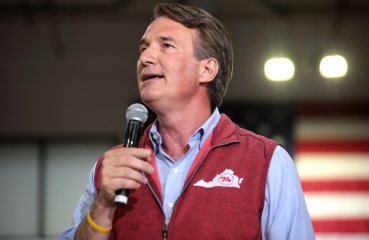
Virginia Governor Glenn Youngkin
Commentary
3.14.2024
Governance

Four states that are leading the charge for conservative education

Frederick M. Hess, Mike McShane

It’s looking like this year’s election will feature a Trump-Biden rematch—a pairing that’s especially frustrating for education, where the nation is wrestling with a raft of real problems:

Virginia Governor Glenn Youngkin
Student doing math in a classroom
Commentary
3.14.2024
Evidence-Based Learning, Curriculum & Instruction, Teachers & School Leaders

We know more about improving math outcomes than policy debates suggest

Emily Freitag

I recently watched a seventh-grade math lesson that did a better job than I ever did as a teacher asking kids relatable theoretical probability questions. How would you represent the probability of a six-foot-tall seventh grader? How would you represent the probability of getting a test in school in any given week? Making sense of where students were coming from was a fascinating puzzle.

Student doing math in a classroom
Fordham Gadfly image
Commentary
3.14.2024

Cheers and Jeers: March 14, 2024

The Education Gadfly

Cheers

Fordham Gadfly image
Commentary
3.14.2024

What we're reading this week: March 14, 2024

The Education Gadfly

Outdated research created a false promise that tutoring could achieve two-standard deviations of academic gains in students. —Paul T. von Hippel, Education Next Joe Biden could court more votes for his struggling campaign by endorsing charter schooling.

Fordham Gadfly image
Girl at school around friends
Commentary
3.8.2024
Evidence-Based Learning, Curriculum & Instruction, Governance, Advanced Education, Teachers & School Leaders

Can we ditch the “gifted” label and just focus on what each student needs?

Alina Adams

Editor’s note: This was first published by The 74.

Girl at school around friends
Student report card
Commentary
3.7.2024
Evidence-Based Learning, Curriculum & Instruction, Governance, Teachers & School Leaders

Doing educational equity right: Grading

Michael J. Petrilli

The way we grade student work is flawed—in some ways inequitable—and is in need of reform. But like so many things in American education, the push for “equitable grading” has often been implemented piecemeal, bringing along with it all manner of unintended consequences, the most important of which is lowered standards.

Student report card
Students raising their hands in a school classroom
Commentary
3.7.2024
Evidence-Based Learning, Charter Schools, Governance

The research is clear: Charter schools work

Daniel Buck

Late last year, researchers Sarah Cohodes and Susha Roy partnered with the MIT Department of Economics to release a paper summarizing the results of lottery-based charter studies. The topline conclusion is straightforward and promising:

Students raising their hands in a school classroom
Jeb Bush
Commentary
3.7.2024
Governance

What if Jeb Bush had won?

Dale Chu

Neither of the major parties’ presumptive presidential nominees has anything serious in the offing to help American students get back on track.

Jeb Bush
Mother and daughter walking to school
Commentary
3.7.2024
Evidence-Based Learning, Governance

How to build a better public school choice program: Evidence from Los Angeles

Amber M. Northern, Ph.D.

School choice discussions often overlook intradistrict open enrollment, allowing students to attend any public school within their resident district.

Mother and daughter walking to school
College graduate
Commentary
3.7.2024
Evidence-Based Learning

Most college graduates face underemployment upon bachelor’s degree attainment

Jeff Murray

Most young people who enroll in college after high school graduation do so in the hope that it will help them secure a good job. Similarly, many employers look to colleges as sources of high-quality candidates to fill job openings.

College graduate
Fordham Gadfly image
Commentary
3.7.2024

Cheers and Jeers: March 7, 2024

The Education Gadfly

Cheers

Fordham Gadfly image
Commentary
3.7.2024

What we're reading this week: March 7, 2024

The Education Gadfly

Due to demographic changes and the democratization of expertise, AI could help rebuild the middle class, not destroy their jobs. —David Autor, Noēma School choice stands to benefit, not harm, rural communities.

Fordham Gadfly image
Standardized test in school
Commentary
3.1.2024
Accountability & Testing, Evidence-Based Learning, Governance, Teachers & School Leaders

The way we set grade-level norms on tests masks pandemic learning loss

Woody Paik

There are, generally speaking, two ways to report students’ performance on tests. One is normative, and it compares a student’s performance to his peers. The second is criterion, and it compares a student’s performance to learning standards, indicating grade-level proficiency and is independent of peers’ test performance.

Standardized test in school
school report card
Commentary
2.29.2024
Evidence-Based Learning, Curriculum & Instruction, Teachers & School Leaders

The hazards of “equity grading”

Meredith Coffey, Ph.D., Adam Tyner, Ph.D.

The push for more “equitable” grading policies has exacerbated grade inflation while yielding little evidence of greater learning. Some aspects of traditional grading can indeed perpetuate inequities, but top-down policies that make grading more lenient are not the answer, especially as schools grapple with the academic and behavioral challenges of the post-pandemic era.

school report card
American school building exterior
Commentary
2.29.2024
Governance, Teachers & School Leaders

Getting education (almost) right

Chester E. Finn, Jr.

Rick Hess and Mike McShane have provided the education world with a thoughtful, accessible, perceptive, and—in its way—persuasive book on improving education. Though sub-titled (and marketed as) “a conservative vision,” it’s both more and less than that.

American school building exterior
Teacher in classroom
Commentary
2.29.2024
Evidence-Based Learning, Curriculum & Instruction, Teachers & School Leaders

Study outlier teachers to solve the homework gap

Mike Goldstein

My friend Michael Petrilli just wrote a great essay about the “homework gap.” He sets aside the upper-class question (stressed out kids with too much of it) and steers readers to the gap (some kids do what’s assigned, some kids copy and cheat, and some kids skip it).

Teacher in classroom
Upside down empty piggy bank
Commentary
2.29.2024
Evidence-Based Learning, School Finance, Governance, Teachers & School Leaders

ESSER funds are ending. What does this mean for pandemic learning loss?

Elainah Elkins

Districts have used almost $190 billion in ESSER funds to help students recover from pandemic learning loss by implementing a wide variety of initiatives, including

Upside down empty piggy bank
Fordham Gadfly image
Commentary
2.29.2024

Cheers and Jeers: February 29, 2024

The Education Gadfly

Cheers

Fordham Gadfly image
Commentary
2.29.2024

What we're reading this week: February 29, 2024

The Education Gadfly

Approximately half of college graduates work jobs that don’t use the skills and knowledge from their degree. —Wall Street Journal A recent Supreme Court action allows schools to consider socioeconomic status, but not race, in admissions decisions.

Fordham Gadfly image
Report
2.28.2024

Think Again: Does "equitable" grading benefit students?

Meredith Coffey, Ph.D., Adam Tyner, Ph.D.

This policy brief challenges four key ideas that underpin “equity”-motivated trends in grading reforms.

Female student doing homework
Commentary
2.22.2024
Evidence-Based Learning, Curriculum & Instruction, Teachers & School Leaders

Doing educational equity right: The homework gap

Michael J. Petrilli

If we care about doing educational equity right, we need to call the bluff of those who want to lower expectations for students’ effort “because equity.” Those so-called advocates need to do some of their own homework—and penance—as well.

Female student doing homework
Horace Mann
Commentary
2.22.2024
Governance

Horace Mann’s solution to political turmoil in education

Daniel Buck

Fights over books, an exodus from public schools, politically obsessed adolescents, the need for civics education—Horace Mann predicted it all back in 1848. Thankfully, this education luminary also provided wisdom and insight in the common school era for how we can turn down the culture war heat in modern times.

Horace Mann
Bipartisan handshake agreement
Commentary
2.22.2024
Governance

Education reform is a bipartisan endeavor

Chester E. Finn, Jr.

In their FUSION essay “The Past and Future of Education Reform,” drawing heavily on their worthy

Bipartisan handshake agreement
Teacher in a classroom
Commentary
2.22.2024
Evidence-Based Learning, Governance, Teachers & School Leaders

Gag order? Or gag reflex?: State laws on teacher speech

Robert Pondiscio

A new report from PEN America claims that 1.3 million teachers, roughly a third of full-time classroom staff in the United States, are now forced to work under “educational gag orders.” PEN tallies forty pieces of legislation restricting teacher speech across twenty-two states as of November 1, 2023.

Teacher in a classroom

Pagination

  • First page « First
  • Previous page ‹ Previous
  • Page 6
  • Page 7
  • Page 8
  • Page 9
  • Page 10
  • Page 11
  • Current page 12
  • Page 13
  • Page 14
  • Next page Next ›
  • Last page Last »

Type

  • Commentary (378)
  • Event (5)
  • Podcast (20)
  • Report (8)

Topics

  • Accountability & Testing (44)
  • Advanced Education (30)
  • Career & Technical Education (6)
  • Charter Schools (38)
  • Curriculum & Instruction (142)
  • Evidence-Based Learning (161)
  • Facilities (10)
  • Governance (189)
  • Personalized Learning (2)
  • Private School Choice (12)
  • School Finance (22)
  • Standards (5)
  • Teachers & School Leaders (159)

Date

  • (-) 2024 (0)
  • September 2024 (63)
  • October 2024 (68)
  • November 2024 (52)
  • May 2024 (56)
  • March 2024 (58)
  • June 2024 (62)
  • July 2024 (69)
  • January 2024 (56)
  • February 2024 (61)
  • December 2024 (55)
  • August 2024 (70)
  • April 2024 (57)
Fordham Logo

© 2026 The Thomas B. Fordham Institute
Privacy Policy
Usage Agreement

National

P.O. Box 110
Burke, VA 22009

202.223.5452

[email protected]

Ohio

P.O. Box 82291
Columbus, OH 43202

614.223.1580

[email protected]

Sponsorship

130 West Second Street, Suite 410
Dayton, Ohio 45402

937.227.3368

[email protected]