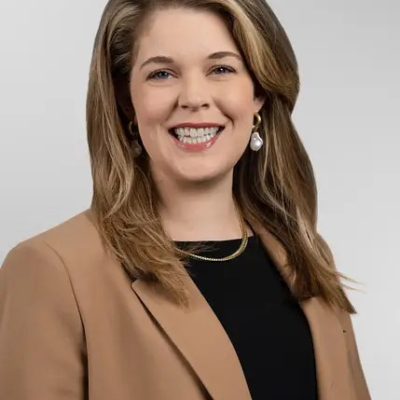
They say everything’s bigger in Texas, but does that include teachers’ paychecks? Mary Lynn Pruneda, director of education and workforce policy at Texas 2036, joins Mike Petrilli and David Griffith to discuss Texas’s Teacher Incentive Allotment (TIA), a performance-based teacher pay program that rewards great teachers with higher pay, especially in high-need schools. Is Texas’s approach to merit pay helping attract and retain teachers in the classrooms that need them most?
Then, on the Research Minute, Amber Northern examines a new National Bureau of Economic Research (NBER) study looking at whether accelerating students in middle school math leads to better outcomes in high school and college.
Recommended content:
- What Is TIA? —Texas Teacher Incentive Allotment, Texas Education Agency
- House Bill 2: Improving Texas Student Outcomes With Targeted Funding Increases —Mary Lynn Pruneda, Texas 2036 (2025)
- Three things Ohio should learn from Texas on teacher merit pay —Jessica Poiner, Thomas B. Fordham Institute
- Big State, Bigger Idea: How Texas’ Teacher Incentive Allotment Is Changing Teacher Pay —National Council on Teacher Quality (2026)
- From Incentive to Impact: The Texas Teacher Incentive Allotment’s Path to Improved Retention and Achievement—J. Jacob Kirksey, Teresa Lansford, Angela Crevar, and Kristin Mansell, Texas Tech University (2024)
- Frequently Asked Questions About the Teacher Incentive Allotment —Texas Teacher Incentive Allotment, Texas Education Agency
- Targeted Acceleration in Middle School Math: Impacts on College Entry, Degree Completion, and STEM —David Card and Laura Giuliano, NBER (2026)
Feedback Welcome: Have ideas for improving our show? We would love to hear them. Send them to [email protected]
Transcript
Introduction
This transcript was generated with the assistance of AI and lightly edited for clarity and readability.
Mike Petrilli [00:00]
Welcome to The Education Gadfly Show.
I'm your host, Mike Petrilli of the Thomas B. Fordham Institute.
They say everything's bigger in Texas, and that includes teacher paychecks.
This week, Mary Lynn Pruneda of Texas 2036 joins us to discuss the state's Teacher Incentive Allotment, an initiative that rewards effective teachers with higher pay.
Is the program helping Texas attract and retain great teachers, especially in high-need schools?
Then on the Research Minute, Amber Northern examines a new study looking at whether accelerating students in middle school math leads to better outcomes in high school and college.
All that and more this week on The Education Gadfly Show.
Mike Petrilli [00:54]
Hello, this is your host, Mike Petrilli of the Thomas B. Fordham Institute, here at The Education Gadfly Show and online at FordhamInstitute.org.
Now, please welcome our special guest for today, Mary Lynn Pruneda.
Mary Lynn, welcome to the show.
Mary Lynn Pruneda
Hey, y'all. Good to see you.
Mike Petrilli
Yes. Mary Lynn is Director of Education and Workforce Policy at Texas 2036.
Also joining us, as always, my co-host, David Griffith.
David Griffith
Hey, Mike.
Seems like you ate your Wheaties this morning.
Mike Petrilli
Oh, I'm coming at it with some energy.
David Griffith
Good.
Mike Petrilli
Yes.
David Griffith
Your usual self.
Mike Petrilli
I've been fighting a cold, but I'm starting to feel better.
So maybe that's where it is.
Or maybe it's the cold medicine. I don't know.
David Griffith
Maybe it's the subject matter for today. Mike just loves the Teacher Incentive Allotment.
Mike Petrilli
Yeah, there you go.
Speaking of when teachers eat their Wheaties, that's exactly right.
Hey, Mary Lynn, for people that don't know, Texas 2036, this was a group that at one point Margaret Spellings was the leader of, so people probably know that name.
So what's Texas 2036?
Tell us real quick.
Mary Lynn Pruneda
Yeah.
So 2036 is Texas's bicentennial.
And so it's our 200 years of existence.
And, you know, being Texans, we like to make a big deal about things and a big show of things.
So we were founded about a decade ago.
Our organization is a nonpartisan nonprofit that works at the legislature, works with state agencies and communities to do one thing, and that's to make Texas the best place to live, work, and raise a family.
And kind of our unique value proposition, if you will, is that we use data.
And so everything that we do, everything that we advocate for, it has to have a track record of being data-informed and then actually leading to some kind of better outcome for Texans.
Mike Petrilli
Love it.
And I got to say, Mary Lynn is one of my favorite butt-kicking education reformers out there doing amazing work in Texas.
People who listen to the show know that I am a big fan of a lot of things happening in Texas.
I certainly have a man crush on your state commissioner, Mike Morath, as well as the Houston superintendent, Mike Miles, appointed by Mike Morath.
Love a lot of things that are going on there in Texas, but especially the Texas Teacher Incentive Allotment.
That is what we're going to talk about today.
Let's do that on Ed Reform Update.
Ed Reform Update: Texas's Teacher Incentive Allotment
Mike Petrilli [03:20]
Okay, so Mary Lynn, we have talked about this on the show from time to time, including some of the studies that have come out.
But look, you know, this is at a time when it felt like the attempt to try to evaluate which teachers were effective and maybe do something with those data, you mentioned data, right?
Whether that is pay the effective teachers more, maybe even remove the ineffective teachers from the classroom.
That was a big deal back in the Obama days, and it crashed and burned.
Right?
And it just seemed like, okay, we have this one shining example in Washington, D.C., where Michelle Rhee had come in and created this incredible system, IMPACT, that's still there.
We have a Democratic Socialist mayor coming in, so we'll see.
But still there after all these years, but did not spread anywhere except arguably Dallas and now the state of Texas.
And it's a remarkable story to me that this is even possible.
So let's start here.
What is the Texas Teacher Incentive Allotment?
How does it work?
Give us kind of the nuts and bolts.
Mary Lynn Pruneda [04:24]
So the Teacher Incentive Allotment, or what we call in Texas just TIA, is a way that we pay teachers in Texas aligned to effectiveness.
And the core of this program, if you take away nothing about this program as a listener other than this, is that it is not optional in Texas.
It is not like a rider that we put on the budget that we have to come back every two years and fund.
It is required.
It is an entitlement program that Texas has for its teachers.
And so I really think that's what's led to a lot of its success, because districts can trust it.
Mike Petrilli
And it's in the funding formula.
Mary Lynn Pruneda
It is.
And it's also in our pension system.
And so if you're one of our highly compensated teachers, it's reflected in your total pension payout.
Mike Petrilli
Okay, so this program says it's in the funding formula, in the pension system.
But then how does it work?
Basically, districts have to come up with a mechanism to determine which of the teachers are going to get these bonuses, incentive pay, stipends, salary boost.
What is it?
Go, go. Keep going.
Mary Lynn Pruneda
So districts, they say, hey, I want to be a part of the program.
And they work for a year to come up with their merit-pay system.
And in that merit-pay system, there are going to be four tiers.
So there's an Acknowledged tier, which is the bottom.
Then there's Recognized, Exemplary, and then Master.
And each one of those tiers has different pay scales that attach to it.
And the districts come in and they say, okay, across these grades and this subject, this is how I'm going to rate each one of these levels of teacher.
And then they send that off to Texas Tech University.
And Texas Tech does the work of making sure that, you know, in Poteet, Texas, when they do a merit-pay system, a Master teacher in Poteet could also be a Master teacher in the Perryton pay system or the Beaumont pay system.
And so the state makes sure that there's some level of equating that goes on, or equating is probably not the exact word, but basically similarity that goes on so that, because TIA is portable, if you're a teacher that moves from Perryton to Beaumont, you're going to be a Master teacher in Perryton and then a Master teacher in Beaumont, and we're going to keep funding you.
And so after Texas Tech approves your program, then you just enter into the school finance formulas and the state begins to pay out the obligation that we owe you in accordance to your teachers, how many you have at each level, and what their designations are.
Mike Petrilli
And we're talking about, in some cases, a lot of money, right?
Tell us more about that.
Mary Lynn Pruneda
So the least amount of money that you can get in the TIA at the bottom tier is $3,000.
The most amount of money that you can get is $36,000.
And so we're just tiering across that.
And then the amount of money that districts have available within each of these tiers.
And this is a reflection of two things.
And this is, I think, one of the most probably equitable, like, focused on making sure that we put the best teachers in the hardest-to-staff classrooms, really one of the most of that type of reform in the country, because in Texas, you get more...
[Brief gap in the source transcript.]
And I think it's been incredible, particularly in our rural communities, because over half of the districts in this program are rural.
And that to us was one of the just key things we had to have.
Mike Petrilli
Now, what is a little confusing is that when you hear, for example, $36,000, right?
So that is for a teacher, the highest tier, in a high-poverty school that's also rural.
Is that right?
That doesn't necessarily mean that that teacher herself is going to get paid an extra $36,000.
Right?
There's some wiggle room about how that money is spent at the district level or school level.
Mary Lynn Pruneda [08:09]
Yeah, so each district can come up with kind of the way that they want to do it.
So we're trying to preserve local control while we put in place the statewide program.
But what basically it is, is that the district has to spend 90 percent of their TIA allotment at the campus.
And I'll tell you, sometimes people are always like, well, you know, 90 percent has to just go to the campus. That doesn't actually have to go to the teacher.
In practice, most of that money goes to the teacher.
But when we were constructing TIA back in 2019, we had a lot of teachers come to us and say, well, we would actually prefer some level of spending flexibility at the campus because I want five or 10 percent of my TIA payment to go towards more school counselors or to go towards some specific program that my campus has.
So we tried to get flexibility, and I've yet to hear anyone say that it's too much flexibility and we need to target it more towards teachers.
Mike Petrilli
Yeah, no, really fascinating.
And look, it's up to what, over a billion dollars, I think, at this point that has been spent in the program?
Mary Lynn Pruneda
Not quite.
It's at $750 million.
It will probably be a billion within a couple more years.
But something else I want to point out.
So when other states come and they see the price tag currently on TIA, I think there's two things to remember.
Number one, Texas is huge.
Right?
And so our K-12, our K-to-workforce system, every single year, we spend $100 billion on it.
And so there's context.
That's 1 percent.
And then within that, when TIA started, it was only $40 million the first year of implementation because we had only a handful of districts doing it.
And that's about 1 percent of our K-12 budget.
So it's a fraction of the total spending, but I think the evidence is there that it's improving outcomes.
Mike Petrilli
All right.
I want to talk about the politics in a moment.
But first, let's keep walking out here.
David, do you have any wonky questions for Mary Lynn about the program design or some of the studies we've talked about that have come out on the program?
David Griffith [10:10]
Yeah.
I mean, so I think there have been a couple of studies, right?
And I think, broadly speaking, I agree that, you know, the sort of early returns are positive.
But, you know, there was one study, right?
And I'm guessing you know which one I'm talking about, that found basically that, you know, the program was succeeding in identifying good teachers.
But then I'm going to do violence to the nuance of the study.
But basically, the teachers were using this identification in poor schools to then go get jobs in other schools.
I guess I'm just curious to know if that rings true to you at the ground level, if you think that's something that might change over time.
I don't know. Maybe as teachers are earning, you know, more teachers are reaching the sort of higher performance levels.
Kind of what your reaction to that was.
Mary Lynn Pruneda [10:57]
Yes, I'm familiar with that research.
Here's what I'll say.
I think that point, maybe it doesn't hold if only certain districts are in TIA.
But once every district's in TIA, and if we're still doing the work of making sure that a Master teacher means Master and that we have an incentive within each individual school district to kind of bump up their points as much as possible, I think that point isn't as powerful against the system.
I think one of the things that I think I've heard Mike say before, certainly in other spaces, is, you know, ultimately the teacher's classroom experience matters to them and what kind of their environment is outside of their pay.
And I think we've all kind of heard that talking point from teachers over the past few years.
And I think that's true.
And I think that doesn't tell me anything new about the system.
It doesn't tell me that TIA isn't actually working for that individual teacher.
It just tells me that we have a lot more work to do to support those low-income campuses and make sure that if you are a low-income campus in a district, that your district is doing TIA and that we can make sure that you're getting the best and brightest.
I'll also say, you know, one of the reasons that we passed it, I think sometimes I get these questions of, a little bit, sometimes I feel maybe I just have a chip on my shoulder because I'm from Texas.
I get, you know, the part in the Bible when someone goes, "Can anything good come out of Nazareth?"
Sometimes I feel that way about Texas when we go to these nationals.
Can anything good come out of Texas?
And my response is always, well, just because we're a bunch of cowboys doesn't mean we haven't read Eric Hanushek.
Like, I mean, we called Dr. Hanushek when we were crafting TIA, and I worked for the governor's office, and we said, will you please just make sure that this does what your research does?
Because one of our goals was to get those teachers that are maybe not performing every day for their students to have them choose just a different career path, some other place that they could be successful, and that we were maximizing our ability to keep successful teachers.
And I think that's happened.
And the other thing I'll say, just a point, and it's totally anecdotal, and I can send this to you because you can show it to your readers.
Do you want to know where Sherman, Texas, is?
Mike Petrilli
Probably not.
Mary Lynn Pruneda
Why would you know?
It's a small East Texas district.
It actually faced interventions and sanctions a few years ago in our state because of low performance.
The other day, Sherman had a billboard up, and I kid you not, it said, "Come teach. You could be one of our $100,000 teachers."
One of the poorest-performing districts in the state, now poor-performing, rural, in an area that doesn't have a significant amount of population, and they're advertising $100,000 paychecks for their best and brightest.
And I just think that that's exactly what the program was designed to do.
And that's what it's doing.
Mike Petrilli
Yeah.
No, I love that anecdote.
And look, I think, as I recall that study, it was some of these teachers at the somewhat lower tiers who were getting, I don't know, $5,000, maybe $10,000 extra.
It wasn't the $20,000, $30,000.
[Brief gap in the source transcript.]
It may be that we need to keep working on getting those incentives right so that those high-poverty schools can really pay extra.
When you think about that, Mary Lynn, this is a huge progressive funding plan as well.
Right?
I mean, that over time you're going to be driving way more money into the neediest schools in Texas.
So let's talk about the politics.
I mean, that sounds like something that Republicans maybe wouldn't always support because typically maybe those aren't their constituents.
Is it the rural thing that's maybe making it more doable for Republicans?
And then on the flip side, I don't know.
There's these crazy polls saying that the Democratic candidate for governor has a chance this year.
I'm not going to make you go on the record about that.
But, you know, is this something that could be at risk if Democrats gain more power in Texas?
I mean, what are the politics of this thing right now?
Mary Lynn Pruneda [15:05]
Well, I can tell you what the politics were like in 2019 when we were writing the legislation.
And then I still think a lot of it's true today.
But in maybe perhaps defense of Republicans at the time, and now today too, there was an enormous focus on improving outcomes for low-income children.
I mean, I think every single member in their district knows kind of where the hardest-to-teach-at schools are, and they have candidates.
They wanted to do something, but they didn't just want to do it by just flooding money into the system and not knowing how it was being spent.
They wanted to do it in a way that was actually going to get to largely women that were doing the hard work of actually improving students' lives.
And so I feel like what TIA offered to those members was an ability to do kind of the hard work and the head work at the same time.
And I think that, to me, is one of the kind of motivating forces behind all of Texas's different types of ed reform over the past ten years, is that it's hard work and it's head work.
It's, hey, we're going to do things for, let's say we put in $250 million into our formulas for special education last session.
But we didn't just put it in there.
We also did a complete revamping of how we're placing students.
And we're looking at how we're funding students and making sure that they're going to the right placement with as much funding as they need for the least restrictive environment.
And so it's hard work and it's head work.
And I feel like, to me, ultimately, that's something that everyone can agree on.
And regardless of who wins the governorship, it's still going to be an entitlement in our system.
There are teachers that are still going to be expecting it.
They're still going to be owed it.
And that's going to continue, Lord willing, ad infinitum for the next hundred years until we're at our state's tricentennial instead of coming up on our bicentennial.
So maybe I'm an optimist.
Maybe you guys think it could all suddenly come crumbling down, but I just don't think it's going to.
Mike Petrilli
Well, but let's talk about it.
I mean, from what we know, this is popular, right?
I mean, I know you don't have teacher unions in Texas, but you have teacher associations, and they still can, you know, find ways to find political power and to have their voices known.
This doesn't have a, there's no trying-to-fire-bad-teacher part of this thing.
So that probably helps.
It's all upside.
I mean, I don't know.
Are the teacher associations okay with this, basically?
Mary Lynn Pruneda
There were some questions at the time, but I generally find that people understood the assignment and they understood what it was trying to do.
And again, because we had so much data from Dallas ISD and the reforms that Mike Miles put in place in Dallas ISD, that it was working.
I mean, it was just incredible.
At the time, we had a low-income Dallas elementary school that we were looking at, and it was outperforming one of the most affluent elementary schools that we have in the state of Texas, in Dallas.
And it was like this school, it was just...
[Unclear phrase in the source transcript.]
And I think going back to my point about hard work and head work at the same time, that's what members were latching on to.
This idea that we could provide this opportunity to every single kid in every single district, regardless of their income, and see outcomes within three years.
And this is, I think, one of the things that I hope comes out in the research and I hope people begin to study more, is not just what the impact is of a first-year TIA teacher.
So that first year that you're in a TIA classroom, but what happens when it compounds over time?
And so one of the things that I know from this first batch of research is that I think it's like seven months of learning in three years in math is gained just by being in the presence of a TIA teacher.
And the impact of reading is about eight months.
That's almost a year of learning made up in three years just by virtue of who's teaching you.
So I hope that growth curve just keeps going on.
Mike Petrilli [18:41]
All right.
I love it.
Mary Lynn, thank you so much for being on the show.
We will have to have you come back another time, maybe after the election, and we'll find out what's happening there in Texas.
We will be watching.
Again, Mary Lynn Pruneda at Texas 2036.
Thanks for coming on the show.
Mary Lynn Pruneda
Thanks for having me, guys.
Mike Petrilli
Now it's time for everyone's favorite, Amber's Research Minute.
Research Minute: Does accelerating students in middle school math pay off?
Mike Petrilli [19:07]
Amber, welcome back to the show.
Amber Northern
Thanks, Mike.
Mike Petrilli
It was nice seeing you.
I guess now it's been a few weeks, in Chicago for the PIE Network Summit.
We saw our former colleague, Adam Tyner, who sometimes had come on the show to pitch in with the Research Minute.
He's now working at an Oklahoma ed reform group.
And he noted, David, that it seemed like we brought most of the Fordham team except for you.
And he wondered if there was a reason.
David Griffith
Yeah, I noticed that too.
Is there a reason?
Mike Petrilli
We thought the reason was you, not us.
We weren't sure.
It's you, not us.
David Griffith
What are you talking about?
We were unhappy to have you there.
You decided.
I was busy parenting and being sick, but it sounds like it was a good time.
Mike Petrilli
Well, I was busy, yes, having a good time and getting sick.
So we had that in common.
But it was always fun to see the...
[Brief unclear passage in the source transcript.]
And I was just having a good time.
I hadn't been in years.
It was a little bit higher quality than it was last time, I've got to admit.
Amber Northern
Okay.
It's a great group.
Mike Petrilli
We were in Chicago.
First couple of days were beautiful.
So yeah, you got to love that.
Ed reformers unite.
David Griffith
That's right.
Mike Petrilli
That's right.
All right.
What you got for us this week, Amber?
Amber Northern [20:24]
We have a new NBER working paper, David Card and Laura Giuliano.
We like this pair.
We've heard from them in the past.
They're looking this time, they're staying in the advanced education space, and they're asking whether accelerated students, when you accelerate them through middle school math, whether that pays off in the long term.
And they really do have long-term data.
They follow students in a large urban Florida district, Miami-Dade, for more than a decade to see whether being placed in an advanced math track in middle school changes their college and career trajectories.
They're studying a program called Great Explorations in Mathematics.
This was kind of a new one for me, but our GEM program.
It compresses the standard sixth-grade math curriculum into a single year.
Then it moves students into Algebra I in seventh grade and Geometry in eighth grade.
So it's essentially putting them two years ahead of their peers.
So students who enter that track have to also maintain at least a B to stay in that track.
And then the authors follow 23,000 students using district-level data linked to National Student Clearinghouse data.
So they have postsecondary outcomes up to six years after high school graduation.
All right, we've got a regression discontinuity design.
So they're exploiting the fact that eligibility is determined by whether a student scores above a specific threshold on the fifth-grade FCAT, which is this Florida state test.
In this case, their cutoff is the 80th percentile.
So students just above that cut are much more likely to enter the GEM program or track, and students just below it are not.
So they're comparing, I've said this so many times on the show, but when we're looking at these types of studies, we're looking at a narrow band around the cutoff.
Yes, it's causal, but we can only really talk about students who are near that 80th percentile, not what acceleration could do for kids who are way above or way below that cutoff.
All right.
So the authors also want to know whether a student's nonacademic traits, so things like work ethic, and are they conscientious, and do they persist, all those things, influence who benefits from this advanced program.
So they use a proxy for students, all that noncognitive stuff that we like and don't know how to measure.
They use students' average GPA in non-math high school subjects as a proxy.
So they're controlling for students' fifth-grade test scores, but they're looking at their GPA in all those non-math subjects.
And they're calling that a noncognitive skill index.
Okay?
Hopefully you're tracking me on all that.
Finding one: That noncognitive skill thing I just told you about, not math ability, is the strongest predictor of who actually completes this GEM math sequence.
So let me slow down.
So among students at the lowest end of the noncognitive distribution, so I think it was like the bottom tercile, among the kids who made it in, almost nobody finished that sequence.
But those at the top, the completion rates were, I think, 60 percent or more.
And so I think what's important to remember is that the program is this sort of sustained commitment from kids, like over multiple years, right?
They've got to move through this advanced track, and they have to maintain a B or apparently they get kicked out.
So success clearly is about more than their math ability anyway.
And then number two, when they looked at the overall sample, they found that this program raised advanced math course-taking in high school.
Of course, that's kind of what it was supposed to be doing.
It increased the probability of completing calculus, but also what it's intended to do.
But I think that was 10 to 13 percentage points higher.
And it also increased PSAT math scores.
But what I want to kind of dig in on is that it didn't actually impact whether students enroll in college or finish a degree.
And so I'm like, huh.
And then obviously, you know, when you get to thinking the sample again, the sample is limited to these high-achieving kids who are probably going to head to college anyway, whether they took algebra in seventh grade or ninth grade.
But that said, it did increase the likelihood of them earning a STEM or business degree.
They put those together.
I'm not quite sure.
I guess they are assuming that business, sure, you use math in a business degree, but not, whatever.
They're together.
And they have kids that are likelier to get a STEM or business degree, 6 percent higher.
So that's about a 25 percent increase.
Last big finding: The effects vary a lot by gender and by noncognitive skill.
So, for example, those boys that have the highest noncognitive index ratings see the biggest calculus gains.
They're about 33 percentage points more likely to take calc by 11th grade in high school.
And there was a big jump for majoring in STEM among those same boys, about 12, I think, percentage points higher for majoring in math, the likelihood of that.
And then the puzzling thing, at least a little bit, was that the girls who had low noncognitive scores, so they're strong in math, right?
But supposedly they have weaker work habits or persistence or whatever this noncognitive thing is measuring.
They had lower grades, right?
They see the largest college-level gains of any group.
The girls with the lowest noncognitive skills.
And I'm like, okay, what's going on there?
And it was across the board.
They had higher rates of getting into selective colleges.
They had higher rates of bachelor's completion.
They had higher rates of going into STEM.
Thirteen to fourteen percentage points.
So the authors kind of, you know, discuss what...
And maybe one thing, and I thought this was the more plausible reason, was that maybe being placed in this track may have changed what girls expected of themselves and what was expected of them, given that sometimes, you know, they get the message that, you know, we're not good in math or whatnot.
I really don't know.
There's a lot of hypothesizing about what's happening with that finding.
But that's what we've got.
Mike Petrilli
Okay.
Okay.
Very good.
And then all those kids who ended up taking calculus have now gone into the crypto industry in South Florida.
Amber Northern
Okay.
We don't know that part.
Mike Petrilli
Maybe they're going to go work for Citadel now that Ken Griffin has moved it down there.
Yeah, so...
You know, I'm so glad, Amber, that you really set it up talking about the regression discontinuity and that we're talking about this narrow band of kids.
You know, so it's not surprising that the differences in math achievement didn't matter much because there probably weren't that many differences.
Right?
I mean, they're just looking at kids that must have been...
And I think the cutoff, didn't I read it was like the 80th percentile?
Amber Northern
Mm-hmm.
Mike Petrilli
All right.
So maybe these are kids at the 75th to the 85th percentile.
Right?
Who are, you know, like you said, probably going to four-year schools anyways, probably not going to the tippity-tippity-top four-year schools anyways, in general.
You know, so something like looking at their grades, which, I don't know, you call that noncognitive.
Just call it their GPA.
Come on, people.
You know, it's not surprising that that, of course, is going to vary more because they controlled for the other things.
So it couldn't vary.
Amber Northern
Yes.
Mike Petrilli
And, but this is interesting.
And like you say, what we don't know is all these kids who were even higher achieving, who otherwise would have been sitting bored in their class, like in what, in some alternative universe, you know, how do they do?
Maybe they end up doing fine, but they sit there bored and they could learn a lot more.
And now they got a chance to.
Amber Northern
That's right.
I mean, we wanted to be prepared, so...
Mike Petrilli
Yeah.
I don't know what to make of the gender stuff.
I don't know, David, what else?
David Griffith [29:11]
Yeah, well, I was going to speculate a little bit about the gender.
I mean, I don't know, obviously.
But I mean, I just wonder if, you know, this equating noncognitive skills with grades, there's a lot of truth to that, right?
But I just wonder if basically we're picking up different things with that, with boys and girls.
Not to generalize too much, but my sense is that a lot of boys are flunking their courses because they're flaky in high school.
I don't know.
Maybe what you're picking up with grades with girls is more cognitive.
I don't know.
That doesn't really explain the reverse causation.
If girls are getting bad grades, maybe because, you know, relative to other girls, because they're just not as good at English or something.
And with boys, it's just really...
[Unclear phrase in the source transcript.]
I don't know.
I am speculating.
But it's interesting.
And it's interesting, I mean, that the noncognitive, we'll just call it grades, whatever is getting you through grades, you know, it's interacting with your academic ability, right?
It's not just sitting there.
And so it's actually, you know, it's sort of like a latent potential, I guess is the right word for it, that you have that you can activate in certain academic settings.
So anyway, it's nice to have a policy that I can be unambiguously for, right?
Even if it doesn't solve all the world's problems.
I feel like we don't get that very often.
Mike Petrilli
Yeah.
Amber Northern
Yeah.
Mike Petrilli
I think that's right.
And I think we can admit what's going on with this gender thing.
Amber Northern
Yes, yes.
But it's good.
I will say it doesn't feel as clean as some of their other findings from some other studies where you can say, okay, you know, these kids, when they get an opportunity to do high-achieving classes, their achievement goes up by X percent or, you know, this one feels a little bit more nuanced.
And I don't know.
I do wonder what the noncognitive thing, I'm like, was that the grades?
I don't know.
Is that just complicating all of this?
I mean, maybe it's interesting.
Mike Petrilli
Right, right.
But still, I mean, even for the overall sample, right?
I mean, even when you're not looking at gender and looking at these things by, you know, noncognitive grading, whatever.
I mean, the fact that the program did largely what it's intended to do, we sometimes assume that, but hey, we shouldn't.
It did raise the number of math courses kids took in high school.
It did increase the probability of them taking calculus, you know, about 13 percentage points.
And it raised their PSATs.
So these are all...
Amber Northern
Yeah, good things.
Mike Petrilli
Right.
And more and more girls going into STEM is huge.
I mean, that's definitely been a big goal for many people, industry and otherwise.
And so that does matter.
And there it's like, yeah, I mean, I buy that piece about how they think of themselves.
Of course, there's peer effects.
I mean, this is classic peer-effect kind of intervention.
You're giving kids a chance to be with peers who are also high achieving.
Right?
And that's got to be helpful.
And look, the worry is always about the kids who don't get to be a part of this.
Well, when the cutoff is that high, you know, still most of the kids are on the other side of that divide.
So it's not like you've got a concentration of super-low-performing kids.
Anyway, we're all happy about this.
All right.
All right.
Thank you, Amber.
Good one.
Amber Northern
And rigorous designs in advanced education.
Like, you know, there's tradeoffs, right, to what we can say.
But still, it's an important piece of the puzzle in terms of this rigorous research in this area.
Mike Petrilli
Love it.
All right.
Well, that is all the time we've got for this week.
And so until next week.
David Griffith
I'm David Griffith.
Mike Petrilli
And I'm Mike Petrilli of the Thomas B. Fordham Institute, signing off.