Mobile Navigation

  • National
    • Policy
      • High Expectations
      • Quality Choices
      • Personalized Pathways
    • Research
    • Commentary
      • Gadfly Newsletter
      • Flypaper Blog
    • Events
    • Scholars Program
  • Ohio
    • Policy
      • Priorities
      • Media & Testimony
    • Research
    • Commentary
      • Ohio Education Gadfly Biweekly
      • Ohio Gadfly Daily
  • Charter Authorizing
    • Application
    • Sponsored Schools
    • Resources
  • About
    • Mission
    • Board
    • Staff
    • Career
Home
Home
Advancing Educational Excellence

Main Navigation

  • National
  • Ohio
  • Charter Authorizing
  • About

National Menu

  • Topics
    • Accountability & Testing
    • Advanced Education
    • Career & Technical Education
    • Charter Schools
    • Curriculum & Instruction
    • ESSA
    • Evidence-Based Learning
    • Facilities
    • Governance
    • Personalized Learning
    • Private School Choice
    • School Finance
    • Standards
    • Teachers & School Leaders
    • Think Again
  • Research
  • Commentary
    • Gadfly Newsletter
    • Flypaper Blog
    • Gadfly Podcast
  • Events
  • Scholars Program

The Education Gadfly Weekly

Sign Up to Receive Fordham Updates

We'll send you quality research, commentary, analysis, and news on the education issues you care about.
Thank you for signing up!
Please check your email to confirm the subscription.

The Education Gadfly Weekly: The sorry state of career and technical education in America

Volume 19, Number 15
4.10.2019
4.10.2019

The Education Gadfly Weekly: The sorry state of career and technical education in America

Volume 19, Number 15
view

The sorry state of career and technical education in America

Fordham’s newest study on career and technical education finds that, although students take more CTE courses in fields for which there is local demand, this is less true when those available jobs are in higher-wage industries. Perhaps the reason is that those lower-wage jobs also require less expertise. They include exactly the kind of low-skill work for which America’s inadequate CTE apparatus prepares students. We need to fix this, which will require better collaboration between local employers, high schools, and community colleges.

Marc Tucker 4.10.2019
NationalFlypaper

The sorry state of career and technical education in America

4.10.2019
Flypaper

The corruption continuum

Chester E. Finn, Jr.
4.10.2019
Flypaper

The civic education crisis

4.10.2019
Flypaper

NCTQ’s new book is a must-read for every aspiring teacher

Jessica Poiner
4.10.2019
Ohio Gadfly Daily

College graduation or bust

Jeff Murray
4.10.2019
Flypaper

The Education Gadfly Show: Is Checker going soft on “social and emotional learning”?

4.10.2019
Podcast
view

The corruption continuum

Chester E. Finn, Jr. 4.10.2019
Flypaper
view

The civic education crisis

David Davenport 4.10.2019
Flypaper
view

NCTQ’s new book is a must-read for every aspiring teacher

Jessica Poiner 4.10.2019
Ohio Gadfly Daily
view

College graduation or bust

Jeff Murray 4.10.2019
Flypaper
view

The Education Gadfly Show: Is Checker going soft on “social and emotional learning”?

Michael J. Petrilli, David Griffith, Ph.D., Amber M. Northern, Ph.D., Chester E. Finn, Jr. 4.10.2019
Podcast
view

The sorry state of career and technical education in America

4.10.2019
Flypaper

The Fordham Institute’s new report, How Aligned is Career and Technical Education to Local Labor Markets? by Cameron Sublett and David Griffith, is a welcome addition to the literature on high school career and technical education. It notes that more people are spending their working years very close to the community in which they grew up, meaning more employers will have to source their workers from people who went to high school nearby. It asks to what degree those folks are trained to do the jobs that are and will be available in that community.

The authors don’t see much alignment between the jobs that are available and the ones that young people train for. According to the national data, “Over half the jobs are in four fields…yet, collectively, these fields account for only a quarter of CTE course concentrations.” It is true that students are more likely to train for jobs that are likely to be available in their local community. But, interestingly, that is most true when wages are low and less true when wages are high.

While these data are useful and I am glad we have them, I would caution the reader about making too much of them. The authors are right that they are the best data we have if our aim is to answer the question they were asked. But the results are potentially misleading if over-interpreted. In particular, the implicit criterion offered for competence in a high-need arena comes from the U.S. Department of Education: possession of a career and technical education “concentration.”

Typically, students achieve a concentration when they have taken a total of three courses constituting an approved sequence in a designated career-related program of study. But when the OECD issued a recent report on vocational and technical education (VET, and what we call career and technical education), it refused to include the data on participation it received from the federal education department because those data categorized children as VET students if they were concentrators. The OECD reasoned that, in the rest of the world, three courses in four years of education is not regarded as a serious VET program.

In most other countries, students are not awarded certificates of beginning competence in a trade or occupation unless they have done years of virtually full-time study in that line of work and have passed one or more very demanding practical and theoretical examinations designed to assess a high degree of initial competence. The time spent preparing for these occupations is typically divided roughly evenly between school and highly structured on-the-job training. Students who pass the exams are said to have a “qualification” in the line of work. The standards for the exams are set by employers in that field, so they know that such students have the requisite knowledge and skills to succeed.

That’s what authentic labor market “alignment” looks like. And frankly, it doesn’t bear much resemblance to anything we do here in the U.S.

Although Sublett and Griffith never actually make the claim that CTE concentrators are well-prepared for employment in their respective fields, I worry that casual readers may be left with that impression—and as a result, will drastically overestimate the percentage of high school students who graduate with the kinds of skills that employers are looking for.

In fact, fewer than 5 percent of high school students in most states leave with a qualification that is honored by employers. About 30 percent leave high school prepared enough to finish college. And the remaining 65 percent leave with only the diploma, which typically signifies almost nothing with respect to a student’s technical skills for any job.

Few American students leave high school with the skills needed to do semi-skilled, never mind skilled work. Most programs for “concentrators” provide hardly more than an introduction to a cluster of occupations, and leave pupils with little that would cause an employer to choose them over non-concentrators. Likewise, don’t be misled by statistics on the number of “industry certificate” holders. I’ve seen law enforcement and public safety programs that boast of these figures when the credential is nothing more than a CPR certificate that requires just a few hours of instruction—a pale comparison to the substantial training needed to be a police office or EMT.

Most high school career and technical education programs are not designed to result in career-ready graduates with strong technical skills. They are widely viewed as places for students whom teachers view as academically behind or disruptive. Districts shape these programs to keep kids in school, trying to find a way to keep their interest up and give them a taste of success, however modest. And success is often measured by how many participants go off to college, not some well-paying career for which they trained, and regardless of whether their college program had anything to do with the career cluster they studied in high school.

The countries with the most successful vocational education and training systems, however, do not view their programs as places for students who cannot do academic work. Nor do they view them as dropout prevention centers. Instead, leaders set fairly high minimum academic standards for admission, and the programs themselves contain a lot of academically challenging material. The reason that CTE has a much higher status in these countries than in the United States is because everyone knows that the school work is demanding and leads to jobs that are rewarding and pay well.

One of the Fordham study’s puzzling findings is that, although students take more career and technical education courses in fields for which there is local demand, this is less true when those available jobs are in higher-wage industries. I suspect the cause for this strange outcome is that lower-wage jobs also require less expertise. They include exactly the kind of work—low-skill work—that you can train for in high schools that count you as a career and technical education concentrator if you take three related courses in four years.

If you want serious training for skilled work in the United States, your best bet is your community college. And ironically, your best strategy for succeeding there is passing your high school’s academic courses, not enrolling in its CTE program.  

There are, of course, exceptions—quality secondary school career and technical programs in some high schools in a few states. But they are not common. Not even close. Sublett and Griffith say that creating stronger programs in more places will take a new, very different kind of collaboration between local employers and local high schools and community colleges. Hear, hear. The usual kind, in which the employers advise the schools and the schools can take or leave the advice, will not do.

One of the major lessons from a lifetime of cross-national study of these issues is that the role of employers must be at least as strong as that of schools. Employers must be fully invested, set standards, approve curricula, play a key role in student assessment, and offer excellent on-the-job, highly structured learning programs. Only then will this country have strong career and technical education.

view

The corruption continuum

Chester E. Finn, Jr.
4.10.2019
Flypaper

I’m as appalled and disgusted as anyone over the Varsity Blues admissions scandal, and it’s fine with me if those parents end up in prison. But I also worry about hypocrisy. So many of us now throwing up our hands in outrage have tiptoed in our own ways onto a continuum at the far end of which is the bribery and conspiracy that’s recently been revealed.

Name me an educated, upper-middle-class parent with college aspirations for their children who hasn’t done a hundred things to advantage their own progeny—at the ultimate expense of somebody else’s child—in the frantic competition for limited spots at the elite colleges and universities they (or at least their parents) hope they will attend. And just about everything on that continuum is within reach of prosperous, educated families—and out of reach for those without much money or education of their own.

Considerably farther down the continuum than I’ve ever been is the thriving industry of independent college admissions counselors, exam-prep coaches, and pricey consultants. As Dana Goldstein and Jack Healy reported in the New York Times three weeks ago:

For prices up to $1.5 million, parents can buy a five-year, full-service package of college admissions consulting from a company in New York City called Ivy Coach. The service—all of it legal—begins as early as eighth grade, as students are steered toward picking the right classes and extracurriculars to help them stand out from the crowd. Then comes intensive preparation for the SAT or ACT, both “coachable exams,” explained Brian Taylor, the company’s managing director, followed by close editing of college essays. “Is that unfair? That the privileged can pay?” Mr. Taylor asked. “Yes. But that’s how the world works.”

Is that corruption—or is it just “helping your child succeed in school”? And where exactly is the line where the latter turns into the former? It’s not illegal, dishonest, or fraudulent to spend money, time, and effort to boost your child’s educational prospects, and Ivy Coach (and Princeton Review, Kaplan, and other far less costly private prospect-boosters) aren’t bribing anyone on campus or substituting a varsity athlete’s photo for that of a nerdy applicant. No, it’s not that kind of corruption. It’s just the kind that tilts the admissions playing field in favor of one kid rather than another—and disadvantages the kid whose family can’t afford it or doesn’t know enough to do it.

But everyone I know does it or something like it, and in the elementary and middle grades, we salute parents who “help their child succeed,” whether it’s ensuring that they do their homework, clarifying the parts they don’t understand, buying art supplies for the diorama, giving them books for Christmas along with toys, schlepping them to the library, showing up for parents’ night, paying for the optional field trip, driving them to softball practice, or dragging them to Colonial Williamsburg over spring break rather than letting them veg out in front of those tempting screens and game boxes.

That’s all praiseworthy, yes. But it’s not something every kid has—and it’s the beginning of a distortion of “equal educational opportunity.”

The best schools try to compensate—this is vivid in top-performing charter networks—by ensuring that their disadvantaged pupils have as many as possible of the same sorts of boosts, assists, and encouragements, but at day’s end no school can supply as many boosts as prosperous, motivated parents can.

The continuum returns big-time in high school, and the ethics get trickier. Do you review your child’s history paper, book review, or lab report? If so, do you point out errors, make suggestions, or actually engage in hands-on editing? How far do you go to leverage your own contacts to arrange that special summer internship or exotic travel experience for your daughter or son? How much do you coax your progeny into those AP and IB classes that they might not otherwise take (and then assist with the research projects that they entail)? Do you perhaps move the whole family to another neighborhood so your child can attend a school with more such advanced course offerings—and a better track record on college admissions?

Then comes the actual admissions sequence. Besides perhaps signing your kid up for an SAT or ACT prep course, and possibly engaging one of those four-figure independent tutor/counselors, how many campuses do you visit with him? How many of your friends do you consult for suggestions? How much time do you yourself spend scanning the reviews and rankings and insider-tip books so as to be certain that your daughter is considering every plausible college option? Soon arrive the application forms, the essays, the interviews. How heavily do you edit her essays? How often do you nag her to finish filling out the forms? How much do you assist her to fill them out in ways that present her in the best possible light (and certainly don’t forget to include Aunt Cecilia ’53 on the line that seeks possible “legacy” connections)? How do you coach and dress her for the interviews?

Where is the line? Is there a line—short of the one that the FBI is whacking fifty parents for crossing? In a perceptive piece last week, my colleague Robert Pondiscio wrote that “the line between mere advantage-seeking and outright cheating and fraud is easily drawn: It is just in front of where you stand. Thus, with a clear conscience, progressive parents living in affluent zip codes can congratulate themselves for bravely choosing public schools for their children. When they employ one or more of a standing army of SAT test-preppers, it’s not an exercise in privilege hoarding but merely ensuring that their children put their best foot forward. The Varsity Blues scandal resonates so deeply because it's a scam that elites can comfortably condemn. The next level down gets uncomfortable quickly.”

Comfortably or not, just about everyone I know does most of those things for their college-bound children—and spends time and money doing them. Nor is college admissions the end of it. There’s graduate school, too, then resumes to beautify and job applications to revise, and then, if you’re lucky, there are grandchildren who also need to gain entry to the tracks that lead to success in our quasi-meritocratic society. Nor is one’s own immediate family the end of it. A friend writes—privately, of course—“Editing a kid's college essay? Jesus, I've done that for my kid and literally dozens of others. Doesn't feel remotely unethical to me, let alone something outside the law.”

Admissions officers at elite schools are doubtless accustomed to all this, have come to expect it, and strive to discount it. We can fault them—as Rick Hess does—for “failing to perform even minimal diligence as athletic coaches sold slots, and failing to notice as applicants fabricated athletic profiles or had their faces photo-shopped onto the bodies of actual athletes.” It may be that they never saw it coming, though they’ve had enough experience with “side door” entry efforts that they should have. Still, experienced admissions staffers focus mainly on the things that are relatively hard for parents to influence directly: teacher-conferred grades, for example, scores on externally-scored exams such as Advanced Placement and International Baccalaureate, and what the applicant actually says during the interview.

Others, meanwhile, strive to level the playing field in myriad ways, from (controversial) affirmative action to the College Board’s (uncontroversial) partnership with Khan Academy so kids who can’t afford the for-profit test-prep outfits can access materials that assist them, too, to put their best feet forward when entrance-exam time comes around.

Yet there’s no way to peel away all the parent-conferred advantages and extras, for they’re inherent, multifaceted, and I think inevitable. We’re dealing with a scarce good—admission to elite colleges—that’s in great demand. Any responsible parent will assist their kids in every way they can to maximize their chance of winning the competition. Those whose sense of responsibility (or unbounded ambition) carries them to the outer limits of what’s ethical will do even more—paying an expert to write a less-than-stellar applicant’s entire essay, say, or writing a big check for a new wing for the college library so that one’s dim heir may yet gain entry. 

When you’re an educated, upper-middle-class parent, you can do a heckuva lot to advance your children. You need not call it corruption. You’re helping your kids succeed in life—and you’re not doing anything criminal. But I do glimpse a continuum. Most of it’s legal and much is educationally beneficial in its own right. But somewhere down that path it turns ugly, illegal and truly corrupt. And—to repeat—it’s a path that I and just about everyone I know have walked at least a short distance on.

view

The civic education crisis

4.10.2019
Flypaper

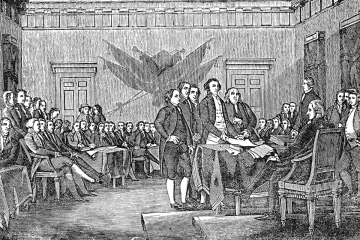
Perhaps George Orwell was thinking of a moment like this when he said, “We have now sunk to a depth at which restating the obvious is the first duty of intelligent men.” The obvious now is that the Republic faces a seemingly overwhelming number of crises.

Only half the people vote (58 percent in 2016, only 44 percent in 2018). The government is virtually shut down by polarization and gridlock even when it is not actually shut down by the failure to approve any spending authority. The U.S. Senate, once known as the greatest deliberative body in the world, hardly deliberates any more. Instead, we have government by executive order, national emergency and war. Judicial appointments have become Armageddon. We cannot solve our border and immigration problems. Meanwhile, our airports and roads are decaying, the national debt is out of control, and healthcare is a mess.

What is not so obvious, however, is that these are merely manifestations of a more profound problem: the civic education crisis. Over the years, I have come to understand that politics is only the topsoil of our national life. In the deeper soil are questions of actual policy: What should we do and how? But deeper still is the root system, the culture and values that sustain and motivate national life. The tap-root that feeds the root system in America is the troika of education, family, and faith. As those roots decay, civic education withers.

Civic education in America has decayed

By almost any measure, the quality of civic education in America has become a national crisis. The Nation’s Report Card, as the National Assessment of Educational Progress testing is called, last showed that only 18 percent of eighth graders were “proficient” or better in U.S. history, 23 percent in civics and government. More troubling, only 1–2 percent scored as “advanced” in these fields. A recent study by the Woodrow Wilson National Fellowship Foundation found that only 36 percent of Americans could pass the citizenship test that is part of the immigration process, a test that immigrants pass at a 97.5 percent rate. A 2017 Annenberg study reported that 75 percent of Americans do not know the three branches of government and 37 percent could not name one right in the First Amendment. Young people say they like socialism but it is clear that they do not understand what that means. And yes, it is true that there are students who think Judge Judy is on the Supreme Court and the Cold War was caused by climate change.

Finally, some Americans are awakening to the fact that there is a serious problem. Students themselves have discovered the problem, with several high schoolers suing Rhode Island officials in federal court over the poor civic education they have received. In a feature article last year, the New York Times observed, “in the age of Trump, civics courses make a comeback.” Several states are considering a strengthening of civic education requirements and foundations are considering major initiatives in the field. By now, however, the problem is so deeply rooted as to require an all-out effort at several levels.

The major problems

The brief answer to why we have a crisis in civic education is that it is no longer a priority. In 2011, the federal government essentially halted its financial support for civic education. Although the Every Student Succeeds Act restores some funding, the federal retreat sent a message. Testing also conveys a message: What we care about, we test. The NAEP tests in American history and civics are only given at the eighth grade level now—no longer in fourth and twelfth grade—and only every few years. State requirements for civic education are low, with most states only mandating a one-semester course in high school. Even STEM initiatives, which have attracted hundreds of millions of dollars in both federal and private funding, have had the unfortunate effect of crowding civic education out of the curriculum.

Teachers and textbooks are also key components of the civic education problem. Teachers graduating from schools of education are taught pedagogy—how to teach—but are generally not required to take extensive coursework in the content of what they will teach. Over 80 percent of colleges do not require a course in history or government. As a result, we have teachers who, themselves, do not know enough about history and civics to be excited and confident about these subjects and to teach them well. Textbooks are, at best, boring and at their worst biased. One of the most widely used textbooks, A People’s History of the United States by Howard Zinn, presents only the dark side of America, with Columbus coming to plunder gold and kill and the Founders motivated primarily by their private property and wealth. As Gordon Lloyd, professor emeritus at Pepperdine University has said, “It’s hard to love an ugly founding.”

Then, too, civic education in many schools has taken a back seat to its shiny new companion civic engagement. Instead of courses on how the government works, countless schools have prioritized students undertaking volunteer work in the community or protesting government action in the name of civic education. Indeed, based on the energy students demonstrated protesting guns on campus last year, a number of cities and states are considering letting sixteen-year-olds vote, as a handful of municipalities already do. While having students engaged in politics and community activities is fine, putting the cart of civic engagement ahead of the horse of civic education is not.

Solutions

While it might be nice if a billionaire were to make a major investment in improving civic education, as Bill Gates has done for global health, or if a major national movement like the one that has advanced STEM education came together, the good news is that there are a number of smaller, achievable steps that could make a real improvement in civic education.

First, states need to step up to the plate and make civic education a priority for their schools. Fortunately, federalism is alive and well in education and states are able to take the initiative in curricular and graduation requirements. Presently, only nine states (plus the District of Columbia) require a full year of student coursework in government and civics. Further, civic education should not wait for high school but should instead begin in elementary schools and continue through the grades. Only two states require middle school civics. On the other hand, Florida has begun an emphasis on civics in elementary school and its results are improving. There needs to be a study of best practices that might be adopted at the state level and a concerted effort made in state capitals to implement a greater emphasis on civic education at all levels. States can also provide the kind of funding needed for teacher training and development, since very little is accomplished in the classroom unless teachers are truly prepared with the necessary content and enthusiasm to lead the charge.

Second, we should consider further testing of civic education. I am not the biggest fan of standardized testing in schools, but if you are going to test, what you choose to test, or in the case of civics not test, delivers a message about what is important. One proposal is that students should have to pass the same citizenship test administered to immigrants in order to graduate. Some twenty states have adopted a version of this and others are considering it. The test is not that difficult and I am not certain it is the best measuring stick toward which a strong civic education program should strive, but it is worth discussing. We should return to administering the NAEP exams in history and civics in earlier grades, even as we strengthen civics course requirements in those grades.

Finally, we should acknowledge that the content of civic education is important and we may need debate and discussion about what teaching civics actually means. Is civic education, as some on the left prefer, an understanding of current issues of civil rights and inclusion? Or is it, as some on the right argue, a basic understanding of the Constitution and how our government works? A possible breakthrough in this regard has been pioneered and advanced by the Ashbrook Center in Ohio: the use of primary documents to teach history and civics. As a supplement, or even a replacement, for boring and biased textbooks, the Ashbrook Center has trained and retrained thousands of teachers to teach using primary documents, which includes not only the Constitution or Declaration of Independence, but also speeches and documents of the time. Teachers report that recreating the debates of historic eras creates far more excitement in the classroom, and test results show an improvement in student learning. It also creates a path through the politicized thicket of history and government since students simply read and discuss primary documents, drawing their own conclusions.

Conclusion

Many remember President Dwight Eisenhower’s farewell speech warning of the dangers of the military-industrial complex, but fewer recall President Ronald Reagan’s farewell address now thirty years ago. Reagan’s speech was warm and optimistic, as was his style, but like Ike’s, it included a warning. Reagan felt that America was falling down on the job of developing in its young people “an informed patriotism.” He emphasized the need to redouble our efforts to help the next generation understand “what it means to be an American.” I sense Reagan felt it was not enough just to know the facts about the American system, although even that would be quite an improvement today. It was also appropriate that efforts be undertaken from the family dinner table as well as the schoolhouse to develop a love of country.

The Founders were clear that a free republic “presupposes” (Federalist No. 55) that citizens possess the sort of virtues that are developed through civic education. It is, as Reagan pointed out, the duty of each generation to pass along this understanding of America to the next. I can think of no higher priority, and no greater contributor to a better functioning of our republic, than to greatly strengthen American civic education. 

This essay was original published on the Hoover Insitution’s Defining Ideas blog.

view

NCTQ’s new book is a must-read for every aspiring teacher

Jessica Poiner
4.10.2019
Ohio Gadfly Daily

For nearly two decades, the National Council on Teacher Quality (NCTQ) has published research, analyses, and evaluations on various aspects of the teaching profession. Their Teacher Prep Reviews, arguably the most well-known aspect of their work, have evaluated and ranked over two thousand teacher training programs spanning undergraduate, graduate, and alternative offerings. Despite the fact that thousands of teaching candidates enroll in preparation programs each year, the vast majority of future teachers select a training program without knowing how well it will prepare them for the classroom. Given how hard teaching is, and how high the stakes are for students, this lack of data is alarming.

The fantastic staff at NCTQ decided to fill this gap by creating a guidebook for prospective teachers. To do so, NCTQ president Kate Walsh joined forces with Dan Brown, a National Board Certified Teacher who previously ran Educators Rising, a national network of more than 45,000 teenagers who are aspiring educators. They leverage the experience of teachers from Teach Plus, an organization that trains and empowers thousands of high-performing teachers to fill leadership and advocacy roles, to offer real-world examples and feedback about the teacher-training process.

The final product, Start Here to Become a Teacher, is nearly two hundred pages’ worth of detailed information about what it takes to become a great teacher and why picking the right preparation program matters. The page-one promise—to provide readers with “unique advice about teaching found nowhere else”—is not an empty one. This guidebook is the first of its kind, and it accomplishes its goal admirably. 

There are a few sections in particular that stand out. First is chapter two’s “Myths About Teaching: Responding to the Haters,” a laundry list of problematic assumptions that most teachers have heard at least once in their lifetime (this former teacher included). The straightforward rebuttals provided after each statement should be helpful for aspiring educators who may be hearing such things from their (probably well-intentioned) parents, professors, or friends.

Another standout is chapter three, “The Best Way to Become a Teacher.” While most “how to become a teacher” guides consider earning a bachelor’s degree in education from a four-year institution to be the premier option, this book recognizes that that there are plenty of other ways to get into the classroom. Readers are given an analyses of the pros, cons, and costs of all of these routes—not just the traditional undergraduate four-year experience, but also graduate schools, alternative programs, residencies, and online programs. A brief explainer on the availability of loans and loan-forgiveness programs for teachers is helpful, as is the chart listing the requirements each state has for entry into undergraduate programs.

In chapter four, the authors acknowledge that teachers earn about 17 percent less on average than other professions that require a comparable amount of education. That in and of itself isn’t groundbreaking information. Any aspiring teacher who saw coverage of the recent teacher walkouts on the news probably assumed as much. But the authors break the conversation down to a more practical level by providing a fifty-state breakdown of starting salaries in sample districts and the price of renting a one-bedroom apartment in that area. This is exactly the kind of real-life question that an aspiring teacher might have while deciding whether teaching makes economic sense. In fact, the nuanced way in which the authors handle the complex issue of teacher pay—including a user-friendly overview of how salary schedules work and how benefits for a typical public school teacher compare to those of a professional in the private sector—should prove critical for those weighing whether to pursue a teaching career.

But the real heart of this publication is the information about what makes a quality program and which programs meet those standards. The authors identify three key aspects of teaching—subject knowledge, professional knowledge, and practice—and then break down the content and skills teachers will need to learn to master each one. Like the earlier discussion on teacher pay, this analysis is a refreshingly honest depiction of a complicated reality. The authors don’t shy away from identifying areas where the majority of programs fall short, and they offer realistic suggestions for how aspiring teachers can fill in gaps on their own.

They also identify programs that are doing an excellent job of meeting what NCTQ has identified as markers of quality—things like a rigorous admissions process, training in classroom management, and high quality opportunities to practice teaching. Unlike the teacher prep reviews, however, this guidebook doesn’t just list programs’ grades on these standards. It also offers facts about the university or college and financial information about tuition, debt, and the typical salary of a new teacher in that state. Though not representative, some program overviews also include a statement from the dean and feedback from actual teaching candidates who are enrolled in the program.  

This guidebook offers aspiring teachers a thorough look under the hood of teacher preparation. So thorough, in fact, that it even covers the ineffable: the reasons why teachers choose to become teachers. That’s how you know this is the real deal.

SOURCE: Dan Brown, Rob Rickenbrode, and Kate Walsh, “Start Here to Become a Teacher,” NCTQ (March 2019).

view

College graduation or bust

Jeff Murray
4.10.2019
Flypaper

For the last seven years, the National Student Clearinghouse Research Center (NSCRC) has published data on college completion rates. The seventh report in the “Completing College: A National View of Student Completion Rates” series was released late last year and looks at the six-year cohort graduation rate for students entering two-year or four-year college programs for the first time in the fall of 2012.

The obvious question—how many first-time college students completed their degree/credential “on time”—is not answered here, despite the obvious implications for persistence and student loan accumulation. Instead, the NSCRC prefers a six-year timeline for completion, even for students initially pursuing a two-year degree.

The fall 2012 cohort consisted of nearly 2.3 million individuals. The largest proportion of students (44.8 percent) were enrolled at four-year public institutions, followed by two-year public institutions (33.2 percent), four-year private nonprofit institutions (19.5 percent), four-year private for-profit institutions (2.3 percent), with two-year private nonprofit and for-profit institutions bringing up the rear (0.1 percent and 0.2 percent, respectively). The highest proportion of students in the cohort were white (48.1 percent), followed by Hispanic (11.0 percent), black (10.1 percent), and Asian (4.0 percent) students. Women comprised 53.4 percent of the cohort. The majority of the students in the fall 2012 study cohort (77.8 percent) were age 20 or younger—“traditional age” students—followed by adult learners (over age twenty-four) at 12.4 percent, and delayed entry students (between age twenty and twenty-four) at 9.1 percent.

The overall national six-year completion rate was 58.3 percent for the cohort. Students who started at four-year institutions were almost twice as likely to complete their degrees than students starting at two-year institutions. Additionally, the stop-out rate (those who had earned no degree or certificate, and had no enrollment activity during the final year of the study period) for students starting at two-year institutions was twice as high as those starting at four-year institutions. One small bright spot is that nearly 16 percent of two-year starters had completed a degree at a four-year institution by the end of the study, although it is impossible to say whether those two-year institutions helped or hindered those completions.

Asian students, both men and women, had the highest completion rates when results were broken out by race and ethnicity and gender, followed by white, Hispanic, and black students. Women had higher completion rates than men across the board. Most disappointingly, black men had the lowest completion rate (36.1 percent) and the highest stop-out rate, with nearly half stopping out by the end of the study period.

Students starting in four-year private nonprofit institutions had the highest overall completion rate (76.1 percent), followed by four-year public (65.7 percent), two-year public (39.2 percent) and four-year private for-profit institutions (37.3 percent). NSCRC reports that completion rates have been on the rise since 2009, and the fall 2012 cohort continues the upward trend.

One could parse the numbers almost endlessly, and the data are interesting at every level. How they play into larger conversations about equity, quality, access, and value of postsecondary education is less immediately apparent.

SOURCES: Doug Shapiro et al., “Completing College: A National View of Student Completion Rates – Fall 2012 Cohort (Signature Report No. 16),” National Student Clearinghouse Research Center (December 2018).

view

The Education Gadfly Show: Is Checker going soft on “social and emotional learning”?

4.10.2019
Podcast


On this week’s podcast, Checker Finn joins Mike Petrilli and David Griffith to discuss his new paper with Rick Hess on how the social and emotional learning movement can avoid going off the rails. On the Research Minute, Amber Northern examines the big new RAND study on principal pipelines.

Amber’s Research Minute

Susan M. Gates et al., “Principal Pipelines: A Feasible, Affordable, and Effective Way for Districts to Improve Schools,” RAND Corporation (April 2019).

Fordham Logo

© 2026 The Thomas B. Fordham Institute
Privacy Policy
Usage Agreement

National

P.O. Box 110
Burke, VA 22009

202.223.5452

[email protected]

Ohio

P.O. Box 82291
Columbus, OH 43202

614.223.1580

[email protected]

Sponsorship

130 West Second Street, Suite 410
Dayton, Ohio 45402

937.227.3368

[email protected]