Mobile Navigation

  • National
    • Policy
      • High Expectations
      • Quality Choices
      • Personalized Pathways
    • Research
    • Commentary
      • Gadfly Newsletter
      • Flypaper Blog
    • Events
    • Scholars Program
  • Ohio
    • Policy
      • Priorities
      • Media & Testimony
    • Research
    • Commentary
      • Ohio Education Gadfly Biweekly
      • Ohio Gadfly Daily
  • Charter Authorizing
    • Application
    • Sponsored Schools
    • Resources
  • About
    • Mission
    • Board
    • Staff
    • Career
Home
Home
Advancing Educational Excellence

Main Navigation

  • National
  • Ohio
  • Charter Authorizing
  • About

National Menu

  • Topics
    • Accountability & Testing
    • Advanced Education
    • Career & Technical Education
    • Charter Schools
    • Curriculum & Instruction
    • ESSA
    • Evidence-Based Learning
    • Facilities
    • Governance
    • Personalized Learning
    • Private School Choice
    • School Finance
    • Standards
    • Teachers & School Leaders
    • Think Again
  • Research
  • Commentary
    • Gadfly Newsletter
    • Flypaper Blog
    • Gadfly Podcast
  • Events
  • Scholars Program

The Education Gadfly Weekly

Sign Up to Receive Fordham Updates

We'll send you quality research, commentary, analysis, and news on the education issues you care about.
Thank you for signing up!
Please check your email to confirm the subscription.

The Education Gadfly Weekly: Republican governors need to step up on school closures

Volume 24, Number 28
7.11.2024
7.11.2024

The Education Gadfly Weekly: Republican governors need to step up on school closures

Volume 24, Number 28
view
Ron DeSantis
High Expectations

Republican governors need to step up on school closures

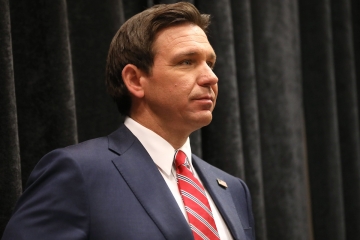
Red-state governors like Ron DeSantis, Brian Kemp, and Greg Abbott deserve credit for taking the political risk to reopen schools quickly during the pandemic, over the objections of officials in Democratic cities. They decided that education was too important to leave to the left. Now the country faces a different wave of school closings, and conservative governors must step up again.

Michael J. Petrilli 7.11.2024
NationalFlypaper

Republican governors need to step up on school closures

Michael J. Petrilli
7.11.2024
Flypaper

Where do teachers unions stand on student discipline?

Daniel Buck
7.11.2024
Flypaper

What’s wrong with boys in school?

Tom Sarrouf, Jr.
7.11.2024
Flypaper

Why are policies that push algebra in eighth grade successful?

Amber M. Northern, Ph.D.
7.11.2024
Flypaper

How does teacher experience impact student absenteeism in early elementary school?

Heena Kuwayama
7.11.2024
Flypaper

Cheers and Jeers: July 11, 2024

The Education Gadfly
7.11.2024
Flypaper

What we're reading this week: July 11, 2024

The Education Gadfly
7.11.2024
Flypaper
view
Teacher upset in classroom

Where do teachers unions stand on student discipline?

Daniel Buck 7.11.2024
Flypaper
view
Upset teen boy in school hallway

What’s wrong with boys in school?

Tom Sarrouf, Jr. 7.11.2024
Flypaper
view
Student doing algebra

Why are policies that push algebra in eighth grade successful?

Amber M. Northern, Ph.D. 7.11.2024
Flypaper
view
Empty table in a kindergarten classroom

How does teacher experience impact student absenteeism in early elementary school?

Heena Kuwayama 7.11.2024
Flypaper

view
Fordham Gadfly image

Cheers and Jeers: July 11, 2024

The Education Gadfly 7.11.2024
Flypaper
view
Fordham Gadfly image

What we're reading this week: July 11, 2024

The Education Gadfly 7.11.2024
Flypaper
view
Ron DeSantis

Republican governors need to step up on school closures

Michael J. Petrilli
7.11.2024
Flypaper

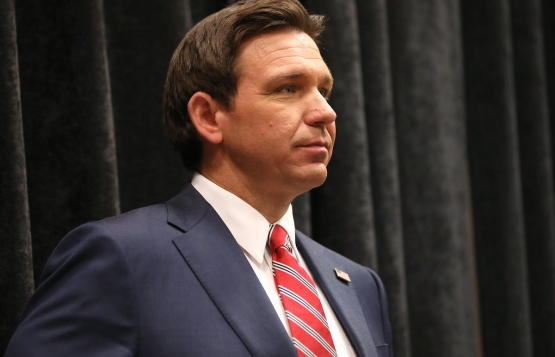
Closing schools during the Covid pandemic was an enormous and tragic mistake. Some red-state governors, including Ron DeSantis of Florida, Brian Kemp of Georgia, and Greg Abbott of Texas, deserve credit for taking the political risk to reopen schools quickly, over the objections of officials in Democratic cities. These conservative governors could have leaned on the conservative principle of local control and let each community do its own thing—with disastrous results. Instead, they decided that education was too important to leave to the left.

Now the country faces a different wave of school closings, and conservative governors must step up again.

Driving that trend is the collapse of America’s birthrate since the 2008–09 financial crisis. The number of babies born every year is down 14 percent, from 4.3 million in 2007 to a three-decade low of 3.7 million in 2022. Demographers don’t all agree on what’s causing this baby bust, but they don’t expect a baby boom anytime soon.

So now many places have too few students for the schools, thousands of which will have to be permanently closed in coming years. Postponing the inevitable only makes the process more expensive by wasting scarce tax dollars on half-empty buildings and unneeded principals, gym teachers and attendance clerks.

Whereas leaders on the left were eager to close schools during the pandemic, they are allergic to doing so now. Teachers unions worry that their members will lose jobs, and the social-justice crowd fears that minorities will be disproportionately affected by closings.

But there’s no way to avoid them. Schools have been adding teachers and other staff for decades, even more so when Covid relief dollars poured in. That’s no longer sustainable, and it will be impossible not to close lots of schools in heavily Black and Hispanic neighborhoods, given demographic shifts. Many parents have already voted with their feet, either through school-choice programs or by leaving cities altogether.

Officials should meet this challenge head on, using data to identify schools with a history of lackluster academic achievement and putting them on the chopping block. The best outcome is for affected students to end up in better schools than they attend now. They should get priority for enrollment at high-performance campuses nearby, including charter and private schools.

But how likely is it that superintendents and school boards in the cities and inner-ring suburbs, where most of the underenrolled schools are, will follow this advice? We can get an idea by looking at communities such as Houston, Chicago, Denver, and Columbus, Ohio, which face the greatest declines in student enrollment and the largest budget crises as a result.

Unions are pushing districts to delay school closings while attacking charter schools for taking “their” students. Progressives are asking school boards to promise not to close schools in minority neighborhoods. Some “equity” hawks even want to make it illegal to consider the quality of schools and their students’ education when making closing decisions, on the theory that this has a disparate impact on minorities.

Some of these blue districts are in states with conservative governors. They may be tempted to avoid this political mess, but if they show leadership and get involved, as they did during Covid, they can improve the school-closing process. Gutsy state leaders could work with legislators to enact laws that force districts to close schools promptly. They could require that a school’s educational performance be a major consideration. They can press for choice policies that help students move from bad schools to good ones. They could have their appointees help local districts get the process right so students end up in stronger schools.

The alternative is to let left-wing officials mess it up, as they did during Covid. That’s too high a price for students to pay, particularly those the school system is already cheating.

Editor’s note: This was first published by The Wall Street Journal.

view
Teacher upset in classroom

Where do teachers unions stand on student discipline?

Daniel Buck
7.11.2024
Flypaper

Long after Covid-inspired shutdowns, schools remain chaotic according to recent surveys and umpteen stories of hallway brawls, bus fights, and general mayhem. Teachers have told me it’s a crisis, that we’re accepting as normal in schools behavior that would warrant public outcry or arrest outside their walls. It’s no wonder analyses in recent years have found that stress and behavior topped pay as the primary reasons that teachers were considering leaving, and that they prefer stricter discipline policies.

With disorderly school environments that are at times actively hostile towards the wellbeing of both students and staff, I have a simple question: Where are the unions?

The answer: Nowhere to be seen.

For reasons that I struggle to comprehend, the national teachers unions have fully embraced the weakest approaches to school discipline, the kind that entail few or no consequences for misbehavior. AFT President Randi Weingarten has written against consequences, going so far as to praise the Los Angeles Unified School District for banning suspensions of students who defy their teachers. Of course, another way to describe a prohibition on punishment for defiance is to say that LAUSD has told children that they do not actually need to listen to or respect the adults in the building. Meanwhile, the NEA has published extensive guides and resource lists advising schools to replace punitive discipline with restorative practices.

The NEA also held its annual conference last week, where president Becky Pringle gave a speech that whined about Donald Trump, demanded equitable funding, genuflected before various progressive causes, complained about parents who take umbrage over sexually explicit books in public school libraries, and praised the Portland teacher strike, which included property damage, vandalism, and the publication on the internet of the addresses and contact information of various board members as a pressure campaign for higher wages.

No mention was made of student behavior or learning loss or much of anything else that goes on in classrooms really. Ironically, she spoke about the “joy of teaching” and “educator respect” while glossing over the very issue that most saps the joy from teaching. And if the NEA does end up discussing discipline policies, as Pringle has suggested it might, it will almost certainly do so counterproductively. They have consistently denigrated discipline in the past.

One of the foremost reasons for even having unions in the first place is for them to defend the interests of their members. Given that surveys—even those that unions themselves carry out—consistently find that student behavior is a primary reason that educators list as they consider leaving the profession, the unions ought to be a leading voice of sanity on this issue. Unfortunately, I doubt any discussion of our behavioral debacle is coming. So far as I can tell, two threads have resulted in this abdication of duty.

First, there’s a reaction against the popularity of zero-tolerance policies in the 1990s and early 2000s. Weingarten herself confesses her former support of these (supposedly) anachronistic policies. They’re the bugaboo that justifies an overcorrection. I’ll concede that the no-excuses trend went too far—handing out demerits for glancing at the clock—but the reaction has advanced to an opposite and equally incorrect extreme.

Second, a concern for equity and racial injustice has led administrators, policymakers, and activists to embrace the excesses of the DEI-social-justice bandwagon and thereby sluff off any remaining commitment to sanity. The NEA has published numerous guides and resource pages that make copious mention of the so-called school-to-prison pipeline—a laudable concern, but acknowledging disparities is not itself a justification for any policy.

Indeed, solutions popular with unions may only worsen the problem. When schools abolish suspensions for defiance or move from punitive to restorative practices, they create the kinds of chaotic, ungovernable schools that create lasting disparities between them and students educated in more orderly classrooms. Numerous studies confirm that misbehaving students are detrimental to the learning of their peers, and so by refusing to hold students accountable for their actions, restorative justice advocates construct a whole new school-to-prison pipeline. What good does it do Johnny if we keep him from suspensions or expulsions, but his school is full of fights, clamor, and disorder?

Regardless of the reason, I’m waiting for unions to step up and defend teachers. Leading unions have bucked progressive excesses for the good of teachers and children before. For example, in 1967, the UFT went on strike to win teachers more power to manage unruly students in their classroom. More recently, the AFT published a controversial smackdown of the Howard Zinn–ification of American social studies. These unions went on strike over sensible policies and have taken stances to check the progressives in their ranks. They should do so again. If anyone has the proper incentives to pick this fight and the resources at their disposal to pressure real improvements, it’s them. If they don’t, they’ll continue to cede this issue to their opponents. Already, Republicans have overtaken Democrats as the trusted party on education according to polls.

And indeed, there are efforts to support teachers, but it’s from the right—the side that’s usually associated with antagonism to educators. Most recently, Louisiana State Superintendent Cade Brumley released his “Let Teachers Teach” set of policy recommendations with an entire section dedicated to student discipline. These include removing discipline rates from school accountability systems so that administrators can maintain order without taking a hit in the state accountability system, empowering principals and school leaders to remove disruptive students from the classroom, and no longer asking teachers to play-act mental health professionals. Other conservative-led localities and states such as Oklahoma, Florida, and Houston have done likewise.

Albert Shanker infamously (if apocryphally) once quipped that, “When schoolchildren start paying union dues, that’s when I’ll start representing the interests of school children.” Now there’s a convincing case to be made that they don’t even represent teachers anymore. If their membership continues to plummet, they’ll have only themselves to blame.

view
Upset teen boy in school hallway

What’s wrong with boys in school?

Tom Sarrouf, Jr.
7.11.2024
Flypaper

In my final college semester, I had the privilege of being a full-time student teacher at a Catholic middle school, teaching seventh and eigth grade history and theology. It was the highlight of my life. The students were curious, polite, and thoughtful, caring to one another and welcoming to me. The boys in particular took a liking to me, and staying after school for sports club and playing recess football with them was a blast. But in the classroom, nearly all of the top students were girls.

My experience is not merely anecdotal but part of larger educational trends. Boys are not faring as well as girls in school. Women outperform men in school in terms of school readiness in kindergarten, GPA, and increasingly in college enrollment and degree attainment. According to Richard Reeves, of the top 10 percent of students, two-thirds of them are girls. On the flip side, boys comprise nearly two-thirds of the bottom 10 percent of students. Though boys outperform girls overall on standardized tests such as the SAT and ACT, girls perform better on the written and verbal portions of the exams while boys outperform on STEM subjects.

Not only from a grades standpoint but also a disciplinary standpoint, boys are not faring as well. Boys are roughly 2.5 times more likely to be suspended or expelled from school than girls; of all expulsions from public school in the 2017–18 school year (the last year the National Center for Education Statistics has available data), 72 percent of all expulsions and 70 percent of suspensions were of boys.

Why do these disparities matter?

Men who lag behind in school are less likely to graduate high school than girls. More high school dropouts means more crime, more suicides (even after controlling for gender disparities in the suicide rate), greater poverty, and greater unemployment. Rather than producing productive, well-adjusted citizens, high-school dropouts threaten the social fabric and increase stresses on the tax base.

At a cultural level, marriage suffers. Charles Murray showed in Coming Apart that people in “Fishtown” who were non-college-educated were much more likely than the college-educated “Belmont” sample to never marry, be divorced, and have children living with a single parent, and less likely to report a “very happy” marriage. Those in “Belmont” suffered very little of these negative effects, and the single-motherhood rate for highly educated women was very low. We should try to arrest the deterioration of life outcomes for the lower and working classes that comprise the demographics of “Fishtown,” but absent that mighty task, reversing the decline in male college attendance is an important priority for helping build strong families with the necessary elements for success and stability. To do this, we must start earlier.

What drives these disparities?

It should be stated at the outset that no one intends these outcomes. America’s schools today intend to provide an equal playing field and give equal treatment to boys and girls. However, attempting to create a completely equal environment can lead to unequal outcomes because boys and girls react differently to the same sets of policies, and exhibit generally different behavior. For instance, if boys and men are more aggressive, competitive, and prone to antisocial behaviors (the vast disparities in the prison population show that this is true at the extreme), then it makes sense that they would be more likely to be suspended or expelled from school, given a “zero-tolerance” policy regarding playground fights.

But are there policies that give girls a natural advantage in reading or social studies? As recently as 2023, a study by Emil Smith and David Reimer showed that girls spend more time reading outside of school than boys; starting in fourth grade, girls read 100,000 more words than boys, which adds up over time. However, Mike Petrilli has shown that this gap does not emerge sui generis in fourth grade, but develops roughly from parity starting in kindergarten and is driven by teacher perceptions of literacy ability being skewed by gender. Without anyone intending it, there are policies that affect this outcome, specifically in curricular decisions about reading: Schools overwhelmingly assign fiction books.

There is research on reading interest in school-age children that explains the problem of over-assigning fiction. A 2021 study by Chantal Lepper, Justine Stang, and Nele McElvany showed that girls were more interested in fiction than boys, and boys were more interested in non-fiction books than fiction (though both boys and girls were equally interested in non-fiction). Boys were more interested in war, comedy, sports, and science fiction and more excited about informational texts, whereas girls preferred narrative books and romantic stories. According to Deloitte, boys are also far less likely to read books by female authors or with female protagonists, but girls were willing to read books written by men and with male protagonists. Lepper, Stang, and McElveny’s findings showed the same pattern, and actually showed that girls had a higher interest in books with male protagonists than boys!

As for what is being read in schools today, it is overwhelmingly fiction. I used Renaissance’s What Kids are Reading: 2024 Report, which shows the top books for grades K–12 in every state, to analyze what is being read, looking at the breakdown between fiction and non-fiction works in the top ten for grades 5–12 in each state. Overwhelmingly, there was little to no non-fiction on offer. Only two grades in the entire country had five non-fiction books in the top ten. Six grades had four non-fiction books, seven grades had three, thirty-five had two, and ninety had one non-fiction book; 213 grades had only fiction in the top ten.[1] Of the non-fiction books, it was overwhelmingly memoirs, featuring a narrative structure more appealing to girls.

What can be done?

There is much to be said about possible interventions: the importance of recess, the need for more male teachers, and more hands-on activities such as labs—or even resurrecting shop classes. Petrilli’s research—in addition to pointing out the need for more male educators—suggested that teacher bias in literacy expectations drove disparities in literacy. But perhaps the bias in teacher perception is driven by real behaviors rather than the “good girls” stereotype, which is itself driven by student interest and effort because of selected reading materials. From my own experience, the boys did fine, but the girls in general were more engaged learners. More systematic research is needed on what drives teacher perceptions.

I propose a rebalancing of reading material in schools specifically targeted at boys. This is tricky, in part because English classes seek to introduce and immerse students in a literary canon. Everyone reading the same core texts gives stronger cohesion in terms of shared language, ideas, and referents. That said, improving male performance in the classroom is an important goal, and making appeals to boys in terms of reading material is a necessary means to do so.

History and science classes offer the most potential for introducing non-fiction books into the curriculum. If students love and can learn from the musical Hamilton, why not learn from reading Ron Chernow’s Hamilton? Similarly, books like Harry Jaffa’s Crisis of the House Divided lays out detailed arguments on each side of the “Lincoln-Douglas debates,” offering a potential launchpad for reworking those debates in the modern classroom. The Barnes & Noble science section offers a wide array of contemporary reads interesting to most boys. In English classes, making appeals to books with male protagonists would be worthwhile for helping engage male reading interest.[2]

After my first publication of this article at the Institute for Family Studies, Katya Sedgwick replied in The American Mind suggesting that history and science are subjects already covering non-fiction, instead arguing for the recovery of literary classics, poetry, and fantasy tales. Classic literature, which features many male protagonists, also gives romantic themes (such as that of Tom Sawyer and Becky Thatcher in Mark Twain’s classic The Adventures of Tom Sawyer) that appeal to women and reveal important teachings regarding gender roles. Rather than classics, modern literature with female leads promotes confusing “girl-boss” mantras, which kills romantic stories and inspires more radical political action—and in which most boys have no interest because it has nothing to say to them other than “step aside; the future is female.”

I strongly agree with her critiques and suggestions for the cultural and formative reasons she mentions, but I will add that more reading of books outside of textbooks—biographies, period histories, political histories, works of political philosophy—would be beneficial additions to science and history curricula. English should be left for poetry, fantasy, and the classics: Homer, Virgil, Beowulf, Arthur, Chaucer, Shakespeare, and the like.

“Equality” in schools can only go so far. Improving outcomes for boys means utilizing interventions that appeal to boys as boys. For teachers and librarians, preparations for next year can be as simple as restocking libraries with books that boys want to read. For administrators, moving towards subjects, disciplines, and skills that appeal to boys should be introduced back into the curriculum in future years, and recruiting and retaining more male teachers is an important and tangible goal. More generally in our culture, “letting boys be boys” must become a cri de couer for raising our future generation of boys into the successful men that we need. 

Editor’s note: An earlier version of this was first published by the Institute for Family Studies.


[1] Taken together, a total of 215 books were in the top ten in my sample, out of a total of 3,530 books (for these calculations, I excluded grade levels in states where no data were available), which means that only 6.1 percent of the books sampled were non-fiction. If we want to know why boys are reading less than girls, this would be it: We aren’t appealing to their interests.

[2] As an aside, The Common Core State Standards call for a rebalancing of reading materials on a 70:30 non-fiction to fiction ratio. Any other issues with Common Core aside, the need for rebalancing on informational texts is a welcome development.

view
Student doing algebra

Why are policies that push algebra in eighth grade successful?

Amber M. Northern, Ph.D.
7.11.2024
Flypaper

Between 1990 and 2013, the share of students nationally who enrolled in algebra or a similar advanced math course in eighth grade more than doubled to 46 percent. Since 2013, however, the trend has reversed, with just 36 percent of eighth graders enrolled in algebra as of 2022. Successful completion of algebra or related math courses in grade eight can put students on track for calculus and more in high school. Some research finds that, without that early boost, subsequent mathematics achievement shrinks. Yet other studies find that broad policies to increase enrollment in early algebra lead to test score declines. Which is it? A recent working paper aims to resolve these conflicting findings.

The research team uses test-score, demographic, course enrollment, and other data from the Oregon Department of Education that include eighth grade students enrolled in any math course during 2014–15 to 2016–17. They had to have seventh grade test scores and attend schools with fifty or more eighth graders. Statewide, around 31 percent of eighth graders took algebra or advanced algebra. Since there isn’t a formal cutoff score on the test that determines whether eighth graders are enrolled in algebra, the researchers take a number of analytical steps to identify one. In a nutshell, they find various discontinuities in enrollment patterns by each school and run multiple simulations to identify those that represent true cutoff points in terms of algebra enrollment (which sets up the analysis for a regression discontinuity design). They end up with forty-nine schools that enroll roughly 5,500 kids, and control for the fact that schools have varied cutoffs. As intended, they show that placement rates into eighth grade algebra increase by more than 40 percentage points at the respective threshold.

Key results reveal significant increases in eighth grade math test scores of 0.12 standard deviations (SD), and smaller increases in eighth grade English language arts test scores of 0.06 SD for students who score above the cutoff. They also find a decrease in absences that equates to nearly one day. All positive.

Then they look into the extent to which teacher and peer exposure account for the impacts. They find that being placed into eighth grade algebra has a significant impact on the education level, experience, and value added of a student’s eighth-grade math teacher. For example, scoring above the threshold results in the value added of a students’ eighth-grade math teacher increasing by 0.09 standard deviations; moreover, such students are significantly more likely to be exposed to a math teacher in the top quartile of value added. However, the same pattern is not seen in ELA, so they conclude that, while teacher characteristics might account for the math test score effects, they are unlikely to account for ELA test score effects.

Moving on to peers, the results show effects on peer test scores in both ELA and math classrooms, such that eighth-grade algebra course enrollment reduces the number of math class peers who have experienced school suspensions and leads students to be exposed to higher-achieving peers in math classrooms. For example, among students scoring above the cutoff, analysts see large increases (0.55 SD) in the mean seventh-grade math score of a student’s eighth-grade math class. The differences in eighth-grade ELA classes are substantially less.

Because the math courses that students take can shape their course schedules more broadly, they also examine the mean achievement of classmates with which focal students share three or more classes. They find that students in eighth-grade algebra courses move through their school day with significantly higher-achieving peers—and that the magnitude of those peer effects is so large that it could account for the majority of eighth-grade algebra’s observed effects on student achievement.

The bottom line is that students who are prepared for eighth grade algebra or related advanced math courses gain immediate benefits from taking those courses, beyond math learning itself. But whether students are ready to take a higher math course is obviously a pivotal decision, and one for which schools have set varying thresholds. In addition, the mechanisms behind the success of the policy—high-quality teachers and high-achieving peers—are fixed commodities in any given school, at least until we approach staffing and acceleration differently. So simply expanding advanced algebra policies won’t do the trick. If only we had a magic wand.

SOURCE: Quentin Brummet et al., “Early Algebra Affects Peer Composition,” Annenberg Institute at Brown University (November 2023).

view
Empty table in a kindergarten classroom

How does teacher experience impact student absenteeism in early elementary school?

Heena Kuwayama
7.11.2024
Flypaper

In the 2022–23 school year, an estimated 26 percent of public school students were chronically absent—a rate almost 10 percentage points higher than pre-pandemic. Though student attendance has rebounded slightly in some states from the Covid-driven absenteeism, it remains a serious issue in schools across the country.

Considering the negative associations between chronic absenteeism and a range of short- and long-term student outcomes (including test scores, graduation rates, and college enrollment), developing a stronger understanding of the factors that impact student attendance is essential. A recent study by researchers from the University of Pennsylvania, North Carolina State University, and Ohio State University contributes to this understanding by investigating the relationship between teacher experience levels and early elementary student attendance.

Using data from the Early Childhood Longitudinal Study, the researchers looked at the reported absenteeism of a nationally representative sample of approximately 18,170 students during their kindergarten (SY 2010-11) through second grade (SY 2012-13) years. (Yes, these data are quite old; more on that below.) The sample included 1,400 “novice” (less than three years of experience) teachers and 16,770 “experienced” (three or more years) teachers.

The authors used regression analysis to determine the relationship between teacher experience and student absenteeism, controlling for several factors, including student and classroom demographics as well as household characteristics. They created child-level fixed effects models to examine within-student variation, or differences in the absenteeism rates of the same students between school years, for students who switched from a novice to experienced teacher (or vice versa). This allowed the researchers to address the possibly of bias being introduced into the results if principals assigned students to novice and experienced teachers in a non-random way (e.g., intentionally assigning more chronically absent students to novice teachers). Each regression was run twice, once with the outcome measure being the number of days missed, and a second time with a binary outcome variable indicating whether a student was chronically absent, accounting for the teacher’s experience level.

Perhaps surprisingly, statistically significant results showed that K–2 students with novice teachers missed fewer days and were less likely to be chronically absent. In addition, the researchers found these effects to be consistent across students with various individual, family, and teacher characteristics, including student English learner status, family poverty level, and teacher race, among others. However, results were stronger for students on the cusp of being considered chronically absent. In addition, to check for robustness, the authors used actual years of experience in place of the “novice versus experienced” distinction as a measure of teacher experience and found that years of experience did not significantly predict student attendance like novice teacher status did.

The authors suggest possible reasons for these outcomes. First, novice teachers may be able to relate better to parents of early elementary students due to a higher likelihood that they are of similar ages. Considering the important role that parents play in early elementary attendance, this ability to build closer connections with parents may facilitate decreases in student absenteeism. Novice teachers may also have received training that focused on newer accountability structures that include indicators like attendance, and on culturally relevant practices that may better engage students.

Despite the inclusion of these possible mechanisms driving the study’s findings, the results remain surprising and should be interpreted with caution. Not only do the findings run counter to the intuitive notion that more experienced teachers are more capable of producing positive outcomes for students, but they also differ from the findings of an earlier study on teacher experience and student absenteeism, creating some grounds for skepticism. In addition, the current study’s data were collected nearly a decade before the pandemic's dramatic impact on student attendance; as such, the insights to be drawn from the study’s results may be less relevant to post-pandemic education.

Nonetheless, the study’s results have important implications for schools hoping to increase attendance rates among early elementary students. First and most importantly, the results suggest that teacher experience itself may not actually impact student attendance rates. However, certain teacher practices or classroom contexts may significantly impact student attendance. Due to the limitations of the data set’s time frame, this relationship should be reanalyzed using more current data to confirm or refute this conclusion. Further research, such as an investigation of the relationship between teacher age and student attendance, or a study focused on the impacts of specific teacher preparation courses or professional development programs attended by teachers on their students’ attendance rates, may also provide important context for the current study’s results and more actionable information for policymakers and school leaders.

SOURCE: Michael Gottfried, Michael Little, and Arya Ansari, “Novice Teachers and Student Attendance in Early Elementary School,” Educational Policy (March 2024).

view
Fordham Gadfly image

Cheers and Jeers: July 11, 2024

The Education Gadfly
7.11.2024
Flypaper

Cheers

  • The Greater Dayton School opened in Ohio to offer an excellent private option for low-income students. —The 74
  • England’s doubling down on knowledge-rich curricula, traditional instruction, and firm but fair discipline is gaining notice abroad. —The Economist

Jeers

  • New York Governor Kathy Hochul signed a bill repealing hard won school reforms, including merit pay and expedited firing processes. —Editorial Board, Wall Street Journal
  • In a disturbing new trend, students are impersonating teachers online and posting graphic, lewd, inappropriate content. —New York Times
  • Opponents of the Science of Reading are wrongly trying to convince people that it doesn’t work for English learners. —Alexander Russo, The Grade
view
Fordham Gadfly image

What we're reading this week: July 11, 2024

The Education Gadfly
7.11.2024
Flypaper
  • With new curriculum, instructional approaches, and staffing models, Houston’s Mike Miles is implementing the most significant overhaul of a public-school system in modern history. —ABC13
  • Open enrollment is one of the most common forms of school choice, yet its impact goes largely unnoticed. —Jude Schwalbach, Education Next
Fordham Logo

© 2026 The Thomas B. Fordham Institute
Privacy Policy
Usage Agreement

National

P.O. Box 110
Burke, VA 22009

202.223.5452

[email protected]

Ohio

P.O. Box 82291
Columbus, OH 43202

614.223.1580

[email protected]

Sponsorship

130 West Second Street, Suite 410
Dayton, Ohio 45402

937.227.3368

[email protected]