Mobile Navigation

  • National
    • Policy
      • High Expectations
      • Quality Choices
      • Personalized Pathways
    • Research
    • Commentary
      • Gadfly Newsletter
      • Flypaper Blog
    • Events
    • Scholars Program
  • Ohio
    • Policy
      • Priorities
      • Media & Testimony
    • Research
    • Commentary
      • Ohio Education Gadfly Biweekly
      • Ohio Gadfly Daily
  • Charter Authorizing
    • Application
    • Sponsored Schools
    • Resources
  • About
    • Mission
    • Board
    • Staff
    • Career
Home
Home
Advancing Educational Excellence

Main Navigation

  • National
  • Ohio
  • Charter Authorizing
  • About

National Menu

  • Topics
    • Accountability & Testing
    • Advanced Education
    • Career & Technical Education
    • Charter Schools
    • Curriculum & Instruction
    • ESSA
    • Evidence-Based Learning
    • Facilities
    • Governance
    • Personalized Learning
    • Private School Choice
    • School Finance
    • Standards
    • Teachers & School Leaders
    • Think Again
  • Research
  • Commentary
    • Gadfly Newsletter
    • Flypaper Blog
    • Gadfly Podcast
  • Events
  • Scholars Program

The Education Gadfly Weekly

Sign Up to Receive Fordham Updates

We'll send you quality research, commentary, analysis, and news on the education issues you care about.
Thank you for signing up!
Please check your email to confirm the subscription.

The Education Gadfly Weekly: An ode to elementary schools

Volume 21, Number 15
4.15.2021
4.15.2021

The Education Gadfly Weekly: An ode to elementary schools

Volume 21, Number 15
view
High Expectations

An ode to elementary schools

If I had to name the most important institution in American life, and the one with the most potential for changing the course of our country, it would be the humble elementary school. Especially the 20,000 or so high-poverty elementary schools in the nation’s cities and inner-ring suburbs, educating millions of kids growing up in poor or working-class families.

Michael J. Petrilli 4.15.2021
NationalFlypaper

An ode to elementary schools

Michael J. Petrilli
4.15.2021
Flypaper

Can teaching be improved by law?

Robert Pondiscio
4.15.2021
Flypaper

Uncle Sam goes soft on state tests

Dale Chu
4.15.2021
Flypaper

Mentors’ effect on middle school attendance

Melissa Gutwein
4.15.2021
Flypaper

The high cost and low performance of online charter schools in California

Julie Fitz
4.15.2021
Flypaper

The Education Gadfly Show: A victory for charter school funding in Oklahoma

4.15.2021
Podcast

Cheers and Jeers: April 15, 2021

The Education Gadfly
4.15.2021
Flypaper

What we're reading this week: April 15, 2021

The Education Gadfly
4.15.2021
Flypaper
view

Can teaching be improved by law?

Robert Pondiscio 4.15.2021
Flypaper
view

Uncle Sam goes soft on state tests

Dale Chu 4.15.2021
Flypaper
view

Mentors’ effect on middle school attendance

Melissa Gutwein 4.15.2021
Flypaper
view

The high cost and low performance of online charter schools in California

Julie Fitz 4.15.2021
Flypaper
view

The Education Gadfly Show: A victory for charter school funding in Oklahoma

Michael J. Petrilli, David Griffith, Ph.D., Amber M. Northern, Ph.D., Chris Brewster 4.15.2021
Podcast
view

Cheers and Jeers: April 15, 2021

The Education Gadfly 4.15.2021
Flypaper
view

What we're reading this week: April 15, 2021

The Education Gadfly 4.15.2021
Flypaper
view

An ode to elementary schools

Michael J. Petrilli
4.15.2021
Flypaper

If I had to name the most important institution in American life, and the one with the most potential for changing the course of our country, it would be the humble elementary school. Especially the 20,000 or so high-poverty elementary schools in the nation’s cities and inner-ring suburbs, educating millions of kids growing up in poor or working-class families.

Yes, of course, we also need to dramatically improve the other parts of our education system if we’re to help all young Americans fulfill their God-given potential. That includes making high-quality pre-K more widely accessible to those who need it most, upping the quality of our middle schools, and rethinking and improving our high schools. Not to mention revamping our post-secondary education system and overhauling our workforce training programs.

Still, if I were king for a day, or even just superintendent of a large district, I would spend at least twenty-three of my twenty-four hours in charge obsessing about elementary schools. And that’s for four big reasons.

First, these schools have the greatest potential impact on kids’ academic, social, and emotional progress. Partly that’s just basic math: Most children spend almost half of their K–12 time in elementary schools, usually six out of thirteen years. And those also happen to be the six years when kids tend to learn the most. To wit, the average student achievement gains during elementary school far outpace those seen before or after.

There’s no doubt that the zero-to-five period is also important, but most of that time is outside the control of any education system, including preschools. And no matter how great a preschool is, there’s only so much a three- or four-year-old can learn. There’s a reason that few tiny tots are doing fractions. Most young brains just aren’t ready for it. And sadly, we simply don’t see much progress in student achievement once students get to middle school and especially high school. That’s not to say that kids cannot learn more at those upper levels; more on that in a bit. But the potential is just not as great as it is for elementary schools.

The second reason to focus on elementary schools is that that’s where we have the best research evidence about what works.

This is most clearly the case when it comes to reading, where we have decades of settled science that systemically teaching students phonics and phonemic awareness is an essential step in early literacy development. We are also building a strong evidence base that content knowledge, in subjects like history, science, geography, and the arts, allows children to develop strong reading comprehension abilities.

But it’s not just in reading. In math, too, we now understand the importance of mastering basic math facts to automaticity, as well as the imperative of developing computational, conceptual, and problem-solving skills as students progress through the elementary grades.

And of course, elementary school is where we set a strong foundation for children’s social and emotional development, helping them develop a healthy attachment to schools, communities, their teachers, and peers—or not.

Again, that’s not to say we know nothing about evidence-based practices in preschool or in middle and high school. But that research base is thinner. The Acceleration Imperative—the crowd-sourced, evidenced-based recovery plan for elementary schools that Fordham recently helped to birth—is more than 120 pages long. It’s hard to imagine filling even half as many pages with solid evidence for middle or high schools.

The third reason to obsess about elementary schools is because of the broad consensus we enjoy in this country when it comes to these institutions, a consensus that’s missing when it comes to high school. As kids approach adulthood, we have to face difficult questions about what they should learn and how they should spend their time, depending on what they might want to do after graduation. Do we really need everyone to take a traditional college prep course of study? When should kids be able to start doing something more career and technically oriented? What about kids who are not likely to go to post-secondary education at all?

These are difficult questions with no easy answers. But not so at the elementary level. Almost everyone would agree that it’s critical for kids to learn to read, write, and do arithmetic at that age, plus get a basic grounding in the nation’s history and its civics institutions, as well as an introduction to science, music, and the arts. Of course there will be some parents who want something outside of the norm. But as we learned when we surveyed parents many years ago about their educational preferences, the vast majority just want a quality school for their kids that teaches them the basics.

Fourth and finally, if we could dramatically improve our elementary schools, it would transform our middle schools and high schools. That’s because the greatest challenges in secondary education relate to the problems of children entering not ready for the material that is presented there. It’s hard to build a sturdy secondary education on the wobbly foundation of an inadequate elementary education.

As I’ve been arguing in the context of making the case for an extra year of elementary school for most kids, even our very best elementary schools don’t get all of their students to grade level by the end of the fifth grade. Few even come close. Which is why most middle schools have to cope with kids coming in two or three grade levels behind. Marc Tucker reports that this just doesn’t happen in other put-together countries, and I have little reason to believe that he is wrong. Imagine what it would mean if it didn’t happen here either.

—

So that’s the case for focusing on elementary schools. What would that actually look like? We can return to our model recovery plan for many of the answers, which in reality is as much a vision for a high-performing elementary school as a blueprint for helping kids recover from the pandemic.

The steps aren’t easy but they are pretty obvious. It starts with the adoption of a high-quality curriculum, one that has received all greens from EdReports.org or been favorably vetted by the What Works Clearinghouse. That’s because high-quality instructional materials are the bridge between our aspirational standards and daily classroom practice. That’s a bridge too far for individual teachers to build themselves.

But as my colleague Robert Pondiscio argued recently, a great curriculum can’t teach itself. So the next step is to invest in steady, high-quality professional learning opportunities for teachers tied directly to the curriculum. Here, too, there is an organization available to vet providers: Rivet Education. And given the avalanche of federal cash coming to schools, there’s no excuse for them not to invest some serious resources into both the implementation of high-quality instructional materials and the improvement of teacher practice.

Next up is getting the school culture right. It’s hard to do without a great principal, but there are resources available to help here, too, including excellent surveys from Johns Hopkins and the University of Chicago that can help leaders gauge whether their culture is where it needs to be, especially as it pertains to setting and communicating high expectations for all students.

Put these pieces together in a coherent way, with vigorous leadership and inspired teachers, and the results for kids can be transformative. Just ask the high-performing, high-poverty charter schools that can be found in almost every large American city, and which embody these practices and are helping their students make dramatically more academic progress every year than their less effective counterparts.

—

At a time when there’s a lot of discussion in this country about infrastructure, both physical and human, let’s make sure we pay enough attention to the institutions that are most critical to America’s future. And that’s the 20,000 high-poverty elementary schools that can make or break a child’s opportunity to fulfill their potential—and might make or break our hopes of rebooting the American Dream, as well.


view

Can teaching be improved by law?

Robert Pondiscio
4.15.2021
Flypaper

If there’s one lesson education policymakers might have learned in the last twenty-five years, it’s that it’s not hard to make schools and districts do something, but it’s extremely hard to make them do it well. There has always been at least a tacit assumption among policy wonks that schools and teachers are sitting on vast reserves of untapped potential that must either to be set free from bureaucratic constraints or shaken out of its complacency. Those of us who have spent lots of time in classrooms watching teachers trying their best and failing (or trying hard and failing ourselves) often find those assumptions curious. Compliance is easy. It’s competence that’s the rub.

Last week, North Carolina’s Democratic governor signed into law a bill that mandates, among other things, that schools in the state use a phonics-based approach to reading instruction. Dubbed the “Excellent Public Schools Act,” the law, which enjoyed strong bipartisan support, requires teachers to be trained in the “science of reading” and to base their reading instruction on it. Despite my inherent skepticism that policy alone can move classroom practice in the right direction, I’m having a hard time finding fault with what North Carolina has done.

I’m generally not keen to impose my preferred flavors of curriculum and instruction on schools, despite some well-defined opinions on such matters. But if there’s an exception, it’s early childhood literacy with curriculum and instruction grounded in the science of reading. The foundational role of proficient decoding and comprehension in academic success suggests that, while it might make sense to let a thousand flowers bloom in curriculum, instruction, and school models—vive la différence!—we have no more important shared task than getting kids to the starting line of basic literacy from the first days of school. So if I have any lingering technocratic impulses left, they’re limited to early childhood literacy and the “science of reading.” But the open question is whether literacy laws—from mandating phonics to third grade retention policies—can have a beneficial effect on classroom practice.

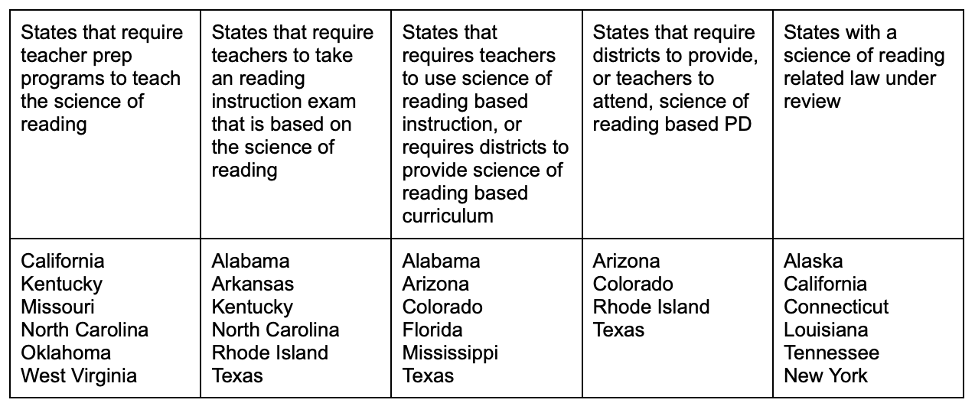
The kinds of measure that North Carolina has adopted are becoming increasingly common. My Fordham colleague Melissa Gutwein has identified at least twenty states (see Table 1) that have passed or are considering measures related to the science of reading. Some, like the new North Carolina law, require teachers to use instruction grounded in the science of reading, or require districts to use science-of-reading-based curricula. Others require teacher prep programs to teach the science of reading. The National Council on Teacher Quality recently reported that more than half of the elementary teacher prep programs it monitors and evaluates now embrace reading science, up from 35 percent just seven years ago. It’s taken at least a half century of advocacy against stiff resistance from the education establishment, the progressive left, and others, but without question, the “science of reading” is on the march, including through statehouses.

Table 1. States that have passed or are considering measures related to the science of reading

1

Still, not every literacy expert is convinced that we can legislate our way to reading proficiency. Among the skeptics is Tim Shanahan, the highly regarded emeritus professor at the University of Illinois at Chicago, who once was in charge of reading for the Chicago Public Schools. He notes that “there are only three things that improve reading achievement,” as far as he can tell: increasing the amount of productive reading instruction provided, ensuring that key elements of curriculum (phonemic awareness, phonies, fluency, etc.) are taught sufficiently, and improving the quality of instruction. “There are a handful of buttons that can be pushed policy-wise to try to get those three things to happen,” Shanahan tells me via email. But states that have adopted third grade retention policies and other literacy-focused measures have seen no improvement in reading achievement.

The current wave of “science of reading” laws is reminiscent of states that emulated Florida’s policy, nearly twenty years ago, to retain kids in third grade who weren’t reading proficiently. “Florida mandated that kids get taught what would today be referred to as the elements of the ‘science of reading,’” Shanahan points out. If your theory of change was that third grade retention policies would prompt schools and districts to provide more effective learning supports for teachers and students, that mostly hasn’t happened. States that jumped on the third grade retention bandwagon “adopted the retention part of the policy, but left out the curriculum, professional development, leadership guidance, etc. that had bolstered achievement in Florida,” he explains.

Yesterday it was Florida, today it’s Mississippi that is the apple of various state lawmakers’ eyes. But here, too, Shanahan notes the state has been chipping away at its low literacy levels for years, using federal, state, and private funding to ensure that Mississippi teachers were addressing the problems effectively.

Kymyona Burk echoes many of Shanahan’s points about effective literacy instruction and interventions, but is more sanguine about the role of state policy. And she had a front-row seat as Mississippi transformed itself into the literacy “it” state and one of the only bright spots in NAEP in recent years. Burk was the state literacy director at the Mississippi Department of Education, where she led the implementation of its heralded Literacy-Based Promotion Act. She now advises states on their literacy practices as Policy Director for Early Education at ExcelinEd, where she advocates for a comprehensive K–3 reading policy that “establishes supports and intensive reading interventions” in early elementary school to ensure grade-level reading by third grade. That playbook includes science of reading training for teachers, ongoing professional learning and literacy coaching, and strong assessment and parent notification provisions.

Burk, who is working with a network of sixteen states in her current role, gives the North Carolina law high marks for adhering to most of the “fundamental principles” that ExcelInEd sees as critical to effective K–3 reading policy. “The only component I did not see in their legislation deals with literacy coaches,” she tells me. According to Burk, “deploying boots on the ground” was a key component of the state’s success. “Once the teachers go to their training, and they’re back in the classrooms with their own students, who is there to really assist them in transferring what they learned that from the theory to practice?” she explains. Coaches, particularly in the lowest-performing schools, have been essential to Mississippi’s results.

Mississippi, not incidentally, was very much on the minds of North Carolina legislators in passing the Excellent Public Schools Act, according to Terry Stoops, who directs the Center for Effective Education at Raleigh’s John Locke Foundation. “There was some mounting pressure on legislators to try to replicate what Mississippi is doing,” he says. Lawmakers were “thinking that if Mississippi can move the needle on literacy instruction and literacy proficiency, then why can’t North Carolina? There’s an interesting state by state competitiveness going on.” That impulse, too, can only help efforts to improve reading outcomes.

Laws are a blunt instrument and not likely to improve classroom practice from afar. But for now, I choose to be guardedly optimistic that there is a productive role for policymakers, if not in mandating specific curricula, training, and support, then at least in establishing something of a market-making expectation that what schools do in the early grades must be grounded in the “science of reading,” and that every other impulse and interest—from ed schools to professional learning organizations to curriculum developers and publishers—should be singing from that same hymnal. Policymakers can build and sustain the conditions necessary, most particularly patience, for sound early reading practice to put down deeper roots and become the default setting in public education. Skepticism remains a virtue. But if the last few years’ worth of momentum leads to a broad and well-informed consensus about what effective reading instruction looks like—and builds the political will to stick with it for the long haul—it might yet be a winning formula.

With reporting by Melissa Gutwein.

view

Uncle Sam goes soft on state tests

Dale Chu
4.15.2021
Flypaper

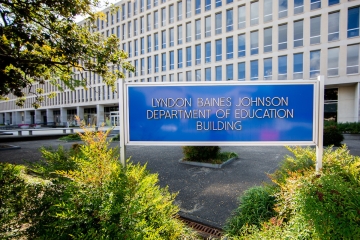
Things are getting messy in the world of assessment. What started off as a well-intentioned offer from the federal government to afford greater flexibility to states in light of the pandemic while still requiring state tests to go forward this year—a hard line that some testing advocates celebrated, albeit prematurely in hindsight—has quickly morphed into complaints that the waiver process lacks transparency and will allow states to back away from the equity guardrails provided by statewide exams. To wit, the U.S. Department of Education raised eyebrows late last month by approving Colorado’s compromise plan to pare down the amount of standardized testing by 50 percent. That decision raised questions as to where the department would ultimately draw the line, an issue I began exploring in my last post. But the feds really stepped in it last week when they green-lighted D.C.’s request to forego federal testing requirements altogether.

Indeed, the D.C. decision was a puzzling one. This is a district of 50,000 students that spends a whopping $30,000 annually per pupil. The city’s charter sector accounts for an additional 44,000 students, for a total enrollment approaching 95,000. By giving D.C. and its charters a free pass, Uncle Sam surrendered access to an invaluable external check on what taxpayers have been paying for and revealed a willingness, contrary to official statements, to release certain jurisdictions from the annual testing required under federal law. What’s more, the feds inexplicably opened themselves up to attack from both testing supporters and skeptics alike in the process. The department should have insisted that testing in the nation’s capital be postponed to the fall rather than cancelled outright. In fact, D.C.’s neighbors to the north in Maryland and Pennsylvania are planning on doing just that.

—

Stepping back for a moment, the feds have been responding to the dozen or so states vying for assessment waivers in one of three ways: approval, denial, or “waiver not required at this time.” While education media outlets have been understandably focused on the first two actions, there’s a lot happening below the radar in states that are being told a waiver isn’t necessary. By my lights, the distinction between being approved and being told not to seek a waiver is one without a difference. Consider what’s happening in three states that fall into this gray category: California, New Mexico, and New Jersey. What shines through is that there is no obvious rationale for how the feds are pronouncing judgment.

Moving west to east, California is ground zero for the increased confusion and head scratching—where what happens between now and the end of July, the closing of the state’s extended testing window, is about as clear as mud. Things started going off the rails a couple of weeks ago when the California press reported that the state had received the thumbs up to use local assessments in lieu of statewide exams. The U.S. Department of Education quickly refuted the article’s veracity in a back-and-forth exchange with national reporters that suggested a sort of palace intrigue between state and federal officials. After the initial smoke cleared, a new level of semantic hellscape came into view: As long as California continues to “provide” statewide tests, local districts can select alternatives if the tests are not “viable” to administer. Talk about a crack big enough to a drive a school bus through! How will state officials, with north of six million students and over a thousand districts, figure out—in an incredibly short period of time—who qualifies for exceptions to the state’s summative exams?

As perplexing as California’s plight may be, New Mexico is in a similar boat. The state’s education agency initially wanted to skip state testing entirely, but then shifted to a convoluted plan to sample 1 percent of all students. New Mexico has since backed off this approach, too, and is now asking schools to administer state exams to the “greatest extent possible.” How are districts responding to the mixed messages? If Albuquerque Public Schools—New Mexico’s largest district with 89,000 students—is any indication, reformers should be worried. Last week, the district sent out an online survey telling parents that the state test would not be made available to everyone:

The assessment will be offered to a limited number of participants. It will be randomly selected whether your student will take the ELA or mathematics portion. While there will be no individual student reports available, participation will play a vital part in the norming of the test for years to come… Testing dates will be April 26–May 7, 2021… There will be no district provided transportation to the test center site.

Concerns about lower student participation rates on state exams this spring are problematic enough without states taking proactive action to depress turnout even further. It’s disappointing that the feds have ostensibly turned a blind eye to this type of egregious behavior.

Finally, last week’s approval of New Jersey’s plan to use a newly developed diagnostic tool, called “Start Strong,” instead of the state assessments, barely registered above the din in D.C. But the decision was a pleasant surprise to the state’s teachers union, among other groups, that celebrated their second consecutive bye from state testing. With a wink and a nod, the feds lent its imprimatur to a forty-five to sixty minute “dipstick” administered in the fall as a substitute for the full battery of state exams, even though state officials have gone on record saying that Start Strong is not designed to replace statewide testing.

Having been given an inch, some states and districts across the country are evidently in the process of taking a mile. What’s become clear through this waiver process is that there is little rhyme or reason to how the department is rendering its verdicts. Their regrettable inconsistency means there won’t be any good national data to be had from this calamity, and whether states will have usable data of their own is up in the air, too. It’s all a significant blow to results-based accountability, flying in the face of the civil rights protections enshrined in federal law. The uneven patchwork now before us was an avoidable if not altogether unsurprising outcome.

view

Mentors’ effect on middle school attendance

Melissa Gutwein
4.15.2021
Flypaper

More than a year into the Covid-19 pandemic, lost instructional time is top of mind for anyone connected to education. Student absenteeism has only become a more pressing challenge, with school administrators driving across town looking for missing students and districts struggling to keep their most marginalized pupils online and engaged.

Indeed, even prior to the pandemic, regular attendance was a challenge for many students. Those living in poverty or with disabilities are more likely to miss school than their wealthier peers without disabilities, and absenteeism generally harms academic performance. In Chicago, for example, it was particularly bad: At least 20 percent of students missed more than three weeks of school in the 2017–18 academic year

A recent NBER working paper explores how a mentoring program in the city called Check & Connect affected absenteeism and academic outcomes. Check & Connect is an intervention developed by the University of Minnesota and recommended by the U.S. Department of Education’s What Works Clearinghouse as a way to improve school attendance. The program pairs individual students and their families with a mentor who establishes a personal connection, has regular check-ins, and works to keep students and families engaged in the learning process.

The authors partnered with Chicago Public Schools to randomly assign first through eighth grade students from the south and west sides of the city with a Check & Connect adult mentor. The project included two trials, one conducted during the 2011–12 and 2012–13 school years, and another during the 2013–14 and 2014–15 school years. The original cohort included 487 students across twenty-three schools, and the second cohort included 348 students across nine of the original twenty-three. Students were eligible for the program if they had missed between ten and thirty-five days of school in the previous year, and were otherwise randomly selected.

Overall, the program yielded modest positive results for fifth through seventh graders. These students attended an average of 4.2 additional school days compared to peers who did not participate. There is some indication that the program becomes more effective in the second year, after mentors have formed relationships with their students, but this finding could also have been due to random chance. The program did not impact attendance rates for first through fourth graders, nor did it affect test scores or GPAs.

The fact that this program worked for older students but not younger ones is not especially surprising. Middle schoolers have more autonomy over whether they attend school than do elementary peers, and they are more willing and able to form meaningful relationships with non-familial adults. Though it is unfortunate that the program did not produce short-term academic gains, it was not designed to boost these outcomes.

Check & Connect costs approximately $1,700 per student, which divides out to about $400 per additional day of attendance for fifth through seventh graders. This is relatively expensive compared to another intervention tested in Chicago, the Chicago Attendance Project, which mailed families information regarding their child’s attendance. The project increased attendance by only about one day, but added a daily cost of only $6–$11. Still, even though Check & Connect students didn’t see immediate academic gains, it is quite likely that they received more benefit on a personal level from having a mentor than from their families receiving a mailer.

As districts across the country consider and plan wide-scale, high-dosage tutoring programs, tutors will ideally serve as natural mentors to their students. While making up for learning loss matters, so too does reestablishing deep connections within school communities. Tutors have the potential to boost academic success alongside regular attendance and meaningful engagement, and should be encouraged to form deep relationships and support their students in a holistic way.

SOURCE: Jonathan Guryan, Sandra Christenson, Ashley Cureton, Ijun Lai, Jens Ludwig, Catherine Schwarz, Emma Shirey, Mary Clair Turner, “The effect of mentoring on school attendance and academic outcomes: Randomized evaluation of the check and connect program,” (NBER Working Paper Series, Working Paper 27661, 2020).

view

The high cost and low performance of online charter schools in California

Julie Fitz
4.15.2021
Flypaper

Full-time virtual charter schools received a great deal of attention as schools scrambled to transition classes online back in the Spring of 2020, and have experienced booming enrollments over the past year. Though many have viewed online charters as a great option for families looking for a safe, consistent schooling environment during the pandemic, others have raised concerns about the checkered history of the sector, including financial scandals, allegations of illegal enrollment inflation (for instance, claiming funding for non-existent and even deceased students), and bizarre employment practices, including outsourcing grading to different countries.

Back in 2019, California even went so far as to place a two-year moratorium on new non-classroom-based charter schools—the state’s term for schools in which more than 20 percent of student learning happens outside of a classroom—so that leaders could develop legislation to appropriately regulate both virtual charters and similarly categorized homeschool and independent-study charters. With the moratorium expiring at the end of this calendar year, In the Public Interest, a left-wing, union-funded think tank, engaged a team of researchers to evaluate academic outcomes for the students who attend these schools and the funding issues that California might address.

The report’s findings on achievement are unsurprising: Students aren’t learning much in California’s non-classroom-based schools. Their analysis shows that students from every demographic group perform worse in online charter schools than students enrolled in any public schools, despite the fact that virtual schools enroll fewer English learners and low-income students. Taken as a collective, virtual schools would rank “in the 33rd percentile of all California schools,” and if one looks specifically at math, their ranking drops to the 12th percentile. These findings align with a growing body of research across many different states, including a 2014 Fordham study on the state of virtual schools in Ohio.

While this portion of their analysis adds nothing particularly original (and, indeed, lacks some of the more rigorous controls for student mobility, demographic characteristics, and previous achievement that can be found in other studies), the value of this report lies in its attempt to account for such poor achievement by scrutinizing the curricular materials used in these online schools. Contrary to companies’ claims that their curriculum is research-based or promises proven results, few products have actually been subject to statistically meaningful independent analysis and tend to fare badly when evaluated by external organizations. The absence of high-quality curricula in virtual schools is especially important because synchronous meetings with teachers are often entirely optional in these environments—meaning that, for many students, learning (or the lack thereof) may occur entirely through engagement with the curriculum.

Moreover, the report concludes that California grossly overpays these schools for their services. For example, the private Pearson Online Academy and public, Pearson-managed California Connections Academy are almost identical schools. Yet the private tuition is between $4,800 and $6,880, depending on grade level, whereas California taxpayer shells out an average of $10,300 for the public school.

The authors close the report by issuing a number of reasonable recommendations for the California legislature to consider as they establish regulations for a virtual schooling sector that will once again be open for expansion at the end of the year. Among other points, they suggest studying and increasing transparency of operational costs, ending no-bid curriculum contracts, ensuring schools pay the lowest-available prices, and freezing the enrollments of consistently low-performing schools until scores improve.

Certain recommendations aimed at regulating the growth of the sector, however, have the potential to unduly constrain the educational choices of students and families and should be re-evaluated. For instance, they recommend imposing a state cap on the overall percentage of students who can be enrolled in an online charter school and suggest that public funding should be withdrawn if a parent selects a virtual charter school that performs lower than an online education program in the student’s home district. Moving toward greater transparency and accountability for the sector would obviate the need for these types of policies.

Many states are long overdue for a coherent evaluation of how virtual charter schools are funded and regulated, especially as more families begin to view these schools as a viable and desirable option. Though policy solutions will vary state-by-state, California can serve as a useful model in the time it took to carefully evaluate the attendant issues. Better that than waiting for the next scandal to break.

SOURCE: Lafer, G., Crawford, C., Petrucci, L., & Smith, J. (2021) Costly Failure: California IS Overpaying for Online Charter Schools That Are Failing Students. In the Public Interest.

view

The Education Gadfly Show: A victory for charter school funding in Oklahoma

4.15.2021
Podcast
 

On this week’s podcast, Chris Brewster, president of the Oklahoma Public Charter School Association, joins Mike Petrilli and David Griffith to discuss how a recently settled lawsuit will boost charter school funding in the Sooner State. On the Research Minute, Amber Northern examines how math and ELA gender gaps change between childhood and young adulthood.

Amber's Research Minute

Francesca Borgonovi, Alvaro Choi, and Marco Paccagnella. "The evolution of gender gaps in numeracy and literacy between childhood and young adulthood," Economics of Education Review 82 (June 2021).

If you listen on Apple Podcasts, please leave us a rating and review - we'd love to hear what you think! The Education Gadfly Show is available on all major podcast platforms.

view

Cheers and Jeers: April 15, 2021

The Education Gadfly
4.15.2021
Flypaper

Cheers

  • Standardized testing helps ensure that schools are transparent and equitable for students of color. —Marc Morial and Janet Murguía
  • Parents praise Andrew Yang’s push for school reopening, his support for charters, and defense of selective admission to gifted programs. —The 74
  • New Orleans transformed public education and expanded school choice for all students in the aftermath of Hurricane Katrina. Let’s embrace similar reforms in the wake of the Covid crisis. —Bobby Jindal and Joe Ricketts
  • The pandemic created new ways to train and employ those without four-year degrees. —Bruno Manno
  • How New York City can better integrate schools and serve communities of color. —Eva Moskowitz
  • Manhattan teacher Paul Rossi is standing up to indoctrination for his students’ sake. —Common Sense with Bari Weiss
  • “How two Cleveland schools stayed open through the pandemic with few Covid cases and more learning opportunities” —The 74

Jeers  

  • “Anti-poverty group flunks lawmakers for blocking Harlem charter school.” —New York Post
  • After the Espinoza U.S. Supreme Court ruling, public funds may go towards teaching problematic curricula. Some wrongly believe that it’s therefore best to cut off all such monies to charter and private schools. —USA Today
  • Some blue state leaders opposed reopening schools because they opposed Donald Trump—committing what may be the most “significant failure of public policy in a generation.” —Paymon Rouhanifard
view

What we're reading this week: April 15, 2021

The Education Gadfly
4.15.2021
Flypaper
  • A San Clemente, California, elementary teacher, Kristine Hostetter, marched to the capitol in the January 6 Trump rally that preceded the riot. Her school split over whether to suspend her. —New York Times
  • U.S. Secretary of Education Cardona: “Schools need to rebuild trust with students and families of color as reopening continues.” —Chalkbeat
  • Dallas schools are staffing in-school suspension classrooms with personnel trained in mental health supports to address equity issues in discipline outcomes. —Dallas Morning News
  • How parents can cultivate creativity in children. —Daniel Willingham
  • Box Tops for Education switched to an app, scrapping the fun and simplicity of collecting cereals boxes and drastically reducing the funds raised for schools. —The Atlantic
Fordham Logo

© 2026 The Thomas B. Fordham Institute
Privacy Policy
Usage Agreement

National

P.O. Box 110
Burke, VA 22009

202.223.5452

[email protected]

Ohio

P.O. Box 82291
Columbus, OH 43202

614.223.1580

[email protected]

Sponsorship

130 West Second Street, Suite 410
Dayton, Ohio 45402

937.227.3368

[email protected]