Mobile Navigation

  • National
    • Policy
      • High Expectations
      • Quality Choices
      • Personalized Pathways
    • Research
    • Commentary
      • Gadfly Newsletter
      • Flypaper Blog
    • Events
    • Scholars Program
  • Ohio
    • Policy
      • Priorities
      • Media & Testimony
    • Research
    • Commentary
      • Ohio Education Gadfly Biweekly
      • Ohio Gadfly Daily
  • Charter Authorizing
    • Application
    • Sponsored Schools
    • Resources
  • About
    • Mission
    • Board
    • Staff
    • Career
Home
Home
Advancing Educational Excellence

Main Navigation

  • National
  • Ohio
  • Charter Authorizing
  • About

National Menu

  • Topics
    • Accountability & Testing
    • Advanced Education
    • Career & Technical Education
    • Charter Schools
    • Curriculum & Instruction
    • ESSA
    • Evidence-Based Learning
    • Facilities
    • Governance
    • Personalized Learning
    • Private School Choice
    • School Finance
    • Standards
    • Teachers & School Leaders
    • Think Again
  • Research
  • Commentary
    • Gadfly Newsletter
    • Flypaper Blog
    • Gadfly Podcast
  • Events
  • Scholars Program

The Education Gadfly Weekly

Sign Up to Receive Fordham Updates

We'll send you quality research, commentary, analysis, and news on the education issues you care about.
Thank you for signing up!
Please check your email to confirm the subscription.

The Education Gadfly Weekly: The mixed blessing of new school measures

Volume 25, Number 35
9.4.2025
9.4.2025

The Education Gadfly Weekly: The mixed blessing of new school measures

Volume 25, Number 35
view
Bored student in school
High Expectations

The mixed blessing of new school measures

As we broaden the scope of what we judge schools for without radically expanding their footprint on the lives of children, are we not setting everyone up for failure? And will we not also—inevitably—slack off on the modest versions of results-driven accountability that we’re barely managing to hold onto today?

Chester E. Finn, Jr. 9.4.2025
NationalFlypaper

The mixed blessing of new school measures

Chester E. Finn, Jr.
9.4.2025
Flypaper

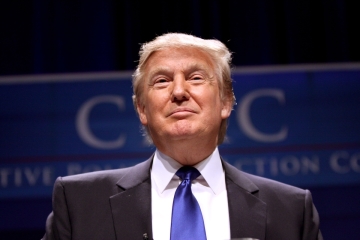
Will Donald Trump be remembered as an education president?

Dale Chu
9.4.2025
Flypaper

A new early literacy safety net in Massachusetts

Almudena Abeyta | Tracy Curley | Dianne Kelly | Ed Lambert | Vanessa Lipschitz
9.4.2025
Flypaper

A better start toward literacy

Alicia Anderson
9.4.2025
Flypaper

Innovation, regulation, and school choice, with Mike McShane | Episode 984 of The Education Gadfly Show

9.3.2025
Podcast
view
Donald Trump

Will Donald Trump be remembered as an education president?

Dale Chu 9.4.2025
Flypaper
view
Student reading

A new early literacy safety net in Massachusetts

Almudena Abeyta, Tracy Curley, Dianne Kelly, Ed Lambert, Vanessa Lipschitz 9.4.2025
Flypaper
view
Students reading in a classroom

A better start toward literacy

Alicia Anderson 9.4.2025
Flypaper
view
Mike McShane Headshot

Innovation, regulation, and school choice, with Mike McShane | Episode 984 of The Education Gadfly Show

Mike McShane, Michael J. Petrilli, David Griffith, Ph.D., Adam Tyner, Ph.D. 9.3.2025
Podcast
view
Bored student in school

The mixed blessing of new school measures

Chester E. Finn, Jr.
9.4.2025
Flypaper

Lots of smart folks have lately been writing about new approaches to assessment and (sometimes) accountability for schools and (rarely) for students. This is happening in tandem with Oklahoma’s request to waive federal ESSA testing requirements and ample evidence from many places that the country’s longstanding push for results-driven school accountability is slackening, if not reversing. Even the weak-kneed version in ESSA—focused on the lowest-performing 5 percent of Title I schools in a state—lacks energy, oversight, and impact. In recent years, state after state has eased or abolished some of its own tests, graduation requirements, and grade-to-grade promotion rules.

Today’s push to ease off comes from both left and right, the former on equity grounds (and fealty to teachers unions, which loathe accountability), the latter because of its view that schools of choice, particularly the private variety, ought to be regulation-free and accountable only to the marketplace.

No, it doesn’t help that the Trump administration, despite occasional use of words like excellence, pays no attention to academic achievement—and has defenestrated the National Center for Education Statistics while attempting to defund various K–12 programs. But the neglect didn’t start on January 20. The Biden team was just as heedless, and ESSA happened under Obama. Any Congressional achievement-and-accountability champions are certainly lying low. What’s popular in Washington today is defunding universities and using overwrought (dare I say Trumped-up?) civil rights and free speech arguments to wage culture wars in and on educational institutions at every level. Uncle Sam, in short, is AWOL or worse, save for a recent nudge to school choice. (It’s also said that they’re going to rebuild at least the parts of NCES that are responsible for the Nation’s Report Card (NAEP).)

Perhaps Washington’s slackening attention to K–12 achievement has created a window of opportunity for scholars, analysts, and think-tankers to focus on how—someday—assessments of schools might be done differently and better. They seem well-intentioned and generally start with an important reality: The multiple-choice tests in general use today, although familiar, efficient, relatively economical, and seemingly objective, tap into just a portion of what schools do and what kids learn. And while they’re better than pre-NCLB assessments—and vastly superior to the norm-referenced variety of yesteryear—they’re also technologically archaic, imprecise at both ends of the learning spectrum, and better at retrospective, summative judgments than at helping teachers gauge, diagnose, and improve upon what kids are (and aren’t) learning during the school year.

So it’s no bad thing for smart folks to devise possible improvements and alternatives. As Van Schoales of Colorado’s Keystone Policy Center recently wrote in Education Week:

[W]e have more than 50 years of research on what makes an effective school. We know the key indicators—strong leadership, clear mission, effective teaching, monitoring of student progress, safe environment with high expectations, family connections, and data-driven decision-making. In short, we know what to look for when evaluating school quality. Given dramatically changing roles at the federal Department of Education and a growing likelihood that states gain even greater flexibility to define and measure their own school-quality progress, the moment is ripe to build evaluation systems that far better reflect how schools are serving students.

Sounds great, but this silver cloud has a dark lining: the risk that, as we seek better ways of gauging how schools serve students across an ever-growing menu of domains, we’ll stop pressing them to improve in the realms that they’re most explicitly responsible for—core academic skills and content.

We also cannot be sure that information about school performance across a wide array of metrics will itself yield better performance. What’s the mechanism whereby more information yields changed behavior and better results? There’s long been a big divide between, on the one hand, those who trust that school leaders, faced with good diagnostic and analytic information about what is and isn’t working in their classrooms, will muster the vision, capacity, and guts to make big changes, and—on the other hand—those who see complex organizations like schools seldom improving unless forced to.

Nobody likes the forcing part, neither those pushing nor those receiving, and it doesn’t always work. States and districts generally opt for the mildest possible push on a low-performing school and typically lack the capacity and will to engage in a thorough reboot. “School turnaround” efforts have a spotty success record (to put it generously). Shutting a school and reconstituting it from the ground up—perhaps turning it into a charter or outsourcing its management—is deeply unpopular, politically risky, and success is not guaranteed.

Which brings us back to the dream of today’s smart rethinkers: that dramatically better ways of gauging and reporting on the many strengths and weaknesses of existing schools will lead to their improvement. And to an unavoidable counter-question: might we not be wiser to concentrate on what sorts of policy changes, school interventions, and alternative options would result in more kids reaching “proficient” on state tests of reading and math?

Let me pause for a couple of the more impressive rethinks, starting with Georgetown’s FutureEd’s “Quality Check: The New, Best Way to Measure School Performance.” The awesome Lynn Olson brought it out in April, jointly with Van Schoales’s center, and she and Tom Toch discussed it on The Education Gadfly Show.

It itemizes 14 “metrics for judging school quality” and organizes them in five sensible clusters: “growth in student achievement,” “access to rigorous instruction,” “effective school staff,” “supportive school climate,” and “postsecondary outcomes.”

They all make sense for purposes of a holistic, 360-degree review of school performance and I can picture a competent team of school inspectors or accreditors looking at these very things during a visit.[1] But what is to be done with this information after they depart? And absent some sort of inspectorate, what is the school team—or its district, its authorizer, its board—to do with this information after receiving it? Because Olson acknowledges that just four of the 14 metrics are currently suitable for accountability purposes—they’re measurable and reasonably objective—the rest are best thought of as grist for the school improvement mill. Which assumes that the will and capacity exist to make changes on the basis of them. Where will that come from? And will the impulse to improve on 14 different metrics not reduce attention to the schools’ core mission of academic skills and knowledge?

I have the same apprehension about efforts to rethink school evaluations by another solid outfit, Scott Marion’s Center for Assessment. They’ve been at it for a long time. To date, they’ve been strong on accountability, urging that states persist with it even if Uncle Sam slacks off—are you listening, Oklahoma?—and, like FutureED, they’re working to devise improved means of judging school performance in more comprehensive ways. The latest is a provocative blog post by the Center’s Laura Hamilton that has me both stimulated and concerned. Consider this key passage:

[D]ata gathered from teachers, parents, students, and the general public show support for a more holistic approach to student development, one that includes providing supports for students’ social, emotional, and civic learning in addition to core academic instruction. Employers highlight the importance of competencies like collaboration, communication, resilience, and adaptability—skills that go beyond what traditional achievement tests measure. As these data show, Americans broadly endorse attending to outcomes beyond academic test scores.

Of course we want young people to acquire all those skills and attributes, want them to be emotionally strong, socially competent, civically prepared—and to possess the “soft skills” that employers want and that successful adulthood usually features. Those are all legitimate goals for the next generation.

But how much of all this should we push onto K–12 schools with their 180-day years, their five-day (and shrinking) weeks, their six-hour (if you’re lucky) days? How many of those competencies and learnings should they be expected to impart—and held to account for? How much can they manage along with the Three R’s (that most kids still aren’t getting much of) plus science, history, and phys-ed? How much can they be expect to counteract the oft-negative influences of neighborhood, peer group, social media, televised role models, and family?

As we broaden the scope of what we will judge schools for without radically expanding their footprint on the lives of children, are we not setting everyone up for failure? A triple failure, if you will, for aren’t we likely, at one and the same time, to (a) find schools doing a weak job of all those other responsibilities while (b) dinging them for doing an even worse job of basic academics and (c) letting other institutions off the hook on grounds that “the schools will handle it”? And will we not also—inevitably—put even less weight on the four objective measures that FutureEd says are valid accountability metrics and slack off, perhaps with federal backing, on the modest versions of results-driven accountability that we’re barely managing to hold onto today?

Think about it.


[1] Indeed, one of the 14 proposed metrics is “comprehensive school ‘inspections’ by trained evaluators.”

view
Donald Trump

Will Donald Trump be remembered as an education president?

Dale Chu
9.4.2025
Flypaper

Last month, Education Secretary Linda McMahon expressed hope that Donald Trump will be remembered as an “education president,” arguing that “sending education back to the states” warrants that distinction. So far, Trump’s second-term record on K–12 includes a first-of-its-kind national school choice program and a significantly smaller U.S. Department of Education. At the same time, the administration has used federal levers more aggressively than ever to wage battles over culture and ideology in schools. If education ends up being one of Trump’s legacies, it raises a fundamental question: What defines an “education president,” and will he qualify?

The original education president, of course, was George H.W. Bush, who seized the issue for his 1988 campaign when he told a group of New Hampshire high school students, “I want to be the education president.” His tenure kicked off an era of federal-state cooperation and bipartisanship on education that lasted nearly 30 years through Clinton’s “Goals 2000” and Bush 43’s No Child Left Behind, along with much that followed under Obama. Together, these presidencies set a high bar for what it means to lead on schooling, combining ambition, policy action, and federal leadership.

Trump’s approach to education has been, to put it mildly, markedly different. He has largely used the issue as a cultural wedge—a strategy that has bolstered his political fortunes and energized his base, but left federal leadership fragmented and uncertainty high for states and districts. In short, Trump’s imprint on education is unmistakable, though it has been defined more by political theater than by the kind of serious policy leadership that previously earned the title of education president.

McMahon’s hope for her boss may simply reflect the loyalty of a friendship that dates back to the early 1980s. But whether any president earns the moniker has always been tied, in large part, to his choice of education secretary. Some appointees, like Lamar Alexander, Dick Riley, Margaret Spellings, and Arne Duncan, were widely respected for their policy expertise, leaving a lasting imprint on the sector. Others have left a far less favorable mark. Miguel Cardona, McMahon’s immediate predecessor, was almost universally panned as ineffectual and a failure. Few remember Lauro Cavazos.

By this measure, it’s still too early to assess McMahon’s impact or how Trump will ultimately be remembered in education. What matters more than anecdotes or activist praise is how effectively the president and his secretary work in partnership to influence student outcomes and federal leadership. Trump’s first education secretary, Betsy DeVos, provides a cautionary tale: Her singular focus on school choice—rooted in the belief that every education challenge could be solved through “competition from choice”—came at the expense of a broader federal agenda and limited her long-term impact on learning. To be an education president, a president must offer a comprehensive approach to education reform.

Looking ahead, much of Trump’s potential education legacy will hinge on how McMahon steers the department and executes upon his second-term policies. She is facing a real-time test with Oklahoma’s request to bypass federally-mandated end-of-year exams—a move that, if approved, could invite other states to follow suit and undermine the comparability that has been a hallmark of accountability for more than two decades. While McMahon hasn’t outright denied the state’s request, her official response is encouraging:

[The Trump] administration’s priorities are improving academics, empowering parents and expanding high quality school choice options. Assessment and accountability is critical to all three of those things… And we made it clear in [responding to Oklahoma’s proposal] that we’re going to closely scrutinize any waiver requests that pertain to assessment and accountability.

Holding the line on Oklahoma’s quixotic proposal matters, but waivers are a stopgap at best. Truly cementing a presidential education legacy demands far more.

At the heart of McMahon’s assignment lies a stark reality: The administration’s most ambitious education initiative—abolishing the Education Department—remains out of reach without Congress, leaving the ongoing effort to shrink it vulnerable to reversal by a future administration. Waivers, meanwhile, are a separate challenge. Used judiciously, they can help shape policy and telegraph priorities to states, but they carry many risks of eroding consistency and accountability. How she navigates these trade-offs—between advancing the administration’s aims and protecting core federal safeguards—could determine whether Trump’s education agenda is consequential.

When all is said and done, whether Trump will be remembered as an education president may come down less to slogans or grand gestures than to student achievement. NCLB, despite public misperception, actually produced modest but real gains, particularly in math. If McMahon can pair today’s unabated zeal for school choice with a genuine commitment to clear and consistent reporting of academic outcomes, she would leave a lasting mark that justifies a place for her boss among the pantheon of education presidents. If not, Trump’s education legacy will be more performative than substantive.

view
Student reading

A new early literacy safety net in Massachusetts

Almudena Abeyta | Tracy Curley | Dianne Kelly | Ed Lambert | Vanessa Lipschitz
9.4.2025
Flypaper

Much commentary has been offered on the literacy crisis plaguing the country. Massachusetts, often recognized as a leader in student achievement, has experienced the same challenge. Signs of the problem were clear in advance of the pandemic with NAEP fourth-grade reading proficiency rates falling from 50 percent to 45 percent between 2011 and 2019. The most recent 2024 NAEP results for fourth-grade reading in Massachusetts show the proficiency rate has fallen to 40 percent. Yet a recent $25 million state investment in early literacy high-dosage tutoring, spearheaded by Governor Healey, presents a new strategy to reverse the trend.

High-dosage tutoring has become a common tool to address literacy gaps across states. Many of these programs have produced smaller outcomes than anticipated, with researchers pointing to issues with planning and logistics that compromised dosage. The work in Massachusetts, however, takes a different approach by focusing on a first-grade literacy safety net in districts with predominantly low-income students. This aligns with the emerging hypothesis that tutoring results might be bolstered by saturating a grade or school.

The high-dosage tutoring safety net was first tested in a two-year, $11 million pilot by the One8 Foundation. In fall 2023, the One8 Foundation funded 13 districts across Massachusetts to partner with Ignite Reading to provide high-dosage, in-school tutoring to first-grade students who did not meet grade-level benchmarks on the district’s state-mandated fall screener. The program paired each student with a trained Ignite Reading tutor who provided them with one-on-one virtual instruction for 15 minutes every day from late September to early June.

Two characteristics differentiated the One8 program. First, for districts to be eligible for the program, they needed to use currently or be in the process of adopting a high-quality English language arts curriculum and have engaged teachers in professional learning to use the curriculum.[i] This meant that by design, Ignite Reading’s science of reading-based tutoring used a similar, structured approach to what students were experiencing with their classroom teachers, avoiding the risk that tutoring become a crutch to prop up outdated or ineffective approaches to literacy instruction. The curriculum requirement also guaranteed that in ensuing years, students would continue to receive ELA instruction grounded in high-quality instructional materials aligned with the science of reading.

Second, the program was fully targeted at first-grade students with literacy gaps. Tutoring is expensive, and resource-constrained districts are often forced into tough choices about which students get seats for what purpose. These choices can create logistical and instructional challenges for classroom teachers that affect dosage, are difficult to integrate into a comprehensive support system, and may not deliver sustained student outcomes. The One8 program placed a major bet on first grade, given the strength of the literacy tutoring efficacy research for that grade. If foundational reading skills are developed in first grade and instruction relies on high-quality ELA curriculum, then a student’s ability to become a capable reader in second grade and beyond is dramatically amplified. The pilot aimed to provide comprehensive coverage for first graders with need, creating a structural intervention or “safety net” first-grade teachers could count on and build around.

Johns Hopkins University evaluated the program results from the 2023–24 school year and found that tutored students grew substantially more (with over five months of instructional gains), as compared to national norms, and significantly more than similar untutored peers in the same district. Gains were consistent across student subgroups and particularly notable among Black students and English learners suggesting the program’s potential to close persistent literacy achievement gaps. The evaluation included surveys and focus groups, with educators frequently noting that the level of personalized instruction and individualized practice provided through high-dosage tutoring simply could not be replicated by school systems.

Based on the strength of these results, the $25 million state investment is designed to scale the first-grade literacy safety net to approximately 10,000 students during the 2025–26 school year. The level of investment is calculated to meet the projected need among first-grade students in districts with predominantly low-income students that are using a high-quality core curriculum. If successful, this statewide program moves toward creating a systematic, high-impact intervention for students with literacy gaps, deploying resources early and efficiently to catch them up so they can be on pace to become fluent readers in second grade. This first-grade safety net also offers an opportunity to streamline program operations, anchor on real time data to more closely monitor student progress, and provide critical support for educators so they can effectively teach across a wide range of student needs.

Moving forward, we can foresee updates to the design of school-level multi-tiered systems of support in later grades as the number of students requiring support declines and the size of learning gaps shrinks. Districts in the One8 pilot described seeing the highest rates of literacy proficiency they had ever experienced after the pilot, with fewer students requiring additional support in later grades and updates in the design of their special education referral processes. If we maintain the impact shown in the pilot, we foresee an opportunity to update the design of supports in later grades to make them more targeted, concentrated and effective.

Studies have shown the promise of high-dosage tutoring as a response to the national literacy crisis. Yet it is an expensive intervention that often is hard for schools to effectively incorporate into their existing systems of support. The new Massachusetts program offers an interesting roadmap for how we might use tutoring as a consistent and sustainable tool that teachers, students, and families can count on to help all students become capable readers.


[i] High quality ELA curricula were defined as those receiving green ratings for Gateway 1 and 2 on EdReports, those endorsed by the Knowledge Matters Campaign, or those with ratings of at least Partially Meets Expectations on all CURATE ratings. If the core curriculum did not include foundational skills, the district or local education agency needed to also be using a high-quality foundational skills supplemental program.

view
Students reading in a classroom

A better start toward literacy

Alicia Anderson
9.4.2025
Flypaper

Reading skills in the early grades can predict future academic success, and too many children begin formal schooling already behind. By fourth grade, only 33 percent of U.S. students are considered proficient in reading, and each year it becomes harder to catch up. U.S. children are not alone in this struggle. Much like the science of reading laws proliferating across the U.S., New Zealand is implementing a national effort to improve literacy, requiring daily class time dedicated to reading and writing instruction.

Among several approved options to meet this requirement, the Better Start Literacy Approach (BSLA) was developed by researchers from the University of Canterbury as a targeted, phonics-based teaching approach for five- to seven-year-olds. BSLA teachers undergo a micro-credentialing program that takes about six months to complete, during which they learn to develop students’ skills in vocabulary, oral narrative, and listening comprehension. They are trained in phonological awareness and phonics and ways of helping children apply these skills in both reading and writing. Children participate in daily 30-minute lessons, along with 10–15 minute small group reading sessions with books aligned to the phonic patterns from the main lessons. Prior to a large-scale implementation of the BSLA method, the approach showed positive effects for smaller samples of students from low socioeconomic backgrounds and in a randomized study of a diverse range of students.

To evaluate the effectiveness of the Better Start Literacy Approach at scale, a team of researchers affiliated with the University of Canterbury and the Better Start program analyzed data from 56,122 students in 885 New Zealand schools. Most children in New Zealand begin school on or near their fifth birthday, rather than on a school year schedule, so the study collected data on a rolling basis to capture comparable data for each child. It focuses primarily on the experience of 4,796 students who began BSLA instruction upon entering school and were assessed at 10 weeks and 30 weeks (approximately one school year).

The researchers used multilevel regression to see how factors like school size, peer performance, gender, English learner status, ethnicity, and reading skills at school entry affect student literacy progress. Student outcomes were measured by non-word reading and non-word spelling skills after 30 weeks of the BSLA teaching. Sometimes called “nonsense” or “pseudo-words,” these assessments parse out a student’s decoding skills separate from word memorization which can mask phonological awareness. The analysis affirmed that school- and student-level factors are strong predictors of student success, and that students perform better surrounded by high-performing peers. However, the findings also suggest that early student growth in the first 10 weeks of BSLA instruction may be a stronger predictor of their end-of-year literacy outcomes, even when controlling for student demographics.

The authors also compared BSLA students’ 10-week assessment scores against baseline data from a random sample of 4,270 demographically matched students who received standard teaching rather than the BSLA implementation. They used predictive modeling to estimate differences between these groups after a full year of formal schooling, and suggest that BSLA students are 1.6 times as likely to perform at the advanced proficiency level for both reading and spelling. And it’s not just the high flyers: The approach leads to an estimated 1.5 times decreased chance of performing at the lowest levels. The models suggest positive improvements for students starting school with different backgrounds and across all levels of early literacy skills.

The study has important limitations. Student literacy outcomes were assessed based on the BSLA scope and sequence, and the aligned assessment may overstate the positive effects of the instruction method. This analysis also relies heavily on predictive modeling, which provides more timely but less reliable evidence compared to a longer term study using student data. The researchers acknowledge that achievement gaps begin before students start school and those gaps tend to endure. Given the stated importance of skills at the time of school entrance and the disruptive early childhood experiences for this sample—toddlers and preschoolers during the Covid-19 pandemic shutdowns—a randomized controlled study of future cohorts could provide more reliable insights.

Note, too, that while this latest evaluation appears in the peer-reviewed International Journal of Educational Research, the authors have a vested interest in the program’s success. In fact, the University of Canterbury offers government-funded training in the approach so that teachers can bring BSLA instruction to their communities to meet the national structured literacy requirement.

Still, the approach—and the broader implementation of structured reading instruction in New Zealand—is worth reviewing as U.S. states rush to adopt evidence-backed methods to support early literacy development. As programs take shape to address urgent shortcomings in literacy instruction, monitoring these efforts over time can guide improvements and help states, districts, and individual schools select approaches that give children a better start toward literacy.

SOURCE: Megan Gath, Gail Gillon, Brigid McNeill, and Amy Scott, “Evaluating the large-scale implementation of structured literacy teaching in New Zealand: Evidence from the Better Start Literacy Approach,” International Journal of Education Research 129 (2025).

view
Mike McShane Headshot

Innovation, regulation, and school choice, with Mike McShane | Episode 984 of The Education Gadfly Show

9.3.2025
Podcast
 

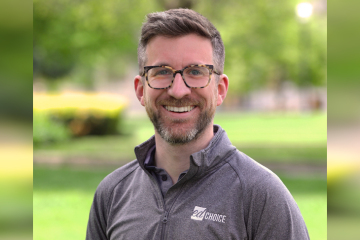
Mike McShane, Director of National Research for EdChoice, joins us on the Education Gadfly Show to debate tradeoffs when it comes to regulation and innovation in the charter school and private school choice sectors.

Then, on the Research Minute, Adam Tyner shares a report from the Urban Institute looking at college and career indicators and how they relate to research on post-high school outcomes.

Recommended content:

On school choice:

Overregulated charter schools: Fact or fiction? —Michael J. Petrilli

School choice should take the road less traveled —Robert Enlow and Michael Q. McShane, Education Next

Charter school regulation means keeping the destination in sight —Thibaut Delloue

From the Research Minute:

Which college and career readiness standards best align with positive outcomes after high school? —Kristin Blagg, The Urban Institute (July 2025)

The vibes for career-tech programs are great. But they’re too rare. —Michael J. Petrilli


Feedback Welcome: Have ideas for our show? Send them to [email protected]

Fordham Logo

© 2026 The Thomas B. Fordham Institute
Privacy Policy
Usage Agreement

National

P.O. Box 110
Burke, VA 22009

202.223.5452

[email protected]

Ohio

P.O. Box 82291
Columbus, OH 43202

614.223.1580

[email protected]

Sponsorship

130 West Second Street, Suite 410
Dayton, Ohio 45402

937.227.3368

[email protected]