Mobile Navigation

  • National
    • Policy
      • High Expectations
      • Quality Choices
      • Personalized Pathways
    • Research
    • Commentary
      • Gadfly Newsletter
      • Flypaper Blog
    • Events
    • Scholars Program
  • Ohio
    • Policy
      • Priorities
      • Media & Testimony
    • Research
    • Commentary
      • Ohio Education Gadfly Biweekly
      • Ohio Gadfly Daily
  • Charter Authorizing
    • Application
    • Sponsored Schools
    • Resources
  • About
    • Mission
    • Board
    • Staff
    • Career
Home
Home
Advancing Educational Excellence

Main Navigation

  • National
  • Ohio
  • Charter Authorizing
  • About

National Menu

  • Topics
    • Accountability & Testing
    • Advanced Education
    • Career & Technical Education
    • Charter Schools
    • Curriculum & Instruction
    • ESSA
    • Evidence-Based Learning
    • Facilities
    • Governance
    • Personalized Learning
    • Private School Choice
    • School Finance
    • Standards
    • Teachers & School Leaders
    • Think Again
  • Research
  • Commentary
    • Gadfly Newsletter
    • Flypaper Blog
    • Gadfly Podcast
  • Events
  • Scholars Program

The Education Gadfly Weekly

Sign Up to Receive Fordham Updates

We'll send you quality research, commentary, analysis, and news on the education issues you care about.
Thank you for signing up!
Please check your email to confirm the subscription.

The Education Gadfly Weekly: History and civics scores still falling, reports NAEP

Volume 23, Number 18
5.4.2023
5.4.2023

The Education Gadfly Weekly: History and civics scores still falling, reports NAEP

Volume 23, Number 18
view
High Expectations

History and civics scores still falling, reports NAEP

Aaargh. Here we go again. The new National Assessment civics and history results are as deplorable as they were predictable. Whether they’ll also serve as the action-forcer that we need is far from certain.

Chester E. Finn, Jr. 5.4.2023
NationalFlypaper

History and civics scores still falling, reports NAEP

Chester E. Finn, Jr.
5.4.2023
Flypaper

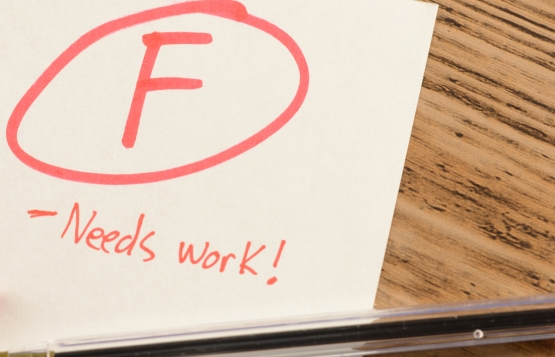
How lax grading policies make classrooms chaotic

Meredith Coffey, Ph.D.
5.4.2023
Flypaper

Putting the Core Knowledge study into perspective

Natalie Wexler
5.4.2023
Flypaper

Handwriting or computers: Which is the superior way for children to learn to write?

Jeff Murray
4.25.2023
Ohio Gadfly Daily

Look beyond test scores to gauge the impact of teacher performance pay

Meredith Coffey, Ph.D.
5.4.2023
Flypaper

Cheers and Jeers: May 4, 2023

The Education Gadfly
5.4.2023
Flypaper

What we're reading this week: May 4, 2023

The Education Gadfly
5.4.2023
Flypaper
view

How lax grading policies make classrooms chaotic

Meredith Coffey, Ph.D. 5.4.2023
Flypaper
view

Putting the Core Knowledge study into perspective

Natalie Wexler 5.4.2023
Flypaper
view
Handwriting vs typing SR image

Handwriting or computers: Which is the superior way for children to learn to write?

Jeff Murray 4.25.2023
Ohio Gadfly Daily
view

Look beyond test scores to gauge the impact of teacher performance pay

Meredith Coffey, Ph.D. 5.4.2023
Flypaper
view

Cheers and Jeers: May 4, 2023

The Education Gadfly 5.4.2023
Flypaper
view

What we're reading this week: May 4, 2023

The Education Gadfly 5.4.2023
Flypaper
view

History and civics scores still falling, reports NAEP

Chester E. Finn, Jr.
5.4.2023
Flypaper

Aaargh. Here we go again. The new National Assessment civics and history results are as deplorable as they were predictable. Whether they’ll also serve as the action-forcer that we need is far from certain. Is this to be a “Sputnik moment” on the civics front or another yawner?

NAEP has been testing U.S. history since 1994, civics since 1998, and the results have always been bleak.[1] At its peak in 2014, the “Nations Report Card” showed a meager 18 percent of eighth graders to be “proficient” in history, while 22 percent reached that threshold in civics. Year after year, assessment after assessment, those two key subjects have reaped the lowest scores of anything tested by NAEP.

Declines in both set in after 2014—well before Covid hit—and it was inevitable that post-pandemic scores would be even worse. Now we’re essentially back to the starting line, i.e., around the same levels as when these subjects were first reported by NAEP. And as we’ve recently seen in reading and math, the declines are worst among low-scoring students, which is to say those who possess the least knowledge and skills in history and civics have experienced the most severe losses.

What’s doubly troubling—but perhaps doubly attention-getting—is that this has happened just as many in the education and policy worlds are striving to launch a renaissance in civics, citizenship, and the historical understandings that must undergird them.

Any number of organizations and projects are working at this. (I’ve been engaged with several, including the estimable Educating for American Democracy venture and its “roadmap for excellence in history and civics.”) They’re responding not just to test scores but also—even more so—to the troubled state of the polity, the erosion of good citizenship, the travails of civil society, and loss of faith in the fundamental institutions and processes of our constitutional democracy.

Educating schoolkids in civics and history is in no way the whole solution to these deep-seated problems, but it has to be part of any solution—and evidence abounds that we’re doing a lousy job of it. The new NAEP results just underscore the blunt fact that the vast majority of American eighth graders don’t know squat about U.S. history or civics.

But why? I’m seeing five big contributing factors.

First, most states have lousy standards for these core subjects, meaning that their expectations for what K–12 students should learn are low, vague, or otherwise lacking. My Fordham colleagues demonstrated this in a voluminous 2021 report that found just five jurisdictions (four states plus D.C.) with “exemplary” standards in both subjects. It’s true that standards alone don’t teach anybody anything, but it’s also true that if you don’t have a clear destination for your journey, you could wander forever and get nowhere.

Second, weak standards are part of a larger “infrastructure” problem in social studies education, admirably documented in a recent RAND study. Although focused on the elementary grades, the failings itemized in that analysis—which include incoherent curricula, lack of teacher support, meager instructional time, ill-prepared teachers, an absence of accountability—apply pretty much across the entire span of K–12 schooling.

Third, curricular materials in this field—with history and civics often submerged in a “social studies” muddle that may be as much about pop-sociology and psychology as essential information and analytic skills—are mostly mediocre, the good ones are little used, and some popular texts are pretty awful. Check out EdReports and the What Works Clearinghouse and you’ll find the curricular cupboards barren for history and civics, this despite the fact that excellent tools exist by which to evaluate such curricula. And the culture wars and political posturing that have recently engulfed curricular deliberations are nowhere livelier than in the realm of social studies, although I’ve also called attention to a latent consensus across much of the land regarding what schools should teach in this realm.

Fourth, many teachers don’t know much about these subjects themselves. Typical certification requirements for social studies teachers include a smattering of “content” courses in any of the half-dozen disciplines that fall under this heading, but persons obtaining such certificates are then deemed qualified to teach any of those subjects. Which is to say a history teacher may have studied very little history and a civics teacher (who may also be the gym teacher) could have majored in anthropology.

Fifth, little time is devoted to history and civics over thirteen years of schooling, and few schools or students are held to account for how well these subjects are learned. Though we routinely term them part of the “core curriculum” along with English language arts, math, and science, we don’t give them nearly as much attention as the other three, and we’re far less likely to insist on any evidence of learning beyond, say, a passing grade in high school history and civics. It’s no help that few colleges pay attention to whether their applicants know anything about these subjects and almost none requires its own students to study them. (Stanford is requiring freshman year civics as of next year.)

Let’s remember, too, the close ties between “knowledge” subjects such as history and civics and students’ reading prowess. As E.D. Hirsch has emphasized for decades, the more you know, the better you’ll be able to read—and understand what you’re reading. As Adam Tyner and Sarah Kabourek recently showed, the more time schools spend on social studies in the early grades, the better readers their students will be. Conversely, the worse one is at reading, the less history and civics one is likely to learn. Hence the failings of U.S. students in those fields tend to track (only more so) our literacy challenges.

Is there hope? The bleak NAEP results that came out the other day could serve as a firebell in the night, the alarm we need to catalyze purposeful action, overcome our divisions, and quell, at least for a moment, the curricular culture wars.

It’s not beyond imagining. Legislative action can already be glimpsed in many places, and innumerable groups are actively promoting civics and history reforms of one kind or another. Advice abounds as to how to strengthen these elements of K–12 schooling.

My own advice is implicit in the five causes of decline that I spelled out above, as each implies its own remedy: solid standards, robust infrastructure, quality curricula, well-prepared teachers, time-on-task, and results-driven accountability. It’s really not rocket science.

But one thing more is also crucial: We must improve our diagnostics, starting with NAEP itself. Why do we have history and civics results for eighth grade but not for fourth or (especially) twelfth? It’s the end of K–12 when we most need solid data on what students have and have not learned. And why do we have only national data, not the state-level results that might drive serious action at the level that matters most? NAEPsters will offer all manner of explanations, starting with budget, but the fact remains that—here as everywhere—the problems likeliest to go unsolved are those that are poorly diagnosed in the first place. What we got from NAEP this week is necessary but in no way sufficient for a thorough diagnosis, the kind that points toward better-targeted treatments.

That all this matters to the nation’s future is self-evident. That we will go beyond garment-rending and teeth-gnashing is less so.

Editor’s note: This first appeared in somewhat different form in Education Next.


[1] In fact, NAEP first assessed knowledge of U.S. history as well as literature (among eleventh graders) back in 1986 via a special NEH-funded probe that gave rise to Diane Ravitch’s and my What Do Our 17-Year-Olds Know?, as well as Lynne Cheney’s American Memory. The answer to the query posed in our book title was “damn little.”

view

How lax grading policies make classrooms chaotic

Meredith Coffey, Ph.D.
5.4.2023
Flypaper

Since the return to in-person learning, schools have seen a surge in student misbehavior of many kinds, ranging from minor classroom disruptions to serious physical violence. Experts cite a host of causes, including stunted socioemotional development, mental health struggles, shifted norms around screen time, TikTok challenges, parent pushback, and changes to disciplinary policies.

I don’t doubt that some or all of these factors have contributed to the crisis. As a high school English teacher, however, I found that something else most impacted my students’ (mis)behavior and my ability to manage it: recent changes to grading policies that have the effect of lowering expectations.

While important debates rage over reactive discipline—that is, what schools do in response to student misbehavior—practicing teachers know that the most effective classroom management is proactive, since it discourages negative behaviors from happening in the first place. “An ounce of prevention,” Benjamin Franklin famously observed, “is worth a pound of cure.” And essential to proactive classroom management is the ability to establish high expectations. Strong student-teacher relationships are important, but grades remain a key motivator. The understanding that an assignment must be submitted within a set timeframe helps keep students on task.

After proactive classroom management, the next best thing is to nip off-task behavior in the bud. My go-to “teacher move” in these cases was always to redirect students to the current academic activity. If I heard a group of students debating the merits of their favorite rappers instead of the assigned discussion prompt, for example, I’d ask them how Playboi Carti served to advance the plot in The Crucible (corny, sure, but generally effective once the eye-rolls ceased).

Keeping my corrective focused on schoolwork rather than behavior meant that I could avoid putting teenagers on the defensive, and it served as a purposeful reminder for why we were together. Of course, this strategy didn’t work every time for every disruption, but it worked often enough and for the most common forms of misbehavior—as well as in the very different school settings in which I taught.

But what if students lack any sense of urgency over the task at hand? What if any assignment can be turned in at a later date, or perhaps not at all?

Take, for instance, the 50 percent rule, an increasingly trendy grading policy that assigns students a minimum grade of 50 percent for any assignment, usually even if it was not attempted. Proponents hold that such policies will increase student motivation by enabling averages to “bounce back” from a poor performance, and that a 50 is still low enough to avoid inflating grades.

I’m all for motivating students, but that math just doesn’t add up. Imagine a class in a school with the 50 percent rule and a typical letter grade system. Say a student earns an 85 average (mid-range B) in the first quarter and then decides to forgo all assignments in the second quarter. Averaging 85 and 50, the teacher would be compelled to award a passing score of 67.5 (D+) for the semester without the student having done a thing for weeks.

Kids get the message, loud and clear: they can pick and choose which homework assignments to complete, which classroom activities to join, and whether they’ll take the unit test. When I taught in a district mandating the 50 percent rule, here’s what I learned:

1. Some students are absolutely going to do the bare minimum to pass. It’s not malicious; it’s tactical. I had students who very politely informed me that they hoped I didn’t take it personally, but they had done enough work earlier in the year to coast, and they didn’t care for writing essays, so they wouldn’t be bothering with the final paper.

2. Struggling students who don’t expect to excel can suffer the worst effects. In a scenario where they would have to attempt an assignment to get at least partial credit, they typically would. But in one with the 50 percent rule, why would they give it their best shot if they thought that the grade they’d earn wouldn’t be much different from the one they’d get for doing nothing?

3. Highly motivated students will strive to earn that A, no matter what, and they know they can’t get there by skipping assignments. But they also aren’t the ones most likely to alter their behavior in response to grading policies.

It doesn’t take a lot of students losing focus for the situation to snowball. First, the lack of meaningful grades means that teachers are less equipped to redirect students in response to everyday misbehavior, which can then escalate. Second, when students don’t keep up with classwork, they are likely to get confused as the class moves forward with new content. And confused or frustrated kids are more likely to act out. Finally, misbehavior is contagious: When even a few students are off task, others often follow suit. Frequent disruptions interfere further with learning, perpetuating the cycle of misbehavior.

To improve student outcomes and decrease the need for reactive disciplinary intervention, schools and districts must revisit lax grading policies.

Instead of across-the-board changes to grading, allow and encourage teachers to be flexible on a case-by-case basis. Those concerned about equity should keep in mind that equity is about giving individual students what they need, rather than giving every student the same thing. Granting an extension or a retake to a student who has been ill or has lost a family member is fair and conscionable. Allowing unlimited flexibility for all students, on the other hand, doesn’t do much for equity.

And if teachers are responsive to individual students’ circumstances, there isn’t any reason to keep the 50 percent rule. The occasional “catastrophic failure” can be rectified without chucking expectations out the window for all other students.

In the face of a deadly pandemic and widespread societal disruption, more generous grading policies had their place. But three years later, with schools back to operating in-person and the national emergency coming to a close, it’s high time to reestablish meaningful expectations that help restore normalcy to classrooms.

view

Putting the Core Knowledge study into perspective

Natalie Wexler
5.4.2023
Flypaper

A recent study finding dramatic boosts in reading achievement from a knowledge-building curriculum has come in for criticism, some of it well-taken. But the study should be seen as just one more piece of evidence casting serious doubt on standard literacy instruction.

The study, which I wrote about in an earlier piece, analyzed the reading scores of two groups of children. Beginning in kindergarten, one group got a curriculum based on the Core Knowledge Sequence that builds academic knowledge. The other group got “business as usual,” which generally means a focus on reading comprehension skills, like “finding the main idea,” over substantive content.

Children in both groups had applied to Core Knowledge charter schools that were oversubscribed. The researchers compared the children who got in through a lottery (the “treatment” group) with those who did not and went to other schools (the “control” group). They found that, by third grade, the treatment group significantly outperformed the control group on state reading tests.

That was especially true for students living in an area characterized as low-income. They made such significant gains that the test-score gap between that group and higher-income students was eliminated.

Although the still-unpublished study hasn’t attracted attention from the mainstream press, at least two education outlets have run stories on it. Both raised questions about the study’s findings.

PD and read-alouds

A story in Education Week quoted the lead researcher, David Grissmer, as saying that, because only one of the nine schools in the study was in a low-income area, it’s possible that factors other than the curriculum affected the results there.

The article continued: “There are other potential differences between the treatment and control groups that could have affected results. Most of the Core Knowledge school teachers received professional development on how to implement the guidelines, while it’s not clear what PD teachers at other schools received. The program also uses different methods than many other reading curricula—relying more heavily on read-alouds, for example.”

But these “differences” aren’t factors that interfere with isolating the effect of a knowledge-building curriculum. They’re factors that are inextricably linked to that kind of curriculum and therefore part of the curriculum’s effect.

The evidence indicates that PD for teachers works best when it’s grounded in the specific content of the curriculum. But the standard elementary curriculum either doesn’t specify content or has extremely thin content because the focus is on comprehension “skills.” So the PD may have been better in the Core Knowledge schools, but that was possible only because the schools were using a curriculum with specified rich content.

Similarly, a heavy reliance on read-alouds is a component of any effective elementary knowledge-building curriculum. In a classroom using the standard approach, the teacher may read aloud for ten or fifteen minutes from a text chosen not for its topic, but for how well it lends itself to modeling a comprehension skill. Then students spend most of the rest of the reading block, which averages two hours, reading on their own to practice the skill. In a school using a knowledge-building curriculum, teachers spend half an hour or more reading aloud from texts too complex for students to read on their own because that’s the most effective way to build knowledge of a new topic before students are fluent readers.

Valid cautions about the data

Another critique of the study came from the Hechinger Report’s Jill Barshay. Barshay dug into the data and came up with several valid cautions:

  • At the school serving low-income families, she wrote, the median family income was over $50,000. Schools in poorer districts might not achieve the same results. (While Barshay characterized these figures as applying to the school, they actually applied to the district. Average income levels at the school may have been even higher—or lower. It’s puzzling that the study didn’t include school-level demographic data, which is usually publicly available.)
  • The data from the low-income school was based on only sixteen students, a sample size so small that it’s hard to be confident of the results. (There were over 500 students in the treatment group as a whole, though, so this caveat doesn’t affect the general finding that Core Knowledge students got a significant boost on reading tests.)
  • The reading scores of the Core Knowledge students didn’t increase in fourth, fifth, and sixth grade, suggesting that they got the entire benefit of the curriculum by third grade. That runs counter to the theory that acquiring knowledge is a cumulative process that results in ever-increasing gains in comprehension, at least up to a point.

I confess that I missed these points when I wrote about the study, and I’m grateful to Barshay for bringing them up. It’s important to subject scientific evidence to critical review, and I hope that the authors of the study discuss these limitations more prominently in their final write-up of the results.

Barshay made two other points I consider less convincing. She found it highly significant that roughly half of the 1,000 families that won admission to the Core Knowledge schools chose not to enroll their children. In an email, Barshay explained that, in her view, that made the sample less random: Maybe those parents realized their children weren’t likely to do well at a Core Knowledge school, skewing the sample in favor of kids who were likely to succeed. True, but then again, maybe an equivalent number in the control group would have decided not to enroll their children if they had gotten in, for the same reason. In that case, the two groups would still be comparable.

Barshay also argued that, because the Core Knowledge schools were charters, they may not have been comparable to the schools the control group ended up attending. “It’s impossible from the study design to distinguish whether the Core Knowledge curriculum itself made the difference or if it could be attributed to other things that these charter schools were doing, such as teacher training or character education programs,” Barshay wrote. (Barshay told me she was speaking in general terms about features of charter schools rather than primarily about the schools in the study.)

As far as I can tell, it’s possible that some control group students also ended up at charters, albeit not Core Knowledge charters. But leaving that question aside, it’s true that charters often differ in significant ways from traditional public schools—and you could also argue that parents who make the effort to apply to charters are likely to be more involved in their children’s education.

However, the researchers discounted those differences because, on average, charter schools in non-urban areas have no better track record than traditional public schools. (All schools in the study were in non-urban areas.) That doesn’t address whether the specific charter schools in this study differed from the schools that the control group attended, but it would be impossible for researchers to control for all the possible differences between the Core Knowledge schools and others in the study.

It’s hard to run experiments on knowledge-building

And therein lies the rub, or part of it. It’s hard to control all the variables in any education study; there’s always attrition, there’s always variation in the way teachers deliver whatever the “intervention” is, etc. That’s even more difficult when a study extends over several years, as this one did. And it seems that the only way to see the effect of a knowledge-building curriculum on standardized reading tests is to run a study that lasts several years.

Another commentator on the recent study, teacher and author Nathaniel Hansford, argues that “this is why we need to look at multiple studies and studies with different designs to be sure than an intervention or pedagogy is effective.” I agree in theory, but in practice that could leave us waiting indefinitely.

The Core Knowledge study took fourteen years to come out—those kindergartners are now nineteen—and I’ve been told it cost an enormous amount of money. I don’t know of any similar long-range studies in the pipeline, and even if there is one, we’re unlikely to see the results for over a decade. Do we really want to wait that long before re-evaluating our approach to reading comprehension?

Fortunately, we don’t have to. Barshay and Hansford have each said that this one study isn’t “convincing” or “definitive” proof that a knowledge-building curriculum boosts reading comprehension. That’s true, but no one is claiming that it is—or at least, I’m not. Instead, we need to see it as evidence that, combined with other evidence, strongly suggests that a well-implemented knowledge-building curriculum is likely to work better than what most schools are currently doing.

Other evidence on building knowledge

Some of that other evidence comes from experimental studies, but the effects—while statistically significant—have been small. That may be because they generally haven’t lasted more than a year or two, and that’s too soon to see results—at least, results on standardized reading tests.

Those tests are considered the gold standard for measuring progress in reading comprehension, but as Professor Hugh Catts has argued, they can be seriously misleading. Different measures of comprehension often disagree. In one study, researchers used four different comprehension tests to measure the same group of students and found that, over half the time, students identified as poor readers by one test were put in a different category by another. The same was true for readers identified as being in the top 10 percent.

One likely reason for that variation is that the passages on standardized reading tests are on random topics that students haven’t learned about in school. The theory is that the tests are assessing abstract reading comprehension ability, not content knowledge. But if students lack knowledge of the topic, or of enough of the vocabulary used in a passage, they may not be able to understand the passage well enough to demonstrate their “skills.”

So this supposedly scientific approach to measuring progress in reading comprehension—which is used not only by teachers and government authorities, but also by many researchers—is due for a serious re-examination. It would be far more reliable and fair to test students’ ability to make inferences or find the main idea of passages on topics they’ve actually learned about.

We also have some accidental experiments that suggest the benefits of building knowledge at the elementary level. One occurred in France several decades ago, when the government abandoned its longstanding national curriculum for elementary schools, which focused on building knowledge of specified, rich content. The result, as E.D. Hirsch, Jr., has pointed out, was an overall decrease in student achievement and a widening of the gap between students from high- and low-income families.

There’s also evidence from the United States. Researchers at the Thomas B. Fordham Institute discovered that children who got thirty more minutes a day of social studies than average had higher reading scores by fifth grade. The benefit was greatest for those from low-income families and negligible for those from the highest-income families. At the same time, an extra thirty minutes a day on reading was not correlated with higher reading scores. One likely reason is that social studies was providing students with the knowledge and vocabulary they needed to understand the passages on reading tests—especially if they were unlikely to pick up that knowledge at home.

And of course, we have plenty of evidence that the standard skills-focused approach to comprehension isn’t working for most students. Only about a third score proficient or above on national reading tests, with little or no change in decades. Large gaps between students at the upper and lower ends of the socioeconomic spectrum persist.

Plus, even if there’s not a lot of laboratory evidence that building knowledge boosts comprehension, there’s ample undisputed evidence that having knowledge—either of the specific topic or of general academic information—is correlated with better reading comprehension.

Not to mention that there’s a lot of anecdotal evidence from the increasing number of schools that have adopted knowledge-building curricula. Teachers are reporting that students are more engaged, better able to make connections between different texts, and possessed of more sophisticated vocabularies. One teacher in an urban, low-income school recently told me he’d overheard his seventh-graders discussing Kantian ethics. Another in a small Southern city has seen students who are still learning English write well-informed essays about the American Revolution. These are marked differences from what they observed before.

It’s true that evidence based on observations can be misleading. For example, it can look like students are reading when they’re just guessing at words. But it’s relatively easy to do experiments showing whether phonics instruction works. In an area like comprehension, which is much trickier to measure, it makes sense to also look at what’s actually going on in classrooms.

That’s not to say that all that schools need to do is adopt a knowledge-building curriculum. To implement that kind of curriculum well, teachers need to understand why it’s important, and they need support in delivering it.

Nor will the adoption of knowledge-building curricula solve all our social ills or even completely level the academic playing field. But given all the available evidence, it would almost certainly make things a lot better than they are now. As one teacher whose school made the shift said to me, “Why not try it? What have you got to lose?”

Editor’s note: This was first published by Forbes.

view
Handwriting vs typing SR image

Handwriting or computers: Which is the superior way for children to learn to write?

Jeff Murray
4.25.2023
Ohio Gadfly Daily

A common concern in evaluating computer-based testing is the perceived differences between students writing by hand and those writing by typing. Historically, typing has been seen as more difficult for students to master—especially younger kids—thus rendering computer-based assessments intrinsically “harder” than pencil-and-paper versions, even when the test material is otherwise identical. But much of the research around the topic is almost a decade old, predating the explosion of online and computer access even our youngest kids (and their teachers) experienced since then, as well as newer research that supports the idea of typing being easier than handwriting. That is, one keystroke—using only one finger most of the time—renders a complete letter rather than a multiple and varied number of pen strokes needed to handwrite any given letter, any one of which can go awry–even for experienced little fingers.

Onto the pile of (almost) up-to-date information we can add brand new findings from Norway. State-run schools in the country were asked to adopt either a handwriting-first or digital-writing-first approach to instruction ahead of the 2018–19 school year. A group of researchers from Volda University College exploited the natural experiment created by comparing the development of writing composition skill among students in five first-grade classes. Half of the children learned to compose text by handwriting on paper and the other half learned by typing on a digital tablet using word-processing software, based on the policies adopted by their schools. All students were evaluated at five separate points during the year by completing the same scheduled narrative writing tasks. All narratives were evaluated in terms of a range of text features capturing both transcription accuracy (spelling, spacing, punctuation) and syntactic and compositional sophistication.

The best news is that all students tended to show strong and similar increases in the accuracy and complexity of their syntax, in the detail and sophistication of their narratives, and in the length of their texts over the school year, with negligible differences based on learning modality. More accurate spelling and word spacing were observed among students in the digital learning group, which the researchers attribute to the software’s inclusion of a text-to-speech function. This allowed students to hear what their typed words sounded like spoken back to them, highlighting misspellings and any words mistakenly strung together or improperly split. Interestingly, students in the digital modality showed lower accuracy with periods, questions marks, and exclamation points than the handwriting group. The researchers surmise that both groups were likely close to the same level of accuracy but that stray marks in the handwriting mode could have been counted as periods by graders, whereas no such moderator existed for kids typing their sentences.

All in all, the researchers suggest that the data represent an even outcome, with both learning modalities proving successful at increasing student growth and achievement in writing. They suggest a number of limitations of both the study design (in 900 hours of instruction over the year, for example, could digital-first teachers have reverted to handwriting for some kids during some lessons?) and the generalizability of their findings (English language instruction with its multiple irregular word structures, they say, would be a very different context to test). They also spend some time discussing the value of the text-to-speech functionality and whether it really represents a positive learning support or a sort of “cheat” for students who use it. On the other hand, might there be some analogous version of that feedback to be incorporated into handwriting-first instruction? Could that then make handwriting superior?

All of this takes on greater significance after years of pandemic-required remote learning and the ongoing utilization of online resources in its wake. At a minimum, it seems, the old mindset that handwriting is an inherently easier learning mode needs to be retired. But beyond that is the future, in which we can merge all the tools and modalities available to provide the very best learning opportunities for students.

SOURCE: Eivor Finset Spilling et al., “Writing by hand or digitally in first grade: Effects on rate of learning to compose text,” Computers and Education (April 2023).

view

Look beyond test scores to gauge the impact of teacher performance pay

Meredith Coffey, Ph.D.
5.4.2023
Flypaper

Most American public school teachers are paid according to a fixed salary schedule that determines their income based only on their years of education and classroom experience. Critics contend that these criteria are weakly associated with teacher effectiveness and instead advocate alternative compensation strategies, such as performance pay. To date, however, research on performance pay incentives for teachers has found mixed results when it comes to student achievement. Now, a new working paper by researchers from Columbia University, the University of South Carolina, and the University of California, Riverside, has become the first to analyze the impact of performance pay on American student outcomes beyond test scores.

The study examines South Carolina’s implementation of the Teacher Advancement Program (TAP), a performance pay initiative that serves mostly high-need, urban schools in several states. Several of its core components are unique among performance pay systems: TAP offers career pathways that enable teachers to advance professionally without leaving the classroom (such as roles coaching other teachers); emphasizes collaborative professional development and individualized feedback on instruction; and determines eligibility for performance pay based not only on student test scores, but also on classroom observations of teachers. In South Carolina, TAP is further distinguished by especially high bonuses and by factoring in school-wide performance (rather than being based entirely on individual teacher performance).

Compiling data from several state agencies plus school report cards, the researchers analyzed various outcomes for students who were first-time eighth graders from the 2002–03 to 2012–13 school years. (South Carolina schools participating in TAP joined the program between 2007–08 and 2010–11.) They used a statistical procedure called propensity score matching to compare outcomes of students in TAP schools to those of peers in otherwise similar but non-TAP schools. The study also accounted for the effects of college prep grants enacted around the same time, TAP’s possible influence on families’ decisions to switch schools, and student demographic factors like gender, race, and poverty.

Statistically significant results were encouraging across the board. TAP increased the likelihood of twelfth-grade enrollment by 3.5 percent and high school graduation within four years by 3.8 percent. Exposure to the program also decreased the likelihood of students’ being arrested for a felony by age eighteen by 1.4 percent and in adulthood by 0.6 percent, and it decreased their likelihood of reliance on social welfare programs by 2.7 percent. Worth noting is that these numbers are averages over time; the longer a student was exposed to TAP, the larger the effects grew. From the first to the fourth year, for example, the increased probability of twelfth-grade enrollment almost quadrupled, growing from 1.8 percent (not statistically significant) to 7.1 percent (statistically significant). And in addition to academic and societal benefits, these effects produced long-run economic benefits: The authors calculate that the reduction in crime alone offset TAP’s cost by a ratio higher than six to one.

The paper offers two major takeaways. First, South Carolina’s version of TAP appears to be particularly successful when compared with other performance pay systems. Although assessment outcomes were not the focus of the study, the authors still note that South Carolina’s program significantly raised students’ test scores within two years of their exposure, in contrast to the results of several other similar efforts (including some other states’ versions of TAP). Future research ought to examine more closely which specific elements have made South Carolina’s TAP successful in boosting student achievement where other performance pay endeavors have fallen short.

Second, the study underscores the value of examining outcomes beyond test scores. Although academic achievement is important, short-term effects don’t always correlate with crucial longer-term outcomes, as the authors note. More evidence for a cost-effective program that improves students’ well-being in adulthood could better equip advocates to navigate political opposition and to maximize the potential of performance pay policies.

SOURCE: Sarah Cohodes, Ozkan Eren, and Orgul Ozturk, “Teacher Performance Pay, Coaching, and Long-Run Student Outcomes,” National Bureau of Economic Research Working Paper Series (March 2023).

view

Cheers and Jeers: May 4, 2023

The Education Gadfly
5.4.2023
Flypaper

Cheers

  • A heroic seventh grader in Michigan took control of his school bus and parked it safely when the driver lost consciousness. —Insider
  • Scholars should publish research findings that cut against the conventional wisdom without fear of cancel culture. —Matthew Yglesias

Jeers

  • Friendship Academy of the Arts—a culturally-affirming charter school in Minnesota that serves a majority Black student population—is threatened by a lawsuit before the state Supreme Court. —Star Tribune
view

What we're reading this week: May 4, 2023

The Education Gadfly
5.4.2023
Flypaper
  • American Federation of Teachers president Randi Weingarten has politicized her union and inserted herself into America’s culture wars. —New York Times=
  • “States with comprehensive [early literacy] policies… saw modest, but significant, improvements on students’ [reading] NAEP scores—while states with policies that weren’t comprehensive did not.” —Education Week
  • One Ohio small town is using a combination of strategies—including home visits, grocery donations, therapy sessions, animal encounters, and curricular change—to combat a student mental health crisis. —Washington Post
Fordham Logo

© 2026 The Thomas B. Fordham Institute
Privacy Policy
Usage Agreement

National

P.O. Box 110
Burke, VA 22009

202.223.5452

[email protected]

Ohio

P.O. Box 82291
Columbus, OH 43202

614.223.1580

[email protected]

Sponsorship

130 West Second Street, Suite 410
Dayton, Ohio 45402

937.227.3368

[email protected]