Mobile Navigation

  • National
    • Policy
      • High Expectations
      • Quality Choices
      • Personalized Pathways
    • Research
    • Commentary
      • Gadfly Newsletter
      • Flypaper Blog
    • Events
    • Scholars Program
  • Ohio
    • Policy
      • Priorities
      • Media & Testimony
    • Research
    • Commentary
      • Ohio Education Gadfly Biweekly
      • Ohio Gadfly Daily
  • Charter Authorizing
    • Application
    • Sponsored Schools
    • Resources
  • About
    • Mission
    • Board
    • Staff
    • Career
Home
Home
Advancing Educational Excellence

Main Navigation

  • National
  • Ohio
  • Charter Authorizing
  • About

National Menu

  • Topics
    • Accountability & Testing
    • Advanced Education
    • Career & Technical Education
    • Charter Schools
    • Curriculum & Instruction
    • ESSA
    • Evidence-Based Learning
    • Facilities
    • Governance
    • Personalized Learning
    • Private School Choice
    • School Finance
    • Standards
    • Teachers & School Leaders
    • Think Again
  • Research
  • Commentary
    • Gadfly Newsletter
    • Flypaper Blog
    • Gadfly Podcast
  • Events
  • Scholars Program

The Education Gadfly Weekly

Sign Up to Receive Fordham Updates

We'll send you quality research, commentary, analysis, and news on the education issues you care about.
Thank you for signing up!
Please check your email to confirm the subscription.

The Education Gadfly Weekly: High-quality curriculum doesn't teach itself

Volume 21, Number 14
4.8.2021
4.8.2021

The Education Gadfly Weekly: High-quality curriculum doesn't teach itself

Volume 21, Number 14
view
High Expectations

High-quality curriculum doesn't teach itself

A new initiative is reviewing and rating major providers of teacher training with the ambition of becoming the EdReports of professional learning. Rivet Education’s “Professional Learning Partner Guide” is the product of two veterans of Louisiana’s celebrated effort to place high quality curriculum at the center of school improvement efforts.

Robert Pondiscio 4.8.2021
NationalFlypaper

High-quality curriculum doesn't teach itself

Robert Pondiscio
4.8.2021
Flypaper

Reduce class sizes, lengthen the school year, provide tutoring—or let principals decide?

Marguerite Roza | Chad Aldeman
4.8.2021
Flypaper

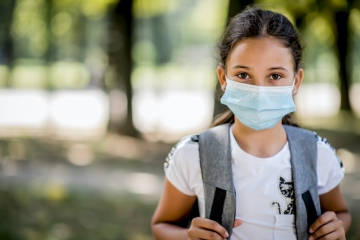
Children learn best when they feel safe and valued

4.8.2021
Flypaper

Proceed with caution: School reopening and Covid case rate data

Amber M. Northern, Ph.D.
4.8.2021
Flypaper

A long overdue look at interdistrict open enrollment in Texas

Jeff Murray
4.8.2021
Flypaper

The Education Gadfly Show: The pandemic’s silver lining: School choice victories in statehouses nationwide

4.8.2021
Podcast

Cheers and Jeers: April 8, 2021

The Education Gadfly
4.8.2021
Flypaper

What we're reading this week: April 8, 2021

The Education Gadfly
4.8.2021
Flypaper
view

Reduce class sizes, lengthen the school year, provide tutoring—or let principals decide?

Marguerite Roza, Chad Aldeman 4.8.2021
Flypaper
view

Children learn best when they feel safe and valued

4.8.2021
Flypaper
view

Proceed with caution: School reopening and Covid case rate data

Amber M. Northern, Ph.D. 4.8.2021
Flypaper
view

A long overdue look at interdistrict open enrollment in Texas

Jeff Murray 4.8.2021
Flypaper
view
OK capitol building

The Education Gadfly Show: The pandemic’s silver lining: School choice victories in statehouses nationwide

Michael J. Petrilli, David Griffith, Ph.D., Amber M. Northern, Ph.D., John Schilling 4.8.2021
Podcast
view

Cheers and Jeers: April 8, 2021

The Education Gadfly 4.8.2021
Flypaper
view

What we're reading this week: April 8, 2021

The Education Gadfly 4.8.2021
Flypaper
view

High-quality curriculum doesn't teach itself

Robert Pondiscio
4.8.2021
Flypaper

There are two things you need to know about teacher “professional learning.” It almost always sucks. And it’s hardly ever about the curriculum teachers use. There’s a third thing worth knowing, too: Despite an estimated $18 billion spent annually on “PL,” there’s very little evidence that it’s effective. One report found that professional development tends to improve student outcomes very little, despite an average cost of $18,000 per teacher per year. Moreover, what scant evidence exists tends to evaluate the quality of professional development entirely on teachers’ perceptions: If teachers think their PD is effective, then it’s effective.

A new initiative is taking up the challenge of reviewing and rating professional learning in a more rigorous way, centered on the adoption and use of “high-quality instructional materials” (HQIM), and with the ambition of becoming something like the EdReports.org of professional learning. Louisiana-based Rivet Education has quietly published a “Professional Learning Partner Guide” aimed at increasing states’ use of high-quality instructional materials (HQIM) and aligned professional development for teachers.

In 2017, I reported and wrote a piece for Education Next on Louisiana’s effort under then-state chief John White to incentivize the adoption and implementation of rich and rigorous curriculum, and to use that as the pivot around which everything else revolves: assessment, professional development, and teacher training.

Rivet is the brainchild of a pair of veterans of that Louisiana work, Litsy Witkowski and Annie Morrison. “We saw the impact that our work on curriculum and instruction, and professional learning had in Louisiana,” Morrison tells me. “But most importantly, I think we saw this theory of change that we embraced in Louisiana that state agencies should define quality and they should define that quality across multiple pieces, assessment, standards, materials, professional learning, and they can incentivize their use in ways that don’t take away local control.”

Despite a burgeoning interest in HQIM, efforts to place curriculum at the center of school improvement efforts still appear to be the exception, not the rule. A 2020 RAND report noted that evidence is “mixed” on the extent to which curricula influences teacher practice and student learning. “A key reason is the role and work of the teacher in curriculum implementation,” the report noted. “Teachers are better positioned to use curricula well in their classroom lessons if they work within an instructional system in their school and district where standards, curricula, assessments, professional learning, and evaluation are all in alignment and working together to help teachers engage students in standards-aligned classroom practices.”

This was the logic behind Louisiana’s initiative and Rivet’s effort to evaluate and rate professional learning providers included in their Partner Guide. The two dozen or so recommended providers successfully met various “gateways” to merit inclusion. Applicants submit learning materials like training presentations, handouts, guidebooks, course syllabi, and coaching notes. Rivet’s reviewers evaluate the materials to determine if the organizations offer “significant evidence of robust, HQIM-aligned professional learning services.” Those that meet the criteria are profiled in Rivet’s “Professional Learning Partner Guide.”

Neither is Rivet a voice in the wilderness here. The Carnegie Corporation recently published a paper urging a shift to anchor professional learning in HQIM. “Traditional teacher professional development often takes the form of a lecture-heavy workshop disconnected from the day-to-day lessons that teachers lead,” the report noted. “By contrast, curriculum-based professional learning is active, ongoing, and focused on improving the rigor and impact of teachers’ lessons.”

These are welcome and overdue initiatives. But there should be no illusions about the complexity of the work. It’s a far steeper challenge than reviewing curriculum materials, which are comparatively static. The number one provider of teacher professional learning is not TNTP, ANet, or any of the two dozen other outfits that get the thumbs up from Rivet. It’s schools and districts themselves. Next come local universities, independent consultants, curriculum vendors, and the inevitable parade of camp followers with something to sell.

Also, while curricular materials arrive in classrooms as written, there are many more moving parts in professional development, which is generally delivered in person by individual trainers with a range of abilities, personalities, and skill. What has made Ed Reports successful is that it has established standards for quality in instructional materials and exerts an influence on curriculum developers to do what it takes to earn its top ratings. That’s much harder to do with PD providers because the pool of providers is vast and disorganized compared to the relatively small universe of publishers. There aren’t enough recognized, quality providers with sufficient capacity to constitute a “market” of quality providers at present.

But without question, there is room to encourage professional learning organizations to improve their services, or merely reorient PD to focus on curriculum, rather than pedagogy at large or the latest initiative from a school district. Arguably, the greatest leverage offered by Rivet’s Practice Guide is to raise districts’ own view of what professional learning should look like, and to raise sophistication about high-quality implementation of curriculum. This has been a bit of a blind spot for too long even among curriculum advocates, who can be guilty of promoting the idea (or allowing it to go unchallenged) that merely adopting “HQIM” is enough. As David Steiner of Johns Hopkins noted in this space not long ago, “We have built a system that not only fails to support the sustained use of demanding curriculum—but actively produces powerful disincentives to its use.”

Joanne Weiss, who co-leads the Instructional Materials/Professional Development Network at the Council of Chief State School Officers, which now includes thirteen states and was inspired by Louisiana’s curriculum-focused initiative, says, “I can project myself into a happy future where these vendors and PD providers have helped a district build their capacity, with the right structures in place and the right people leading PD.” Then you wouldn’t necessarily need a standing army of first-rate PL providers. But for now, it’s the linkage between high-quality materials and professional learning that’s the breakthrough idea. Says Weiss, “If we don’t get teachers who are trained in skillful use of instructional materials, there’s no silver bullet here.”

view

Reduce class sizes, lengthen the school year, provide tutoring—or let principals decide?

Marguerite Roza | Chad Aldeman
4.8.2021
Flypaper

District leaders may be celebrating the $122 billion in stimulus relief Congress approved for K–12 schools last month. But with more money comes more pressure for local leaders to spend those dollars in ways that do the most good for students while avoiding budget pitfalls.

There are few limitations on the funds. The law stipulates that 20 percent of the money be used to “address learning loss” among students through the use of “evidence-based interventions.” Congressional appropriators listed summer programs, extended school days, or afterschool programs as optional uses of money, but as a practical matter, districts could justify almost anything from tutoring to improving building-ventilation or even adding more staff. Honestly, we’re challenged to find something that districts couldn’t spend their money on.

However, the aid is temporary. Leaders who commit to things they won’t be able to afford once the money runs out are setting themselves up to fall off a funding cliff in a few years.

So how can district leaders make good spending choices? Now is a great time to employ the classic “would you rather” test to help explore spending tradeoffs and think through the cost and value of competing investments with finite dollars at hand. Crafting a range of spending options that all carry the same price tag can help leaders grapple with which option has the potential to do the most good for students, while acknowledging the tradeoffs associated with each choice.

The latest round of stimulus works out to an average of $2,450 per student, although the amounts vary widely by state and school district. Consider the following spending options for a district aiming to spend a portion of its money to alleviate unfinished student learning. Each option would cost about the same $1,000 per pupil. For that amount, a district could:

A. Reduce class sizes by two students for a year.
B. Extend a school year by four weeks for all students.
C. Provide one-third of students with a year’s intensive tutoring.
D. Offer four-week learning camps for all K–5 students this summer and next.
E. Give principals the money to decide what makes the most sense in their school.

These are back-of-the-envelope estimates, and districts should run their own numbers. But there are clear tradeoffs across and within each option.

The class-size reductions in option A would reduce each teacher’s workload a bit, but they would not add any more instructional time for students who may have only received a partial education this year. To make it work, districts would need to hire new, full-time teachers, which could get tricky when the money runs out.

Option B would add instructional time for students. But like option A, it’s a one-size-fits-all approach, meaning the dollars wouldn’t be targeted specifically to the kids who need the most support.

The tutoring in option C could be used to target aid directly to the students who needed it the most. Success will hinge on whether schools can launch a large-scale, effective tutoring program outside of their normal classroom schedules, as well as whether the students who need it agree to participate.

Context matters, too. For instance, the learning camps in option D may work better in communities where there’s more appetite for summer programs, but take-up rates would depend on community preferences and the availability of competing options.

Shifting the decisions to principals, as would be the case with option E, allows school leaders to customize supports based on the needs of their own mix of students. While that might spur some innovative responses, it would mean less consistency from school to school.

Another important step in the “would you rather” test is to consider what use of the funds would bring the most value to the family. From a family’s perspective, does their child need tutoring or a summer camp? Or would they prefer to spend the $1,000 on something else entirely?

Every district will need to decide which tradeoffs make sense based on their own community. But whatever option(s) a district picks (from this list or one they draft themselves), the imperative for all district leaders is the same: focusing on doing the most for students with the money.

Education spending always involves choices. Smart choices require understanding the value of each dollar, and “would you rather” questions help leaders to reflect on their assumptions about how a program or service is best structured, what outcomes will be achieved, the benefit to the student, and at what cost.

“Would you rather” choices also help build community engagement and trust. Parents, teachers, and other stakeholders can be invited to weigh their preferences among different cost-equivalent scenarios.

It’s no accident that all the spending options presented above are cost-equivalent investments over a limited period of time. That’s because districts can get into trouble when they obligate themselves to recurring spending that has no end date.

Given the time-limited nature of the federal funds, we caution districts against using the funds to hire a slew of new employees in the same ways as they did pre-pandemic. When the money runs out, no district wants to be considering furloughs or layoffs a few years from now. And there are other, more financially sustainable options for adding labor, such as contracting or paying stipends to current staff who agree to take on more work.

One thing’s for sure: District leaders should prepare to be judged for how they spend their federal relief money. Big one-time sums draw big scrutiny. Those who take time now to weigh a range of cost-equivalent options may avoid decisions that come back to haunt them long after the pandemic abates.

Editor’s note: This was first published by Education Next.

view

Children learn best when they feel safe and valued

4.8.2021
Flypaper

Editor’s note: The Thomas B. Fordham Institute recently launched “The Acceleration Imperative,” an open-source, evidence-based resource designed to aid instructional leaders’ efforts to address the enormous challenges faced by their students, families, teachers, and staff over the past year. It comprises four chapters split into nineteen individual topics. Over the coming weeks, we will publish each of these as a standalone blog post. This is the fourth. Read the first, second, and third.

Feeling safe and valued is vital to a child’s development. Learning suffers when students fear for their safety, worry about being bullied, or don’t sense their teachers have high expectations for their success. In a healthy, supportive climate, students are engaged and take intellectual risks. They follow well-established rules and norms for behavior that their teachers and school leaders model and maintain. Such a community is characterized by positive relationships between teachers and students, a place where genuine respect is the norm, and where all students feel they belong.

The same is true for adults—both the teachers and families who make up a school community. In a nurturing culture, educators and family members share candid exchanges based on mutual interests and respect. Their social and emotional needs are part of the equation, too.

This climate does not occur magically—rather, it must be cultivated through deliberate school-wide strategies, expectations, and rules. A safe and supportive school culture should reflect shared values and take into account the communities and cultures students bring with them to school. And it must include sound classroom-management practices and developmentally appropriate supports, including social well-being and mental health interventions. This will be particularly important—and challenging—in the post-pandemic era, given the significant trauma so many students likely experienced over the past year, especially those growing up in poverty.

Recommendations

  • Establish and maintain authentic, candid relationships with students and their families that reflect and show respect for their communities and cultures. In-school activities like greeting individual students by name, and making time for regular check-in conversations can be helpful, as can family-outreach strategies like calling home to share a positive report from a school day or surveying parents on their opinions of the school.

  • Uphold a consistent, shared code of conduct in which students and adults are expected to work hard, show respect for the rules and one another, and make positive behavioral choices. Focus efforts on preventing disruption, including recognizing and rewarding positive behavior and providing mental-health supports to students who have experienced trauma and may struggle with self-regulation.

  • Set and communicate high expectations for all students and provide access to these goals through universal supports, such as after-school office hours or tutoring that is open to all.

  • Guard against racially biased discipline, including by carefully tracking and analyzing data on misbehavior and the school’s response, including office referrals and in or out-of-school suspensions.

  • Consider assigning instructional duties by subject-area strength or “looping” students so they work with the same teacher for more than one year.

  • Adopt practices that support teachers’ emotional well-being, such as informal socializing, regular check-ins, and limits on evening emails.

Rationale

Positive relationships between students and teachers are at the core of a successful classroom environment, one where students feel seen, work hard, and treat one another with respect. We know that when there are such relationships, students are happier and more likely to thrive. A positive school climate is correlated with beneficial student outcomes on many measures, including attendance, assessment outcomes, high school graduation rates, physical health, and adolescent pro-civic behaviors.

But it is important to understand that strong relationships don’t mean friendship-like bonds or generic feelings of being liked. The Search Institute’s Developmental Relationships Frameworks provides a sound model for educators looking to create school climates that foster learning. It is based on five elements: express care, challenge growth, express support, share power, and expand possibilities. In this understanding of climate, teachers don’t just express care for their students, they envision and communicate ambitious possibilities for their futures and provide the challenges and supports needed to realize that potential.

This all rests of skillful classroom management, which minimizes disruption and sets clear rules and expectation for behavior and success. Students feel safer and behave better when they know that there are transparent norms in the classroom, and when they know what the consequences will be if they make a mistake.

The National Council on Teacher Quality, in its overview of the research, stresses that positive relationships are developed not through friendship but through a teacher’s implementation of “fair rules and productive routines.” In other words, teachers need to create a structured, positive environment for students in order for the relationship to be a positive one. Concrete strategies for classroom teachers can be found in “Reducing Behavior Problems in the Elementary Classroom,” a practice guide published by the Institute of Education Sciences that affirms the importance of teaching and reinforcing consistent rules and routines, positively reinforcing appropriate behavior, and imposing consequences for negative behavior. In addition, principals and other school leaders should occupy a steady presence in the school’s halls and classrooms, which can prevent disciplinary problems from occurring.

The starting point is to ensure that students are highly engaged in learning by choosing high-quality, rigorous curriculum that is content-rich, interesting, and culturally relevant, with instruction that connects all students to it. In elementary school classrooms, this tends to mean trading out disconnected literacy skill-building activities like “making inferences” for text-based learning about high-interest topics like the Underground Railroad or explorations in space. Relationships and rules are key, but rich content and effective teaching also help to create orderly and purposeful classroom environments.

Schools with safe and supportive climates also take into account the holistic needs of teachers and students. Engaging, high-quality instruction is key, but so are opportunities for physical activity and unstructured, student-led games and playground time. Daily schedules should have time for exercise outdoors.

Reading List

Delpit, L. (2013). Multiplication Is for White People: Raising Expectations of Other People’s Children. The New Press.

Epstein, M., Atkins, M., Cullinan, D., Kutash, K., and Weaver, R. (2008). “Reducing Behavior Problems in the Elementary School Classroom: A Practice Guide (NCEE #2008-012).” Washington, D.C.: National Center for Education Evaluation and Regional Assistance, Institute of Education Sciences, U.S. Department of Education.

  • Provides the evidence base for the idea that clear rules and expectations that are reinforced deliberately by teachers improve student behavior.

Greenberg, J., Putnam, H., and Walsh, K. (2014). “Training Our Future Teachers: Classroom Management.” National Council on Teacher Quality.

  • Draws heavily on research-backed classroom management practices and identifies five key strategies that teacher candidates should master: establish rules, build routines, reinforce positive behavior, impose consequences for misbehavior, and foster student engagement.

Hamre, B., and Pianta, R. (2005). Can Instructional and Emotional Support in the First-Grade Classroom Make a Difference for Children at Risk of School Failure? Child Development, 76(5), 949–67.

Jacob, B., and Rockoff, J. (2011). “Organizing Schools to Improve Student Achievement: Start Times, Grade Configurations, and Teacher Assignments.” Washington, D.C.: Brookings Institution.

Manning, J., and Jeon, L. (2020). “Supporting Teachers During Re-Entry.” Baltimore, MD: Johns Hopkins University Institute for Education Policy.

Nelson, B.S., and Hammerman, J.K. (1996). “Reconceptualizing teaching: Moving toward the creation of intellectual communities of students, teachers and teacher educators.” From Teacher Learning: New Policies, New Practices. The Series on School Reform. McLaughlin, M., and Oberman, I., eds. Newton, MA: Center for Development of Teaching

  • Provides a framework for the idea of classrooms as “intellectual communities” that are the ultimate end of the rules and relationships that foster positive behavior.

Oliver, R., Wehby, J., and Reschly, D. (2011). Teacher classroom management practices: Effects on disruptive or aggressive student behavior. Campbell Systematic Reviews. 4(1), 1-55.

  • Summary showing how strong classroom management systems based on clear and transparent rules can reduce disruptive student behavior.

Quin, D. (2017). Longitudinal and Contextual Associations Between Teacher–Student Relationships and Student Engagement: A Systematic Review. Review of Educational Research, 87(2), 345–387.

  • Review of 46 studies on the impact of strong relationships between teachers and students that decisively shows positive impacts on academics, attendance, positive behavior, and many other areas.

Roorda, D., Koomen, H., Split, J. and Oort, F. (2011). The Influence of Affective Teacher–Student Relationships on Students’ School Engagement and Achievement: A Meta-Analytic Approach. Review of Educational Research, 81(4) 493-529.

  • Looks across 99 studies to investigate the associations between affective qualities of teacher–student relationships and students’ school engagement and achievement to find evidence of the major impact of positive relationships on academic success.

Simonsen, B. Fairbanks, S., Briesch, A., Myers, D., and Sugai, G. (2008). Evidence-based Practices in Classroom Management: Considerations for Research to Practice. Education and Treatment of Children. 31(3), 351-380.

  • Summary of research that finds evidence that setting and reinforcing clear expectations for behavior is an effective classroom-management practice.

Skinner, E., and Belmont, M. (1993). Motivation in the classroom: Reciprocal effects of teacher behavior and student engagement across the school year. Journal of Educational Psychology, 85(4), 571-581.


view

Proceed with caution: School reopening and Covid case rate data

Amber M. Northern, Ph.D.
4.8.2021
Flypaper

School reopenings in the wake of the coronavirus pandemic are an ongoing, imperfect work in progress, and the science that school leaders and parents are being encouraged to follow is evolving. In mid-February 2021, NBER released a study conducted by seven scholars, including Dan Goldhaber from the University of Washington and Katharine Strunk and Scott Imberman from Michigan State University, that provided up-to-that-minute data on the extent to which in-person schooling contributes to the spread of Covid-19. It is a large, detailed, and impressive piece of work which adds important pieces to this vital puzzle.

The research team uses data on reported Covid cases in Michigan and Washington State as collected by the CDC and the respective state health agencies, as well as district-level information on learning modalities as reported by each state’s department of education via monthly surveys administered to districts. The latter data include not only the modality offered (fully in-person, hybrid, or remote-only schooling) but the approximate share of students receiving each of these different modes of instruction. Their first model—the “sparse model,” since it uses few controls—shows that in-person modalities (fully in-person and hybrid) are positively correlated with increased Covid cases—more so in Michigan than Washington.

The researchers then use a wide variety of other community variables to build more complex models designed to account for non-schooling risk factors for Covid-19 spread. Among them are the share of individuals in a county who report “always” wearing face masks in public as of July 2020, the share of people who stay at home as calculated by the U.S. Department of Transportation, the share of the 2016 presidential election vote for Donald Trump in each county (a measure of political leaning), county unemployment rates, the share of the population that attend county public schools, the share who are age sixty-five or older, the share who live in a nursing home, and so on. Once they allow the effects of modality to differ according to the level of community spread and account for the factors above, in-person schooling is not associated with increased spread of Covid—at least in counties reporting low levels of pre-existing Covid cases.

That result changes in counties reporting moderate to high pre-existing Covid rates. For example, Michigan districts offering in-person learning show increased Covid-19 spread for daily average case counts over twenty-one cases per 100,000 population. Still, the researchers are cautious because their district and county fixed-effect models can’t pick up every unobserved factor that may be affecting modality offerings or the choice to attend in person that are also related to Covid spread in communities.

They show, too, that the amount of uptake matters. When examining data on the proportion of students actually attending school in person, they find that the results in Washington are driven mainly by school systems with relatively high proportions of students—over 75 percent—attending in person. Yet in Michigan, compared to the fully-remote option, they find that Covid spread may be reduced even more in districts where small percentages of kids are in person (25 percent or less). This feels counter-intuitive, but could be an indication that there are simply too many out-of-school variables to collect and model. To put a finer point on it, the estimated effect of in-person schooling on Covid spread may depend on what students and staff in the counterfactual of no in-person schooling are doing. We can’t assume fully-remote learning is safer, since some remote families are participating in learning pods, others may be hiring babysitters and nannies who watch several kids, or families may be involving kids in other social activities because they are missing school. Any of these activities could serve to expose kids and adults to Covid as a direct result of the imposition of a learning modality meant to keep them safe.

Their bottom line finding—that in person schooling has a significant impact only at higher pre-existing levels of spread—seems in line with earlier guidance. But we also know that case rates are a function of testing as well as incidence. And as of late, some of the guidance is saying that it is safe to attend schools even when spread is higher in a community assuming other safety protocols are in place. While many early fears regarding Covid-19 spread in schools—kids won’t wear masks, social distancing is impossible in the lunch room, etc.—have not come to pass, others persist. This research is fairly positive regarding the safety of reopening schools to in-person learning. Its data, however, predate widespread vaccination, which could add even more to the evolving picture. Still, given what we know at this juncture, a combination of moving forward on reopening while exercising abundant caution seems to be the way forward.

SOURCE: Dan Goldhaber, Scott A. Imberman, Katharine O. Strunk, Bryant Hopkins, Nate Brown, Erica Harbatkin, and Tara Kilbride, “To What Extent Does In-Person Schooling Contribute to the Spread of COVID-19? Evidence from Michigan and Washington,” NBER Working Paper #28455 (February 2021).

view

A long overdue look at interdistrict open enrollment in Texas

Jeff Murray
4.8.2021
Flypaper

Interdistrict open enrollment (OE) is something of an enigma in Texas. It’s up to districts whether to open their borders or to keep them closed to non-resident students. But unlike other states, the Texas Education Agency (TEA) does not track or report such enrollment data statewide. A new analysis released by the Reason Foundation helps to provide a first-ever snapshot of OE in the Lone Star State.

The data, aggregated from regional reports compiled by the TEA following the 2018–19 school year, give only the most basic information. Of the state’s nearly 5,432,000 K–12 students, approximately 146,000 of them, or about 3 percent, attended a traditional public school outside of their residentially assigned district. Based on schools’ “Overall Scaled Score” or “Overall Rating” in TEA’s accountability system, students disproportionately left lower-rated districts for higher-rated districts. OE students also tended to transfer out of districts with higher percentages of economically disadvantaged students, although the backgrounds of the departing OE student population remain unknown. A wide variation in the number of OE students accepted by districts was apparent, with some enrolling thousands from outside of their boundaries and others enrolling none at all. A data visualization tool developed with the assistance of the Texas Public Policy Foundation reveals the location of these hubs of activity and inactivity. There seems to be little rhyme or reason to the observable patterns. It is not unusual for a district with a high influx of students to be surrounded by districts registering low outflows.

As the researchers lament, these data are broad snapshots of open enrollment patterns. There is no way to know which students are moving or how they are faring in their new schools. It is similarly unknown whether choices are limited or abound. Although a 2011 Brookings analysis of school choice policies across the country called interdistrict open enrollment a “widely available and easily accessible” form of school choice, author Russ Whitehurst told the Texas Tribune at the time that the lack of state level data in the Lone Star State served to lower the value of OE. “It’s not a marketplace if parents can’t really shop and compare and make a rational choice,” he said. This was perhaps an exaggerated response, but the criticism of data availability was valid then and is only slightly less valid now.

The Reason Foundation report raises a number of concerns on behalf of families, including opaque and varying transfer processes from district to district, which arise from the “black box” of Texas’s district-centric OE set up. While this analysis is a much-needed first step, more and better data must be collected and readily available if families are to benefit from OE in Texas to the fullest possible extent.

SOURCE: Jordan Campbell and Aaron Garth Smith, “Analysis of Texas School District Open Enrollment Data,” Reason Foundation (March 2021).

view
OK capitol building

The Education Gadfly Show: The pandemic’s silver lining: School choice victories in statehouses nationwide

4.8.2021
Podcast
 

On this week’s podcast, John Schilling, president of the American Federation for Children, joins Mike Petrilli and David Griffith to discuss a string of school choice victories in this year’s state legislative sessions. On the Research Minute, Amber Northern examines how some privileged parents discussed their local school system on an online parent forum.

Amber's Research Minute

Vanessa Williamson, Jackson Gode, & Hao Sun, “‘We all want what’s best for our kids’: Discussions of D.C. public school options in an online forum,” Brookings Institution (March 2021).

If you listen on Apple Podcasts, please leave us a rating and review - we'd love to hear what you think! The Education Gadfly Show is available on all major podcast platforms.

view

Cheers and Jeers: April 8, 2021

The Education Gadfly
4.8.2021
Flypaper

Cheers

  • Schools in Richardson, Texas, are identifying more gifted students from underprivileged backgrounds. —Dallas Morning News
  • After pressure from parents, New York City Mayor DeBlasio is scrapping the union-backed, but not evidence-based, “two-case rule” that often caused schools to close for ten days or longer. —New York Times
  • Strong governors from both parties are overcoming union pressure and reopening schools. —New York Times
  • A Black mother and school-board candidate in Evanston, Illinois, opposes the antiracist curriculum being taught to her children, which she deems “disempowering, divisive, and ill-suited to helping students of color succeed in school.” —The Atlantic

Jeers

  • The New York Times cries wolf on an impending teacher shortage, as Matt Barnum of Chalkbeat rightly points out. —Chalkbeat
  • A bill to grant Chicago’s teachers union even broader bargaining rights might become law, with potential repercussions for reopening high schools. —Chalkbeat Chicago
view

What we're reading this week: April 8, 2021

The Education Gadfly
4.8.2021
Flypaper
  • Districts and educators define curriculum quality differently than experts—and that’s OK. —Michael B. Horn
  • A Stanford study confirms that the use of standardized test results in college admissions is more equitable than the alternatives. —Greg Ashman
  • Catholic schools can make a post-Covid comeback. Let’s improve access to school choice. —Kathleen Porter-Magee
  • School districts are weighing how to use federal stimulus dollars to bring students back to the classroom and solve pre-pandemic problems. —AP
  • “We can’t afford to love learning acceleration to death.” —Paul Hill and Robin Lake
Fordham Logo

© 2026 The Thomas B. Fordham Institute
Privacy Policy
Usage Agreement

National

P.O. Box 110
Burke, VA 22009

202.223.5452

[email protected]

Ohio

P.O. Box 82291
Columbus, OH 43202

614.223.1580

[email protected]

Sponsorship

130 West Second Street, Suite 410
Dayton, Ohio 45402

937.227.3368

[email protected]