Mobile Navigation

  • National
    • Policy
      • High Expectations
      • Quality Choices
      • Personalized Pathways
    • Research
    • Commentary
      • Gadfly Newsletter
      • Flypaper Blog
    • Events
    • Scholars Program
  • Ohio
    • Policy
      • Priorities
      • Media & Testimony
    • Research
    • Commentary
      • Ohio Education Gadfly Biweekly
      • Ohio Gadfly Daily
  • Charter Authorizing
    • Application
    • Sponsored Schools
    • Resources
  • About
    • Mission
    • Board
    • Staff
    • Career
Home
Home
Advancing Educational Excellence

Main Navigation

  • National
  • Ohio
  • Charter Authorizing
  • About

National Menu

  • Topics
    • Accountability & Testing
    • Advanced Education
    • Career & Technical Education
    • Charter Schools
    • Curriculum & Instruction
    • ESSA
    • Evidence-Based Learning
    • Facilities
    • Governance
    • Personalized Learning
    • Private School Choice
    • School Finance
    • Standards
    • Teachers & School Leaders
    • Think Again
  • Research
  • Commentary
    • Gadfly Newsletter
    • Flypaper Blog
    • Gadfly Podcast
  • Events
  • Scholars Program

The Education Gadfly Weekly

Sign Up to Receive Fordham Updates

We'll send you quality research, commentary, analysis, and news on the education issues you care about.
Thank you for signing up!
Please check your email to confirm the subscription.

The Education Gadfly Weekly: Checker Finn on empty pedestals and diminished history

Volume 20, Number 25
6.24.2020
6.24.2020

The Education Gadfly Weekly: Checker Finn on empty pedestals and diminished history

Volume 20, Number 25
view
High Expectations

Empty pedestals and diminished history

A legitimate grievance against Confederate monuments has degraded into something deeply troubling. Statues of George Washington, Thomas Jefferson, Benjamin Franklin, Theodore Roosevelt, Winston Churchill, and the like are now getting removed, toppled, or vandalized. It’s a threat to our history based on disapproval of some actions and practices of past individuals, never mind how central—even heroic—their roles were to the history that we want our kids to learn more about. Few young Americans are learning American history as it is. We shouldn’t want them to learn even less.

Chester E. Finn, Jr. 6.24.2020
NationalFlypaper

Empty pedestals and diminished history

Chester E. Finn, Jr.
6.24.2020
Flypaper

Do programs for advanced learners work?

Jonathan Plucker
6.24.2020
Flypaper

Curriculum in a pandemic: Four lessons learned

Lynne Munson
6.24.2020
Flypaper

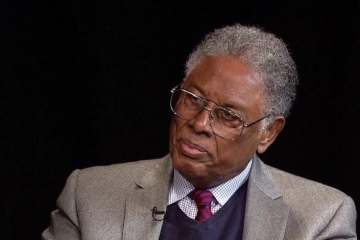
Tom Sowell defends charter schools

Chester E. Finn, Jr.
6.24.2020
Flypaper

Closing the digital divide for charters

Jessica Poiner
6.22.2020
Ohio Gadfly Daily

The Education Gadfly Show: The case for good schools as a state constitutional right

6.24.2020
Podcast
view

Do programs for advanced learners work?

Jonathan Plucker 6.24.2020
Flypaper
view

Curriculum in a pandemic: Four lessons learned

Lynne Munson 6.24.2020
Flypaper
view

Tom Sowell defends charter schools

Chester E. Finn, Jr. 6.24.2020
Flypaper
view
Digital divide in charter schools SR image

Closing the digital divide for charters

Jessica Poiner 6.22.2020
Ohio Gadfly Daily
view

The Education Gadfly Show: The case for good schools as a state constitutional right

Michael J. Petrilli, Nina Rees, David Griffith, Ph.D., Amber M. Northern, Ph.D. 6.24.2020
Podcast
view

Empty pedestals and diminished history

Chester E. Finn, Jr.
6.24.2020
Flypaper

Theodore Roosevelt’s statue is being removed from the front entry of the American Museum of Natural History that he did so much to help create.

Portraits of four previous Speakers were removed from the Capital’s corridors last week by order of Nancy Pelosi, although they led the U.S. House of Representatives for a total of ten years.

George Washington’s memorial in Baltimore has been defaced.

Washington and Jefferson were both toppled in Portland.

Washington and Franklin statues have been spray-painted in Philadelphia.

Andrew Jackson’s statue needed police protection to avoid being pulled down by vandals in Lafayette Square.

Christopher Columbus’s very name is turning into a four-letter word, joined by the toppling of statues commemorating him all over the place.

A group of Wisconsin protesters even brought down—and tossed into Lake Monona—the statue of a little-known immigrant from Norway who served as a colonel in the Union army.

Nor is this violent repudiation of the past confined to American shores. Churchill’s statue has been vandalized and may be moved from Parliament Square to a museum, though one must wonder if the defacers wish that Hitler had won. And Cecil Rhodes’s statue will vanish from Oriel College, Oxford, though it’s doubtful they’ll surrender the mining fortune that pays for Rhodes scholarships.

What’s next? Must Columbus, Ohio, now change its name? How about Jefferson City, Missouri? Washington and Lee University? Cortez, Colorado? Yale University? Then there’s the nation’s capital, itself, where Fordham’s main office is located. Why should its name memorialize a slave-owner? And what of that tall obelisk honoring him just south of the White House? Hmmm, “White House.” Perhaps appropriate for the incumbent but surely a poor choice of names for the chief executive’s residence going forward.

What’s happening to our history? Is it getting toppled, too, because we disapprove of some actions and practices of past individuals, never mind how central their roles may have been to the history that we want our kids to learn more about?

A clear and present risk in history education has long been what historians call “presentism,” viewing the past—and passing judgment on its events and actors—through the lens of today’s values and priorities. Viewed through that lens, what’s important about an historical event or person isn’t why it happened the way it happened when it happened, but rather our opinion as to whether it should have happened. What gets added in our hyper-woke age is the judgment that, if any aspect of an historical personage or event is now unpalatable, that person or event should be criticized, disavowed, and if possible, erased, no matter what else they may have accomplished or what difference they may have made. 

I understand, obviously, that putting someone’s likeness on a pedestal in the form of a statue, or on a high-profile wall in the form of a portrait, serves to highlight and call attention to them, perhaps glorify them. But mankind has been doing that forever. Nobody likes Satan or the goddess Kali but their images are all over the place. So, too, the unlovable members of the Borgia family, not to mention Hitler and Stalin. Those folks aren’t necessarily depicted and displayed in public venues because viewers—or the artists—think well of them, but because they are famous personages who played large roles in shaping the world we live in today.

When it comes to Jefferson, Roosevelt, and Churchill, say, they’re depicted in portraiture and statuary because they did great things that most people today appreciate and approve, notwithstanding other parts of their lives that we may now deplore. Do the deplorable parts justify defacing or tearing down their images?

I get the distinction between them and Confederate generals, most of whose statues went up during the Jim Crow era. If their principal contribution to U.S. history was doing their utmost to preserve slavery while sundering the union, I can’t defend celebrating them—though, once again, displaying Stalin’s portrait doesn’t necessarily signal praise. I do think kids should learn a lot about the Civil War, however, in which the likes of J.E.B. Stuart were as consequential as William Tecumseh Sherman. (It also needs to be recalled that Robert E. Lee was a distinguished officer in the U.S. Army—including service in the Mexican War and superintendent of West Point—for thirty-two years before, as we now say, “turning traitor” after Lincoln offered him command of the Union army.)

I also get the distinction between statues torn down because people disapprove of the person being commemorated and a few situations where it’s more about the statuary itself. The main issue with the Roosevelt statue facing Central Park isn’t about him so much—though he definitely slaughtered a lot of animals—as the depictions of a Native American man and an African man at his side. Keep in mind, though, that when that “heroic” grouping debuted in 1940, it wasn’t widely seen as offensive, however much it may appear that way to today’s onlookers.

Here’s the point: Few young Americans are learning American history in school. We have ample data showing that, including the recent NAEP results. Insofar as they’re learning and perhaps retaining some knowledge of the nation’s past, it’s mostly coming from other places, from Ken Burns documentaries, from David McCullough’s books, from watching Hamilton and from visiting Monticello and Mount Vernon and Mt. Rushmore and Independence Hall. And, maybe, just maybe, from eyeballing and driving by and walking past and perhaps visiting the statues and monuments that have been erected in traffic circles, public parks, the National Mall, and elsewhere. Do we really want them to learn even less? And do we really want them to view George Washington as a slave owner rather than the “father of his country”? To regard Churchill as an imperialist or as the leader who wouldn’t appease Hitler and roused England to fight back? Of course they should learn both. But that won’t happen if we erase them from view as if they never existed.

As the Wall Street Journal editorial board correctly noted, “This current anti-monument wave degrades what originated as a legitimate grievance: the presence of Confederate monuments, many erected during the Jim Crow era to perpetuate the Lost Cause myth and advance white supremacy. But that idea has been taken over now by what has turned into a mob intent on willy-nilly eradication of chunks of American history.”

view

Do programs for advanced learners work?

Jonathan Plucker
6.24.2020
Flypaper

As I noted in a recent post, attitudes toward advanced education are cyclical. From gifted education to talent development programs, from honors classes to AP, we have experienced a largely positive stretch of media attention and state-level policy gains. However, advanced education has started to come under fire, especially in urban districts. This pressure has only increased due to the economic crisis and heightened concerns about systemic racism.

Many of the current arguments against advanced programming have been around for a while: Those kids will be fine on their own, you shouldn’t separate students based on ability, teachers can just differentiate for every student in the regular classroom, advanced programs are biased against lower income students, etc. Advocates are fairly adept at countering these misunderstandings.

But a new argument has emerged over the past couple years: “Research says that advanced programs don’t work.” That’s ridiculous, but it has become increasingly common, often presented as a known fact. Over the last couple years, I have had several journalists share versions of “The research clearly says ability grouping/gifted education/acceleration/enrichment doesn’t work.”

And with concerted efforts to eliminate advanced programming in high-profile districts—New York City and Seattle being current examples—this narrative is popping up like an aggressive weed. For example, the NYC Student Diversity Advisory Group (SDAG) asserted throughout its August 2019 report that gifted programs are not associated with evidence of effectiveness, recommending instead that NYC schools use enrichment instead, which is like saying pain medicine doesn’t work, so use ibuprofen! Think tanks (see this piece as an example) have jumped into the fray to support the SDAG recommendations, making similar claims. All of these attacks tend to be very thinly-sourced—if they contain any supporting research at all. For example, the SDAG report has thirty-seven citations, the majority of which are newspaper stories, think pieces, or a report of the SDAG itself—in other words, not research. Contrast those reports with the recent report commissioned by the Massachusetts Department of Education, which is carefully sourced, even-handed, and—not surprisingly—generally positive in its conclusions about the effectiveness of advanced education.

Advanced learning programs are effective, and we have reams of research to support that conclusion. Do we have high-quality, gold-standard, replicated research supporting every possible intervention? Of course not. Show me a field that does. For example, we’ve spent billions to study how to help students learn to read, yet we still have a very wide range of opinions on how to do one of the most foundational tasks in all of education. Furthermore, a field that can be described in that way (i.e., everything is totally research-supported) would be largely absent of innovation, which isn’t a good thing.

What follows is a rough summary of intervention research, listed from more to less evidence of effectiveness. For the purposes of this post, “evidence of effectiveness” is defined as research on positive student outcomes, broadly defined, with a bias toward experimental studies. A colleague who provided feedback on this post made a great point that needs to be kept in mind: All this assumes that the interventions are well-designed and carefully implemented, and even in those cases, not every strategy works the same every time, even in similar contexts, for every student. But in general, research supports the following summaries:

Acceleration: One of the most-studied intervention strategies in all of education, with overwhelming evidence of positive effects on student achievement. So much supporting work that it is impossible to do it any justice here; I’ll just point people to these resources from the Belin-Blank Center and this meta-analysis. We don’t have a lot of evidence that acceleration strategies impact excellence gaps, and there are reasons to believe they probably don’t, at least not by themselves. But the effectiveness of acceleration regarding increases in student learning is hard to question at this point.

Ability grouping: Not as clear cut as acceleration research, but studies find convincing evidence that flexible ability grouping is a net positive for the student learning of our most and least advanced students. The meta-analysis linked above found evidence within-class ability grouping was most effective for promoting advanced learning among various grouping strategies, and other studies suggest that flexible ability grouping may help close excellence gaps. The field’s growing research base on curriculum models can also be placed in this category, and those studies suggest that pre-differentiated, prescriptive curricula leads to significant growth in advanced learning.

Enrichment: Much less third-party research and very few experimental studies, making it difficult to determine the actual impact of these programs. What we do have is mixed but generally promising, especially for summer, residential enrichment—such as these examples here, here, and here. (Full disclosure: I work for an organization that runs such summer program.) What would be most helpful are the types of studies done on problem-based learning many years ago, which gathered evidence that PBL-focused instruction didn’t hurt student test scores. The argument became that PBL brings the possibility for tremendous depth of student learning in addition to a range of other, highly desirable soft skills, such as communication, collaboration, creativity, interest development, all with no negative impact on test results. Having this type of research would greatly facilitate the implementation of enrichment interventions, and I won’t be surprised if enrichment-based interventions will eventually be found to be among the best, if not the best, creativity interventions. Regarding excellence gaps, we have very little high-quality research on the impact of enrichment programs.

Selective high schools: Among the oldest strategies for advanced education are public high schools that selectively choose high-performing students based on entrance exam scores, hence the label “exam schools.” Despite the long history of this approach to advanced learning, very few experimental studies exist, and other sophisticated research designs often produce mixed-to-negative results (examples here and here). The issues surrounding exam schools are complex and controversial, with longstanding questions about diversity, or lack thereof, in these schools, the value-added for students, and their ability to close excellence gaps.

Given the above evidence, educators and policymakers can reasonably conclude there are research-supported interventions to promote advanced learning. However, my suspicion is that most advanced students are currently being taught using heterogeneously-grouped differentiation. This approach, which relies heavily on teachers to differentiate curricula and instruction for the wide range of student performance levels in their classrooms, is generally the favored approach in teacher preparation programs, at least partially explaining its ubiquity.

Yet there is very little research that teachers are effective differentiators for the wide range of student ability and performance levels they find in their classrooms, and many teachers appear to understand differentiation’s limitations. Indeed, when I press my “whole-class differentiation first, last, and always” colleagues and friends for evidence that it works for gifted students, the reply is usually to list districts that are trying this approach. That’s not evidence. Lots of people drive huge SUVs, but that is not evidence that doing so addresses climate change. What evidence we have suggests teachers have a hard time differentiating in the absence of ability grouping (including programs such as Advanced Placement). And again, there’s little to no research on effects of this form of differentiation on excellence gaps, either positive or negative.

We have an abundance of research on advanced education, and on balance the evidence is positive—certainly more positive than for critics’ alternatives. Do we need more and better research, especially on how to ensure these programs and interventions work for the diverse student body in our schools, especially regarding how the interventions impact the lives of students based on class, race, ethnicity, and gender? Absolutely, but that can be said about any educational intervention. For now, advocates should be confident in the depth of the research base on advanced education.


view

Curriculum in a pandemic: Four lessons learned

Lynne Munson
6.24.2020
Flypaper

Great Minds creates curricula in math, English language arts, and science for grades PK–12. I’m its founder and CEO, and when Covid-19 hit, we were ill-prepared for digital distance learning, like most everyone else. A RAND survey found that, pre-pandemic, most teachers used digital materials only to supplement their main curricula. We knew schools and districts needed vendors like us to respond to school closures with instructional materials that would help learning continue at home, including students lacking technology. With the support of partner districts, including Baltimore and Syracuse, we dropped everything to pivot from publishing print materials to recording digital lessons. Along the way we learned a few things that may help fellow educators as we all prepare for an uncertain school year this fall.

1. Whether students are in school or at home, content is king. Learning might look different at home, with perhaps fewer hours of study, but it shouldn’t suffer in quality. Wherever they are, students need access to the same kind of comprehensive, coherent, knowledge-building curricula that many use in the classroom.

In her book The Knowledge Gap, Natalie Wexler writes about a fourth grader named Matt who considered himself a member of the “dumb group.” Then his class studied a literacy module about the human heart. He wrote about Clara Barton and became an enthusiastic class participant and reader—and “smart.” Students need something worth writing about. Good content delivers. It also helps students understand and respond to current events. Kyair Butts, 2019 Baltimore teacher of the year, described how his sixth graders’ study of resilience in the Great Depression and the shared human experience of The Odyssey helped them weather the quarantine.

2. In an emergency, organizations must be able to pivot quickly. As of mid-March, we had zero online video lessons. By mid-May, our staff had completed 1,054 free video lessons in what we called Knowledge on the Go. Teachers assigned these lessons to students and parents used them with their children. We saw more than 8 million web views in eight weeks, with users in all fifty states and 188 countries.

Standing up a suite of cohesive, coherent lessons in three subjects wasn’t easy. For weeks, much of the staff worked twelve- to fourteen-hour days on a completely new, technically difficult project that brought a range of challenges, from video quality to complicated recording software. But our employees felt strongly that helping quarantined students, teachers, and parents was the right thing to do. More than 75 percent of our curriculum team consists of current or former teachers. Many are also parents. Both kinds of expertise contributed to their successful delivery of distance learning lessons.  

3. Find partners to amplify your own expertise. We have a website, an email subscriber list, and social media channels. Yet we needed much help in spreading the word about our online lessons to the teachers, parents, and students We asked education associations and think tanks to tell their networks about our lessons. We also worked with school districts to broadcast them on public access and public television channels to reach students who lack computers or internet access at home.

4. Listen to the field and act on feedback. Our teachers recorded lessons of varying lengths, whatever the material required. Some parents told us the initial videos were too long for young children. So we shortened the lessons. Teachers and parents asked for more features. We added more Spanish language materials. We swiftly made our print student editions and assessments available digitally. For our next iteration of online learning, we’re adding more digital tools to help students complete their work and assist teachers in evaluating that work and gauging student progress.

—

Now, more than ever, students need educators who evolve with the times to help them build knowledge, discover new ideas, and set a path for lifetime success. My company succeeded in our new endeavor. We’re here to cheer on others. You can do it, too.

view

Tom Sowell defends charter schools

Chester E. Finn, Jr.
6.24.2020
Flypaper

The publication date for this admirable book is Tom Sowell’s ninetieth birthday (June 30, 2020), and I doubt that’s entirely coincidental. Though Jason Riley reported three years ago that Sowell was “putting down his pen,” that obviously didn’t happen. And we’re better off as a result.

With charter schools under more political fire today than we’ve seen in decades, Sowell’s latest book is both timely and compelling. So, too, the excerpt that was featured in Friday’s Wall Street Journal. Although mostly focused on New York City and California—and with the New York saga focused mostly on the successes and tribulations of Eva Moskowitz and Success Academy—the book has national resonance. As Sowell writes, “The stakes are huge—not only for children whose education can be their one clear chance for a better life, but also for a whole society that needs productive members fulfilling themselves while contributing their talents to the progress of the community at large.”

It’s a short, fast read—half the pages are appendices and notes—and the author is a superb writer. His central message is straightforward: Although not all charter schools are successful, the good ones—such as KIPP and Success Academy—are doing a far better job of educating disadvantaged children, particularly children of color, than the district-operated schools those children would otherwise attend. But because charters pose threats, both reputational and fiscal, to those district schools, the powerful interests of teacher unions and others who depend on district schools for their own jobs and reputations are doing their upmost to throttle the charter movement. Sowell estimates, for example, that if all the children currently on waiting lists for New York charters were able to enroll in them, about a billion dollars in public spending would shift from the district to the charters.

Sowell is a longtime defender—both impassioned and analytical—of quality schools for minority youngsters. He has never lost his admiration for the outstanding job that D.C.’s Dunbar High School did for its Black pupils back in the bad old days of de jure segregation—or his dismay over its “abrupt destruction” in the 1950’s. Noting that Dunbar still exists today as a shadow of its one-time educational greatness, he warns that perhaps the greatest threat to charters today isn’t their annihilation, but rather a transformation of their basic nature—essentially the loss of their autonomy—in response to the “numerous and intrusive ‘reforms’…being proposed and enacted today, closely following the agenda of the teachers unions.” We could, in other words, end up with a hollow educational shell that’s called “charter schools” but is indistinguishable from the alternative and thus not worth the bother.

Kudos and thanks to Thomas Sowell—and happy ninetieth birthday!

SOURCE: Thomas Sowell, Charter Schools and Their Enemies (Basic Books 2020).

view
Digital divide in charter schools SR image

Closing the digital divide for charters

Jessica Poiner
6.22.2020
Ohio Gadfly Daily

Approximately nine million students across the nation lack access to the internet or to internet-connected devices. Lawmakers and educators have known for years that this disparity, often referred to as the “digital divide,” can contribute to achievement and attainment gaps based on race and income. But the sudden and large-scale transition to full-time remote learning brought about by the coronavirus has sparked renewed concerns.

A recently published white paper from the National Alliance for Public Charter Schools (NAPCS) aims to shed additional light on the digital divide by exploring how many charter school students have limited internet connectivity and device availability. Because charter schools generally serve a higher percentage of low-income students than districts, it stands to reason that they would have a higher rate of students with limited access.

Very little data exist at the school level. But the authors were able to approximate connectivity and device access by using the American Community Survey (ACS), which provides household data at the census tract level. Connectivity data indicate the type of internet present in each household, including broadband and dial-up. Low-access homes are those that have dial-up or no internet. Device data indicate whether a household has digital devices such as computers, smartphones, or tablets.

To determine whether students at a specific school lack access, the authors geolocated schools to a census tract. Census tracts contain anywhere from 4,000 to 9,000 people, making it reasonable to assume that a significant portion of a school’s students live in the census tract where the school is located. The authors then used the 2018 ACS data to estimate digital access by multiplying the percentage of low-access households by school enrollment. Virtual charter schools were excluded from the calculations because their students are not tied to a specific geographical location, and because they need devices and connectivity in order to enroll.

The results indicate that although student-level gaps exist in both the traditional public and charter sector, they are likely somewhat larger for charter schools. More than 22 percent of charter students are estimated to lack connectivity, compared to 19 percent of district students. An estimated 13 percent of charter students lack devices, compared to 11 percent of district students. The device results are less compelling, since smartphones—which are typically considered unsuitable for schoolwork—are included in the ACS count of devices.

The paper also estimates digital access at the school level. Schools are considered low access if they are located within a census tract where one third or more of households lack devices or high speed connectivity. In terms of connectivity, approximately one in five charter students and one in eight district students attend a school located in a low-access tract. Charter students are around 60 percent more likely than their district peers to attend a school located in one of these tracts. They are also more than twice as likely as their district peers to be enrolled in a school located in a tract with low access to devices.

The paper also presented student connectivity by state and city. There is considerable variation between states, but of the forty-four with charter sectors, thirty-one have an estimated 20 percent or more of charter students lacking connectivity. Tennessee (nearly 37 percent) and Arkansas (nearly 34 percent) have the highest rates. In terms of total numbers, six states have more than 30,000 charter students who lack connectivity. California and Texas have the largest numbers, at 102,447 and 90,558, respectively.

The fifty cities with the largest number of charter students who have low access account for more than 51 percent of all charter students who likely face connectivity challenges. The top five are Los Angeles (22,150 students), Houston (21,896 students), Philadelphia (19,417 students), Chicago (18,655 students), and Detroit (14,565 students). Four Ohio cities made the top fifty: Cleveland (6,880 students), Columbus (5,643 students), Cincinnati (2,720 students), and Toledo (2,053 students). In all four of these cities, the share of charter students with low access is 25 percent or higher. In Cincinnati, the share is a whopping 39 percent.

The paper estimates that closing the digital divide for charters would cost around $243 million during the first year. Arriving at this dollar amount required making several assumptions, including the type of connection needed (wired versus wireless) and the total cost of devices, support, and insurance for each student. Given the current economic crisis, $243 million seems like a big chunk of change. But even with widespread funding cuts, it’s still a drop in the bucket. There’s a ton of uncertainty around reopening schools in the fall, but many leaders are leaning toward the possibility of hybrid schedules, with plenty of remote learning still happening from home. That means students will need device and connectivity access—and lawmakers will need to decide if paying to close the digital divide is a necessary expense.

Source: Nathan Barrett and Adam Gerstenfeld, “Closing the Digital Divide,” National Alliance for Public Charter Schools (June 2020).

view

The Education Gadfly Show: The case for good schools as a state constitutional right

6.24.2020
Podcast

On this week’s podcast, Nina Rees, President and CEO of the National Alliance for Public Charter Schools, joins Mike Petrilli and David Griffith to discuss her new AEI paper, “A constitutional right to a high-quality public education.” On the Research Minute, Amber Northern examines the effect of virtual classes on high schoolers’ access to advanced courses.

Amber's Research Minute

Jennifer Darling-Aduana and Carolyn Heinrich, “The Potential of Telepresence for Increasing Advanced Course Access in High Schools,” Educational Researcher (June 1, 2020).

The Education Gadfly Show is available on Google Podcasts, Libsyn, Spotify, iHeartRadio, Apple Podcasts, TuneIn, The Podcast App, PodBean, Podbay, Chartable, Castbox, and myTuner Radio.

Fordham Logo

© 2026 The Thomas B. Fordham Institute
Privacy Policy
Usage Agreement

National

P.O. Box 110
Burke, VA 22009

202.223.5452

[email protected]

Ohio

P.O. Box 82291
Columbus, OH 43202

614.223.1580

[email protected]

Sponsorship

130 West Second Street, Suite 410
Dayton, Ohio 45402

937.227.3368

[email protected]