Scary NAEP results again.
Harvard Graduate School of Education Academic Dean Marty West writes: “We must search for new explanations and solutions.” But how?
Earlier this year, we wrote:
Education is in a trap. Our field studies daylight behavior—8 a.m. to 3 p.m.—in great detail. Classes are observed, schools are visited, test scores are released. We can describe five different math curricula and how they differ.
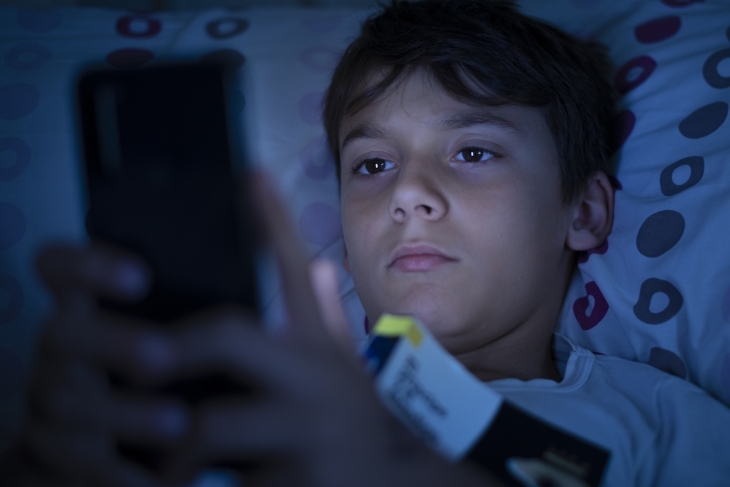
But we’re missing the details of what happens after dark: the TikTok binge, the fight over putting the phone away, the slow collapse of homework, the late-night texting and gaming that leads to five hours of sleep, the kid whose executive function is so shot he couldn’t get his homework done if he were in an empty jail cell.
We have the big picture, from data like the American Time Use Survey, which Jonathan Haidt used to great effect.
Parents get tons of (often confident) advice: take phones away, set screen limits, make kids go outside. But when real parents try these interventions, they often fail. We don’t have fine-grained data on this, so we don’t learn why they failed or how frequently.
For Part 2, below, we share three real case studies from the past year. Together, they illustrate what our field is missing: quality “field studies” of teen patterns (how is time “really” spent) and choppy intervention efforts.
Let’s not leap to solve everything! Let’s first examine what’s going on.
Case study 1
Sarah is on her phone most of the night, so when her alarm rings, she struggles to wake up. Mom pleads for her to go to school most mornings—sometimes successfully, sometimes not. Even when she goes, Sarah is late. Not only that, often Mom is late to work after battling Sarah. And once Sarah plops down in the classroom, she is irritable.
Mom read Jonathan Haidt’s Anxious Generation and found it enlightening even though it made her feel like a failure. She’d let Sarah have a phone at age 11. At first, the phone wasn’t so bad. Somewhere along the line, though, there was a tipping point. Now Sarah is always on it.
Mom tried to take the phone back, first through gentle coaxing, then through incentives, then straight up “I’m taking it”—all advice she’s seen on parenting blogs. Sarah’s response was extreme. She left home three times. Mom and Dad would drive, panicked, around their neighborhood looking for her. She was never too far, but each time, Mom gave back the phone. Another time Sarah poured a two-liter bottle of Pepsi on Mom’s bed. Mom was scared. These reactions seemed crazy. She googled “phone addiction treatment,” but when she’d find a place, the Reddit reviews were bad.
Sarah cycled through three therapists over two years. One Sarah didn’t like. Another wouldn’t ever give Mom straight answers about what they were doing in therapy, so Mom moved on. The third seemed to make progress. The phone stayed but at least there was detente in the household. Sarah agreed to try a midnight bedtime and to hand over her phone at 11:30 p.m. to Mom.
A new problem emerged. Sarah would lay there at midnight in good faith but didn’t fall asleep. She tried:
- No caffeine after 2 p.m., but this did nothing.
- A weighted blanket, which made her feel trapped and didn’t last more than two nights.
- Melatonin. It knocked her out but left her groggy, so she discontinued.
- Dimming the lights an hour before bed. That one, for whatever reason, made a difference. Her Fitbit sleep score rose from 63 to 77 on a typical night.
Obviously, the lesson here is not that teens need light dimmers!
Instead: Most interventions fail, whether initiated by parents or professionals. Trying, failing, adjusting—that’s how you find the things that actually work. Glib explanations to parents probably make things worse, creating false expectations of quick resolution. Sarah may be better rested, but other issues remain.
Case study 2
Alan is a distracted tenth grader. Does he have ADHD? One therapist said no. Another said yes—but Mom wondered if the therapist thought she just wanted medication and extra time on SATs.
They tried Ritalin. His teachers said he behaved better in class, but he said it killed his appetite, so they stopped.
Mom has a solid relationship with Alan. She’ll sit him down at the kitchen table to do homework, and he won’t complain too much. But the second she turns her back, he switches to another tab in his browser to chat on Discord. It doesn’t even seem willful—almost automatic, he says, before he even realizes what he’s done.
She’s tried to have him just work with pencil and paper, but the school assignments are literally all online. Math homework, for example, is “Delta Math.” There’s no book.
Alan, on Zoom, comes off as confident and charming. “I can pull up those grades,” he says. “I don’t really need help. This is just Mom overreacting.” He does have high scores on state standardized tests.
Even when Alan does sit down in good faith to get started at 7 p.m., it’s not perfectly clear what homework is due. One night, an executive function coach sat beside him, and it took 27 clicks through Google Classroom to uncover the real list of assignments—which came from six teachers with six different approaches to listing assignments across multiple platforms. Alan hadn’t been lying. He genuinely didn’t know what he was missing, and it took some real detective work to figure it out.
The school recommends Alan show up for afterschool help sessions. But there are two problems. One is he plays sports, and neither he nor Mom wants him to give that up. Two is that the format of the help sessions are not “sit your butt down and get started on the work.” Instead, the sessions are built as if the key problem is comprehension. Teachers say, “Bring me the problems where you’re stuck.” But that’s not Alan’s issue. It’s task initiation and persistence.
The coach tried to experiment alongside Alan:
- Writing out nightly plans with estimated times and making friendly bets on what would work.
- Moving from the bedroom back to the kitchen table.
- Sharing screenshots with Mom so she became the “good cop,” while the coach played the “friendly bad cop.”
- Chunking big projects. Alan said he “knew” to do that, but alongside the coach, he couldn’t articulate precisely how.
Some things worked and some didn’t. There were setbacks. One night Alan did 60 minutes of English homework and forgot to hit “submit,” a perfect picture of how foggy the process can be.
But over time, Alan got back on track. He even submitted two big papers early (out of character), raised an F in chemistry to a B and a D+ in math to an A. Teachers noticed the change and opened the door for him to make up old work. His relationship with his mom improved.
Excited, Alan was eager to “go it alone” in the fall term. We wish the story here were glorious. Instead, he fell back into old habits.
Why share this? Too often these “intervention stories” are tied up neatly in a bow—and that doesn’t line up with what we see in the 6 p.m.-to-midnight space.
Case study 3
Jon is an 11th grader in foster care. He’s already in his second high school, so friendships haven’t come easily. Still, he’s outgoing and able to find a few guys to hang with. He uses marijuana three or four times a week.
Academically, he’s in the lower track courses—officially called “college prep”—but the rigor is a joke. Most kids copy homework in plain sight of the teacher. Jon sometimes wonders if vocational-technical school would’ve been better, but that ship has sailed.
He gets services through the Department of Social Services—bus passes, help with medical appointments on occasion, weekly sessions with a caseworker. Jon described a mix bag on that. Over the years, the caseworker switched pretty frequently, so he’d have to re-explain his story to a new adult all over again. One therapist tried trauma-focused CBT, walking him through breathing exercises and thought logs, which felt useful in the moment. But he tired of it and says “I should go back to that.” Jon likes the current counselor, but scheduling is choppy. The net effect: Therapy is “on the list” of services he receives from the state, but it rarely stuck long enough to change his day-to-day life.
His foster mom leans on him for yardwork, and he tries to help out. Sports? He tried basketball in ninth grade but didn’t make the junior varsity team, and he ran track one season but didn’t love it.
Jon says what he really wants is a part-time job. He’s applied to 21 restaurants online, but received no calls back. He asked his caseworker, who said, “Keep trying. It’s hard to find jobs.” He asked his foster mom, and she said, “They want experience, and you don’t have any.”
He got paired with a coach, Geordie, who specializes in helping people “stuck” in their job search. First thing Geordie did is ask Jon to walk him through exactly what he’s been doing. Jon pulls up Indeed.com. He clicks through the application, types in his experience (none), and hits submit. “That’s it,” he shrugs.
Geordie explains that online applications rarely work, especially for a first job. You’ve got to go in person. He has Jon practice the basics: what to wear, how to shake hands, what to say. The pitch is simple but crucial: “I’m never on my phone while working, and I show up 15 minutes early.” (Then you actually have to do those two things, if hired.)
Jon told Geordie what his foster mom had said. Geordie: “That’s true to a point. If a manager has two candidates and both seem trustworthy, and one has experience, that’s who gets the job. But often the manager doesn’t have a perfect applicant, so anyone who seems trustworthy can get hired.”
That weekend, Jon tried it. He walked into restaurants, introduced himself, handed over his info face to face. He had two job offers within days.
At one interview, the manager offered shifts: Wednesdays and Thursdays 4–8 p.m., and Saturdays 12–8 p.m.. Jon wanted to say yes, but he realized he had a mandatory appointment at the Department of Social Services many Wednesdays from 4–5, and only recently had that scheduling gotten locked in. His instinct was to turn down the whole job.
Geordie stopped him. “That’s crazy,” he said. “You negotiate.” Together they rehearsed: Jon could propose starting on Wednesday at 5:30 instead, working until 8 or even 9:30. Or he could swap in a Tuesday 4–8 shift.
Jon went back, made the ask, and the boss agreed.
We asked Jon what he stopped doing in order to make room for the 16 hours a week of work. “Mostly scrolling on my phone,” he said. He’s saving up, but not sure for what. He’s working hard, and his foster mom is impressed and tells him so.
Why does this matter?
We (the authors) focus on a broader outcome we call teen flourishing. Jon’s success (a job) probably doesn’t vault his K–12 experience much, but it makes him feel more confident and productive. Sarah’s increased sleep probably does improve her typical morning at school. We care equally about both.
But for the Fordham Institute audience, our dear K–12 systems friends, these three stories reveal what standardized test scores cannot: the intricate web of factors—sleep deprivation, technology addiction, executive function challenges, social isolation, and a new form of lethargy—that shape student outcomes between dismissal and first period. Sarah’s phone battles, Alan’s invisible homework load, and Jon’s job search illuminate why our education debates often miss the mark.
Here’s what we’re saying and not saying:
- K–12 leaders need better questions. Instead of asking “What curriculum will raise test scores?” or hand-waving about AI tutors for all, we might ask “What’s actually happening in teen students’ lives?”
- K–12 leaders need to accept they are not well-positioned to answer these questions. They have too much on their plate and are not succeeding with basic mission of learning, so they should ask someone else to do that.
For example, U.S. military members suffered a new form of blast injuries in Iraq and Afghanistan from IEDs. DARPA could specify the problem—the physics of blasts, field diagnostics—but not the solutions. They recruited others to come up with rapid advances in diagnosis, mechanisms, and treatment.
That’s what we need here.
We’re not in a situation where “we know what works.” Parents get glib advice that makes things sound too easy. Psychologists give us tiny interventions in controlled settings that don’t mirror real life. K–12 leaders have the political juice to demand better!
We need approaches that work in the messy reality of 6 p.m. to midnight—where progress is slow, setbacks are common, and sometimes the solution is as unexpected as a dimmer switch or a face-to-face conversation with a restaurant manager.
Until we study and address what happens after dark, our high school improvement efforts will continue to fall short.