
Editor’s note: This was first published in SCHOOLED, Mike Petrilli’s Substack, which hosts weekly education-reform conversations around K–12’s biggest topics.
There’s a debate on whether tutoring should be the next “big thing.” But the whole debate is moot if tight budgets mean districts can’t afford it.
Ah, but there’s a way they can. Let’s do the math.
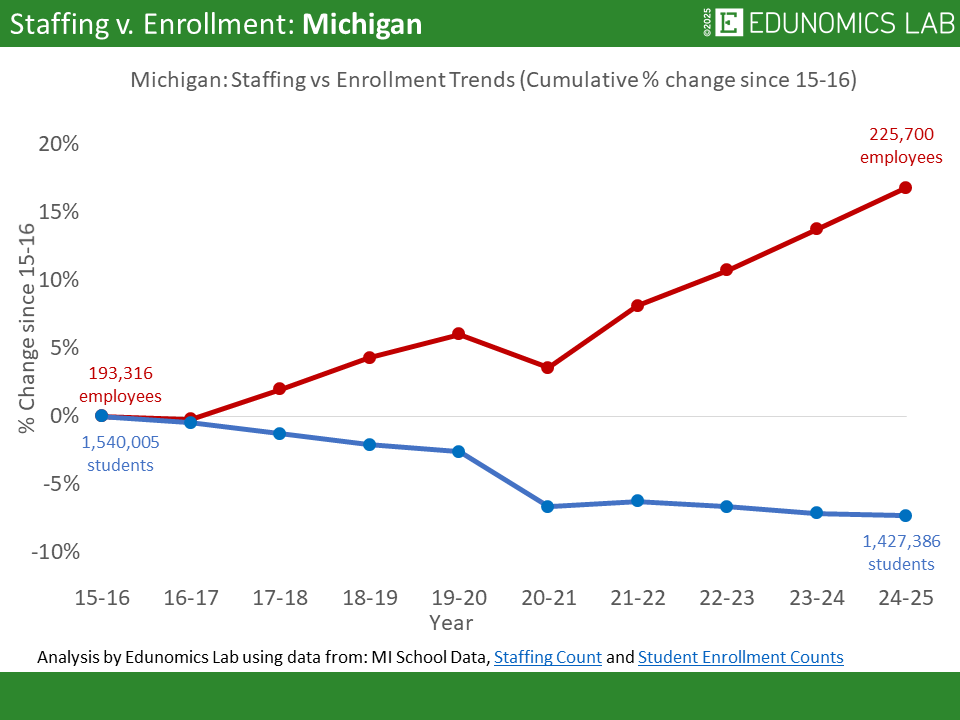
First, let’s acknowledge that what districts have right now is a lot of employees.
When Covid relief funds were flowing, many districts expanded what we call the “middle layer” in schooling—non-teaching specialists, administrators, and support staff who sit between the classroom and central office. Michigan supplies the example below. (See other state-by-state staffing graphs here.)
Second, tutoring is something that most district employees can do. Administrators, specialists, and paras can all serve as tutors.
One option: Districts could, at any moment, redirect some in this “middle layer” to do tutoring.
Done. Tutoring at no additional cost.
But there’s a better option. We believe there’s an enormous amount of teaching talent in this “middle layer.” It was the strongest teachers that got promoted to newly-created coaching, specialist, or school administrator roles (only to have their teaching posts replaced with newbies).
So why not redirect the strongest in this “middle layer” back to the classroom, bumping the weaker of the newbie teachers to tutoring roles. For starters, that means more kids get rockstar teachers.
Meanwhile, the displaced teachers, along with a portion of the newly hired paras become the tutoring workforce. It’s a twofer. Classroom teaching gets a boost. And for kids that could benefit from tutoring, it’s a way to make it happen.

Think of it as musical chairs for school employees, but with student outcomes guiding where people land. The best part: Employees keep jobs, while kids get what they need.
What about labor agreements? Since unions tend to protect employment and pay—not roles—this strategy should be legit.
Sure, the district may want to honor pay bumps that were awarded with “promotions.” A rockstar teacher is worth the extra cash. And yes, districts might be paying more than the market rate for tutors, but let’s remember that these employees already know the school and the kids, so there’s some real value there.
Truth is, as enrollments continue to fall, some districts may need to reduce staffing through attrition or pink slips. That makes intentional labor deployment even more urgent. In many districts, lackluster results don’t justify this expanded “middle layer” staffing arrangement. Time to try something else.
Budget deficits always require difficult choices. In our recorded 30-min webinar, we offered eight ways that districts can cut their budgets without eroding district quality.
The real challenge for leaders is whether they are willing to manage their most expensive resource—people—in a way that prioritizes student need over the status quo.