
Lately, I’ve been asking audiences (mostly comprised of public school district leaders) to rate ESSER. Thumbs up for success, down for disaster. The most common answer, by far, is a tepid something in between.
I think that’s right. Had there been no relief funds, pandemic-era K–12 enrollment drops would have forced districts to downsize (and lay off staff) in the middle of trying to reopen. And often, students received essential emergency supports, like food or supplies for homeless students, thanks to schools’ efforts. While many systems struggled to stand up learning recovery efforts, some students did benefit from tutoring and summer school, and many will continue to get value from efforts to update reading instruction.
At the same time, hindsight is 20/20. In systems where test scores continue to decline, particularly among students in the bottom quartile, some may regret not investing differently.
One investment that deserves particular reflection was the tendency of districts to bring on so many staff even as enrollment fell and is predicted to continue to drop.
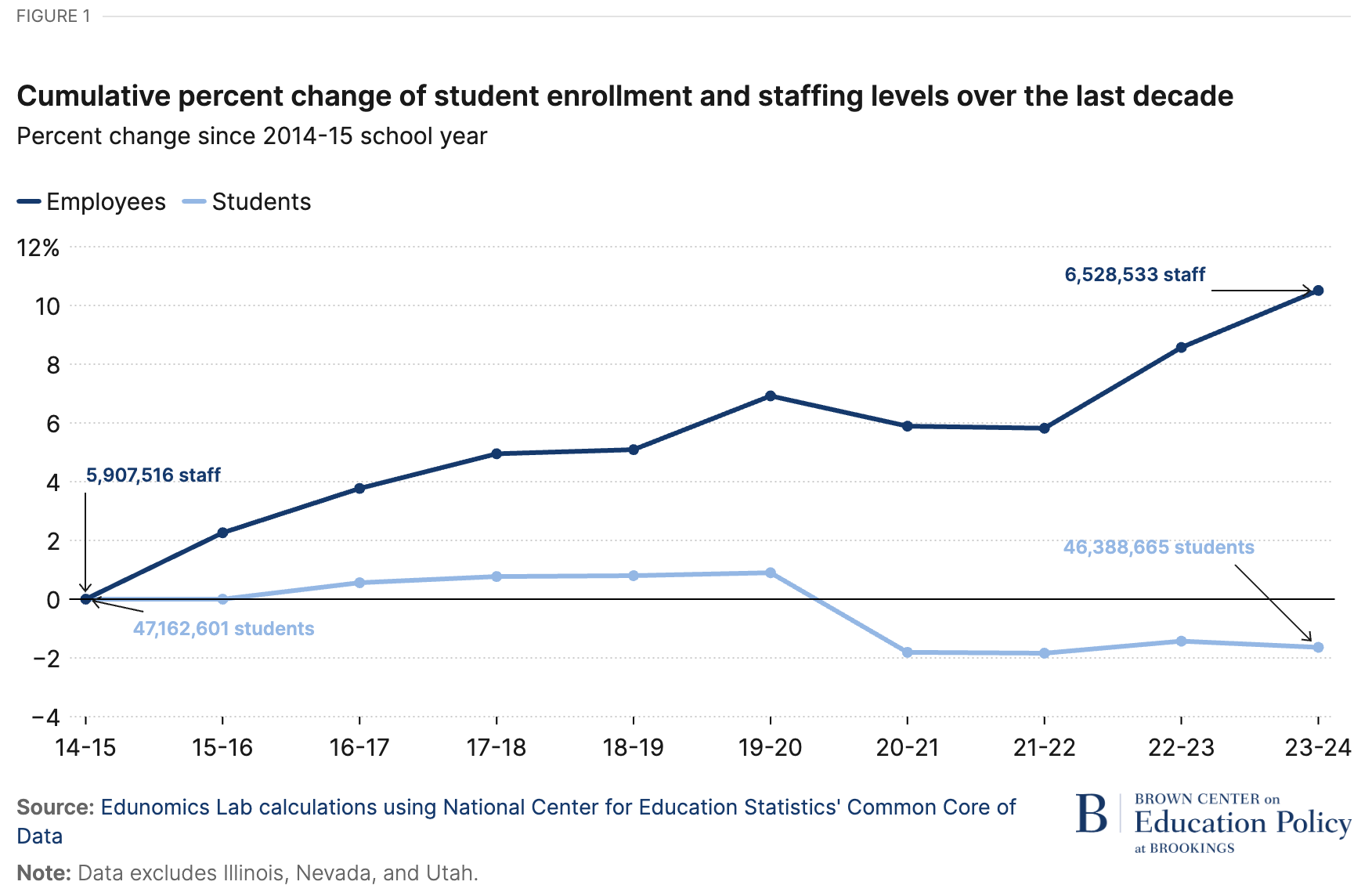
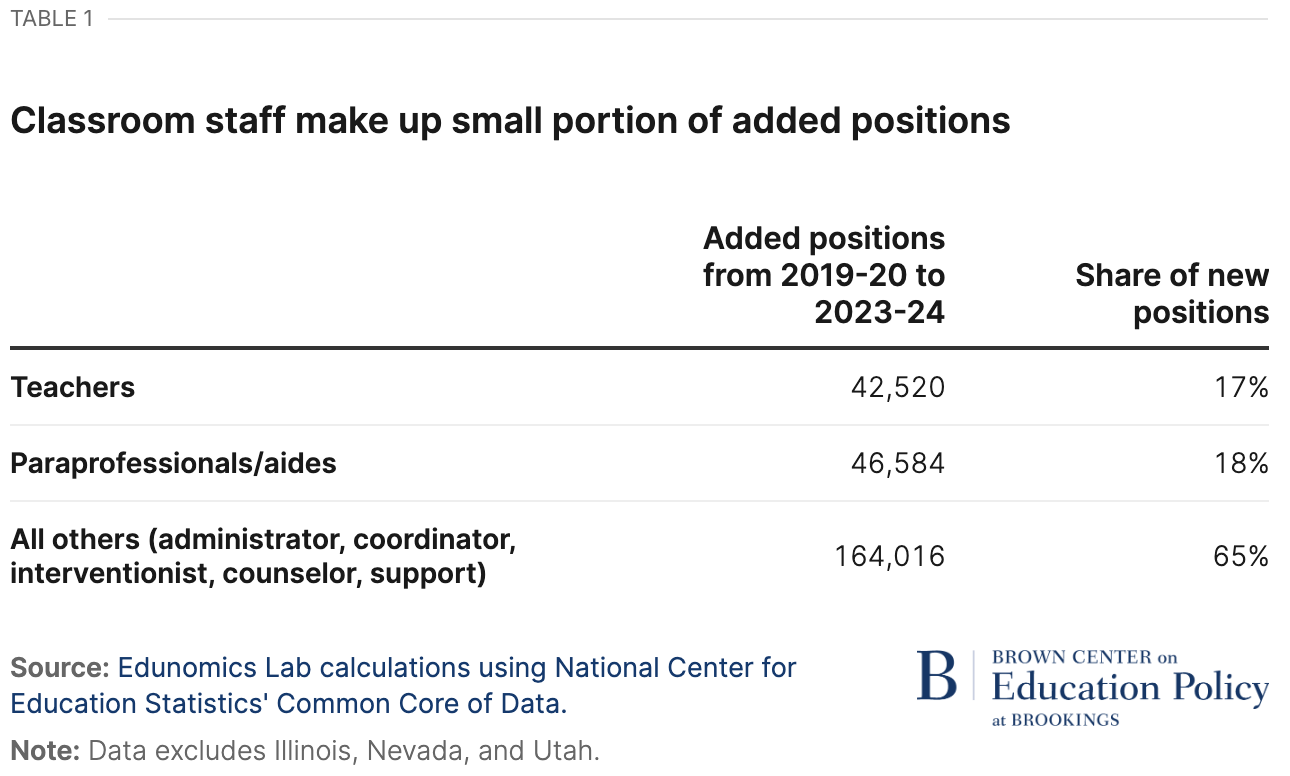
Conventional wisdom assumes more employees means better services for students, but the pace of the hiring bonanza warrants real concern. In our analysis of NCES staffing data, we find districts added well over 200,000 positions between 2019–20 and 2023–24, with very few of the newly added positions being in teaching roles (17 percent). Another 18 percent were aides. The remaining 65 percent of the added positions took on non-teaching roles of administrators, coordinators, counselors, interventionists, coaches, and student support staff (roughly evenly split between administrative and specialist roles). Many new roles undoubtedly involved a “promotion” from the existing teacher ranks, typically with higher pay (or more days of the current pay rate).
One worry is that these newly created non-teaching positions were filled by what had been some of the strongest teachers, and the replacement teachers aren’t as effective. The best math teacher got “promoted” to being a math coach. Filling the resulting teacher openings amidst teacher shortages (triggered in part by the mass hiring) meant pulling from deeper into a thinning applicant pool, potentially filling classrooms with weaker candidates (or worse, leaving unfilled roles covered by substitutes). As a result, many students spent their post-pandemic years in a classroom with a less effective teacher. If history is any guide, rapid hiring tends to lower the average teacher quality for the students who needed it most.
Could the addition of so many new administrators and specialists be beneficial enough that it more than offsets the reduction in teacher quality? Can’t the reading coach help the new teacher hire get a lot better? Now that the kids have a counselor to talk to, won’t that free up the teacher’s bandwidth?
Perhaps. But it’s unclear whether that theory holds up. With teacher effectiveness being such an important determinant of student outcomes, districts might have prioritized teacher quality over staffing quantity. For instance, districts could have paid the most effective teachers to take on more students, lead summer programs and intercessions, or work in the highest-need schools and classrooms.
Either way, now that ESSER is gone, districts are struggling to afford their larger, better-paid workforces. For some, the resulting budget reductions are leaving districts worse off in that they are depleting reserves, raising fees on students, or reducing days of schooling. Unpopular cuts anger parents and staff, and can consume leaders who may end up with less bandwidth to focus on learning.
The current budget cycle has districts trying to reduce their workforce via hiring freezes and layoffs. An open question is whether districts will shrink their administrator and specialist ranks, and if so, will those employees (formerly some of the stronger teachers) be exited from the system or return to the classroom? Average teacher quality hangs in the balance, especially where those employees had been some of the more effective teachers previously.
Where districts do resort to “seniority-based” layoffs (still in effect in many areas), disruptions will impact the highest-poverty schools the most.
It will be a few years before the dust settles and data can help clarify the magnitude of ESSER-triggered teacher quality effects. My guess is we’ll once again be reminded of what should be obvious: When it comes to staffing, quality matters more than quantity. Some students were worse off as a result of the ESSER-induced mass hiring. And some districts have been financially destabilized by the use of one-time money for permanent labor expenses.
As with most hangovers, the bigger question is whether we’ll ever learn.
Editor’s note: This was first published by the Brookings Institution.