Mobile Navigation

  • National
    • Policy
      • High Expectations
      • Quality Choices
      • Personalized Pathways
    • Research
    • Commentary
      • Gadfly Newsletter
      • Flypaper Blog
    • Events
    • Scholars Program
  • Ohio
    • Policy
      • Priorities
      • Media & Testimony
    • Research
    • Commentary
      • Ohio Education Gadfly Biweekly
      • Ohio Gadfly Daily
  • Charter Authorizing
    • Application
    • Sponsored Schools
    • Resources
  • About
    • Mission
    • Board
    • Staff
    • Career
Home
Home
Advancing Educational Excellence

Main Navigation

  • National
  • Ohio
  • Charter Authorizing
  • About

National Menu

  • Topics
    • Accountability & Testing
    • Advanced Education
    • Career & Technical Education
    • Charter Schools
    • Curriculum & Instruction
    • ESSA
    • Evidence-Based Learning
    • Facilities
    • Governance
    • Personalized Learning
    • Private School Choice
    • School Finance
    • Standards
    • Teachers & School Leaders
    • Think Again
  • Research
  • Commentary
    • Gadfly Newsletter
    • Flypaper Blog
    • Gadfly Podcast
  • Events
  • Scholars Program

The Effectiveness of Secondary Math Teachers from Teach for America and the Teaching Fellows Programs

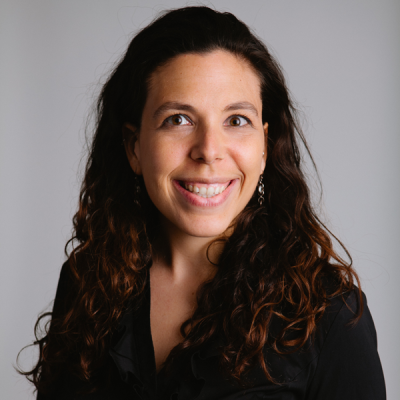
Dara Zeehandelaar Shaw, Ph.D.
9.12.2013
This study of Teach For America (TFA) and Teaching Fellows secondary math teachers explores how their students compare to peers taking the same course, in the same school, from teachers who entered the profession through traditional certification programs (or other programs not as rigorous as TFA or Teaching Fellows). Conducted by Mathematica and the federal Institute of Education Sciences, the report is the first look at this question using random assignment, the gold standard for empirical research: Students in each participating school, 9,000 overall taught by 300 secondary math teachers, were randomly assigned to their instructors. The upshot? First, students who had TFA teachers performed better on end-of-year assessments than students in the comparison classrooms, scoring an average of 0.07 standard deviations higher, which is equivalent to 2.6 additional months of school or moving from the 27th to 36th percentile. Second, students who had Teaching Fellows teachers did not do any better or worse than students in comparison classrooms. However, students of novice Teaching Fellows did better than those instructed by novice comparison teachers. To be sure, these findings are not necessarily reflective of the programs alone. They also reflect differences in the people who choose to enter them. Finally, a bit on the characteristics of these teachers: Both TFA and Teaching Fellows have less experience than their peers, are less likely to be minorities, more likely to have graduated from more selective colleges, less likely to be math majors but more likely to score higher on tests of math content. However, only years of experience and, for high school, math content knowledge were associated with higher student achievement. These findings add to the glut of research indicating that traditional certification programs could benefit from greater selectivity, indeed from a radical overhaul.
SOURCE: Melissa A. Clark, et al., The Effectiveness of Secondary Math Teachers from Teach for America and the Teaching Fellows Programs (Washington, D.C.: Institute of Education Sciences, September 2013).
Policy Priority:
High Expectations
Topics:
Curriculum & Instruction
Tags: Institute of Education Sciences Teach For America Washington

Dara Zeehandelaar Shaw was the national research director at the Thomas B. Fordham Institute, where she oversaw Fordham’s research pipeline, designs and executed new studies, managed ongoing projects, and conducted quantitative and qualitative research until the beginning of 2017. Her areas of study include education governance and school boards; finance and teacher pensions; policy design and implementation (…

View Full Bio

Related Content

view
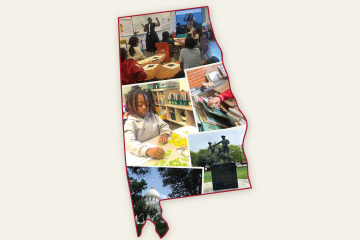
Collage of Alabama classrooms, a student working with letters, books, the Alabama State Capitol, and a Civil Rights monument, arranged within the outline of Alabama against a cream background.

Studying the Southern Surge: How Alabama Beat the Odds in Reading

Liana Loewus 10.28.2026
NationalReport
view
Wonkathon
High Expectations

Three pillars for digital technology in schools, and everything else left to communities

Alice Mueller 10.22.2026
NationalBlog
view
Wonkathon

The education technology debate is missing students with disabilities

Saashya Rodrigo, Nicole Fuller 10.22.2026
NationalFlypaper
Fordham Logo

© 2026 The Thomas B. Fordham Institute
Privacy Policy
Usage Agreement

National

P.O. Box 110
Burke, VA 22009

202.223.5452

[email protected]

Ohio

P.O. Box 82291
Columbus, OH 43202

614.223.1580

[email protected]

Sponsorship

130 West Second Street, Suite 410
Dayton, Ohio 45402

937.227.3368

[email protected]