In which states do students spend the most and least time in school?
The amount of time students spend in school is a popular lever of change pulled by education policymakers of all types.


New findings challenge the assumption that obtaining a master’s degree will lead to higher financial returns down the line.
The Founding Fathers never envisioned that executive orders would be a major policymaking tool, circumventing legislative and executive deliberations, political stalemates, and partisanship. But recent history has deemed them essential levers if there is to be urgent action on the most important matters of the day.
Editor’s note: This was first published by CharterFolk.
At peak enrollment in Baton Rouge, Louisiana, our local school system educated over 70,000 children. Now, in essentially the same facilities, it serves just over 34,000 children. The district has been experiencing a steady decline in student enrollment since the early 2000s, losing around 2 percent of our student population each year on average.
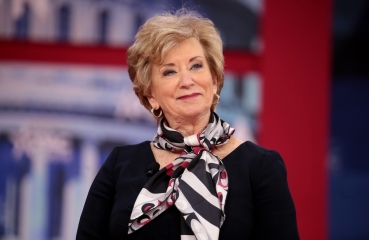
In announcing his nomination of former SBA director Linda McMahon as the next secretary of education, President Trump promised yet again to eliminate the U.S. Department of Education. An important question is whether abolishing the agency—and its programs, policies, and regulations—would actually make things better for America’s students.
Social media lit up Tuesday evening with the news that President-elect Trump has tapped professional wrestling magnate and former Small Business Administration (SBA) administrator Linda McMahon to lead the U.S. Department of Education.
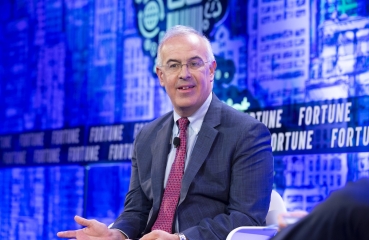
Ah, David Brooks. Ordinarily, I’d start a piece in which I plan to (partially) disagree with him by stating that he’s a very smart guy—but what I’m going to push back at this time is his much-disseminated contention that America needs to rethink what “smart” means. Even though his own qualities would likely still qualify under his new formulation, I ought not take chances.
A new working paper by an accomplished team of researchers uses a new dataset to dive deep into the dynamics and impacts of teacher strikes. This paper provides a fresh perspective on why these strikes happen, how they influence school districts, and their broader implications on education policy and student achievement.
A partial defense of Lucy Calkins and her role in America’s reading crisis. —Helen Lewis, The Atlantic Despite efforts to diversify, Harvard still admits a disproportionate number of students from a small number of affluent and/or highly-selective high.
After an eventful year of politics and controversy—with more lurking on the horizon—several friends have shared their apprehension about holiday gatherings. No one wants to see Grandma serve the turkey wearing her red hat or Uncle Bob stick a “We’re not going back” flag in the cranberry sauce.
Editor’s note: This is the second in a series about Montgomery County [Maryland] Public Schools (MCPS), the fifteenth largest district in the country. Part one covered curricular and related issues and is available here.
Trump 2.0 is likely to be bad for education reform, especially in blue states, says Petrilli. But that take could prove too pessimistic. Perhaps the rightward shift in some of the bluest parts of America will encourage Democrats to fight for the center again, including by embracing sensible education reforms. Let’s give this possibility a hearing.
Around the turn of the millennium, Florida was widely regarded as a pace-setter in education reform.
In the Fordham Institute policy report titled Think Again: Are Education Programs for High-Achievers Inherently Inequitable?, Brandon Wright outlines four claims describing arguments that opponents of advanced education programs use to advocate for their
Early-college high schools are those that fully incorporate college course-taking into the curriculum. They are not to be confused with a more-typical “dual enrollment” model, which allows students the opportunity to take college courses if they have time.
Betsy DeVos expresses interest in returning to the secretary of education role while discussing the president-elect’s plans for education in his second term.
Yes, choice itself is a form of accountability, but “customer satisfaction” isn’t enough when tax dollars are in play—even for private-school choice programs. The public has a right to know that participating students are gaining essential skills. To that end, this post discusses four tiers of escalating accountability and where state policy should land, depending on the amount of taxpayer dollars provided to individual schools, among other considerations.
Editor’s note: This is an adapted excerpt from the author’s recent Fordham Institute report, “Think Again: Are Education Programs for High Achievers Inherently Inequitable?”
Almost forty years ago, E.D. Hirsch published his seminal book, Cultural Literacy, which advanced a simple, albeit paradigm-shifting, premise: Intellectual aptitudes—including literacy itself—depend on knowledge more than skills.
One of the most interesting and significant findings about charter schools in the last decade—outside of the fact that they tend to outperform traditional public schools (TPS)—is that growin
According to estimates by principals nationwide, about 44 percent of American public-school students were behind grade level in a least one subject at the start of the 2023–24 school year.
New research shows that an endorsement from a local teachers’ union can boost a school board candidate’s likelihood of winning by up to 20 percentage points, due in large part to the popular belief that teacher approval signals competence in improving schools.
Within just a few short months, there will be a new occupant of the Oval Office and, with that, a new administration in charge of the education and workforce regulatory regime.
In 1990, 48 percent of our nation’s eighth graders had very weak math skills. How did we know? They scored in the lowest performance category, Below Basic, on the national test given to a sample of American students every two years.[1]
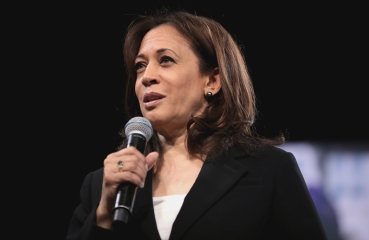
It is rare, but not unheard of, for presidents to ask members of the opposing party to serve in their cabinets. If she wins, Vice President Harris has pledged to make the symbolic gesture, historically used at key moments to project unity and bipartisanship. There’s a compelling argument to be made that the post of Education Secretary would be a worthy target for such an act. Here Chu discusses seven candidates for the role.