Mobile Navigation

  • National
    • Policy
      • High Expectations
      • Quality Choices
      • Personalized Pathways
    • Research
    • Commentary
      • Gadfly Newsletter
      • Flypaper Blog
    • Events
    • Scholars Program
  • Ohio
    • Policy
      • Priorities
      • Media & Testimony
    • Research
    • Commentary
      • Ohio Education Gadfly Biweekly
      • Ohio Gadfly Daily
  • Charter Authorizing
    • Application
    • Sponsored Schools
    • Resources
  • About
    • Mission
    • Board
    • Staff
    • Career
Home
Home
Advancing Educational Excellence

Main Navigation

  • National
  • Ohio
  • Charter Authorizing
  • About

National Menu

  • Topics
    • Accountability & Testing
    • Advanced Education
    • Career & Technical Education
    • Charter Schools
    • Curriculum & Instruction
    • ESSA
    • Evidence-Based Learning
    • Facilities
    • Governance
    • Personalized Learning
    • Private School Choice
    • School Finance
    • Standards
    • Teachers & School Leaders
    • Think Again
  • Research
  • Commentary
    • Gadfly Newsletter
    • Flypaper Blog
    • Gadfly Podcast
  • Events
  • Scholars Program

Topics

Displaying 391-420 of 17507 results
wonkathon
Commentary
11.7.2025
Curriculum & Instruction, Governance, Teachers & School Leaders

Beyond a science of reading policy checklist

Kymyona Burk

Editor’s note: This essay is an entry in Fordham’s 2025 Wonkathon, which asked contributors to answer this question: “What needs to happen next—at the state, district, and school levels—for the science of reading revolution to fulfill its promise and ensure that far more
wonkathon
wonkathon
Commentary
11.6.2025
Curriculum & Instruction, Governance, Teachers & School Leaders

Unlocking the science of reading

David Steiner

Editor’s note: This essay is an entry in Fordham’s 2025 Wonkathon, which asked contributors to answer this question: “What needs to happen next—at the state, district, and school levels—for the science of reading revolution to fulfill its promise and ensure that far more

wonkathon
wonkathon
Commentary
11.6.2025
Evidence-Based Learning, Curriculum & Instruction, Governance, Teachers & School Leaders

Redefining the federal role in literacy: Strengthening grants to drive statewide reform

Rianna Saslow

Editor’s note: This essay is an entry in Fordham’s 2025 Wonkathon, which asked contributors to answer this question: “What needs to happen next—at the state, district, and school levels—for the science of reading revolution to fulfill its promise and ensure that far more

wonkathon
Leaky pipe
Commentary
11.6.2025
Evidence-Based Learning, Curriculum & Instruction, Governance, Advanced Education, Teachers & School Leaders

The leaky kindergarten-to-college pipeline for high-achieving, low-income students

Aaron Churchill , Michael J. Petrilli

America is wasting much of its human capital. That’s because many high-achieving, low-income students—we call them HALO students—fall off the education track and never reach the gates of our top colleges and universities. Regrettably, these capable young people won’t reap the benefits of a four-year degree, which remains a generator of upward mobility and career success.

Leaky pipe
Student at school
Commentary
11.6.2025
Evidence-Based Learning, Career & Technical Education, Teachers & School Leaders

CRPE on special education: Great diagnosis, wrong prescription

Chester E. Finn, Jr.

A remarkable new data engine and provocative policy paper from the Center on Reinventing Public Education should serve to refocus the attention of policymakers and ed-reformers on the many shortcomings of special education as it has evolved over the past half-century.

Student at school
Students on computers at school
Commentary
11.6.2025
Curriculum & Instruction, Governance, Teachers & School Leaders

The illusion of learning: The danger of artificial intelligence for education

Robert Pondiscio

In the spring of 2000, E.D. Hirsch Jr. published an essay in American Educator titled “You Can Always Look It Up—Or Can You?” It’s one of those pieces that distills a lifetime of insight into a few pages. Hirsch argued that the notion of teaching “learning skills” instead of knowledge was deeply misguided.

Students on computers at school
School cellphone ban
Commentary
11.6.2025
Evidence-Based Learning, Teachers & School Leaders

Cutting the cord: Early evidence on cellphone policy implementation

Alicia Anderson

Most U.S. students currently or will soon attend a school with a cellphone policy.

School cellphone ban
Dick Cheney
Commentary
11.5.2025
Governance

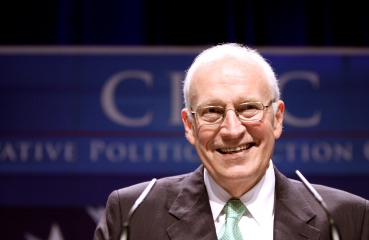
Vice President Dick Cheney and education

Nina Rees

Dick Cheney passed away yesterday at the age of 84. As one of his domestic policy advisors during his time as Vice President, I was deeply saddened by the news; especially as I think about my own aging parents (my mom is 81 and my dad is 90).

Dick Cheney
wonkathon
Commentary
11.5.2025
Curriculum & Instruction, Governance, Teachers & School Leaders

The science of reading starts at birth

Elliot Regenstein

Editor’s note: This essay is an entry in Fordham’s 2025 Wonkathon, which asked contributors to answer this question: “What needs to happen next—at the state, district, and school levels—for the science of reading revolution to fulfill its promise and ensure that far more

wonkathon
wonkathon
Commentary
11.4.2025
Evidence-Based Learning, Curriculum & Instruction, Teachers & School Leaders

Why science of reading reforms need definable goals

Caitlin Peartree

Editor’s note: This essay is an entry in Fordham’s 2025 Wonkathon, which asked contributors to answer this question: “What needs to happen next—at the state, district, and school levels—for the science of reading revolution to fulfill its promise and ensu

wonkathon
wonkathon
Commentary
11.3.2025

Literacy or nothing

Thomas F. Kelly

Editor’s note: This essay is an entry in Fordham’s 2025 Wonkathon, which asked contributors to answer this question: “What needs to happen next—at the state, district, and school levels—for the science of reading revolution to fulfill its promise and ensure that far more

wonkathon
wonkathon
Commentary
10.31.2025
Curriculum & Instruction, Governance, Teachers & School Leaders

Seizing opportunity at a time of risk: Toward a new model of accountability to advance student literacy

Charles Barone

Editor’s note: This essay is an entry in Fordham’s 2025 Wonkathon, which asked contributors to answer this question: “What needs to happen next—at the state, district, and school levels—for the science of reading revolution to fulfill its promise and ensure that far more
wonkathon
wonkathon
Commentary
10.31.2025
Curriculum & Instruction, Governance, Teachers & School Leaders

The science of reading revolution must reach older readers

Melinda Cameron

Editor’s note: This essay is an entry in Fordham’s 2025 Wonkathon, which asked contributors to answer this question: “What needs to happen next—at the state, district, and school levels—for the science of reading revolution to fulfill its promise and ensure that far more
wonkathon
wonkathon
Commentary
10.31.2025
Curriculum & Instruction, Governance, Teachers & School Leaders

How researchers and technology are accelerating the science of reading movement

Dan Lips

Editor’s note: This essay is an entry in Fordham’s 2025 Wonkathon, which asked contributors to answer this question: “What needs to happen next—at the state, district, and school levels—for the science of reading revolution to fulfill its promise and ensure that far more
wonkathon
wonkathon
Commentary
10.30.2025
Curriculum & Instruction, Governance, Teachers & School Leaders

Reform teacher education. Improve student literacy proficiency.

Patrick Riccards

Editor’s note: This essay is an entry in Fordham’s 2025 Wonkathon, which asked contributors to answer this question: “What needs to happen next—at the state, district, and school levels—for the science of reading revolution to fulfill its promise and ensure that far more
wonkathon
wonkathon
Commentary
10.30.2025

Improving science of reading implementation through career-long educator support

Michael W. Kirst

Editor’s note: This essay is an entry in Fordham’s 2025 Wonkathon, which asked contributors to answer this question: “What needs to happen next—at the state, district, and school levels—for the science of reading revolution to fulfill its promise and ensure that far more
wonkathon
wonkathon
Commentary
10.30.2025
Curriculum & Instruction, Governance

Next steps to sustain effective science of reading instruction for all students

Linda Diamond, Kelly Stuart, Dale Webster

Editor’s note: This essay is an entry in Fordham’s 2025 Wonkathon, which asked contributors to answer this question: “What needs to happen next—at the state, district, and school levels—for the science of reading revolution to fulfill its promise and ensure that far more
wonkathon
Standardized test in school
Commentary
10.30.2025
Accountability & Testing, Evidence-Based Learning

Do the ACT and WorkKeys exams measure the same or different skills?

Jeff Murray

For decades, ACT has been testing students’ postsecondary readiness via two separate assessments: one aimed at measuring college readiness and a second that focuses on career-related skills and abilities.

Standardized test in school
Teenage student doing math
Commentary
10.30.2025
Evidence-Based Learning, Curriculum & Instruction, Teachers & School Leaders

Do high school STEM opportunities affect postsecondary decisions?

Meredith Coffey, Ph.D.

Careers in science, technology, engineering, and math (STEM) fields tend to pay well, offering about double the average wages of non-STEM jobs. But even with that pay advantage, several STEM careers rank among the anticipated workforce shortage areas.

Teenage student doing math
schooled ad
Commentary
10.29.2025

Subscribe to get SCHOOLED

SCHOOLED is Michael J. Petrilli’s twice-weekly free Substack and email newsletter restarting the education-reform conversation. Click here to subscribe for: Sharp analysis of the week’s biggest K–12 debates

schooled ad
Board meeting
Commentary
10.28.2025
Evidence-Based Learning, Governance, Teachers & School Leaders

Are school boards fulfilling their purpose as essential civic institutions?

Josiah Padley

School boards—an elected group of community members that sets policy, approves the yearly budget, and establishes a vision for a school district—haven’t been around forever.

Board meeting
Teacher in a classroom
Commentary
10.28.2025
Evidence-Based Learning, Curriculum & Instruction, Governance, Teachers & School Leaders

Stopping the pendulum: Making education a research-based profession

Douglas Carnine

Discredited ideas don’t return to most professions.

Teacher in a classroom
wonkathon
Commentary
10.24.2025

Continued literacy growth requires an ongoing commitment to continuous improvement

Amy Rhyne

Editor’s note: This essay is an entry in Fordham’s 2025 Wonkathon, which asked contributors to answer this question: “What needs to happen next—at the state, district, and school levels—for the science of reading revolution to fulfill its promise and ensure that far more
wonkathon
wonkathon
Commentary
10.24.2025
Curriculum & Instruction, Governance

Harness parent power to boost literacy gains

Bridget K. Cherry

For the science of reading to succeed in elementary school classrooms, we need to prepare aspiring teachers in what it is, how to use it, how to measure it, and how to target it to meet the needs of individual learners. That means starting in teacher preparation programs.

wonkathon
School bus
Commentary
10.23.2025
Governance, Teachers & School Leaders

When school boards act like the PTA

Robert Pondiscio

Fordham’s latest study, "Who’s on Board? School Boards and Political Representation in an Age of Conflict," offers an unvarnished look at the nation’s school board members. The findings confirm that local school boards function less like independent oversight bodies and more like glorified parent-teacher associations.

School bus
Student doing math in a classroom
Commentary
10.23.2025
Evidence-Based Learning, Curriculum & Instruction, Advanced Education, Teachers & School Leaders

Rethinking advanced math in high school

Adam Tyner, Ph.D.

For decades, high-achieving high school students have been told the surest way to impress selective colleges is to take calculus. In a recent national survey of 133 admissions officers, 74 percent said the College Board’s Advanced Placement calculus course is among the math classes that “carry the most weight” in admissions decisions.

Student doing math in a classroom
Military personnel writing
Commentary
10.23.2025
Career & Technical Education, Curriculum & Instruction, Governance, Teachers & School Leaders

What the military taught me about the education system

Thibaut Delloue

During my second tour as a U.S. Navy officer, I served as a navigator aboard a test warship in San Diego. In port, navigators often have little to do other than prepare for the next deployment. But not every military job is created equal.

Military personnel writing
Students testing
Commentary
10.23.2025
Evidence-Based Learning, Curriculum & Instruction, Governance, Teachers & School Leaders

A better way to do standardized testing?

Jeff Murray

The types, amounts, and modes of testing done in our schools are subject to debate and analysis, with “too much,” “too often,” “too complex,” and “not helpful” among the many complaints.

Students testing
Teacher in a classroom
Commentary
10.23.2025
Evidence-Based Learning, Teachers & School Leaders

Who wants to be a teacher?

Robert Chung

Although teacher quality policies involving salaries, working conditions,

Teacher in a classroom
Commentary
10.17.2025
Evidence-Based Learning, Curriculum & Instruction, Governance, Teachers & School Leaders

My kingdom for a reliable curriculum review

Holly Korbey

Editor’s note: This was first published on the author’s Substack, The Bell Ringer. Last week, Eric Hirsch, the Chief Executive Officer of curriculum review nonprofit EdReports, announced he is stepping down in June of 2026.

Teacher in a classroom

Pagination

  • First page « First
  • Previous page ‹ Previous
  • Page 10
  • Page 11
  • Page 12
  • Page 13
  • Current page 14
  • Page 15
  • Page 16
  • Page 17
  • Page 18
  • Next page Next ›
  • Last page Last »

Type

  • Book (10)
  • (-) Commentary (17507)
  • Event (51)
  • Podcast (383)
  • Report (258)
  • Video (98)

Topics

  • Accountability & Testing (398)
  • Advanced Education (228)
  • Career & Technical Education (68)
  • Charter Schools (1003)
  • Curriculum & Instruction (1463)
  • ESSA (110)
  • Evidence-Based Learning (812)
  • Facilities (18)
  • Governance (1237)
  • Personalized Learning (36)
  • Private School Choice (121)
  • School Finance (121)
  • Standards (131)
  • Teachers & School Leaders (1367)

Date

  • 2026 (328)
  • 2025 (367)
  • 2024 (378)
  • 2023 (373)
  • 2022 (381)
  • 2021 (397)
  • 2020 (382)
  • 2019 (352)
  • 2018 (407)
  • 2017 (463)
  • 2016 (596)
  • 2015 (537)
  • 2014 (632)
  • 2013 (486)
  • 2012 (362)
  • 2011 (2382)
  • 2010 (1934)
  • 2009 (1480)
  • 2008 (1912)
  • 2007 (494)
  • 2006 (503)
  • 2005 (439)
  • 2004 (434)
  • 2003 (515)
  • 2002 (606)
  • 2001 (311)
  • 1969 (56)
Fordham Logo

© 2026 The Thomas B. Fordham Institute
Privacy Policy
Usage Agreement

National

P.O. Box 110
Burke, VA 22009

202.223.5452

[email protected]

Ohio

P.O. Box 82291
Columbus, OH 43202

614.223.1580

[email protected]

Sponsorship

130 West Second Street, Suite 410
Dayton, Ohio 45402

937.227.3368

[email protected]