Mobile Navigation

  • National
    • Policy
      • High Expectations
      • Quality Choices
      • Personalized Pathways
    • Research
    • Commentary
      • Gadfly Newsletter
      • Flypaper Blog
    • Events
    • Scholars Program
  • Ohio
    • Policy
      • Priorities
      • Media & Testimony
    • Research
    • Commentary
      • Ohio Education Gadfly Biweekly
      • Ohio Gadfly Daily
  • Charter Authorizing
    • Application
    • Sponsored Schools
    • Resources
  • About
    • Mission
    • Board
    • Staff
    • Career
Home
Home
Advancing Educational Excellence

Main Navigation

  • National
  • Ohio
  • Charter Authorizing
  • About

National Menu

  • Topics
    • Accountability & Testing
    • Advanced Education
    • Career & Technical Education
    • Charter Schools
    • Curriculum & Instruction
    • ESSA
    • Evidence-Based Learning
    • Facilities
    • Governance
    • Personalized Learning
    • Private School Choice
    • School Finance
    • Standards
    • Teachers & School Leaders
    • Think Again
  • Research
  • Commentary
    • Gadfly Newsletter
    • Flypaper Blog
    • Gadfly Podcast
  • Events
  • Scholars Program

Topics

Displaying 391-420 of 650 results
Commentary
5.6.2016
Charter Schools

Four ways to fuel healthy competition in education

Aaron Churchill

The monopoly can and should be broken

Commentary
5.6.2016
Charter Schools

Is "district" an operative word?

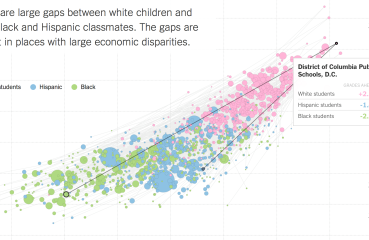
I have two requests. The first is modest. The second is…well, let’s focus on the first for the time being.Please go to your calendar and block off thirty minutes. You can call the item “Districts and the Achievement Gap.” It’s easy work; you’ll just need to do look at some pictures.
Commentary
5.5.2016
Charter Schools

Test scores don't tell us everything, but they certainly tell us something about school quality and student success

Michael J. Petrilli

Editor's note: This post is the fourth in an ongoing discussion between Fordham's Michael Petrilli and the University of Arkansas's Jay Greene that seeks to answer this question: Are math and reading test results strong enough indicators of school quality that regulators can rely on them to determine which schools should be closed and which should be expanded—even

Commentary
5.4.2016

Research on ten early childhood education programs

By Darien Wynn

Commentary
5.4.2016
Charter Schools

Charter school effectiveness in spite of perverse incentives

Aaron Churchill

By Aaron Churchill

Commentary
5.4.2016

An examination of opt-out issues

Robert Pondiscio

By Robert Pondiscio

Commentary
5.4.2016
Charter Schools

One highway, two realities

A sixth grader in Mountain Brook, Alabama, can be considered one of the luckiest in the country, enrolled in a district where he and his classmates read and do math three grade levels above the average American student.

Commentary
5.4.2016
Charter Schools

Paying homage to charter schools' early trailblazers

Chester E. Finn, Jr., Brandon L. Wright

This is the first in a series of essays marking the twenty-fifth anniversary of America’s first charter school law. These commentaries are informed and inspired by our forthcoming book (co-authored with Bruno V.

Commentary
5.4.2016
Charter Schools

I strongly support charter schools. That’s why I’m so tough on them.

By Dave Yost

Undefined
5.4.2016
Charter Schools

The Leicester City edition

On this week’s podcast, Mike Petrilli and Robert Pondiscio talk Trump, the role of test scores in determining school quality, and the opt-out movement. During the Research Minute, Amber Northern explains how the threat of NCLB sanctions reduced teacher absences.

Commentary
5.4.2016
Advanced Education

Students need opportunities to flex their creative muscles

Although we consider creativity and critical thinking two of the most important skills today, children often have limited opportunities to flex their creative muscles. Parents and teachers need to encourage creative children to find at least one outlet, along with venues and audiences to showcase their work.

Commentary
5.4.2016
Charter Schools

What reformers can do to expand charters and choice besides advocating for policy change

Michael J. Petrilli

A few weeks ago, I argued that policy change is not the only path to education reform, floated five other approaches for improving educational practice, and promised to flesh them out in future posts.
Commentary
5.4.2016
Charter Schools

Rely on local actors, instead of faulty information, to make judgements about school quality

Jay P. Greene

Editor's note: This post is the third in an ongoing discussion between Fordham's Michael Petrilli and the University of Arkansas's Jay Greene that seeks to answer this question: Are math and reading test results strong enough indicators of school quality that regulators can rely on them to determine which schools should be closed and which should be expanded—even
Commentary
5.3.2016
Charter Schools

Revamp of Charter Schools Program incentivizes (mostly) the right things

Jamie Davies O'Leary

The federal Charter Schools Program (CSP), which provides seed money for charter start-ups primarily through competitive state grants, got an upgrade in the Every Student Succeeds Act (ESSA) in December.

Commentary
5.3.2016

Shut bad schools for low performance, but don't draw conclusions from test scores alone

Michael J. Petrilli

By Michael J. Petrilli

Commentary
5.2.2016
Charter Schools

The weak predictive power of test scores

Jay P. Greene

The school choice tent is much bigger than it used to be. Politicians and policy wonks across the ideological spectrum have embraced the principle that parents should get to choose their children’s schools and local districts should not have a monopoly on school supply.

Commentary
5.2.2016
Charter Schools

When personal beliefs and duties collide

Personal belief cannot supersede public duty

Commentary
5.2.2016
Charter Schools

Teaching to the Student: Charter School Effectiveness in Spite of Perverse Incentives

Aaron Churchill

Test score inflation or genuine increase in proficiency?

Commentary
5.2.2016
Charter Schools

Virtual schools mean real work for charter supporters

Chad L. Aldis

Efforts to reform charters must include all school types

Commentary
4.29.2016
Advanced Education

America's Report Card: We're still ignoring low-income high-achievers

Chester E. Finn, Jr., Brandon L. Wright

Last week, the Department of Education released the 2015 Nation’s Report Card for twelfth graders. As with the fourth- and eighth-grade scores provided last fall, there was little to celebrate. In the core subjects of math and reading, average scores held firm at the same unimpressive level they’ve been at since 2009.

Commentary
4.29.2016
Charter Schools

Coming next week: Jay Greene and I debate school choice and the role of test scores in determining school quality

Michael J. Petrilli

Next week, in a series daily blog posts, Jay Greene and I will explore areas of agreement and disagreement around the issue of school choice and school quality.

Commentary
4.29.2016
Charter Schools

A deep dive into Ohio’s charter school enrollment data

Aaron Churchill

Ohio's families need more high-quality choices in more locations

Commentary
4.28.2016
Charter Schools

Opportunity awaits: A market analysis of Ohio’s charter school sector

Jessica Poiner

The Buckeye State has a better opportunity than ever to raise its charter game

Commentary
4.28.2016
Charter Schools, ESSA

Announcing the Fordham Institute's third annual Wonkathon. This year's topic: ESSA and parental choice

Michael J. Petrilli

In 2014, we hosted our first-ever Wonkathon, which was dedicated to the subject of charter school policy.
Commentary
4.27.2016

The causes and consequences of test score manipulation in New York

Amber M. Northern, Ph.D.

By Amber M. Northern, Ph.D.

Commentary
4.27.2016
Charter Schools

School choice, student mobility, and school quality in New Orleans

Robert Pondiscio

By Robert Pondiscio

Commentary
4.27.2016
ESSA

Is there actually a national teacher shortage?

The whole point of the Every Student Succeeds Act was to revert financial and regulatory authority back to states after No Child Left Behind’s era of federal supremacy.

Commentary
4.27.2016

The Office for Civil Rights jumps to conclusions on school discipline

Michael J. Petrilli

By Michael J. Petrilli

Undefined
4.27.2016

The LEMONADE edition

On this week’s podcast, Mike Petrilli and Robert Pondiscio celebrate Prince’s little-known legacy in the world of education, assess education policies that hold parents accountable, and question the alleged diversity of the opt-out movement. During the Research Minute, Amber Northern examines the causes and effects of test score manipulation in New York State.

Commentary
4.27.2016
Charter Schools

Using Google Maps to get charter students to school

Outliers make for great stories and headlines, but they don’t do much for policy discussions—particularly school choice policy. Recently, there has been a flurry of headlines citing tales of “extreme sacrifice” by Detroit students in their efforts to commute great distances to the schools of their choice.

Pagination

  • First page « First
  • Previous page ‹ Previous
  • Page 10
  • Page 11
  • Page 12
  • Page 13
  • Current page 14
  • Page 15
  • Page 16
  • Page 17
  • Page 18
  • Next page Next ›
  • Last page Last »

Type

  • Book (2)
  • Commentary (596)
  • Report (8)
  • Video (10)

Topics

  • Accountability & Testing (7)
  • Advanced Education (39)
  • Career & Technical Education (1)
  • Charter Schools (179)
  • Curriculum & Instruction (46)
  • ESSA (72)
  • Governance (4)
  • Personalized Learning (1)
  • Standards (3)
  • Teachers & School Leaders (3)

Date

  • (-) 2016 (0)
  • September 2016 (67)
  • October 2016 (70)
  • November 2016 (71)
  • May 2016 (96)
  • March 2016 (76)
  • June 2016 (92)
  • July 2016 (69)
  • January 2016 (79)
  • February 2016 (89)
  • December 2016 (50)
  • August 2016 (72)
  • April 2016 (89)
Fordham Logo

© 2026 The Thomas B. Fordham Institute
Privacy Policy
Usage Agreement

National

P.O. Box 110
Burke, VA 22009

202.223.5452

[email protected]

Ohio

P.O. Box 82291
Columbus, OH 43202

614.223.1580

[email protected]

Sponsorship

130 West Second Street, Suite 410
Dayton, Ohio 45402

937.227.3368

[email protected]