
Mobile Navigation

  • National
    • Policy
      • High Expectations
      • Quality Choices
      • Personalized Pathways
    • Research
    • Commentary
      • Gadfly Newsletter
      • Flypaper Blog
    • Events
    • Scholars Program
  • Ohio
    • Policy
      • Priorities
      • Media & Testimony
    • Research
    • Commentary
      • Ohio Education Gadfly Biweekly
      • Ohio Gadfly Daily
  • Charter Authorizing
    • Application
    • Sponsored Schools
    • Resources
  • About
    • Mission
    • Board
    • Staff
    • Career
Home
Home
Advancing Educational Excellence

Main Navigation

  • National
  • Ohio
  • Charter Authorizing
  • About

National Menu

  • Topics
    • Accountability & Testing
    • Advanced Education
    • Career & Technical Education
    • Charter Schools
    • Curriculum & Instruction
    • ESSA
    • Evidence-Based Learning
    • Facilities
    • Governance
    • Personalized Learning
    • Private School Choice
    • School Finance
    • Standards
    • Teachers & School Leaders
    • Think Again
  • Research
  • Commentary
    • Gadfly Newsletter
    • Flypaper Blog
    • Gadfly Podcast
  • Events
  • Scholars Program

Topics

Displaying 151-180 of 448 results
Commentary
9.7.2005

Closing achievement gaps, economic gaps

In "The Dems Go Back to School," (Gadfly, September 1, 2005) you refer to the "loopy left arguments" of Richard Rothstein who, you claim, "declare[s] education improvement impossible until poverty is eradicated."
Commentary
9.7.2005

Maine eyes the big test

Will all high school students in the state of Maine pass through a Kaplan test-prep course on their way to graduation? The Boston Globe reports that the land of the lobster may soon swap its Maine Educational Assessment test for the SAT. If adopted, the state would pay for every 11th grade student to take the test once.

Commentary
9.7.2005

NCLB: Civil right or wrong?

Breaking news: civil rights groups disagree on NCLB. Though John Jackson, the NAACP's national director of education, tells Education Week, "Unity is always best," it is proving elusive.

Commentary
9.7.2005

Crash Course: Imagining a Better Future for Public Education

Chris Whittle, Riverhead PressSeptember 2005

Commentary
8.31.2005

Union bites

Chester E. Finn, Jr.

What does the National Education Association eat? Every serious school reformer wants to know. And so, as official Washington took its usual late-August snooze, we recruited some friends and investigated. (Sorry, Mike Antonucci, we did not wear trench coats.)Yes, the NEA Caf??

Commentary
8.31.2005

Waiver city

Upon taking office in February, Secretary Spellings explained her views on NCLB flexibility to Education Week: "There is room to maneuver through the administrative process without waivers. But this 'waive everything' - no.

Commentary
8.31.2005

The Dems go back to school

Michael J. Petrilli

The stated purpose of the "National Task Force on Public Education," appointed by President Clinton's former chief-of-staff John Podesta, was to "address the challenges facing our education system in an increasingly complex and interconnected world." Its true purpose was to carve out an education agenda for the Democratic Party. That's no easy task. Five years after George W.

Commentary
8.31.2005

The Grinch's small heart grew three sizes that day!

New York Times columnist Michael Winerip seldom gets kudos here but last week he turned in a great profile of an outstanding lifelong teacher. Jean Louise Stellfox was a Shakespeare-quoting, grammar-loving English teacher in the coal-mining town of Shamokin, Pennsylvania, who set high, exacting goals and held all her students to them.

Commentary
8.31.2005

Wishful thinking

Don't be fooled, says Hoover Institution senior fellow Terry Moe, by recent headlines; despite popular belief, unions are not in decline.  While private sector unions, which have seen their memberships plummet from 35 percent of the private work force in the 1950s to a mere 8 percent today, may be experiencing problems, public sector unions are thriving.  "School teachers, for ex

Commentary
8.31.2005

Working their way to the top

Cristo Rey schools are placing low-income students on the corporate ladder. Students who enroll in one of the network's eleven Catholic college-preparatory schools, which combine high academic standards with real-world work experience in corporate America, take on entry-level positions one day each week with a sponsoring company.

Commentary
8.31.2005

Providing Quality Choice Options in Education

National Governors Association Center for Best Practices and the Center for School Change August 2005

Commentary
8.31.2005

(Multiple) intelligent design

Howard Gardner's theory of multiple intelligences has great influence on teacher practice. After all, shouldn't teachers be conscious of whether Johnny is spatially, musically, or linguistically intelligent and tailor their instruction accordingly? Well, not quite, according to Daniel T. Willingham, a professor of cognitive psychology at the University of Virginia.

Commentary
8.31.2005

States Try Harder, But Gaps Persist: High School Exit Exams 2005

Center on Education Policy August 2005

Commentary
8.24.2005

Robin Hood in reverse

A riddle: Who has been talking a good game for forty years about equalizing resources for poor kids while creating obscure rules that do the exact opposite? Answer: Uncle Sam. Title I, the mother of all federal education programs, requires that high-poverty schools receive roughly comparable resources before adding funds from Washington.

Commentary
8.24.2005

Secretary Spellings: Aging Well

The summer heat causes some to wilt, but it seems to have stiffened the spine of Secretary of Education Margaret Spellings.

Commentary
8.24.2005

Science class is for science

Readers are surely aware that, while vacationing at the ranch, President Bush uttered a few unfortunate words about the teaching of so-called intelligent design: "Both sides ought to be properly taught...so people can understand what the debate is about...Part of education is to expose people to different schools of thought...You're asking me whether or not people ought to be exposed to differe

Commentary
8.24.2005

Schizophrenic nation

Good grief! Americans' famed ambivalence, not to say schizophrenia, deepens with respect to school reforms. The annual Phi Delta Kappa/Gallup Poll released Tuesday, which measures the nation's attitudes toward public schools, shows that while most Americans endorse the goals associated with the No Child Left Behind Act, few embrace its methods.

Commentary
8.24.2005

Focus on Results: An Academic Impact Analysis of the Knowledge Is Power Program (KIPP)

Martin A. Davis, Jr.

Educational Policy InstituteAugust 2005

Commentary
8.24.2005

Tapping America's Potential: The Education for Innovation Initiative

Chester E. Finn, Jr.

The Business Roundtable August 2005

Commentary
8.24.2005

A Fiscal Analysis of Proposed Education Access Grants in Minneapolis

Eric Osberg

Ericca Maas, Milton & Rose D. Friedman Foundation and the Hubert H. Humphrey Institute of Public AffairsJuly 2005Indiana???s New and (Somewhat) Improved K-12 School Finance SystemDr. Susan L. Aud, Milton & Rose D. Friedman FoundationJuly 2005

Commentary
8.24.2005

Making education bricks without straw

Chester E. Finn, Jr.

U.S. charter schools are being deprived of essential funding in nearly every community and state where they are found.

Commentary
8.24.2005

Harold Stevenson, in memoriam

Diane Ravitch

Harold Stevenson, one of the most eminent education researchers of our generation, died in July at the age of 80. A professor of psychology at the University of Michigan for thirty years, Stevenson was best known for his book (co-authored by James Stigler), The Learning Gap: Why Our Schools Are Failing and What We Can Learn from Japanese and Chinese Education, published in 1992.

Report
8.24.2005
School Finance, Charter Schools

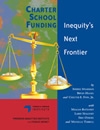
Charter School Funding: Inequity's Next Frontier

Sheree Speakman, Chester E. Finn, Jr., Bryan C. Hassel

Of all the controversies swirling around the nation's charter schools, none is more hotly contested than the debate over funding. Into the fray leaps Charter School Funding: Inequitys Next Frontier, the most comprehensive and rigorous study ever undertaken of how public charter schools are funded, state by state, and how their revenues measure up to dollars received by district-run schools.

Commentary
8.10.2005

The South will rise again

The Dukes of Hazzard isn't the only Southern revival this summer: the recent NAEP scores show southern states accelerating faster than the General Lee.

Commentary
8.10.2005

The Grinch that stole summer

What could possibly be nasty enough to slash recess, eliminate gym class, demolish the arts, cause childhood obesity, increase anxiety, and now, slight of all slights, trim little Susie's summer vacation? But of course: the evil No Child Left Behind Act!

Commentary
8.10.2005

Time un-muddles the middle

Last week's Time was all about "being 13." Its conclusion: "Today's 13-year-olds, growing up in a world more connected, more competitive, more complex than the one their parents had to navigate as kids, so far show every sign of rising to the challenge." Perhaps, but are their schools "rising to the challenge," too?

Commentary
8.10.2005

An obit for ed schools

Gadfly can only imagine the expressions of shock and awe as ed school profs and deans awoke at their favorite summering spots to find the Grey Lady of Times Square asking, "Who Needs Education Schools?" The answer, according to this expansive and mostly astute article by Anemona Hartacollis, is pretty much nobody.

Commentary
8.10.2005

Putting out a contract on charters

D.C. charter schools took two hits this week.

Commentary
8.10.2005

Renewing the Compact: A Statement by the Task Force on Charter School Quality and Accountability

Chester E. Finn, Jr.

National Alliance for Public Charter SchoolsAugust 2005

Commentary
8.10.2005

A Delicate Balance: District Policies and Classroom Practice

Allison Porch

Lauren E. Allen, Eric Osthoff, Paula White, and Judy Swanson, Cross City Campaign for Urban School Reform2005

Pagination

  • First page « First
  • Previous page ‹ Previous
  • Page 2
  • Page 3
  • Page 4
  • Page 5
  • Current page 6
  • Page 7
  • Page 8
  • Page 9
  • Page 10
  • Next page Next ›
  • Last page Last »

Type

  • Commentary (439)
  • Report (9)

Topics

  • Accountability & Testing (2)
  • Charter Schools (1)
  • Curriculum & Instruction (2)
  • Governance (1)
  • Private School Choice (1)
  • School Finance (1)
  • Standards (6)
  • Teachers & School Leaders (1)

Date

  • (-) 2005 (0)
  • September 2005 (41)
  • October 2005 (40)
  • November 2005 (49)
  • May 2005 (32)
  • March 2005 (31)
  • June 2005 (42)
  • July 2005 (50)
  • January 2005 (45)
  • February 2005 (41)
  • December 2005 (31)
  • August 2005 (29)
  • April 2005 (42)
Fordham Logo

© 2026 The Thomas B. Fordham Institute
Privacy Policy
Usage Agreement

National

P.O. Box 110
Burke, VA 22009

202.223.5452

[email protected]

Ohio

P.O. Box 82291
Columbus, OH 43202

614.223.1580

[email protected]

Sponsorship

130 West Second Street, Suite 410
Dayton, Ohio 45402

937.227.3368

[email protected]