
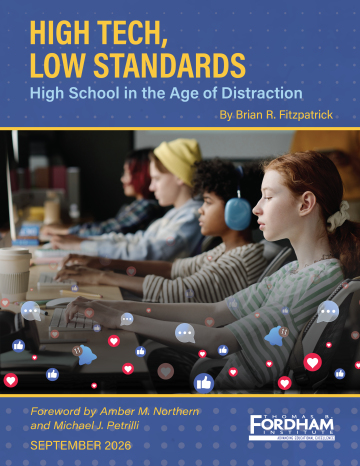
High Tech, Low Standards: High School in the Age of Distraction
A new national survey finds that school-issued devices, AI misuse, and grade inflation are undermining learning and leaving many students feeling unprepared for the future.
High Stakes for High Schoolers: State Accountability in the Age of ESSA (Part II)
Eleven weeks ago, in High Stakes for High Achievers: State Accountability in the Age of ESSA, the Fordham Institute reported that current K–8 accountability systems in most states give teachers scant reason to attend to the learning of high-achieving youngsters.
Charter Schools at the Crossroads: Predicaments, Paradoxes, Possibilities
Over the past quarter-century, charter schools have gone from an upstart education experiment to a prominent, promising, and disruptive innovation in K–12 education. Indeed, few observers present at the creation of the first charter schools could have predicted how rapidly this movement would spread or how thoroughly it would come to dominate the education-reform agenda.
Charter School Boards in the Nation's Capital
Tens of thousands of individuals across the United States volunteer their time, energy, and expertise as members of charter school boards. Yet as the charter sector has grown, we’ve learned remarkably little about these individuals who make key operational decisions about their schools and have legal and moral responsibilities for the education of children in their communities.

High Stakes for High Achievers: State Accountability in the Age of ESSA (Part I)
No Child Left Behind meant well, but it had a pernicious flaw: It created strong incentives for schools to focus all their energy on helping low-performing students get over a modest “proficiency” bar. Meanwhile, it ignored the educational needs of high achievers, who were likely to pass state reading and math tests regardless of what happened in the classroom.
Enrollment and Achievement in Ohio's Virtual Charter Schools
This Fordham study, conducted by learning technology researcher June Ahn from NYU, dives into one of the most promising—and contentious—issues in education today: virtual schools. What type of students choose them? Which online courses do students take? Do virtual schools lead to improved outcomes for kids?
Common Core Math in the K-8 Classroom: Results from a National Teacher Survey
In Common Core Math in the K-8 Classroom: Results from a National Teacher Survey, Jennifer Bay Williams, Ann Duffett, and David Griffith take a close look at how educators are implementing the Common Core math standards in classrooms across the nation.
A Policymaker's Guide to Improving School Leadership
Whether the goal is to enhance instruction, create a culture of excellence, or broaden education options for parents, it’s nearly impossible to improve schools without strong leaders. This is hardly news; much evidence has indicated the importance of effective principals for decades.
Career and Technical Education in High School: Does It Improve Student Outcomes?
Fordham’s latest study, by the University of Connecticut's Shaun M. Dougherty, uses data from Arkansas to explore whether students benefit from CTE coursework—and, more specifically, from focused sequences of CTE courses aligned to certain industries.
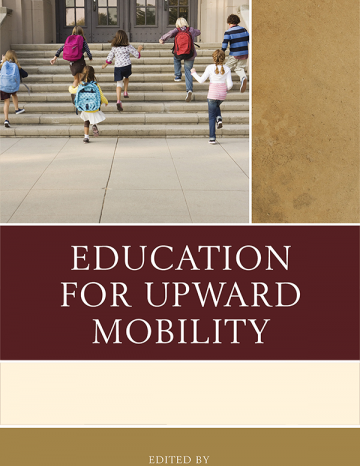
Education for Upward Mobility
In Education for Upward Mobility, editor Michael J. Petrilli and more than a dozen leading scholars and policy analysts seek answers to a fundamental question: How can we help children born into poverty transcend their disadvantages and enter the middle class as adults? And in particular, what role can our schools play?
Evaluating the Content and Quality of Next Generation Assessments
Evaluating the Content and Quality of Next Generation Assessments examines previously unreleased items from three multi-state tests (ACT Aspire, PARCC, and Smarter Balanced) and one best-in-class state assessment, Massachusetts’ state exam (MCAS). The product of two years of work by the Thomas B.
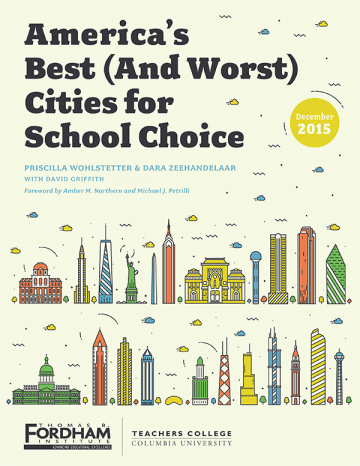
America's Best (and Worst) Cities for School Choice
More than twelve million American students exercise some form of school choice by going to a charter, magnet, or private school——instead of attending a traditional public school.
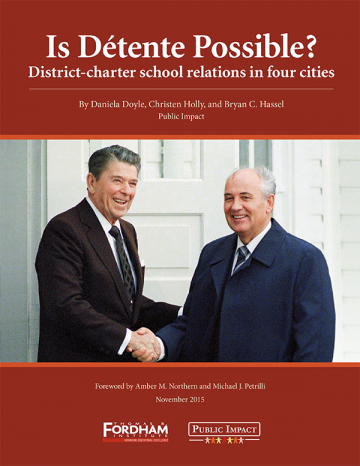
Is Detente Possible? District-charter school relations in four cities
Whether you think the end game of the current “mixed economy” of district and charter schools should be an all-charter system (as in New Orleans) or a dual model (as in Washington D.C.), for the foreseeable future most cities are likely to continue with a blend of these two sectors. So we wanted to know: Can they peacefully co-exist? Can they do better than that?