Mobile Navigation

  • National
    • Policy
      • High Expectations
      • Quality Choices
      • Personalized Pathways
    • Research
    • Commentary
      • Gadfly Newsletter
      • Flypaper Blog
    • Events
    • Scholars Program
  • Ohio
    • Policy
      • Priorities
      • Media & Testimony
    • Research
    • Commentary
      • Ohio Education Gadfly Biweekly
      • Ohio Gadfly Daily
  • Charter Authorizing
    • Application
    • Sponsored Schools
    • Resources
  • About
    • Mission
    • Board
    • Staff
    • Career
Home
Home
Advancing Educational Excellence

Main Navigation

  • National
  • Ohio
  • Charter Authorizing
  • About

National Menu

  • Topics
    • Accountability & Testing
    • Advanced Education
    • Career & Technical Education
    • Charter Schools
    • Curriculum & Instruction
    • ESSA
    • Evidence-Based Learning
    • Facilities
    • Governance
    • Personalized Learning
    • Private School Choice
    • School Finance
    • Standards
    • Teachers & School Leaders
    • Think Again
  • Research
  • Commentary
    • Gadfly Newsletter
    • Flypaper Blog
    • Gadfly Podcast
  • Events
  • Scholars Program

The Education Gadfly Weekly

Sign Up to Receive Fordham Updates

We'll send you quality research, commentary, analysis, and news on the education issues you care about.
Thank you for signing up!
Please check your email to confirm the subscription.

The Education Gadfly Weekly: What’s the point of high school?

Volume 24, Number 36
9.5.2024
9.5.2024

The Education Gadfly Weekly: What’s the point of high school?

Volume 24, Number 36
view
High school graduates
High Expectations

What’s the point of high school?

Many states are struggling to revise their high-school graduation requirements, sometimes up, sometimes down. The most basic is the perennial issue of how hard should it be to earn a diploma. The next is how can high schools can possibly prepare thousands of dissimilar young people for the expectations and prerequisites of hundreds of differing post-graduation options?

Chester E. Finn, Jr. 9.5.2024
NationalFlypaper

What’s the point of high school?

Chester E. Finn, Jr.
9.5.2024
Flypaper

It’s time for tough love to address chronic absenteeism

David Griffith, Ph.D. | Daniel Buck
9.5.2024
Flypaper

The vibes for career-tech programs are great. But they’re too rare.

Michael J. Petrilli
9.5.2024
Flypaper

Tutoring outcomes in D.C. public schools, 2022–23

Jeff Murray
9.5.2024
Flypaper

#936: How socioeconomic factors explain achievement gaps, with Eric Hengyu Hu and Paul L. Morgan

9.4.2024
Podcast

Cheers and Jeers: September 5, 2024

The Education Gadfly
9.5.2024
Flypaper

What we're reading this week: September 5, 2024

The Education Gadfly
9.5.2024
Flypaper
view
Parent-teacher conference

It’s time for tough love to address chronic absenteeism

David Griffith, Ph.D., Daniel Buck 9.5.2024
Flypaper
view
Career-technical education

The vibes for career-tech programs are great. But they’re too rare.

Michael J. Petrilli 9.5.2024
Flypaper
view
School tutor

Tutoring outcomes in D.C. public schools, 2022–23

Jeff Murray 9.5.2024
Flypaper
view
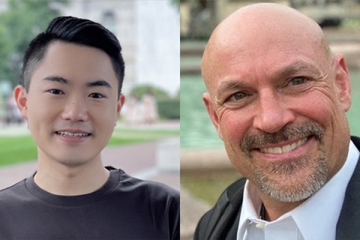
Eric Hengyu Hu and Paul L. Morgan

#936: How socioeconomic factors explain achievement gaps, with Eric Hengyu Hu and Paul L. Morgan

Eric Hengyu Hu, Ph.D., Paul L. Morgan, Ph.D., Michael J. Petrilli, Amber M. Northern, Ph.D., David Griffith, Ph.D. 9.4.2024
Podcast
view
Fordham Gadfly image

Cheers and Jeers: September 5, 2024

The Education Gadfly 9.5.2024
Flypaper
view
Fordham Gadfly image

What we're reading this week: September 5, 2024

The Education Gadfly 9.5.2024
Flypaper
view
High school graduates

What’s the point of high school?

Chester E. Finn, Jr.
9.5.2024
Flypaper

Many states are struggling to revise their high school graduation requirements, sometimes up, sometimes down. Indiana is home to perhaps the premier struggle today, but it’s not alone. Election day may find Massachusetts jettisoning its two-decade-old requirement that students pass the (eighth-grade-level) MCAS exam before graduating. Idaho is in the midst of an overhaul. Rhode Island recently raised the bar. Ninth graders in Kansas face new requirements. My home state of Maryland is moving—at a snail’s pace, some say—to install the ambitious “blueprint for the future.” Meanwhile, Colorado appears to be on the brink of lowering its passing scores for students who opt for standardized tests in lieu of traditional graduation requirements. And so it goes.

Much is also going on behind the scenes, where debates are heated and multiple tensions are tugged back and forth. The most basic is the perennial issue of how hard it should be to earn a diploma. If too hard, some kids—potentially a politically unsustainable number of them—won’t get this important credential. If too easy, few kids will be well prepared for what follows, whether that means community colleges, selective universities, blue-collar trades, sophisticated technical jobs, the military, whatever—let alone for good citizenship, competent parenting, cultural engagement, and personal finance.

Then, however, comes the next complication, which is that “well prepared for” doesn’t mean the same thing for young people headed from high school into, say, construction work, a plumbing apprenticeship, a chef’s job in a five-star restaurant, an open-to-all college, an Ivy League university, or the Air Force. How can a high school—or a state or district setting graduation requirements—possibly prepare thousands of dissimilar young people (who themselves arrive in high school with widely varied degrees of readiness, not to mention capacity and motivation) for the expectations and prerequisites of hundreds of differing post-graduation options?

Twenty or so years ago, we at Fordham joined with the (much-missed) Achieve organization and Education Trust to create the American Diploma Project (ADP) and a network of states pledged to prepare their students for both college and career. We concluded that they all needed to learn essentially the same things—and this went on to have considerable influence on the Common Core State Standards that followed a few years later. But the truth is, in retrospect, we were viewing the high school world through a college-readiness lens, in part because it was a lot easier to find out what college readiness means—at least readiness for credit-bearing work in open-enrollment state colleges—than to smoke out the skills and knowledge that are essential across the endlessly variegated world of work.

Now we live in a world of heightened equity concerns and greater sensitivity to injustice, unequal access to various goods and services, and a disposition in many places to deny differences that—whatever their source—may actually exist in our young people. We also live in a fast-changing economy in an ever-more-competitive world. Making all efforts to work out the “right answer” to “what’s high school supposed to accomplish” more fraught and politically charged than ever before.

Most such efforts nowadays settle on one (or more) of three strategies:

1. “College for all.” This is a nobly aspirational and utterly unrealistic goal, but it’s pursued by an odd coalition of equity hawks; student-hungry colleges; educators who went to college themselves and want their own kids to do likewise and so cannot imagine otherwise (or recommend otherwise without feeling hypocritical); and politicians fearful of saying “let’s send 70 percent of young people to college.” (The feared response: Which 30 of young Americans don’t you care about?) All these folks know and often acknowledge that not everyone will actually matriculate to and complete college, but they do believe that closing off the possibility of college too soon—before kids have even graduated high school—is a form of lowering expectations, usually in ways that are biased by race and/or class.

The reality is that not quite half of young Americans today end up with college degrees. In 2022, reports the Lumina Foundation, among adults ages twenty-five to thirty-four, 39.7 percent held a bachelor’s degree or higher. Another 8.9 percent had associate degrees. That makes 48.6 percent. Set aside the worrying fact that some possess degrees with little or no connection to decent-paying jobs and focus only on degree attainment. Perhaps the country—and its young adults—would be better off if we pushed the proportion with college degrees closer to 60 or 70 percent, which would be a very heavy lift in its own right. We’d still have 30–40 percent without college degrees. Then what? And is it really true that we’re doing a service to those 30–40 percent by making them sludge through college-prep classes, all the way through twelfth grade, rather than doing something more constructive with their instructional time?

2. “College and career.” I was part of the hardworking commission, ably led by Brit Kirwan, that developed Maryland’s “blueprint for the future,” which the legislature subsequently adopted (though it isn’t yet fully paid for and is a long way from being fully implemented). It’s got a lot of moving parts, but the high school part contemplates multiple “pathways” once everyone meets—by tenth grade is the goal—a high standard of readiness in reading and math. In short form, it reads like this:

The College and Career Readiness Pillar sets a new College and Career Readiness (CCR) standard that prepares graduates for success in college and the workforce by ensuring they have the knowledge and skills to complete entry-level credit-bearing college courses and work in high-wage and high-demand industries. The Blueprint aims to have all students meet the CCR standard by the end of their tenth grade year, develops CCR-Support pathways to support students in meeting the standard, enables students to enter a Post-CCR pathway that builds on the student’s strengths, develops a Career and Technical Education (CTE) system that is aligned with industry’s needs, and ensures that prekindergarten through twelfth grade curriculum, standards, and assessments are all aligned with the new CCR standard.

Tons of loose ends there, starting with the fact that the state hasn’t set the CCR standard yet (it’s working with an interim version), the fact that reading and math aren’t all that’s needed for subsequent success, and the fact that getting everyone to a uniform high standard by tenth grade is reminiscent of NCLB’s pie-in-the-sky promise that everyone would be proficient by 2014. (To be fair, the Blueprint recognizes that some students will take longer and that many will need extra help.)

3. College or Career. A handful of reformers, including my friend and colleague Mike Petrilli, want high schools to ease up on the traditional load of “Carnegie Units” that they require for graduation, most of them loosely tied to college-prep, and create space for a lot more heavy-duty CTE, apprenticeships, and the like that offer serious workforce preparation in a wide array of fields for kids who don’t intend to go to college or for whom college—college completion, anyway—is not a realistic possibility. This would be more akin to the “dual education systems” of Germany, Switzerland, and a few other lands that have developed technical education and apprenticeships to a high level. 

What they’re recommending—a close cousin of “college and career” à la Maryland’s Blueprint, but apparently with lesser demands when it comes to a common standard of attainment—is probably the most realistic about American adolescents but possibly the least realistic about contemporary American politics, as well as the capacity of U.S. high schools to deliver something that few of them have done successfully since the old days of “tracking” kids through the “comprehensive” institutions that the late Ted Sizer characterized as shopping malls.

If I have to choose among these three options, I’ll stick with the Maryland version, mindful though I am that making it happen would take decades of sustained effort.

Yet all three approaches are too narrowly occupational. They neglect the schools’ concurrent responsibility to meet America’s need for competent citizens, not just people who earn livings. None of these reformist visions deals with the need for young adults to be culturally literate, to be knowledgeable voters, to be good neighbors, great parents, and adept at managing their personal finances. It’s not that these outcomes cannot also be cultivated by good schools. It’s that the reformers, policymakers, and wonky sorts who debate the mission and outcomes of high school seldom bother to mention them.

Education serves both public and private functions, particularly at the “compulsory” level that is the K–12 enterprise. And both the public and private functions go far beyond performing a job, whether that job is making computer chips, building roads, giving physical therapy to the disabled, teaching physics, writing lawbooks, or driving buses. Yes, it’s important to earn a living, preferably at something one likes and is good at. That’s important both for one’s own and one’s family’s self-sufficiency and for the nation’s prosperity. But what about all the other qualities we seek in adults? And what’s the high school’s responsibility to develop, inculcate, and inspire those qualities?

A one-semester random civics course or psychology course or economics course doesn’t do it (and most of those are electives, whatever the school.) Yet when we agonize and argue over the college-career balance and try to formulate (and then revise) graduation requirements that we hope get that balance right, we seldom think about the other qualities that also need to be balanced. And today we’re not doing very well on that front, either.


view
Parent-teacher conference

It’s time for tough love to address chronic absenteeism

David Griffith, Ph.D. | Daniel Buck
9.5.2024
Flypaper

Despite an unprecedented infusion of resources, the latest data show that American students are struggling to recover the ground they have lost and may even be making less year-to-year progress than before the pandemic. Yet, to a remarkable extent, educators and policymakers who profess to care about the problem are shying away from the most obvious remedy: Make kids come to school, and make their parents make them do so.

Between 2018 and 2022, the share of American students who experienced chronic absenteeism—commonly defined as missing at least 10 percent of the school year—skyrocketed from 15 percent to 28 percent. And, despite much public angst, the most recent numbers show that roughly a quarter of kids are still missing too much school.

Until this condition improves, returning to prior achievement levels is all but impossible. After all, even a few missed days can leave students disoriented—particularly if their courses are carefully sequenced. Moreover, research suggests that chronic absenteeism has spillover effects, depressing the achievement of peers whose teachers must repeatedly recapitulate their lessons.

Unsurprisingly, chronic absence is also linked to higher dropout rates and a greater likelihood of risky behavior such as drug and alcohol use. So, in recognition of the stakes, a cross-partisan coalition of think tanks and advocacy organizations is calling for a 50 percent reduction in chronic absenteeism within five years.

That’s a laudable goal. But how can it be achieved?

The prevailing consensus, as exemplified by Department of Education guidance, emphasizes the identification and removal of barriers to attendance. Is Johnny struggling to get to the bus stop? Move it a block closer. Is his family coping with illnesses? Host free-to-access medical clinics.

It’s hard to object to these efforts. Yet they are strangely disconnected from the current problem. After all, the rise in chronic absenteeism has been eerily universal. In proportional terms, younger and older students have seen nearly identical increases, as have urban and rural students, rich and poor students, and students from different racial and ethnic groups.

Barriers alone cannot explain such a rapid and universal shift. For example, longstanding transportation challenges didn’t become twice as severe because of the pandemic. Nor are lingering health-related challenges a plausible explanation (though it’s possible that parents are keeping kids with sniffles home from school more often than they used to). Nor has there been a notable increase in Americans’ economic distress. All of which suggests that the problem is fundamentally cultural.

In one sense, that’s bad news. Culture is hard to change. But there’s a silver lining. After all, if the biggest problem is that students who used attend school regularly have gotten out of the habit, then perhaps all that’s truly needed to reestablish the habit is a modicum of political courage and a not-so-gentle shove.

Admittedly, some previous efforts at enforcement have backfired. For example, suspending students for truancy is patently absurd, and student involvement in the criminal justice system correlates with even higher rates of absenteeism.

But of course, there are other options. For example, schools can and should prohibit students who miss class from playing in football games or other athletic competitions that week. And teachers can and should base a non-trivial percentage of students’ grades on “participation” including but not limited to attendance.

In theory, many school districts already deny chronically absent students class credit and require Saturday or after school detentions. Still, many districts don’t do these things. And even in those that do, we suspect that implementation is spotty.

As we write this, Ohio legislators are considering a bill that would pay students to go to school. And it’s true that positive incentives such as cash payouts, gift cards, and other financial rewards have a track record of success.

Yet in addition to sending a questionable message—effectively bribing people into basic, expected behaviors—such policies may be fiscally unsustainable. And, contrary to the assertions of some advocates, there is plenty of evidence that fines and other sanctions can also work when combined with effective outreach. For example, one comprehensive and seemingly effective intervention referred students to case managers and then penalized families who didn’t attend meetings.

Yes, many of these outcomes are undesirable. But so is the status quo. And if we truly believe that a public education is indispensable, we can’t demur when an unprecedented throng declines to show up.

In short, the point of "tough love” isn’t to win friends or make anyone’s life easier. It’s to get someone whose future matters to do something necessary and important.

Like go to school.

view
Career-technical education

The vibes for career-tech programs are great. But they’re too rare.

Michael J. Petrilli
9.5.2024
Flypaper

Education loomed small at both political conventions this summer—a shame considering what dire condition it’s in. But former President Barack Obama’s address to the DNC contained one reference that deserves attention and applause: “Kamala knows that if we want to help people get ahead, we need to put a college degree within reach of more Americans. But she also knows college shouldn’t be the only ticket to the middle class.”

Coming from Obama, who presided when the “college for all” mindset was at its apex, this is a big deal and an important indicator of how far the pendulum has swung from the days when support for career and technical education was lukewarm at best. Now, expanding it is a popular position, promoted by Democrats and Republicans, the left and the right, especially for programs that focus on high-skill and even high-tech, jobs.

Yet when pollsters survey kids in the real world, students report that all they continue to hear from their schools is “college, college, college.” That’s one takeaway from a study released last week by Gallup and the Walton Family Foundation.

As Cory Turner reported for National Public Radio, this leaves the students who don’t aspire to college feeling less engaged in school: “So of those planning to go to college, which is about half of Gen Z teens, the overwhelming majority say they have a great future ahead,” Turner said. “They're optimistic. But more than four in ten Gen Z students say they don't have college plans, and they are a lot less optimistic.”

“They're also less likely than college-bound teens to say there's an adult at school who makes them feel excited about the future or even encourages them to pursue their dreams,” Turner added. “Part of the problem these teens say is school staff spend a lot of time talking about college, but not alternatives.”

In the NPR report, Zach Hrynowski, a senior education researcher at Gallup, added:

“Even the kids who are like, I don't want to go to college. What are they hearing the most about? College. We're not talking to them about apprenticeships, internships, starting a business, entrepreneurial aspirations, jobs that don't require a college degree.”

It’s scarcely surprising that so many non-college-bound students report that their studies don’t interest them and seem irrelevant to their career plans. Nobody in their schools seems to be encouraging what they do want to do.

As I’ve written before, it’s likely because so few of these students are actually provided the opportunity to do a serious career tech program. Almost everywhere in America, even high-quality CTE is just a set of elective courses, taken alongside the regular college prep track. Just a handful of high school students get to spend significant schooltime focused on career preparation, including via hands-on apprenticeships—even in their junior or senior years. Everybody else is still sleepwalking through more semesters of math, English, science, and history, even if those subjects no longer interest them and provide little preparation for the careers that lie ahead.

The reason this is happening is because policymakers have failed to update our high school graduation requirements to allow students serious alternatives to traditional college-prep.

A case in point right now is Indiana, where some state leaders were trying to make room in high school course schedules for significant work-based learning by stripping out requirements for world history, foreign language, and fine arts.

But the Indiana Capital Chronicle reported some kids and parents, along with higher education institutions, rebelled, worried that the new mandates were going to mess up the traditional college prep pathway. And they weren’t wrong. Indiana was loath to create two different pathways—one for kids aiming for college and another for those wanting to join a trade. So what the state came up with was a compromise that made nobody happy: making everybody do work-based learning but also college prep.

The state has backed off of the changes and is now proposing a standard diploma that is focused on preparing students for college, along with an optional seal that would indicate career readiness. In other words, Indiana is more or less back to where it started.

We could do better. States should get serious about creating pathways that offer a real choice to kids and their families. At least by junior year of high school, let them decide whether they want to focus on traditional college prep or something more career-oriented. That is the only way we’re going to help all students feel engaged in their studies, not just the ones who have their sights set on the Purdues or Princetons of the world.

Editor’s note: A version of this was first published on Forbes.

view
School tutor

Tutoring outcomes in D.C. public schools, 2022–23

Jeff Murray
9.5.2024
Flypaper

Since 2022, public schools in the District of Columbia have been working to mitigate Covid learning disruptions by establishing and ramping up high-impact tutoring (HIT) efforts. Data on the outcome of these efforts are beginning to emerge, and a new report from the National Student Support Accelerator (NSSA) shows some minimally encouraging signs.

NSSA is an offshoot of the Stanford Accelerator for Learning and Systems Change for Advancing Learning and Equity, an initiative focused on researching how tutoring can best benefit students. Its new report looks at the first full year of HIT implementation in D.C. schools during 2022–23. Tutoring efforts that year concentrated on math and English language arts (ELA) for students in all grades and was focused on schools—both district and charter—with the greatest concentrations of students identified as at risk. It’s interesting to note that “at risk” doesn’t generally mean academic risk for schools in the district, but rather centers primarily on student socioeconomic status and homelessness, in the context of this wholly-academic intervention. Pre-existing academic need appears not to have been a driving force in choosing where tutors were placed, although some data suggest that academic performance may have influenced teachers’ decisions on which students to refer for tutoring.

A total of 5,135 students in 151 schools received HIT. Eligible buildings were those in which 40 percent or more of their students were categorized as at risk. Approximately 52 percent receiving HIT were district (DCPS) students, with charter school students making up the remainder. Overall, 6 percent of all D.C. public school students—and just 8 percent of all students categorized as at risk—received HIT. Of these students, 3,240 received tutoring in ELA and 2,558 in math. Tutoring hours received were highest in grades K–2, falling off starting in grade three. High school freshmen and seniors received the fewest hours of tutoring. Students, on average, participated in twenty-seven individual sessions. Seventy percent of students participated in eleven or more tutoring sessions. The report includes some details on the widely varying types of tutoring offered.

For students in grades K–8, achievement in math was measured by iReady assessments taken at the beginning, middle, and end of the year. These findings reflect DCPS students only; no data for charter school students were able to be calculated. Tutoring students began the school year 0.19 standard deviations below their non-tutored peers and ended the school year 0.14 standard deviations below. While tutored students still scored below their non-tutored classmates, the gap between the two groups did diminish, and students who received more tutoring shrunk the gap the most. Students who participated in more than twenty tutoring sessions were able to shrink their gap with non-tutored peers from 0.23 standard deviations to 0.14 standard deviations. The same pattern was observed in an analysis of Reading Inventory Scores for tutored and non-tutored students. This analysis covered a fuller cohort, including grades 2–12, but again did not include charter students. Outcomes for students in grades 7–12 were measured by the MAP math assessment, and students who received the most tutoring (twenty or more sessions) managed to outscore their non-tutored peers by the final test of the year. A tiny bright spot.

In terms of achievement, data from the annual PARCC assessment, administered in the spring of 2023, were available for all D.C. students, including charter students, for grades 3–11. However, the researchers conclude only that the findings—tutored students fared worse across the board than non-tutored peers and that those who received the most tutoring actually performed the worst of all groups—suggest that teachers likely chose their lowest-performing students to receive tutoring even though that was not a stated criterion for selection.

Non-academic outcomes discussed in the report include school attendance (students with better school attendance participated in more tutoring sessions, on average, and vice versa), student perceptions of tutoring, and tutoring program managers’ impressions of the program.

While these findings are generally positive, they are also rather modest, given the scope of the problem at hand. If the rates of gap closing don’t increase from the snail’s pace observed here, it will take years of additional work for tutored students to meet the test score performance of their non-tutored peers. Older students don’t have years to wait, and two cohorts of students have already graduated since the start of this HIT effort. We also know from this report that tutoring participation declines sharply in higher grades. Additionally, funding for tutoring in D.C. and elsewhere initially came from federal pandemic-relief funds, which are now exhausted and not sure to continue. All signs point to a diminishing effect going forward from the endpoint of these data, which should temper even the most enthusiastic responses to these findings.

SOURCE: Cynthia Pollard et al., “Implementation of the OSSE High Impact Tutoring Initiative: First Year Report School Year 2022–2023,” National Student Support Accelerator (August 2024).

view
Eric Hengyu Hu and Paul L. Morgan

#936: How socioeconomic factors explain achievement gaps, with Eric Hengyu Hu and Paul L. Morgan

9.4.2024
Podcast
 

On this week’s Education Gadfly Show podcast, SUNY Albany’s Eric Hengyu Hu and Paul L. Morgan, authors of Fordham’s recently released report Explaining Achievement Gaps: The Role of Socioeconomic Factors, joins Mike and David to discuss their findings. Then, on the Research Minute, Amber reports on a study of differences in grading practices between international and domestic instructors at U.S. public universities.

Recommended content:

  • Eric Hengyu Hu and Paul L. Morgan, Explaining Achievement Gaps: The Role of Socioeconomic Factors, Fordham Institute (August 2024)
  • “America’s highest-achieving students are disproportionately Asian. Let’s not be afraid to investigate why.”—Michael J. Petrilli and Amber M. Northern
  • Meredith Coffey and Adam Tyner, Excellence Gaps by Race and Socioeconomic Status, Fordham Institute (August 2023)
  • Trang Pham and Stephanie Potochnick, Undergraduate Grading Practices of International and Domestic Faculty: Evidence From Three Large U.S. Public Universities, AERA Open (2024)

Feedback Welcome: Have ideas for improving our podcast? Send them to Stephanie Distler at [email protected].

view
Fordham Gadfly image

Cheers and Jeers: September 5, 2024

The Education Gadfly
9.5.2024
Flypaper

Cheers

  • A Colorado Springs high school’s decision to ban cell phones demonstrates how these policies benefit students, teachers, and principals alike. —NPR
  • IDEA Public Schools, a charter network with 125 campuses across Texas, is pushing for the release of the state’s A-F accountability scores for schools. —Dallas Morning News
  • The idea of universal free lunch in schools is gaining steam, but we should first prioritize improving the quality of cafeteria food. —Tim Daly, The Education Daly and Max Eden, Washington Examiner
  • New York City’s Department of Transportation is closing off 71 streets during the school day this month so that children can play outside. —New York Times

Jeers

  • President Biden has been staunchly anti-charter, despite evidence that these schools help students succeed. —Wall Street Journal
  • Colorado may lower the minimum SAT score needed to use the test to fulfill a high school graduation requirement. —Chalkbeat
  • A dubious argument that high schools should replace the College Board’s AP courses with state-led college-credit classes, even though states likely lack the expertise and capacity to implement such programs. —Max Eden, RealClearEducation
view
Fordham Gadfly image

What we're reading this week: September 5, 2024

The Education Gadfly
9.5.2024
Flypaper
  • Investing more in apprenticeships could make a huge difference in launching the careers of young people across the country. —Heather Long, The Washington Post
  • The closure of several Rochester public schools shook the community to its core. This is just one example in a nationwide trend of declining enrollments and closures. —Alec MacGillis, The New Yorker
  • What separates human brains from artificial intelligence? One computer scientist says it’s educability, or the ability to improve our minds by connecting old knowledge to new knowledge. —Joshua Rothman, The New Yorker
  • FX’s new show, “English Teacher,” uses comedy to expose the dark underbelly of public education—including the dangers of social media, cancel culture, and ineffectual administration. —John Anderson, Wall Street Journal
  • In a world increasingly driven by knowledge and technology, the U.S. is falling behind—and it’ll continue to do so until greater investments are made in education and technology. —Amy Zegart, Foreign Affairs
  • In 2020, Trump’s 1776 Commission sought to teach students a more “patriotic” story about slavery in the U.S. Though the commission was shut down, the debate over how to teach children about race in American history continues. —The Washington Post
Fordham Logo

© 2026 The Thomas B. Fordham Institute
Privacy Policy
Usage Agreement

National

P.O. Box 110
Burke, VA 22009

202.223.5452

[email protected]

Ohio

P.O. Box 82291
Columbus, OH 43202

614.223.1580

[email protected]

Sponsorship

130 West Second Street, Suite 410
Dayton, Ohio 45402

937.227.3368

[email protected]