Mobile Navigation

  • National
    • Policy
      • High Expectations
      • Quality Choices
      • Personalized Pathways
    • Research
    • Commentary
      • Gadfly Newsletter
      • Flypaper Blog
    • Events
    • Scholars Program
  • Ohio
    • Policy
      • Priorities
      • Media & Testimony
    • Research
    • Commentary
      • Ohio Education Gadfly Biweekly
      • Ohio Gadfly Daily
  • Charter Authorizing
    • Application
    • Sponsored Schools
    • Resources
  • About
    • Mission
    • Board
    • Staff
    • Career
Home
Home
Advancing Educational Excellence

Main Navigation

  • National
  • Ohio
  • Charter Authorizing
  • About

National Menu

  • Topics
    • Accountability & Testing
    • Advanced Education
    • Career & Technical Education
    • Charter Schools
    • Curriculum & Instruction
    • ESSA
    • Evidence-Based Learning
    • Facilities
    • Governance
    • Personalized Learning
    • Private School Choice
    • School Finance
    • Standards
    • Teachers & School Leaders
    • Think Again
  • Research
  • Commentary
    • Gadfly Newsletter
    • Flypaper Blog
    • Gadfly Podcast
  • Events
  • Scholars Program

The Education Gadfly Weekly

Sign Up to Receive Fordham Updates

We'll send you quality research, commentary, analysis, and news on the education issues you care about.
Thank you for signing up!
Please check your email to confirm the subscription.

The Education Gadfly Weekly: What do we know about the value of CTE credentials?

Volume 26, Number 19
5.14.2026
5.14.2026

The Education Gadfly Weekly: What do we know about the value of CTE credentials?

Volume 26, Number 19
view
Apprentice
High Expectations

What do we know about the value of CTE credentials?

A new Fordham report estimates the value of earning industry-recognized credentials and certificates as part of high school CTE pathways. The study provides some of the best evidence to date on the economic value of technical education that students can earn during high school. Now, Shaun Dougherty, one of the nation’s leading CTE scholars, puts the Plasman study in the context of the larger research literature.

Shaun M. Dougherty 5.14.2026
NationalFlypaper

What do we know about the value of CTE credentials?

Shaun M. Dougherty
5.14.2026
Flypaper

Trump’s education tax credit is poorly designed, but blue states should opt into it anyway

Michael J. Petrilli
5.14.2026
Flypaper

Five policies for school boards to improve discipline

Daniel Buck
5.14.2026
Flypaper

Findings from the new phone ban study may not be so bleak after all

Meredith Coffey, Ph.D.
5.14.2026
Flypaper

Can Arkansas make teaching great again? | Episode 1017 of The Education Gadfly Show

5.13.2026
Podcast
view
New York Governor Kathy Hochul

Trump’s education tax credit is poorly designed, but blue states should opt into it anyway

Michael J. Petrilli 5.14.2026
Flypaper
view
Adults and students in a school

Five policies for school boards to improve discipline

Daniel Buck 5.14.2026
Flypaper
view
School phone box

Findings from the new phone ban study may not be so bleak after all

Meredith Coffey, Ph.D. 5.14.2026
Flypaper
view

Can Arkansas make teaching great again? | Episode 1017 of The Education Gadfly Show

Jacob Oliva, Michael J. Petrilli, David Griffith, Ph.D., Amber M. Northern, Ph.D. 5.13.2026
Podcast
view
Apprentice

What do we know about the value of CTE credentials?

Shaun M. Dougherty
5.14.2026
Flypaper

A new report from the Thomas B. Fordham Institute, authored by Jay Plasman from The Ohio State University, estimates the value of earning industry-recognized credentials and certificates as part of high school CTE pathways. The top-line takeaway is that some of these credentials seem to offer a pretty hefty payoff in the workforce, even after accounting for the benefit of the CTE course-taking (and other variables) themselves. This study from Ohio is some of the best (and only) evidence to date on the economic value of some technical education that students can earn during high school.

Such credentials have been pitched as having the potential to help those who earn them have a smoother transition to the workforce, and the assumption has been that would include a pay premium. However, there isn’t much evidence on this count, despite substantial growth in the use of these credentials by states and districts that are hungry for available measures to satisfy requirements in accountability systems and meet student and parent demand for a measure of value.

These certifications have been in broad use for some time, but they are getting much more attention as policy shifts toward emphasizing career readiness and non-college pathways into the workforce. Importantly, at least one credential or certification is linked to almost every high school CTE program. And, other than basic course-taking numbers, there isn’t much in the way of data that is systematically collected or reported for CTE students in high school. As a result, for students in high school CTE programs who are not planning to go on to college, these certifications may be the only available metric beyond seat time that indicates career readiness.

So what do we learn from the Ohio analysis? Well, this study is among the first to show that credentials earned in high school can indeed lead to higher pay. Though the findings cannot be interpreted as demonstrating a cause-and-effect relationship, it does a thoughtful job of comparing students who were in similar CTE programs and schools and whose only clear difference was whether they earned the certificate or credential. Overall, Plasman finds that seven years after high school, credential earners in many areas were earning more than their otherwise similar peers who also completed coursework in the same CTE program. In particular, he finds returns of over 20 percent higher earnings for certificate holders in construction, transportation, and manufacturing, with smaller gains in IT, health, business, agriculture, engineering, and law/public safety. A handful of other certifications show that those who earn them are earning less seven years out.

Is this work really new? Yes, this work adds to a small literature that tries to estimate whether credentials earned in high school seem to pay off. This is important because there is not a lot of research evidence on this question. Earlier work using Texas data from Matt Giani showed that some credentials can offer workforce benefits in the form of higher pay in the short term. As with the Plasman report, there was a lot of variation in the potential value of these certificates across program content areas, with a few showing higher benefits and many showing zero or small negative differences in later earnings.

What’s interesting is that the Plasman and Giani studies align on showing benefits of transportation, health, construction, and IT certificates, but differ in the direction of earnings differences in areas like agriculture and business. We shouldn’t make too much of differences across the states because their economies and population trends are quite distinct. However, it is worth noting the areas where they find similar benefits of certificate earning. Two states don’t make a consensus, but in an area with limited evidence, this is worth noting.

Will earnings premiums persist as (former) students enter their late twenties and thirties? It’s too early to tell. What we really want to know is whether credential earners will continue to do better than they otherwise would have done had they not earned the credential. If the peers that these studies are comparing them against all went to college and earned a bachelor’s degree, then it may be that the short-term benefits of these certificates earned in high school won’t carry the same longer-term benefits.

What other research questions remain? One important issue to sort out is whether the certificate or unobserved skill differences are behind the wage returns? The big challenge is that we do not know if the certificate itself is valuable, or if it is just the best available indicator of skills that employers value. Plasman has done the best that is possible given the Ohio data (which are excellent, though don’t include the underlying CTE skill measures that we might like).

Deeper insights may soon be coming. Ongoing work by Daniel Kreisman and Thomas Goldring is designed to offer first-of-its-kind evidence that we need to better understand whether and how credential receipt is working. They have data on student performance on some National Occupational Competency Testing Institute (NOCTI) certifications. Most certifications are awarded based on students scoring at or above some minimum threshold. In the case of this ongoing study, they have the scores and the indication of who received the certificate. The result is that they should be able to differentiate among people who had similar skills on the assessment but who just barely differed in whether they received the certification. This design has the potential to help provide the next set of evidence we need to understand (at least for a handful of districts and certifications) if the payoff comes from the certificate or the underlying skill it is meant to signal.

What might we expect to see? The certificate is likely valuable only insofar as it gives employers an idea of actual skills they value. In areas where the credentials are more easily attained (the test is relatively easy), receiving the credential might not provide all that much information to employers. For instance, if passing a credentialing test is easy and everyone (or nearly everyone) gets the credential, then there is no ability of employers to use the signal that might otherwise come from attainment of the certificate or credential. In these instances, employers get too little information or an imperfect indicator of skill from these metrics. Conversely, credentials that are harder to earn might mean that getting the certificate is a good indicator of someone with high skills. But because earning a credential is binary—you get it or you don’t—those students who just missed earning the credential will look lower-skilled to employers. Thus, the certificates themselves could really be benefiting those who earn them. However, if employers need to hire more than just the pool of people who earned the certificate, they are at a disadvantage in knowing who is the next best person with the skills they value.

The Plasman study sheds new light on a policy relevant issue. The size and economic diversity of Ohio make it a great place from which to learn, and the analysis’s insights are valuable to policymakers and practitioners. There is more evidence needed, but thankfully, some of that work is underway.

view
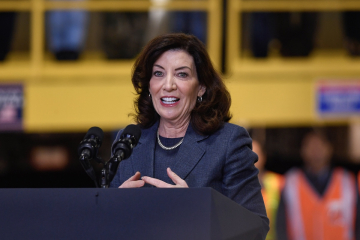
New York Governor Kathy Hochul

Trump’s education tax credit is poorly designed, but blue states should opt into it anyway

Michael J. Petrilli
5.14.2026
Flypaper

Last week, New York Governor Kathy Hochul made big news by announcing her intention to opt her state into the federal Education Freedom Tax Credit (EFTC)—though her office later hedged a bit. In a statement to the press, her staff said they “await information from the federal government on the program and will thoroughly review the details of the policy for poison pills that could harm New York’s education system.”

They will have to wait another few months for said “information”—i.e., the Treasury Department regulations that will govern the initiative—if current rumors about Treasury’s timing are correct. And most likely, those rules won’t say much, except that governors like Hochul will have little say over which Scholarship Granting Organizations can work in their states, as long as they meet the minimum requirements of the law.

That would, indeed, be a poison pill for those who are dead set against private school choice, including funding for religious schools. Peter Greene, for example, went on a rampage against Colorado Governor Jared Polis last weekend for opting into the tax credit initiative—the only Democrat besides Hochul to do so to date—even though it could support schools that discriminate against gay kids. (Polis is openly gay.)

The federal voucher program is simply federally-funded discrimination, a chance for the government to transfer its tax liability to private schools without holding them to any sort of anti-discrimination standards. It’s the government spending what were supposed to be tax dollars on activities that only benefit a selected few.

But what about those of us who support school choice in all its varieties but aren’t crazy about the particulars of the EFTC? Who wish it were targeted more narrowly to low-income students, or included requirements for participating schools to test children regularly? Who view private school choice, including for faith-based schools, not as “discrimination” but as support for educational pluralism? Should we celebrate the decisions by Hochul and Polis?

Regular readers know that I’ve been defending Democratic governors who want to wait for the Treasury regs before they opt in. That only seems fair, and reflects my hope that perhaps the Trump administration will yet decide to give governors some leeway in how the initiative works in their states. For example, if a blue-state governor wanted to limit eligibility to poor and working-class families, or require some testing and transparency provisions, Washington might go ahead and let them.

But those are my policy preferences. As the Rolling Stones taught us, you can’t always get what you want. So what if the option is a clear binary choice:

  1. States opt in and agree to approve every qualified Scholarship Granting Organization, even those that plan to provide scholarships to upper-middle-class families and/or those that don’t require any testing or transparency from participating schools; or
  2. States don’t opt in, and their students and families—in both the public and private school sector—can’t benefit from taxpayer donations funded by the tax credit.

If that’s the choice, I say: Opt-in. Blue states included.

The New York opportunity is particularly exciting. The Empire State has long been home to among the largest Catholic school sectors in the country, with a proud history of serving poor and working-class families well and providing their students a boost to upward mobility. Yet given the state’s deep-blue politics, no private school choice program has ever been in the cards. Now, thanks to Governor Hochul’s brave decision, we can imagine that thousands of low-income and working-class families could gain access to high-quality urban Catholic schools.

And Catholic dioceses are probably the entities best positioned to turn the EFTC into life-changing scholarships. That’s because church leaders can petition their affluent parishioners to take the tax credit, donate to a Scholarship Granting Organization affiliated with the church, and then turn those donations into scholarships for poor and working-class students. There aren’t many other organizations in America that serve both rich and poor and an play matchmaker at scale between donors and recipients.

And for me, keeping Catholic schools open, thriving, and full of low-income and working-class families would be an outcome worth celebrating, even if the initiative doesn’t include the policy designs I prefer. (I do hope they choose not to exclude gay kids or the children of gay parents, though they have a First Amendment right to do so.) And that’s without contemplating the potential benefits to public school and charter school students, who can benefit via mini-scholarships for tutoring and the like.

It was probably Voltaire who first said, some 250 years ago, “Let not the perfect be the enemy of the good.” When comes to the far-from-perfect EFTC, that’s good advice for us today.

Editor’s note: This was adapted from an article first published on Mike’s Substack, SCHOOLED.

view
Adults and students in a school

Five policies for school boards to improve discipline

Daniel Buck
5.14.2026
Flypaper

One year, I decided to write down bullet-pointed notes on all the chaos, violence, and disorder that occurred in my school: Two students held a peer against a wall while a third pummeled them in the face and stomach; another student beat up a special needs child on the bus; a girl brought a hammer to school but it was confiscated before she could use it.

In the end, I stopped my note-taking exercise after two months because such occurrences became too quotidian. Too many other tasks demanded my time for me to bother documenting “another fight today.”

Thankfully, most schools manage to maintain at least basic safety. But prosaic disruptions are a ubiquitous problem. A 2026 union survey confirms what others have before: Student behavior is and has been the number one reason that teachers consider leaving the profession. At the student level, misbehaving peers cause other kids to misbehave and drive down achievement.

That being said, it’s easy to complain about poor behavior, and I’ve made the case for strong behavior policies countless times here and elsewhere. Instead, I want to focus on what school boards can actively do to ensure basic order in their schools—a central and necessary condition for learning.

Strengthen codes of conduct, “broken windows” style

Codes of conduct are the mechanism that either empower administrators to maintain order in schools or restrain them from taking necessary actions. In Milwaukee Public Schools, for example (the large urban district near me), many behaviors have a maximum consequence that curtail building principals. Skipping class, inappropriate dress, leaving class—all plateau at a “level 1” intervention, which limits responses to warnings, conferences, and positive interventions.

Of course, few serious reformers would recommend an out of school suspension for a first-offence class skipper. But what about a second, third, or fourth time? Moreover, are smaller consequences such as detentions, loss of privileges, or academic consequences spelled out in codes of conduct?

I’d advise boards to review and revise their codes of conduct with a “broken windows” theory of schooling in mind. In 1982, George Kelling and James Q. Wilson argued for “broken windows” policing, wherein officers spend more time shooing along loiterers, picking up trash, and apprehending turnstile jumpers than hunting down career criminals. The central idea was that small instances of disorder or chaos create a permission structure for greater disorder or chaos. One broken window signals that no one cares and rules won’t be enforced, so why not break another and rob a house while you’re at it?

Some discipline reform advocates lament “vague school rules” against defiance, disorderly conduct, disrespect, and insubordination. The entire state of California has even prohibited the use of suspensions for willful defiance. Advocates argue that policies should instead focus on clear, egregious behaviors such as fights, alcohol use on school grounds, or throwing furniture—the argument runs.

However, at any school, administrators and teachers either establish the expectation that students must obey school rules or not. If rules are not uniformly enforced, the implicit message then is that students only have to follow some rules some of the time. This degrades a school’s culture.

When I was an assistant principal and students came to my office, regardless of the behavior, I could either support teachers as authorities in their own classroom or not. Regardless of the teachers’ requests or students’ behavior, the fundamental question was whether students had to obey.

The controversial uniform policies of “no excuse” charter schools, wherein students can receive consequences even for mismatched socks, make for an illustrative example. Personally, I’m ambivalent about school uniforms. But if a school sets a uniform policy, they have to enforce it. Otherwise, the message is that “we have rules, but only kind of.” Mismatched socks shouldn’t lead to corporal punishment, but a code of conduct must allow a consequence for a breach, however minor—a school provided pair and a loss of recess time, for example.

Consider other small misbehaviors such as talking out of turn or refusing to sit in an assigned seat. Perhaps one student can whisper during instruction or sit wherever his heart desires, but what happens when every student does likewise? Small infractions compound—either through every student misbehaving or one student persistently disrupting class—such that they interrupt learning far more in aggregate than a one-off fight or outburst.

Hold the line with small consequences on minutiae, and schools will achieve greater order and discipline than keeping it to suspensions for egregious actions. Deal with the small fish so that bigger fish to fry don’t come along. While boards (usually) cannot themselves revise student handbooks or codes of conduct, they can compel superintendents to revise them along the board’s vision and refuse to approve them until district leadership does so.

Compel administrators to use consequences

School board members need to understand that many forces within a school encourage academic mediocrity. No one actually likes high expectations. Sure, everyone mouths rhetorical support for high expectations, but when it comes to high grading loads, the need to assign Fs, tough academic gauntlets, academic eligibility to participate in sports, retention policies, and any practical enforcement of high expectations, most stakeholders bristle.

Discipline enforcement exemplifies this reality. Every time I pressed a button to enter a consequence into our student management software, I knew my life would get difficult for a week. Parents, invariably, contested both the official account of the incident and the subsequent consequence.

Now, parents have every right to question the decisions that a school makes about their child. I only mention this pushback to demonstrate that there are many disincentives to doing the right thing. It’s easier in the moment for administrators to give a student a stern talking to and move on with their day—no risk for contentious parent meetings required.

With that in mind, board policy can require that principals or deans assign a consequence for referrals or before returning a student back to class. They needn’t be harsh, but administrators cannot then send a student back to class with only a bag of chips and an encouraging pep-talk.

Keep restorative justice and PBIS supplemental

The majority of the work to maintain safe and orderly schools happens through clearly defined, taught, and enforced routines and procedures—from how to enter the school building to expectations during class discussions. It’s fine—advisable even—to include follow-up conversations after a consequence and incentive systems to reward good behavior akin to restorative justice or positive behavior interventions and supports (PBIS), but only so long as they remain supplemental—that is, something like a restorative conversation happens in tandem with a consequence, not as a replacement for it.

Any competent administrator or teacher will talk with students after a behavior incident: What happened, why did it happen, what can you do instead next time, and what can you do to make it right? And many also leverage incentive systems in their own classes. These are necessary and good additions to any strong discipline policy.

The problem arises when PBIS or restorative justice come to replace any code of conduct. If an administer must try a behavior plan full of various rewards and incentives before they can administer a suspension or if a restorative conversation replaces a consequence, the discipline policy becomes too weak to maintain order. The proactive behavioral structures and enforcement are the metaphorical walls and roof of the school building. If you try to keep out the weather with only gutters, you’re destined to failure. Ensure that no board policy places such restraints on an administer.

Tour schools

The reality is that most states and schools have decent discipline codes. They’re neither overly lenient nor exceedingly punitive. They offer appropriate latitude to administrators to pull either the lenient or strict lever as fits the situation. Faults in the system often come at the point of implementation, not policy. There’s no better way to determine the implementation of behavior policies—or any policy for that matter—than for board members to visit schools.

Discipline reports and data can be fudged, but the day-to-day culture of a school cannot. What’s the feeling in a hallway? How noisy are classrooms? Is that noise productive chatter or chaos? Do you hear teachers screaming? Are students poised and respectful as you walk by? What’s the status of bulletin boards and walls? Are they maintained or falling apart and covered in graffiti? These questions are far more difficult to fake or (literally) paper over.

Routine walkthroughs are obviously easier in smaller districts. But even in larger districts, board members can make it a routine exercise to spend, say, a day a month visiting a handful of schools. Divide and conquer among a 9-person board, and you can maintain a sense of how the district as a whole and individual schools are succeeding or failing.

Perform behavioral audits

For this last recommendation, I owe credit to Max Eden, who suggested that boards perform regular behavioral audits consisting of a survey of teachers that includes a free response section. He argues that, “One could Google for hours in vain trying to find a teacher who went on record about discipline and safety problems, but when teachers have the opportunity to speak anonymously, they have horror stories to tell.”

Any attempt to bring order to schools will likely trigger negative press. You can practically plug and play the headline: “District X implements policy that experts say could do terrible Y harm to student group Z.” Behavioral audits will provide fodder for effective counter messaging and a much-needed look into the chaotic reality of classrooms. Eden provides a few examples from districts that have used behavioral audits:

  • “We were told that referrals would not require suspension ‘unless there was blood.’”
  • “I have never seen anything like it. The behavior is unreal. The students know they can get away with anything because there are no real consequences.”
  • “Students are throwing rocks at teachers. When they are sent down to the office, they returned moments later.”
  • “My life and the lives of my students were threatened this year, and the child was in school the very next day.”

A transparency measure such as this won’t improve behavior itself but it will make the problem clear so that the above policies have justification and community support.

—

None of these policies alone (or even together) will usher in a utopian era of school orderliness and decorum. A healthy garden is the manifestation of numerous actions: well-timed planting, sufficient watering, soil health, pH levels, weeding, a balance of sun and shade, and much else. So, too, an orderly school relies on effective teacher training, engaging instruction, high-quality curricula, thoughtful routines, school culture, and plenty else. But everything else rests on the precondition that schools are safe and orderly, educators can teach without chaos, and students can learn in environments where they can actually focus on their studies. While administrators and teachers must carry out the day-to-day functions of a school, it’s incumbent on school boards to set the policies that allow them to do so successfully.


view
School phone box

Findings from the new phone ban study may not be so bleak after all

Meredith Coffey, Ph.D.
5.14.2026
Flypaper

Over the six years I taught high school, I tried every response to student cellphone use that was available to me: one warning, three warnings, no warnings; reacting to the mere sight of a phone, looking the other way if the use wasn’t conspicuous; calling the front office, calling the counselor, revisiting “classroom norms,” emailing parents, buying one of those class cellphone organizers that looks like it’s for shoes. None of these efforts worked particularly well, and they were all draining.

That’s why, since I left the classroom in 2022, I’ve been heartened to see the wave of school cellphone bans across districts and states. Unlikely bedfellows from teachers unions to Moms for Liberty have allied in support, and a study last year suggested promising initial results around attendance and academic achievement.

However, a new study from researchers from Stanford, Duke, Penn, and Michigan offers a different set of findings, which have received attention from the New York Times, the Washington Post, and NPR (not to mention Fordham’s own Amber Northern). The study analyzes the effects of a single popular phone ban mechanism: Yondr pouches. Adopted in almost five thousand schools, these magnetically sealed cases allow students to maintain possession of their phones while physically preventing access during the school day. Admittedly, the new study’s results aren’t the slam-dunk some of us might’ve hoped for, yet I’m inclined to agree with Emily Oster that they’re not as discouraging as some reports have declared.

The researchers, including prominent names such as Tom Dee and Angela Duckworth, rely on data from a variety of sources: private companies Yondr and Advan Research (the latter for phone GPS data); administrative education data from the National Center for Education Statistics, the Education Data Center, the Stanford Education Data Archive, state education agencies, and school-level records; and results from surveys of teachers, parents, and students. The study examines the effects of this particular approach to phone banning—Yondr pouch adoption—on academic, attendance, disciplinary, and social-emotional outcomes. Using a staggered difference-in-differences study design, they compare outcomes for middle and high schools that adopted Yondr pouches between 2023 and 2025 with outcomes for middle and high schools that either never adopted Yondr pouches or did so in 2026. The study’s largest analytic sample included over 40,000 schools, though it was not nationally representative.

The first finding—that cellphone use in schools declined—is already pretty encouraging. Some might think it obvious that locking up phones decreases their use, but in fact, anecdotes of Yondr hacks abound, with some arguing that the pouches aren’t ultimately effective. In defiance of such claims, this study used GPS data and teacher reports to determine that phone activity during school hours declined substantially. (The researchers hesitate to put a specific number on students’ activity decrease, since the detectable rate of phone “pings” is subject to factors like phone privacy settings and activity on school staff’s phones.) Don’t we, in general, want kids to be less glued to their phones, especially during the school day? Simply having students on their phones for less of the day is a win unto itself.

Two other outcomes briefly worsened but then rebounded: student discipline and student well-being. Upon Yondr adoption, schools experienced a 16 percent increase in suspensions, but by the following year, suspensions had returned to baseline levels. This short-term shock makes sense: Some of the infractions probably resulted from cellphone use that wasn’t previously prohibited, and some probably resulted from students prone to misbehaving no longer using their phones to “self-anesthetize,” as study co-author Dee has said.

That language might sound melodramatic to those who haven’t been in a classroom in a while, but it’s on point. I had students who tried to fight because one looked at another the wrong way; if you’re looking at a phone, then you’re not giving the stink-eye to your classmate. I had students who wanted to use their phones to listen to music during independent work time; if you can’t hear the kid making rude comments or an irritating pencil noise, then you’re not going to get annoyed and shout at them. Teachers experiencing recent phone bans have told me that their students are now forced to interact face-to-face throughout the entire class period—genuinely a first for many of them. Still, as one teacher told me, the payoff will be worth what she and her colleagues see as short-term “growing pains.”

Students’ self-reported well-being also dropped sharply upon Yondr adoption but soon rebounded and even improved. Imagine being 15 years old and never having experienced school without notification-induced dopamine hits or your favorite Spotify playlist. And yet, this finding shows that students are overcoming the shock and adapting.

The other outcomes all suggest that, at least within the initial years of Yondr use, schools and students are breaking even. There was no statistically significant effect on self-reported classroom attention, perceived likelihood of cyberbullying, or absenteeism.

What’s drawn much of the attention to this study, however, is the finding that Yondr pouches haven’t yet moved the needle on academic outcomes. Most of the academic effects were close to null, although there were small improvements in high school math and very small setbacks in middle school math. That’s not the stunning endorsement that some of us might’ve wanted, but it’s also early days of implementation. The earliest Yondr adoptions included in the study took place in 2022–23, and the others took place even more recently. That’s not much time to heal from what Jonathan Haidt has called “the damage from distraction and fragmented attention [that] has been compounding for years.”

In the coming years, longer-term studies will become possible and may well reveal different results for academic achievement or any of these other outcomes. In the meantime, also helpful would be research on other types of phone bans, as well as work examining phone bans’ impact on teacher recruitment and retention. The present study saw teacher satisfaction increase with Yondr adoption, and a recent Ed Week survey suggests that stricter phone policies have improved recruitment. If I hadn’t spent my teaching career stuck in an unending loop of cellphone Whac-A-Mole, I might not have burned out so quickly. And improved teacher outcomes matter for students.

Though I expect to see more phone ban benefits over time, we may not—but that doesn’t mean we should perceive this study as an indictment of phone bans. Disappointment around the “mixed” results comes across as emblematic of the tendency in education to expect a single, silver-bullet policy or practice to “fix” everything overnight. But if you heard about an intervention that decreased students’ time on their phones, measurably improved their well-being, didn’t cause any apparent harm, and only cost $30 per student, wouldn’t that be appealing? Just because Yondr pouches aren’t an instant cure-all doesn’t mean they aren’t worthwhile.

SOURCE: Hunt Allcott, E. Jason Baron, Thomas Dee, Angela L. Duckworth, Matthew Gentzkow, and Brian Jacob, “The Effects of School Phone Bans: National Evidence from Lockable Pouches,” National Bureau of Economic Research (April 2026).

view

Can Arkansas make teaching great again? | Episode 1017 of The Education Gadfly Show

5.13.2026
Podcast
 

Arkansas Education Secretary Jacob Oliva joins The Education Gadfly Show to discuss the sweeping Arkansas LEARNS reforms, from early literacy and teacher pay to career pathways, parent empowerment, and new approaches to teacher preparation. Why did Arkansas take on so much at once, and can it support teachers, empower districts, and maintain high standards along the way?

Then, on the Research Minute, Amber Northern examines new research on Indiana charter schools’ post-pandemic academic recovery, especially for Black, Hispanic, low-income, and previously low-performing students.

Recommended content:

  • ExcelinEd 2026 Poll Findings —ExcelinEd
  • Raising the Floor: Teacher Retention Effects of a Statewide Minimum Salary Increase —Gema Zamarro, Andrew M. Camp, Josh McGee, Taylor Wilson, and Miranda Vernon, CALDER (2026)
  • What happens when you relax accountability —Michael J. Petrilli, SCHOOLED
  • Virtual Illusion: Comparing Student Achievement and Teacher and Classroom Characteristics in Online and Brick-and-Mortar Charter Schools —Brian R. Fitzpatrick, Mark Berends, Joseph J. Ferrare, and R. Joseph Waddington, Educational Researcher (2020)
  • Indiana Charter School Performance During and After the COVID-19 Pandemic —Ron Zimmer, Stephen M. Ponisciak, Mark Berends, Julie W. Dallavis, Joseph J. Ferrare, Adam Kho, Shelby L. Smith, and Joseph Waddington, EdWorking Papers (2026)

Feedback Welcome: Have ideas for improving our show? We would love to hear them. Send them to [email protected]

Fordham Logo

© 2026 The Thomas B. Fordham Institute
Privacy Policy
Usage Agreement

National

P.O. Box 110
Burke, VA 22009

202.223.5452

[email protected]

Ohio

P.O. Box 82291
Columbus, OH 43202

614.223.1580

[email protected]

Sponsorship

130 West Second Street, Suite 410
Dayton, Ohio 45402

937.227.3368

[email protected]