Mobile Navigation

  • National
    • Policy
      • High Expectations
      • Quality Choices
      • Personalized Pathways
    • Research
    • Commentary
      • Gadfly Newsletter
      • Flypaper Blog
    • Events
    • Scholars Program
  • Ohio
    • Policy
      • Priorities
      • Media & Testimony
    • Research
    • Commentary
      • Ohio Education Gadfly Biweekly
      • Ohio Gadfly Daily
  • Charter Authorizing
    • Application
    • Sponsored Schools
    • Resources
  • About
    • Mission
    • Board
    • Staff
    • Career
Home
Home
Advancing Educational Excellence

Main Navigation

  • National
  • Ohio
  • Charter Authorizing
  • About

National Menu

  • Topics
    • Accountability & Testing
    • Advanced Education
    • Career & Technical Education
    • Charter Schools
    • Curriculum & Instruction
    • ESSA
    • Evidence-Based Learning
    • Facilities
    • Governance
    • Personalized Learning
    • Private School Choice
    • School Finance
    • Standards
    • Teachers & School Leaders
    • Think Again
  • Research
  • Commentary
    • Gadfly Newsletter
    • Flypaper Blog
    • Gadfly Podcast
  • Events
  • Scholars Program

The Education Gadfly Weekly

Sign Up to Receive Fordham Updates

We'll send you quality research, commentary, analysis, and news on the education issues you care about.
Thank you for signing up!
Please check your email to confirm the subscription.

The Education Gadfly Weekly: We all agree that college isn’t for everyone. We should start acting like it.

Volume 22, Number 4
1.27.2022
1.27.2022

The Education Gadfly Weekly: We all agree that college isn’t for everyone. We should start acting like it.

Volume 22, Number 4
view
Personalized Pathways

We all agree that college isn’t for everyone. We should start acting like it.

One of the biggest shifts in education reform in recent years has been widening acknowledgment that the “college for all” mantra was misguided. Yet so far our commitment to “multiple pathways” to opportunity is almost all talk accompanied by very little action. High school course requirements and accountability systems continue to push almost all students into the college-prep track.

Michael J. Petrilli 1.27.2022
NationalFlypaper

We all agree that college isn’t for everyone. We should start acting like it.

Michael J. Petrilli
1.27.2022
Flypaper

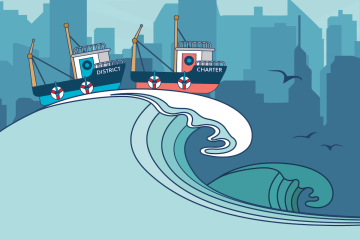
Charter school expansion narrows achievement gaps

Amber M. Northern, Ph.D. | Michael J. Petrilli
1.27.2022
Flypaper

Americans have lost trust in public schools

Robert Pondiscio
1.27.2022
Flypaper

A century of school reform, through the eyes of Larry Cuban

Chester E. Finn, Jr.
1.27.2022
Flypaper

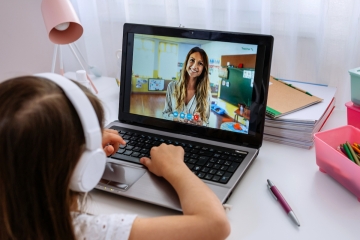
Virtual schools should get more support and attention

Jeff Murray
1.27.2022
Flypaper

Education Gadfly Show #804: How charter schools are closing achievement gaps in metro areas

1.26.2022
Resource

Cheers and Jeers: January 27, 2022

The Education Gadfly
1.27.2022
Flypaper

What we're reading this week: January 27, 2022

The Education Gadfly
1.27.2022
Flypaper
view

Charter school expansion narrows achievement gaps

Amber M. Northern, Ph.D., Michael J. Petrilli 1.27.2022
Flypaper
view

Americans have lost trust in public schools

Robert Pondiscio 1.27.2022
Flypaper
view

A century of school reform, through the eyes of Larry Cuban

Chester E. Finn, Jr. 1.27.2022
Flypaper
view

Virtual schools should get more support and attention

Jeff Murray 1.27.2022
Flypaper
view

Education Gadfly Show #804: How charter schools are closing achievement gaps in metro areas

Michael J. Petrilli, David Griffith, Ph.D., Amber M. Northern, Ph.D., Andrew Campanella 1.26.2022
Resource
view

Cheers and Jeers: January 27, 2022

The Education Gadfly 1.27.2022
Flypaper
view

What we're reading this week: January 27, 2022

The Education Gadfly 1.27.2022
Flypaper
view

We all agree that college isn’t for everyone. We should start acting like it.

Michael J. Petrilli
1.27.2022
Flypaper

One of the biggest shifts in education reform in recent years has been widening acknowledgment that the “college for all” mantra was misguided. Almost everyone now admits that college, as traditionally defined, is not going to be for everyone, and that career and technical programs and trade schools can provide sturdy on-ramps to the middle class.

Yet so far our commitment to “multiple pathways” to opportunity is almost all talk accompanied by very little action. Those of us in and around K–12 education continue to behave as if virtually every student is expected to go off to a four-year university. That’s especially the case when it comes to:

  • High school course requirements. These policies may have more on-the-ground traction than any others in education, yet they get almost no attention. They should because they remain stuck in the college-for-all mindset. According to the Education Commission of the States (ECS), of the forty-seven jurisdictions that set these requirements at the state level, forty-six require four years of English, forty-two require three years of math, forty require three years of social studies, and thirty-six require three years of science. Not to mention requirements for health, physical education, and fine arts. How are students supposed to take career and technical programs, do on-the-job training, or tackle apprenticeships when their schedules are already full of mandatory academic courses?
  • High school course-taking. Not surprisingly, given states’ graduation requirements, students’ course loads remain overwhelmingly academic—even more so than in the past. According to the latest Digest of Education Statistics, public high school graduates in the class of 2009 earned, on average, 4.4 Carnegie units of English, 4.2 units of social studies or history, 3.9 units of math, 3.5 units of science, 2.2 units of foreign language, and 2.1 units of art. Compare that to 3.9, 3.2, 2.7, 2.2, 1.0, and 1.5, respectively, for the high school graduating class of 1980. Meanwhile, just since 2000 (when statisticians started collecting the data), the number of career and technical education credits obtained by the average public high school graduate declined from 2.9 to 2.5. So the class of 2009 earned more than eight academic credits for every one credit of CTE. That says to me that virtually all students are in fact in a college-prep program, maybe with a little CTE on the side.

Table 1. Average number of academic Carnegie units earned by the graduating classes of 1980 and 2009 (Source: Digest of Education Statistics)

Class year

English

Social studies

Math

Science

Foreign language

Art

Total

1980

3.9

3.2

2.7

2.2

1.0

1.5

14.5

2009

4.4

4.2

3.9

3.5

2.2

2.1

20.3

  • High school testing and accountability systems. According to another analysis by ECS, “about” twenty-two states use a college entrance exam as their high school accountability test (either the ACT, SAT, or PSAT)—exams that are of little use to students heading into the trades. State accountability metrics tend to focus heavily on high school graduation rates—themselves tied to those academically-oriented course requirements—as well as college-and-career-ready indicators that strongly emphasize student success in various forms of post-secondary education rather than the labor market. In many states, for example, high schools get credit for sending their students on to college, but no credit for helping graduates earn a living wage.

These policies reflect the reality that our education system—and education reformers—remain uncomfortable with separate high school tracks for students with different goals, skill sets, and academic backgrounds. Thus we promote college and career instead of college or career.

We do so for understandable reasons. We remember the old vo-tech system, which was rightly criticized as racist, classist, and sexist. Too often, school systems in the bad old days selected students to “work with their hands” based on their skin color or zip code, rather than a sophisticated assessment of their strengths, proclivities, and goals. We want college prep to be the default, lest academically promising students from the wrong side of the tracks fail to enroll in the right classes and fulfill their potential. Plus, we Americans love the idea of second (and third, and fourth) chances, never wanting to “give up” on people if we think they have a chance to “make it.”

But that thinking still reflects a college bias, perhaps hard-wired into educators and reformers who themselves graduated from four-year colleges. It assumes that college is better than the trades, or middle-skill jobs, or plain old work experience—and that kids should only “settle” for these options after giving college the, well, old college try. That’s one reason we see so many people bemoaning the fact that college-going has plummeted during the pandemic.

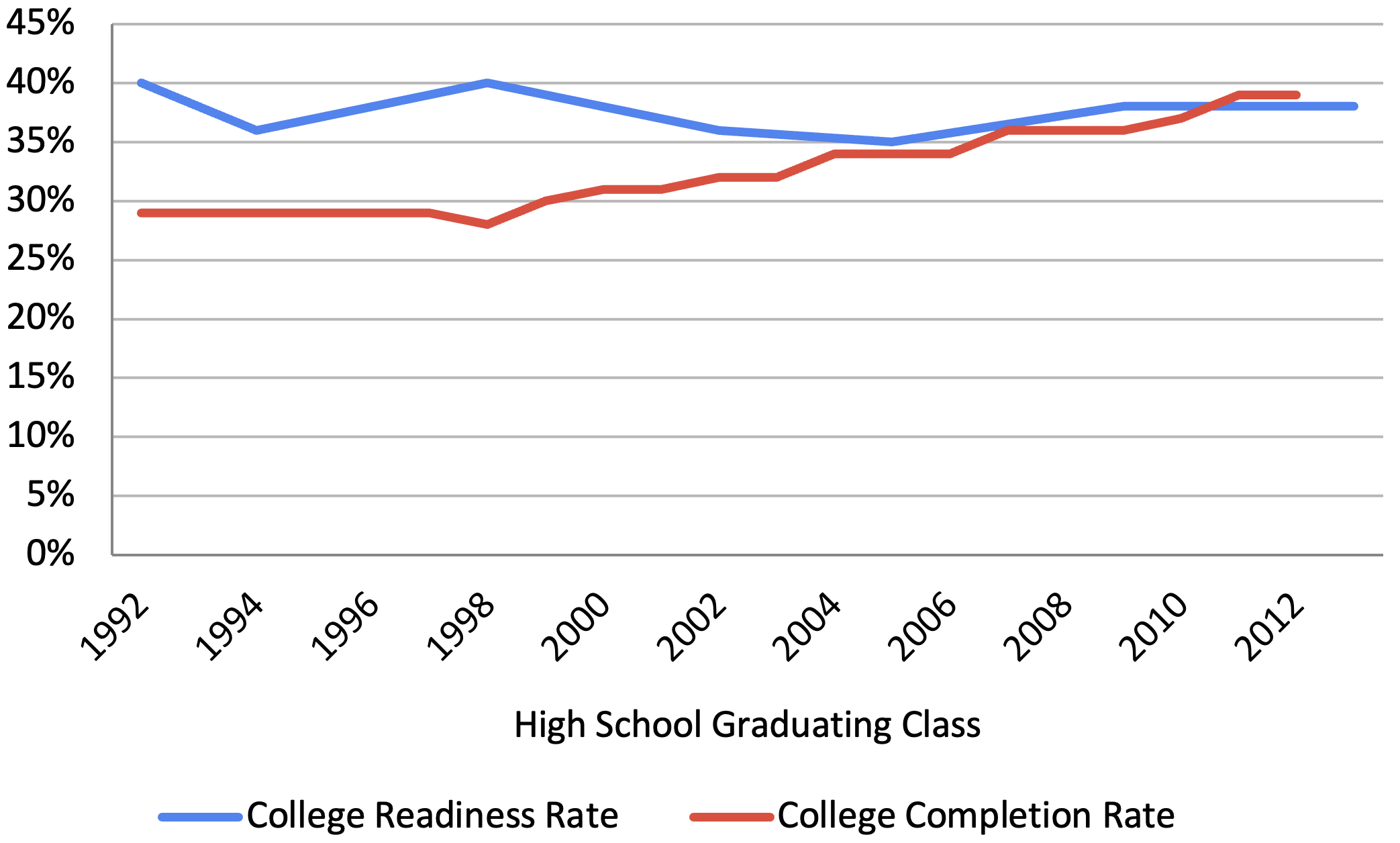
If we really believe that Americans without college degrees are just as valuable to our society, democracy, and economy; just as worthy of dignity; and just as worthy of respect as us over-credentialed professionals, then we should stop telling our young people that college is the only goal worth shooting for. We should be willing to be more honest, to say that college is a great option for people who like school and are good at it. That group is probably about 40 percent of high school graduates, give or take, judging by college-readiness and college-graduation rates of late. And in light of the pandemic and massive learning loss, we’ll be lucky if that number doesn’t decline, at least in the short term.

Figure 1. College readiness rate versus college completion rate, by high school graduating class, 1992–2012

1

Note: In reading, the National Assessment Government Board estimates that “college-prepared” is equivalent to “NAEP-proficient.” So these numbers are the percentage of all twelfth-grade students who were proficient in reading in the years shown. Bachelor’s degree completion numbers come from the National Center for Education Statistics’ Digest of Education Statistics, Table 104.20: “Percentage of persons twenty-five to twenty-nine years old with selected levels of educational attainment, by race/ethnicity and sex: Selected years, 1920 through 2020.”

For people who aren’t academic superstars but have other strengths and interests, a trade or the like might be a better fit. Individuals only benefit from the “college wage premium” if they actually complete college, and that is unlikely for people who leave high school without college-ready skills in reading, writing, and mathematics. And as recent studies have shown, more education doesn’t always equate to more earnings.

Yet today, thanks to state high school graduation requirements and school accountability systems, we only give kids time to take a few CTE courses as electives. Instead, we should embrace models from Germany, Switzerland, and Austria, where many sixteen- and seventeen-year-olds spend most, if not all, of their time in apprenticeships, at workplaces, while finishing coursework that purposefully connects academics to technical skills. We might, in other words, allow students to choose to finish their core academic courses after their sophomore year, and spend junior and senior years getting ready for the real world, as Maryland’s Kirwan Commission recommended. And if we stop fetishizing college degrees, we might even help to stem the populist backlash against meritocracy that is shaking our society and our politics.

We talk a good game on career and technical education and the “dignity of work.” It’s time for us to walk the walk, too.

view

Charter school expansion narrows achievement gaps

Amber M. Northern, Ph.D. | Michael J. Petrilli
1.27.2022
Flypaper

The education reform engine known as results-based accountability—which was sputtering in the pre-pandemic period—has now all but stalled out. In contrast, the engine known as school choice is firing on all cylinders. Across the country, private school choice programs are proliferating, charters are burgeoning, new schooling models that defy traditional classification are being invented, and a nontrivial percentage of families is leaving the traditional public school system—perhaps for good.

Renewed demand for more effectual alternatives to traditional school districts is one reason that billionaire Michael Bloomberg has doubled down on his investment in urban charter schools. That demand—and his promise of additional supply—is warranted in light of rigorous studies that show that attending an urban charter school is associated with faster progress in reading and math, greater odds of enrolling and persisting in an institution of higher learning, and voting—plus a lower likelihood of being incarcerated.

Nationally, charters account for an ever-growing share of total public school enrollment, and they remain the most consequential school choice offering in most metropolitan areas, with 240,000 U.S. students newly enrolled in charters since the start of the pandemic.

Yet much remains poorly understood about the wider implications of charter growth. After all, most estimates of charters’ effects on students are driven by schools that serve a subset of a community’s students—or of a racial or socioeconomic minority—whose families have self-selected into this alternative form of public education. And, like any other promising education innovation, charters may struggle to replicate the successes of early exemplars as they expand to serve a larger and/or more representative population of students and staff. We don’t know whether charter schools can close achievement gaps at scale or whether urban charters can serve as a rising tide that lifts all boats across a whole metro area, including student performance in traditional public schools.

As readers may recall, a 2019 study conducted by Fordham’s associate director of research David Griffith found that an increase in the share of Black and Hispanic students who enrolled in charter schools was indeed correlated with a district-wide increase in Black and Hispanic students’ reading and math achievement. That important finding led the Wall Street Journal editorial board to declare that “Charter Schools Ace Another Test.”

The story doesn’t end there. Good reasons exist to keep asking about the impact of growing charter enrollments on the achievement of all students, whether they attend charters or traditional (district-operated) public schools. First, the data continue to improve. Second, the boundaries that one uses to define a charter “market” could make a big difference. For example, the Phoenix metropolitan area contains at least thirty school districts, and students move relatively freely among them, so any analysis that is limited to individual school districts risks missing the forest for the trees. The metro area is where the market for better schools ultimately operates.

In addition, we recently published an analysis (and interactive website) examining school quality in the nation’s larger metro areas. That study addressed which metro areas were performing well in the pre-pandemic era, not why. One possible explanation is that metros with more charter school attendees perform better. A third purpose of the present study is to test that hypothesis.

So, with David in the driver’s seat again, our new study, Still Rising: Charter School Enrollment and Student Achievement at the Metropolitan Level, revisits these topics in greater depth and with better data.

Our new sample includes 400 metropolitan statistical areas and 534 micropolitan statistical areas—all of which are referred to as “metros” in the report and most of which include not only the urban cores that are the stuff of “I heart New York” postcards but also the surrounding suburbs and exurbs.

Here’s what the new study found:

First, an increase in total charter school enrollment share is associated with a significant increase in the average math achievement of low-income, Black, and Hispanic students, especially in larger metro areas.

This is a big deal. After all, the country’s hundred largest metro areas enroll two-thirds of all K–12 pupils, so any policy that works for poor students and students of color in “large” metros has game-changing potential. And because charter schools’ share of total enrollment averages 7 percent in these places, even a conservative reading of the results suggests that most large metro areas would benefit from an increase in charter school enrollment.

Second, increases in Black and Hispanic charter school enrollment share are associated with sizable increases in the average math achievement of these student groups, especially (again) in larger metro areas.

In the average “large” metro area, roughly one in ten poor kids, one in eight Black students, and one in fifteen Hispanic students is currently enrolled in a charter school. To repeat, policies that allow those proportions to rise could yield significant gains for these pupil populations.

Some of the report’s most compelling results are for Hispanic students, consistent with a 2015 CREDO study that found Hispanic youngsters enrolled in urban charters gained twenty-two days of math learning per year. Yet despite their seemingly transformative outcomes, predominantly Hispanic charters are woefully understudied. To us, this suggests that more attention should be paid to better understanding charters’ successes with Hispanic students.

Third, an increase in total charter school enrollment share is associated with a significant narrowing of a metro area’s racial and socioeconomic math achievement gaps.

It’s possible this result is partly due to declines in the achievement of higher income and/or White students (though the estimates for these groups aren’t statistically significant). That wouldn’t be good. Still, critics who allege that charters exacerbate educational inequality for low-income students and students of color will find no support for that allegation in this study. Rather, the findings suggest that large increases in charter school enrollment share could yield similarly large reductions in longstanding racial and socioeconomic math achievement gaps.

—

It’s not hard to connect the dots: The United States is reeling from a pandemic that has widened and deepened achievement gaps that were already pernicious while depressing the achievement of most students. Getting more children into charter schools could help reverse those dire trends.

view

Americans have lost trust in public schools

Robert Pondiscio
1.27.2022
Flypaper

Editor’s note: This essay was first published by The 74.

Americans have an enduring, though contradictory, fondness for local institutions. On the whole, it can be summed up as “it’s bad out there, but it’s fine where I am.” Polls have long shown Congress is held in low regard bordering on naked contempt, for example, but everyone’s own representatives are somehow immune from that harsh judgment. Your congressman is far more likely to retire or decline to seek another term than to lose a reelection bid. We evince a similar skepticism toward the health care industry, yet few professions are more trusted than doctors and (especially) nurses.

This same phenomenon has long been true of schools. For decades, Americans have given failing grades to public education at large, but we regard the schools our own children attend as the exceptions to the rule, with solid majorities giving local schools grades of A or B.

Because of this dynamic, when advocates for private school choice, charters, online education, microschools, homeschooling, and other alternatives to traditional public schools were heralding the arrival of a “new normal” (or, more cynically, a crisis too good to waste) in the early days of the pandemic, I cautioned skepticism. Our enduring fondness for local schools suggested that public education would snap back into its old normal shape at the earliest possible moment. The overwhelming majority of American children—85 percent before the pandemic—attend zoned public schools. This figure cannot be fully explained away by a lack of alternatives, or a failure of imagination, or entrepreneurship. It suggests the persistence of a valued cultural habit. We simply like sending our kids to local public schools and mostly think they’re pretty good.

But here we are, deep into a third consecutive school year disrupted by Covid-19, or living under the threat of it, and the evidence is now mounting and irrefutable that Americans’ relationship with local public schools is not as solid, reliable, or unshakable as it has been historically.

To say 2021 was the “year of school choice” elides the fuller picture. True, there were new and expanded choice initiatives in more than twenty states, potentially affecting about 4.5 million students. But it was also the year of just about everything else. The unprecedented visibility of remote school Zoomed directly into millions of American homes raised questions about both class content and instructional rigor. Angry parents protesting at school board meetings were likened to domestic terrorists. What were they angry about? You name it: critical race theory, activist teachers, and woke curricula. Staying in person, going remote. Gender-neutral bathrooms and book bans. Mask mandates and a lack of mask mandates. It was also the year that public education fell into the voracious maw of partisan politics, becoming a prominent issue in Virginia’s governor election, rewriting political scripts and playbooks for the 2022 midterms and perhaps the next presidential election.

Add it all up, and it seems uncontroversial to suggest that the historically solid and reliable relationship of most Americans with their neighborhood schools has never in living memory seemed more in play than at present.

One needn’t be a social justice activist or angry parent to question your relationship with the neighborhood school, however. There’s an even simpler phenomenon at work: inertia. It is not an indictment of local schools (or at least not intended as one) to say that among their most salient features is predictability. The rhythms of the school year largely dictate family life. Your kids have somewhere they’re supposed to be Monday through Friday for forty weeks of the year. Working families are accustomed to making plans for their children well in advance for summer vacation and winter recesses—not the night before, when schools close due to staffing issues or when your child is quarantined weeks at a time out of an abundance of caution to stop the spread of Covid. The less reliably schools are open and accommodating, the more likely parents are to make other plans. Two years and counting of uncertainty and improvisation is, frankly, too much to ask of parents. It’s plenty of time for new habits to form and to stick.

The cracks in the foundation are visible and growing. Just before the holidays, NPR compiled head-count data from more than 600 school districts in twenty-three states and the District of Columbia. They found that very few districts, especially larger ones, have returned to pre-pandemic attendance levels: New York City’s school enrollment dropped by about 38,000 students last year and another 13,000 this year. In Los Angeles, the head count declined by 17,000 in the 2020–21 school year and nearly 9,000 this year. Chicago is down nearly 25,000 since the start of the pandemic. All told, there was a 3 percent decline in public school enrollment, which adds up to about 1.5 million children. “Many families simply opted out of remote learning in the non-compulsory grades of pre-K and kindergarten,” NPR reported. “School leaders hoped this year would bring recovery.”

It hasn’t.

Will this exacerbate inequity? I don’t see how it can’t. Parents who have the means and motivation have already made other plans. Those who lack resources can’t and won’t. The data suggest significant numbers of students have already slipped through the cracks, ending whatever tenuous relationship they had with formal education. Some older kids are exiting the education system altogether; in 2020, U.S. colleges saw a 13 percent decrease in first-year enrollment compared with pre-pandemic rates, while high school dropout rates surged. Community college enrollment is also down sharply.

The extent to which this turbulence presages a permanent change in America’s habits of educating its children will remain unclear for some time. But the responses across the education sector have been instructive to watch. Schools of choice that are accustomed to competing for students have been more likely to remain open for in-person instruction and have reaped the benefit of increased enrollment. Many families flocked to Catholic schools, which were committed to remaining in person; “Across the nation, the Catholic school approach is to stay open wherever we are allowed,” said Tom Carroll, superintendent of Catholic schools for the Archdiocese of Boston. At the same time, charter school enrollment grew 7 percent and homeschooling rates tripled over the course of the pandemic. Other families opted for smaller, boutique options, like learning pods and private tutors.

Most telling is the apparent lack of urgency among the public school establishment, particularly teachers unions, to getting kids back in school or to keeping them there. They seem stubbornly determined to push parental patience to its limits and beyond. Despite the overwhelming evidence that remote learning has harmed students’ academic and social development, especially for children from disadvantaged backgrounds, many districts are still closing as a first resort, not a last one, whether it’s to stop the spread of Covid, deal with staffing crunches, or provide mental health days for staff and students.

The staunchest defenders of public education as an indispensable institution argue that public schools provide a common good that goes beyond academics. Yet it’s often those very same “defenders” insisting schools be closed and access restricted. “The damage wrought to students, particularly those from historically marginalized communities, during a time when our children and parents so desperately needed the stability and resources of schools was self-inflicted and flew in the face of mounting evidence for well over a year,” observes Paymon Rouhanifard, a former school superintendent who last year cast the only vote against a statewide masking mandate on the Massachusetts Board of Elementary and Secondary Education. The failure to prioritize the well-being of children has troubled him for more than a year. “Frankly, it’s unforgivable,” he says.

It’s long been a popular notion among school choice advocates to suggest that education is no different than any other category of goods or services and should be subject to the same market pressures, but this is a grand oversimplification. In truth, our relationship with a school is closer in kind to that of a church or an employer than a restaurant or grocery store: You don’t switch casually or quit in a fit of pique. It would take a perfect storm of parent frustration, political upheaval, and respectable alternatives to disrupt the long-dominant paradigm of sending our children to a convenient and trusted local school.

But that perfect storm is exactly what’s been brewing since March 2020. And the forecast seems to suggest it’s not over yet.

view

A century of school reform, through the eyes of Larry Cuban

Chester E. Finn, Jr.
1.27.2022
Flypaper

Confessions of a School Reformer, a new book by emeritus Stanford education professor Larry Cuban, still going strong at eighty-eight, combines personal memoir with a history and analysis of U.S. school reform efforts over the past century, seeking to show how his own life and career have been entangled with that history and the lessons he has drawn from that junction. It’s an ambitious undertaking that is ultimately illuminating and sobering.

The personal saga is interesting as far as it goes, not so much because Cuban held lots of high-wattage jobs—seven years as Arlington, Virginia, superintendent was the most powerful—but because his entanglement with ed-reform has spanned all three of what he depicts as its major eras, and his reflections on what they did and didn’t achieve are worth taking seriously.

The child of working-class Jewish immigrants from Czarist Russia, he attended public schools in Pittsburgh during the depression and World War II and was the first in his family to attend college. Throughout those formative years, he was surrounded by the progressivism—old-fashioned progressivism, not today’s version—that dominated American education at the time and that comprised the first of the three reform eras. Boyhood recollections include plenty of “hands-on, learning-by-doing” in classrooms, and his time at the University of Pittsburgh’s school of education included much Dewey, along with that influential thinker’s sublime confidence that education is a powerful engine for reforming society itself. Yet as Cuban reflects on his own education, he is powerfully struck—a key theme of this book—by how much more influential in one’s life are forces other than formal school and the extent to which schooling is itself shaped by the forces around it:

[T]he inescapable fact remains that over 80 percent of children’s and teenagers’ waking time is spent outside of school, in the family, the neighborhood, the company of friends, religious settings, and the workplace. Too often, I believe, formal schooling...is given far more weight than it deserves in assessing how children and teenagers become adults. Family, friends, and larger events go well beyond formal schooling in shaping character and behavior over a lifetime. Life educates.

Phase two, both for ed-reform and for Cuban, was the civil rights movement, which he associates with the 1950s through 1970s. It was then that he taught high school history in de facto segregated Cleveland and in a Washington, D.C., struggling with the challenges of ending de jure segregation. While in the nation’s capital, Cuban also stepped into roles as a master teacher, in the central office’s staff development office, and for a time, in the federal government’s Civil Rights Commission. Reflecting on those years, with what feels like a blend of honesty and sorrow, he recalls being:

[F]illed with a passion to teach history and help students find their niche in the world while working toward making a better society. That confident Deweyan belief in the power of schools (and yes, teachers, too) to reform society brought me to Washington, D.C., in 1963.... Looking back, I see far more clearly now...that national political, economic, and social occurrences (e.g., recession, war, presidential changes) rippled across districts and schools, further weakening my initial beliefs that better schools could make a better society. Instead, I learned that societal effects flowed over districts, schools, and classrooms. I had the causal direction wrong: Societal changes alter schools far more than schools remake society.

Cuban went on to the Arlington superintendency, which lasted until local political shifts turned out the liberal school-board majority that had employed him and replaced them with “a set of political conservatives whose appointments were aimed at a set of policies different from the ones that earlier boards and I had adopted.” County leaders now wanted a “low-profile, fiscally cautious superintendent” who would curb costs and not rock boats.

So Cuban and his family headed west, where he picked up a doctorate from Stanford, became friends with the distinguished education historian David Tyack, and embarked on a new life as university professor and prolific author. (Perhaps his best known book, coauthored with Tyack, was 1995’s Tinkering Toward Utopia: A Century of Public School Reform.)

By then, as Cuban sees it, America had emerged from its civil rights era and entered into the third phase of education reform, which envelopes us still. He sometimes calls it the “standards-based reform movement” and sometimes “systemic reform,” and (to my surprise) he includes school choice in its many flavors under that heading along with standards, testing, and school accountability. With the exception of vouchers, he writes, that mode of ed reform, “initially pushed by business leaders, was largely embraced by states and districts by the early 2000s,” then became “de facto national policy” with NCLB and ESSA, and “its life span as a reform movement now challenges the half-century reign of Progressive education.”

In Cuban’s view, this version of reform, like its predecessors, maintains the “over-confident expectation that formal education will transform society according to the reformers’ blueprint”:

Public confidence in what schools can do for both individuals and communities has grown in the past decade, even during the Covid-19 crisis. Such growing public confidence—an all-important political fact—reveals again a cast-iron faith in schools as escalators taking individuals to where they want to go and, of equal importance, as an avenue for renewing those American ideals found in the Declaration of Independence.

Yet Cuban no longer buys it. What he’s learned over a long, full career, both from the on-the-ground portions and from a considerable period in academe, “has blended into a mix of what schools can and cannot do in a decentralized national system of schooling driven by an abiding faith in schools as an all-purpose solvent for individual, institutional, and societal problems.”

The short version is that “schools, rather than altering a capitalist democratic society, reflect it.” He’s not saying they don’t matter. Kids learn lots under their roofs that they need to know by way of skills and knowledge. Incremental change in schooling remains possible and, Cuban believes, will continue. (He cites ongoing tech-driven innovations as examples.) But the basics haven’t changed much and aren’t likely to. “Progressives, civil rights reformers, and standards-based promoters have all left their thumbprints on public schools, yet, in the final analysis, these fervent reformers changed only surface features....” And with the core elements of schooling as we know it, also essentially unchanged, go the durable societal problems—inequality, mediocrity, etc.—that led to those reform movements in the first place.

This sober-verging-on-glum analysis cannot be termed encouraging, but it’s based on a great deal of experience, reflection, and hard-won wisdom. You may want to see for yourself.

view

Virtual schools should get more support and attention

Jeff Murray
1.27.2022
Flypaper

A recent release from the Education Commission of the States reminds us that the term “virtual school” refers to several different types of educational options, and that the ecosystem—more important now than ever before—requires specific attention and support from policymakers.

The four main types of virtual schools are charter schools, single-district schools, multi-district schools, and state schools. Governance structures vary across the typologies, with a variety of agencies and actors responsible for oversight and implementation, including state education agencies and state boards of education, charter school authorizers, local education agencies, and third-party providers.

Charter schools constitute nearly half of all full-time virtual schools in the U.S. and have the largest enrollment share. As of January 2020, more than twenty states permitted virtual charters (with more potentially on the way). Their operation and governance are generally akin to brick-and-mortar charters, with a mix of nonprofit and for-profit management organizations. Single- and multi-district virtual schools are rarer and clearly different from charters. Virginia and Tennessee, for example, permit a district or group of districts to contract with entities that meet state standards to serve as the online provider while the districts maintain oversight. The Florida Virtual School (FVS) is the prime example of a state-sponsored virtual school. It is run by a governor-appointed board with oversight from the state department of education. And the pandemic pivot to remote learning has allowed it to expand far beyond the Sunshine State.

A quick rundown of recent research on virtual education leads with the bad news that a raft of studies have shown that students in virtual charters experience weaker academic growth, increased mobility, and lower graduation rates than their brick-and-mortar peers. Specifically, virtual schools that focus on independent study and asynchronous instruction with limited student engagement and teacher contact time, high student-teacher ratios, and a reliance on family support for learning all experience poorer academic outcomes. However, evidence also suggests that course content and student motivation matter greatly. A Michigan study showed that part-time virtual students—those supplementing in-person learning with specific online content—fared better than their full-time virtual counterparts, while a study of FVS found far stronger positive outcomes for non-traditional students working on credit recovery versus traditional, first-time course takers.

The guide ends on a reasonably positive note by providing evidence that state-level policy levers are an effective means by which to implement improvements to virtual schools. State-level standards for school—and in the case of charter virtual schools, for their authorizers, too—can support research-driven initiatives, such as differentiated instruction and student-teacher contact time; flexible definitions of attendance and progress monitoring; teacher training and licensure requirements designed specifically for remote instructors; and funding mechanisms that prioritize virtual-specific needs, such as one-to-one student technology access, in-person testing, and at-home enrichment activities.

No state is pulling out all of these various stops, but best practices from across the country are described in the guide. Prior to the plague, virtual schools were expanding in a slow and organic way. The policy infrastructure to properly support them was, perhaps, lagging behind, but the right moves were being made in that regard. While the recent explosion of virtual schooling was involuntary, exponential expansion is inevitable, even after the Covid danger has subsided. Now is the time to make sure we understand how virtual schooling works best and make sure states guarantee the highest functionality of virtual options for all families who want it.

SOURCE: Ben Erwin, “A Policymaker’s Guide to Virtual Schools,” Education Commission of the States (November 2021).

view

Education Gadfly Show #804: How charter schools are closing achievement gaps in metro areas

1.26.2022
Resource
 

On this week’s Education Gadfly Show podcast (listen on Apple Podcasts and Spotify), Andrew Campanella, president of National School Choice Week, joins Mike Petrilli and David Griffith to discuss Fordham’s latest charter school study, Still Rising, and how school choice helps students in traditional public schools, too. Then, on the Research Minute, Amber Northern examines a study of how pandemic-related school disruptions affect children’s mental health.

You can find this and every episode on all major podcast platforms. 

Recommended content:

  • The report authored by David: Still Rising: Charter School Enrollment and Student Achievement at the Metropolitan Level.
  • The tool for parents that Andrew mentions: “School Choice by State.”
  • The study that Amber reviews on the Research Minute: Anna Gassman-Pines, Elizabeth Ananat, John Fitz-Henley II, and Jane Leer, “Effects of Daily School and Care Disruptions During the COVID-19 Pandemic on Child Mental Health,” NBER Working Paper #29659 (January 2022).

Feedback welcome!

Have ideas or feedback on our podcast? Send them to our podcast producer Pedro Enamorado at [email protected].


view

Cheers and Jeers: January 27, 2022

The Education Gadfly
1.27.2022
Flypaper

Cheers

  • The state should force Boston Public Schools into a receivership, as it has “poorly served Black and brown students.” —Boston Globe
  • For two years, America has harmed children by miscalculating risk and sacrificing their experience and growth to assuage adult fears. This must stop. —The Atlantic
  • This is how the research explains charter schools’ success with traditionally disadvantaged students. —Greg Richmond

Jeers

  • Ignoring the harm that disruptive and violent students inflict on their peers, this article focuses only on disciplined students missing school. —The Nation
  • “[Rhode Island] Governor McKee’s office says ‘School Choice Week’ proclamation issued in error.” The governor supports charter schools but not publicly-funded private school vouchers. —WPRI
  • Ironically, the ACLU is opposing bills that promote government transparency in what curricula states and districts are using. —ACLU
view

What we're reading this week: January 27, 2022

The Education Gadfly
1.27.2022
Flypaper
  • This month’s sudden switch to remote learning is troubling news for kindergarteners. —Cincinnati Enquirer
  • Rick Hess interviews Doug Lemov, author of Teach Like a Champion, on what wisdom he has to share for teachers in 2022. —Education Week
  • A study from the University of Pennsylvania finds that “cash aid to poor mothers increases brain activity in babies.” —New York Times
  • “How it feels to be an Asian student in an elite public school.” —New York Times
  • For the first time in two decades, graduation rates dip as the pandemic slows seniors down. —Chalkbeat
  • GreatSchools’s popular rating system is biased and often inaccurate, according to research by leading economists. Tracking student-level growth is the better way to rate schools. —Chalkbeat
Fordham Logo

© 2026 The Thomas B. Fordham Institute
Privacy Policy
Usage Agreement

National

P.O. Box 110
Burke, VA 22009

202.223.5452

[email protected]

Ohio

P.O. Box 82291
Columbus, OH 43202

614.223.1580

[email protected]

Sponsorship

130 West Second Street, Suite 410
Dayton, Ohio 45402

937.227.3368

[email protected]