Mobile Navigation

  • National
    • Policy
      • High Expectations
      • Quality Choices
      • Personalized Pathways
    • Research
    • Commentary
      • Gadfly Newsletter
      • Flypaper Blog
    • Events
    • Scholars Program
  • Ohio
    • Policy
      • Priorities
      • Media & Testimony
    • Research
    • Commentary
      • Ohio Education Gadfly Biweekly
      • Ohio Gadfly Daily
  • Charter Authorizing
    • Application
    • Sponsored Schools
    • Resources
  • About
    • Mission
    • Board
    • Staff
    • Career
Home
Home
Advancing Educational Excellence

Main Navigation

  • National
  • Ohio
  • Charter Authorizing
  • About

National Menu

  • Topics
    • Accountability & Testing
    • Advanced Education
    • Career & Technical Education
    • Charter Schools
    • Curriculum & Instruction
    • ESSA
    • Evidence-Based Learning
    • Facilities
    • Governance
    • Personalized Learning
    • Private School Choice
    • School Finance
    • Standards
    • Teachers & School Leaders
    • Think Again
  • Research
  • Commentary
    • Gadfly Newsletter
    • Flypaper Blog
    • Gadfly Podcast
  • Events
  • Scholars Program

The Education Gadfly Weekly

Sign Up to Receive Fordham Updates

We'll send you quality research, commentary, analysis, and news on the education issues you care about.
Thank you for signing up!
Please check your email to confirm the subscription.

The Education Gadfly Weekly: Time for a ceasefire in the civics wars

Volume 24, Number 17
4.25.2024
4.25.2024

The Education Gadfly Weekly: Time for a ceasefire in the civics wars

Volume 24, Number 17
view
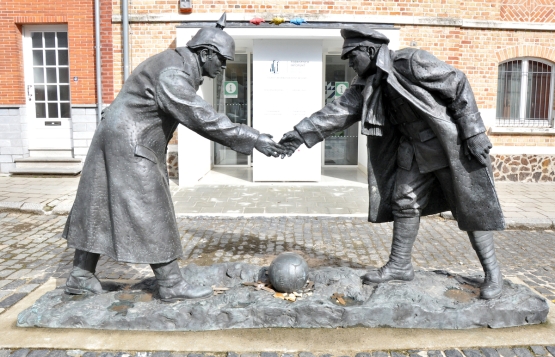
Christmas Truce Statue
High Expectations

Time for a ceasefire in the civics wars

The conflict over civics education is unnecessary, driven more by cultural combatants and politicians than by vast divides among parents and citizens regarding what schools should teach and children should learn. If those who inflame these debates would hold their fire, we could build on a latent accord among the clients of civics education.

Chester E. Finn, Jr. 4.25.2024
NationalFlypaper

Time for a ceasefire in the civics wars

Chester E. Finn, Jr.
4.25.2024
Flypaper

The history of ed reform shows that progress is possible

Andrew J. Rotherham
4.25.2024
Flypaper

Teacher evaluation reform was very successful—on paper

Tim Daly
4.25.2024
Flypaper

Examining the evolution of the college wage premium—and its biggest beneficiary

Amber M. Northern, Ph.D.
4.25.2024
Flypaper

American learning losses in the pandemic era: A global perspective

Jeff Murray
4.23.2024
Ohio Gadfly Daily

Cheers and Jeers: April 25, 2024

The Education Gadfly
4.25.2024
Flypaper

What we're reading this week: April 25, 2024

The Education Gadfly
4.25.2024
Flypaper
view
Students raising their hands in a school classroom

The history of ed reform shows that progress is possible

Andrew J. Rotherham 4.25.2024
Flypaper
view
Teacher in a classroom

Teacher evaluation reform was very successful—on paper

Tim Daly 4.25.2024
Flypaper
view
College graduate

Examining the evolution of the college wage premium—and its biggest beneficiary

Amber M. Northern, Ph.D. 4.25.2024
Flypaper
view
Hoover PISA NAEP Ohio SR image

American learning losses in the pandemic era: A global perspective

Jeff Murray 4.23.2024
Ohio Gadfly Daily

view
Fordham Gadfly image

Cheers and Jeers: April 25, 2024

The Education Gadfly 4.25.2024
Flypaper
view
Fordham Gadfly image

What we're reading this week: April 25, 2024

The Education Gadfly 4.25.2024
Flypaper
view
Christmas Truce Statue

Time for a ceasefire in the civics wars

Chester E. Finn, Jr.
4.25.2024
Flypaper

How about a ceasefire in the civics wars? Possibly even a peace treaty? This could turn out to be easier to achieve than pausing the conflict in Gaza (or Kashmir or Sudan or…). The world’s big fights generally arise from opposed interests and disputes over fundamentals. Looking from afar at American civics education, one might think the same: hopeless divisions over what should happen in civics classrooms, textbooks, and assessments. Should they focus on “how government works” or “what can I do to change things?” Is this subject about knowledge or action, information or attitudes, facts or dispositions? Rights or obligations?

Yet unlike disputes that pit country against country and terrorist against nation state, much of the civics conflict is unnecessary, driven more by cultural combatants and politicians than by vast divides among parents and citizens regarding what schools should teach and children should learn. If those who inflame these debates would hold their fire, we could build on a latent accord among the clients of civics education.

The evidence has been rolling in for years.

The University of Southern California’s Dornsife Center, for example, surveyed 1500 K–12 parents in 2021 and reported that:

…parents across political parties feel it is important or very important for students to learn about how the U.S. system of government works (85 percent), requirements for voting (79 percent), the U.S.’s leadership role in the world (73 percent), the federal government’s influence over state and local affairs (72 percent), how students can get involved in local government or politics (71 percent), benefits and challenges of social programs like Medicare and Social Security (64 percent), and contributions of historical figures who are women (74 percent) and racial/ethnic minorities (71 percent).

A year later, the Jack Miller Center surveyed parents of elementary-secondary pupils and found that “89 percent agree that a civic education about our nation’s founding principles is ‘very important.’” This semi-consensus also extends to history class: “Over 92 percent of parents believe that the achievements of key historical figures should be taught even if their views do not align with modern values—cutting against the narrative that America is firmly divided on how to teach students about the founders and the country’s history.”

As is clear from Dornsife’s percentages, we’re not looking at total consensus, just widespread agreement on fundamentals. Get into hot topics like gender, abortion, and racism and plenty of Americans want their kids’ schools to convey a one-sided view or avoid the issue altogether. Yet nearly everyone wants students to learn how to analyze issues, to understand why people argue about them, and how a democratic republic attempts to navigate them. Nearly everyone wants kids to understand those mechanisms—why we have the kind of government we do, where it came from, how it works, and the principles that drive it. And everyone, I’m pretty sure, wants their children to grow up to be good citizens.

The hard part—even after professional warriors drop their weapons—is turning the latent consensus into concrete standards, curricula, and pedagogy. As Frederick Hess and Matthew Rice noted in 2020, after leading a series of bipartisan discussions at the American Enterprise Institute, there is “widespread agreement on many...of the goals of civics education” but “little agreement on how to get there.”

Toward that end, several recent initiatives have revisited what should actually be taught. Probably the two best known are the Educating for American Democracy “roadmap” (EAD), launched—with a grant from the National Endowment for the Humanities—by iCivics with a broad-based group of academics and K–12 practitioners, and “American Birthright,” a set of “model K–12 social studies standards” produced by the “Civics Alliance,” which was convened by the National Association of Scholars.

EAD claims to offer “a vision for the integration of history and civic education throughout grades K–12.” This forty-page document abounds with questions that students should grapple with, not things they should know. (“What can we learn from historical leaders even when we disagree with their actions and values?” “What fundamental sources and texts in American constitutionalism and history do you invoke to help you understand current events? What gives those sources credibility and authority?”) It’s squarely on the “inquiry” side of the curriculum, not a list of people, events, and structures, which is why it’s thought by many to represent the “progressive” side of the civics debate. Yet the questions it poses can’t be answered very well unless one also knows stuff, so it does furnish a framework on which to hang a thorough and ambitious curriculum, provided someone adds the “content” that teachers and their pupils will need.

Content is what “American Birthright” is all about. Its 115 pages also offer a framework—up to a point. They abound in names, events, and dates, which is why these model standards are widely viewed as coming from the “traditional” side. The document also poses explanatory and discussion challenges but tends to frame them as simplified admonitions about big, complicated topics: “Explain why free people form governments to defend their liberty”; “Describe how citizens demonstrate civility, cooperation, self-reliance, volunteerism, and other civic virtues.” Those are obviously important things to do, but really hard unless one has already acquired EAD-style analytic skills, as well as factual knowledge.

In my view, an amalgam of the best of EAD and American Birthright would make for an awesome social studies plan, albeit one that would occupy far more school time than is typically allotted to these subjects today. Such a blend would also take advantage of the latent consensus about what kids should learn.

That doesn’t mean civics classes in Dallas would be identical to civics in Seattle. There’s no reason to expect matched curricula or teaching styles across a vast nation with a decentralized K–12 system governed almost entirely by states and communities. Yet we need some shared understanding of what it means to be an American and what’s changed—and hasn’t—over these several centuries. 

One truly basic version is embodied in the test that immigrants must pass to become American citizens. Administered by the Citizenship and Immigration Services (USCIS), it consists of 100 knowledge-centered questions about history and civics. (“What stops one branch of government from becoming too powerful?” “Why do some states have more Representatives than other states?” “Before he was President, Eisenhower was a general. What war was he in?”) Those taking it face only ten questions—but since nobody knows which ten they’ll get, preparing for the test means learning the answers to all hundred.

Knowing those things is just a start on real citizenship, but it’s not a bad threshold to ask people to cross. That’s why at least eight states now require high school students to pass some version of the test. And a team at Arizona State University has amplified it into an actual curriculum by adding original sources, study guides, teacher materials, and other supplements meant to “exceed the USCIS test in helping students learn not just the facts tested but [also] the underlying concepts, ideas, and events.”

This, too, is a potential path toward curricular consensus. Yet instead of striving for a unified approach to revitalizing civics and history across the land, we see potshots and diatribes. The Civics Alliance, for instance, slams the College Board’s excellent Advanced Placement course in civics and American government because it includes an “action” component—never mind that the course, which was developed jointly with the National Constitution Center, is anchored to Supreme Court decisions and is impressively balanced. And the lead author of American Birthright gave an “F+” to EAD, declaring that its “light amount of traditional civics content” is “surrounded by the far heavier emphasis on hollow educational ‘skills,’ video games civics, and a very large amount of radical action civics.” He went farther, denouncing all forms of “bipartisan cooperation” in this realm because “the radicals conceive of ‘civics’ as a mean to eliminate their political opponents from the public square and because civics reformers are only accepted in such ‘bipartisan’ endeavors as very junior associates rather than equal partners.”

That’s what culture warriors do, but they don’t all come from the right. EAD has also been pilloried from the left, both by progressive academics who deplore its decision to leave actual curriculum (and test) development to state and local sources rather than propagating a national plan, and by equity hawks who find it soft on “empowerment” and “social justice” issues.

Teachers, too, sometimes add to the discord and suspicion because many who teach these subjects don’t view them the same way their clients do. As Hess and Michael McShane note in their new book, Getting Education Right, drawing on a RAND survey of social studies teachers, “Barely half deemed it essential that students understand concepts like the separation of powers or checks and balances.” A broader RAND survey of K–12 instructors found “that more...think civics education is about promoting environmental activism than ‘knowledge of social, political, and civic institutions.’”

Is the potential juice worth so many squeezes? Why keep struggling to fend off the warriors and redirect the instructors? We know that earlier efforts at civics revival have petered out or been reversed, and that the quest for concord is slower and a lot less fun than hurling brickbats.

So why persist? The country has muddled through despite the fact that Americans know next to nothing about civics or history—what editorial cartoonist Pat Oliphant once called a “forest fire of ignorance.” Never mind that just 22 percent of eighth graders were “proficient” in civics on the recent National Assessment and barely 25 percent of college-age Americans know that the vice-president breaks ties in the Senate. (More think that’s the responsibility of the Speaker of the House!) How much does it really matter in the real world that they understand so little about government?

Yet muddling through yesterday is no guarantee of successful muddling tomorrow. Our citizenship woes grow more consequential as people’s faith in democracy itself falters. YouGov reported late last year that almost a third of young Americans agree—many of them strongly—with the statement “Democracy is no longer a viable system, and America should explore alternative forms of government.” 

Why believe in something that you barely understand or were never taught and feel no role in?

Civic ignorance is a silent killer, akin to high blood pressure, easy to ignore or take for granted even as it accompanies and hastens the onset of more serious maladies. Deteriorating norms of behavior, vulnerability to fake news and conspiracy theories, inability to compromise, isolation from civil society—all are associated with not knowing or caring much about the functions of government, the principles that underlie it, or the historical saga that explains why we have the kind we do, where it has succeeded, where it has faltered, how it has changed. 

Over time, like persistent hypertension, accumulated ignorance makes a difference. As we huddle in separate ideological (and socioeconomic and ethnographic) silos and accustom ourselves to cruder language and worse conduct, especially in the public square—“defining deviancy down,” as famously phrased by my own mentor, the late Senator Pat Moynihan—our civic and citizenship challenges mount. It’s no surprise that people, especially the young, grow more cynical and pessimistic, more open to alternatives such as strong leaders who don’t have to bother with messy elections of the ”free and fair” variety. 

Because peoples’ attitudes and actions in the civics-and-citizenship realm are shaped by a hundred forces, schools and colleges bear limited responsibility. But when it comes to old-fashioned ignorance, formal education has a big role—and was playing it poorly before anyone heard of “culture wars.” For decades, civics has loomed small in the curriculum, standards have been low, requirements few (and declining), instructors often ill-prepared—and in few places are schools, teachers, or students held to account for whether anything gets learned. Rare is the college that requires its students to study civics, and almost as rare are colleges that even offer such courses.

Yes, most high schoolers must take a course in civics or government—though a dozen states have no such graduation requirement, and most of those that do mandate just a single semester. Some administer a statewide “end of course” exam, but almost nowhere do students actually have to pass it. In Maryland, where I live, the test score counts for 20 percent of a student’s course grade, while teachers determine 80 percent. (Until recently, passing the exam itself was prerequisite for a diploma, but that was seen as too onerous and punitive, particularly for poor and minority students.)

When the Thomas B. Fordham Institute evaluated state academic standards for civics (and U.S. history) in 2021, reviewers gave A ratings to just five jurisdictions, while judging twenty-one to deserve a D or F. Common failings, said the reviewers, included “overbroad, vague, or otherwise insufficient guidance for curriculum and instruction” and neglect of “topics that are essential to informed citizenship and historical comprehension.”

Weak standards, low expectations, few requirements, practically no accountability, ill-prepared (and oft-misguided) teachers, and too little time in the curriculum. A mess, to be sure, yet it’s hard to muddle through with a population that’s gradually untethering from democracy, that knows not how a Senate tie gets broken, and that’s more engaged with video games than understanding elections or attending to issues before the town council. Nor should we look forward to a day when schools, to the extent that they teach the subject at all, are confined either to progressive “action civics” or MAGA-style “patriotism civics.” It’s one thing for the country to evolve politically toward blue and red but quite another for young Americans not to know enough to see what they have in common.

Whether we center a curricular renaissance on the citizenship test, on an arranged marriage between EAD and American Birthright, or on something entirely different, it’s important to persist. And instead of getting depressed by the challenges ahead, let’s recall once more that, in this realm, there’s far greater agreement than argument across the land on fundamentals. It’s a ceasefire that most Americans would cheer.

Editor’s note: A version of this essay was first published in two parts by The 74.

view
Students raising their hands in a school classroom

The history of ed reform shows that progress is possible

Andrew J. Rotherham
4.25.2024
Flypaper

When my daughters were preteens, they came home from school one day alarmed. During a lesson on climate change, the teacher or some part of the lesson, it was never quite clear, had basically stated that, absent radical attention to warming, there would be little hope for survivability on earth after 2030. This was during peak Greta Thunberg–mania.

I remember having a few thoughts. First, I’m deeply concerned about climate change, but what was reported to me by the kids isn’t what the evidence shows and is a bananas lesson. But also, even assuming this is what the evidence convincingly shows, these are really young kids. What would be the point of telling them this?

This episode recurred to me recently in the context of the constant, and weirdly fashionable, bellyaching by reformers about how education reform has accomplished little, if anything at all. Oddly, this is one place reformers and anti-reformers now seem to agree, even as the evidence indicates it’s not true. What’s more, even assuming it was in fact the case, if you’re an advocate, why the hell would you run around braying it?

Has everything gone swimmingly? Of course not. But in the context of U.S. social policy, until a few years ago, we were making what would be considered good progress. (It’s worth noting how long social policy change takes in a country like this. Perhaps the recent quite rapid progress on a few issues like gay and transgender rights has skewed perceptions.)

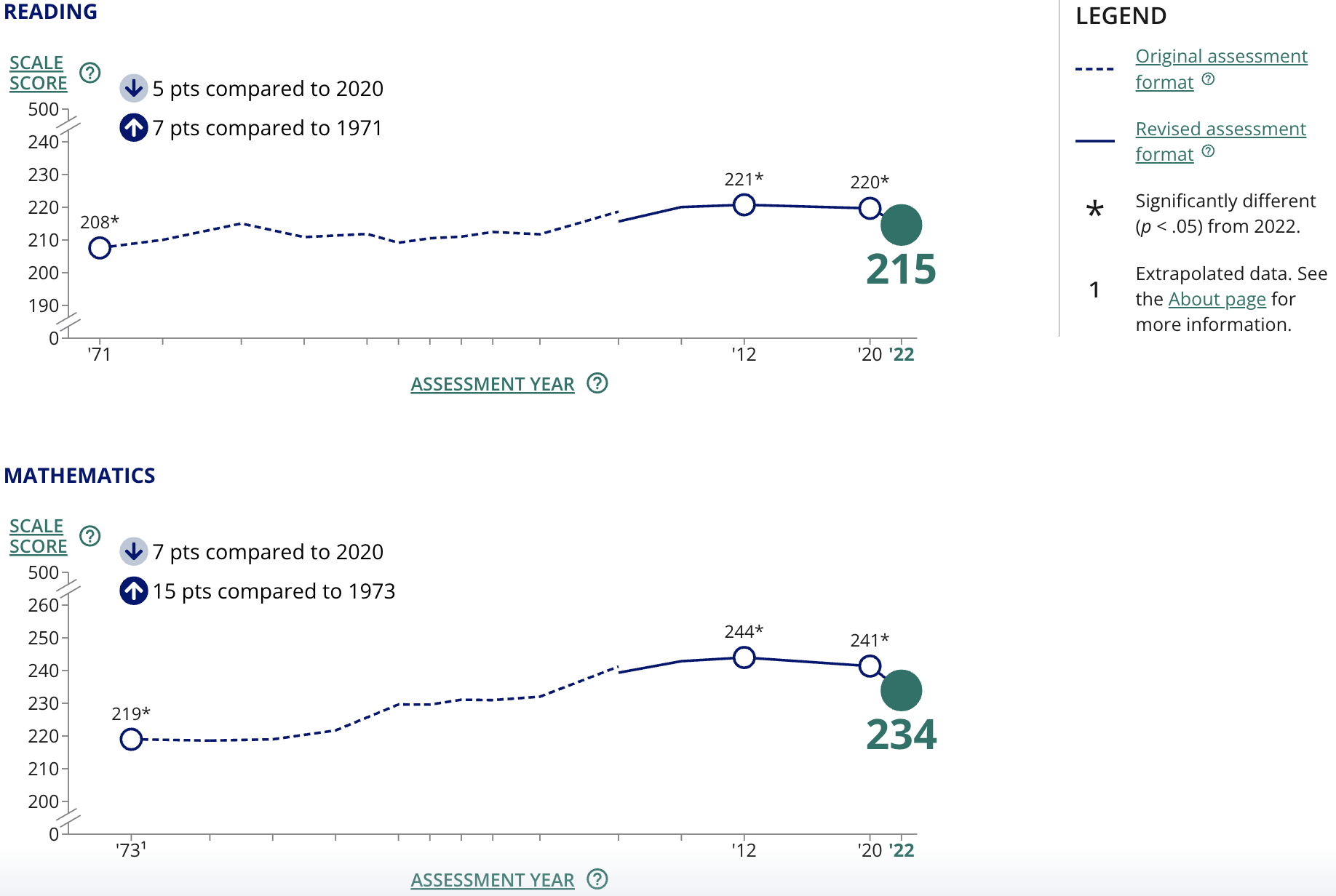
Until the Obama Administration’s and Congress’s decision to throw in the towel on accountability, student achievement was on a steady, if modest, growth path. (See figure 1.) Students furthest from opportunity were making gains. Not enough, but gains. The pandemic, of course, scrambled everything, as did obliviousness by both the Trump and Biden teams, but we should not lose sight of those earlier trajectories—that are averages across an entire student population. People will argue about counterfactuals and the pace of change, but “barely budged,” which you often hear, this is not.

Figure 1. Trend in NAEP long-term reading and math average scores for nine-year-olds

ar1

Source: “Explore NAEP Long-Term Trends in Reading and Mathematics,” U.S. Department of Education (accessed April 2024).

Tom Kane, while being perhaps the most passionate voice on the urgency of pandemic learning loss, also suggests that we may have the longer-term story of achievement wrong. A deeper dive he and several colleagues conducted found that “income-based achievement gaps in fourth and eighth grade narrowed between 1992 and 2015—while math scores rose at all income levels.” Similarly, Rick Hanushek and several colleagues found “a steady, albeit modest, reduction in the SES-achievement relationship over the past four decades.” Other data indicate the same thing about low-achievers—notable progress during the standards-era toward what we used to call equity.

Time to throw a party? Nope. The data are all as sobering as they are encouraging. But it does mean the Dante-like, abandon-all-hope approach to talking about educational progress is not only politically stupid whether you’re a reformer, staunch public school supporter, or both—it’s also empirically questionable.

There are plenty of other examples of authentic progress, usually beyond what was promised or expected.

I remember being lectured by the “smart set” in education that KIPP would never have more than fifteen schools and was consequently more or less a distraction I was naïve to even be interested in. (The same people said Teach For America would be perhaps a boutique program of 500 teachers a year if they were really lucky.) By extension, most people thought Bill Clinton’s goal of 3,000 charter schools was just throwaway political hyperbole. Today, there are more than 7,000 charter schools (and about 275 of them are KIPP schools). Are all charters fantastic? No. But many are, and the data show, on average, that they’re getting better and continue to be a good bet as a policy.

More people are going to college, too, and more importantly, graduating. Again, this is not an unvarnished blessing, given the mixed quality and return on investment of higher education, but is also, on average, for the good—especially for low-income students in quality higher education programs.

Standards are also improving. There is plenty to fault in President Obama’s education record, but it seems inarguable that, in aggregate, state standards were better in 2016 than in 2008, and he and Arne Duncan played a role in nudging that along. Standards are also more specific and actionable for teachers and more often aligned with curriculum. We’re also seeing a boom in high-quality curricula hitting the market, and the focus on curriculum is a welcome and noteworthy change. In addition to being good for students, curricular support makes the job of teaching more sustainable.

That’s in part because of another good-news story: We’re finally getting serious about early reading combined with knowledge-rich curricula. The politically fashionable but largely ineffective approaches are being sidelined, and an evidence-based approach to literacy is taking hold. Is this arguably a half-century overdue? Yes. But you can bemoan that or appreciate that late is better than never. It’s still progress.

On all of these issues, we saw a combination government activity, philanthropy, and social entrepreneurs of different sorts. The private sector also played an important role in some key aspects, including innovation. And that activity, for a time, engaged journalists and policy leaders. It was exciting.

If we’re being honest, the biggest barrier to a lot of changes has been and continues to be the constantly changing fads and politics in education. On reading, curriculum, or assessment, too many people figure out what is politically fashionable and proceed from there. I’ve had people tell me that phonics is just a Republican way of teaching reading. That’s idiotic. That sort of ethos is why the gap between evidence and practice is often so substantial and preference falsification is rampant.

This is also the same problem we see now with everyone having the mopes about education improvement and reform. Like those tan shoes with white soles it seems like every dude was suddenly wearing, it’s just the fashionable thing.

It’s remarkable how often you hear at an education meeting that little or nothing has improved in schools, or even that things are basically the same as they were during Jim Crow. It’s complete nonsense, of course. Most people are smart, well-read enough, and aware of the larger world to know this (at least I sure hope that’s the case). Yet it’s the fashion right now to be in that mode. You get socially and professionally rewarded for it even as it’s creating a culture at odds with high expectations and optimism for young people.

We’ve also created a culture where saying there has been progress or things aren’t so bad is likened to being blind to the problems. Progress and continuing challenges are not mutually exclusive. This country and its K–12 sector have made enormous progress—and there is still a lot of work to do.

But, to do that work, you obviously need people to believe it’s possible. That’s why saying there is no progress is insane as an advocacy strategy. Joe Biden is not going to lead a parade, but he’ll get in front of one. So will most pols. But who wants to lead or be anywhere near a parade of Eeyores? Right now, the message to politicians, philanthropy, and media is a dour if not repellent one.

Sure, if you genuinely believe education is not a lever for change or empowerment, then you should go work in a different sector or on different issues. Reasonable people can disagree about the best way to effect change. Otherwise, let’s stop admiring the problems and get back at it with a lot more energy, new ideas, and some fresh arguments and debates.

Here’s the bottom line: Until the one-two punch of ESSA and the pandemic, achievement trends were going in the right direction—especially for students on the wrong end of the achievement gap. And the supports for students, whether new school options or curricula, are improving. There is pent up demand and increasingly supply around innovation.

This is not a bad time to work in education. It should be an exciting time. Reform has hardly been flawless and hasn’t achieved its loftier goals, but at the same time, evidence of progress is all around. This sort of fits-and-starts progress is how social policy change generally happens. In fact, given how stubbornly resistant to change the education system is, how political, and how fad driven, the narrative that nothing has worked is pretty much backwards. We should say so. And then act accordingly.

Editor’s note: A version of this essay was first published on the author’s blog, Eduwonk.

view
Teacher in a classroom

Teacher evaluation reform was very successful—on paper

Tim Daly
4.25.2024
Flypaper

Editor’s note: This is the second part in a series on teacher evaluation reform. Part one recalled how teacher evaluation became a thing. This was first published on the author’s Substack, The Education Daly.

Today, I’ll summarize the heyday of this movement, which lasted roughly six years from 2009 to 2015. It hit the rocks as quickly as it began—and not necessarily because it didn’t “work,” so to speak. Here’s how it happened.

What were we thinking?

There was broad support across the political spectrum for improving teacher evaluation. But it’s most deeply associated with that cast of characters called ed reformers, of whom I’m one. Our movement, sometimes portrayed as consisting of alumni from Teach For America’s first fifteen years, but better understood to include a multi-generational amalgam of frustrated civil rights organizations, maverick district administrators, and assorted malcontents, shared a set of beliefs that animated their work. Others may put it more eloquently, but my description of our thinking in the early 2000s would go something like:

  • America’s achievement gaps are shameful—and fixable. We were exceptionally optimistic about the potential of every child to succeed academically. Poverty could not be accepted as determinative. Low performance stemmed from educational neglect and low expectations.

  • Our optimism about children was combined with extreme cynicism about the systems that schooled them. These were the villains. They watched kids fail and then blamed them for it. They defended practices like “last in, first out” layoffs that may have been preferable to adults but were demonstrable harmful to students.

  • There was scant margin for error. As blue collar jobs disappeared, kids would be punted into a thankless economy and forced to scrape for a comfortable profession. Failure at school would mean failure in life.

  • Instead of fixing individual schools—or even districts—we needed to focus on whole systems. Think bigger. Stop tinkering around the edges. Don’t just raise student performance, eliminate the gaps entirely—to zero.

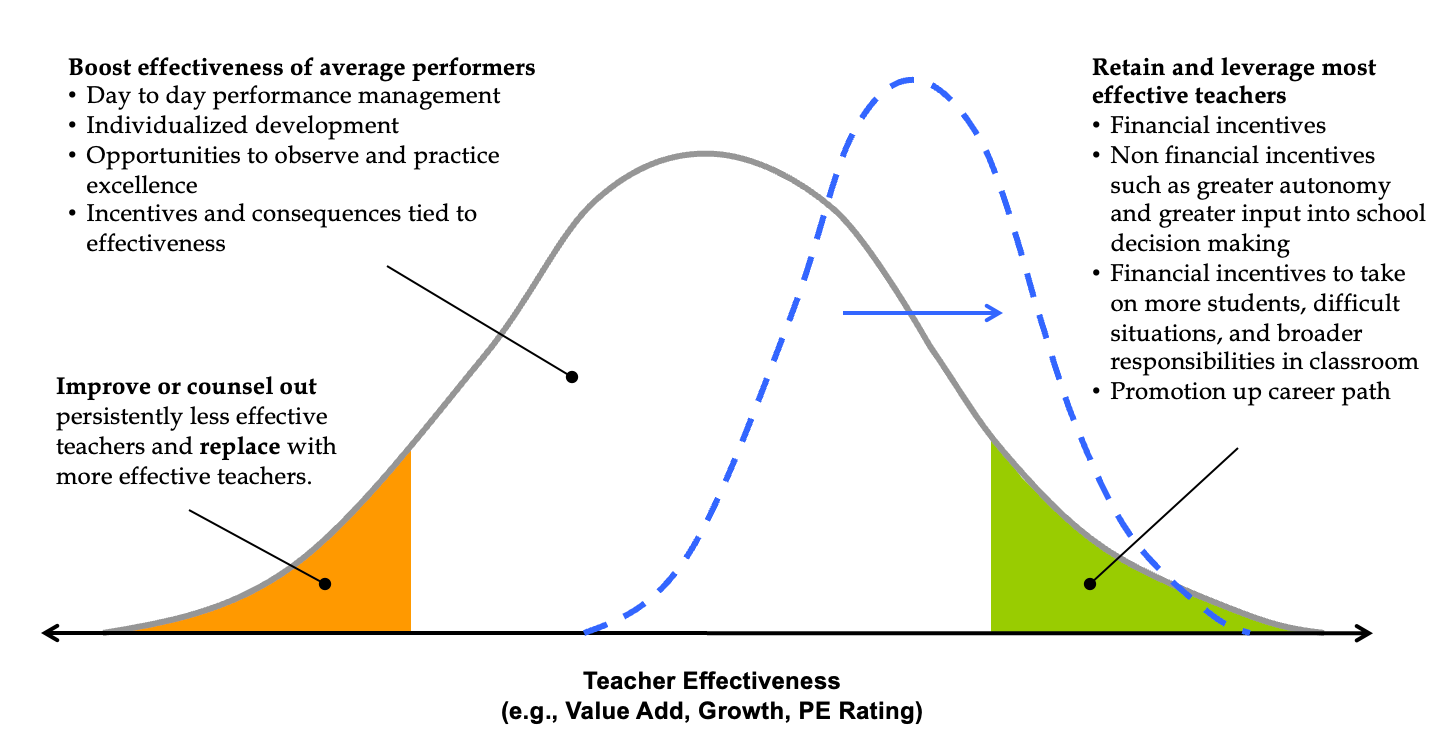
  • The data were clear. Acting on the differences in effectiveness between teachers—by improving or dismissing the lowest performers and retaining the highest performers—offered the greatest potential to raise student achievement of any available lever. From heart, we quoted excerpts from research papers like “Having a top-quartile teacher rather than a bottom-quartile teacher four years in a row could be enough to close the Black-White test score gap.”

  • Systems wouldn’t take this lying down. They were made to resist, to wait out. Any short-term change would be washed away overnight like a sandcastle.

I’m oversimplifying only slightly in saying we felt we had been presented with a math function. There were some low-performing teachers. Past patterns suggested they were unlikely to improve. If they exited the profession and were replaced by typical new hires—and if, at the same time, more of the highest-performing teachers were retained for more years—achievement would rise significantly. The question was whether we had the courage to do it.

1

What did we advise districts and schools to do?

New evaluation systems needed to yield accurate results and hold up when challenged in due process. Unions—which had expressed openness to modernizing evaluations—made clear that the evaluations must be objective. That was their term. New approaches couldn’t rely on the perfunctory classroom observations of principals, who were seen by the unions as keepers of personal vendettas. Standards had to be the same from one classroom and school to the next.

Reformers accepted this challenge with an excess of enthusiasm. In the process, I suspect we also took the bait. To meet the unions’ specs while achieving the goal of differentiating good teaching from bad, we got technocratic.

You can see this in a document we published at TNTP about a year after The Widget Effect. Teacher Evaluation 2.0 was a set of specific recommendations for redesigning evals. Summarized briefly:

  1. Annual evaluations. If we’re serious about improving instruction, a biannual (or even less frequent) process doesn’t deliver sufficient feedback.

  2. Clear, rigorous expectations. The bar should be excellence rather than minimally acceptable compliance, e.g., this lesson has a written objective, as some observation protocols required.

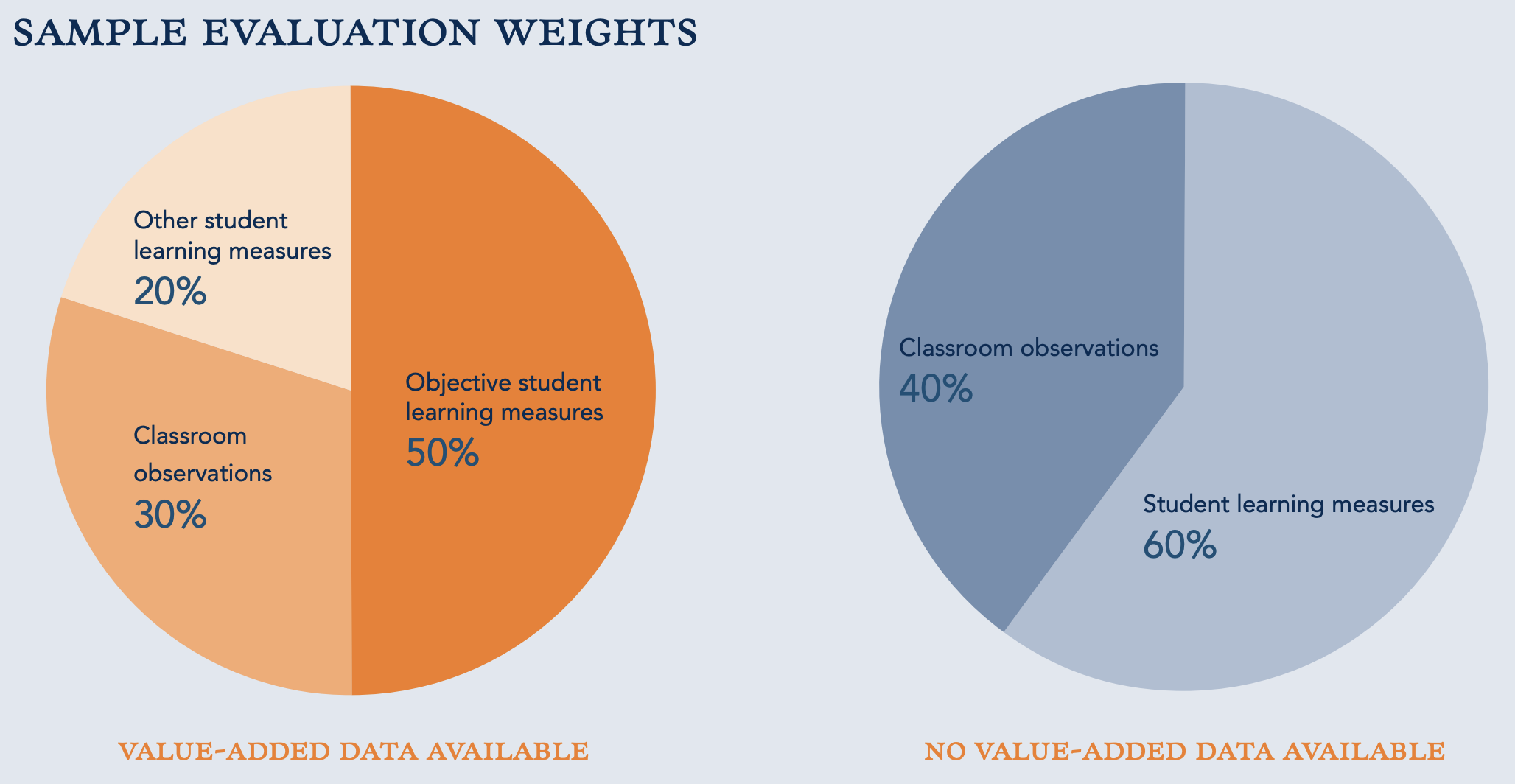
  3. Multiple measures. This was a biggie. The idea of using more than one data source was not controversial, but we suggested placing more weight on objective measures of student achievement—like growth in test scores—than observations. It was a radical departure from the way teachers had been evaluated. We’ll get into this in greater detail before this series is done, I promise.

2

  1. Multiple rating categories. Some districts used a simple binary of satisfactory or unsatisfactory. A teacher was A-OK or fired. We recommended four or five levels to create usable differentiation.

  2. Regular feedback. Evaluations should not depend on a single point in time where the principal breezes through with a clipboard. They should be frequent enough to be fair and drive improvement.

  3. Evaluations should inform decisions. Not just dismissal for low performers, but also pay advancement for top performers, opportunities to become a lead teacher or coach, and protection for top teachers against being laid off during hard economic times (in the wake of the real estate crash, layoffs were a very real threat).

With these design recommendations handy and snowballing momentum around evaluation, the stage was set for states to overhaul their systems in their quests for Race to the Top funds.

Away we went

Whoa boy, did things take off.

By 2016, forty-four states passed teacher evaluation legislation. The number of states requiring consideration of evaluation ratings when conferring tenure rose from zero—and that’s not a joke, pre-2009, you got tenure as long as you weren’t fired by a certain deadline—to twenty-three.[i]

In 2009, only four states required student outcomes to be the preponderant component of a teacher’s evaluation. In 2015, the number had grown to sixteen. The number of states requiring outcomes to count for some part of the final rating increased from fifteen to forty-three.

The success of evaluation reform on paper—in the law—was remarkable. How about on the ground? Much more complex. And less successful.

A group of early movers received constant press attention. The highest profile belonged to D.C. Public Schools, which rolled out their system, called IMPACT, for the 2009–10 school year. The state of Tennessee, one of the first winners of Race to the Top, piloted its system in 2010–11 and fully deployed it in 2011–12. Also, beginning in 2009–10, the Gates Foundation underwrote evaluation overhauls in three districts—Hillsborough, Florida; Memphis, Tennessee; and Pittsburgh, Pennsylvania—as well as a collection of California charter networks.[ii]

These systems deserve a deep dive of their own, but we don’t have space to do it here. For our purposes, you mainly need to know that D.C.’s and Tennessee’s efforts were effective by most definitions. Independent research verified that student achievement improved, teachers responded to the new evaluations by getting better, and high performers were retained while low performers left at higher rates.[iii]

The Gates districts did not succeed—particularly because enthusiasm for implementing the new systems waned and teachers still generally received very high ratings.

In just about all cases, though, the political blowback against early adopters was fierce.

Along with that heat, two factors slowed implementation of new evaluations more broadly.

The first was the transition to the Common Core State Standards, which most states had committed to adopt. New standards meant new assessments with more rigorous definitions of a “proficient” student. It was not possible to calculate a student’s annual growth using their performance on one type of test in year A and a totally different test in year B. Many states paused consideration of student learning in teacher evaluations while the tests were in transition.[iv]

The second was rising tension around teacher dismissals. This subject received tons of public discussion in the early-mover districts and states. Were teachers really going to be fired? In significant numbers?

In some cases, the answer was yes. Central Falls, Rhode Island, fired all the teachers at its underperforming high school in February 2010. Somewhat ironically, this decision was not predicated on evaluations of individual teachers. It was a blanket move to clear the way for a school turnaround. Teachers were not given any due process. When President Obama embraced this tough love approach, he opened a rift with teachers unions and cemented the notion that improving schools meant firing teachers.

In 2010, the first results from D.C.’s IMPACT system came in. The Washington Post’s headline was “Rhee dismisses 241 teachers in the district.”

As the public perception of evaluation reform became more associated with firing low performers and less with recognizing and rewarding great teachers, political support declined. Teachers unions dropped their neutral/open stance and actively opposed new teacher evaluations. It happened relatively quickly.

In 2014, AFT President Randi Weingarten retreated on the use of student performance and publicly embarrassed the Gates Foundation by refusing to accept its money. Just a few months later, the National Education Association called on Obama’s Secretary of Education, Arne Duncan, to resign for his support of changes to teacher evaluation and tenure.

While facing these defections from the left side of the political spectrum, the evaluation coalition had the same problem on the right. There were multiple drivers, but a major one was the Obama Administration’s offer to states of waivers from NCLB sanctions in exchange for adoption of its favored policies—including evaluation. Conservatives felt that the program amounted to micromanagement of local districts. Before long, Republicans were against just about everything Obama was trying to do in education—even some stuff they’d favored a few years prior.

The wave that propelled teacher evaluation to the top of the education agenda dissipated. By the time most states completed their pauses and began to officially implement their new laws, there wasn’t much heft behind them. In New York, Governor Andrew Cuomo, who had been a hawk on teacher evaluation, reversed his position in 2015 and called for reducing the emphasis on student tests after families began opting their children out of them. Most states similarly backed off.

In an eye-opening 2017 paper titled Revisiting the Widget Effect, Matt Kraft and Allison Gilmour reviewed twenty-four states that had adopted teacher evaluation reforms and reported that less than 1 percent of teachers were being rated unsatisfactory in nearly all of them. After so much drama about teachers getting fired, few were.

A 2023 paper reported that, nationally, evaluation reforms had no effect on student achievement.

It didn’t take long for teacher evaluation to go from the hot new thing to declared a failure.

Why? What were the missteps? What have we learned from them? Those questions will require a post of their own. Next time, we’ll wrap up this series by going there.


[i] NCTQ did a great job tracking all of the policy changes in real time. Their 2015 yearbook is available here. Chad Aldeman also unpacked it for a 2017 retrospective in Education Next.

[ii] There are many more early movers, some of whom took big risks to implement their systems and got notably good results. I don’t mean to shortchange them here by omission. Cincinnati, New Mexico, Newark, and Dallas are just a few.

[iii] In D.C., researchers found that IMPACT achieved “substantial differentiation in ratings,” pressure on low performing teachers to improve. When teachers departed, “DCPS has been able to replace low-performing teachers in high-poverty schools with teachers who are substantially more effective.” D.C.’s performance on national tests improved dramatically. In Tennessee, a major study concluded that “evaluation reform contributed to student achievement gains and that evaluation reform operated to improve student achievement through two mechanisms: teacher development and strategic teacher retention.” Tennessee’s ranking on national tests also improved quite a bit. Lynn Olson did a nice write-up for FutureEd here. You can read about the disappointing results for Gates-funded sites here.

[iv] More than a few advocates felt that pushing for new standards and new teacher evaluations concurrently was too much—that the standards should have come first. Then, after teachers got used to them, go for the evaluations. If you wonder how we responded, I invite you to re-read the description of our thinking at the top of this post.

view
College graduate

Examining the evolution of the college wage premium—and its biggest beneficiary

Amber M. Northern, Ph.D.
4.25.2024
Flypaper

As the downsides of a “college for all” perspective become clear, it’s critical that we continue to track how the “college wage premium” (CWP) is evolving, for whom, and at what levels of degree attainment. The CWP is typically understood to mean the difference between average wages earned by workers with a four-year degree versus those earned by workers with a high school diploma. (That said, there’s also been illuminating research on earning differences between holders of bachelor’s and associate degrees.) This latest report from the Federal Reserve Bank of San Francisco gives us another look at CWP (bachelor’s only) over the years from 2000 to 2022.

The descriptive study uses microdata from the Current Population Survey, a longitudinal project of the Census Bureau, which collects a plethora of data each month from roughly 60,000 households. Analysts focus on the quarter of that sample that gets asked every month about wages and work hours, and they combine those responses over the twelve months of each year to yield annual samples comparable across racial and ethnic groups. They adjust the results for differences in the demographic and geographic composition of the sample across groups and over time and identify the racial groups in a way where there is no overlap.

Results show that, in 2000, wages for workers with at least a college degree were 68 percent higher on average than wages earned by high school graduates. This was part of a substantial rise in CWP during the three decades starting in the 1980s. However, that rise began to flatten during the decade following the Great Recession of 2007–09. CWP peaked at 79 percent in the mid-2010s but declined to about 75 percent in 2022. While that 4 percentage point drop may sound small, especially given three years of Covid-fueled economic turmoil at the end, it’s substantial in light of the 10 percentage point gain in the CWP between 2000 and 2015.

In looking at racial and ethnic groups, analysts find that CWP is especially large for Asian workers, with college grads earning more than twice what high school graduates earn, a 120 percent premium. The other three racial and ethnic groups averaged between 70 and 80 percent CWP. In the early half of the recovery from the Great Recession, all groups saw gains, but those gains flattened for White workers towards the latter half of the recovery and fell for Hispanic and Black workers. But the premium for Asians continued to rise during that period, which likely reflects differences in their choice of majors, attainment of post-graduate degrees, and subsequent occupations. (Since the onset of the pandemic in 2020, CWP edged down slightly for all groups except Hispanic workers.)

Why did CWP plateau during the Great Recession recovery and subsequently decline? The analyses show that more rapid wage growth for high school graduates, rather than slower wage growth for college graduates, is the primary explanation for the flattening or reduction of the premium. Specifically, from 2000 to 2011, real wages picked up for all groups, but they accelerated more for those graduating from high school and for Black and Hispanic workers in particular.

Since 2011, wages for White high school grads and college grads rose roughly the same amount, while wages for Asian college grads rose more rapidly than for Asian high school grads. The one substantive change seen during the first two years since pandemic onset is that real wages for Asian high school grads has now picked up again, too. The researchers conclude that tight labor markets in recent years have changed relative wages and may be altering the perceived benefits of a college education, leading fewer students to pursue college after high school.

It is good news that students with just a high school diploma are earning more today than they have historically. Increased minimum wages, tax and transfer policies, and Covid-era supports also likely contributed to this laudable boost for lower-income Americans. However, given the higher lifetime earnings of college grads—CWP doubles for them over the course of their lives—those students who are motivated, able, and have a good chance of finishing college should go! Those not prepared or less than motivated by the idea of four years spent in college should know their other options—and high schools should do a better job equipping them for those possibilities.

SOURCE: Leila Bengali, Marcus Sander, Robert G. Valletta, and Cindy Zhao, “Falling college wage premiums by race and ethnicity,” The Federal Research Bank of San Francisco (August 2023).

view
Hoover PISA NAEP Ohio SR image

American learning losses in the pandemic era: A global perspective

Jeff Murray
4.23.2024
Ohio Gadfly Daily

A new report from the Hoover Institution’s Education Success Initiative provides another close look at the U.S. education system’s global standing in the aftermath of Covid, focusing specifically on the economic impacts the changes portend.

Analysts Eric Hanushek and Bradley Strauss compare Program for International Student Assessment (PISA) and the National Assessment of Educational Progress (NAEP) data from before and after pandemic-related school closures and the temporary shift to remote learning. They show where American students as a whole landed in the achievement distribution, how international standings changed pre- and post-Covid, and conduct an interesting state-by-state analysis.

Hanushek and Strauss start with the most-recent administration of PISA, which tested the math, reading, and science skills of fifteen-year-old students in eighty-one countries and territories in 2022. To reduce noise in the data, comparisons are pared down to math results only. The United States ranked thirty-fourth among all participants, slightly below the mean score of the combined Organization for Economic Co-operation and Development (OECD) countries and comparable to Malta and the Slovak Republic. We are three-quarters of a standard deviation behind Singapore, the top performer internationally, and half of a standard deviation behind Macao and Taiwan—numbers two and three. While Singapore, Taiwan, Saudi Arabia, and ten others actually showed a gain in PISA math results between 2018 (the last administration prior to Covid) and 2022, the United States was among the large cadre of countries that registered score drops: approximately 15 points. While not as steep as a number of others—Norway shed almost 35 points, Iceland nearly 40—Hanushek and Strauss calculate the economic impact of the drop on American students this way: The average student will have 5−6 percent lower lifetime earnings compared to expected earnings had there been no pandemic, unless something is done to fully remediate this learning loss. Absent such a fix, they calculate, the resulting lower-quality future labor force will cost the U.S. economy up to $31 trillion (in 2020 dollars)—equivalent to a 3 percent lower GDP throughout the remainder of the century.

2022 math results for NAEP, “The Nation’s Report Card,” are “transformed” by the analysts onto the same scale as PISA math results, creating a putative scale where individual states are ranked in comparison to PISA countries. The best-performing state on NAEP in 2022 was Massachusetts. It would be sixteenth in the world if it were ranked on its own, placing student performance just ahead of the average student in Austria and just behind the average student in the United Kingdom. The next-highest-performing state was Utah, ranking twenty-first between Slovenia and Finland. At the other end of the spectrum, thirteen states—including Oklahoma, West Virginia, Washington, D.C., and New Mexico—fell behind the average student performance in 77th-place Turkey.

Despite being the top state, Massachusetts was among those states registering more than a 10-point drop in NAEP math scores. Oklahoma, Pennsylvania, Delaware, and Minnesota also registered scores more than 10 points lower in 2022 than in 2018. Fordham’s home state of Ohio was in the middle, dropping between 5 and 7 points overall and finishing just above Norway and the OECD average in the putative international rankings.

“The full explanation of the causes of the differential losses is not available,” Hanushek and Strauss write, “but there is evidence that hybrid and remote instruction related to closures contributed to the distribution of losses.” This becomes more obvious when we consider the widely varying Covid responses from different U.S. states. They then calculate the heterogeneity of impacts on average lifetime earnings—using their previous PISA-based methodology—in each state, finding a 4 percent loss for students whose states were at the top of the score distribution (like Massachusetts and Utah) and a whopping 9 percent loss for those at the bottom (such as Delaware and Oklahoma).

The silver lining around all this bad news is that these losses are not completely irremediable. Improved curricula, high-quality teaching, extended school days, and high-dosage tutoring have all shown promise in helping students catch up and accelerate back to where data indicate they should be. Hanushek and Strauss cite all these and more in their report. Unfortunately, here in 2024 (and even in 2022 when these state and international data were collected), time has already run out for older students, and some level of learning and economic losses have already been cemented into their futures. How many more students will leave high school before we can say we’ve done everything we can to help?

SOURCE: Eric A. Hanushek and Bradley Strauss, “A Global Perspective on U.S. Learning Losses,” Hoover Education Success Initiative (February 2024).

view
Fordham Gadfly image

Cheers and Jeers: April 25, 2024

The Education Gadfly
4.25.2024
Flypaper

Cheers

  • “College students should study more.” —Matthew Yglesias, Slow Boring
  • Students persuade Kevin Bacon to return to the Utah high school where Footloose was filmed. —NPR
  • A fiscal cliff is looming, but there are practical steps that schools can take now to help them prepare for budgetary shortfalls. —Chad Aldeman, The 74

Jeers

  • “Schools want to ban phones. Parents say no.” —Wall Street Journal
  • If a new bill is approved, California will eliminate its last remaining teacher assessment. —EdSource
view
Fordham Gadfly image

What we're reading this week: April 25, 2024

The Education Gadfly
4.25.2024
Flypaper
  • A new survey of American teenagers reveals interesting opinions and trends in cellphone and social media use, bullying in schools, and absenteeism. —EdChoice
  • Vying and jockeying for Trump’s secretary of education have begun. —Daily Caller
  • “Tennessee’s universal school voucher plan is dead for now, governor acknowledges.” —Chalkbeat
  • As Ivy League and prestigious, private universities lose clout and raise tuition, public state schools provide a better alternative. —Nate Silver, Silver Bulletin
  • Biden’s new Title IX regulations extend protections to transgender students and change how campuses can adjudicate sexual assault allegations. —Washington Post
Fordham Logo

© 2026 The Thomas B. Fordham Institute
Privacy Policy
Usage Agreement

National

P.O. Box 110
Burke, VA 22009

202.223.5452

[email protected]

Ohio

P.O. Box 82291
Columbus, OH 43202

614.223.1580

[email protected]

Sponsorship

130 West Second Street, Suite 410
Dayton, Ohio 45402

937.227.3368

[email protected]