Mobile Navigation

  • National
    • Policy
      • High Expectations
      • Quality Choices
      • Personalized Pathways
    • Research
    • Commentary
      • Gadfly Newsletter
      • Flypaper Blog
    • Events
    • Scholars Program
  • Ohio
    • Policy
      • Priorities
      • Media & Testimony
    • Research
    • Commentary
      • Ohio Education Gadfly Biweekly
      • Ohio Gadfly Daily
  • Charter Authorizing
    • Application
    • Sponsored Schools
    • Resources
  • About
    • Mission
    • Board
    • Staff
    • Career
Home
Home
Advancing Educational Excellence

Main Navigation

  • National
  • Ohio
  • Charter Authorizing
  • About

National Menu

  • Topics
    • Accountability & Testing
    • Advanced Education
    • Career & Technical Education
    • Charter Schools
    • Curriculum & Instruction
    • ESSA
    • Evidence-Based Learning
    • Facilities
    • Governance
    • Personalized Learning
    • Private School Choice
    • School Finance
    • Standards
    • Teachers & School Leaders
    • Think Again
  • Research
  • Commentary
    • Gadfly Newsletter
    • Flypaper Blog
    • Gadfly Podcast
  • Events
  • Scholars Program

The Education Gadfly Weekly

Sign Up to Receive Fordham Updates

We'll send you quality research, commentary, analysis, and news on the education issues you care about.
Thank you for signing up!
Please check your email to confirm the subscription.

The Education Gadfly Weekly: Testing, SpaceX, and the quest for consensus

Volume 21, Number 16
4.22.2021
4.22.2021

The Education Gadfly Weekly: Testing, SpaceX, and the quest for consensus

Volume 21, Number 16
view
High Expectations

Testing, SpaceX, and the quest for consensus

A suite of technologies that are already widely used in some private-sector testing can and should be embraced by state and national assessments, as well as the private tests that aren’t yet making maximum use of them. Read more.

Chester E. Finn, Jr. 4.22.2021
NationalFlypaper

Testing, SpaceX, and the quest for consensus

Chester E. Finn, Jr.
4.22.2021
Flypaper

Schools need mental health services. Here’s how to fund them after Covid aid ends.

Sarah Broome
4.22.2021
Flypaper

Six principles for high-quality, effective writing instruction for all students

4.22.2021
Flypaper

How does money matter for schools?

Adam Tyner, Ph.D.
4.22.2021
Flypaper

Not all non-traditional schooling is created equal

Julie Fitz
4.22.2021
Flypaper

The Education Gadfly Show #766: The U.S. Department of Education’s puzzling take on testing in 2021

4.21.2021
Podcast

Cheers and Jeers: April 22, 2021

The Education Gadfly
4.22.2021
Flypaper

What we're reading this week: April 22, 2021

The Education Gadfly
4.22.2021
Flypaper
view

Schools need mental health services. Here’s how to fund them after Covid aid ends.

Sarah Broome 4.22.2021
Flypaper
view

Six principles for high-quality, effective writing instruction for all students

4.22.2021
Flypaper
view

How does money matter for schools?

Adam Tyner, Ph.D. 4.22.2021
Flypaper
view

Not all non-traditional schooling is created equal

Julie Fitz 4.22.2021
Flypaper
view

The Education Gadfly Show #766: The U.S. Department of Education’s puzzling take on testing in 2021

Dale Chu, Michael J. Petrilli, David Griffith, Ph.D., Amber M. Northern, Ph.D. 4.21.2021
Podcast
view

Cheers and Jeers: April 22, 2021

The Education Gadfly 4.22.2021
Flypaper
view

What we're reading this week: April 22, 2021

The Education Gadfly 4.22.2021
Flypaper
view

Testing, SpaceX, and the quest for consensus

Chester E. Finn, Jr.
4.22.2021
Flypaper

In a thought-provoking piece in the Hechinger Report a couple weeks ago, IES director Mark Schneider and Schmidt Futures honcho Kumar Garg made a compelling case for a revolution in education testing. The authors correctly explained that practically nobody likes today’s assessments, they’re expensive, and many people would like to do away with them altogether. Then they explained why abolishing testing would be a really bad idea, as it would deny valuable information to both educators and policymakers and would scrap a major tool for pursuing equity.

Rather than crusading against testing, say Schneider and Garg, we need the equivalent of a “SpaceX” for assessment—a reimagining, redesigning, and reconstructing of how this can and should be done in the mid-twenty-first century.

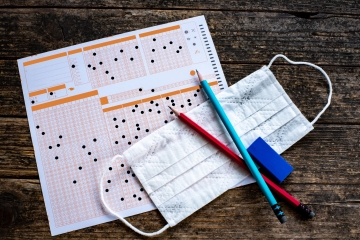
They’re right—right that this needs to happen, and right that “improvements are available now.” In particular, a suite of technologies that are already widely used in some private-sector testing can and should be embraced by state and national assessments, as well as the private tests that aren’t yet making maximum use of them. Artificial intelligence can generate test questions and evaluate student responses. “Natural language processing” illustrates the kind that can appraise essay-style responses, thus helping to liberate testing from multiple-choice items that can be fed through a scanner. Computer-adaptive testing (already a feature of the Smarter-Balanced coalition, though constrained by ESSA’s insistence on “grade-level” testing) saves time, reduces student frustration, and yields far more information on what kids do and don’t know, particularly at the high and low ends of the achievement distribution.

Schneider and Garg itemize several necessary elements of the paradigm shift they seek:

First, we should strive to set ambitious goals for where assessment innovation can go.... Second, government agencies and research funders should invest in advanced computational methods in operational assessments.... Third, fostering talent is critical. New testing designs will require new test researchers, developers, statisticians and AI experts who think outside the box.... But, most importantly, we must recognize that the status quo is broken. We need new thinking, new methods and new talent.

That’s not the whole story, of course. There are plenty of other needs, mostly involving the surmounting of present-day obstacles. Government bureaucracies are set in their ways. Procurement systems are ossified and formulaic. Digital divides are real. And the more tests rely on technology, the greater the risk that those divides will worsen the inequalities that the tests reveal.

Moreover, all sorts of state and federal laws and regulations are involved. The intersection of assessments with academic standards and ESSA-driven accountability regimes is genuinely complicated. And then there’s the matter of “trendlines,” the desire to know how next year’s assessment results compare with last year’s, so that we can calculate growth, operate our accountability system, know whether gaps are closing and reforms are working, etc.

Those aren’t trivial considerations, especially in long-running testing programs such as the National Assessment of Educational Progress. Big changes in how tests are constructed and conducted are certain to collide with the barriers noted above, but also run a high risk of forcing trend lines to start anew.

Schneider and Garg say these challenges are worth tackling. That it’s already a time of flux, and agitation in the testing realm may well mean they’re right and the time is at hand. On the other hand, as former Achieve major domo Michael Cohen says, the time may not be right “for a major effort to create better tests because nobody wants to talk about tests. People are tired of standards, tests, and accountability. They just don’t want to deal with it anymore.”

It surely won’t be easy to reach anything resembling consensus across the education field, not in these politically schismatic times when people want so many different things from tests, and want to deploy and restrict them in so many different ways—or abolish them altogether.

Dissensus is visible today among the twenty-six members of the National Assessment Governing Board (NAGB) as they struggle with replacement of the twelve-year-old framework that underlies NAEP’s reading tests. Intended to take effect with the 2026 assessment cycle, the proposed new framework that emerged from an extensive attempt to “vision” the future of reading has prompted much controversy. In a scathing review of last year’s draft, David Steiner of Johns Hopkins and Mark Bauerlein of Emory suggested that the new framework would, in effect, define deviancy down by masking the problem of weak background knowledge that compromises reading comprehension among many youngsters, particularly those from disadvantaged homes. They also spotlighted the great risk that the proposed new framework would break NAEP’s reading trendline, which extends all the way back to 1992.

Whether the changes subsequently made in the proposed framework are substantive or cosmetic remains a topic of intense debate within the governing board, which over the decades has been celebrated for its capacity to reach consensus on important decisions. Whether that can happen next month when NAGB is supposed to adopt the new reading framework remains to be seen.

The point here, however, is not about NAEP or NAGB. It’s about the difficulty of achieving consensus in today’s testing arguments—and the difficult trendline issue, which is a big deal not only for NAEP, but also for many state assessments, as well as private-sector testing efforts such as SAT, ACT, and NWEA.

Statistical and psychometric legerdemain sometimes makes it possible to “bridge” or “equate” scores across a major shift in testing methods, content, or scoring arrangements. That’s how the NAEP reading trendline, for example, survived the installation of a new assessment in 2009, and how the College Board has been able to publish equivalency tables each time it has “re-centered” the SAT.

Perhaps such bridges can span the divide between today’s testing systems and the “SpaceX” version that Schneider and Garg envision. Or perhaps we must steel ourselves to sacrificing trend data in pursuit of other benefits that the SpaceX version would bring. It’s a close call—and an issue that will make consensus-seeking even harder, particularly in governmental assessments, such as those that states are required by ESSA to conduct, as well as NAEP itself.

A revolution in testing is less fraught—at least less political—in privately-operated programs, especially the kind that are more commonly used for formative and diagnostic purposes rather than tied to school accountability. Reconceptualizing those tests and their uses might yield additional gains. If more schools deployed them regularly and painlessly, then used them both for instructional decisions by teachers and to keep parents posted on their children’s learning gains and gaps, perhaps there’d be less need for and pressure on end-of-year accountability testing. Maybe it could happen less frequently or, NAEP-style, involve just a sample of students and schools.

Yes, it’s time for some fresh thinking! Are you listening, Elon Musk?

view

Schools need mental health services. Here’s how to fund them after Covid aid ends.

Sarah Broome
4.22.2021
Flypaper

Editor’s note: This is the second in a two-part series advocating for schools to offer better mental health services for students—something that’s especially important after pandemic-related disruptions to schools and children’s routines. The first part discussed what such services look like, and ways that leaders can use federal pandemic aid to help fund them in the short term.

Schools have long needed comprehensive mental health supports for students and staff. According to the US Department of Health and Human Services, one in five children and adolescents experience a mental health problem during their school years.

At the most basic level, the best teacher in the world cannot effectively reach a student who is having a mental health crisis. For a long time, we have expected teachers to handle the mental health issues of students in their class in addition to teaching. We need to recognize that mental health is no different than physical health in that they are both real needs that require specially trained professionals to address—and that when left untreated, they can significantly inhibit the ability of a student to learn. Classroom teachers can provide some basic mental health support like comforting a student who is upset. However, asking teachers to run a classroom with students who have untreated mental health issues or asking them to figure out how to treat them is different. The fact that mental health issues are often more difficult to see, combined with years of mental health stigmatism, has led to these issues being largely ignored in education. However, recent efforts to advance the cause of mental health access for students have caused many schools to rethink their approach.

While some schools have found ways to add the required resources through complicated funding and staffing structures, others have struggled to get even one mental health professional on campus. With the sudden influx of federal Covid-19 relief funds, the financial barriers to providing these services in schools are disappearing, at least temporarily. As schools head into summer planning, they should be considering how and where to add these services—and even more importantly, how to ensure the long-term sustainability of funding that will let them remain in place after the federal relief dollars expire.

How to fund mental health services

The simplest and most effective way to provide comprehensive mental health services on campus is for schools to hire mental health professionals on staff. Many schools employ counselors—but they are often tasked with duties such as scheduling and college admissions. The best practice for schools is to have mental health professionals that are completely and singularly focused on providing mental health services to students. These individuals should be specially licensed. Some examples include licensed social workers (master’s or clinical), licensed professional counselor, or licensed psychologists. The current recommended ratio is one mental health professional for every 250 students. But with the increased needs in the wake of COVID-19, that may not be enough. While some schools already employ mental health professionals, others have not been able to make that possible due to budgetary constraints. Now, at least in the short term, thanks to three separate rounds of federal Covid relief funds, schools have an opportunity to hire these professionals.

While the best solution would be to simply add these individuals to staff, some schools and districts may run into concerns about the number of allowable full-time employees (FTEs) or concerns over what to do when the funding ends. For these schools, a good solution would be to contract with individual mental health professionals. Contractors allow schools the benefit of mental health support while not requiring the same resources as FTEs. In addition, many states may experience a talent pipeline issue because of a shortage of school-specialized mental health professionals combined with the increased demand for their services. Using contactors allows one individual to service multiple schools, slightly mitigating the talent pipeline concern. Contractors can also be useful if the school wants to provide a specialized type of mental health support, such as addiction, LGBT-related issues, family therapy, or a specialization in complex trauma. For these specializations, there may not be a large enough student population in need to justify employing a full-time specialist, but it may make sense for a school to contract for a limited number of hours.

While the federal Covid-19 relief funds can provide immediate resources to add these services, many schools may rightly be concerned about how to maintain this level of mental health access in the long term. The good news is that Obama-era changes to federal Medicaid guidelines opened up a potential pathway for long-term funding of these services. In 2014, Medicaid released updated guidelines known as the Free Care Reversal Policy that clarified that states can allow schools to bill Medicaid for mental health services for all students—not just those with IEPs, which is how Medicaid had previously functioned. This pathway has the potential to provide long-term sustainable funding for schools to provide these mental health services.

However, each state must go through a process to authorize this change, and to date, only thirteen have. If your school is in California, Colorado, Connecticut, Florida, Kentucky, Louisiana, Massachusetts, Michigan, Missouri, Nevada, New Hampshire, North Carolina, or South Carolina, your state has taken steps to adopt this policy; Georgia and Oregon have begun the process and are waiting on approval. If you are in one of these states and have a Medicaid-eligible population, this funding method is open to you. Each of these states has its own unique rules and requirements, so if you have not as yet begun billing Medicaid this way, you should reach out to your state department of education for support. If you are in one of these states and are not yet set-up for this, your federal Covid-19 relief dollars could be used to help you do this long-term by purchasing billing software or hiring staff that can be paid for by these federal funds until the Medicaid reimbursement can be received.

In states that have not made this policy shift, schools should consider lobbying their departments of education (in conjunction with the entity that oversees Medicaid in their state) to work to implement the Free Care Reversal Policy and use federal Covid-19 relief dollars to support that work. Helpful resources for this can be found at the Healthy Students, Promising Futures Learning Collaborative. Fully implementing this policy will allow schools to continue providing these services long after the federal Covid-19 funds run out.

Access to mental health services is critical to student success in school. With students returning after a year of disruption, these services are going to be more important than ever. Fortunately, the federal Covid-19 relief dollars can provide the funding for those resources in the short term. And if used correctly, they also have the potential to provide sustainable funding through the Medicaid Free Care Reversal Policy. If this moment is leveraged well, it can be a profound turning point for mental health access in schools.

view

Six principles for high-quality, effective writing instruction for all students

4.22.2021
Flypaper

Editor’s note: The Thomas B. Fordham Institute recently launched “The Acceleration Imperative,” a crowd-sourced, evidence-based resource designed to aid instructional leaders’ efforts to address the enormous challenges faced by their students, families, teachers, and staff over the past year. It comprises four chapters split into nineteen individual topics. Over the coming weeks, we will publish each of these as a stand-alone blog post. This is the eighth. Read the first, second, third, fourth, fifth, sixth, and seventh.

Explicit writing instruction not only improves students’ writing skills but also helps build and deepen their content knowledge, boosts reading comprehension and oral language ability, and fosters habits of critical and analytical thinking. The process of planning, writing, and revising can be taught in intentional, sequential steps. In following this process, students can improve their skills and overall comprehension and retention of information.[1] It’s imperative that schools not scrimp on writing instruction as they help students recover from the pandemic.

To be effective, writing should be embedded in the content of the core curriculum and begin at the sentence level. As Judith Hochman and Natalie Wexler describe in The Writing Revolution: A Guide to Advancing Thinking Through Writing in All Subjects and Grades, “Writing and content knowledge are intimately related. You can’t write well about something you don’t know well. The more students know about a topic before they begin to write, the better they’ll be able to write about it. At the same time, the process of writing will deepen their understanding of a topic and help cement that understanding in their memory.” They go on to establish six key principles of the Hochman method, which include explicit skills instruction, the infusion of grammar in practice, and an emphasis on planning and revising. These form a strong basis for high-quality, effective writing instruction for all students.

Recommendations

  • Adopt and implement a high-quality English language arts curriculum (see the section on “Reading”).

  • Select a writing curriculum and activities that feature explicit, carefully focused instruction and connect to a variety of content areas, including building writing time into all subjects. To date, “The Writing Revolution,” also known as the Hochman method, is the only curriculum that combines these two elements.

  • Writing activities should start at the sentence level. Tasking young students with longer assignments will overtax them and short-circuit learning. Sentences are the building blocks for all writing.

  • Expand teachers’ awareness and enthusiasm for the role that frequent sentence-level writing, sentence expansion and combining, and even note-taking activities can play in enhancing any kind of instruction. A school-wide study of The Writing Revolution can serve as a sound starting point.

  • Invest in ongoing curriculum-based professional learning for leaders, instructional coaches, and teachers to build expertise and fully leverage the power of high-quality writing instruction.

Rationale

Content and cognitive science

There is a robust body of research indicating that writing has the potential to boost comprehension and retention, extending back to the 1970s.

In a landmark study, undergraduates were given five minutes to read an article. They then were randomly assigned to one of four tasks: reading the article once; studying it for fifteen additional minutes; creating a “concept map” or bubble diagram of the ideas in the article; or writing what they could remember from the passage, known as “retrieval practice.” When tested a week later, the group that had engaged in writing had a clear advantage in recalling information and making inferences.[2]

Writing about a topic is akin to preparing to teach something you have learned, which has also been shown to improve recall, a phenomenon called the “protégé effect.”[3] Essentially, writing requires students to recall something they have slightly forgotten (the mechanism at work in retrieval practice) and explain it in their own words (the mechanism at work in the protégé effect). A recent meta-analysis found that writing about content in science, social studies, and math reliably enhances learning in all three subjects.[4]

But most existing approaches to writing instruction fail to take full advantage of these potential benefits. Instead, they ask students to write about their own experiences or about random topics, without providing much background information.

In addition, most instructional approaches vastly underestimate how difficult it is to learn to write.[5] Young students may be juggling everything from letter formation and spelling to putting their thoughts in a logical order. Yet virtually all strategies expect inexperienced writers, including kindergartners, to write multiple-paragraph essays. The theory is that students need to develop their voice, fluency, and writing stamina from the earliest stages. But writing at length only increases cognitive load, potentially overwhelming working memory and depriving students of the cognitive capacity to absorb and analyze the information they’re writing about, much less acquire target skills.[6]

The Institute of Education Science’s Practice Guide on elementary writing cites twenty-five studies finding a variety of positive effects that follow from paying close attention to the writing process. It also recommends that one hour a day be devoted to students’ writing beginning in the first grade, and acknowledges that this is unlikely to be achieved unless writing practice occurs in the context of non-ELA content area instruction.[7]

Starting at the sentence level

Studies have shown the positive effects of interventions such as sentence combining and sentence expansion and teaching sentence-construction skills generally.[8] The IES Practice Guide recommends that students be taught to construct sentences. There are also indications in the literature on “writing to learn” that shorter writing assignments, including poems, yield larger benefits.[9] In addition, focusing on learning to construct sentences before moving on to paragraphs lightens the load on students’ working memory, freeing up cognitive space for absorbing and analyzing the content they’re writing about.

And yet for some reason, there appears to have been no studies testing whether there are greater benefits from an approach that explicitly teaches students to write sentences before asking them to embark on lengthier writing.

In the meantime, it’s best to begin writing at the sentence level. Sentence-level instruction not only lightens cognitive load, it also makes instruction in the conventions of written language—such as grammar, punctuation, etc.—far more manageable. Teachers confronted with page after page of error-filled writing often don’t know where to begin, and they don’t want to discourage students by handing back a sea of red ink. And if students can’t write a good sentence, they’ll never be able to write a good paragraph or a good essay.

Many students don’t easily absorb the mechanics of constructing sentences from their reading, as most approaches to writing instruction assume. Rather, they need to practice how to use conjunctions, appositives, transition words, and so forth. Activities that teach these skills, when embedded in the content of the curriculum, simultaneously build writing skills, content knowledge, and analytical abilities.

For example, students learning about the Civil War might be given the sentence stem “Abraham Lincoln was a great president _____________.” and then asked to finish it in three different ways, using “because,” “but,” and “so.” This kind of explicit instruction can also familiarize students with the syntax and vocabulary that are found in written but not spoken language, and can boost reading comprehension. Once you have learned to use a word like “despite” or a construction like the passive voice in your own writing, you’re in a much better position to understand it when you encounter it while reading.

Example: The Writing Revolution

The potential of explicit writing instruction that is embedded in the content of the curriculum and begins with sentence-level strategies is enormous. As far as can be determined, the Writing Revolution method is currently the only approach to writing instruction that combines these two features. It rests on six key principles:

  1. Students need explicit instruction in writing, beginning in the early elementary grades.

  2. Sentences are the building blocks of all writing.

  3. When embedded in the content of the curriculum, writing instruction is a powerful teaching tool.

  4. The content of the curriculum drives the rigor of the writing activities.

  5. Grammar is best taught in the context of student writing.

  6. The two most important phases of the writing process are planning and revising.

Once students are ready for lengthier pieces, the Writing Revolution focuses considerable attention on teaching students to construct clear, linear outlines. When students transform their outlines into finished pieces of writing, they are able to construct coherent, fluent paragraphs and essays by drawing on the sentence-level strategies they have been taught.

Reading List

Arnold, K., Umanath, S., Thio. K., Reilly, W., McDaniel, M., Marsh, E. (2017). Understanding the cognitive processes involved in writing to learn. Journal of Experimental Psychology: Applied. 23(2), 115-127.

Bangert-Drowns, R., Hurley, M. and Wilkinson, B. (2004). The Effects of School-Based Writing-to-Learn Interventions on Academic Achievement: A Meta-Analysis. Review of Educational Research. 74(1), 29-58.

Graham, S., and Hebert, M. A. (2010). “Writing to Read: Evidence for how Writing Can Improve Reading. Carnegie Corporation Time to Act Report.” Washington, D.C.: Alliance for Excellent Education.

  • Teaching sentence-construction skills has improved reading fluency and comprehension.

Graham, S. and Perin, D. (2007). “Writing Next: Effective Strategies to Improve Writing of Adolescents in Middle and High Schools – A report to Carnegie Corporation of New York.” Washington, D.C.: Alliance for Excellent Education.

Graham, S., Kiuhara, S.A., and MacKay, M. (2020). The effects of writing on learning in science, social studies, and mathematics: A meta-analysis. Review of Educational Research. 90(2), 179-226.

  • Embedding writing instruction in content and having students write about what they are learning in English language arts, social studies, science, and math has boosted reading comprehension and learning across grade levels.

Hochman, J. and Wexler, N. (2017). The Writing Revolution: A Guide to Advancing Thinking Through Writing in All Subjects and Grades. Jossey-Bass.

Graham, S., Bollinger, A., Booth Olson, C., D’Aoust, C., MacArthur, C., McCutchen, D., and Olinghouse, N.(2012). “Teaching elementary school students to be effective writers: A practice guide (NCEE 2012-4058).” Washington, D.C.: National Center for Education Evaluation and Regional Assistance, Institute of Education Sciences, U.S. Department of Education.

 Karpicke, J., and Blunt, J. (2011). Retrieval Practice Produces More Learning than Elaborative Studying with Concept Mapping. Science. 331(6018) 772-775.

Mueller, P. A., and Oppenheimer, D. M. (2014). The Pen Is Mightier Than the Keyboard: Advantages of Longhand Over Laptop Note Taking. Psychological Science, 25(6), 1159–1168.

  • Two key takeaways: the benefits of writing for information retention are strongest with writing by hand rather than on the computer; and the act of writing solidifies students’ knowledge of a subject.

Naka, M., & Naoi, H. (1995). The effect of repeated writing on memory. Memory & Cognition, 23(2), 201–212.

  • Demonstrates the crucial link between writing about something and remembering the content involved.

Panero, N.S. (2016). Progressive mastery through deliberate practice: A promising approach for improving writing. Improving Schools, 19(3), 229-245.

  • Summarizes the research on improving writing quality as well as writing strategies that improve reading comprehension, and connects those to practices taught in The Writing Revolution.

Seven, S., Koksal, A.P., Kocak, G. (2017). The Effect of Carrying out Writing to Learn Activities on Academic Success of Fifth Grade Students in Secondary School on the Subject of ‘Force and Motion. Universal Journal of Educational Research. 5(5), 744-749.

Tindle, R. and Longstaff, M.G. (2015). Writing, Reading and Listening Differentially Overload Working Memory Performance Across the Serial Position Curve. Advances in Cognitive Psychology. 11(4), 147-155.

Wexler, N. (2019). “Writing and cognitive load theory,” ResearchED, Issue 4,

  • “Writing can impose such a heavy burden on working memory that students become overwhelmed, unable either to improve their writing skill or to benefit from the positive effects that writing can have on reading comprehension and learning in general.”

Willingham, D. (2003). Students remember … what they think about. American Educator, 27(2), 37–41.

  • Writing can facilitate students’ thinking about what they are supposed to learn.

—

[1] From Brian Pick: I think it is important here to address both the writing process and the writing mechanics. Both matter but sometimes schools focus almost exclusively on only one or the other.

[2] From the editors: See “Retrieval Practice Produces More Learning than Elaborative Studying with Concept Mapping.” For more about writing and retrieval, see “The effect of repeated writing on memory,” which compares memorization among Japanese and American students using writing as a memorization strategy.

[3] From the editors: For example, in a study by Muis et al., elementary students who were solving complex math problems used more metacognitive strategies when preparing to teach those strategies compared to a control group. In a study by Nestojko et al., participants who were told they would be teaching a passage had better recall than those who were told they would be tested on the passage.

[4] From the editors: See “The Effects of Writing on Learning in Science, Social Studies, and Mathematics: A Meta-Analysis.”

[5] From the editors: Research shows that writing imposes a heavier cognitive load on working memory than reading. See “Writing, Reading, and Listening Differentially Overload Working Memory Performance Across the Serial Position Curve.”

[6] From Jamila Newman: I think it's important that schools see writing as gateway to student independence and agency. Reading and listening often position students as consumers, but writing and speaking position students as producers of argument, opinion, and ideas.

[7] From the editors: See “Teaching Elementary School Students to Be Effective Writers.”

[8] From the editors: See both “Writing Next” and “Writing to Read,” two Carnegie Corporation of New York reports published by the Alliance for Excellent Education.

[9] From the editors: See “The Effects of School-Based Writing-to-Learn Interventions on Academic Achievement” and “The Effect of Carrying out Writing to Learn Activities on Academic Success of Fifth Grade Students in Secondary School on the Subject of ‘Force and Motion’.”


view

How does money matter for schools?

Adam Tyner, Ph.D.
4.22.2021
Flypaper

The “Does money matter?” debate has been getting boring. The idea that increasing school spending wouldn’t make the schools work at least a little better probably never made much sense to begin with. But in the past few years, study after study has used new quasi-experimental research methods to examine the question of whether money “matters,” and the results have been highly consistent: It does. Yet just as we arrived to the point of dreading another clever regression discontinuity study that promised to once again prove something that we probably never should have doubted in the first place, a new paper from Northwestern University economist Kirabo Jackson and his graduate student Claire Mackevicius builds on this exhaustive body of evidence to add important new dimensions to the “money matters” question.

Although earlier work from Jackson (2020) already collected the extant research, reviewed it, and put the nail in the coffin of the “Does money matter?” doubts, this new NBER working paper extends this work into fresh territory, making several important contributions.

Even before we get to the findings, the paper makes an important contribution by simply standardizing the results of the previous studies of the effects of school spending on student outcomes. It’s common for researchers to scale the effects in their research based on an arbitrary benchmark, such as one standard deviation, $1,000, or five percentiles, but different studies using varying input and output data makes it excruciating to compare the results for the literature writ large. By standardizing the inputs ($1,000 dollars, based on 2018 prices, for four years of schooling) and outputs (standard deviations of test scores or other education outcomes), the present study shows that seemingly divergent results actually align more closely than we may have thought. For example, they compare the stated effects of Lafortune et al. (2018), which estimated a statistically significant effect of spending on test scores, with those of Clark (2003), which reported “no discernible effect,” but when the inputs and outputs are put on the same scale, the two studies are found have quite similar results.

Regarding the question “Does money matter?,” the study slightly updates the findings of the aforementioned review by Jackson that show that the ratio of positive estimated effects of spending to null or negative effects is so overwhelming that there should be no question that additional funds, on average, enable somewhat better educational outcomes. Based on the recent published studies on the topic, they estimate the odds that there is no relationship between funding and student outcomes at 1 in 4,320,893. In other words, money matters.

A positive relationship alone, however, does not necessarily justify more dollars for schools. If we found that tripling school funding lead to students scoring one point higher on the end-of-year math tests, would we really think that the tens of thousands in added taxpayer dollars per pupil were justified? Policymakers and the public need more specific information. We need to know how much of an effect spending will actually have, whether some places are already spending so much that there are steep diminishing returns to additional outlays, and what types of spending get the most “bang for the buck.”

Indeed, the overall effect of an additional $1,000 of spending per child on test scores, based on 2018 prices and over four years of school, is estimated by Jackson and Mackevicius to be quite small, about 4 percent of a standard deviation. The estimated effects on educational attainment (e.g., preventing dropout or promoting high school graduation or college enrollment), however, were considerably stronger, at a whopping 16 percent of a standard deviation. This translates to a 2 percentage point increase in the high school graduation rate and a 4 percentage point increase in college-going for a $1,000 per pupil increase in school spending.

Fiscal conservatives who support charter schools will be particularly interested in one specific comparison in which the researchers benchmark the effects of increased spending against the effects of attending a high-achieving charter school. An additional $1,000 of spending, while having a statistically significant effect on student outcomes, has just 15 percent of the effect of attending a high-achievement charter school and less than half of the impact on college-going, based on a comparison with Angrist et al.’s (2016) estimates of charter school impacts. Although these policies are by no means mutually exclusive, advocates would need to secure impressive increases in spending to outdo the work that boosting high-quality charters might achieve.

Importantly, the study also focuses on the differences in the effects of spending for students from different backgrounds. As other studies of school finance have suggested, the effects of spending are greatest when it supports the neediest students. The difference for graduation rates is particularly important: a $1,000 increase in funding (for four years) is estimated to boost graduation rates for lower-income students by 1.9 percentage points, but just 0.6 percentage points for higher-income students.

Another important contribution is the analysis of the effects of capital spending on student outcomes. These analyses have always been tricky, since large spending in one year is unlikely to boost student learning very much as construction commences. In fact, they may disrupt learning in the first years of construction, as jackhammers may break everyone’s concentration as much as they break the old concrete foundations. Yet having better facilities may help students to learn more over time. Rather than attributing the spending only to the year in which it occurs, the study uses some accounting techniques to amortize the facilities spending over time, finding that over the longer term, construction spending also has measurable impacts on academic outcomes.

The paper also tries to determine whether spending is still likely to have an impact, even as average per pupil expenditure has risen precipitously in recent decades. At some level of spending, surely the effect of spending more money would diminish or even disappear. Have we already reached that point? The present study finds no evidence that there we are already experiencing those diminishing returns and suggests that rising labor costs in this labor-intensive field may be the reason that we don’t observe the expected diminishing returns.

As I argued in my chapter of the recent volume Getting the Most Bang for the Education Buck, the education policy world does not need another study showing simply that “money matters.” The case on that question has been settled. But by no means does that suggest that the interesting questions in school finance have been settled. The current study may forge new conventional wisdom about effects for student subgroups or for diminishing returns that future studies can test.

Of course, it would seem that the present study also has clear implications for President Biden’s proposals to massively increase federal funding for poor students. Yet previous research has found that such new sources of federal dollars often fail to influence school spending, since state and local sources of funding can dry up in response to new federal flows. No one should deny the importance of equitably funding schools, but the future of “money matters” questions lies in these more context-dependent details.

The future of “Does money matter?” is “How and how much does money matter?”

SOURCE: C. Kirabo Jackson and Claire Mackevicius. The Distribution of School Spending Impacts. No. w28517. National Bureau of Economic Research, 2021.

view

Not all non-traditional schooling is created equal

Julie Fitz
4.22.2021
Flypaper

When we imagine the typical school, at least one from the pre-pandemic era, generally the first thing that comes to mind is a teacher instructing a classroom full of students. But the scene can be quite different for California’s 190,000-plus students who attend charter schools where at least 20 percent of their instruction takes place outside of this traditional setting. The state calls these “nonclassroom-based” (NCB) schools, and they include full-time virtual schools, independent-study charters, and supported homeschooling. According to Caprice Young, leader of the Learn4Life charter network:

The biggest misunderstanding is that NCB schools are all online schools. Some are and some are not, but the term NCB refers to the way the schools are reimbursed for services, not their instructional context. Traditional schools earn state dollars based on enrollment calculated based on student seat-time in a classroom, whereas NCBs are reimbursed based on the amount of academic school work the students do. In this manner, NCBs (which include both charter and non-charter public schools) are closer to the new proficiency-based funding models many innovators are calling for post-pandemic.

Sometimes these schools get a bad rap. But a new report issued by the California Charter Schools Association attempts to clear up some misconceptions, and argues that these schools meet the needs of many California students and families.

The report emphasizes that the wide variety of school types under the umbrella of “Nonclassroom-based” allows students and families to make schooling choices tailored to their needs. Many schools offer a career-focus or engage in some form of personalized learning, for example, while others offer college-readiness programs. Still others are oriented around particular pedagogical perspectives, such as those with constructivist, content-focused, or twenty-first-century-skills offerings. The sector also particularly caters to students who are credit-deficient or who have otherwise had difficulty in traditional schools. Approximately one-third of NCB schools serve such a high proportion of high-risk students that they qualify for “dashboard alternative school status” and are evaluated according to an alternative accountability model. These programs, in particular, serve a high proportion of low-income and highly mobile students.

Furthermore, over the many years that they have been in operation, NCB schools have developed distinct forms of expertise in meeting students’ learning needs. The report identifies eight common best practices that NCB leaders view as critical to their schools’ success:

  1. Personalized Learning. Many NCB programs tailor their instructional programs to students’ unique needs, interests, and situations. Students and families have more flexibility and choice when selecting curriculum, learning environments, and pacing.

  2. Synchronous and Asynchronous Learning. Flexibility is extended by a combination of live and asynchronous learning opportunities that students may opt to attend in order to receive additional support from trained educators.

  3. Strong Teacher and Student Relationships. NCB teachers have clearly delineated responsibilities for connecting individually with students and families, and frequently engage in personalize check-ins with students.

  4. Flexibility of Instruction Timing and Style. Students can engage in instruction at the time, place, and in the format that best works for them. This is particularly of benefit to at-risk students, who may work or have care-taking responsibilities that preclude their ability to engage on the typical 8 a.m.–3 p.m. schooling schedule.

  5. Parents/Guardians are Active Participants in Students’ Learning. Schools host frequent trainings for parents on how to support their students and view parents as important participants in their students’ learning journey.

  6. Emphasis on Students’ Responsibility. Without the structure of the traditional classroom, students take on greater responsibility for regulating their own schedules and learning. While NCB teachers provide appropriate support and accountability structures, many schools aim to cultivate student responsibility and ownership of their own learning.

  7. Adapted to Meet Diverse Student Needs. In addition to meeting the needs of many at-risk students, NCBs often work well for high-performing athletes, accelerated learners, students with medical conditions, and many who have experienced bullying or emotional distress in previous school settings.

  8. Providing Needed Educational Options. NCB leaders viewed their programs as serving an important function for students whose needs are suited to the unique environment these schools offer and for school districts that may otherwise have limited resources.

The California Charter Schools Association’s report contributes much-needed nuance to the debate around NCB schools by emphasizing the variation within this sector. Policy that blanket-regulates NCB schools may unnecessarily hinder students and families from accessing widely-appreciated programs that accommodate atypical needs and lifestyles. Nonetheless, California will do well to evaluate how to appropriately hold these schools accountable for producing positive learning outcomes and ensure that they are responsible stewards of public funds. But this can surely happen without further inhibition of the expansion of NCB educational opportunities.

SOURCE: Slakey, J. (2021) Serving Diverse Student Needs in the Golden State: Practices and Programs of Nonclassroom-based Charter Public Schools. California Charter Schools Association.

view

The Education Gadfly Show #766: The U.S. Department of Education’s puzzling take on testing in 2021

4.21.2021
Podcast
 

On this week’s podcast, Dale Chu, Mike Petrilli, and David Griffith discuss the Biden Administration’s flawed decision-making on testing waivers. On the Research Minute, Amber Northern examines how investments in local libraries affect communities and children.

Amber's Research Minute

Gregory Gilpin, Ezra Karger, and Peter Nencka. "The Returns to Public Library Investment," Federal Reserve Bank of Chicago (April 2021).

If you listen on Apple Podcasts, please leave us a rating and review - we'd love to hear what you think! The Education Gadfly Show is available on all major podcast platforms.

view

Cheers and Jeers: April 22, 2021

The Education Gadfly
4.22.2021
Flypaper

Cheers

  • David McCollough’s American Exchange Project is bringing together young Americans from different regions and backgrounds during the pandemic. —BBC
  • “Patriotism is a contested concept. But it shouldn’t fade to something only dimly remembered.” —George F. Will
  • Atlanta will be adding half an hour to elementary students’ school day in the fall to address unfinished learning. —Atlanta Journal-Constitution

Jeers

  • Howard University’s dissolution of its classics department is “a sign of spiritual decay...running amok in American culture.” —Cornel West and Jeremy Tate
  • Teacher training and licensure programs are spreading forms of progressive pedagogy that are ruining education. —National Review
  • Pitting excellence against equity, Massachusetts schools chief Jeff Riley wants to replace rigorous, statewide admissions criteria for vocational schools, and instead let them use their own requirements that focus on diversity. —Boston Globe
  • The U.S. Department of Education’s new grant rules for history and civics programs cite the controversial 1619 Project and the far-left Ibram X. Kendi, inflaming the culture wars. —EdWeek
view

What we're reading this week: April 22, 2021

The Education Gadfly
4.22.2021
Flypaper
  • Seventy years ago, Prince Edward County closed public schools to deny Black students an education. Fixing inequities worsened by pandemic closures is this generation’s civil rights crisis. —Washington Post
  • “Biden…is expected to propose a half dozen education programs that would constitute the largest federal investment in education in at least a half century.” —Washington Post
  • How to practice band music safely in reopened schools. —Wall Street Journal
  • Black students in South Florida are failing state tests but graduating anyway. —Miami Herald
  • With students returning to classrooms, learning pods are dwindling. —We Are Iowa Local 5 News
  • Public schools should not continue remote learning in the fall based on groundless safety concerns, especially not synchronously with in-person instruction. It will only incur unnecessary staffing and logistics costs. —New York Magazine
Fordham Logo

© 2026 The Thomas B. Fordham Institute
Privacy Policy
Usage Agreement

National

P.O. Box 110
Burke, VA 22009

202.223.5452

[email protected]

Ohio

P.O. Box 82291
Columbus, OH 43202

614.223.1580

[email protected]

Sponsorship

130 West Second Street, Suite 410
Dayton, Ohio 45402

937.227.3368

[email protected]