Mobile Navigation

  • National
    • Policy
      • High Expectations
      • Quality Choices
      • Personalized Pathways
    • Research
    • Commentary
      • Gadfly Newsletter
      • Flypaper Blog
    • Events
    • Scholars Program
  • Ohio
    • Policy
      • Priorities
      • Media & Testimony
    • Research
    • Commentary
      • Ohio Education Gadfly Biweekly
      • Ohio Gadfly Daily
  • Charter Authorizing
    • Application
    • Sponsored Schools
    • Resources
  • About
    • Mission
    • Board
    • Staff
    • Career
Home
Home
Advancing Educational Excellence

Main Navigation

  • National
  • Ohio
  • Charter Authorizing
  • About

National Menu

  • Topics
    • Accountability & Testing
    • Advanced Education
    • Career & Technical Education
    • Charter Schools
    • Curriculum & Instruction
    • ESSA
    • Evidence-Based Learning
    • Facilities
    • Governance
    • Personalized Learning
    • Private School Choice
    • School Finance
    • Standards
    • Teachers & School Leaders
    • Think Again
  • Research
  • Commentary
    • Gadfly Newsletter
    • Flypaper Blog
    • Gadfly Podcast
  • Events
  • Scholars Program

The Education Gadfly Weekly

Sign Up to Receive Fordham Updates

We'll send you quality research, commentary, analysis, and news on the education issues you care about.
Thank you for signing up!
Please check your email to confirm the subscription.

The Education Gadfly Weekly: Moving K–12 programs to the Department of Labor is neither smart nor conservative

Volume 25, Number 48
12.4.2025
12.4.2025

The Education Gadfly Weekly: Moving K–12 programs to the Department of Labor is neither smart nor conservative

Volume 25, Number 48
view
Donald Trump
High Expectations

Moving K–12 programs to the Department of Labor is neither smart nor conservative

The Trump administration recently proposed shifting Department of Education programs to other agencies, mostly the Labor Department. A few of the ideas makes sense. But overall, the proposal is nuts—and betrays conservative values, says a longtime GOP staffer.

Vic Klatt 12.4.2025
NationalFlypaper

Moving K–12 programs to the Department of Labor is neither smart nor conservative

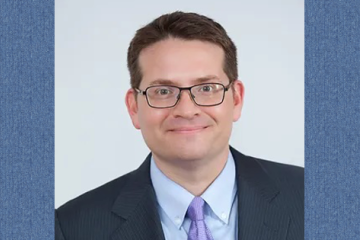
Vic Klatt
12.4.2025
Flypaper

Helping students flourish, not just achieve: An interview with Mike Goldstein

Robert Pondiscio
12.4.2025
Flypaper

We’re losing too many high-achieving low-income students

Michael J. Petrilli
12.4.2025
Flypaper

Assessing students’ academic mobility via test-based and non-test-based outcomes

Jeff Murray
12.4.2025
Flypaper

Why are students missing school?

Jill Hoppe
12.4.2025
Flypaper

Moving from science of reading laws to science of reading success | Episode 996 of The Education Gadfly Show

12.3.2025
Podcast
view
Mike Goldstein

Helping students flourish, not just achieve: An interview with Mike Goldstein

Robert Pondiscio 12.4.2025
Flypaper
view
Sad student in a classroom

We’re losing too many high-achieving low-income students

Michael J. Petrilli 12.4.2025
Flypaper
view
Walking up steps

Assessing students’ academic mobility via test-based and non-test-based outcomes

Jeff Murray 12.4.2025
Flypaper
view
Empty school desk

Why are students missing school?

Jill Hoppe 12.4.2025
Flypaper
view

Moving from science of reading laws to science of reading success | Episode 996 of The Education Gadfly Show

Eric Tucker, Michael J. Petrilli, David Griffith, Ph.D. 12.3.2025
Podcast
view
Donald Trump

Moving K–12 programs to the Department of Labor is neither smart nor conservative

Vic Klatt
12.4.2025
Flypaper

Last month, Mike Petrilli wrote about the Trump administration’s proposal to shift Department of Education programs to other agencies, mostly the Labor Department. His Substack is designed to elicit responses from friends in education policy, so others weighed in with their own impressions of the president’s decision.

After reading all of this, I came to the conclusion that people just don’t get it, or perhaps they just don’t want to speak up in the current political climate.

Let me start by saying that a few of the administration’s ideas make at least some sense: combining career and technical education and job training programs is completely logical, regardless of their bureaucratic home; and having the State Department take over international education and the Department of the Interior take over Native American programs has some merit. But overall, the proposal is nuts.

One feature of the administration’s decision is the notion that they’re going to “reduce union power” over Education Department programs by shifting them to the Department of Labor. This is absurd on its face. Anyone who truly understands Washington knows that there may not be a cabinet agency more captured by a set of interest groups than the Labor Department is by labor unions. Even under President Trump, the agency is run by a secretary rumored to be hand-picked by labor interests! Only out of touch Washington insiders could possibly think that shifting education programs to the Labor Department dominated by labor union politics and policies will reduce the influence of organized labor. I mean, come on, man! (As a recent former president known for his labor union ties used to say.)

Neither will shifting programs to the Labor Department reduce micromanagement and unnecessary and excessive bureaucratic meddling by educrats. Do administration officials not realize what this agency actually does? Have they heard of OSHA? The wage and hour division? How about issues like mine safety, pensions, or Davis Bacon? Ask some of your colleagues about the apprenticeship program and how nothing can happen there without union sign off.

The Labor Department runs a few small to middling grant programs—quite poorly, I should note, by virtually all accounts across the partisan spectrum in my experience. But what it mostly does is regulate and enforce regulations. This accounts for perhaps 90 percent of its staff’s work (my own estimate). This means that eventually—even if it takes a year or two—agency regulators will get their hooks into education programs, especially if the Democrats win the next presidential election. And when these regulators get going, they will be doing the bidding of the NEA and AFT, who will be whispering in their ears at every turn.

If the administration was really committed to moving these programs to another agency, the Commerce Department would have made much more sense. It’s the place where true partnerships between the government and the business community take place.

Lastly, as an old guy who has been around Washington for more than three decades, I must point out that combining education and labor programs was actually tried before on a smaller scale, in the mid 1990s during the Clinton Administration, by Republicans lawmakers. The effort was led by then Rep. Steve Gunderson, among others, but the Democrats opposed it for many of the same reasons they do now.

But conservative groups were just as responsible as the Democrats for stopping the idea dead in its tracks. The opposition then was led by Phyllis Schlafly, the Family Research Council, the Heritage Foundation, and various others of what we used to call “family groups.” In a nutshell, they opposed it because they believed that moving these programs to Labor would lead to a school-to-work pipeline that would create an unholy alliance between big government and big corporations. In those days, these groups informally referred to this as the Bill Clinton-to-Bill Gates pipeline, and they viciously attacked Republicans who thought about supporting this idea, or even a smaller version that just combined what used to be called “vocational education” with the training programs at the Labor Department.

Boy have things changed. It’s sad to see people putting their heads in the sand about all this, and it’s depressing that this kind of proposal sees the light of day at all, let alone get implemented—even if (and likely when) it will be reversed at some point down the line.

view
Mike Goldstein

Helping students flourish, not just achieve: An interview with Mike Goldstein

Robert Pondiscio
12.4.2025
Flypaper

Editor’s note: To read more about this topic from Mike Goldstein and Sean Geraghty, co-founders of the Center For Teen Flourishing, see “What are students doing between 6 p.m. and midnight?“ and “How to help students when they need it most—when they aren’t at school.”

For more than two decades, I’ve admired Mike Goldstein as one of the true pioneers of modern education reform. As the founder of Match in Boston—one of the most relentlessly thoughtful, data-driven, and high-performing charter schools in the country—Mike built a reputation not just for results, but for an unusually rigorous way of thinking about how those results are achieved. He has never been content with slogans or easy answers. He interrogates assumptions, tests ideas, and follows the evidence wherever it leads.

Now he’s turning that same disciplined, clear-eyed approach to a challenge that sits largely outside the reach of schools, and in some ways dwarfs the academic debates that have consumed us for decades. His new effort, the Center for Teen Flourishing, starts from an uncomfortable truth: Even the best schools can’t get kids all the way to flourishing. Not when so much of what shapes their character, habits, happiness, and sense of purpose happens “from 3 p.m. to 3 a.m.”—in the unstructured hours where too many teens today drift toward passivity, isolation, and screens. If we are serious about helping teenagers truly flourish, we need to think beyond classrooms and curricula and confront the broader social, emotional, familial, and civic conditions that shape their lives.

I recently sent Mike a series of questions about this emerging initiative, how his thinking has evolved, and why he believes our field must expand its ambitions. His answers, characteristically, are sharp, honest, and provocative. I’m delighted to share them here.

1. What is the Center for Teen Flourishing?

The Center for Teen Flourishing is an R & D lab for the 3 p.m. to 3 a.m. hours. 

I started Match as a lab when ed reform was cooking. We tried things. Many failed! Some worked. High-dosage tutoring got its start at Match and scaled up. We also piloted an unusual teacher prep program and a new kind of college. The coin of the realm was achievement gains as measured by state tests. 

CTF also wants to experiment, but with a different outcome metric: “hours per week of flourishing.” Many teens describe themselves as not doing much out of school besides scrolling on their phones. Some try to change their behavior but struggle. The conventional wisdom does not seem to be helping, so let’s try some new ideas (and measure the results). We’ll collect field notes along the way. 

2. You helped invent one of the most influential charter school models in the country, Match. Now you’re working on something that sits outside of schools. What led you to conclude that even great schools can’t get kids all the way to flourishing?

Those teens I met in 1999 when I started Match Charter High? Now they’re 40. Some had the story they and we had hoped for: worked hard in high school, first in family through college, got good jobs. Others struggled—including a number who went on to become college graduates. Their labor outcomes weren’t what we’d hoped for. They’re still poor. Charter Growth Fund has led research in this area, to their credit. 

We’ve seen some entrepreneurs create great schools. KIPP, P-TECH, and Harlem Children’s Zone are all intriguing school models (college-for-all, career, wrap-around). The kids’ educational experience improved, and that matters. But randomized trials have shown disturbingly low impact on life outcomes. A 2023 Mathematica study found that attending a KIPP middle school increased the likelihood of a student enrolling in college, but not of graduating. MDRC found that P-TECH had no effect on college enrollment or graduation. Roland Fryer and Will Dobbie found that Texas charter schools didn’t seem to bolster later-in-life earnings. 

So I’m not sure that great schools alone get poor kids out of poverty.

But then something happened. A new problem appeared, and, unlike the achievement gap, it plagues poor and rich teens alike. I call it teen languishing. I’m referring to kids who, for the most part, from 3 p.m. to 3 a.m., do almost nothing besides screen time.

3. The Center for Teen Flourishing’s focus is on “languishing teens”—kids who aren’t clinically depressed but who aren’t exactly thriving either. What does languishing look like in real life? And what convinced you that this is an urgent problem?

A suburban Boston-area teacher emailed me this weekend. This, he wrote, is his median student:

  • Heavy screen time after school, over the weekend, and during the summer.
  • Little time outdoors, reading books, walking, engaged in fitness, working or volunteering.
  • Apathy; maybe low-grade anxiety/depression (unclear if clinical).
  • Going through the motions, little direction or ambition.
  • No clear out-of-school “passions.”
  • Haven’t found “their people.”

Once upon a time, boredom nudged teens to…do things. The smartphone and the trillion dollar companies who sell them defeat boredom. That leads to an idleness that I think is bad for young people.

4. This reminds me Yuval Levin’s essay on “The Changing Face of Social Breakdown” and his observation that “the challenges to America’s social order now seem less like exorbitant human desires driving people’s lives out of control and more like an absence of energy and drive leaving people languishing and enervated.” Are you seeing what he’s seeing?

Loved that Levin essay. I’m seeing what he’s seeing. 

He makes an interesting point in that essay. He notes that his professional peers see this social issue as a class divide; he cites a study indicating that wealthier Americans are getting married and having kids at higher rates than those with lower incomes. But Levin argues that the broader issue, which he calls “pathological passivity,” is across the board.

That’s what we believe at CTF as well. The “sitting around” problem is prevalent everywhere, even among teens in the wealthiest families. 

5. A lot of what you’re describing happens “from 3 p.m. to 3 a.m.,” outside the reach of K–12 education. What kinds of activities or environments do you think actually move the needle for teens in that window? How do we know?

Flourishing teens build busy calendars: sports, restaurant jobs, Starbucks hangouts with friends, church youth groups, scouting, playing guitar. Each domain (fitness, music, work, sleep, socialization) has its own vein of research showing benefits. Some flourishing teens do this the easy way: they join activities that the school offers. Other flourishing teens busy themselves with cool things that aren’t part of the school menu. 

What we don’t know is precisely how to increase languishing teen participation in all of these things. There aren’t many field experiments. That’s what our center wants to do: challenge the conventional wisdom and do some R & D on how to help teenagers live healthy and meaningful lives.

6. Jonathan Haidt and others have focused on reducing screen time through restrictions or “digital sabbaths.” You’ve suggested an alternative: substitution—filling teens’ lives with more engaging, real-world activities. What makes you think substitution might work better than suppression?

Haidt has been invaluable for bringing more attention to the problem. And the school cellphone bans he’s championed have been great. He also backs a favorite thinker of mine, Lenore Skenazy, and her organization Let Grow, which encourages young kids to play together outside.

But outside of school, is the tactic of 3 p.m. to 3 a.m. screen suppression working for languishing teens age 14 and above?

China has tried since 2019 with various moves, including video game limits. A Nature Human Behaviour paper found “no credible evidence” the tactics worked.

Britain’s Online Safety Act took effect a couple months ago; VPN downloads multiplied by twenty times.

Teens find workarounds.

Big Tech offers a Maginot Line of blockers and parental controls. Those don’t seem to work. Have you ever tried? You’re peering over your teen’s shoulder and asking, “Hey is that really science homework, or is it TikTok?” It’s tough.

All of that suggests we may not see the gains we want from out-of-school suppression. We should try! But substitution’s advantage is that it inherently works. If you’re rock climbing, you’re probably off your phone. (Well, except for the selfie.) 

7. You’ve noted that teen flourishing straddles at least six different research silos: mental health, parenting, K–12 education, youth development, screen addiction, and workforce development. Your center touches all six and doesn’t fit neatly into any one of them. This makes fixing schools seem easy by comparison.

My wife Pru is a doctor and made this analogy: Have you ever heard of pediatric “failure to thrive” (FTT)? FTT isn’t a single-organ disease. It’s a syndrome: poor weight gain, lethargy, sleep trouble. The causes interact: feeding routines, sleep, parental capacity, reflux, mild infections, stress.

The fix is never just “see GI” or “see psych.” You need a coordinated plan: pediatrics + nutrition + lactation + sleep hygiene + social work, all aimed at the daily schedule (feeds, naps, play) with one shared outcome metric—the growth chart.

What Center for Teen Flourishing is chasing is perhaps akin to teen FTT. It addresses several issues at once, all unified by the need to fix teens’ daily schedules. 

The research silo problem is a barrier. The education people are understandably mostly worried about how 3 p.m. to 3 a.m. affects, say, chronic absenteeism. A teen who sits on the sofa all evening but shows up to school isn’t high on their list of problems to solve. The mental health people care about teens who meet clinical thresholds. And so on. 

8. You spent years in the charter world. What lessons—good and bad—from the education reform era are you applying to CTF? And what mistakes do you want to avoid repeating?

A. Education reform is at its best when we focus on details of practice. I so admire what happens at, say, Brooke Charter Schools from 8 a.m. to 3 p.m. Our sector needs similar fascination with the 3 p.m. to 3 a.m. lives of teens.

B. Sometimes you need to recruit a new tribe of talent. Charters had Teach For America, The New Teacher Project, Fisher Fellows, BES—at its peak, the sector was able to mobilize a whole new pool of talented young people. For teen thriving, I think we need a similar effort, somehow pulling in energetic adults and trying fresh ways to deploy them.

I don’t think that typical mentor programs are the answer. These programs are usually relaxed and unstructured—“Hey, you want to go to a ball game?” But that doesn’t seem to work with languishing teens. Because of screens, they’re not bored, so anyone trying to engage them has to be really good at motivating them try new things in the real world and helping them persist with the two or three things they’re interested in.

C. Stay humble. Ed reform got high-dosage tutoring right with a few thousand kids but scaled up wrong. We improved teacher prep but got the branding wrong. We got more kids to earn college diplomas but got the poverty-escape mechanism wrong. I hope to stay curious, be wrong, change my mind, and maybe occasionally be right! 

9. Where does AI play into all this?

There are at least 20 large funders seeking more AI in schools. They have a good cause: achievement! Ed tech, including AI, has always had the allure of scalability, so the interest in AI tools is understandable. If computers can solve education problems, you can help a lot of kids.

A downside is that even good AI use cases are probably more screen time. 

My friend Kyle playfully says that our Center for Teen Flourishing should be funded as a hedge, akin to a carbon offset. If you’re building things that will cause kids to spend even more time on screens, perhaps also help them reduce their total screen time in other ways. 

10. What’s the North Star metric? How will you know if you’re succeeding?

The North Star metric is hours of flourishing each week.

That’s counting the weekly hours on fitness, in-person time with friends, any sleep above 5 hours a night, volunteering or working up to 10 hours a week, pleasure reading, gardening, or walking the dog.

Instead of a pediatrician’s annual physical, we’re experimenting with a structured “life report card” process where a willing teen and parent are interviewed.

We estimate that, currently, the 75th percentile teen has about 20 hours per week in a flourishing state. That looks like an after-school sport, a hobby, a babysitting job, some in-person hangout time. The 25th percentile is closer to two hours per week. 

view
Sad student in a classroom

We’re losing too many high-achieving low-income students

Michael J. Petrilli
12.4.2025
Flypaper

Across the country, tens of thousands of high-achieving children are sitting at their desks, waiting for the challenge they deserve. But for many—and above all for those from low-income families—that wait won’t end.

Sure, we encounter some success stories. The child of an impoverished rural Ohio “town drunk,” Beth Macy became the first in her family to attend college, rising to become a journalist and, today, a contributor to The New York Times. At just 16 years old, John Roger Stephens, the son of a west-central Ohio factory worker and seamstress, became his high school’s salutatorian and enrolled at the University of Pennsylvania; he graduated magna cum laude before becoming the three-time Grammy-winning John Legend. A few years Legend’s junior, J.D. Vance would soon emerge from Rust Belt poverty, ultimately attending Yale Law School and, yes, becoming the fiftieth vice president of the United States.

Their stories show that kids—even from the most difficult circumstances—can have what it takes to succeed in college and beyond. And as Americans, we love Horatio Alger tales of young people overcoming hardship to find adulthood success. It’s the American Dream!

Yet the tragic reality is that most high-achieving, low-income (HALO) students don’t have access to the opportunities that would open those doors. New research by Stéphane Lavertu, published by my organization, the Thomas B. Fordham Institute, finds that in Macy’s, Vance’s, and Legend’s own Buckeye State, HALO students are outnumbered just 3-to-1 by their more affluent counterparts in third grade—but a decade later, they’re outnumbered 6-to-1 at four-year colleges and a staggering 10-to-1 at top colleges.

Thankfully, some HALO students are beating the odds.

What makes the difference?

While many factors are at play, our study finds that access to advanced coursework is one of the most significant. In Ohio, HALO students are more likely to attend a four-year—and a top college—if they receive gifted services. In middle school, advanced math is a key lever, boosting the odds of a HALO student attending a top college by 6 percentage points—and if the course is high school level, that likelihood jumps to 18 percentage points. And for HALO students in high school, taking just one AP or IB course is correlated with a 29-percentage-point spike in college-going. Our study also finds that being surrounded by high-achieving peers is part of this statistical boost. Simply put, challenging these students works.

And still, we systematically deny these opportunities to the students who need them most. Compared to their affluent peers, HALO students are 26 percent less likely to take advanced math in middle school, 34 percent less likely to take AP or IB or dual-enrollment courses in high school, and 44 percent less likely to receive gifted services in middle or high school. These aren’t just statistics—they are closed doors.

We’ve chosen to settle for a status quo that leaves a vast reservoir of human potential untapped. This is a tragedy for students and a crisis for our nation. But state and district leaders can choose differently. Our school systems can adopt policies that better serve low-income students.

The solutions start with widening the pipeline. First, find the students and put them in the right classes. Instead of relying on subjective teacher referrals or savvy parents opting in, schools should automatically enroll high-achieving students in advanced courses. Second, offer more seats in these courses. Advanced education is not a zero-sum game. There’s plenty of room for HALO students alongside their affluent peers. All students should be screened for gifted or advanced learning opportunities—regularly and across subjects—to give them lots of chances to show they’re ready for a challenge.

At the same time, policymakers should expand high-quality school choice. If a student’s neighborhood high school doesn’t have the capacity to offer AP or IB courses, for example, that student shouldn’t be trapped. States might consider selective-admission or magnet schools for high-achieving students or pass robust interdistrict open-enrollment laws. To ensure these programs actually reach HALO students, leaders must be intentional: set seats aside specifically for low-income students and launch information campaigns to ensure families know about these life-altering options.

How many future Nobel laureates, cancer researchers, or tech innovators are sitting bored in classrooms right now, their potential slowly draining away because of their ZIP code? How much more economic growth and human progress are we willing to forfeit?

We can—and we must—fix this. Identifying and challenging our brightest students, regardless of background, shouldn’t be a partisan issue. Those on the left value equality of opportunity; those on the right prioritize merit. Getting more HALO students on track to achieve their dreams checks both boxes. The Beth Macys, John Legends, and J.D. Vances should be the rule, not the heartwarming exception.

view
Walking up steps

Assessing students’ academic mobility via test-based and non-test-based outcomes

Jeff Murray
12.4.2025
Flypaper

There is a widely-held belief that the foremost mission of American public education is to provide a pathway to success for every student, including those who face considerable life obstacles. However, persistent achievement gaps along dimensions of race, income, family education level, and other factors challenge the truth—or at least the practicality—of this conviction. Research, including from Fordham, has shown that these gaps often form early and are persistent or even widen over time. A new CALDER working paper looks at both test-based and non-test-based high school outcomes for a population of third grade students in an effort to locate evidence that initially-low-performing students have the ability to rise.

The longitudinal student-level data for this study come from Washington State, comprising more than 581,000 unique students who entered third grade from 2006 to 2013. These students were followed through 12th grade—the latest cohort reached that milestone in 2022—with data focusing on outcomes such as math and English language arts test scores, college-level course-taking while in high school, absences, disciplinary incidents, GPA, and high school graduation. To keep their analysis consistent, the researchers make a number of adjustments to the wide swath of data to account for changes in testing regimes and for students who come into and out of the various cohorts over time.

“Academic mobility” is defined as how much a student’s rank in the distribution of academic (and non-academic) performance changes during their time in school. An education system with high academic mobility would be one where students’ early-grade ranks are less predictive of their later-grade ranks; one with low academic mobility would see students locked into their early-grade ranks for their entire school career.

The researchers find low evidence of mobility in their sample. Higher performance on third or eighth grade assessments strongly predicts better high school outcomes, including test scores, GPAs, college-level course-taking (in both math and ELA), and graduation rates. Higher performance on these exams also predicts lower rates of absenteeism and disciplinary incidents. And the corollary for low initial performance is true as well. Early achievement in math is even more predictive of high school outcomes than early achievement in ELA, and third grade achievement overall is more predictive than eighth grade achievement, indicating that potential for academic mobility—or lack thereof—sets in early without much capacity for change.

That’s not to say that some students don’t exhibit upward academic mobility after a slow start in third grade. On average, students who score at the 25th percentile of their third grade test score distribution move up to the 31st percentile by high school. But those same students also experience varying degrees of downward mobility in the non-test-based outcomes of college-level course-taking, absenteeism, and disciplinary incidents. Asian students are generally the most upwardly mobile racial/ethnic group, and Black males are generally the least mobile. Gender gaps also vary in size but almost always favor females, regardless of student group or outcome.

The authors point out that there is a missing counterfactual here (“we do not know what achievement would look like in the absence of any existing interventions”), but nonetheless conclude that “five years of elementary and middle school experiences and interventions”—whatever they are in this context—“do little to substantially shift the educational trajectories of students who begin school with low achievement” at third grade. This is bleak and challenges the belief that schools can provide a pathway to success for every student. But it is vital information to know. The road to a student’s ultimate academic outcome begins early, and lowtest scores by third grade should be a clarion call to do everything possible to give those students the best chance of moving up.

SOURCE: Dan Goldhaber, Stephanie Liddle, and Suvekshya Gautam, “Assessing the Academic Mobility on Test and Non-Test Outcomes for Students from Third Grade Through High School,” CALDER Working Paper (November 2025).

view
Empty school desk

Why are students missing school?

Jill Hoppe
12.4.2025
Flypaper

As states continue to confront abysmal post-pandemic attendance patterns, understanding why students miss school has become increasingly important. A recent study published by the American Enterprise Institute (AEI) examines how reasons for student absences have shifted before, during, and after the Covid-19 pandemic.

The Panorama survey, administered annually in Rhode Island, captures student experiences with school climate, engagement, learning, and other topics. The state’s chronic absenteeism measure asks students “Why have you been absent from school?” followed by a predetermined list of reasons including bullying, taking care of family, and illness. Students could select one or more reasons from the list.

Using self-reported responses from more than 660,000 Rhode Island students in grades 3–12 between 2017 and 2024, the researchers compared the pre-pandemic period (2019–20) with the post-pandemic (2023–24). They disaggregated reasons for absence by grade level, gender, race/ethnicity, and school characteristics (e.g., poverty level, achievement rating), and explored how different reasons for absence may be correlated.

The research team presents many different findings. Illness remained the most common reason for missing school before and after the pandemic (75 percent of all absences). Illness-related absences declined sharply during remote learning but rebounded to pre-pandemic levels once students returned to classrooms, increasing between 2020 and 2024 by 3.6 percentage points among elementary students, 2.4 among middle schoolers, and 3.2 among high schoolers. It is worth noting that illness is not cited more frequently post-pandemic than pre-pandemic, contrary to some assumptions that illness-related absences would surge after the pandemic.

Lack of sleep was the next most common reason for missed school, cited by about one in four students. Post-pandemic, sleep-related absences rose among elementary (+1.9 points) and middle (+4.3 points) school students but declined slightly among high schoolers (-1.3 points).

Reports of boredom and “giving up” increased among younger students and fell among older ones, suggesting disengagement has become more concentrated in the early grades. Safety-related absences—feeling unsafe, bullying, or rumors—increased slightly among elementary and middle schoolers while remaining stable in high school.

The study also examined how particular reasons for absence tend to cluster. The strongest correlations were between “bullied” and “rumor” (r = .42) and between “bullied” and “not safe” (r = .37), suggesting that students who report one safety-related concern commonly report others. In contrast, “rumor” and “sick” were nearly unrelated (r = .01), indicating that illness-driven absences are largely independent of safety and mental wellbeing issues.

Patterns differed across demographic groups. White students were more likely than students of other racial and ethnic backgrounds to cite illness as a reason for missing school, while students of color more often reported engagement or safety-related reasons. Among younger students, boys more often reported lack of sleep and boredom, whereas among older students, girls more frequently cited lack of sleep and “giving up.”

Furthermore, students in low-achieving, high-poverty, or high-minority schools reported substantially higher rates of absences for nearly every reason except illness. For example, absences due to “caring for others” were three times as common in low-performing schools (18.5 percent) as in high-performing ones (6.3 percent).

While the findings are descriptive rather than causal, they highlight important shifts in why students miss school—and where interventions might focus. Rising disengagement and safety-related absences among younger students suggest that attendance initiatives must address not only health but also the broader challenges in school climate, student engagement, and day-to-day experiences. At the same time, persistent sleep-related absences point to health and family-life factors that schools cannot ignore.

The study’s limitations are also important. The Panorama survey is anonymous, so researchers cannot link reasons for absence to individual attendance records or determine how many days a given student actually missed. In addition, some survey categories are overly broad: “Lack of sleep” reflects a wide range of underlying causes, from late-night work to anxiety or technology use. Without a clearer understanding of root causes, designing targeted solutions becomes challenging.

The findings also show that the factors driving absences vary widely across schools, suggesting that one-size-fits-all approaches to reducing absences are unlikely to succeed. Recognizing contextual differences is critical: Schools serving different populations face distinct barriers, and solutions must be tailored accordingly.

Ultimately, the findings underscore that absenteeism reflects a complex mix of health, engagement, and environmental factors that evolved in the wake of the pandemic. Understanding these dynamics is essential for crafting equitable, data-driven strategies to improve attendance and ensure students are present, supported, and ready to learn.

SOURCE: Kevin A. Gee, Peter Yu, and Arya Ansari, “Why Were You Absent? Students’ Reasons for Missing School Before and After the Pandemic,” American Enterprise Institute (October 2025).

view

Moving from science of reading laws to science of reading success | Episode 996 of The Education Gadfly Show

12.3.2025
Podcast
 

This week, we’re joined by Wonkathon winner Eric Tucker—CEO and president of The Study Group—to talk about his first-place entry on what it will take for the science of reading laws to succeed.

Then, on the Research Minute, David Griffith highlights a study showing how much valuable information is lost when individual test questions are collapsed into a single score—and why states could produce better value-added measures by using the rich data they already collect.  

Recommended content: 

  • Science of reading 2.0: Assessment in the service of learning as the backbone of science-powered reading improvement — Edmund W. Gordon and Eric Tucker for the Thomas B. Fordham Institute
  • Wonkathon 2025: What will make science of reading laws succeed? —Thomas B. Fordham Institute
  • Do Test Scores Misrepresent Test Results? An Item-by-Item Analysis —Jesse Bruhn, Michael Gilraine, Jens Ludwig, and Sendhil Mullainathan, EdWorkingPapers (2025)

webinar graphic

Don’t miss our December 4 webinar, Implementation Is Where It’s At: What’s Next for the Science of Reading?, happening at 3:00 p.m. ET.

Feedback Welcome: Have ideas for improving our show? Send them to [email protected]

Fordham Logo

© 2026 The Thomas B. Fordham Institute
Privacy Policy
Usage Agreement

National

P.O. Box 110
Burke, VA 22009

202.223.5452

[email protected]

Ohio

P.O. Box 82291
Columbus, OH 43202

614.223.1580

[email protected]

Sponsorship

130 West Second Street, Suite 410
Dayton, Ohio 45402

937.227.3368

[email protected]