Mobile Navigation

  • National
    • Policy
      • High Expectations
      • Quality Choices
      • Personalized Pathways
    • Research
    • Commentary
      • Gadfly Newsletter
      • Flypaper Blog
    • Events
    • Scholars Program
  • Ohio
    • Policy
      • Priorities
      • Media & Testimony
    • Research
    • Commentary
      • Ohio Education Gadfly Biweekly
      • Ohio Gadfly Daily
  • Charter Authorizing
    • Application
    • Sponsored Schools
    • Resources
  • About
    • Mission
    • Board
    • Staff
    • Career
Home
Home
Advancing Educational Excellence

Main Navigation

  • National
  • Ohio
  • Charter Authorizing
  • About

National Menu

  • Topics
    • Accountability & Testing
    • Advanced Education
    • Career & Technical Education
    • Charter Schools
    • Curriculum & Instruction
    • ESSA
    • Evidence-Based Learning
    • Facilities
    • Governance
    • Personalized Learning
    • Private School Choice
    • School Finance
    • Standards
    • Teachers & School Leaders
    • Think Again
  • Research
  • Commentary
    • Gadfly Newsletter
    • Flypaper Blog
    • Gadfly Podcast
  • Events
  • Scholars Program

The Education Gadfly Weekly

Sign Up to Receive Fordham Updates

We'll send you quality research, commentary, analysis, and news on the education issues you care about.
Thank you for signing up!
Please check your email to confirm the subscription.

The Education Gadfly Weekly: ICE and ed reform

Volume 26, Number 6
2.12.2026
2.12.2026

The Education Gadfly Weekly: ICE and ed reform

Volume 26, Number 6
view
Playground with snow
High Expectations

ICE and ed reform

Aggressive immigration enforcement, including around schools, is leading many families to keep their kids home. Is it time for education reformers to join the #Resistance? Or should we work instead to find a narrow consensus around keeping schools open and safe?

Michael J. Petrilli 2.12.2026
NationalFlypaper

ICE and ed reform

Michael J. Petrilli
2.12.2026
Flypaper

AI-assisted learning stumbles on the evidence

Daniel Buck | Anna Low
2.12.2026
Flypaper

Why doesn’t the education system study the successful?

Holly Korbey
2.12.2026
Flypaper

First, do no harm: The academic impacts of grade inflation on long-term outcomes

Jeff Murray
2.12.2026
Flypaper

What happens when students with disabilities switch to charter schools?

Julia Hayes
2.12.2026
Flypaper

Can states build coherent early childhood systems? | Episode 1005 of The Education Gadfly Show

2.11.2026
Podcast
view
Students on computers

AI-assisted learning stumbles on the evidence

Daniel Buck, Anna Low 2.12.2026
Flypaper
view
Teacher in a classroom

Why doesn’t the education system study the successful?

Holly Korbey 2.12.2026
Flypaper
view
Balloons in a classroom

First, do no harm: The academic impacts of grade inflation on long-term outcomes

Jeff Murray 2.12.2026
Flypaper
view
Students in a classroom

What happens when students with disabilities switch to charter schools?

Julia Hayes 2.12.2026
Flypaper
view

Can states build coherent early childhood systems? | Episode 1005 of The Education Gadfly Show

Elliot Regenstein, Michael J. Petrilli, Amber M. Northern, Ph.D. 2.11.2026
Podcast
view
Playground with snow

ICE and ed reform

Michael J. Petrilli
2.12.2026
Flypaper

In private conversations, and at policy conferences, education reformers are increasingly asking whether we should join the resistance against ICE.

Some of you will surely think that this question is inappropriate, if not ridiculous. Haven’t we learned anything about the danger of “getting out of our lane” and engaging in political debates not clearly connected to our work? Don’t we remember what happened when some reform groups decided to go all-in on DEI? What plays out when universities decide to opine on the issue du jour?

On the flip side, I can picture reformers on the ground thinking, “we have no choice but to engage.” Especially in locales subject to immigration enforcement “surges”—meaning the Twin Cities today—the federal presence is scaring the bejesus out of kids, parents, and teachers, leading schools (all kinds of schools!) to figure out how to keep everyone safe, emotionally and otherwise. Should they go virtual? Refuse to let ICE agents through the door unless they present judicial warrants? What if they show up at bus stops or snag people on their way to school? As Jessica Grose wrote recently, even apolitical public school parents in targeted communities are finding themselves taking part in the resistance out of a basic commitment to neighborliness.

If you’re skeptical that the threat to school communities is real, allow me to quote from an email I received from a reformer-friend in Minnesota. This is someone who works with charter schools and private schools, many of them serving immigrant and refugee populations:

I cannot fully describe how terrified many of the families and staff of color are at all of these schools. The vast majority are U.S. citizens, lawful permanent residents, or legally entered the country through the asylum process, but the many credible reports and rampant rumors of federal agents detaining immigrants or people of color irrespective of (or without even requesting) identification has essentially trapped them in their homes.

I’ve heard multiple first-hand accounts from school leaders of their schools being frequently surveilled by federal agents, and of parents who have been taken as they arrive to pick up their children, staff taken in school parking lots, and students taken at bus stops. As a result, attendance rates have dropped dramatically (to as low as 35 percent) and all of these schools must now try to provide “remote learning” to many students and protect their staff who are unable to come to work.

If you haven’t heard about the above instances, the reason is that these schools are desperate to avoid publicity for fear that it will make them a target for federal agents, social media harassment, and hostile individuals taking video of their staff and students. (A trusted reporter I’ve known for two decades documents many examples in this January 20 article, but the reality is even worse than she describes.)

Tough stuff, to say the least.

The teachers unions and other traditional education groups are starting to engage, including via lawsuits. And some national reform groups on the left are doing so, such as Ed Trust.

So perhaps the real question is what ed reform groups on the center-left and center-right should do.

Courage, wisdom, and the long view

What’s most important to remember, in my opinion, is that those of us in education reform agree on one issue—and only one issue. While we all have opinions on all manner of political and policy debates—on both the substance of policy and on tactical approaches—if we put those opinions front and center, we risk shrinking our coalition rather than growing it. That’s especially true if we create new litmus tests for the views we must hold—outside of education!—in order to be a reformer in good standing. That leads to subtraction instead of addition and is a good way to lose a political fight.

For many of us on the right and center-right, that’s how it felt a decade ago when some of our left-leaning colleagues went all-in on Black Lives Matter and diversity, equity, and inclusion. Even though the official BLM organization came out against many education reforms, and even though the most strident DEI advocates attacked mainstream views like “equal opportunity” and “colorblind policies,” many of us felt enormous pressure to adopt hard-left positions on these matters.

That no doubt divided and weakened our movement and led to some pretty major policy losses—on accountability, charter schools, progressive funding, and more. If we think that smart education policy changes lives, then that’s a big problem.

Let’s please not do that again!

On immigration, we need to remember that our personal opinions differ widely. Some of us on the right, in particular, believe that a lot of the blame for today’s immigration mess belongs to Democrats for allowing millions of migrants to cross the border in 2022–24 and for adopting “sanctuary” policies that block officials from handing over illegal immigrants who have landed in jail for being credibly accused of serious crimes.

Forcing reformers, regardless of their personal politics or party affiliation, to agree with the hard-left position on immigration, in public, including in red states, is not just dumb politics, it’s a form of “right-think” that’s simply indefensible.

That said, I continue to think we might be able to achieve something approaching consensus about immigration policy as it applies to schools. Don’t we want kids attending them? Regularly? All kids? And isn’t it tragic when schools in the public, private, and charter sectors conclude that they must offer virtual learning as a substitute for the real thing? I bet we could get a lot of ed reform groups—national, state, and local, and left, right, and center—to sign a letter that goes something like this:

Dear Secretary McMahon,

We represent a coalition of education reform organizations that are deeply concerned that current immigration enforcement actions in Minnesota and elsewhere are significantly suppressing school attendance and harming student learning. We ask that you work with Secretary Noem, officials in the White House, and others to ensure that all students feel safe going to school. That means reinstating longstanding “sensitive locations” policies that committed federal officials to steering clear of schools, and to committing the administration not to detain parents, students, or teachers on the way to or on the way home from school.

You should know that we are a diverse coalition—and that includes politically and ideologically. Some of us voted for President Trump, and some did not. Some of us support stepped-up immigration enforcement, and some of us do not.

While our politics may be diverse, we share a core belief: The central purpose of public education is to assure that all children, regardless of economic circumstances or demographics, graduate from high school equipped with the foundational skills necessary for a successful and fulfilling life. We resolutely support policies that are in service of that objective and oppose those that may compromise it.

Where we also agree is around the importance of making our schools safe, engaging, challenging environments, so that all students achieve their full potential. And we share a conviction that remote learning, which many schools in Minneapolis are now offering—is rarely as effective as the in-person kind. We know you share these views and values, too.

We would be happy to work with you to bring together school leaders from the public, private, and charter school sectors—in Minneapolis and elsewhere—to develop a plan for how to make students, families, and educators feel confident that they can attend school every day without fear.

I honestly don’t know whether such a letter would do much good—or even be welcomed by the groups on the front line in Minnesota. What I do know is that keeping our focus on schools—rather than the “omnicause” that Kelsey Piper wrote about this week—is the way to keep our ed reform coalition together. And if ed reform changes lives—which we all believe—that’s a worthy goal in and of itself.

Editor’s note: This essay is an amalgam of two recent posts on Mike’s SCHOOLED Substack newsletter. Subscribe here!

view
Students on computers

AI-assisted learning stumbles on the evidence

Daniel Buck | Anna Low
2.12.2026
Flypaper

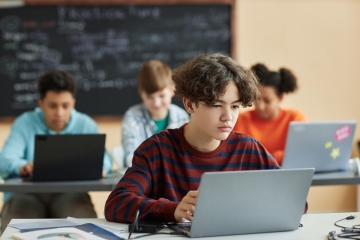
Five months after the launch of ChatGPT, Sal Kahn, the founder of the online learning giant Kahn Academy, predicted that, “We’re at the cusp of using AI for probably the biggest positive transformation that education has ever seen.” As of now, this appears to have been an aspirational proclamation made with little evidence.

In the history of education, such declarations are commonplace, and it comes as little surprise that a tech CEO sees promise in an innovative technology. For centuries, optimists—and those with vested financial interests in technological innovations—have touted the potential world-changing benefits of blackboards, erasable pencils, projectors, radio, television, cell phones, social media, computers, and plenty more. Without a doubt, technological advancements from air conditioning to the internet have transformed schools, which have in turn brought changes both positive (classrooms free from sweltering heat) and negative (screen addictions).

As an increasing number of corporations are investing in the advancement of AI, the evidence of this fluid technology on student learning has proven difficult to pin down. Will it revolutionize education as every child gets a personalized AI tutor, consequently boosting academic achievement? Or will it become a glorified machine widely used for cheating and one that minimizes thinking and thereby leads to cognitive atrophy?

A new behemoth report from the Organization for Economic Co-operation and Development (OECD) analyzing the emergence of AI in education thus far seems to suggest that it might be a bit of both. According to the OECD analysis, generative AI (i.e., the machine-learning models in widespread use, like ChatGPT, Gemini, and Claude) can support knowledge acquisition for students by facilitating learning and improving creativity. Key word: “can.” Emerging data highlighted in the report also point to several snags.

While available research suggests that access to generative AI can improve student performance—on practice problems, final exams, and essays, for example—this does not prove sustained improvements in student learning. For example, in one randomized experimental study comparing student writing with and without AI support, the ChatGPT-supported group showed greater improvements in scores on their writing, yet the return did not yield greater knowledge acquisition or transfer. Additionally, the AI-users exhibited a distinct reliance on the technology and, compared to the non-AI supported groups, “were less likely to engage in metacognitive activities,” such as self-reflection.

In other words, improved performance on AI-assisted assignments does not necessarily translate to improved understanding. Using AI for writing may have created a better final product, but it didn’t make students any better writers than if they’d completed their work without AI assistance and may have only taught them how to rely on the technology.

In another RCT, access to generative AI improved math performance during practice by 48 percent, but once those supports were removed and students took exams in a closed-book environment, students performed 17 percent worse than students who studied with just a textbook.

Outsourcing thinking to a chatbot may produce better scores on essays or exams, but only so long as students have access to it. Remove the tool and students can no longer perform at that level without the assist.

A similar dynamic plays out with simpler technologies. Little Johnny may perform better on a test with access to a calculator, but if those supports are removed and he doesn’t know his times tables, then he has not actually learned the material. In the physical domain, an athlete could lift more if assisted by robotics, but that’s no measure of their physical prowess. Worse, their muscular strength may even decrease over time, making it much more difficult to bench 200 when the robot isn’t around.

When it comes to affective capacities such as creativity, the OECD report cites a study measuring how the use of a general-purpose LLM can enhance creativity and quality of writing. The group using generative AI outperformed those going it alone—with only their brains to rely on—in terms of both creativity and writing quality. (Importantly though, the ideas of AI users were not as “funny.”)

Does this really mean AI is enhancing our creativity? Or are we just outsourcing it and receiving high marks? There’s an important distinction.

The report details an interview with Ronald Beghetto, an Arizona State University professor who specializes in using AI to support creative processes. Beghetto explains that, to use generative AI effectively, one needs “a clear goal, prior content knowledge, and a sense of what you want to build.” If AI is ineffective in transferring domain-specific knowledge, and students using it lack the content knowledge and understanding to employ it well, that renders the tool essentially useless. An intuitive first step seems to be to teach students a curriculum rich in foundational knowledge and essential skills.

The report acknowledges that “beneficial effects of a support tool depend on whether and to what extent the tool can elicit conducive interaction patterns.” Namely, researchers and educators should concern themselves with how learners use AI—the measurable effects on learning are simply not clear-cut.

The topline conclusion of the OECD authors is, “GenAI can support learning when guided by clear teaching principles,” but the details of specific studies give cause for skepticism. In short, the current research is helpful, but frankly, the effects on student learning remain a grab-bag, with results contingent on a multitude of conditions.

Despite the mixed results, there has been a rapid uptick in teacher and student usage of AI. Many districts and schools have embraced the technology. Yet, the return on this investment when it comes to genuine learning and understanding is not uniform or conclusive. Moreover, there are real tradeoffs to consider. Will discussions with AI distort children’s social skills? Will AI cultivate an overreliance on technology, extending beyond the classroom, and foster addiction-like behavioral symptoms as social media algorithms have?

Assuming students use it well (asking for feedback instead of writing a draft) still the question remains: Why not ask another knowledgeable human for feedback? Dare we suggest, a teacher? A peer? A parent? That approach has worked for a long time. At the very least, the report’s indefinite conclusions related to student learning warrant a tap on the brakes of the AI hype-train.

view
Teacher in a classroom

Why doesn’t the education system study the successful?

Holly Korbey
2.12.2026
Flypaper

It was a big January for my Hoosier family. I grew up in Bobby Knight’s Indiana, so IU’s incredible football National Championship win is a big deal in my home state.

After the Hoosiers’ historic win, in a matter of days, on podcasts and in the media, I noticed a rush from fans, players and coaches to everyday people to try to study and understand exactly what IU head football coach Curt Cignetti did to turn the program around from the failingest in football to national champions in just a couple of years. This will likely go on for some time, probably years. And here I am—little ol’ me, who has watched so little football I didn’t understand until recently why the teams were constantly hiding the ball so I couldn’t tell who had it—I have read enough to get an idea of how Cignetti thinks about success and what his loose blueprint for winning looks like. I’ve even read about the greats who influenced Cignetti, taking it back more layers.

In sports and music, there’s an ingrained culture of learning from the greats; it’s expected. And it’s also public, common knowledge. Many readers could probably rattle off the greats who Bob Dylan modeled his music after, or who Kobe Bryant studied as he rose to superstardom.

But this is largely not the culture in education. In a lot of my reporting, honestly, sometimes it feels like the opposite is true, that many are downright incurious about what great schools are doing and whether any of those practices might apply to them.

A few years ago, visiting one of the consistently top-performing schools in a nearby state, one where they were educating some of the state’s most disadvantaged children and sending them to college, I asked the school’s leader how many local leaders had visited to see what they were doing.

“Zero,” he said, shaking his head. (I hope it has changed since.)

Recently, I’ve had a similar experience talking with teachers across the country who are often one of the only educators in their buildings getting consistently blow-your-mind reading scores for their students. How many leaders from central office—heck, how many from down the hall—wanted a blueprint for what they were doing, or wanted to come investigate? Sadly for many teachers, the answer is the same: zero.

I’ve become genuinely curious about why a culture of “learning from the greats” isn’t the norm in education. Smart people who work within the system have given me clues: for some, excellence and greatness in student learning isn’t a top priority, so therefore some might be unaware of who is doing something exceptional; weak systems don’t do a good job identifying who others should look to for guidance; egos get in the way of shining a light on those who are making a big difference; and perhaps most of all, educator and author Mike Schmoker’s observation that in education the road to greatness is often obscured, sometimes on purpose.

He wrote:

The chief hindrance to such improvement is that the richest opportunities are hidden, sometimes by design. As the late Harvard professor Richard Elmore showed us, the “superstructure of schooling” conceals its gravest defects and its failure to align its practices with its hard-earned research base. To break through, educators have to stare down the gap between proven practice and common practice.

Even with the understanding that schools serve different kinds of kids, and context really matters to success (nothing works everywhere, etc.), I’m pretty baffled why there isn’t more curiosity about what great schools are doing to improve and increase learning for students. I also wonder why there isn’t more public acknowledgement about who inspired great teachers and leaders, who they studied to become great. (Can you imagine an elementary school principal making a public speech on how she closely studied the success of a fellow principal, her Uncle Kevin, for example, to learn why his students were always doing so well? And then everyone rushing to make podcasts with millions of listeners about Uncle Kevin, asking him to explain his blueprint for success?)

The entire system would benefit from public acknowledgement of who is doing great work.

I’ve spent a good deal of time writing and talking about building up student background knowledge, how that knowledge holds the keys to academic success as well as to critical and creative thinking—should we also apply that understanding to those who lead our education systems? What about their background knowledge of the greats, those who are consistently successful, and how it shapes how they think about their own?

I know that learning from greatness is always happening among teachers, leaders and schools, I just wonder whether it’s the norm, or the expectation.

A book I recently read got me thinking about this kind of systemic learning, passed down from one generation to another: Schools that Succeed: How Educators Marshal the Power of Systems for Improvement, by education reporter Karin Chenoweth. It’s a decade old, but relevant and worth reading. Chenoweth reports on schools that are doing great work, often despite considerable obstacles, and highlights what highly successful schools and systems did to improve learning for their students.

Reading it has been like learning from the greats.

For greatness at the school level, strong systems

The central question animating Chenoweth’s Schools that Succeed asks what a group of unexpected, highly successful schools did to get there. Her reporting takes her to Lakewood, California, Nassau County in Long Island, New York, Mobile, Alabama, and other places to look closely at schools with outsize graduation rates and overall academic performance compared to the usual expectations of the students they serve.

Greatness is hard to achieve in schools, Chenoweth writes. Most of the time students leave schools at basically the same level they entered—advanced students get access to advanced coursework and stay advanced, and the same for low-achieving students. Moving a student from low to high is exceedingly hard work, and each chapter examines a different school doing exactly that.

But it’s the last chapter, “Marshaling the Power of Schools,” that I keep re-reading, especially since I’ve spent the last few years writing about pretty much nothing else but the scientific evidence on teaching and learning. To Chenoweth’s eye, evidence-based practices in these schools—where leaders and teachers understood what it means to learn, and which practices get them there—along with the expectation that every child could learn, were givens. They were the starting point, necessary but not sufficient.

“Certainly, it is critically important that these schools have leaders who feel a moral imperative to do what is right for kids and who spend a good deal of time understanding the research evidence about teaching and learning,” she wrote.

But that’s not the only magic happening at a schoolwide level. As a matter of fact, walk into any one of these schools and nothing special is going to jump out at you: “They don’t look all that different from other schools.” Even when teachers were using the evidence-based practices, the work of greatness often boiled down to the systems they had in place that kept things running, and the willingness of the adults to constantly evaluate and improve the systems.

Chenoweth highlights a high school in Prince George’s County, Maryland, where there were more Black students taking AP classes and passing AP exams than any other high school in the region. Black students commonly have less access to AP courses compared to other groups (though this access has improved slightly, thankfully, in the decade since). When she asked the principal what he attributed that success to, he pointed her to the master schedule, of all things—an unsexy but very real part of making AP classes available to more students. (The master schedule was key in providing student support, too.) Leaders at that school were hand-scheduling students to make sure they had more opportunities to take advanced academics.

In another example, leaders at Elmont Memorial High School in Elmont, New York, created a “ninth grade academy” with intensive supports to help support at-risk students in the transition from middle school. But as soon as leaders stopped seeing significant results, they stopped, evaluated and changed the systems around the academy, then kept experimenting to find what worked best so as many students as possible could succeed in high school.

Interestingly, Chenoweth compares these schools’ drive to greatness to the scientific method, something they all had in common—analyzing problems, hypothesizing a solution, then measuring results and re-evaluating if necessary. Wash, rinse, repeat to constantly improve. Much like Coach Cignetti, there seemed to be no flash, just precision, metrics and the often boring, systems route to progress.

“By focusing so closely on the systems underlying their work, educators are able to develop a professional distance and look at success and failure dispassionately rather than as a personal win or loss. The ability to examine evidence dispassionately is important because education in many ways is a very personal field, and anything that helps teachers and leaders evaluate what they are doing instead of deciding how much they love a particular practice or lesson plan is important,” she wrote.

Learning from greatness: the You factor

I’m interested in this scientific method approach, of that professional distance—learning from greatness doesn’t mean only studying leaders from the past who have already done it well, but includes educators examining themselves and what they are currently doing, and using the scientific method to try things and then measure their effectiveness.

Teacher educator Patrick Burke at the Dublin City University Institute of Education told me last summer that part of preservice teacher education in Ireland includes a teacher-as-researcher role, and he considers it a key piece of Ireland’s decade-long school improvement. Measuring the success and failure of their own lessons or approaches prepares teachers to see themselves as learners themselves, he said, who can look objectively at what they’ve done, evaluate it, and improve on it.

American programs are beginning to catch on to the teachers-as-researchers model, and I’d like to do some reporting on it. If you have been a part of such a program, or are doing this work currently and would like to talk about it, drop me a line.

Editor’s note: This was first published on the author’s Substack, The Bell Ringer.

view
Balloons in a classroom

First, do no harm: The academic impacts of grade inflation on long-term outcomes

Jeff Murray
2.12.2026
Flypaper

There’s plenty of evidence that average grades, GPAs, and graduation rates have gradually been rising—and fewer kids have been failing—in recent years. What impact is this having on students? A recent University of Maryland working paper helps answer that question by examining two large groups of high school students.

The four-person research team looks at data from all high schools in the Los Angeles Unified School District (LAUSD) and from all public high schools in the state of Maryland. The LAUSD dataset covers more than 985,000 high school students between 2004 and 2013. Although it lacks demographic information, it does include annual end-of-year test scores, allowing for detailed measurement of grade inflation. The Maryland dataset, by contrast, contains far fewer end-of-course test scores—only algebra, geometry, and either ninth or tenth grade English—but includes detailed demographic information on students, as well as data on their college enrollment and labor market participation after graduation. It covers more than 1.6 million high school students between 2013 and 2023.

The researchers constructed two measures of teacher-specific grade inflation. The first is “mean grade inflation,” which uses a comparison between end-of-course test scores and class grades to determine how much a given teacher inflates the average student’s class grade. This metric includes controls for a number of student characteristics and is bias-checked against students’ past and future scores to account for as many unobservable influences on test performance as possible. The second is “passing grade inflation,” a novel measure that determines how likely a teacher is to pass a student who received an F grade in the class. That is, a binary “yes, they did” or “no, they didn’t” pass students who scored below the grading threshold for failing.

The analysis finds that the two types of grade inflation have very different impacts on students. Mean grade inflation has an overall negative effect, as it lowers future test scores, reduces the likelihood of students graduating from high school, decreases college enrollment, shrinks individuals’ earnings, and more. For example, having math and English teachers who are, on average, 1 standard deviation higher in mean grade inflation decreases student test scores in the next year by approximately 0.03 standard deviations, reduces students’ likelihood of graduating high school by 0.8 percentage points, and lowers students’ likelihood of ever taking the SAT by 0.8 percentage points. Moreover, although the negative effects are similar for students of all abilities, the grade retention and SAT-taking impacts are worse for higher-performing students.

Passing grade inflation, by contrast, conveys more positive impacts, such as reducing the likelihood of students being held back a grade, increasing the likelihood of high school graduation, and boosting initial enrollment in two-year colleges. Having math and English teachers who are, on average, 1 standard deviation higher in passing grade inflation increases students’ next-year test scores by 0.01 standard deviations and raises the likelihood of graduating high school and taking the SAT by 0.6 and 0.7 percentage points, respectively. These positive impacts are strongest for students in the bottom of the eighth of the grade GPA distribution.

The researchers don’t make any recommendations for policy or practice, but the implications of their findings are clear. Two different forms of grade inflation are occurring in Los Angeles and Maryland—via deliberate teacher actions—with a set of direct and measurable short- and long-term academic impacts on students. Mean grade inflation is, overall, detrimental to students, while passing grade inflation is somewhat more defensible. If grade inflation can be curbed, the issue is moot. But if it continues in Los Angeles or Maryland or (likely) everywhere else, then teachers, principals, and stakeholders need to be aware of those impacts and calibrate their inflationary behaviors to minimize negative consequences for students.

SOURCE: Jeffrey T. Denning, et al., “Easy A’s, Less Pay: The Long-Term Effects of Grade Inflation,” University of Maryland Working Papers (October 2025).

view
Students in a classroom

What happens when students with disabilities switch to charter schools?

Julia Hayes
2.12.2026
Flypaper

Students with disabilities make up almost 15 percent of K–12 students in the U.S. These students have long been underrepresented in charter schools, which may offer different (or fewer) special education services than traditional public schools. This underrepresentation raises questions regarding charters’ ability to serve the needs of students with disabilities.

A new study by Scott A. Imberman and Andrew Johnson examines data on Michigan K–8 students from 2013 to 2018 to assess how the identification, educational setting, services, and academic outcomes of students with disabilities (SWDs) change upon switching from a traditional public school (TPS) to a charter school. Students in Michigan benefit from a strong and diverse choice system, with almost a quarter of public school students enrolled in charter schools or a TPS through inter-district open enrollment.

To assess how the educational environment and outcomes of SWDs change upon enrollment in a charter school, the researchers use difference-in-difference models to compare students’ outcomes before and after such a shift, while also accounting for broader changes over time. This analysis employs a two-way fixed effects model, allowing comparisons with students over time and across various charter entry cohorts to help isolate the effect of attending a charter school.

Several key findings emerge. Among students who eventually enroll in a charter school, approximately 14.5 percent were identified for special education services in the year prior to entry. This rate remained largely unchanged in the first year after enrolling in a charter school. However, identification rates increased gradually by 1 to 2 percentage points two to three years after charter enrollment, with similar patterns observed across disability types.

As for educational environment, prior to attending a charter school, all SWDs spent an average of 2.3 percent of their school day in special education settings. Upon enrolling in a charter school, that percentage fell by roughly half—a significant, though temporary, reduction in time. By students’ third year of charter enrollment, time spent in special education settings returned to pre-charter entry levels.

Compared to TPS, charter schools also use less intensive and less expensive special education programs and service assignments, reflecting changes in how IEP-based services are delivered upon student enrollment. After switching to a charter school, students were more likely to participate in resource programs, in which they spend most of their day in general education classrooms and receive targeted instruction in resource rooms for a portion of the day. In contrast, programs that place students with cognitive disabilities in a separate classroom for the entire day are more intensive and costly, serving students with more significant needs. The study finds that participation in these decline after charter entry.

These patterns do not indicate whether students with more intensive needs are less likely to switch into charter schools, or whether students with similar needs receive different levels of services in charters than they would in TPS. Rather, the findings show how special education services typically change when students transition from TPS to charter schools.

Despite the reduction in intensity and cost, student academic outcomes improved for both SWDs and general education students after enrolling in charter schools. Math and reading scores improved for SWDs and general education students at a similar rate upon enrollment. By the third year after enrollment, achievement gains reached approximately 0.2 standard deviations in both subjects. Student attendance also improved, with absence rates decreasing by 3.3 percentage points in the first year after students enrolled in a charter school and continuing to improve modestly thereafter.

These results suggest that charter schools are not shortchanging SWDs, as critics often claim. Instead, when students transition from TPS to charter schools, they are more likely to receive inclusive services—without sacrificing student outcomes.

SOURCE: Scott Imberman, Andrew Johnson, “How Do Charter Schools Serve Students with Disabilities? Lessons from Michigan,” National Center for Research on Education Access and Choice (January 2026).

view

Can states build coherent early childhood systems? | Episode 1005 of The Education Gadfly Show

2.11.2026
Podcast
 

This week on The Education Gadfly Show, we’re joined by Elliot Regenstein, partner at Foresight Law + Policy and author of Readiness: Preparing State Early Childhood Systems for a Brighter Future, to talk about early childhood education and care—and why state systems are so often fragmented and hard to navigate. We discuss who makes key decisions, why coordination is so difficult, and what it would take to build more coherent early childhood systems going forward.

Then, on the Research Minute, Amber Northern shares new evidence on achievement gaps across different types of schools, showing that inequality has grown fastest in traditional public schools, while charter schools show more positive trends over time.

Recommended content:

  • Readiness: Preparing State Early Childhood Systems for a Brighter Future —Elliot Regenstein

  • The Best American School System —Tim Daly, The Education Daly

  • The Nation’s Achievement Inequality Report Card: An Assessment of Test Score and Equality Trends in Traditional Public, Charter, Catholic, and Department of Defense Schools —M. Danish Shakeel, Misty Gallo, and Patrick J. Wolf, EdWorkingPapers (2026)

Feedback Welcome: Have ideas for improving our show in 2026? We would love to hear them. Send them to [email protected]

Fordham Logo

© 2026 The Thomas B. Fordham Institute
Privacy Policy
Usage Agreement

National

P.O. Box 110
Burke, VA 22009

202.223.5452

[email protected]

Ohio

P.O. Box 82291
Columbus, OH 43202

614.223.1580

[email protected]

Sponsorship

130 West Second Street, Suite 410
Dayton, Ohio 45402

937.227.3368

[email protected]