Mobile Navigation

  • National
    • Policy
      • High Expectations
      • Quality Choices
      • Personalized Pathways
    • Research
    • Commentary
      • Gadfly Newsletter
      • Flypaper Blog
    • Events
    • Scholars Program
  • Ohio
    • Policy
      • Priorities
      • Media & Testimony
    • Research
    • Commentary
      • Ohio Education Gadfly Biweekly
      • Ohio Gadfly Daily
  • Charter Authorizing
    • Application
    • Sponsored Schools
    • Resources
  • About
    • Mission
    • Board
    • Staff
    • Career
Home
Home
Advancing Educational Excellence

Main Navigation

  • National
  • Ohio
  • Charter Authorizing
  • About

National Menu

  • Topics
    • Accountability & Testing
    • Advanced Education
    • Career & Technical Education
    • Charter Schools
    • Curriculum & Instruction
    • ESSA
    • Evidence-Based Learning
    • Facilities
    • Governance
    • Personalized Learning
    • Private School Choice
    • School Finance
    • Standards
    • Teachers & School Leaders
    • Think Again
  • Research
  • Commentary
    • Gadfly Newsletter
    • Flypaper Blog
    • Gadfly Podcast
  • Events
  • Scholars Program

The Education Gadfly Weekly

Sign Up to Receive Fordham Updates

We'll send you quality research, commentary, analysis, and news on the education issues you care about.
Thank you for signing up!
Please check your email to confirm the subscription.

The Education Gadfly Weekly: How states can meet the rising demand for school choice

Volume 20, Number 36
9.16.2020
9.16.2020

The Education Gadfly Weekly: How states can meet the rising demand for school choice

Volume 20, Number 36
view
Quality Choices

How states can meet the rising demand for school choice

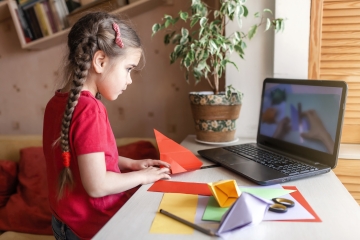
Six months into the pandemic, the nation’s forced experiment in remote learning has resumed. But our education system’s design is ill-suited to the unique quandaries posed by Covid-19. District officials continue to ask parents for grace and patience, and many have continued to oblige, but if current conditions persist into next year and beyond, demand for choice will almost certainly increase as a large number of parents keep their children at home.

Dale Chu 9.16.2020
NationalFlypaper

How states can meet the rising demand for school choice

Dale Chu
9.16.2020
Flypaper

Why state assessments matter, even in a pandemic

Aaron Churchill
9.16.2020
Flypaper

“Evasive entrepreneurs” create new K–12 school options

Bruno V. Manno
9.16.2020
Flypaper

Zoom like a champion

Robert Pondiscio
9.16.2020
Flypaper

Can “high-dosage tutors” help ensure low-performing students don’t fall behind?

Trinady Maddock
9.16.2020
Flypaper

The Education Gadfly Show: How did those online summer camps go?

9.16.2020
Podcast
view

Why state assessments matter, even in a pandemic

Aaron Churchill 9.16.2020
Flypaper
view

“Evasive entrepreneurs” create new K–12 school options

Bruno V. Manno 9.16.2020
Flypaper
view

Zoom like a champion

Robert Pondiscio 9.16.2020
Flypaper
view

Can “high-dosage tutors” help ensure low-performing students don’t fall behind?

Trinady Maddock 9.16.2020
Flypaper
view

The Education Gadfly Show: How did those online summer camps go?

Michael J. Petrilli, David Griffith, Ph.D., Amber M. Northern, Ph.D. 9.16.2020
Podcast
view

How states can meet the rising demand for school choice

Dale Chu
9.16.2020
Flypaper

Six months into the pandemic, the nation’s forced experiment in remote learning has resumed. While some places have seen improvements in the form of live instruction and greater consistency, many others are still dealing with the fallout from last spring against the backdrop of a racial divide between schools that are offering in-person instruction and those that aren’t. The problem isn’t so much a shortage of effort (though there’s plenty of that, too) as a lack of expertise among schools and districts. Simply put, our education system’s design is ill-suited to the unique quandaries posed by Covid-19.

District officials continue to ask parents for grace and patience, and many have continued to oblige, but what happens if current conditions persist into next year and beyond? It’s almost certain that the demand for choice will increase as a large number of parents keep their children at home. Talking about school choice in the way we typically do—best illustrated by the ceaseless tug-of-war on the test-based evidence for and against non-traditional models—misses the bigger and broader unanswered questions germane to today’s extraordinary circumstances: What do communities need schools to do? What kinds of choices do parents actually want? How do we ensure these choices are viable for students and families? And moving beyond “backpacks full of cash,” what are the practical implications for school choice?

To answer these questions, Rick Hess, Director of Education Policy Studies at the American Enterprise Institute, asked me to offer some pragmatic solutions that policymakers could use at a time of emergency. My report, released last week by AEI, presents eight interesting ideas—some new, some old—to consider.

1. Hybrid homeschooling

Before the pandemic, this form of educational choice wouldn’t have been contemplated in a public school setting. Coined by Michael McShane, hybrid homeschooling calls for children to split their time between homeschool and a traditional environment. This could be three days at home and two days at school or any other combination that involves spending part of the day away from a school building. The key innovation here is that hybrid homeschooling blurs the lines of what we traditionally think of as school.

2. Employer-provided early childhood education

In his treatise on expanding the conservative education agenda, Hess put forth the novel idea of making early-childhood education (ECE) proximate to employment, an approach that would be a boon to both parents and children. Rather than duct-taping it onto the existing K–12 system as called for in most ECE proposals, Hess advocates expanding employer-provided ECE, which could be achieved by reforming the tax code in ways to make it cheaper and more attractive to prospective employees.

3. Open enrollment

Interdistrict choice laws, also known as open enrollment, allow families to choose schools beyond the ones assigned to them based on their places of residence. As states face the dual threat of an enrollment crisis this fall and the unpredictability of new coronavirus outbreaks, strengthening open enrollment laws could be one of the easier ways to put students and families more in the driver’s seat.

4. An education appraisal market

Although nine in ten parents believe their child is at or above grade level in reading and math, only about a third of students perform at grade level. To bridge this disconnect, the Heritage Foundation’s Lindsey Burke believes states should create a market for an accurate and real-time assessment of student skills. Using the independent appraisal process as a model, Burke argues that parents should be given the financial flexibility to participate in an education appraisal market.

5. Education savings accounts and Covid-19 refunds

Due to the poor performance of schools last spring, Burke has provocatively suggested that parents should get some of their money back. This would be incredibly difficult to do, but there is certainly something to be said about adopting such an approach prospectively. In all but six states, this would require enabling legislation.

6. Education savings accounts and homeschoolers

Education savings accounts, as currently configured, don’t do much for homeschoolers. Many have a litany of eligibility requirements or regulations that artificially constrain the supply of potential education providers, and aren’t as useful when all schools are closed. In the coronavirus era, states should consider expanding eligibility to all students in the state to both reflect the pandemic’s impact on all families and recognize that homeschooling has become more urban, secular, and socioeconomically diverse.

7. Homeschool enrichment

Nearly half of states have requirements that allow homeschooled students to participate equally in extracurricular and interscholastic activities such as band and sports. In the other half that don’t have equal access laws, the decision to grant access to school-based opportunities is often left to individual school districts and the whims of local school boards. In either scenario, parents can count on there being plenty of strings attached in the form of regulatory and financial hurdles. If states are genuinely concerned about the welfare of students being home educated, they should do more to reduce this type of friction.

8. Pandemic pods and microschools

Skeptics worry that pandemic pods are a dark sign of deepening inequities ahead. For every person who views these microschools as the worst manifestation of privilege and opportunity hoarding, others see rational actors who cannot reasonably be expected to resign themselves to the current state of affairs when they have the means to take action on behalf of their children. States and districts should watch this development closely and might do well to consider a formal mechanism for pod creation to increase their availability and accessibility.

—

The future of school choice rests in expanding the choice palette and blurring the lines of what schooling entails. More flexibility will be required to reinvigorate the choice movement—with the convenience of students and families at the forefront.

Setting the right tone with lawmakers will be important if choice advocates are serious about advancing any of these eight ideas. To quickly get to—and keep the focus on—solutions, making any new legislation time bound (e.g., including a sunset provision) could create additional space to provide greater flexibility to families while acknowledging the need to be adaptive to future challenges after Covid-19 recedes.

American schools have recovered from other calamities—including previous pandemics. Children show remarkable resilience when their interests are placed above all else. To get the most out of this coming school year, it won’t do to shoehorn the complexities created by Covid-19 into our normal policy frameworks. Our charge will be to reach deeply into our reserves to advance the current school choice debate beyond the zero-sum stalemate toward new solutions to the challenges of this moment.

view

Why state assessments matter, even in a pandemic

Aaron Churchill
9.16.2020
Flypaper

Ohio legislators recently introduced Senate Bill 358, which proposes to cancel all state testing scheduled for spring 2021. The provision calling for the cancellation of state exams would only go into effect if the state receives an assessment waiver from the U.S. Department of Education—something that a handful of states have already requested, but that thus far the agency has signaled a reluctance to issue.

The department is right to resist such requests. Indeed, in a June report, in sharp contrast to the Ohio legislation, my Fordham colleague Chad Aldis and I argued that lawmakers should resume state assessments this year. A similar stance has been taken by Ohio Governor Mike DeWine, other education groups, and the Columbus Dispatch editorial board, a leading newspaper in the Buckeye State. This is important for at least three reasons—not only in Ohio, but in every state in the nation.

One, state assessments gauge where students stand against grade-level expectations. The pandemic may have upended our lives, but it has not changed the timeless reality that students need to master reading, writing, and arithmetic. To this end, Ohio has, for example, implemented rigorous academic standards that set forth the knowledge and skills that pupils are expected to learn by the end of each grade level. State assessments that are aligned to these standards gauge the extent to which students meet such expectations. Taking only about 1 percent of a student’s school year, these “summative” exams serve as a vital check on learning that enable parents, schools, and communities to better understand whether children are on-track academically or need extra help.

Importantly, state assessments also encourage schools to meet state standards and help guard against lowered expectations. This purpose of testing is especially crucial as schools continue to rely on remote instruction during the pandemic. Widespread concerns have been raised about student learning via this delivery method, especially among children with special needs and from low-income backgrounds. Upholding the assessment system this year would help to ensure that schools are doing everything in their power to keep all students engaged and working towards grade-level standards. Indeed, concerns about schools falling prey to the “soft bigotry of low expectations” is one reason why civil rights groups have been such outspoken advocates for assessments, including their administration this coming spring.

Two, state assessments provide an “external audit” of proficiency that complements course grades and diagnostic tests. Some have argued that course grades and diagnostic tests provide all the information that’s needed to understand pupil performance. While grades and diagnostics are very important tools, they alone cannot offer a complete picture of student achievement. Course grades typically reflect non-academic factors, such as attendance or participation, and are subject to “grade inflation,” the harmful practice of assigning grades that overstate students’ actual mastery of the course material. Perhaps reflecting such inflation, surveys find that a vast majority of parents believe their kids are on-track, even though exam data indicate far fewer students meet proficiency targets. Diagnostic exams can help educators pinpoint specific areas where students struggle, but using them as substitutes for state assessments would create immense confusion for parents and communities. Does an 80 percent proficiency rate on the NWEA MAP test mean the same thing as an 80 percent proficiency rate on the iReady exam? A testing expert may know, but those who don’t work in education will be left scratching their heads. 

State exams round out our view of student achievement. Unlike course grades, they offer an impartial, unfiltered assessment of proficiency. And unlike diagnostic tests, they provide comparable information that allows communities to see how their schools stack up against statewide averages and neighboring districts. As Americans across the country undertake the hard work of supporting children’s academic recovery, they’ll need a full toolkit of information about pupil achievement—one that includes state assessment results.

Three, baseline state assessment data is essential to tracking progress moving forward. Speaking of recovery, it will be an immense undertaking to support the thousands of students who have struggled to learn during the pandemic. It’s vital that baseline information is gathered sooner rather than later. While the cancellation of last year’s state tests was necessary, it also means that up-to-date information about achievement doesn’t exist. Another year of cancelled state tests would only compound the problem, leaving us even less informed about the academic toll of months of disruption. Communities would likely have to rely on anecdotes and assumptions about student needs—hardly the foundation for effective planning—and they’d need to wait yet another year to begin tracking progress moving forward. Another gap year in state testing would also complicate the calculation of student growth (or “value-added”), a critical measure that provides a look at school quality that isn’t tied to pupil demographics. Analysts are already raising alarms about widening achievement gaps due to the pandemic. Without reliable value-added data, we won’t be able to identify and learn from high-poverty schools that are helping low-income and minority students make progress in the midst of the pandemic.

The past year has presented a host of challenges to parents and educators. But students are no less in need of an excellent education than they were before the health crisis struck. To understand where students stand—and to offer help if necessary—parents and communities need the information yielded by state assessments. Cancelling them would be a mistake.

view

“Evasive entrepreneurs” create new K–12 school options

Bruno V. Manno
9.16.2020
Flypaper

Covid-19 is upending what parents think about America’s schools, motivating them to seek different ways to educate their children. It’s also inspiring enterprising individuals and imaginative policymakers to create new ways to support that parent demand for change. And together, though often working in uncoordinated ways, these parents, individuals, and policymakers are fostering an approach to change best characterized as “evasive entrepreneurship.”

This approach uses existing resources, especially technology, in inventive ways that work around the limits of current school systems to create and use new education services and products. These innovative methods meet the needs of today’s Covid-19 families and children, challenging existing K–12 systems to be more effective in the way it serves them.  

Parents want something different 

A July poll of public-school parents by Echelon for the National Parents Union found that two of three parents (63 percent)—regardless of income, race, and political affiliation—believe that in response to Covid-19, schools “should be focused on rethinking how we educate students.” Twenty-one percent “plan to send [their] child to a different school or homeschool...next year.” Add 19 percent who are undecided” and it’s two of five parents (40 percent) looking at alternatives. 

An early August Gallup poll of parents overall shows that satisfaction with their child’s education dropped 10 percent from last year, while the number of parents saying they will withdraw their child from public school and teach them at home as homeschoolers doubled to 10 percent.

A late August poll by Civis, a data analytics firm, found almost two in five parents changed their plans for their children’s schooling for the 2020–21 school year. Nearly three of five of those moms and dads chose an online learning program, with the balance going almost equally to either a public or private school.

Finding alternative approaches

What alternatives are parents considering? Some of them are newer innovations like family PODS, including microschools. Others are familiar—homeschooling, charter schools, and private schools—with new twists. Here’s a snapshot of what this looks like.

Parent Organized Discovery Sites—or PODS—are a newer alternative parents are pursuing, typically falling into two categories. There are those serving families who withdraw their children from school and use PODS as a new form of schooling. And there are those serving families whose children are enrolled in a school’s online learning program but supplement this program with specific PODS services.

PODS are paid for in a variety of ways. For example, families can pay directly “out of pocket” or receive them as employee benefits. Some PODS provide scholarships for low-income families. Other approaches include using state or local tax dollars or support from nonprofit and philanthropic organizations.

PODS as a new form of schooling can be seen in the emergence of microschools, which reinvent the one room schoolhouse. They usually are groupings of fifteen students or less, engaging three to six families. They might employ one teacher or alternatively, parents teach, hiring a college student or other “grown-up” to assist.

Prenda is an Arizona based network of micro schools, growing from seven students in one neighborhood in 2018 to over 200 schools. Its website traffic increased 737 percent in June compared to June 2019. 

PODS as a supplement to online learning can add services like tutoring, childcare, and afterschool programs so students socialize and pursue academics or extracurricular activities with friends. A variety of actors—governments, non-profits, parents, corporations, etc.—are starting these programs.   

San Francisco Mayor London Breed and the city’s school district are opening and financially supporting PODS in libraries and community centers. This program will serve at least 6,000 K–6 high-need students who are using the school district’s online learning curriculum. Students will be in small socially distanced groups supervised by staff from community nonprofits. 

In Columbus, Ohio the YMCA is offering PODS for students ages five to sixteen who are attending school virtually. Students can arrive as early as 6 a.m., with learning sessions starting at 8 a.m.

In Minnesota, the Minneapolis based African American Community Response Team is creating the North Star Network to establish community ZOOM learning PODS. They will supplement online learning offered by schools, providing a quiet learning space, technology, and tutors.

JPMorgan Chase offers discounts on virtual tutors and learning PODS for eligible employees that they access through its employer sponsored childcare provider, Bright Horizons. It’s also opening its fourteen childcare centers to offer employee children at no cost a place to do remote learning instruction with supervision.

Homeschooling is an established alternative to traditional public schools that has parents overseeing their child’s education. It includes home instruction, often using online curricula so parents don’t need to create their own nor do much instruction. Families frequently form small groups or cooperatives for extracurricular activities.

Homeschool filings in Nebraska are up 21 percent as of late July. In Vermont, they’ve increased about 75 percent over the same time in 2019. In North Carolina, so many parents filed notice on a government website of plans to homeschool that the website was temporality unable to accept applications.

Classical Academic Press reports that curriculum sales to homeschooling families are up by 50 percent, with enrollment in its online Academy increasing by 100 percent since Covid-19.

National Home School Association Executive Director J. Allen Weston has been inundated with calls for homeschooling information. The organization received more than 3,400 information requests on a single day in July, up from between five and twenty per day. He estimates by the end of the 2020–21 school year, homeschooling enrollment will rise from around 4 million to as many as 10 million students.

Public charter schools are another option, coming in many forms, including online learning. More families are choosing virtual charters as “brick and mortar” schools remain closed or because they’re wary of sending kids into school buildings. Oklahoma’s Epic Charter Schools is a virtual school enrolling 38,026 students. It’s the largest school system in the state, surpassing Oklahoma City and Tulsa, adding up to 1,000 students a day. Students who enroll in Epic’s online learning program have access to a $1,000 “learning fund” to use for everything from karate lessons to art classes. The school manages the money and parents must choose from approved vendors.

Meanwhile. Florida Virtual School is a tuition-free school that works with public, private, charter, and homeschool families and school districts nationwide. It has seen an increase of 64,107 course requests in its Flex program since July 1, representing an increase of 93 percent. Full-time applications have increased by 5,738, or 177 percent, over the prior year since registration opened in March.

Private schools are another familiar option. They have the flexibility to do things differently than public schools, including smaller class size and lower teacher-student ratios. Such features are attractive to parents during the pandemic. Enrollment information so far is anecdotal. Myra McGovern of the National Association of Independent Schools relates that member schools have had “an influx of inquiries about admissions.”

Emily Glickman of New York City based Abacus Guide Educational Consulting helps families enroll children in private schools. Covid-19 has produced a surge of inquiries, leading her to expand student placement options, including residential schools in Florida, Los Angeles, Seattle, and elsewhere. Her clients “…perceive that private schools are in a better position to implement safety measures, [like] putting in a new ventilation system or doing a better job distancing the students.”

Enterprises supporting parents

Websites like SchoolHouse, LearningPodsHub, and Selected for Families are helping families form PODS and assist teachers and tutors in providing services to these families.

SitterStream is a startup created at the beginning of the pandemic. It offers on-demand babysitting and tutoring to students, individually or in PODS. It has partnerships with small and large businesses who provide these services to employees, with Amazon one of their corporate clients.

Transportant, a high-tech school bus company, makes “school buses as smart as your phone.” With the onslaught of the pandemic, it began working with school districts to convert buses into rolling Wi-Fi hotspots. It now provides high speed internet services for an entire street or apartment building to students who lacked access.

iCode is a national computer science education franchise that offers onsite and virtual computer coding for young people. They now offer supervised, in-person, full-day or half-day remote online learning support at its locations to help working parents manage school closures and online schooling for their children.

New financing approaches

Today, twenty-nine states, plus the District of Columbia and Puerto Rico, offer parents many ways to use public dollars for expenses associated with enrolling children in alternatives to traditional public schools. The Covid-19 schooling crisis is an opportunity to deploy those financing options to support new forms of parent choice and wider access to extant forms. 

Arizona offers a good example, as we see with Prenda working with charter schools to provide tuition free microschools. They also accept funds from Arizona’s Education Savings Accounts program (four other states have similar programs), enabling families to use public dollars for private school costs, tutoring, online learning, and other educational expenses.

Sixteen states and the District of Columbia and Puerto Rico provide parents with twenty-nine different publicly funded scholarships—or vouchers—to pay private school tuition and fees. Another eighteen have twenty-three different full or partial tax credits giving individuals and businesses credits when donating to nonprofits that provide private school scholarships to low income families.

Individual tax credits and deductions in nine states allow parents to receive state income tax relief for educational expenses, including private school tuition, books, supplies, computers, tutors, and transportation.

Public charter school laws exist in forty-four states and the District of Columbia, Puerto Rico, and Guam. They have created more than 7,500 tuition-free schools of choice in many varieties and specialties.

During the pandemic, some states also are providing imaginative financial support for families seeking new education options for their children. For example, the federal CARES Act provides discretionary funds for governors to support innovative education programs and services, fostering creativity and enterprise in policymaking.

Oklahoma Gov. Kevin Stitt is using $30 million from the CARES Act’s Governor’s Emergency Education Relief Fund to create a $12 million “Learn Anywhere Oklahoma” program so students can access online content with a teacher; an $8 million “Bridge the Gap” digital wallet program offering $1,500 to more than 5,000 low-income families to purchase curriculum content, tutoring, and technology; and a $10 million “Stay in School” fund providing up to $6,500 to over 1,500 low income families with a pandemic-related job loss so their children remain in their current private schools.

Governors Henry McMaster of South Carolina, Chris Sununu of New Hampshire, and Ron DeSantis of Florida announced similar programs for low-income families wanting to enroll their child in a private school.

—

How much of this will “stick” beyond the pandemic? The honest answer is the obvious one: No one knows. But yes, some will stick. The Civis survey referred to at the beginning of this essay reports that eight of ten (83.3 percent) K–12 parents who disenrolled children from school say they will reenroll them in their original school once it is safe to do so. This suggests some significant number of students will return to some version of the “old normal.” So the long-term effect becomes a question of magnitude: How much will stick and what effect will that have over the long term?

It’s taken nearly forty years, more or less, going back to a Nation At Risk—or thirty years, going back to the nation’s first school choice program in Milwaukee—for us to have created our present education reform framework that allows us today to undertake many of these alternatives that parents are now pursuing.

Covid-19 has thrown K–12 schooling into disarray. But is has also catalyzed creative and determined parents, innovators, and policy leaders to respond as evasive entrepreneurs. The creativity and entrepreneurship involved is characteristically American and impressive, even if driven by urgency and exasperation. These entrepreneurs are charging ahead, not waiting for permission to create impressive innovations and alternatives to the current K–12 system so learning can continue.


view

Zoom like a champion

Robert Pondiscio
9.16.2020
Flypaper

I’ve made no secret over the years of my admiration for the work of Doug Lemov. When I was a new and clueless fifth grade teacher in 2002, his essential book, Teach Like a Champion, was unfortunately still a few years away. My first year or two of teaching would have been better—and more importantly, better for my students—if everyone in a position to educate and train...er, develop...new teachers had the instinct and insight Lemov put between covers a decade ago: There are certain things effective teachers do that makes them effective, and that by observing those competent women and men, we can identify and isolate those moves, name, practice, and master them. No one has done more than Lemov to make teaching teachable.

Just in time for a school year that is starting under a Covid-19 cloud of uncertainty, Lemov and his TLAC colleagues have pulled together a timely new book, Teaching in the Online Classroom: Surviving and Thriving in the New Normal. I’m not crazy about the title because I’m not convinced remote learning and hybrid models are anything close to a “new normal.” If a natural disaster forces you to evacuate, even for an extended period of time, your intention is to get back home—your once and future normal—as soon as possible. Until then, you do the best you can to recreate the habits and routines of your disrupted life. Gregg Vanourek’s recent Fordham report on how high performing charter networks adapted in the spring underscores that one of the big things they did was try to recreate as close to possible a normal school day and stick with familiar school routines.

Lemov and his co-author in the edited volume’s lead essay, Erica Woolway, understand this clearly. “No one asked for the world to change, but it has,” they write. “As teachers, that means there’s work to be done.” By their own admirable admission, they acknowledge “the absolute necessity of getting better at what we do now, no matter the circumstances.” The patented TLAC focus on practicality that has helped a generation of teachers achieve competence quickly is very much in evidence. “We won’t be making any Ted Talks on the seamless, frictionless, automatic teaching future waiting for us if we could just embrace technology,” Lemov and Woolway write. Amen.

On balance “the experience of learning online will likely be less productive for most students than classrooms are. It may be profoundly so for many, and in a way that impacts the most vulnerable learners most,” they observe. Covid-19 has created a “second, educational pandemic” that is best fought, they insist, by focusing on “the core of the craft.” Note the word, since it undergirds what makes Lemov’s work in this and previous books so vital: Let others natter on about how teaching is an “art” or how teachers are born not made. No, teaching is a craft. The distinction matters, as does the mindset, if we are to have any hope of making it something millions of men and women can do competently—online or in person.

The book is divided into seven brisk and readable chapters, reflecting and respecting that the clock is ticking, and that our students don’t have the luxury of allowing us to fumble our way forward through trial and error. Like Lemov’s legendary “taxonomy” of teaching techniques that gave rise to Teach Like a Champion, the new book names and describes techniques that are unique to remote learning with links to about thirty video clips to show them being used. An entire chapter, for example, is given to tactics intended to “dissolve the screen,” or heighten awareness of the back-and-forth exchanges between students and teachers that still exists, even when learning happens at a distance. “It’s not merely connecting to let kids know that we care about them (though hopefully there is plenty of that),” note chapter authors Jen Rugani and Kevin Grijalva. “It’s establishing a connection through the work so that kids feel both accountable and connected at the same time.” Another chapter takes on perhaps the most prodigious challenge of the new (not) normal: how to create and sustain a culture of attention and engagement from a distance, particularly when lessons may vary, occurring in real time or “asynchronously.”

To the degree teaching has a common language (check for understanding, cold call, ratio, wait time, etc.), it’s because Lemov made an obsessive study of effective teachers and gave it a shared vocabulary. This is something TLAC critics routinely misunderstand. It’s not “do this because Doug Lemov says so.” It’s “here’s is a technique that we see successful teachers doing time and again that you can do in your classroom.” It demystifies teaching, empowers teachers—and benefits kids.

The work of Lemov and his Teach Like a Champion team represents one of the few clear victories to emerge from the ed reform era, but it would be a mistake to associate his work exclusively with the urban-charter-school world from which it emerged. TLAC trainers are more likely these days to be working with traditional public school teachers and leaders, even international school personnel, than urban charter schools. But it’s no coincidence that so many high-performing charter schools bear Lemov’s thumbprint: high levels of teacher turnover inherent to those schools mean they can least afford to wait for teachers to hone their craft, find their voice, and feel fully in charge of their classrooms. In the fall of 2020, that impatience and urgency applies to nearly every school and teacher. It may not be possible at all to “teach like a champion” remotely. But we don’t have the time to experiment and fumble our way toward effectiveness. Lemov’s new and timely book is probably our best shot to make the best of the turbulent and unpredictable school year that’s now upon us, ready or not.

SOURCE: Doug Lemov, editor. Teaching in the Online Classroom: Surviving and Thriving in the New Normal (Jossey-Bass, 2020).

view

Can “high-dosage tutors” help ensure low-performing students don’t fall behind?

Trinady Maddock
9.16.2020
Flypaper

The pandemic has left us in a world quite different from the one before. While we’re faced with plenty of new challenges, we also have the opportunity to test out creative solutions. One such idea is offered in a report from Nicholas Munyan-Penney and Charles Barone of Education Reform Now—high-dosage tutoring.

Learning gaps between low- and high-income students have long presented issues of equity in education. And now, as the authors point out, some families are hiring tutors to supplement their children’s online curricula. While these families are certainly within their right to do so, it could essentially mean—for students in poor-quality online programs or without access to technology—that some students will get schooling this semester and some will not. To remedy this, the authors suggest that schools implement high-dosage tutoring programs for students whose education will be “most negatively impacted by closures.”

Munyan-Penney and Barone propose that high-dosage tutors—sometimes referred to as individualized tutors—will instruct a group of two to three students daily in learning areas these students may be falling behind in. Tutoring groups would be determined by diagnostic assessments, a tool proposed by the authors in a previous brief to determine each student’s academic level at the start of the school year in order to target instruction. It’s worth noting that, while many states recommended diagnostic assessments in their reopening plans, no states recommended grouping students by ability, likely to avoid accusations of tracking.

The authors point out that some challenges created by Covid-19 may be remedied with high-dosage tutoring. They submit that tutoring may be a desirable option for college graduates, for example, whose unemployment rates are currently at around 14 percent. Tutors could also ensure students receive enough instruction time, as some districts grapple with teachers union negotiations. And finally, high-dosage tutoring can be implemented in person, online, or in a hybrid model; since groups are small, social distancing measures can be observed in person, and Zoom calls with three students are certainly much easier and more effective than those with twenty.

Lastly, the authors acknowledge the biggest challenges to implementing high-dosage tutoring are cost and time. Tutors can cost $3,000 or more per student, so it’s unlikely that districts will have the funds to implement this program, especially low-income districts, for whom it’d be most relevant. Hiring and training tutors, as well as assessing students and assigning them to groups, would have been challenging even at the time this brief was released in July, and now school has already begun for most, if not all, students. But this isn’t to say that high-dosage tutoring necessarily had to be implemented at the start of the school year. It could be implemented at any time, even next semester, and for some students, that would still be better than nothing.

One-on-one or small group tutoring has been shown to produce positive learning gains in students. What is unknown is how well these programs would scale up while maintaining a level of quality high enough to justify their cost. But while logistical issues would certainly arise, the implementation of high-dosage tutoring may be the creative solution for unprecedented times that schools need right now. And considering U.S. Secretary of Education Betsy DeVos’s announcement that federal testing will commence as usual this year, it’s even more important that schools find ways to support students who are falling behind—many of whom haven’t had any schooling since March. There’s been an array of proposed ideas such as this one to mitigate learning losses in students—and now it’s up to districts to take action.

SOURCE: Nicholas Munyan-Penney and Charles Barone, “Covid-19 Response: High Dosage Tutoring to Accelerate Student Learning,” Education Reform Now (July 2020).

view

The Education Gadfly Show: How did those online summer camps go?

9.16.2020
Podcast

On this week’s podcast, Timothy Daly, co-founder and CEO of EdNavigator, joins Mike Petrilli and David Griffith to discuss Camp Kinda, a free online summer resource that was designed to keep students engaged and curious while they were stuck at home. On the Research Minute, Amber Northern examines the different effects Republican and Democratic legislatures have on education finance and outcomes.

Amber's Research Minute

Mark J. Chin and Lena Shi, “The Impact of Political Party Control on Education Finance and Outcomes: Evidence from U.S. States,” retrieved from Annenberg Institute at Brown University (August 2020).  

The Education Gadfly Show is available on Google Podcasts, Libsyn, Spotify, iHeartRadio, Apple Podcasts, TuneIn, The Podcast App, PodBean, Podbay, Chartable, Castbox, and myTuner Radio.

Fordham Logo

© 2026 The Thomas B. Fordham Institute
Privacy Policy
Usage Agreement

National

P.O. Box 110
Burke, VA 22009

202.223.5452

[email protected]

Ohio

P.O. Box 82291
Columbus, OH 43202

614.223.1580

[email protected]

Sponsorship

130 West Second Street, Suite 410
Dayton, Ohio 45402

937.227.3368

[email protected]