Mobile Navigation

  • National
    • Policy
      • High Expectations
      • Quality Choices
      • Personalized Pathways
    • Research
    • Commentary
      • Gadfly Newsletter
      • Flypaper Blog
    • Events
    • Scholars Program
  • Ohio
    • Policy
      • Priorities
      • Media & Testimony
    • Research
    • Commentary
      • Ohio Education Gadfly Biweekly
      • Ohio Gadfly Daily
  • Charter Authorizing
    • Application
    • Sponsored Schools
    • Resources
  • About
    • Mission
    • Board
    • Staff
    • Career
Home
Home
Advancing Educational Excellence

Main Navigation

  • National
  • Ohio
  • Charter Authorizing
  • About

National Menu

  • Topics
    • Accountability & Testing
    • Advanced Education
    • Career & Technical Education
    • Charter Schools
    • Curriculum & Instruction
    • ESSA
    • Evidence-Based Learning
    • Facilities
    • Governance
    • Personalized Learning
    • Private School Choice
    • School Finance
    • Standards
    • Teachers & School Leaders
    • Think Again
  • Research
  • Commentary
    • Gadfly Newsletter
    • Flypaper Blog
    • Gadfly Podcast
  • Events
  • Scholars Program

The Education Gadfly Weekly

Sign Up to Receive Fordham Updates

We'll send you quality research, commentary, analysis, and news on the education issues you care about.
Thank you for signing up!
Please check your email to confirm the subscription.

The Education Gadfly Weekly: Charter schools complicate the narrative on Covid shutdowns and learning loss

Volume 22, Number 44
10.27.2022
10.27.2022

The Education Gadfly Weekly: Charter schools complicate the narrative on Covid shutdowns and learning loss

Volume 22, Number 44
view
Quality Choices

Charter schools complicate the narrative on Covid shutdowns and learning loss

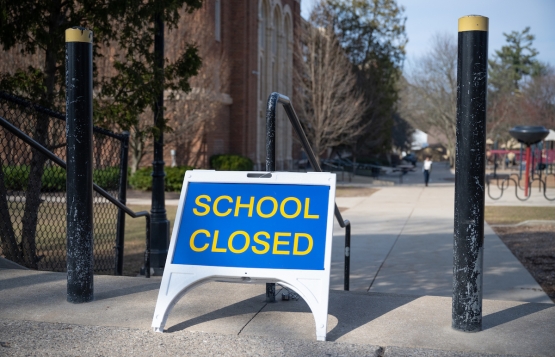
This week’s news of sharp declines on the National Assessment of Educational Progress gave partisans yet another chance to relitigate the debate over keeping schools closed for in-person learning for much or all of the 2020–21 school year. We conservatives are eager to identify the teachers unions as the primary culprits, and we’re not wrong. But there is one complication we should acknowledge: the curious case of urban charter schools.

Michael J. Petrilli 10.27.2022
NationalFlypaper

Charter schools complicate the narrative on Covid shutdowns and learning loss

Michael J. Petrilli
10.27.2022
Flypaper

Treating my NAEP hangover

Chester E. Finn, Jr.
10.27.2022
Flypaper

High-achieving middle schoolers have suffered devastating math losses, finds NAEP

Brandon L. Wright
10.25.2022
Flypaper

Determining the factors that lead to kindergarten ability group placement

Amber M. Northern, Ph.D.
10.27.2022
Flypaper

Education Gadfly Show #843: Halloween a week early with NAEP results in

10.25.2022
Podcast

Cheers and Jeers: October 27, 2022

The Education Gadfly
10.27.2022
Flypaper

What we're reading this week: October 27, 2022

The Education Gadfly
10.27.2022
Flypaper
view

Treating my NAEP hangover

Chester E. Finn, Jr. 10.27.2022
Flypaper
view

High-achieving middle schoolers have suffered devastating math losses, finds NAEP

Brandon L. Wright 10.25.2022
Flypaper
view

Determining the factors that lead to kindergarten ability group placement

Amber M. Northern, Ph.D. 10.27.2022
Flypaper
view
iStock/Getty Images Plus/Ridofranz

Education Gadfly Show #843: Halloween a week early with NAEP results in

Michael J. Petrilli, David Griffith, Ph.D., Chester E. Finn, Jr., Amber M. Northern, Ph.D. 10.25.2022
Podcast
view

Cheers and Jeers: October 27, 2022

The Education Gadfly 10.27.2022
Flypaper
view

What we're reading this week: October 27, 2022

The Education Gadfly 10.27.2022
Flypaper
view

Charter schools complicate the narrative on Covid shutdowns and learning loss

Michael J. Petrilli
10.27.2022
Flypaper

This week’s news of sharp declines on the National Assessment of Educational Progress (NAEP) gave partisans yet another chance to relitigate the debate over keeping schools closed for in-person learning for much or all of the 2020–21 school year. Conservatives (myself included) have been eager to identify the teachers unions as the primary culprits.

And we’re not wrong. Many union leaders behaved despicably during the late summer and early fall of 2020, appearing more interested in spiting President Trump’s and Secretary DeVos’s calls to reopen schools than in finding constructive ways to launch safely. Shame especially fits those union leaders who attacked reopening advocates as racists or murderers—even as progressive leaders in so many other countries were reopening their schools enthusiastically and with little ill effect.

It’s also true that in places where teacher unions are the strongest—mostly the bluest states and districts—schools remained shuttered the longest, generally not reopening for in-person instruction until vaccines were available for teachers in spring 2021, and in some cases not even until the following fall.

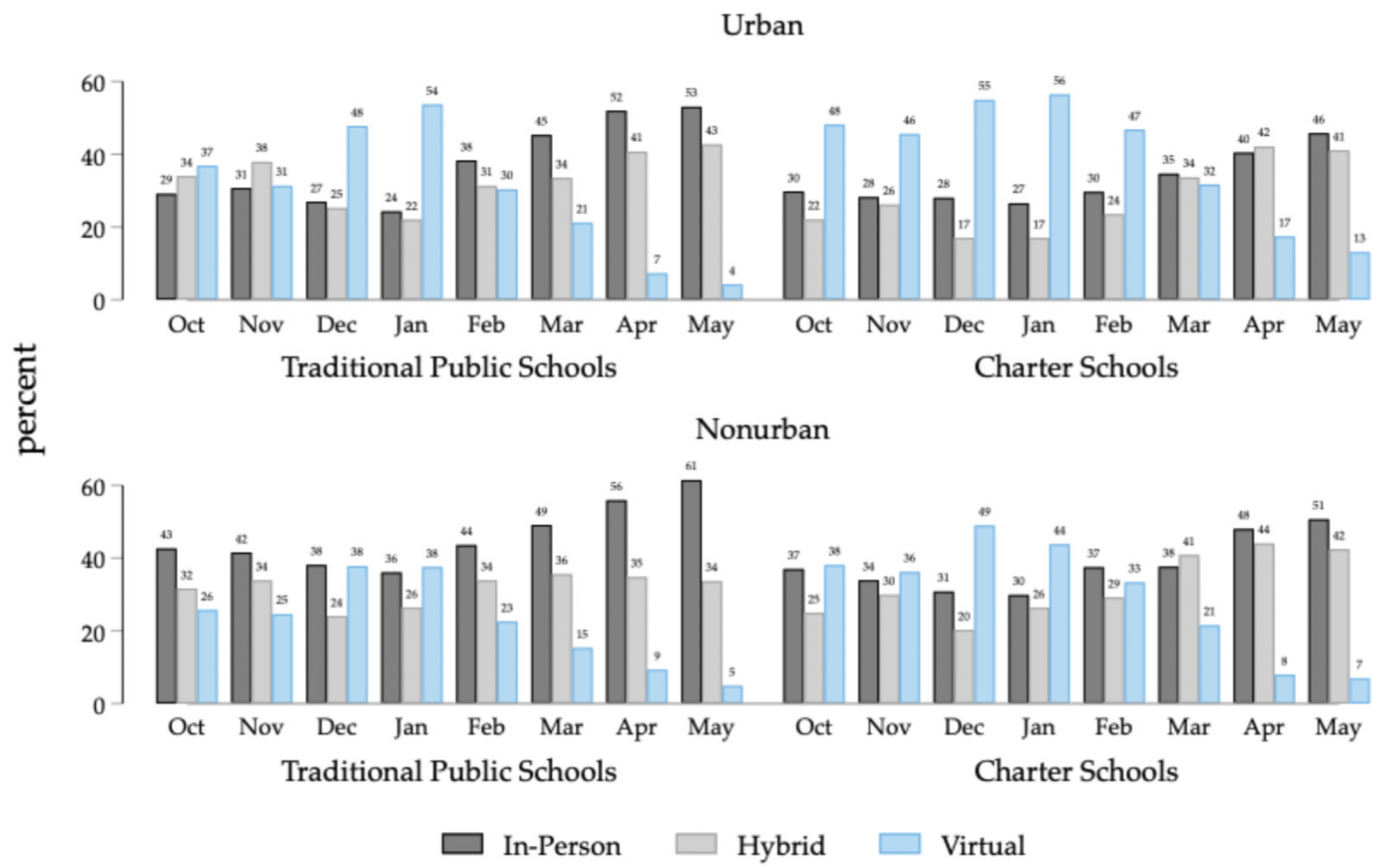
But there is one complication to the blame-the-unions narrative that we conservatives should acknowledge: the curious case of urban charter schools. These schools, which boasted a decades-long track record of improving student achievement and other outcomes in the pre-Covid era, were actually more likely to remain completely virtual during the first half of 2020–21 than their urban district counterparts. That was the conclusion of an analysis by Sarah Cohodes and Christine Pitts for the Center on Reinventing Public Education that was published this past January, and which includes this figure:

1

We already know from rigorous studies from the American Institutes for Research, Dartmouth College, Harvard, and NWEA that schools that stayed closed for in-person learning the longest saw their students fall furthest behind. So we should not be surprised that NAEP brought bad news for all public schools, including charter schools. Indeed, declines for charters were just as bad, and in some cases worse, than those for traditional public schools.

Which raises the question: Why did so many charter schools stayed closed for in-person learning for so long? Nine in ten charter schools don’t have teachers unions, so union leaders can’t fairly be blamed for their decisions. What could?

After talking to others in the charter sector, including school leaders, I have several hypotheses. The strongest is simply that these are schools of choice, and many charter parents were afraid to send their children back to school before vaccines were widely available. Keep in mind that charters disproportionately serve large numbers of Black and Hispanic parents, most of them low-income and working class. And as we all know, tragically, these are the very communities that were hit hardest by Covid, especially in the early months of the pandemic. There was no point in charter schools reopening for in-person instruction only to have few parents send their kids to class, or for families to transfer their students to district schools (which remained closed) so that they could remain at home trying to learn online.

(Private schools faced different realities: strong incentives to reopen as soon as possible, given how hard it would be to persuade parents to make hefty tuition payments for remote instruction. It’s not surprising, then, that Catholic schools did relatively well on NAEP from 2019 through 2022.)

Another factor that likely nudged many urban charters to remain all-virtual for so long was local politics. Located as they are in deep blue parts of the country, charters operated under strict public health guidance coming from officials who tended to be much more cautious about reopening all manner of institutions than those in purple or red communities. For example, in Columbus, Ohio, home to a handful of charter schools that we at Fordham authorize, the city health commissioner was urging all schools not to reopen for in-person instruction in the fall of 2020, even as the health department in suburban Franklin County was laxer. School reopening patterns largely followed suit.

Finally, even if their schools were not unionized, charter leaders had to worry about maintaining the trust of their teachers. Often operating in difficult budgetary circumstances, and already unable to afford to pay their teachers as much as nearby districts, making teachers return to in-person instruction when all the schools around them were still closed was risky.

Those are my hypotheses, though I understand that some readers may consider them to be excuses. And yes, the understanding I’m showing toward charter leaders and the tough decisions they made should be extended to educators in the traditional public schools, as well. Nothing about the pandemic was easy, and making the case to reopen schools when vaccines were not yet available was an enormous leadership challenge, regardless of sector.

But by now, we should all acknowledge the evidence that keeping schools closed for so long was damaging to students in so many ways. Not only did it result in massive learning loss, as well as social and emotional challenges for many children, it also kept many parents from returning to work, and does not appear to have helped much in terms of reducing the spread or deadliness of Covid. We may not have been able to force nervous parents to send their babies to school, but we could have ensured that in-person schooling was at least available for those who wanted it, and we could have tried harder to convince families that school was a safe place to be.

The best act of contrition is for us to ensure that the Covid generation now gets everything it needs to be made whole: the extra resources and instructional time to make up for learning loss, and the social and emotional support to get back to full health, physically and emotionally. That still is not enough, but it is the least we can do.

view

Treating my NAEP hangover

Chester E. Finn, Jr.
10.27.2022
Flypaper

Monday was insane, with everyone and his grandmother (and her pet dog) attempting to make insightful, quotable comments on the avalanche of new data from the Nation’s Report Card. Some of it was indeed insightful, but much was simply self-promoting, as were many attempts to position oneself in advance as an expert to be taken seriously.

(This cake was taken by eight Michigan State professors who jointly announced on Friday that they’d be “available to comment” and previewed what they might say.)

Speaking as a fully-credentialed, deeply-respected, and widely-published world authority on NAEP myself, of course I have comments of my own on what the data show. But it’s more important to flag some big-picture items.

First, it’s probably unwise for state and local results to come out two weeks before a contentious election. Pre-pandemic, the Congressionally-mandated two-year cycle for fourth and eighth grade reading and math results hit in odd-numbered years. But because NCES felt it could not safely and reliably administer the NAEP tests in spring 2021, they delayed a year, pushing the assessment itself into spring 2022 and assessment results to October. While the three-year gap turned out to be well-timed for purposes of before-and-after Covid calculations, landing in even-numbered years has (obviously) led to a frantic effort to associate a state’s or city’s NAEP results with the policies and actions (or inactions) of incumbent governors and mayors.

On this cycle, the next big NAEP release containing state and local achievement data and trend lines will fall just before the 2024 election, when eleven states will have gubernatorial races, not to mention nationwide results that are bound to be argued over as evidence of what the Biden administration and/or Congress did or didn’t do.

We tend to forget how little direct influence governors and mayors—and presidents and members of Congress—have on what schools do and what kids learn (or not), although it’s not crazy to point to the influence they and their subordinates had in many places on school closures during Covid. Generally speaking, however, the country will not benefit from having its NAEP results—which are seriously meant to be objective, non-partisan, and apolitical—associated in any way with who is running for what. Or, for that matter, with who might be impeached for what. The National Assessment Governing Board should seek Congressional approval for another three-year cycle that puts NAEP back into an odd-year pattern.

Second, please notice the NAEP dog that didn’t bark on Monday: the twelfth grade. That’s because when lawmakers mandated NAEP to deliver state-level results in reading and math, they specified only grades four and eight. The fact is that (mandated or not) there is no subject for which NAEP delivers end-of-high-school data at the state (or local) level.

This is nuts. The end of high school is when state leaders should most want to know how their K–12 students are performing in core subjects. Maybe not reading, but surely math, science, history, and civics! That’s when kids are turning into adults, heading for college, emerging into the world of work. What do they know? What can they do? Who’s not making it? Must we forever settle for SAT and ACT scores, even as those tests fade and mindful that they were never intended for anything except gauging college readiness, often in a self-selected population?

Where’s the clamor for the Nation’s Report Card to tell us how our kids are doing at the conclusion of their compulsory education?

Third, can we please remind ourselves that NAEP results cannot explain why trends go up, down, or sideways? Summative assessments, whether taken by everyone or (in NAEP’s case) taken by a carefully selected sample of everyone, don’t deal with causation. At most, they can be correlated with other data and developments in the world around the kids who sat for them. We can reasonably infer that a key reason for the widespread declines that were reported on Monday is that so many schools were closed for so long because of the pandemic, yet NAEP data themselves cannot prove that that’s the cause. (It could be famine, hurricanes, divorces, curricular changes, absenteeism, measles.) To claim that NAEP results show the effects of such-and-such—e.g., teachers union leaders pressing to keep schools closed—is a form of “misNAEPery.” What we can safely say—and to me it’s pretty damning—is that union leaders wanted schools closed, school did close, and scores fell, all during the same period.

What’s more, because NAEP samples cohorts of students and yields no results for individuals, it doesn’t show whether Johnny, Michael, or Mary learned more or less between test administrations. It only shows that Missouri’s fourth graders, say, in 2022 were less proficient in reading and math than were that state’s fourth graders in 2019. For purposes of tracking actual gains and growth or stasis or losses in real kids, state assessments are more valuable because they yield year-to-year data on individual test-takers (and individual schools).

So where do we go from here? Everyone says we need to bestir ourselves to help kids “catch up” or risk a “lost generation.” Jeb Bush outlined a promising battle plan in the Wall Street Journal on Monday.

But are those who run our schools and school systems up to the challenge? Tuesday’s Washington Post featured two morning-after-NAEP revelations that point in opposite directions.

The “metro” section abounds with vows and plans by state and local leaders in D.C., Maryland, and Virginia to make “heavy investments to improve students’ performance.” Big numbers are tossed around for tutoring, summer programs, and such, with promises to deploy (in Maryland state superintendent Mohammed Choudhury’s words) solutions that “must be innovative, collaborative, and bold.”

Back on page one, however, the Post’s national team reveals that “despite having access to the dollars, school systems throughout the country reported spending less than 15 percent of the federal funding...the most recent installment of Elementary and Secondary School Emergency Relief, during the 2021–22 school year.” Half of the districts with students who were furthest behind spent less than 5 percent of available federal recovery dollars.

Put that in your pipe and try to avoid an explosion. Scores plummeted even as tens of billions meant to pay for recovery went unspent.

Achievement is challenging, and spending alone doesn’t change outcomes. What wasn’t happening in many places over the past two years was intensive tutoring, compulsory summer school, Saturday catch-up sessions, extending days, talking kids into repeating grades, and most of the rest of the Jeb Bush plan. Doing such things means changing an entrenched, calcified system that almost never does things that are “innovative, collaborative, and bold.”

Talking about change is easy. Getting the K–12 dinosaur to do anything different may be impossible.

view

High-achieving middle schoolers have suffered devastating math losses, finds NAEP

Brandon L. Wright
10.25.2022
Flypaper

Editor’s note: This is an edition of “Advance,” a newsletter from the Thomas B. Fordham Institute written by Brandon Wright, our Editorial Director, and published every other week. Its purpose is to monitor the progress of gifted education in America, including legal and legislative developments, policy and leadership changes, emerging research, grassroots efforts, and more. You can subscribe on the Fordham Institute website and the newsletter’s Substack.

This week, the U.S. Department of Education released results for the 2022 Nation’s Report Card—the most extensive assessment yet of how American students fared during the pandemic, and what my colleague Checker Finn has fittingly called “the little-known test that matters the most.” Building on other NAEP data for nine-year-olds released earlier this year, this latest batch gives us new reading and math scores for fourth and eighth graders across the country, as well as for each state and twenty-six large urban school districts.

The results are dismal, with significant drops nationwide and in almost every state and school system—and in both subjects and both grade levels. Math scores saw the steepest declines, no doubt because learning math depends more on classroom instruction than reading, which students learn and practice outside of school, too.

This is terrible news for our young people and our country, as many analysts have already explained in all sorts of outlets this week. The losses will take years and years to recover, if they ever do. This newsletter, however, focuses on advanced education—that is, how we’re doing as a country with kids who reach the high end of the achievement spectrum. In that regard, NAEP yields two kinds of informative results: the percentage of test-takers who reach its “Advanced” level, as set by the test’s governing board, and the composite scale score for those who reach the 90th percentile.

Looking closely at those metrics, the new data look a bit different for high achievers than for American K–12 students in general.

That doesn’t mean the news is good, but at the high end of the spectrum, in most places, it’s not particularly bad. In fourth grade math, and in fourth and eighth grade reading, scores remained flat or dropped to levels they were hovering around before Covid struck. These plateaus and smaller drops are—to be sure—bad things, but after years of pandemic-caused partial schooling, they seem both better than one would expect and remediable.

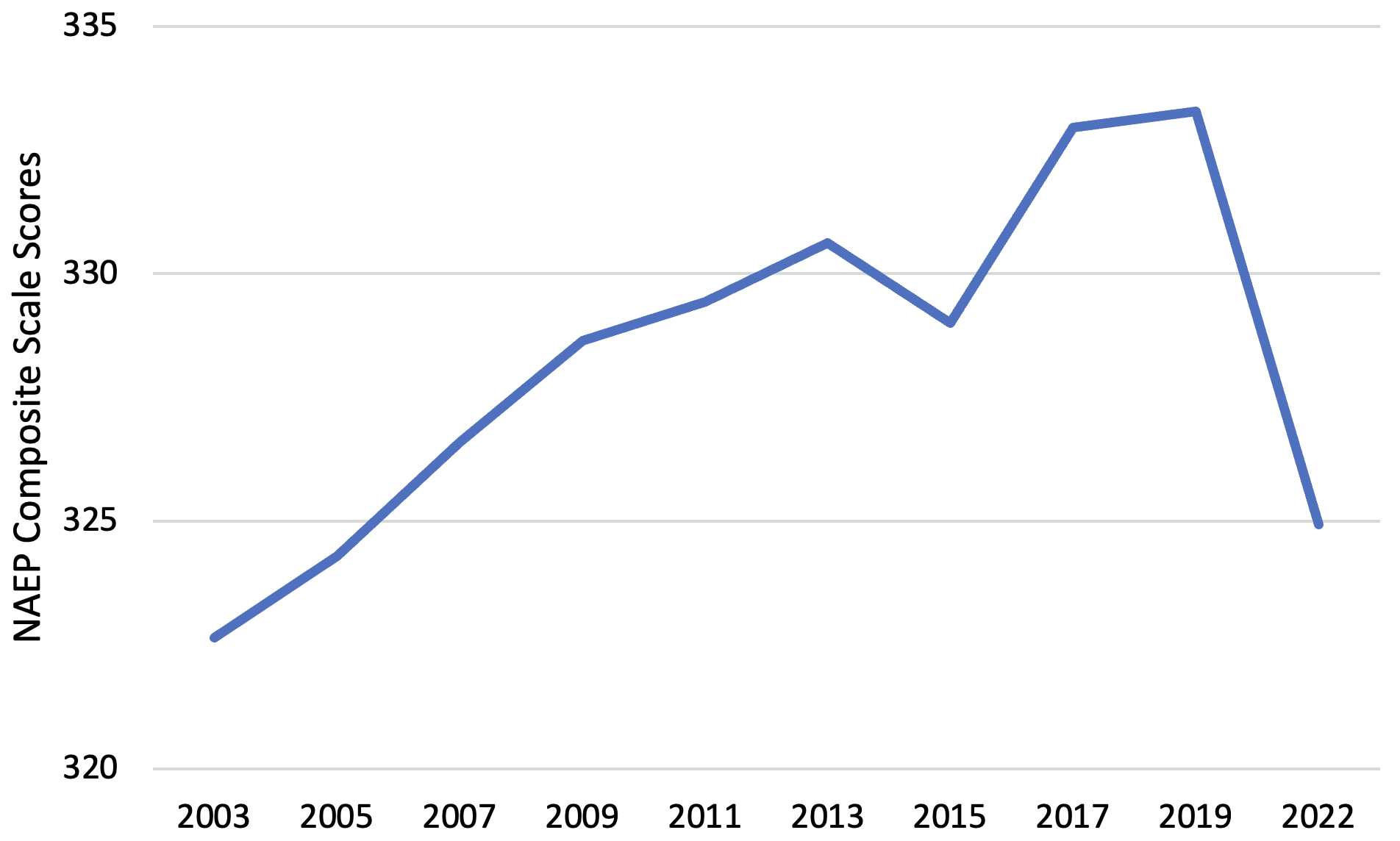
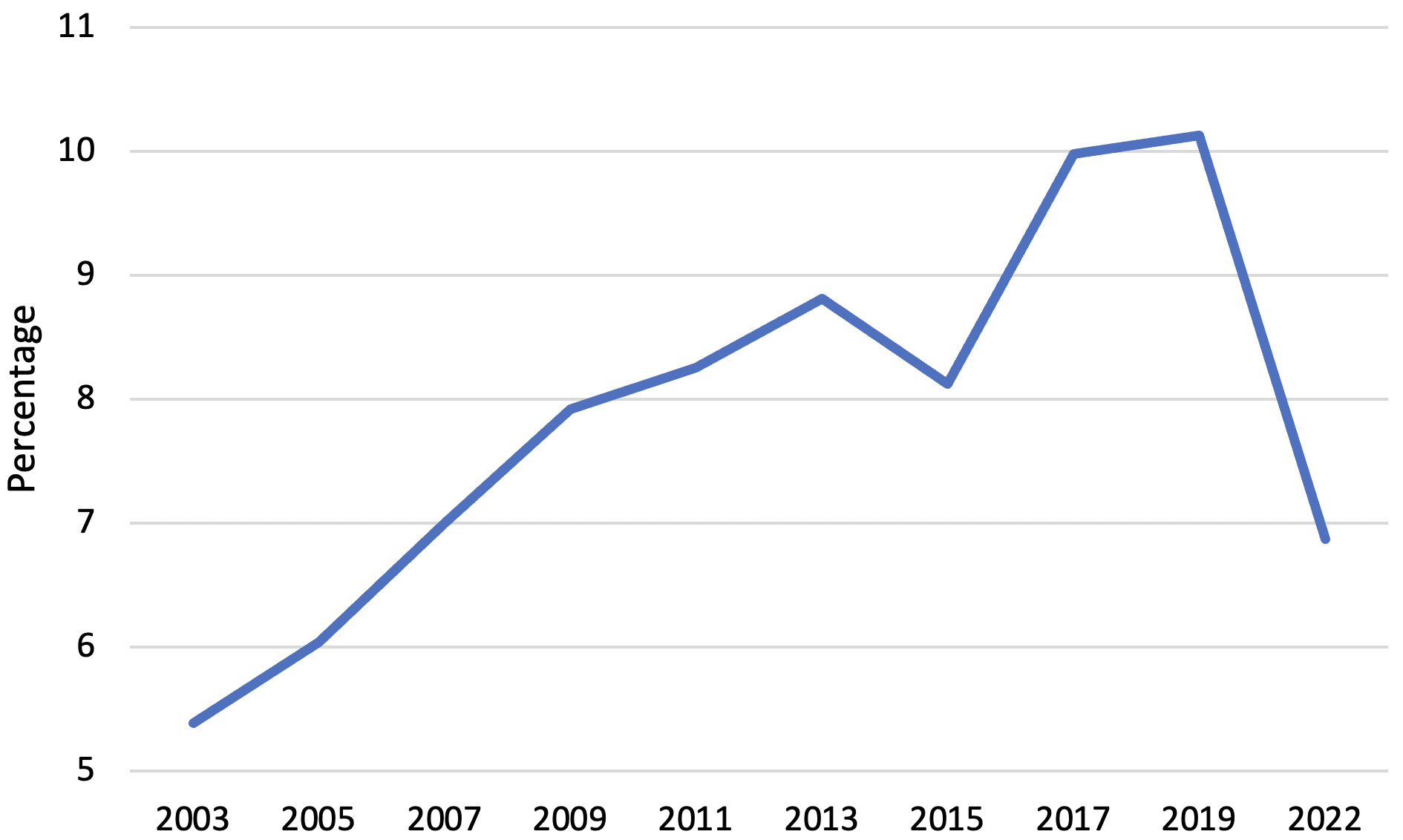
Eighth grade math, however, looks like the aftermath of Hurricane Ian. Almost two decades of progress have been lost. The 90th percentile plummeted to a score not seen since 2005, and the percentage of test-takers at NAEP “Advanced” fell to its 2007 level. (See figures 1 and 2.)

Figure 1. NAEP 90th percentile composite scale score, eighth grade math, 2003–22
1

Figure 2. Percentage of test-takers at NAEP’s “Advanced” level, eighth grade math, 2003–22
2

The figures speak for themselves, but note how progress, barring a small drop in 2015, has been swift and consistent for decades—and how pandemic-related school closures and other challenges wiped almost all of that away in one fell swoop.

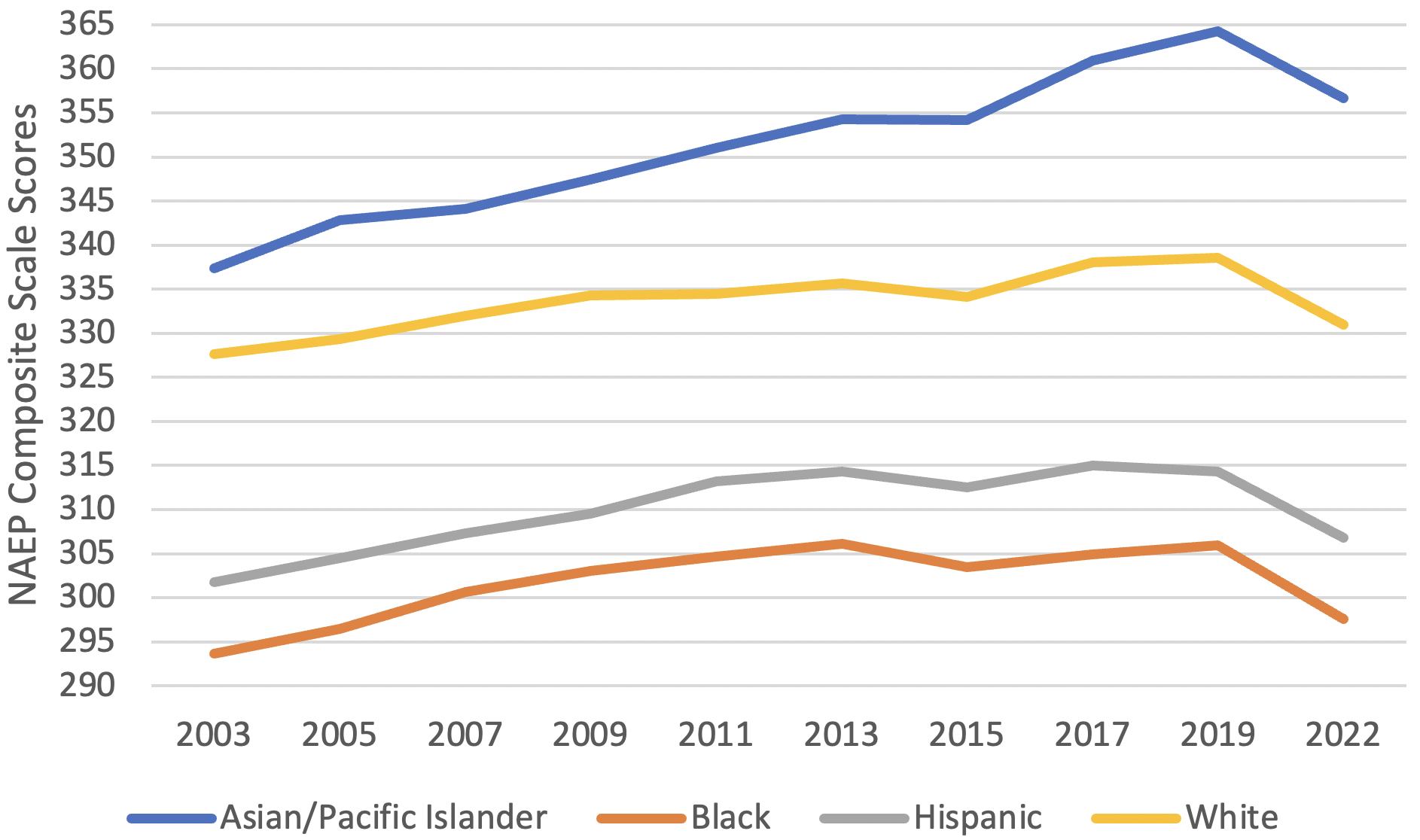
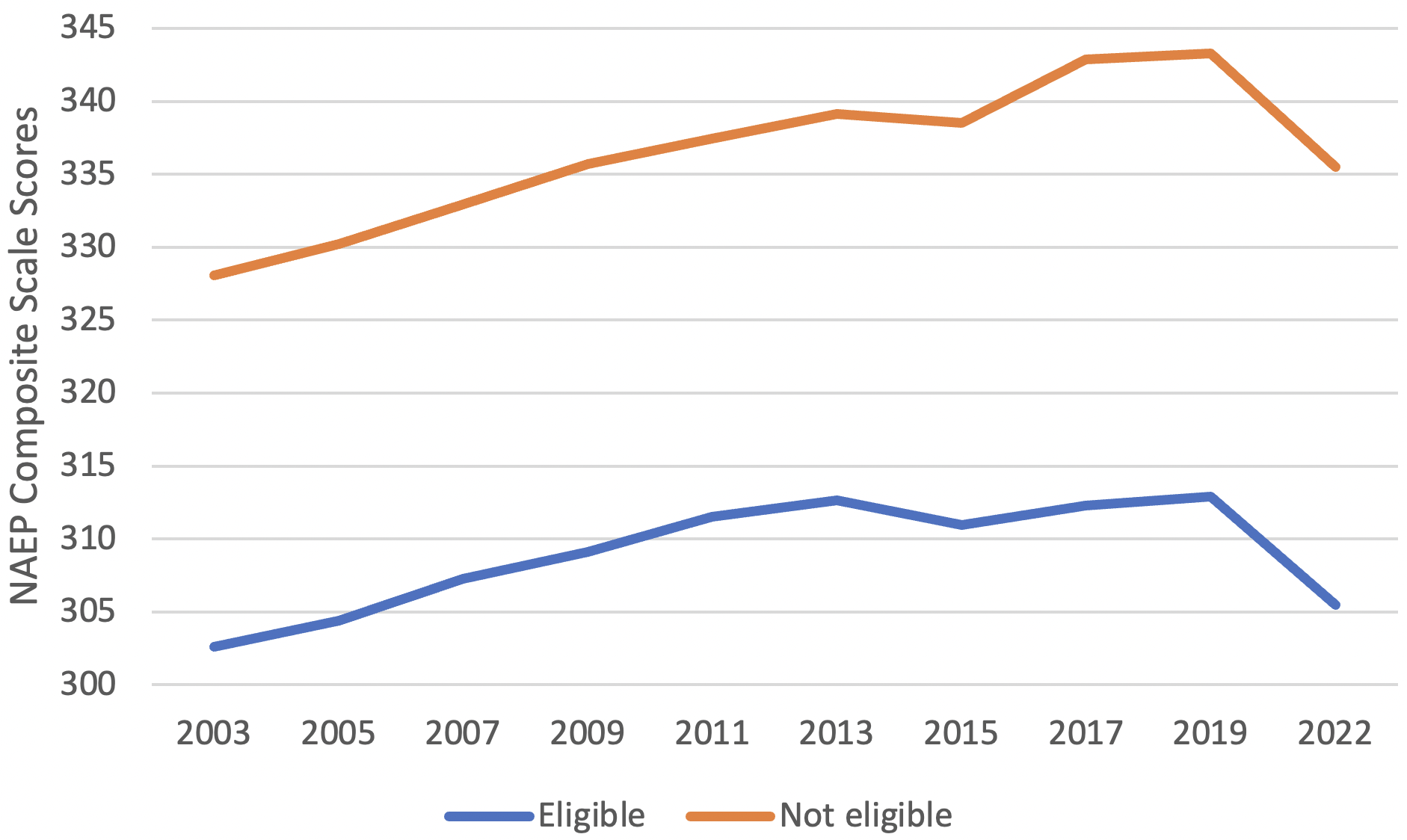
Moreover, these drops were suffered by all racial and ethnic groups, as well as students eligible and not eligible for free and reduced-price lunch. (See figures 3 and 4.) For marginalized eight graders especially, these drops represent something truly alarming. It’s terrible news, for example, that our highest-achieving Black and Hispanic middle schoolers saw dramatic declines in math. Because of this, just 8 percent of Black students are now at NAEP’s “Proficient” level in 8th grade math, and 1 additional percent are at “Advanced.” In other words, most of the highest-achieving Black students in the country—the talented tenth, as W.E.B. Du Bois would have called them—haven’t reached NAEP’s top level, and one in ten aren’t yet to “Proficient.”

Figure 3. NAEP 90th percentile composite scale score, eighth grade math, by race and ethnicity, 2003–22
3

Figure 4. NAEP 90th percentile composite scale score, eighth grade math, by eligibility for free and reduced-price lunch, 2003–22
4

The magnitude of the NAEP declines for students in general is going to get a lot of attention. And that attention is, in many places, likely to be of the triage variety, wherein school systems will be tempted to focus almost exclusively on the worst-off students, and to dismiss losses at the high end of the achievement spectrum. And although those at the bottom end absolutely deserve heaps of extra support now and in the coming years, leaders ought to avoid the mistake of assuming that higher achievers will be fine without help of their own.

That’s because considerable research suggests that “math skills better predict future earners and other economic outcomes than other skills learned in high school,” and as the Wall Street Journal reported this week, “math proficiency in eighth grade is one of the most significant predictors of success in high school.” This suggests that the huge drops shown on the Nation’s Report Card over just the past three years could reverberate through the rest of these students' lives, and our country’s future.

This is a problem for at least two reasons. The first is obvious: All students deserve educational experiences that help them reach their full potential, and the experience of these students has fallen well short of that. This is especially true for those who are Black, Hispanic, low-income, and come from other underserved backgrounds. They often depend more on the school system to cultivate their potential and accelerate their performance than their more advantaged peers. And they stand to be most harmed by these massive math losses.

The second argument is that the country needs its high-achieving children to be well educated to ensure its long-term competitiveness, security, and innovation. They’re the young people most apt to become tomorrow’s leaders, scientists, and inventors, and to solve our current and future critical challenges. Indeed, economists don’t agree on much, but almost all concur that a nation’s economic vitality depends heavily on the quality and productivity of its human capital and its capacity for innovation. While the cognitive skills of all citizens are important, that’s especially the case for high achievers. Using international test data, for example, economists Eric Hanushek and Ludger Woessmann estimate that a “10 percentage point increase in the share of top-performing students” within a country “is associated with 1.3 percentage points higher annual growth” of that country’s economy, as measured in per-capita GDP.

One solution, then, is to ensure that, going forward, these children get the services they need to recover from these pandemic-related losses and thrive in high school and beyond. And due to their high achievement, ability, or potential, these students will require something more than can be provided in the average classroom geared toward the average student. Schools should therefore offer distinctive and high-quality advanced programs and services for those who would benefit from them. Where these already exist, don’t cut them; support and maintain them. And where they don’t exist, add them. The future of millions of students, as well as the future of our nation, may depend on it.

—

QUOTE OF NOTE

“Said a former gifted-and-talented student, placed at a large district middle school by lottery, ‘I feel like I’m ready to run a marathon, but my teachers will only let me walk.’”

—“Restore admissions screens for preteens,” New York Daily News, Casey Cohn, October 25, 2022

—

THREE RECENT STUDIES TO STUDY

“Equitable Identification of Gifted Students With the Relationship of Religiosity and Ethical Sensitivity Level of Teachers,” by Hyeseong Lee, Martha A. Wilkins, and Ann O’Brien, Gifted Education International, OnlineFirst, October 17, 2022

“As teachers are the gatekeepers in identification procedure, it is crucial to understand how teachers’ openness and beliefs may affect the equitable identification. To be specific, we focused on how teachers’ level of religious beliefs and ethical sensitivity impact notions of fairness in the identification of gifted students, particularly those from traditionally underrepresented groups. Study participants were 46 teachers who attended a Midwestern Catholic University in the U.S. Based on the results measuring teachers’ religiosity, ethical sensitivity, and equitable identification index from vignettes, we found that there were no statistically significant score differences of religiosity and ethics level of teachers when they were divided into two groups, one showing equitable identification versus the other comparatively not...”

“A Renewed Call for Disaggregation of Racial and Ethnic Data: Advancing Scientific Rigor and Equity in Gifted and Talented Education Research,” by Glorry Yeung and Rachel U. Mun, Journal for the Education of the Gifted, Volume 45, Issue 4

“Researchers in gifted and talented education (GATE) have increasingly taken on the role of advocating equity and access for minoritized populations. However, subgroups of racially and ethnically diverse students are rarely disaggregated from monolithic racial and ethnic categories. Studies on academic achievement of Asian American and White students, based on aggregated data, risk straying from scientific rigor and may lead to conclusions that further contribute to the masking of inequities and disparities of nested subgroups... We contend that fair and equitable access should be afforded to all students and call for the normalization of racial/ethnic data disaggregation in GATE research to increase scientific rigor in our scholarship and unmask intra-ethnic inequities.”

“Validity Evidence of The HOPE Scale in Korea: Identifying Gifted Students From Low-Income and Multicultural Families,” by Hyeseong Lee, Marcia Gentry, and Yukiko Maeda, Gifted Child Quarterly, Volume 66, Issue 1, 2022

“The underrepresentation of students from low-income families and of culturally diverse students is a longstanding and pervasive problem in the field of gifted education. Teachers play an important role in equitably identifying and serving students in gifted education; therefore, the Having Opportunities Promotes Excellence (HOPE) Scale was used in this study with a sample of Korean elementary school teachers (n = 55) and their students (n = 1,157). Confirmatory factor analysis and multigroup confirmatory factor analysis results suggested the HOPE Scale shows equivalence of model form, factor loading, and factor variances across different income and ethnic groups...”

—

WRITING WORTH READING

“Restore admissions screens for preteens,” New York Daily News, Casey Cohn, October 25, 2022

“Massachusetts lacks the talent needed to support its economy. Education could fix that.” Boston Globe, Kara Miller, October 25, 2022

“Bring back selective admissions? some N.Y.C. middle schools say no,” New York Times, Troy Closson, October 24, 2022

“Why universal screening is a more equitable identifier of gifted and talented students,” eSchool News, Anna Houseman, October 24, 2022

“A Brooklyn school's students fought to add AP African American Studies to their curriculum,” NBC News, Janelle Griffith, October 23, 2022

“How high achievers are their own worst enemy,” KWQC, Debbie McFadden, October 18, 2022

“How to raise a high-achieving student: 7 tips from parents of CNY National Merit honorees,” Syracuse.com, By Lindsay Kramer, October 13, 2022

“From 1966 to now, Peoria's gifted program a continuing success in education,” Journal Star, Leslie Renken, October 11, 2022

“Record high for Mississippi Advanced Placement participation, achievement,” The Daily Leader, Daily Leader Staff, October 4, 2022

view

Determining the factors that lead to kindergarten ability group placement

Amber M. Northern, Ph.D.
10.27.2022
Flypaper

Ability grouping—arranging students in a classroom into smaller learning groups based on their aptitude in a given subject—is a common practice among teachers as early as kindergarten. It also tends to set a precedent for continued ability grouping in the later elementary grades and for tracking in middle and high school—a more determinative strategy that can affect a student’s future trajectory. Thus, it’s important to determine whether and how a child is placed in a particular kindergarten group. A recent study from University of Texas researchers Paul von Hippel and Ana Cañedo asks to what extent kindergarten ability group placement is predicted by children’s reading and math skills and the degree to which it may be biased by other factors, such as socioeconomic status (SES), race or ethnicity, and gender.

Data are gleaned from Early Childhood Longitudinal Study (ECLS) 2011 data, which was initiated in fall 2010 with a nationally representative sample of roughly 15,000 kindergarteners. Their teachers were asked whether they used ability groups in their classrooms and, if so, how many and which of the sampled children were in which groups. They were also asked about the kids’ behaviors in class, such as whether they had self-control or tended to argue or be impulsive. The researchers predicted ability group placement using a regression model with classroom fixed effects, which is important because teachers form ability groups by comparing kids in the same classroom. Since they had data for both the spring and fall of kindergarten, von Hippel and Cañedo predicted both initial group placement in the fall and examined changes in placement between fall and spring.

Their models predicted about half of the variance in placement, and by far the strongest predictor was standardized test scores, sourced from adaptive reading and math assessments taken in both fall and spring of the kindergarten year. The next strongest predictors were socioeconomic status, female gender, and Asian ethnicity, each of which predicted a 2- to 4-percentile boost in reading or math group placement. Specifically, Asian children were placed 4.2 percentile points higher than their scores alone would predict, while those from more advantaged backgrounds placed 2.5 percentile points higher. While those effects are fairly small, they are nontrivial, especially if the predictors are combined. For instance, an Asian female with high socioeconomic status would be placed 10–13 percentile points higher than her scores alone would predict. Whether a bias of that magnitude would bump students into a higher group depends on how many groups the teacher uses.

On average, Black and Hispanic children were not placed in lower groups compared to White children with similar test scores and the same socioeconomic status. Because they tended to have lower scores and lower SES, they were indeed placed in lower ability groups on average; but net of both those things, their race did not predict placement. They also found that around one-third of students changed groups between fall and spring. In reading, test score gains most predicted an upward move in placement, but net of those gains, SES was more informative than race or gender.

In looking at potential mechanisms, teacher reports on student behaviors helped to explain girls’ higher placements but not those of Asian-Americans or advantaged students. A second, related paper from the same authors looked into whether parental involvement—such as parents attending teacher conferences or communicating with teachers outside of conferences—helped to explain placement, and found that it did not.

The question of whether ability grouping is beneficial is not addressed in either study, but prior studies show mixed results, with some showing that it helps all students and others that it helps only the high achievers.

It is reassuring to see that Black and Hispanic children were not placed in lower kindergarten groups due to their race in this analysis, but what happens beyond kindergarten matters just as much. Other research shows that even when Black, Hispanic, and economically-disadvantaged children start kindergarten with the same skills—as seen here—they are still less likely to become proficient readers in future years than their White and wealthier peers. We must do more to make sure that all children finish the race together.

SOURCES: Paul T. von Hippel and Ana P. Cañedo, “Is Kindergarten Ability Group Placement Biased? New Data, New Methods, New Answers,” American Educational Research Journal (2021); Ana P. Cañedo and Paul T. von Hippel, “Bias in Kindergarten ability group placement: Does parental lobbying make it worse? Do formal assessments make it better?” retrieved from Annenberg Institute at Brown University (May 2022).

view
iStock/Getty Images Plus/Ridofranz

Education Gadfly Show #843: Halloween a week early with NAEP results in

10.25.2022
Podcast
 

On this week’s Education Gadfly Show podcast, Checker Finn joins Mike Petrilli and David Griffith to discuss the 2022 NAEP results. Then on the Research Minute, Amber Northern reviews a study that examines how instructional time differs between countries and offers suggestions on how U.S. schools can recover learning time lost to the pandemic.

Recommended content: 

  • The 2022 NAEP results.
  • Checker Finn’s recent book about NAEP: Assessing the Nation’s Report Card: Challenges and Choices for NAEP, May 2022.
  • The study that Amber reviewed on the Research Minute: Matthew A. Kraft and Sarah Novicoff, “Instructional Time in U.S. Public Schools: Wide Variation, Causal Effects, and Lost Hours,” Annenberg Institute at Brown University (September 2022).

Feedback Welcome:

Have ideas for improving our podcast? Send them to our podcast producers Nathaniel Grossman and Lilly Sibel at [email protected] and [email protected]

view

Cheers and Jeers: October 27, 2022

The Education Gadfly
10.27.2022
Flypaper

Cheers

  • We can confront the epidemic failure of America’s schools head on by focusing on simple solutions, like improving school choice and teaching with research-backed curricula. —Jeb Bush
  • “COVID devastated education. This is a chance for renewal”. —Mona Charen

Jeers

  • “The far left and far right undermine American confidence and fabricate an existential threat to the American idea.” —David French
  • A new survey of twenty-year-olds suggests that many components of critical race theory are indeed being taught in K–12 schools. —City Journal
view

What we're reading this week: October 27, 2022

The Education Gadfly
10.27.2022
Flypaper
  • “I thought at least 50 percent credit for no work was okay. I was wrong.” —Jay Mathews
  • The variation in the latest release of NAEP data defies simple narratives, reminding us that “the Nation’s Report Card” is better at telling what happened with student achievement than why. —Martin R. West
  • Results-based school accountability is as important as ever after the pandemic. —Chester E. Finn, Jr.
  • “Sparks fly over test scores, books, school safety in second Michigan debate.” —Chalkbeat Detroit
  • One veteran education reporter regrets her failure to cover the importance of phonics-based reading instruction. —Atlanta Journal-Constitution
Fordham Logo

© 2026 The Thomas B. Fordham Institute
Privacy Policy
Usage Agreement

National

P.O. Box 110
Burke, VA 22009

202.223.5452

[email protected]

Ohio

P.O. Box 82291
Columbus, OH 43202

614.223.1580

[email protected]

Sponsorship

130 West Second Street, Suite 410
Dayton, Ohio 45402

937.227.3368

[email protected]