Mobile Navigation

  • National
    • Policy
      • High Expectations
      • Quality Choices
      • Personalized Pathways
    • Research
    • Commentary
      • Gadfly Newsletter
      • Flypaper Blog
    • Events
    • Scholars Program
  • Ohio
    • Policy
      • Priorities
      • Media & Testimony
    • Research
    • Commentary
      • Ohio Education Gadfly Biweekly
      • Ohio Gadfly Daily
  • Charter Authorizing
    • Application
    • Sponsored Schools
    • Resources
  • About
    • Mission
    • Board
    • Staff
    • Career
Home
Home
Advancing Educational Excellence

Main Navigation

  • National
  • Ohio
  • Charter Authorizing
  • About

National Menu

  • Topics
    • Accountability & Testing
    • Advanced Education
    • Career & Technical Education
    • Charter Schools
    • Curriculum & Instruction
    • ESSA
    • Evidence-Based Learning
    • Facilities
    • Governance
    • Personalized Learning
    • Private School Choice
    • School Finance
    • Standards
    • Teachers & School Leaders
    • Think Again
  • Research
  • Commentary
    • Gadfly Newsletter
    • Flypaper Blog
    • Gadfly Podcast
  • Events
  • Scholars Program

The Education Gadfly Weekly

Sign Up to Receive Fordham Updates

We'll send you quality research, commentary, analysis, and news on the education issues you care about.
Thank you for signing up!
Please check your email to confirm the subscription.

The Education Gadfly Weekly: Artificial intelligence is not the end of high-school English

Volume 22, Number 50
12.15.2022
12.15.2022

The Education Gadfly Weekly: Artificial intelligence is not the end of high-school English

Volume 22, Number 50
view
High Expectations

Artificial intelligence is not the end of high-school English

The internet is abuzz about “ChatGPT,” an artificial intelligence program that can generate remarkably solid pieces of prose in response to prompts both serious and whimsical, instantly, and in any imaginable style. Some find this thrilling. Others, mostly writers and teachers, are filled with existential dread. But let’s dispense with the idea that artificial intelligence will make writing instruction obsolete.

Robert Pondiscio 12.15.2022
NationalFlypaper

Artificial intelligence is not the end of high-school English

Robert Pondiscio
12.15.2022
Flypaper

How to supercharge student learning

Eva Moskowitz
12.15.2022
Flypaper

For the love of memorization

Daniel Buck
12.15.2022
Flypaper

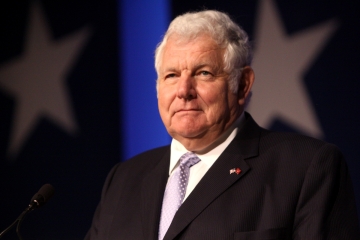
Times change, principles endure: Bill Bennett’s "Book of Virtues" at 30

Robert Pondiscio
12.15.2022
Flypaper

Voucher lotteries and college enrollment outcomes

Jeff Murray
12.15.2022
Flypaper

Education Gadfly Show #849: The success of Denver’s “portfolio”-style school reform, with Parker Baxter

12.13.2022
Podcast

Cheers and Jeers: December 15, 2022

The Education Gadfly
12.15.2022
Flypaper

What we're reading this week: December 15, 2022

The Education Gadfly
12.15.2022
Flypaper
view

How to supercharge student learning

Eva Moskowitz 12.15.2022
Flypaper
view

For the love of memorization

Daniel Buck 12.15.2022
Flypaper
view

Times change, principles endure: Bill Bennett’s "Book of Virtues" at 30

Robert Pondiscio 12.15.2022
Flypaper
view

Voucher lotteries and college enrollment outcomes

Jeff Murray 12.15.2022
Flypaper
view
iStock/Getty Images Plus/twilightproductions

Education Gadfly Show #849: The success of Denver’s “portfolio”-style school reform, with Parker Baxter

Michael J. Petrilli, Amber M. Northern, Ph.D., David Griffith, Ph.D., Parker Baxter 12.13.2022
Podcast
view

Cheers and Jeers: December 15, 2022

The Education Gadfly 12.15.2022
Flypaper
view

What we're reading this week: December 15, 2022

The Education Gadfly 12.15.2022
Flypaper
view

Artificial intelligence is not the end of high-school English

Robert Pondiscio
12.15.2022
Flypaper

If you’ve been on social media lately, you’ve doubtless encountered fictional stories and essays generated by “ChatGPT,” an artificial intelligence program that can generate remarkably solid pieces of prose in response to prompts both serious and whimsical, and can do so instantly and in any imaginable style.

Some find this thrilling. Others, mostly writers and teachers, are filled with existential dread. “My life—and the lives of thousands of other teachers and professors, tutors and administrators—is about to drastically change,” wrote English teacher Daniel Herman in The Atlantic.

My hunch is that’s a lot less true than he thinks. For starters, let’s immediately dispense with the idea that artificial intelligence will make writing instruction obsolete. As Herman put it, “It’s no longer obvious to me that my teenagers actually will need to develop this basic skill.” Remember the “twenty-first-century skills” movement? There was breathless insistence that, with all the world’s knowledge now in our pockets and mere keystrokes away, K–12 education should prioritize critical thinking, problem solving, creativity, and communication. The question on the lips of education’s smart set back then was, “Why cram kids’ heads with a bunch o’ facts when we have Google?” Similarly, why teach writing when “AI” can generate sophisticated text at the touch of a button?

E.D. Hirsch, Jr. nailed the answer twenty years ago. “The Internet has placed a wealth of information at our fingertips. But to be able to use that information—to absorb it, to add to our knowledge—we must already possess a storehouse of knowledge,” he wrote. “That is the paradox disclosed by cognitive research.” More recently, University of Virginia professor Dan Willingham wrote that research in cognitive science has shown that “the sorts of skills that teachers want for students—such as the ability to analyze and to think critically—require extensive factual knowledge.” 

In other words, it takes knowledge to communicate knowledge—or even to have the discernment to judge whether an AI-generated piece of text makes sense or sufficiently responds to a prompt. Herman writes that what GPT can produce right now “is better than the large majority of writing seen by your average teacher of professor.” Perhaps so, but this is a problem unique to the education equivalent of the “worried well” and their teachers, not the far larger number of students for whom constructing a tolerable five-paragraph essay is a daunting challenge. A tiny minority of American high school students are like Herman’s, discussing and analyzing “Anzaldúa’s radical ideas about transcending binaries, or Ishmael’s metaphysics in Moby-Dick.”

Skilled teachers who know their students have seldom failed to notice when a turned-in assignment has the thumbprint of a little extra help from home or simply doesn’t sound like original work. It will be no different with AI. Another English teacher, Peter Greene, whose rural Pennsylvania students are far more typical than those in an elite prep school, noted in Forbes that ChatGPT covers gaps in its knowledge by making things up and embellishing. “In other words, it has an eerily human capacity for bullshitting its way around gaps in its data base.” Teachers who know their students will not easily be fooled. Greene makes the excellent suggestion that teachers try out their writing assignments on the chatbot. “If it can come up with an essay that you would consider a good piece of work, then that prompt should be refined, reworked, or simply scrapped.”

Concerns that AI makes writing instruction obsolete are manifestations of the “Curse of Knowledge,” an idea popularized by Chip Heath and Dan Heath in their 2007 book Made to Stick. The curse of knowledge is “a cognitive bias that occurs when an individual, communicating with other individuals, unknowingly assumes that the others have the background to understand.” It’s a common problem in education: To the well-educated and language proficient, problem solving, critical thinking—and clear, sophisticated written analysis—all feel like “skills” that can be practiced and mastered (or plausibly faked via artificial intelligence) because they are already rich in knowledge and sophisticated language. Herman worries that AI will make it easy for students to avoid “doing the hard work of actual learning,” but there’s no reason to think the average high school student could even read the machine-generated essays ChatGPT creates, let alone plausibly pass one off as their own work. 

In sum, the threat of ChatGPT is not that it will make writing instruction obsolete. It’s the assumption that it will make writing instruction obsolete that we should be on guard against. The world of futurists, technology enthusiasts, and educated elites is simply not the same as the world occupied by the substantial majority of students struggling to reach basic levels of language proficiency. Artificial intelligence will provide time-saving tools for knowledge-haves, but if we make the same mistake made by promoters of “twenty-first-century skills,” it will be fatal to the interests of knowledge have-nots, who will not be given the opportunity to develop the knowledge base the well-educated take for granted, and which make those tools useful.

view

How to supercharge student learning

Eva Moskowitz
12.15.2022
Flypaper

In the wake of pandemic-related learning loss, there’s widespread agreement that we must find more time for learning and a number of schools and districts have added afterschool tutoring and summer school to their calendars. While such additions to schools’ teaching and learning time have benefits, intensifying our focus on how we use the classroom time we already have is even more important. To that end, I urge consideration of “learning density.”

By which I mean the amount of new learning—concepts, vocabulary, insights, and reasoning—jammed into every chunk of a lesson. It’s something we’ve been thinking about a lot lately at Success Academy, the charter school network I founded and lead.

In classrooms with high learning density, every minute is packed with penetrating questions, purposeful discussion, new knowledge, and high-quality ideas. Students love being there because they’re making connections and gaining insight at a fast clip, and it’s more enjoyable for teachers because each lesson does more to boost students’ intellectual growth.

Learning density is different from instructional efficiency, which is about eliminating pockets of wasted time during lessons. Instructional efficiency has long been a focus in high-performing charters, and is an important reason why Success Academy and other schools embrace high standards for student behavior and efficient routines for everything from entering the classroom, to handing out materials, to moving around the room.

Instructional efficiency is limited, however. Achieving it allows teachers to cover more material faster but leaves aside the question of the quality of learning—its richness, depth, and range. In a math class with instructional efficiency, for example, students may briskly learn how to employ a new procedure to solve a specific kind of problem and have several opportunities for practice. In one with high learning density, by contrast, students learn not only how to solve the problem, but also why the procedure works and the mathematical concept underlying it. Along with computational skills, they practice mathematical reasoning and gain conceptual understanding, which will help them tackle unfamiliar problems in the future. In the same amount of time, students’ knowledge grows along more dimensions.

When we observe lessons in our schools, we evaluate them through the lens of learning density. We often close our eyes for five minutes, listen closely, and ask ourselves, “Is my knowledge and understanding of the problem or text increasing in this chunk of time? Would I want to be a student in this class?” Too often, the answer to both these questions is no—but I think we get ahead of the game just by asking them.

Educators tend to be satisfied by any lesson that has active student participation and little obvious disruption. Yet what’s often happening is that teachers simply “pass the mic” without driving toward a clear intellectual purpose, frittering away both their and their students’ time. The end result is disengagement—particularly among students who struggle most—and high rates of academic failure. Teachers, meanwhile, feel exhausted and rushed for time because they constantly have to make up later what students didn’t learn.

This is a tragedy for both kids and adults. If we want our pupils to have a productive, impactful schooling experience—and want teaching to be enjoyable and manageable for educators—class time must be packed with dense, layered learning. This starts with high-quality curricula and instructional materials. Works of literature and primary sources should be rich in vocabulary, knowledge, and ideas. Math problems and science experiments should push students to grapple with essential underlying concepts. Assignments and assessments should be intriguing and spark deep thinking.

We must also pay far closer attention to instructional practices. Are teachers starting off discussions with a challenging question that gets students thinking right away or one that pitches to the lowest level? Are they introducing new knowledge, vocabulary, and ideas or reteaching what students already know? Are they promptly correcting inaccuracies or wasting time debating questions with clear yes and no answers? Are they delighting in a spot-on idea and building on it or failing to distinguish low- and high-quality ideas? These are all important questions for determining the level of learning density in a classroom.

Needless to say, a peaceful, orderly classroom environment is an essential precondition for achieving high learning density. Once routines and systems are established, however, going for high learning density is itself a powerful classroom management strategy. Students don’t act out when they’re being provoked, challenged, and stretched by difficult and worthwhile questions and problems.

As schools and districts work to address learning loss in the wake of the pandemic, an intensive focus on learning density is a strategy that will allow teachers to engage students, supercharge learning, and reduce academic failure. It doesn’t require additional funding or major systemic reform. It also makes the job of teaching far easier: Students learn more, their outcomes improve, and the need for reteaching recedes. But getting to learning density requires training and coaching, along with time for intellectual preparation so teachers can develop their own high-quality ideas about the material and questions that spark student thinking. Ensuring that teachers and leaders have the time and space to pursue this goal should be a top priority for schools across the country.

view

For the love of memorization

Daniel Buck
12.15.2022
Flypaper

Every year, I ask my students to memorize a poem, but I intentionally avoid using the word “memorize.” Rather, they must learn Robert Frost’s Stopping by Woods on a Snowy Evening, Langston Hughes’s A Dream Deferred, or some other famous verse by heart. When memorized, poems become something we hold dear in our hearts and minds, growing almost into a mental keepsake. But there are also demonstrable educational reasons to do so.

Throughout history, literary and artistic greats have employed memorization as part of their creative development. A common practice in jazz circles is the act of memorizing and transcribing famous solos. There are articles online dedicated to listing the classic improvisations that any aspiring musician ought to have memorized. Charlie Parker famously memorized Lester Young solos, transposed them into every key, and practiced them at double or triple their original tempo. Shakespeare would likely have spent time memorizing Holinshed’s Chronicles, where he drew inspiration for his history plays. Augustine would have learned entire passages of Virgil by heart. Each of these literary, musical, and philosophical masters, through memorizing the best of their predecessors, thereby developed a palette for sound, rhythm, imagery, and melody.

In his book How to Think Like Shakespeare, Scott Newstok outlines many of the presuppositions of enlightenment and medieval education and emphasizes today’s altered understanding of creativity. “If anything,” he writes, “creative imitation...has been the hallmark of art and industry” for most of human history. Upon discovering a piece of writing they admired, Robert Louis Stevenson, Benjamin Franklin, and countless other authors would perform imitative practices to perfect their own craft—reproducing it directly, memorizing it, or attempting to mimic its style. “By trying to sound like someone else,” Newstok writes, “you begin to sound ‘like yourself.’” In memorizing literature, our students implicitly adopt the best that is in authors and can begin to employ these skills, patterns of thought, lines of argumentation, and knowledge in their own thinking and academic work.

There’s also a strong knowledge-rich justification for the memorization of literature. Perhaps students may initially learn the words of the Preamble to the U.S. Constitution or a poem of Dickinson without profound understanding. Nonetheless, young children can delight in nursery rhymes—the rhythm, the symmetry, the sing-song nature—even before they fully understand the words. These words, locked into their memory for recall, allow them later to compare and analyze when they have gained the capacity to fully understand them. If “critical thought” is a process of making connections, as Rousseau contends, then students need nodes to connect, and memorized verse forms powerful nodes that can supercharge thinking later when connected. They serve as models as we focus on every word, detail, image, grammatical construction, passing emotion, punctuation or lack thereof, and poetic or rhetorical detail.

It is common parlance in education to hear “I want to teach students how to think, not what to think.” But the how must begin with the what. Critical thought requires knowledge. For our students to think well, we must give them something to think about. Like a painter and their paints, our students need intellectual supplies to think with. Beautiful imagery, profound arguments, pithy lines, famous phrases, and the like are some of the best supplies of thought that they could acquire.

If we want them to think critically about politics, what better than the knowledge of and reflection on the Bill of Rights that would come through memorizing it? If we want to teach them to analyze literature, how better than to store away some of the most commonly alluded-to verses from scripture?

Even before a child fully grasps the meaning of a nursery rhyme, they develop a sense of rhythm, order, and balance. They get fleeting images that store in their memory even if some of the finer points elude them. They also store complex syntax and familiarize themselves with unique grammar constructions to employ in their own writing. Complex language becomes second nature.

Memorization doesn’t inhibit the growth of the self or critical thought. Rather, it strengthens the mind, focus, and attention to detail as drills and strength training do the body. It enhances the self, providing students with knowledge and language that they can use against lazy thinking and propaganda. Memorization does not stifle freedom but, through difficulty now, allows students to make better use of that freedom later on. It enlarges, strengthens, and frees the self.

My own students demonstrate the fulfillment and creativity that come with memorization. They have to memorize literature every year in my class, sometimes a poem for speaking to the class and at other times lines from Shakespeare for performance. The poetry last year was just delightful to watch. Students paced the room, speaking to the sky, to the crowd, to different students depending on the line. Some spoke in accents and performed pre-planned motions. One student practiced with her friends, so the friends acted out Edgar Allan Poe’s Annabel Lee as she spoke it. In my Shakespeare unit, the performance of a scene is the final assignment, and students must memorize their lines. The laughter that echoes from the halls as they plan their costumes, setting, and performance paints the exact opposite of the false caricature of students sitting dully at their desks reciting lines of Whitman in choral response to a teacher in front.

What do I most value about memorization? It’s the number of students who have returned to my class to tell me, with a smile on their face, that they still remember Wordsworth’s daffodils and giddily recite it for me—simple delight and joy in beautiful literature.

Editor's note: This is an excerpt from Daniel Buck's forthcoming book, What Is Wrong With Our Schools? The ideology impoverishing education in America and how we can do better for our students, to be published December 20, 2022, by John Catt Educational.

view

Times change, principles endure: Bill Bennett’s "Book of Virtues" at 30

Robert Pondiscio
12.15.2022
Flypaper

It’s poignant to read the mainstream media fanfare and reviews that greeted William J. Bennett’s The Book of Virtues when it was published in 1993, and to reflect on the America that made the book an unlikely cultural phenomenon: 3 million copies sold, spin-off books for young children, even a cartoon series on PBS, which ran for nearly five years.

A few months after it took off, Newsweek put Bennett on its cover along with Peggy Noonan and Hillary Clinton (!), a trio of haloed and white-robed “virtuecrats” fighting America’s moral decline. Stifling a smirk, writer Howard Fineman dubbed Bennett a one-man “cottage industry of character education—a multimedia McGuffey,” yet the magazine’s own polling forced him to concede that Bennett was on to something: More than three-quarters of Americans (76 percent) agreed that “the United States is in moral and spiritual decline.” The fraying of the nation’s social fabric could no longer be dismissed as merely “the crotchety preoccupation of the cultural right.” So undeniable was the appeal of Bennett’s character campaign that Fineman predicted the rise of “a new kind of politics that could dominate the decade if economic or foreign crises don’t intervene.” A year later, Monica Lewinsky began her White House internship.

Bennett the virtuecrat never launched the presidential bid that Newsweek and so many others assumed he would. Eventually, the nation that kept The Book of Virtues number two on the New York Times best-seller list for eighty-eight weeks would choose a president whose lack of the virtues Bennett extolled—self-discipline, honesty, and responsibility—were less a political liability than a personal brand. The nation still awaits the rise of a virtuous political class.

Likewise, it’s hard not to be wistful perusing the newly-published thirtieth anniversary edition of The Book of Virtues. My memory betrayed me in revisiting the anthology for the first time in decades; I recalled, incorrectly, that it was written for young people. Organized by individual character traits—compassion, friendship, faith, and so on—each chapter starts with nursery rhymes and light verse, suitable for reading aloud to children. But the anthology’s selections grow longer, richer, and more challenging from the beginning to the end of each chapter: Plato on self-discipline from “Gorgias”; an 1852 speech by Frederick Douglas holding America accountable for the sin of slavery; the Agincourt speech from Shakespeare’s “Henry V.” The meatier fare invites quiet, contemplative reading after the kids are in bed. It’s a moral primer, but it’s not homework. Entries include items on the high school basketball team memorialized in the movie Hoosiers and the “Thrilla in Manila” heavyweight title fight between Joe Frazier and Muhammad Ali. One delightful entry in the chapter on courage is also the anthology’s shortest: an advertisement placed in London newspapers by Ernest Shackleton in 1900 seeking volunteers for his Antarctic expedition, which read, in full:

MEN WANTED FOR HAZARDOUS JOURNEY

Small wages, bitter cold, long months of complete darkness,

constant danger, safe return doubtful.

Honor and recognition in case of success.

The response was “overwhelming,” Shackleton later said.

Nearly one-third of the selections in the thirtieth anniversary edition are new, including entries about Mother Teresa, Jaime Escalante, and Navy Seal Michael Murphy, a posthumous Medal of Honor recipient who died saving his comrades in Afghanistan. No thought was given to updating the list of virtues themselves, however. “You know, people are honest or they are not. They believe in the value of work or they don’t,” Bennett remarked when I spoke with him recently. “C.S. Lewis said you could no more invent a new virtue than a new color.”

True, but some are more in season than others. Bennett took rueful note of changing attitudes about work, one of the book’s ten virtues, and the millions of American men in their prime years who are forgoing meaningful work, their lives consumed by screen time and, in too many cases, opioid abuse. “The person who has missed the pleasures of work, of a job well done, has missed one of the great pleasures of life. Hard work can be done by people on the left or on the right,” Bennett said, noting that, even thirty years ago, some critics carped that he had produced a book of conservative virtues. “There was a book of liberal virtues,” he said. “It didn’t sell.”

The 1990s were no less obsessed with “multiculturalism” than readers today are with “identity.” Both the original Book of Virtues and the revised edition stand up well to the demands of diversity, with entries by and about Martin Luther King Jr., Harriet Tubman, James Baldwin, and others, and folktales from many traditions. This will likely not be sufficient to appease present-day readers less concerned with which authors are included than with which ones are cancelled and purged. Perhaps Bennett and his wife and co-editor Elayne might yet be persuaded to add one more virtue in future editions: tolerance.

Bennett’s anthology pairs nicely with E. D. Hirsch, Jr.’s Cultural Literacy, another out-of-nowhere phenomenon of the 1990s, which preceded it by a few years. Bennett, the conservative secretary of education under Ronald Reagan, was an early and enthusiastic proponent of Hirsch, the liberal English professor from the University of Virginia. Each man saw the timeless appeals of these tales and figures to advance their projects. For Bennett, stories drawn from the Bible, Greek mythology, fairytales, oft-recited poems, and episodes from American history cultivated character. For Hirsch, they were essential components of the common store of background knowledge, allusions, and idioms on which reading comprehension depends.

Our political divide and the partisan media ecosystem that feeds it makes its unlikely, alas, that an anthology edited by a prominent conservative intellectual can win even a fraction of the attention that greeted the original volume. “Look at the blurbs on the back cover,” Bennett said, referring to laudatory pull quotes from Time, Newsweek, the Washington Post, and People, praising the original Book of Virtues. “I don’t think I’d get those today,” he conceded, though the evidence of moral decline that so fussed the editors of Newsweek thirty years ago is no less compelling today. “Trust in institutions was down, people were worried about schools and family formation,” Bennett observed. “Those are even bigger concerns now.”

Editor’s note: This was first published in the Manhattan Institute’s City Journal.

view

Voucher lotteries and college enrollment outcomes

Jeff Murray
12.15.2022
Flypaper

Authorized by Congress in 2004, the Washington, D.C., Opportunity Scholarship Program (OSP) is one of the longest-standing voucher programs in the nation. It is also the only federally-funded one. While its fortunes have changed as congressional and executive branch leadership has switched parties over the years, the program has endured. As a result of its longevity, OSP is a perfect lens through which to study the long-term effects of voucher usage. New research in the AERA Journal looks at the impact of the program on participants’ college enrollment rates.

Researchers Matthew Chingos and Brian Kisida go back to the first two OSP application rounds in 2004 and 2005 and identify 1,776 students who entered the voucher lottery—they applied for seats in oversubscribed grade levels—and who can also be observed in OSP administrative records for at least two years after their expected high school graduation. National Student Clearinghouse data provide college enrollment information.

The treatment group comprised 1,059 students who won the lottery and were offered an OSP voucher; lottery non-winners were assigned to the control group. OSP applicants overall had an average family income of about $18,000 in 2004–05, and less than 20 percent came from married, two-parent families. Almost all were Black or Hispanic, and almost a quarter were already utilizing school choice by attending a charter school at the time of application. Treatment group students were slightly more likely than control group students to be Black or Hispanic and had slightly lower family income. Chingos and Kisida run an intent-to-treat (ITT) analysis, noting that only 74 percent of those offered a voucher actually used one and some students in the control group accessed private schools without the aid of OSP. Of those who accepted the offered voucher, approximately 30 percent utilized it for four or more years.

The college enrollment rates for the treatment and control groups were the same, statistically speaking, though voucher recipients were slightly less likely to enroll within three years of graduation, but slightly more likely to enroll four and five years after graduation. Chingos and Kisida theorize that these patterns could be caused by delays in graduation for voucher students needing extra time to complete diploma requirements (which could include higher requirements for private school students than for their public school peers) and observed improvements in the overall educational outcomes in D.C. district and charter schools after 2004.

Unfortunately, the data do not yet reach far enough to look at college completion outcomes for OSP students, an important point where outcomes for the two groups might diverge significantly. That is a study for another day.

SOURCE: Matthew M. Chingos and Brian Kisida, “School Vouchers and College Enrollment: Experimental Evidence From Washington, DC,” AERA Journal (November 2022).

view
iStock/Getty Images Plus/twilightproductions

Education Gadfly Show #849: The success of Denver’s “portfolio”-style school reform, with Parker Baxter

12.13.2022
Podcast
 

On this week’s Education Gadfly Show podcast, Mike Petrilli and David Griffith talk with the University of Colorado’s Parker Baxter on how Denver’s comprehensive school reform effort led to higher student achievement and graduation rates. Then, on the Research Minute, Amber brings us good news about a third grade retention policy in Indiana.

Recommended content:

  • “The system-level effects of Denver’s portfolio strategy on student academic outcomes” —Parker Baxter
  • A University of Colorado video on Parker Baxter’s study.
  • “Denver Public Schools’ controversial reform strategy led to higher test scores and graduation rates, but not without costs” —Colorado Public Radio
  • The study that Amber reviewed on the Research Minute: Young Hwang and Cory Koedel, “Holding Back to Move Forward: The Effects of Retention in the Third Grade on Student Outcomes,” Retrieved from Annenberg Institute at Brown University (December 2022).

Feedback Welcome:

Have ideas for improving our podcast? Send them to our producer Nathaniel Grossman at [email protected].

view

Cheers and Jeers: December 15, 2022

The Education Gadfly
12.15.2022
Flypaper

Cheers

  • The SUNY Reading Corps, made up of pre-service teachers, provides high-dosage tutoring in reading to New York City students. —Chalkbeat
  • The president of the Carnegie Foundation wants high schools to move away from the Carnegie Unit, the standard for credit hours it developed over a century ago. —Education Week
  • An Indiana program that allows high school students to take career-oriented pathways to graduation could be expanded statewide. —Chalkbeat
  • Not content to rest on his laurels, Arizona Governor Doug Ducey became a champion of school choice in his final year in office. —Keri D. Ingraham
  • Officials in Texas are holding the state’s largest alternative certification program accountable by moving to revoke its accreditation due to poor performance. —Dallas Morning News

Jeers

  • A $123 million program in Los Angeles to offer extra school days to offset pandemic-related learning loss is poised to have dismal attendance, with just one in nine eligible students signing up. —Los Angeles Times
  • Because of charter schools’ success, they are becoming political targets. —Wall Street Journal
  • D.C. is one step closer to changing its school funding model for the worse. Money should follow the child, and when enrollment drops, so too should funding. Otherwise, schools that lose families end up with more money per kid, which isn't fair. —Washington Post
view

What we're reading this week: December 15, 2022

The Education Gadfly
12.15.2022
Flypaper
  • A new study finds a “perception gap” between what Republicans and Democrats think each other believes about the education culture wars and what those groups actually believe. —Education Week
  • “What’s the point of teaching cursive?” —John McWhorter
  • High school seniors in Ohio weigh their options post-graduation: the trades, a four- or two-year degree program, or the military. —Dayton Daily News
Fordham Logo

© 2026 The Thomas B. Fordham Institute
Privacy Policy
Usage Agreement

National

P.O. Box 110
Burke, VA 22009

202.223.5452

[email protected]

Ohio

P.O. Box 82291
Columbus, OH 43202

614.223.1580

[email protected]

Sponsorship

130 West Second Street, Suite 410
Dayton, Ohio 45402

937.227.3368

[email protected]