Commentary

An “opportunity economy” would give every person the chance to achieve their potential—and there are three keys to creating one: promoting thriving childhood environments, focusing on community-level change, and building social capital.

Eschewing the traditional September start to the new school year (or, at most, mid-August), some Richmond, Virginia, public schools kicked off the 2024–25 academic calendar on July 22.
Forcing students to switch schools can be traumatic and even harmful. Yet closing an underenrolled school can also be beneficial when displaced students land in better alternatives, and when it ensures that innumerable children in future generations are well-served. But how should policymakers identify which schools should be candidates for closure? Our latest study offers some answers.
Of the school choice options available to many U.S. families today, few embody the spirit of “power to the parents” quite like education savings accounts (ESAs).

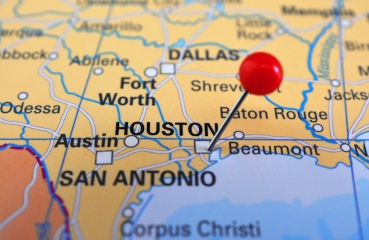
Houston’s local ABC news affiliate recently ran a report that the Houston Independent School District, Texas’s largest, has more than 2,000 uncertified teachers (out of a teaching force of approximately 10,000).
Schools across the country spend billions of dollars each year on the construction and renovation of their facilities—everything from roof repairs to new science labs and from classroom expansions to whole new buildings. How do these expenditures impact students and the taxpaying community around schools?


“How Kamala Harris can build an ‘opportunity economy.’” —Raj Chetty, New York Times According to a new report, many social studies teachers are now turning to the internet to find primary sources for their lessons—but a small number are presenting students with ideologically skewed mat

Governor Glenn Youngkin is under fire again from Virginia’s education establishment, this time because a new school accountability system his administration is promoting refuses to put lipstick on a pig.
Editor’s note: This was first published by The 74.
Modern States Education Alliance is a non-profit that makes college-level courses and college credit free to any learner anywhere, including high school students interested in advanced coursework. It offers thirty-two online courses free of charge at www.modernstates.org, including all the necessary textbooks and readings.
If the academic Olympics aren’t working for some stressed-out teens and their families, they should consider downshifting in their courses and activities and forgetting about gaining admission to a highly-selected college. Focus instead on finding one that’s a great fit for you personally. Be assured that, given enrollment trends, plenty will be glad to receive you.
As a candidate for president in 2020, Kamala Harris introduced a plan to raise teacher salaries by $13,500.
Kamala Harris’s presidential acceptance speech at the Democratic National Convention promised Americans “an opportunity economy where everyone has the chance to compete and the chance to succeed.” But working-class Americans are glum about their economic position today and what this promise means for them.
As school systems around the world continue trying to recover from learning losses caused by the pandemic, a new paper out of Germany gives us some historic context on what to look for and what to be wary of.

In general, wealthier schools have higher reading proficiency rates—but the focus should be on districts like Steubenville, Ohio, that are exceeding expectations despite their high rates of poverty.

As another school year begins, I have been struck by the many different ways leaders and educators talk about instructional materials. At meet-the-teacher nights or staff meetings to explain the move to a new curriculum or in board meetings to explain plans for the year, educators often talk about the role the curriculum will play with bold claims. I have heard:

For ten years, veteran education reformer Kathleen Porter-Magee led Partnership Schools, an independent charter-like management organization that ran Catholic schools on behalf of the archdiocese of New York and, currently, Cleveland. She recently announced that she was stepping down. Here she discusses the lessons she learned.
I’m a huge fan of the Daniels Fund under the leadership of Hanna Skandera, the more so since the national part of their giving has grasped the nettle of civics education. And we at Fordham were longtime members of the Philanthropy Roundtable.
This summer, the Washington Post’s (fantastic) “Department of Data” columnist, Andrew Van Dam, ran a fun feature about “America’s best decade,” according to public opinion.

In February 2020, California settled a case which alleged that the state was violating the right to an education by sending kids to schools that didn’t teach them how to read.

A new study asks: if schools want to maximize student achievement, should they hire more staff or raise salaries for the teachers that they already employ? —Paul E.

Many states are struggling to revise their high-school graduation requirements, sometimes up, sometimes down. The most basic is the perennial issue of how hard should it be to earn a diploma. The next is how can high schools can possibly prepare thousands of dissimilar young people for the expectations and prerequisites of hundreds of differing post-graduation options?
Despite an unprecedented infusion of resources, the latest data show that American students are struggling to recover
Education loomed small at both political conventions this summer—a shame considering what dire condition it’s in.
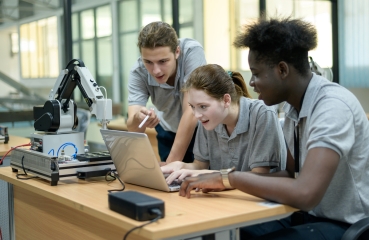
Since 2022, public schools in the District of Columbia have been working to mitigate Covid learning disruptions by establishing and ramping up high-impact tutoring (HIT) efforts.