Mobile Navigation

  • National
    • Policy
      • High Expectations
      • Quality Choices
      • Personalized Pathways
    • Research
    • Commentary
      • Gadfly Newsletter
      • Flypaper Blog
    • Events
    • Scholars Program
  • Ohio
    • Policy
      • Priorities
      • Media & Testimony
    • Research
    • Commentary
      • Ohio Education Gadfly Biweekly
      • Ohio Gadfly Daily
  • Charter Authorizing
    • Application
    • Sponsored Schools
    • Resources
  • About
    • Mission
    • Board
    • Staff
    • Career
Home
Home
Advancing Educational Excellence

Main Navigation

  • National
  • Ohio
  • Charter Authorizing
  • About

National Menu

  • Topics
    • Accountability & Testing
    • Advanced Education
    • Career & Technical Education
    • Charter Schools
    • Curriculum & Instruction
    • ESSA
    • Evidence-Based Learning
    • Facilities
    • Governance
    • Personalized Learning
    • Private School Choice
    • School Finance
    • Standards
    • Teachers & School Leaders
    • Think Again
  • Research
  • Commentary
    • Gadfly Newsletter
    • Flypaper Blog
    • Gadfly Podcast
  • Events
  • Scholars Program

Curriculum & Instruction

Displaying 331-360 of 1594 results
PBS tv show
Commentary
8.15.2024
Curriculum & Instruction

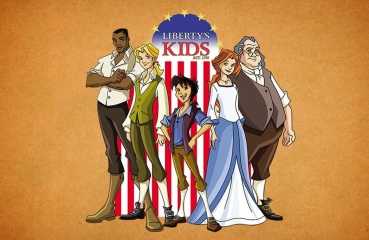
Bring back "Liberty’s Kids"

Chester E. Finn, Jr.

As the United States heads toward the semiquincentennial (!) of the Declaration of Independence, as we near an election that’s uncommonly consequential (!), and as many worthy groups strive to rekindle civics in American schools and colleges, it’s time to revisit and revive the superb animated video series named Liberty’s Kids


PBS tv show
School library
Commentary
8.15.2024
Curriculum & Instruction, Governance, Teachers & School Leaders

They’re still not book bans

Daniel Buck

Just when I thought that book ban debates were so last year—gone the way of critical race theory or the Common Core, subsumed by the latest controversy over Title IX or Project 2025—it seems those grouchy conservatives are at it again.

School library
School robotics class
Commentary
8.15.2024
Evidence-Based Learning, Career & Technical Education, Curriculum & Instruction, Governance, Advanced Education, Teachers & School Leaders

Threading the needle on selective enrollment public schools

Michael J. Petrilli

A recent article in the Boston Globe dug into a controversy that is dogging Massachusetts’s highly-regarded system of regional career and technical education (CTE) high schools.

School robotics class
Teacher in a classroom
Commentary
8.2.2024
Evidence-Based Learning, Curriculum & Instruction, Governance, Teachers & School Leaders

A reform agenda for Montgomery County Public Schools, part one

Michael J. Petrilli

As regular readers know, I’m a parent of two children enrolled in Maryland’s Montgomery County Public Schools (MCPS).

Teacher in a classroom
Standardized test in school
Commentary
8.1.2024
Accountability & Testing, Evidence-Based Learning, Curriculum & Instruction, Governance, Teachers & School Leaders

The case for standardized testing

Victoria McDougald

By now, we’re well familiar with critiques of standardized testing opponents: tests rob schools of critical instructional time, encourage teaching to the test, place undue pressure on students and educators to perform, are educationally irrelevant, only provide a snapshot of student achievement at a specific moment in time, and are largely driven by family income levels, parents’ education, and

Standardized test in school
School report card
Commentary
8.1.2024
Evidence-Based Learning, Curriculum & Instruction, Standards, Teachers & School Leaders

Have bloated pandemic-era grades now stabilized?

Amber M. Northern, Ph.D.

School closures and remote learning led to widespread relaxation of student accountability at the onset of the coronavirus pandemic. Lax requirements to turn in work, fewer graded assignments, and—most perniciously—policies mandating “no zeros” or “no failing grades” were adopted (or accelerated) to lighten the load of young people whose worlds had been turned upside down.

School report card
Wonkathon
Commentary
7.30.2024
Evidence-Based Learning, Curriculum & Instruction, Teachers & School Leaders

Who gets attendance interventions is as important as what the intervention is

Mikia Manley

Editor’s note: This essay is an entry in Fordham’s 2024 Wonkathon, which asked contributors to answer this question: “How can policymakers and practitioners radically reduce chronic absenteeism—at least below pre-pandemic levels and preferably much further?”

Wonkathon
Wonkathon
Commentary
7.29.2024
Curriculum & Instruction, Governance

Let’s stop blaming kids for absenteeism and unleash entrepreneurship

Darien Contu

Editor’s note: This essay is an entry in Fordham’s 2024 Wonkathon, which asked contributors to answer this question: “How can policymakers and practitioners radically reduce chronic absenteeism—at least below pre-pandemic levels and preferably much further?”

Wonkathon
Wonkathon
Commentary
7.29.2024
Evidence-Based Learning, Curriculum & Instruction, Governance, Teachers & School Leaders

Sustainable, promising interventions to reduce chronic absenteeism

Charles Ogundimu

Editor’s note: This essay is an entry in Fordham’s 2024 Wonkathon, which asked contributors to answer this question: “How can policymakers and practitioners radically reduce chronic absenteeism—at least below pre-pandemic levels and preferably much further?”

Wonkathon
Wonkathon
Commentary
7.26.2024
Evidence-Based Learning, Curriculum & Instruction, Governance

To fix chronic absenteeism, we must ask why kids don’t want to go to school

Leslie Colwell

Editor’s note: This essay won second place in Fordham’s 2024 Wonkathon, which asked contributors to answer this question: “How can policymakers and practitioners radically reduce chronic absenteeism—at least below pre-pandemic levels and preferably much further

Wonkathon
Students taking a test
Commentary
7.26.2024
Evidence-Based Learning, Curriculum & Instruction, Advanced Education

Are AP exams getting easier?

Chester E. Finn, Jr.

Three decades ago, the College Board “recentered” the SAT. Now it’s “recalibrating” Advanced Placement. Though both adjustments in these enormously influential testing programs can be justified by psychometricians, both are also probable examples of what the late Senator Daniel P.

Students taking a test
Wonkathon
Commentary
7.26.2024
Evidence-Based Learning, Curriculum & Instruction

Change our schooling paradigm to reduce chronic absenteeism

Hugh Osborn

Editor’s note: This essay is an entry in Fordham’s 2024 Wonkathon, which asked contributors to answer this question: “How can policymakers and practitioners radically reduce chronic absenteeism—at least below pre-pandemic levels and preferably much further?”

Wonkathon
Students raising their hands in a school classroom
Commentary
7.26.2024
Curriculum & Instruction, Governance, Standards, Teachers & School Leaders

Civics for today

David Davenport

This essay focuses on A Republic, If We Can Teach It: Fixing America’s Civic Education Crisis, a new book by Jeffrey Sikkenga and Hoover research fellow (emeritus) David Davenport.

Students raising their hands in a school classroom
Wonkathon
Commentary
7.25.2024
Curriculum & Instruction, Teachers & School Leaders

How can policymakers and practitioners reduce chronic absenteeism? The answer is sports.

Sam Duell

Editor’s note: This essay is an entry in Fordham’s 2024 Wonkathon, which asked contributors to answer this question: “How can policymakers and practitioners radically reduce chronic absenteeism—at least below pre-pandemic levels and preferably much further?”

Wonkathon
Wonkathon
Commentary
7.25.2024
Evidence-Based Learning, Curriculum & Instruction, Governance, Teachers & School Leaders

Schools cannot radically reduce chronic absenteeism alone

Jeremy Singer, Sarah Winchell Lenhoff

Editor’s note: This essay is an entry in Fordham’s 2024 Wonkathon, which asked contributors to answer this question: “How can policymakers and practitioners radically reduce chronic absenteeism—at least below pre-pandemic levels and preferably much further?”

Wonkathon
Student putting a cellphone in a box in a classroom
Commentary
7.25.2024
Evidence-Based Learning, Curriculum & Instruction, Teachers & School Leaders

How to implement a cellphone ban in schools

Amber M. Northern, Ph.D.

About seven in ten (72 percent) high school teachers say that students being distracted by cellphones is a major problem in their classroom.

Student putting a cellphone in a box in a classroom
Upset child reading in a classroom
Commentary
7.25.2024
Evidence-Based Learning, Curriculum & Instruction, Governance, Teachers & School Leaders

California schools are failing to teach kids how to read

Daniel Buck

Everyone benefits from exemplars. We all need models to mimic and follow. In the policy realm that means states, legislatures and governors who pass policies and reforms that materially improve the lives of their residents.

Upset child reading in a classroom
Students in a school computer lab
Commentary
7.25.2024
Accountability & Testing, Evidence-Based Learning, Curriculum & Instruction, Governance

Is “credit recovery” as bad as they say?

Adam Tyner, Ph.D.

For several years now, critics have been blaring klaxons about the questionable quality and increasing

Students in a school computer lab
Teacher in a classroom
Commentary
7.25.2024
Evidence-Based Learning, Curriculum & Instruction, Teachers & School Leaders

Digging into the 2024 survey of American public school teachers

Jeff Murray

Teacher voice is often missing from education policy discussions, leading to what can feel like an adversarial relationship between pundits and practitioners. Educators for Excellence (E4E) strives to reframe that relationship by amplifying the interests and concerns of teachers across the land.

Teacher in a classroom
Wonkathon
Commentary
7.24.2024
Evidence-Based Learning, Curriculum & Instruction, Governance, Teachers & School Leaders

To boost attendance and outcomes, pay students, not systems

Garion Frankel, Cooper Conway

Editor’s note: This essay is an entry in Fordham’s 2024 Wonkathon, which asked contributors to answer this question: “How can policymakers and practitioners radically reduce chronic absenteeism—at least below pre-pandemic levels and preferably much further?”

Wonkathon
Kamala Harris
Commentary
7.24.2024
Evidence-Based Learning, Charter Schools, Curriculum & Instruction, Governance, Teachers & School Leaders

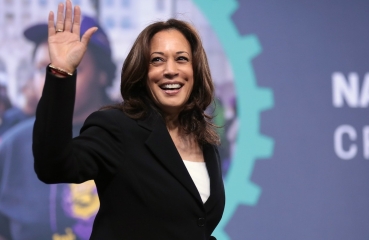
How Kamala Harris can move to the center on education

Michael J. Petrilli

It may be true that Kamala Harris is, at heart, your typical progressive Democrat from California. But she has an unusual opportunity to shed some of that political baggage. Indicating that she will be open to education reform is one of the best ways to do so.

Kamala Harris
Wonkathon
Commentary
7.22.2024
Curriculum & Instruction, Teachers & School Leaders

Rethinking school policies to combat chronic absenteeism

Dr. Michael Gary, Dr. Ivory A. Toldson

Editor’s note: This essay is an entry in Fordham’s 2024 Wonkathon, which asked contributors to answer this question: “How can policymakers and practitioners radically reduce chronic absenteeism—at least below pre-pandemic levels and preferably much further?”

Wonkathon
School student taking a standardized test with a scantron form
Commentary
7.22.2024
Accountability & Testing, Evidence-Based Learning, Curriculum & Instruction, Governance, Teachers & School Leaders

Do testing and accountability improve student learning?

Chester E. Finn, Jr.

In a word, yes! It’s never enough, and there’s no resting on laurels, but we have solid evidence over thirty years in America and beyond that students learn more when they—and their schools—are held to account for what and how well they’re learning.

School student taking a standardized test with a scantron form
Dad and son doing homework
Commentary
7.19.2024
Evidence-Based Learning, Curriculum & Instruction, Governance, Advanced Education, Teachers & School Leaders

Advanced education programs are important to parents, poll finds

Alli Aldis

Academic advancement programs (especially those branded as “gifted and talented”) are often at the center of controversy about equity in education.

Dad and son doing homework
Proceed with caution road sign
Commentary
7.18.2024
Evidence-Based Learning, Curriculum & Instruction, Governance, Teachers & School Leaders

The “science of reading” is on a winning streak—and that’s a problem

Robert Pondiscio

Spend any length of time in education and you can’t help notice pendulum swings as ideas about what constitutes effective practice fall in and out of fashion. There’s no reason to expect the “science of reading” movement to be an exception.

Proceed with caution road sign
Tutor and students
Commentary
7.18.2024
Evidence-Based Learning, Curriculum & Instruction

Can higher student-tutor ratios make tutoring more affordable without sacrificing effectiveness?

Devon Nir

As policymakers grapple with pandemic-induced learning loss across the country, intensive tutoring has emerged as a promising solution.

Tutor and students
High school students taking a test
Commentary
7.11.2024
Accountability & Testing, Curriculum & Instruction, Advanced Education, Teachers & School Leaders

The Great Recalibration of AP exams

John Moscatiello

The Advanced Placement program is undergoing a radical transformation. Over the last three years, the College Board has “recalibrated” nine of its most popular AP Exams so that approximately 500,000 more AP Exams will earn a 3+ score this year than they would have without recalibration.

High school students taking a test
Teacher upset in classroom
Commentary
7.11.2024
Curriculum & Instruction, Governance, Teachers & School Leaders

Where do teachers unions stand on student discipline?

Daniel Buck

Long after Covid-inspired shutdowns, schools remain chaotic according to recent surveys and umpteen stories of hallway brawls, bus fights, and general mayhem.

Teacher upset in classroom
Upset teen boy in school hallway
Commentary
7.11.2024
Evidence-Based Learning, Curriculum & Instruction, Governance, Teachers & School Leaders

What’s wrong with boys in school?

Tom Sarrouf, Jr.

In my final college semester, I had the privilege of being a full-time student teacher at a Catholic middle school, teaching seventh and eigth grade history and theology. It was the highlight of my life. The students were curious, polite, and thoughtful, caring to one another and welcoming to me.

Upset teen boy in school hallway
Catholic school classroom
Commentary
7.4.2024
School Finance, Charter Schools, Curriculum & Instruction, Governance

Public funding for religious schools can help ease our culture wars

Michael J. Petrilli

Knee-jerk reaction against public subsidies for religious education is unwise. That’s because allowing religious families to choose sectarian schools for their children could very well be a saving grace for our society. And you don’t have to be among the faithful to believe so.

Catholic school classroom

Pagination

  • First page « First
  • Previous page ‹ Previous
  • Page 8
  • Page 9
  • Page 10
  • Page 11
  • Current page 12
  • Page 13
  • Page 14
  • Page 15
  • Page 16
  • Next page Next ›
  • Last page Last »

Type

  • Book (3)
  • Commentary (1464)
  • Event (11)
  • Podcast (68)
  • Report (34)

Topics

  • Accountability & Testing (504)
  • Advanced Education (267)
  • Career & Technical Education (84)
  • Charter Schools (1117)
  • (-) Curriculum & Instruction (1594)
  • ESSA (129)
  • Evidence-Based Learning (837)
  • Facilities (25)
  • Governance (1416)
  • Personalized Learning (51)
  • Private School Choice (140)
  • School Finance (169)
  • Standards (190)
  • Teachers & School Leaders (1456)

Date

  • 2026 (121)
  • 2025 (158)
  • 2024 (142)
  • 2023 (148)
  • 2022 (197)
  • 2021 (203)
  • 2020 (170)
  • 2019 (94)
  • 2018 (13)
  • 2017 (5)
  • 2016 (46)
  • 2015 (76)
  • 2014 (50)
  • 2013 (38)
  • 2012 (15)
  • 2011 (83)
  • 2010 (6)
  • 2009 (8)
  • 2008 (6)
  • 2007 (2)
  • 2005 (2)
  • 2004 (3)
  • 2003 (4)
  • 2002 (1)
  • 2000 (2)
  • 1998 (1)
Fordham Logo

© 2026 The Thomas B. Fordham Institute
Privacy Policy
Usage Agreement

National

P.O. Box 110
Burke, VA 22009

202.223.5452

[email protected]

Ohio

P.O. Box 82291
Columbus, OH 43202

614.223.1580

[email protected]

Sponsorship

130 West Second Street, Suite 410
Dayton, Ohio 45402

937.227.3368

[email protected]