How to make sure science of reading reforms reach teachers
The science of reading (SOR) has been one of education’s hottest topics in recent years, with 40 states and the District of Columbia
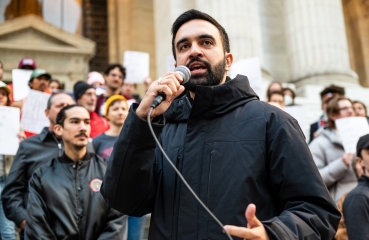
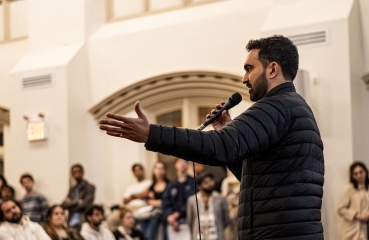
Democratic Socialist mayoral candidate Zohran Mamdani has proposed phasing out the successful and popular Gifted and Talented (G&T) progr
Zohran Mamdani, the Democratic Party’s nominee for mayor of New York City, has announced his intention to end kindergarten entry into the city’s Gifted & Talented (G&T) programming by September 2027.
Coming out of Covid and with an efflorescence of alternatives to traditional public schools, it’s been clear for a while that the relationship between families and s
In the 2020 presidential election, barely half of 18- to 24-year-olds voted, compared to 76 percent of those in the 65–74 age group.
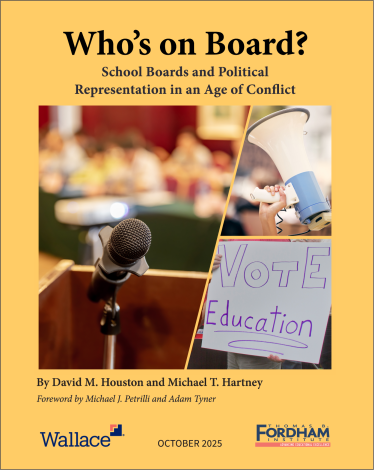
School boards have become ground zero for America’s education culture wars, with fiery debates over race, gender, curriculum, and pandemic policies making national headlines. But beyond the noise, how well do these elected bodies actually represent their communities?
Political scientist Charles Murray paints a stark picture of America in 2050: a small but thriving “cognitive elite”—married, working, earning, raising children, pursuing fulfilling careers—alongside
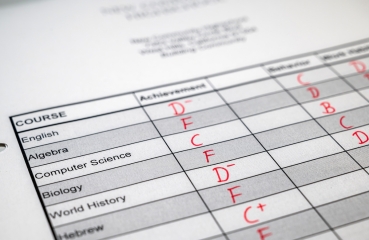
I’m no fan of many so-called “equitable” grading reforms.
Editor’s note: This was first published on Mike Petrilli’s Substack, SCHOOLED.
Critics contend that the National Assessment Governing Board, which sets policies for the Nation’s Report Card, sets the bar too high—that the definition of “proficient” is too challenging. This aligns with moves to lower the bar in parts of the country, including efforts in some states to make it easier for kids to pass end-of-year assessments or to eliminate those tests completely. This line of thinking and these polices are deeply misguided.
As a Los Angeles Unified School District parent during the pandemic, I had a front row seat as my fellow Democrats and their teachers union allies lit the match that turned a global health crisis into an education inferno.
The teacher pipeline concerns currently being debated in the media are not new. They’re merely the most recent iteration of a slow-burning problem that has become more acute since Covid school closures upended K–12 education. One suggestion for boosting the number and diversity of new teachers is to relax licensing requirements.
In K–12, we’ve often treated student experience data as a “nice to have.” As we confront another disappointing set of NAEP scores, a growing evidence base suggests that understanding how students experience school
Last week, the Houston Chronicle’s editorial board looked into claims by the Mikes (Mike Miles and Mike Morath) about the many Space City schools going from D’s or F’s to A’s and B’s on the state report card, thanks to the sweeping reforms undertaken in the d
From my experiences supporting districts to choose and use high-quality instructional materials (HQIM), I’ve seen that curriculum selection often breaks down where it matters the most: in classrooms.
There’s been a lot of smart analysis of the dismal NAEP results released last week. But here’s an alarming fact that you probably haven’t seen before: The cohort of students who scored at record-low levels in twelfth grade reading were part of the same generation of kids who scored at record-high levels in fourth grade. So what happened?
Editor's note: This was first published in the “Civic-Ready” issue of NASBE’s State Education Standard.
The latest twelfth-grade results from the National Assessment of Educational Progress are awful, as
I remember standing on my high school track, clutching my inhaler, knowing I was about to fail. Officially, the Obama administration had phased out the Presidential Fitness Test, but my district hadn’t gotten the memo. So, once a year, my Rhode Island classmates and I still lined up for the evaluation.
As we broaden the scope of what we judge schools for without radically expanding their footprint on the lives of children, are we not setting everyone up for failure? And will we not also—inevitably—slack off on the modest versions of results-driven accountability that we’re barely managing to hold onto today?
Last month, Education Secretary Linda McMahon expressed hope that Donald Trump will be remembered as an “education president,” arguing that “sending education back to the states” warrants
Much commentary has been offered on the literacy crisis plaguing the country. Massachusetts, often recognized as a leader in student achievement, has experienced the same challenge. Signs of the problem were clear in advance of the pandemic with NAEP fourth-grade reading proficiency rates falling from 50 percent to 45 percent between 2011 and 2019.
Given our moniker as “The Education Gadfly,” we at the Thomas B. Fordham Institute are not accustomed to lavishing praise on education leaders. That’s OK, considering how rarely they deserve it. But when someone in a position of authority demonstrates leadership, courage, and common sense, it’s important for us gadflies (and reformers) to say so.
Nearly twenty years ago, Hurricane Katrina devastated New Orleans. Among other sweeping institutional changes, the unprecedented school reforms enacted in the immediate aftermath have left long-lasting effects on the city’s K–12 public education system. But are New Orleans schools still operating in the way that reformers intended?
With eighteen words tucked into a 37-page education bill, the Indiana state legislature took a major step towards easing the lives of educational entrepreneurs. Those words? “A public school, charter school, or nonpublic school shall be considered a permitted use in all zoning districts.”
Editor’s note: This was first published by The 74.
As private school choice policies have proliferated and matured across the country, researchers have looked at the policy side of the process, as well as
It’s back-to-school season, with an estimated 47.2 million K–12 public school students and 3.2 million teachers returning to their classrooms.
Classical education has become one of the brightest spots in the K–12 landscape. Once a niche movement, it now encompasses more than 1,500 public, private, and charter schools serving nearly 700,000 students.
First a bit of history: Before he got canceled during the #Me-Too Movement, Garrison Keillor headlined a very popular public radio variety show called “A Prairie Home Companion.” Most weeks, he regaled listeners with stories from the fictional Lake Wobegon, Minnesota; I remember lis