Commentary
Competency-based education can better inform parents, students, and teachers
Mike Petrilli recently reopened an important conversation.
Mike Petrilli recently reopened an important conversation.

Fordham’s latest study, Charter School Boards in the Nation's Capital, doesn’t disappoint.

It’s been twenty-five years since Minnesota introduced chartering to America.
Our goal with this post is to convince you that continuing to use status measures like proficiency rates to grade schools is misleading and irresponsible—so much so that the results from growth measures ought to count much more—three, five, maybe even nine times more—than proficiency when determining school performance under the Every Student Succeeds Act (ESSA).


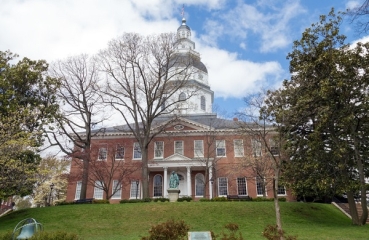
Maryland governor Larry Hogan has excellent political judgment. I wish I could say the same of his educational judgment.
On this week’s podcast, Mike Petrilli, Alyssa Schwenk, and David Griffith discuss how teachers ought to handle this year’s particularly polarizing and cringe worthy presidential election. During the research minute, Amber Northern explains how charter school boards affect school quality.


This summer’s dual repudiation of education reform policy and charter schools by the NAACP and the Movement for Black Lives Coalition is a story that hasn’t gone away. In fact, it’s a pivot that will come to a head later this week in Cincinnati, when the NAACP takes up a resolution supporting a national moratorium on charter schools.



This report from the Council for a Strong America provides an alarming snapshot of how ill-prepared many of the nation’s young adults are to be productive members of society.



On this week’s podcast, Robert Pondiscio and Checker Finn discuss James S. Coleman’s legacy, fifty years after the release of his seminal, groundbreaking report. During the research minute, David Griffith examines whether preschool programs improve attendees’ long-term academic, economic, and health outcomes.
By Amber M. Northern, Ph.D.


By Christopher Weiss Harrison

Management expert Peter Drucker once defined leadership as “lifting a person's vision to higher sights.” Ohio has set its policy sights on loftier goals for all K-12 students in the form of more demanding expectations for what they should know and be able to do by the end of each grade en route to college and career readiness. That’s the plan, anyway.
Tens of thousands of individuals across the United States volunteer their time, energy, and expertise as members of charter school boards. Yet as the charter sector has grown, we’ve learned remarkably little about these individuals who make key operational decisions about their schools and have legal and moral responsibilities for the education of children in their communities.
On this week’s podcast, Mike Petrilli, Alyssa Schwenk, and David Griffith discuss whether teachers should be giving As and Bs to students who aren't on track for success. During the research minute, Amber Northern examines whether sixth graders fare better when they aren't the youngest students in the school.
By Michael J. Petrilli