Mobile Navigation

  • National
    • Policy
      • High Expectations
      • Quality Choices
      • Personalized Pathways
    • Research
    • Commentary
      • Gadfly Newsletter
      • Flypaper Blog
    • Events
    • Scholars Program
  • Ohio
    • Policy
      • Priorities
      • Media & Testimony
    • Research
    • Commentary
      • Ohio Education Gadfly Biweekly
      • Ohio Gadfly Daily
  • Charter Authorizing
    • Application
    • Sponsored Schools
    • Resources
  • About
    • Mission
    • Board
    • Staff
    • Career
Home
Home
Advancing Educational Excellence

Main Navigation

  • National
  • Ohio
  • Charter Authorizing
  • About

National Menu

  • Topics
    • Accountability & Testing
    • Advanced Education
    • Career & Technical Education
    • Charter Schools
    • Curriculum & Instruction
    • ESSA
    • Evidence-Based Learning
    • Facilities
    • Governance
    • Personalized Learning
    • Private School Choice
    • School Finance
    • Standards
    • Teachers & School Leaders
    • Think Again
  • Research
  • Commentary
    • Gadfly Newsletter
    • Flypaper Blog
    • Gadfly Podcast
  • Events
  • Scholars Program
Listen on Apple Podcasts Listen on Spotify Watch on YouTube
Podcast

What the fadeout effect means for testing, accountability, and school choice | Episode 1008 of The Education Gadfly Show

Drew Bailey Michael J. Petrilli Amber M. Northern, Ph.D. David Griffith, Ph.D.
3.4.2026
 

Drew Bailey, professor at the University of California, Irvine, joins The Education Gadfly Show to discuss the fadeout effect across education interventions. Why do early treatment effects shrink over time, and what does that mean for judging program success, especially when test score gains diminish but long-term outcomes like graduation rates and earnings persist? We also debate the role of test scores in accountability, the evidence linking school value-added to real-world success, and what this all means for the role of testing in school choice initiatives.

Then on the Research Minute, Amber Northern examines new data on how states define “proficiency” in reading and math and what NAEP reveals about rigor, transparency, and the debate over standards.

Recommended content:

  • Why Do Most Education Interventions Fade Out Over Time? —Drew Bailey, Tyler Watts, and Emma Hart, Education Next

  • School Choice, Test Scores and Long-Term Outcomes: The Evidence Is Ambiguous —Michael J Petrilli, Education Next

  • Reducing Inequality through Dynamic Complementarity: Evidence from Head Start and Public School Spending —Rucker C. Johnson and C. Kirabo Johnson, American Economic Journal

  • A future for IES? —Chester E. Finn, Jr., Thomas B. Fordham Institute

  • Mapping State Proficiency Standards Onto the NAEP Scales Results From the 2022 NAEP Reading and Mathematics Assessments —Darrick Shen-Wei Yee and Brian Cramer, Institute of Education Sciences, National Center for Education Statistics (2026)

Feedback Welcome: Have ideas for improving our show? We would love to hear them. Send them to [email protected]
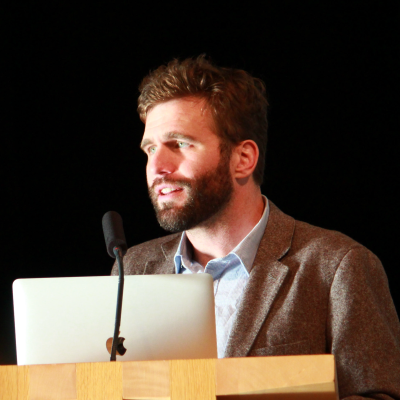
Drew Bailey

Drew Bailey is a professor in the School of Education at the University of California, Irvine.

President, Thomas B. Fordham Institute

Michael J. Petrilli is president of the Thomas B. Fordham Institute, executive editor of Education Next, editor in chief of the Education Gadfly Weekly, host of the…

View Full Bio

Amber Northern is senior vice president for research at the Thomas B. Fordham Institute, where she supervises the Institute’s robust research portfolio and…

View Full Bio

David Griffith is the National Research Director at the Thomas B. Fordham Institute, where he manages or authors reports on various subjects including charter schools, …

View Full Bio

Related Resources

view Nikole Hannah-Jones

A comprehensive list of the responses to the Nikole Hannah-Jones article

The Education Gadfly 10.1.2026
NationalBlog
view Rocky terrain
High Expectations

The uneven ground of the no-zero grading policy landscape

Kennedy Sundberg 10.1.2026
NationalBlog
view F grade
High Expectations

Do dual enrollment students still benefit despite failing college courses?

Jeff Murray 10.1.2026
NationalBlog
Fordham Logo

© 2026 The Thomas B. Fordham Institute
Privacy Policy
Usage Agreement

National

P.O. Box 110
Burke, VA 22009

202.223.5452

[email protected]

Ohio

P.O. Box 82291
Columbus, OH 43202

614.223.1580

[email protected]

Sponsorship

130 West Second Street, Suite 410
Dayton, Ohio 45402

937.227.3368

[email protected]