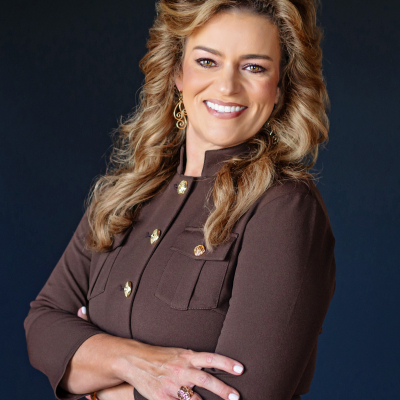
Kimberly Richey, Assistant Secretary for Civil Rights at the U.S. Department of Education, joins Mike Petrilli and David Griffith to talk about the latest federal guidance on school discipline and Title VI. What does the Department’s new approach to racial disparities in discipline mean for schools? Can the new guidance stick, or will the rules continue to change every time a new administration takes control of the White House?
Then, on the Research Minute, Amber Northern reviews a new NWEA study examining whether schools are getting Algebra I placement right, and why students should be allowed to take algebra as soon as they are ready.
Recommended content:
- Dear Colleague Letter: Guidance on Pupil Discipline and Compliance with Title VI —U.S. Department of Education
- Toward a durable compromise on discipline disparities? —Michael J. Petrilli, SCHOOLED
- Doing educational equity right: School discipline —Michael J. Petrilli, Thomas B. Fordham Institute
- Groundhog Day for school discipline —David Griffith, Thomas B. Fordham Institute
- Getting Algebra Placement Right: Expanding Opportunity and Strengthening Preparation —Megan Kuhfeld, Daniel Long, and Scott J. Peters, NWEA (August 2026)
Feedback Welcome: Have ideas for improving our show? We would love to hear them. Send them to [email protected]
Transcript
This transcript was generated with the assistance of AI and lightly edited for clarity and readability
Introduction
Mike Petrilli [00:00]
Welcome to The Education Gadfly Show.
I'm your host, Mike Petrilli of the Thomas B. Fordham Institute.
This week, Kimberly Richey, Assistant Secretary for Civil Rights at the U.S. Department of Education, joins us to discuss new federal guidance on school discipline and Title VI.
What does the Department's new approach to racial discipline disparities mean for schools?
Then on the Research Minute, Amber Northern reviews a new NWEA study examining whether schools are getting Algebra I placement right and why students should be allowed to take Algebra as soon as they're ready for it.
All that and more this week on The Education Gadfly Show.
Mike Petrilli [00:59]
Hello, this is your host, Mike Petrilli of the Thomas B. Fordham Institute, here at The Education Gadfly Show and online at FordhamInstitute.org.
And now please welcome today's special guest, Kimberly Richey.
Kim, welcome to the show.
Kimberly Richey
Hey, Mike. So good to be with you all today. Thanks so much for having me. I really appreciate it.
Mike Petrilli
Yeah. Well, Kim is a special guest.
She is the Assistant Secretary for Civil Rights at the U.S. Department of Education.
Boy, we had a congressman on a few weeks ago. Now you're just raising the bar, I tell you.
Kimberly Richey
Super, super excited to be here with you today. It really is an honor, and to talk about something that's so important is exciting.
Mike Petrilli
Yes.
Well, let me welcome in my co-host as well, David Griffith.
David, welcome to the show.
David Griffith
Hey, always a pleasure, Mike.
Mike Petrilli
Yeah.
Well, Kim, we did invite you here to talk about one of my, I wouldn't say favorite topics because it's a tough topic, but I think one of the most important topics, something I've certainly written a lot about and care a lot about, which is the topic of school discipline and, in particular, racial discipline disparities.
This has been a big controversy for multiple administrations now.
You recently put out new federal guidance on school discipline, and we would love to talk about it.
So let's do that on Ed Reform Update.
Ed Reform Update: School discipline and Title VI
Mike Petrilli [02:25]
All right, so Kim, oh, and I should say, how can I not say this?
First of all, it's Kim's birthday as we're recording today.
So happy birthday, Kim.
Kimberly Richey
Thank you so much. What a great day to be here. Thank you.
Mike Petrilli
And people watching on YouTube can see in the background, there are some birthday flowers and a birthday crown.
Amazing.
So I'm glad to see there is celebrating going on.
Kimberly Richey
And for those who can't see, I am not wearing the crown right now. It is here in spirit.
Mike Petrilli
Yes, exactly.
I do remember my time as an appointee over there at the Department of Education, and people would take birthdays very seriously.
Kimberly Richey
Very seriously.
Mike Petrilli
Any excuse, actually, to have a party, to have cake, but there were strict rules. You know, people had to pitch in. Could not put that on the taxpayer dime.
Kimberly Richey
That's right. And the entire team has confirmed for me this morning that we are in full compliance with all of those rules.
But we did, in full disclosure, we did have birthday cake at about 10 o'clock this morning, so I'm feeling the sugar rush.
Mike Petrilli
Yeah.
Hey, there's no regulation against that.
But speaking of regulations, all right.
So let's start here, Kim, especially for folks who have not been following every twist and turn of this debate around discipline disparities, especially with respect to federal civil rights enforcement.
Let's start by just, like, the basics, because I just want to be clear.
It is certainly the case that it is still the law of the land that schools cannot discriminate against students on the basis of race, including when it comes to discipline.
Right?
This idea that, you know, if a white kid breaks a rule, they only get a slap on the wrist. A Black kid breaks the same rule but gets suspended. That would be discrimination.
That's illegal.
That's the kind of thing that your office would investigate and, if possible, hold folks accountable for, right?
So what is this debate about when we're talking about discipline disparities?
Kimberly Richey [04:19]
Thank you for starting there, Mike.
I want to say at the outset that there's nothing about the July regulation that OCR published. There is nothing contained in the August guidance that changes the legal requirements for race discrimination under Title VI of the Civil Rights Act of 1964.
Title VI, for those who may not know, is the federal law that prohibits schools from discriminating against students, against employees, on the basis of race, color, or national origin.
And so those provisions remain unchanged.
Schools cannot treat students differently on the basis of race, color, or national origin, and OCR will continue to vigorously enforce Title VI to ensure that schools are not doing that.
I think that's a really important place to start.
I think for those who are coming to this new or who may not be familiar with this either as a legal issue or as a policy issue, as you all know, and I'm preaching to the choir, but really we've been dealing with this issue of race and discipline since 2010.
I would say it's been a prevalent policy and political and, frankly, legal issue. All three.
This started in about 2010 when the Obama administration made the decision to prioritize this as an enforcement matter.
I think it was back in 2010 when they opened really five very large, comprehensive compliance reviews to look at school districts across the country and how they were disciplining students to see if schools were treating students differently and disproportionately impacting students on the basis of race at any point through the discipline process.
Shortly thereafter, in 2014, the Obama administration issued a Dear Colleague letter that really, I would say, changed the way that OCR enforced Title VI in school discipline cases.
OCR has always had provisions within its regulations that allowed for the examination of disparate impact.
And what the Obama administration said in 2014 is, we're going to look at these cases. We're going to look for different treatment. We're going to look to see if you are treating students differently, but we're also going to look to see if your policies might be having a disparate impact on certain students.
And for those that may not know what disparate impact is, we try to talk about that without sounding too attorney-like or too legalistic.
But essentially, what OCR began doing is they began investigating cases and going into school districts and starting with data analysis and looking at nothing but a school district's discipline data.
And what began happening is that OCR would look at a case, they would look at a school, and they would look at the policies.
They would say, okay, there's no evidence that you had intent to discriminate. You are fairly enforcing your policies. That means you're not treating students differently.
You're applying your policies evenhandedly. Your policies are not discriminatory. You're applying them across the board the way that you should.
But they would nonetheless hold schools in violation of Title VI for no other reason than the data did not look right.
And what I mean by that is they were disciplining certain groups of students at higher rates than they were compared to other students.
[Brief gap in the source transcript.]
Mike Petrilli [08:56]
And can I just say, Kim, that, you know, and when we say data, I mean, my understanding is they were just looking at it by, say, race, right?
And we do know that...
[Brief gap in the source transcript.]
It is the case that we know that that matters a lot.
Poverty matters a lot.
And tragically, Black students in America today are still way more likely to be poor than white students.
They're way more likely to be consistently poor, to be extremely poor. I mean, they are much more likely to face disadvantage in lots and lots of areas.
And there are reasons in the discipline case to expect that a kid growing up in poverty and growing up in maybe a dangerous neighborhood, maybe going to a school that's not as safe as we would like, for a lot of reasons, that child may be more likely to act out, may be more likely to get into a fight.
There are surveys. The federal government has asked teenagers, you know, have you gotten into a fight? And Black students are more likely to say yes.
Right?
So I remember once at a conference, I tried to explain all this.
I said, look, it's not because of race. It's because of class that we see these disparities.
And yes, I think there's reasons to believe that Black students misbehave at higher rates than white students, not because they are Black, but because they are so much more likely to face all these disadvantages.
You know, the audience kind of gasped. I mean, like, how can you say this out loud?
Which, again, I get. These are not happy conversations to have.
But if that's the underlying issue, right, the students, there's a disparity.
All we see with the discipline data is how schools responded. We don't see the underlying misbehavior.
And, you know, we can imply it. There's some studies that are trying to get closer to it.
And look, it still could be the case that some of these disparities are being driven by discrimination.
Right?
But we can't assume that all of it is being driven by discrimination.
And then we've got to worry about, as you have, Kim, what are the unintended consequences?
Kimberly Richey
That's right.
Mike Petrilli
Do schools start to discriminate against white students in order to make the discipline data look right?
Do they start lying about their discipline data and being on the forms?
Right?
Kimberly Richey
I think that's right.
Yeah. And I think you really are hitting the nail on the head, Mike, because discipline is one of the most complex areas of civil rights law that we deal with in OCR.
And it's because, exactly what you said, there are so many factors that can go into why a particular student is disciplined.
And so to reduce it to data, or to reduce it to race, to take such a complex issue and to try to apply such a singularly focused solution to it has just ended up, you know, with catastrophic results.
And I think that that's what we've seen over the last twenty years.
These policies have not been effective.
They are reducing everything to race. They're reducing everything to the color of a student's skin.
And, you know, I hear from teachers all the time: I was told that I could not discipline African American students at all. I was told that I could only refer white or Asian students.
And, you know, in 2026, those are just not acceptable answers.
And even more importantly, they are completely inconsistent with what the Constitution requires and with what Title VI allows.
And so I think that, just to recap, I gave you a lot of background. I'm sorry.
But so what the Trump administration has done, what we've done, is earlier this summer in July, we first started with the regulations, which is what I was referring to.
We amended the Department's regulations to remove disparate impact provisions from the regulations.
That's obviously more broad than discipline, but the Constitution requires it.
We believe the Supreme Court has been clear that Title VI prohibits intentional discrimination, not unintentional discrimination, not disparate impact.
So we've taken the very significant step of aligning our regulations with both the Constitution and the statutory requirements of Title VI.
And we followed up with that about a month later with what we're here to talk about today, some very important guidance that provides clear direction to schools on what the law requires throughout the discipline process.
And the bottom line is that Title VI prohibits any type of discrimination on the basis of race, color, or national origin.
Schools cannot take race into account at any part during the discipline process, at any part of the discipline process.
And this idea of racial balancing, which is what these policies have resulted in, is not allowed under Title VI.
It's certainly not required, and I would argue that it's not permissible.
And so what we're doing within OCR right now is we are enforcing Title VI, and we have launched two directed investigations.
I think that schools, you know, dating all the way back to the Obama administration, schools that have adopted these social justice policies, these restorative discipline policies, we have reviewed so many of those where it is clear that schools are taking race into account.
Those are extremely problematic under Title VI.
And so we are going to pursue those investigations.
We are really trying to reorient and reset on Title VI.
I think, you know, you've written extensively on how difficult this has been for schools, and I've written on that as well.
But what has essentially happened is with every change in administration, the pendulum swings back and forth.
Mike Petrilli
And I want to talk about whether we can fix that.
But let me push a little bit, Kim.
I'm thinking, okay, there's been forever debate. Let's say I remember famous debates about Shaker Heights, Ohio, a diverse suburb outside Cleveland, right, where there was a lot of time this question of, hey, you know, it was a diverse suburb, a lot of professors and the like.
And it seemed like both upper-middle-class, or at least middle-class, Black students and white students, and yet the white students were outperforming the Black students in terms of achievement.
And so there were studies and task forces to try to understand that.
What's going on? Can we do something about it?
It seems like on the discipline front, you could have a similar circumstance.
Let's say there's a district. Let's say they do like I've been calling for and they have controls for socioeconomic status, and they still find there's a gap, that Black students are getting in trouble at higher rates than white students.
And they want to try to understand why. They start digging into it.
And maybe they start having some initiatives that focus on providing support to Black students to help them steer clear of violence or whatever's causing them to get in trouble.
I mean, if they consider race at all, are you saying that's starting to cross legal lines?
They can't do that kind of analysis? They can't have those kinds of initiatives?
Kimberly Richey [16:46]
Yeah.
So I think that, you know, this is where, this is the area where OCR will focus over the next several months on providing additional guidance to schools.
I think that there is a difference, Mike, between telling a school district, you cannot take race into account throughout the discipline process. You cannot have the end goal of racial balancing in your discipline data.
There's a difference between saying that and saying it's okay to track your data. It's okay to know what your discipline data looks like.
I think my position and the position of the Department is that, and this is the difference between how Title VI has been enforced before and how it's being enforced now, the data is the starting point.
So if I'm looking at discipline data and I'm seeing discrepancies, I 100 percent agree with you that schools have an obligation to dig at that point.
They have an obligation to look at their policies. They have an obligation to look at their practices.
They still have to ensure that they are not violating Title VI. They still have to make sure that they're not treating students differently at any point throughout the discipline process.
And so I think that there's nothing in this letter that tells schools that they can't look at data, that they can't ensure compliance.
If I were in charge of a school, or if I were representing a school, or if I were on a school board and I saw discrepancies in data numbers, it would be my sign to do some additional digging.
It would be my sign to dig into the policies, to dig into the practices, to figure out what was going on in the classroom.
The difference is that under the 2014 discipline letter, everything stopped at an analysis at the data.
Nobody went any further than that.
So they looked at the data. They said there's a discrepancy. Boom, you're in violation of Title VI.
There was no additional digging. There was no inquiry as to why or what may be contributing to that.
And data alone does not cause a Title VI violation.
It should be a sign to schools to dig more.
Mike Petrilli
Right. Right.
You know, so much of this has been about the legal rules, and it has to be, right? This is a civil rights law.
But like you say, it's complicated.
And at the end of the day, this is an educational issue, too.
David, why don't you get in here, as I bring you out every once in a while as our former high school teacher at a challenging charter school.
I mean, how do we make sure that we intersect all the legal requirements with, like, the classroom reality and the goal?
The goal is to help students meet high expectations when it comes to their behavior.
Right?
The goal is for kids to misbehave less. The goal is to have safe and orderly classrooms.
So how do we do it?
I mean, what's on your mind, David?
David Griffith [19:39]
Yeah, well, I will attempt to distill what I've been trying to say for the last ten years, which is that I would encourage everyone, regardless of how you feel about what has been said here, to try to keep the two issues separate.
One issue is: What are the sources of these disparities that we've been talking about, harping on?
That's a really important question.
Another really important question is, basically, what is the best approach to discipline?
Right?
I think that discipline reformers, certain kinds of discipline reformers, sometimes I even count myself as one, make very valid points about the risks associated with, you know, at-risk kids essentially being on the street.
Right? Like, that's not particularly satisfactory.
Mike Petrilli
Because we suspend them or expel them.
David Griffith
Yeah, because they're... right.
Right.
I mean, nobody should really want an at-risk fifth grader or eighth grader, pick your age, it doesn't matter, right, we shouldn't really walk them out of school onto the street.
That is an entirely legitimate end of public policy to ask, can we reduce that?
Are we sure we're getting the tradeoffs right?
We have this need to maintain order in schools and classrooms, and we have this concern that if we put kids out of the classroom, we don't really know what's happening to them.
There are really difficult tradeoffs there.
It is entirely appropriate to talk about that.
I think we should try to keep that conversation as separate from race as we can, because they are two separate questions.
And I mean, frankly, I just think that it is not helpful to the conversation to mix these two questions, because this question of what is the best discipline policy or the best approach to discipline is really slippery, even if you don't inject race into it.
It's actually quite a slippery question on its own.
You can find schools and districts that seem to have successfully reduced out-of-school suspension, replaced it with in-school suspension.
You can find places where it doesn't seem to have gone well.
I think that will keep us pretty busy, honestly.
And I would encourage people, maybe who don't agree with Kimberly on this one, right, to focus their efforts on making that case sort of on the merits and on getting that balance right.
Because that is actually what I think we should be talking about.
Mike Petrilli
No, and I like that.
And, you know, Kimberly, you mentioned the pendulum swinging.
I mean, I raised this a few weeks ago in my SCHOOLED Substack.
You know, this is really hard on district officials and educators.
Cory Turner, NPR, did a great story on this when your guidance came out.
I mean, it's the ping-pong game. It's going pretty extreme.
You know, the Obama and the Biden administrations say you must look at your data and you must act on it.
And as you explained, you know, even if you're not doing anything unfair to treat kids unfairly, you still have to keep going, right?
And then you're saying, well, basically that, no, if you do anything that's racial balancing, then we're going to hold you accountable.
I mean, sometimes I feel like, is there some way to just, like, maybe discipline is too complicated to be in this whole civil rights frame at all?
Or can we just maybe have a rule that says, look, all we're going to do at OCR is we're going to pick up the phone if somebody calls us and says, hey, I think my child was treated unfairly when it came to discipline because of their race.
And we will respond to those individual complaints.
Or what else?
I mean, how do we stop the ping-pong match from happening?
Kimberly Richey [23:14]
Yeah, you know, honestly, Mike, I think that when we published our final rule in July and we removed the disparate impact provisions from our Title VI regulations, I believe that that is going to help a lot with what you're referring to as far as the continuous, every time a new administration comes in, the policy changes and schools don't know what might violate Title VI from one school year to the next.
And more importantly, families and kids don't know either. Teachers don't know, right?
But I think that with OCR's removal of the disparate impact provisions from our regulations, that was the legal basis for these decisions.
That was the legal basis for OCR to go in and to focus exclusively on data.
And so I think, from my perspective, removing those provisions from OCR's regulations will finally start to add some continuity.
And we actually talked a lot about that in the publication of the final rule, and it was one of our justifications for the regulatory action, to provide more clarity to schools, to provide more clarity to parents, so that everyone would know, once and for all, when it comes to enforcement of Title VI, what actually violates the law and what does not.
Mike Petrilli
And are you hopeful then that if, let's say, the Democrats win the White House in 2028, that the next administration isn't going to just go back to what we had before?
Kimberly Richey
Yeah, you know, I mean, I'm not a bettor or a tea-leaf reader.
I don't know what's going to happen, you know, as far as what any future administration might do from a regulatory perspective.
But I think that we made a persuasive legal argument.
You know, the Supreme Court has spoken on what type of discrimination Title VI prohibits, that it's intentional discrimination.
It does not cover situations where there might be some type of unintentional discrimination or where there might be some type of disparate impact on a particular group.
And so I think that it would be difficult to roll back this initiative in the future.
But I will say, I've worked with schools all across the country.
I've worked at three different state departments of education. So I've worked with schools a lot in Oklahoma, Virginia, and Florida.
I can tell you that when you tell a school any discrepancy in your data means that you violated Title VI, they are going to make the data look right.
They're going to do whatever they have to do to make the data satisfy OCR's inquiry, whether that means disciplining on the basis of race, whether that means racial bias...
[Brief gap in the source transcript.]
Data looks good.
That's not good for anybody.
That's not good for teachers. That's not good for school safety. That's not good for classroom behavior.
And it's certainly not good for kids.
And what this has really done is tied the hands of local leaders to the point where they cannot respond to misbehavior. They cannot respond to school violence.
And so I think that there are broader, serious implications here about what this policy has done.
We are not better off than we were in 2014.
Outcomes have not increased. Schools have not gotten safer. Behavior has not improved.
And I'm really proud of the work that we're doing to rethink these policies.
Mike Petrilli [26:55]
All right.
We will leave it there.
Kimberly Richey, the Assistant Secretary for Civil Rights at the U.S. Department of Education.
We appreciate it. And again, happy birthday.
Kimberly Richey
Thank you so much. Great to be with you all today.
We'll see you soon. Bye-bye.
Mike Petrilli
All right. Thank you, Kim.
Now it's time for everyone's favorite, Amber's Research Minute.
Research Minute: Are schools getting Algebra I placement right?
Mike Petrilli [27:16]
Amber, welcome back to the show.
Amber Northern
Thank you, Mike.
Mike Petrilli
We just had a really good, interesting talk with Kim Richey.
I understand you worked together in Virginia.
Amber Northern
Oh, we did a little bit. Had a little bit of overlap. Not much.
But yes, knew her from Virginia, other folks that we met, and yeah, had a little bit of overlap when I got to the Department.
So she's great.
Mike Petrilli
I mean, David, like I was saying there, I just wish sometimes we could just take the whole discipline thing out of the civil rights frame because it doesn't fit well.
I mean, look, I get it that we need to worry about kids getting discriminated against, and you should be able to file a complaint if you think your kid was discriminated against.
But, you know, looking at data, I mean, it's like imagine if we said, okay, the Office for Civil Rights is going to take it upon themselves to investigate any time there's a racial achievement gap in a school or school district.
They would be investigating all the time, everybody, everywhere.
Right?
I mean, we don't do that.
David Griffith
Yeah, that's right.
And as I keep trying to say, I just, you know, I guess we're going to have to keep having this conversation because we can't avoid the topic.
Right?
But I think the more we can talk about the other question, which is, what is the right approach to discipline, the more constructive the conversation is.
Right?
Because, you know, if you're concerned about kids being out of school, you don't need to motivate your policy...
You don't need to go there. You don't need to talk about racial disparity.
You can just say, look, I'm concerned that we're suspending kids too much, right?
I'm concerned, you know, and you're not going to have a bulletproof case there either because it's really complicated when you dig into the data.
But you can at least have a, I don't know, a constructive conversation about when can we replace OSS with ISS and how do we know, right?
And kind of how good are our ISSs and how good are our other alternative schools, and what can we do about this?
Right?
Is it possible to do better?
And it's just, it's a completely different conversation than the one we've just been having.
I don't know.
It's also important.
Mike Petrilli
No, it's the difference between, you know, the educators talking and the lawyers talking.
And look, everybody plays an important role.
David Griffith
They do. They do.
Mike Petrilli
We're being nice here. We won't throw the lawyers under the bus.
All right.
Well, Amber. So, yeah, that was a good one. You should go back and listen to it.
Amber Northern
I will. I will.
It sounds like a good one.
But, you know, what I really thought you were going to ask me about was Bruno Mars, which is why I had to miss a podcast.
Mike Petrilli
Yes.
Amber got to go see Bruno Mars, who, by the way, did one of the best Super Bowl shows ever, I remember.
Amber Northern
Best Super Bowl ever.
Sold-out crowds everywhere.
He stayed onstage for three hours without a break, sweated his behind off, and just totally delivered.
So anyway.
Mike Petrilli
Love it.
All right.
Well, are we going to talk about research today?
Amber Northern [30:14]
Well, we should.
We have a new research brief from our friends at NWEA, just always using their MAP data to answer interesting questions.
So this time they are looking at math education policy via the lens of this study that asks, one, are students who are ready for eighth-grade algebra actually enrolled in it?
And two, does taking algebra in eighth grade rather than waiting until ninth grade actually improve student outcomes?
Which seems like questions we need answers to.
So they are looking specifically at whether there's a disadvantage to delaying algebra until ninth grade for students who are already ready by the end of seventh grade.
And for students who are not ready by the end of seventh grade, does waiting until ninth grade actually help them?
Okay, so they're using nationwide MAP Growth data for 55,000 middle schoolers.
Just love how they get these N sizes with their data.
They have seventh-grade MAP Growth scores and eighth- or ninth-grade MAP Growth and algebra.
Those are the two data sets they're looking at.
They're defining readiness using a seventh-grade spring RIT benchmark of 237.
What does that mean?
It means that RIT is a score from NWEA's MAP Growth test, and it shows where a student is performing academically regardless of grade level.
That's my layman's way of explaining that.
So in this case, they're saying a score of 237 is the point at which students are considered likely to be ready for Algebra I based on these prior studies that they've done that connect MAP Growth scores to students' odds of reaching proficiency on state Algebra I end-of-course exams.
Okay, couple quick caveats.
First, that benchmark I just mentioned is derived from linking studies they've done to EOC algebra tests in Texas, Ohio, Georgia, and North Carolina.
So that means they're looking at median cut scores across those states.
So it might not generalize to every state accountability condition or context.
And then second, the researchers are comparing algebra outcomes for students who were ready by spring of seventh grade but waited until ninth grade to take it.
And then they are looking at those who were ready to take it and took it, okay?
So those two groups.
And we know that there may be unobservable reasons why kids end up in eighth-grade versus ninth-grade algebra beyond what these MAP scores are capturing.
So there is some selection here, okay?
All right, with that in mind, key finding one: About one-quarter of seventh graders are ready for early algebra.
According to this benchmark I just told you about, unfortunately, 42 percent of schools don't offer eighth-grade Algebra I.
So that's an access problem.
But then beyond the access problem, they say even among the ready students attending schools that do offer eighth-grade algebra, still about one-quarter of those kids wait to enroll until ninth grade, even though they're ready.
Key finding number two: For higher-achieving kids, taking algebra in eighth grade generally produces better outcomes than waiting.
This advantage, they looked at across the upper half of the achievement distribution. They saw it throughout that upper half of the distribution, but it was largest among seventh graders in the top decile.
So specifically, students in that top decile who took algebra in eighth grade scored five points higher than those who took it in ninth grade.
Again, these are all the kids who got that magic readiness score.
And that's roughly equivalent, I'm like, okay, what's five points? It's roughly equivalent, they say, to two-thirds of a year of growth for the average student in algebra.
And then for lower-achieving students who weren't yet ready by the end of seventh grade, the timing didn't seem to matter.
So they remain below proficiency, below the proficiency benchmark, regardless of when they took the course.
So simply delaying the course until ninth grade wasn't enough to improve outcomes for those kids.
And they say, you know, the takeaway for me anyway was we shouldn't use one group who's not ready as a reason to hold up another group that is ready.
And I think we've got to do more to get all kids ready and do more to get the ready kids in the more advanced math course.
So that's what I've got.
Mike Petrilli
And maybe one more takeaway would be that some of these automatic enrollment policies that states are adopting, that these are good ideas, right?
Because you say basically, okay, if you score well on the state test, how it usually works, could be on NWEA or i-Ready, you know, then we're going to automatically place you into the advanced math course.
And therefore, we don't worry about teacher bias or making parents request that you get in or other kinds of things like that.
The default is if they show they've got the potential on this test to do well, they go in there.
Of course, the parent can always opt them out, but that seems unlikely to happen.
And what we've seen is, I believe in North Carolina and Texas especially, is that that has a big impact on getting lots more kids, especially disadvantaged kids, into these classes that they can do quite well in and they were not in previously.
Amber Northern
Yeah.
But I guess that only works if their school has the class.
And I couldn't believe it, that you've got middle schools out here across America still in 2026 that do not have eighth-grade algebra.
It said 42 percent, which seemed a little high to me, too.
David Griffith
I also picked up on that.
That's unbelievable.
I mean, I don't know that there's a middle school in America, I mean, I'm sure there are, but the number of middle schools that do not have at least one student, and probably more than one student, who is ready for eighth-grade algebra is extremely small.
I mean, even in poor areas, there are kids who are ready for algebra in eighth grade.
What are we doing?
I don't get it.
Also, what are we doing?
I mean, is it just six years of pre-algebra?
I mean, somebody with older kids explain to me, like, what is happening in all these years if they're not getting to algebra?
I know we do fractions in, like, third grade and fourth grade and then just more fractions and...
I don't quite understand what it is that we think we're doing for all of middle school if it's not algebra.
I mean, calculus is hard. Algebra is doable if you can benefit from the tracks, in my opinion.
Mike Petrilli
We do introduce algebraic concepts in elementary school under the college standards, but yeah.
Look, no, that's shocking.
I mean, it used to be the case that you'd find a lot of high schools that didn't have a single AP class, but I thought we've largely fixed that, right?
I mean, still plenty of progress to be made, but I think you'd have to work hard at finding an American high school, traditional comprehensive high school, that does not have at least a few AP courses.
But you can still find 42 percent of middle schools without algebra in the eighth grade.
No wonder the kids aren't working all their way into AP Calculus.
No wonder that the College Board came out with AP Precalculus.
Goodness gracious.
David Griffith
I'm really struggling to formulate a counterargument here.
I mean, honestly, right?
If there's any, if there's any...
Mike Petrilli
Oh, you got one?
Oh, it's that tracking. It's terrible.
Tracking.
It's racist. It's classist. It's terrible. It's blah, blah, blah, blah, blah.
That's the counterargument.
David Griffith
Yeah, that's pretty crazy, honestly.
If we're just talking about, I mean, no, I mean, it is.
Like if we're talking about letting kids go further ahead, particularly when kids in other schools and districts are probably doing that, right?
I don't know.
I don't know.
It's pretty crazy. I'm sorry.
Is there an actual counterargument that I'm missing other than, you know, we should let kids move on to the next math class when they're ready?
That seems like a pretty intuitive concept to me.
I don't know.
I'm struggling to come up with a version of equity that I believe in that, I don't know, in any way challenges that idea.
I guess I would hope that we can rally around that and make it happen, right?
It's sort of shocking, honestly, that it isn't already happening, right?
It's such a common-sense policy that it's hard to understand why we can't make it happen.
Amber Northern
Well, you guys may recall I covered the Washington State study that Dan Goldhaber and friends did, and they found large numbers of parents opting out, right?
Even when we did automatic enrollment.
So to me, it's partly some parental education is another piece of this when they do have the policy, right?
Because it didn't fix it either. They didn't see the numbers that they wanted to see.
David Griffith
Yeah, somebody said that to me. I'd forgotten that.
I don't get it.
I mean, nobody's asking parents to do anything, right?
Other than let their kid move ahead.
I really am struggling to understand that intuition on the part of parents.
What do they think is going to happen?
Mike Petrilli
Maybe their kids don't want to take a harder math class.
I think it might be that simple.
Let's not ever complicate it.
David Griffith
Yeah.
I mean, that's demoralizing, but it has the ring of truth, right?
I don't know.
Mike Petrilli
Yes, that could be our tagline.
Demoralizing, but has the ring of truth.
I like that.
Let's try that.
That sounds good.
All right, everybody, that is where we've got to leave it.
That is all the time we've got for today.
So until next week.
David Griffith
I'm David Griffith.
Mike Petrilli
And I'm Mike Petrilli of the Thomas B. Fordham Institute, signing off.