Mobile Navigation

  • National
    • Policy
      • High Expectations
      • Quality Choices
      • Personalized Pathways
    • Research
    • Commentary
      • Gadfly Newsletter
      • Flypaper Blog
    • Events
    • Scholars Program
  • Ohio
    • Policy
      • Priorities
      • Media & Testimony
    • Research
    • Commentary
      • Ohio Education Gadfly Biweekly
      • Ohio Gadfly Daily
  • Charter Authorizing
    • Application
    • Sponsored Schools
    • Resources
  • About
    • Mission
    • Board
    • Staff
    • Career
Home
Home
Advancing Educational Excellence

Main Navigation

  • National
  • Ohio
  • Charter Authorizing
  • About

National Menu

  • Topics
    • Accountability & Testing
    • Advanced Education
    • Career & Technical Education
    • Charter Schools
    • Curriculum & Instruction
    • ESSA
    • Evidence-Based Learning
    • Facilities
    • Governance
    • Personalized Learning
    • Private School Choice
    • School Finance
    • Standards
    • Teachers & School Leaders
    • Think Again
  • Research
  • Commentary
    • Gadfly Newsletter
    • Flypaper Blog
    • Gadfly Podcast
  • Events
  • Scholars Program

The Education Gadfly Weekly

Sign Up to Receive Fordham Updates

We'll send you quality research, commentary, analysis, and news on the education issues you care about.
Thank you for signing up!
Please check your email to confirm the subscription.

The Education Gadfly Weekly: Which is worse: Sugary snacks or bad schools?

Volume 25, Number 28
7.17.2025
7.17.2025

The Education Gadfly Weekly: Which is worse: Sugary snacks or bad schools?

Volume 25, Number 28
view
Child drinking soda
High Expectations

Which is worse: Sugary snacks or bad schools?

Writing in National Review, Audrey Fahlberg describes efforts by Republican governors in a growing number of states to ban candy and soda from purchases paid for with federal SNAP benefits—the program formerly known as Food Stamps. Will they apply the same standard to awful schools and fraudulent providers that are supported by payments generated by federal tax credits and state-level voucher and ESA programs?

Chester E. Finn, Jr. 7.17.2025
NationalFlypaper

Which is worse: Sugary snacks or bad schools?

Chester E. Finn, Jr.
7.17.2025
Flypaper

The One Big Beautiful Bill could bankroll supplemental learning

Travis Pillow
7.17.2025
Flypaper

David Brooks is partly right about literary fiction

Meredith Coffey, Ph.D.
7.17.2025
Flypaper

The gender gap in math performance starts early in elementary school

Jeff Murray
7.17.2025
Flypaper

Student success systems in action: Lessons from the GRAD Partnership

Jill Hoppe
7.17.2025
Flypaper

#977: New law, new questions for school choice, with Brian Jodice

7.16.2025
Podcast
view
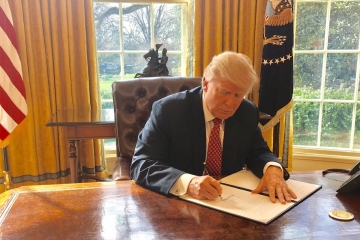
Donald Trump signing a bill

The One Big Beautiful Bill could bankroll supplemental learning

Travis Pillow 7.17.2025
Flypaper
view
Books on a library bookshelf

David Brooks is partly right about literary fiction

Meredith Coffey, Ph.D. 7.17.2025
Flypaper
view
Female student doing math

The gender gap in math performance starts early in elementary school

Jeff Murray 7.17.2025
Flypaper
view
Happy students in school

Student success systems in action: Lessons from the GRAD Partnership

Jill Hoppe 7.17.2025
Flypaper
view
Brian Jodice

#977: New law, new questions for school choice, with Brian Jodice

Brian Jodice, Michael J. Petrilli, Adam Tyner, Ph.D. 7.16.2025
Podcast
view
Child drinking soda

Which is worse: Sugary snacks or bad schools?

Chester E. Finn, Jr.
7.17.2025
Flypaper

Writing in National Review, Audrey Fahlberg describes efforts by Republican governors in a growing number of states to ban candy and soda from purchases paid for with federal SNAP benefits—the program formerly known as Food Stamps.

Hurrah for them, I say, aware that they must get waivers (from the federal Food Nutrition Act) to do this and that the food industry fights back fiercely, with heavy lobbying both in Washington and in their state capitals. The waiver part appears to be getting easier—four more states have requests getting reviewed—under RFK’s “MAHA” initiative, but the lobbying isn’t getting any less intense.

Why are governors (and Kennedy) doing this? Sure, it will help a bit on the margin to make the population healthier—a good thing—but GOP leaders tend to shun “nanny state” practices. At least as important, they’re saying, is to curb government subsidies of bad nutrition with taxpayer dollars.

As HHS Secretary Kennedy recently put it at a rally with Oklahoma governor Kevin Stitt, “If you want to drink a bottle of soda, you should be able to have that right….[But] the federal government should not be paying for it through taxpayer money.”

What I’m wondering is whether GOP leaders—governors, especially, but also Education Secretary Linda McMahon—will apply the same standard to awful schools and fraudulent providers that are supported by payments generated by federal tax credits (from the “Big Beautiful” new measure) and state-level voucher and ESA programs. (Because it’s a tax provision, Treasury Secretary Bessent will have more to say than McMahon—but he will likely seek her advice when writing the regulations.)

The libertarian wing of the school-choice world—including smart and earnest folks like Robert Enlow and Michael McShane—appears to be as opposed to quality-control regulation of such programs as Coca-Cola is to soda bans.

Whereas Food Stamps got underway in 1961 and (as with school lunches) there’s much history and debate about what does and doesn’t qualify, the explosion of private-school choice programs—which now sometime include subsidies for home schooling and sundry education “supplements”—is a recent development, the more so with Congress having just entangled Uncle Sam in a potentially very big way even as Texas lawmakers created a vast new program in the Lone Star State.

What does and doesn’t qualify is, today, a hodgepodge of differing state definitions and rules. That’s not wrong, for states generally do and should decide these things. They license schools to operate in the first place and they determine what satisfies their “compulsory attendance” laws. So governors should engage with this issue, with what gets put into kids’ heads as well as what goes into their mouths.

What’s to be done with fraudulent education operators? With schools in which almost nobody learns to read or cipher? With schools (and “supplements”) that ignore U.S. history and civics? With rules so lax that ski trips may be charged as field trips?

If, as every serious economist believes, K–12 education serves a public purpose—creating an educated society—as well as private purposes determined by parents and designed to benefit individuals, then states and their leaders have an obligation to ensure that that happens.

Every state has a constitutional provision assigning itself the responsibility of delivering education to its residents. The wording varies but the obligation is omnipresent.

I’m particularly taken with Indiana’s phrasing:

Knowledge and learning, generally diffused throughout a community, being essential to the preservation of a free government; it shall be the duty of the General Assembly to encourage, by all suitable means, moral, intellectual, scientific, and agricultural improvement; and to provide, by law, for a general and uniform system of Common Schools, wherein tuition shall be without charge, and equally open to all.

Indiana governor Mike Braun is among those now pushing to block soda and candy from SNAP. Will he and his peers do the same for K–12 schooling purchased with state or federal assistance? How will Secretary McMahon—or Bessent—encourage them to?

How high should that bar be set? Governors working on SNAP aren’t saying that only organic products qualify or that bran flakes are the only breakfast cereal worthy of subsidy. They’re actually setting quite a low bar, just evicting the worst offenders.

When it comes to schooling, some of us would be thrilled to see states set the bar high, allowing only high-performing schools and providers to participate. But that edges into nanny state territory and may discourage the innovation and dynamism that K–12 education sorely needs.

Surely, though, there should be at least a low bar—and where exactly to set it should get serious discussion and gubernatorial attention. Should doughnuts qualify for SNAP? Should schools that fail to teach the basics qualify for tax credits? Even the much-more-heavily regulated charter sector continues to run into fraud problems. So let’s get these questions into high-level policy considerations, not just disputations among ed-wonks. A good place to begin is agreeing that it’s nuts to say there should be no bar at all!

view
Donald Trump signing a bill

The One Big Beautiful Bill could bankroll supplemental learning

Travis Pillow
7.17.2025
Flypaper

Both supporters and detractors of a landmark education provision in the newly passed One Big Beautiful Bill Act have framed it, primarily, as a new funding stream to help families pay for private school.

But the education tax credit provisions President Trump recently signed into law have the potential to do something else: unlock new funding to help all students, including the economically disadvantaged, access tutoring and other learning opportunities that supplement what they do in school—provided, of course, that their states opt in.

The bill allows state-approved scholarship funding organizations to raise funds from donors. Donors would receive a dollar-for-dollar tax credit of up to $1,700 per year. The organizations (my employer is one of them) would fund scholarships to help students cover educational expenses that are eligible under the existing federal Coverdell Education Savings Account program.

Those expenses include private school tuition, but also academic tutoring. That means students attending traditional public schools and charter schools can receive from scholarships for supplemental learning.

This has the potential to create a new funding stream that would allow states to continue, or even expand, microgrant programs they created during the pandemic. Such programs were a boon to parent-directed tutoring and enrichment, but states like Idaho and Ohio are winding them down now that federal pandemic funding has expired.

For Democratic governors now weighing whether to approve SGOs and support new funding for private education, tutoring scholarships may offer an agreeable middle ground, creating a mechanism to fund academic support that can also benefit public-school students. For Republicans who are all-in on school choice, they offer an opportunity to expand access to academic support for all students, regardless of what schools they choose.

The tutoring scholarship opportunity

Federal tax credits could give states a new way to sustain their pandemic-era supplemental learning programs.

They could also unleash new, previously untapped resources from businesses and other groups with a stake in improving student learning.

For example, the Florida Chamber of Commerce Foundation recently released a bracing series of reports on our state’s need to close math education gaps. One of its key recommendations was for businesses to support tutoring initiatives. This is a sound idea. Many students struggle to master algebra due to gaps in the skills they should have acquired in earlier grades. The evidence is strong that well-designed tutoring initiatives could help.

But designing a new tutoring program from scratch could prove complicated for the philanthropic arms of Disney, Publix, or other major state employers. The new federal legislation offers them a simpler alternative: Help raise money to fund tutoring scholarships for students who need extra support.

For example, companies could promote individual giving campaigns among their employees, who could donate to scholarship-granting organizations approved by their state. The scholarship granting organizations can then provide scholarships to families that they can use to pay for tutoring. The SGOs would determine which families are eligible and assemble marketplaces of available tutors for families to choose from.

Businesses would thereby help marshal investments in our state’s future talent base, the employees would get a dollar-for-dollar tax credit, more students would get access to tutoring, educators who run tutoring services could get more paying customers, and if all goes well, public schools’ academic outcomes could improve. Everyone wins.

Expanding access to the tutoring market

Tutoring scholarships offer a once-in-a-generation opportunity to make the shadow education system accessible to more families. Right now, families with means purchase a panoply of tutoring and enrichment programs for their children, but many families struggle to fit these expenses into their household budgets—an often-underrated driver of education inequality beyond school walls.

This is a reality all over the world. There are more Kumon tutoring locations than Burger Kings. But unlike fast-food restaurants, private tutoring opportunities tend not to be equally distributed. As a fascinating paper showed last year, they tend to concentrate in affluent communities, where they share shopping center space with upmarket staples like Whole Foods and Pure Barre.

Tutoring and enrichment scholarships funded through federal tax credits have the potential to allow all families to have the kind of conversation that is second nature in many affluent families: “Johnny is struggling in math. Let’s hire him a tutor.”

Learning from cautionary tales

Seasoned education reformers will recall the last time something like a tutoring scholarship was supported through federal policy. It didn’t go very well. No Child Left Behind’s Supplemental Educational Services (SES) initiative left a trail of disappointing results.

New efforts funded by the “big, beautiful bill” should be informed by that experience.

SES began with a limited range of state-approved tutoring options. Families were often stuck with a small set of providers who contracted with their districts. Even if they tried to shop among those providers, they had little information to inform their choices. Students were confined to narrow “academic” activities, which often amounted to worksheets or study hall sessions that weren’t synced to what they were doing in class. Unsurprisingly, the program failed to deliver an overall boost in student achievement, and many states documented declining student participation.

Since the days of SES, however, the twenty-one states with education savings accounts or robust individual tax credits have shown it’s possible to create diverse, open markets for education services, including tutoring services that parents purchase with scholarship funds.

States and philanthropists can help create the conditions that will help families navigate these markets effectively.

That could include:

Information systems. Right now, families have few tools to evaluate whether their child will get results from Varsity Tutors, Mathnasium, or the independent tutor who lives down the street. User reviews through platforms like GreatSchools can help parents judge the reputations of providers in their area. They could also help parents become more astute shoppers by arming them with information on the kinds of features that make tutoring effective: Are the instructors properly trained? Do students spend enough time receiving instruction, i.e., is the tutoring “dose” high enough to be effective? Do tutees receive consistent attention from the same tutor?

Connective tissue. This is an underrated issue with out-of-school learning: How does it connect with the learning that students do in school? Can tutors get reports from teachers to compare notes or identify areas where students need extra work? Can students get help with transportation to ensure that the opportunity isn’t confined to parents with the time and resources to shuttle their kids to tutoring session?

Evaluations. Federal tax credits have the potential to unleash a wave of new experiments in supplemental learning. So it behooves us to learn as much as we can about how they work. Which programs and providers are more effective at boosting learning outcomes? How do families navigate the market for tutoring, and what changes could help them navigate it more effectively?

The tax credit provisions will take effect in January 2027, which means there’s ample time for state leaders and philanthropists to develop infrastructure that will support the program’s success.

Tax credit scholarships tend to be less regulated than other education choice programs. There’s a good reason for that: Nobody is forced to participate, and the programs require three layers of consent. Donors must agree to fund scholarships. Schools and educators must agree to offer their services. And families must agree that a school or tutor is the right option for their child.

That said, job one for states that hope to sponsor supplemental learning scholarships must be to ensure financial integrity among approved providers.

Decades ago, Florida learned this lesson the hard way, as unscrupulous nonprofits raised tax-credit-supported donations but failed to manage the money responsibly. The result was a set of regulations and audit requirements designed to ensure that any organization tasked with administering scholarships kept proper books and did not misappropriate money intended to help students.

Fifty big, beautiful experiments

If every state signs on, the One Big Beautiful Bill Act has the potential to launch fifty new experiments in parent-directed education.

In states with existing scholarship programs, it can provide supplemental funding to increase the purchasing power of cash-constrained families. In those without these programs, it has the potential to open doors to new learning options.

And in every state, it has the potential to unleash supplemental funding that brings the shadow education system out of the shadows.

But this need not be experimentation of the naïve, anything-goes variety. These new experiments should adopt the lessons of the first thirty-five years of state-led efforts to expand education choice.


view
Books on a library bookshelf

David Brooks is partly right about literary fiction

Meredith Coffey, Ph.D.
7.17.2025
Flypaper

It’s often been noted, yet bears repeating: Americans are reading less than ever, and that includes kids. For adults, reading reduces stress, improves sleep, slows cognitive decline, helps us live longer, expands our knowledge and, in the case of fiction, may even help us develop empathy. Kids who read get all those benefits, too, plus greater likelihood of academic success. Yet we beat on, boats against the current of what’s good for us, continuing to read less each year.

Last week, New York Times columnist David Brooks added another wrinkle to the conversation, arguing that literary fiction once occupied a prominent place in American culture, but has gone AWOL in recent decades, driven partly by an excess of “Colleen Hoover and fantasy novels and genre fiction” and partly by the rise of progressive political orthodoxy. One could parse eternally what constitutes “literary fiction” (i.e., “highbrow”) as opposed to “genre fiction” (e.g., romance, horror, fantasy, sci fi), as well as the extent to which those designations are valid—and whether they really matter. But, with the caveat that genre fiction can also be smart and tell us valuable things about our world, I’m willing to lean into Brooks’s premise that some distinction exists there. I also agree with him on several other counts:

  • Literary fiction used to occupy a larger share of bestseller lists.
  • It would be good if Americans read more books, especially more books that challenge them.
  • We all have stunted attention spans, which has weakened our proclivity for reading challenging books.
  • An excess of political orthodoxy can hinder critical thought and creativity.

Yet reports of literature’s death appear to be greatly exaggerated. True, Brooks might observe that I’m not “old enough to remember when novelists were big-time,” but I’ll counter that I’m young enough to have written a dissertation on twenty-first-century literary fiction. So here goes.

First, genre books have long sold big. As Brooks notes, literary greats Vladimir Nabokov and J.D. Salinger published some of the best-selling books of the early 1960s. But can you name the #1 seller in 1964, the year after Salinger’s Raise High the Roof Beam, Carpenters ranked third? It was John le Carré’s spy thriller, The Spy Who Came in from the Cold. Two years after that? The notoriously “melodramatic, lurid and camp” Valley of the Dolls. Since their debuts in the 1970s, Stephen King and Danielle Steel have sold astonishing numbers: 350 million and a billion copies, respectively. In short, pulp is hardly a new phenomenon.

Second, there is no shortage of highbrow novelists today, and to the extent that Americans are still reading, many are reading their work. Brooks may gloss over Barbara Kingsolver’s achievements as “reliably left-wing,” but that doesn’t change the fact that she’s a two-time winner of both the UK Women’s Prize and the Pulitzer Prize who can claim ten bestsellers. Other recent Pulitzer recipients, including Colson Whitehead and Anthony Doerr, have also sold millions of books. The New York Times bestseller list ended 2024 with Percival Everett’s James at the #1 spot. The year prior, Ann Patchett’s Tom Lake debuted at #1. Contrary to Brooks’s assertion that “interest in contemporary writers overall has collapsed,” critically recognized novels continue to sell—and that’s whether or not they are perceived as “progressive.”

Still, I can buy Brooks’s argument that literary fiction “plays a less central role” in American life than it once did. It certainly doesn’t take center stage today. And I wasn’t around to witness the early eighties, when Brooks recalls “vastly more book review outlets,” so I won’t argue about the cultural vibes back then.

But I wonder about the extent to which literary fiction has simply come to occupy a cultural space that is less visible to Brooks and his peers. Is it possible that, in part, he’s mistaking an evolution for a disappearance? Nobel laureate Kazuo Ishiguro’s most recent novel, Klara and the Sun, has over four hundred thousand Goodreads ratings, and his most popular, Never Let Me Go, has over eight hundred thousand. Trevor Noah’s March 2025 interview with critically acclaimed novelist Chimamanda Ngozi Adichie surpassed three hundred thousand YouTube views within two weeks; Adichie’s most famous TED Talk is now approaching fifteen million views. BookTok catapulted sales of Madeline Miller’s The Song of Achilles—a retelling of the Iliad—from a humble twenty thousand copies to over two million. I’ll grant that BookTok doesn’t primarily trade in works inspired by Greek mythology, but it is one of multiple vibrant, online spaces where discussion of literary fiction lives on.

Genre fiction is undoubtedly having a moment, and if that gets more people reading, all the better; novels don’t have to be highbrow to boost our brain health or our empathy, nor do they have to be highbrow to be intellectually provocative. What genre fiction hasn’t done, however, is supplant literary fiction. We aren’t reading as much as we should, very true, but the sorts of novels that that Brooks admires are still here, and they still matter. For the sake of literacy, as well as the creative, emotional, and cognitive development of children, let’s do our best to get them reading something—and all the better if it’s something truly worthy of their attention.

view
Female student doing math

The gender gap in math performance starts early in elementary school

Jeff Murray
7.17.2025
Flypaper

Rigorous research shows that boys and girls exhibit similar core numerical skills during infancy and early childhood, but the pervasive stereotype that boys are better than girls in the subject leads to behaviors that quickly transform that initial promise into later reality. As years of schooling progress, an achievement gap emerges and widens between the genders, and ultimately females end up consistently underrepresented in math-intensive college majors and jobs. Prior evidence suggests that the trouble starts early, and a new report in the journal Nature sharpens the picture.

A team of researchers from France and the United States, led by Pauline Martinot, a physician with a background in neurodevelopment and global health, makes use of four years of data from the French national testing program called EvalAide. It is a series of tests designed by the education ministry to give every French teacher in first and second grade a detailed picture of the needs, achievement levels, and progress of each child in their class, covering both language and mathematics. French law generally requires students to begin first grade in the September following their sixth birthday. Nationwide testing is conducted at the start of first grade, the middle of the first-grade year, and at the start of second grade. Results from each administration are given to teachers and parents, with the idea that teachers will explain to families what pedagogical means are being and will be used to boost outcomes for the next test, and families will have direct insight into what is and is not working along the way. Martinot and her team follow four cohorts of students entering first grade across the country from 2018 to 2021—more than 2,650,000 children.

The average mathematical performance of boys and girls was nearly identical at the start of first grade. By the middle of first grade, however, a small but already highly significant gap favoring boys was observed. By the start of second grade, that effect size had quadrupled, creating a giant gap between boys’ and girls’ test performance. This pattern repeated in each of the four years studied here—with no variation for Covid-impacted school years—and varied only slightly across family, class, and school type and across socioeconomic levels. Various other robustness checks were made, including analyzing only the parts of the EvalAide test that were identical across all test administrations (the majority of questions are designed to increase in difficulty with each test), controlling for variations in student age at test administration, and controlling for varying amounts of schooling received prior to first grade. The researchers even analyzed selected pairs of boys and girls who were closely matched on both math and language test results, as well as numerous demographic factors at the start of first grade. These students’ math outcomes still diverged in a similar pattern to the overall findings on both subsequent test administrations.

The researchers learned more about how the gap is forming: At the first test administration, although boys and girls had the same mean score, boys were over-represented at both ends of the distribution (lowest and highest deciles). Thus, similar averages for boys and girls. After one year of schooling, however, the picture changes dramatically, with the top 5 percent of test performers comprising more than twice as many boys as girls (2.3 boys for each girl). And this same pattern was observed in the vast majority of individual classrooms—tens of thousands of them across France—every year. Martinot and her team caution that these are not causal findings and likely don’t generalize beyond France, but they are satisfied that something is occurring within first grade classrooms across the country to manifest these alarming shifts in academic outcomes.

They conclude with speculation on the causes of this pervasive pattern, largely focusing on the behaviors of adults—teachers and parents/guardians—who adhere to gender-based stereotypes and transmit them to the young people in their care. It is also suggested that math starts to “get serious” as soon as it becomes an “academic subject” in its own right and that this new emphasis on math achievement might serve to amplify adult mindsets around it and to make students, especially girls, more receptive and responsive to those preconceptions, whether problematic or beneficial. As to solutions, the report encourages education for teachers and parents to erase gendered stereotypes, as well as any anxieties of their own on the subject, and suggests schools should provide access to strong role models of scientists, analysts, teachers, astronauts, and statisticians for girls to appreciate and emulate. Good practices for anyone interested in boosting the presence of women and girls in math and science.

SOURCE: Pauline Martinot et al., “Rapid emergence of a maths gender gap in first grade,” Nature (June 2025).

view
Happy students in school

Student success systems in action: Lessons from the GRAD Partnership

Jill Hoppe
7.17.2025
Flypaper

In the wake of the Covid-19 pandemic, schools can’t seem to shake chronic absenteeism, behavioral challenges, and lowered student achievement. Research consistently points to solutions like relationship-building and early-warning systems, yet many efforts fail to combine these approaches into a comprehensive strategy. A new report examines one model for connecting targeted supports for at-risk students with broader efforts to improve school climate.

Developed using feedback from several hundred educators, students, and community members, the GRAD Partnership is a coalition of twelve organizations in collaboration with Johns Hopkins University’s Everyone Graduates Center. It works with schools, districts, states, and local communities to implement systems to help students stay on track for high school graduation and postsecondary success. These systems are comprised of (1) strong, supportive relationships; (2) real-time, actionable, and holistic data; (3) strategic improvement actions; and (4) student-centered mindsets. At the core of this approach are Student Success Teams: school leaders, educators, and staff who meet regularly to monitor key indicators like attendance, behavior, grades, and well-being. Using these data and student/family input, they identify root causes of problems, take targeted action, and refine strategies to keep students on track.

As a follow-up to last year’s initial report, this latest impact report evaluates the impact of the GRAD Partnership’s student success systems on course failure and chronic absenteeism in the program’s second year. The researchers compared de-identified, grade-level data to baseline data from the year before implementation. The data come from middle and high schools that began implementation in 2023–24 (first-year group) or 2022–23 (second-year group). Course failure data are available for eighty-four grade-level groups across fifty-three first-year schools and forty-five groups across thirty-four second-year schools. Chronic absenteeism data are available for seventy-one grade-level groups in forty-seven first-year schools and thirty-three groups across twenty-nine second-year schools across the country.

The researchers assessed the program’s implementation using a ten-question multiple-choice survey administered to coaches working with GRAD Partnership schools to determine overall implementation fidelity levels across ten key system components in the areas of data use, interventions, and relationships/mindsets.

The report describes three main findings. First, both first- and second-year participating schools saw declines in students failing one or more courses. Among first-year schools, the mean course failure rate dropped from 33 percent to 27 percent. Ninth-grade effect sizes were especially large, with mean failure rates declining from 30 percent to 23 percent. In second-year schools, mean course failure rates dropped from 31 percent before participation to 20 percent after year two. Middle school, high school, and ninth-grade results were comparable to these overall second-year trends.

Second, both first- and second-year groups saw significant reductions in chronic absenteeism. Among first-year schools, the overall average chronic absenteeism rate declined from 34 percent to 30 percent, with ninth-grade rates falling from 37 percent to 32 percent. In second-year schools, chronic absenteeism declined from 29 to 21 percent. For ninth grade, however, the 14 percent improvement seen after year one did not improve further in year two, signaling a potential plateau.

Third, the survey results show that 82 percent of reporting schools achieved either solid or strong levels of implementation as reported by affiliated coaches, while 18 percent ended year one with only partial implementation. From year one to year two, schools saw further improvements in key areas, including the use of predictive data and human insights (48 percent to 70 percent), access to holistic data (48 percent to 75 percent), and efforts to develop student-centered mindsets (14 percent to 30 percent).

The results are promising in addressing both chronic absenteeism and course failure—two major barriers to student success. However, the use of course failure as a primary measure of program effectiveness raises concerns. With grade inflation increasing over the past decade, course failure rates may present a skewed picture of student success and may falsely portray student gains. Future research should consider incorporating alternative indicators such as standardized test scores, student belonging, or school climate—or at minimum, control for grading trends. Determining which components of the student success system are most effective in improving outcomes is also important, especially given the plateau in ninth-grade chronic absenteeism.

While the GRAD Partnership’s student success systems show real potential for reducing course failure and chronic absenteeism, the long-term impact depends on targeted support, continued refinement, and better metrics to capture student progress.

SOURCE: Robert Balfanz and Vaughan Byrnes, “Delivering Success: The GRAD Partnership Year Two Impact Results,” Everyone Graduates Center at Johns Hopkins University (June 2025).

view
Brian Jodice

#977: New law, new questions for school choice, with Brian Jodice

7.16.2025
Podcast
 

On this week’s Education Gadfly Show, Brian Jodice, National Press Secretary for the American Federation for Children joins us for a lively debate on the federal school choice provision embedded in the newly enacted “One Big Beautiful Bill”—including its potential impact in blue states.

Then, on the Research Minute, Adam reviews a new Education Next study showing that a low-cost college-planning course can boost success for high-achieving, low-income students.

Recommended content: 

  • “Democrats’ School Choice Dilemma” —Michael J. Petrilli, for The Wall Street Journal
  • “Federal school choice skeptics are tilting at windmills” —Shaka Mitchell, for the Thomas B. Fordham Institute
  • “College Counseling in the Classroom” —Joshua Hyman, Education Next
  • “#974: The Risks of the Educational Choice for Children Act, with Jon Valant” —Education Gadfly Show, Thomas B. Fordham Institute
  • Education Gadfly Show #974: The Risks of the Educational Choice for Children Act, with Jon Valant
  • Education Gadfly Show #963: All about the Educational Choice for Children Act, with Jim Blew 

Feedback Welcome: Have ideas for improving our podcast? Send them to Stephanie Distler at [email protected].  

Fordham Logo

© 2026 The Thomas B. Fordham Institute
Privacy Policy
Usage Agreement

National

P.O. Box 110
Burke, VA 22009

202.223.5452

[email protected]

Ohio

P.O. Box 82291
Columbus, OH 43202

614.223.1580

[email protected]

Sponsorship

130 West Second Street, Suite 410
Dayton, Ohio 45402

937.227.3368

[email protected]