Both supporters and detractors of a landmark education provision in the newly passed One Big Beautiful Bill Act have framed it, primarily, as a new funding stream to help families pay for private school.
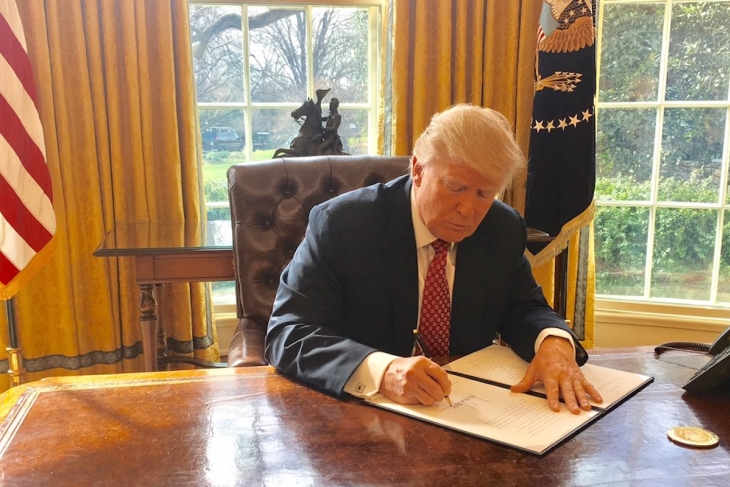
But the education tax credit provisions President Trump recently signed into law have the potential to do something else: unlock new funding to help all students, including the economically disadvantaged, access tutoring and other learning opportunities that supplement what they do in school—provided, of course, that their states opt in.
The bill allows state-approved scholarship funding organizations to raise funds from donors. Donors would receive a dollar-for-dollar tax credit of up to $1,700 per year. The organizations (my employer is one of them) would fund scholarships to help students cover educational expenses that are eligible under the existing federal Coverdell Education Savings Account program.
Those expenses include private school tuition, but also academic tutoring. That means students attending traditional public schools and charter schools can receive from scholarships for supplemental learning.
This has the potential to create a new funding stream that would allow states to continue, or even expand, microgrant programs they created during the pandemic. Such programs were a boon to parent-directed tutoring and enrichment, but states like Idaho and Ohio are winding them down now that federal pandemic funding has expired.
For Democratic governors now weighing whether to approve SGOs and support new funding for private education, tutoring scholarships may offer an agreeable middle ground, creating a mechanism to fund academic support that can also benefit public-school students. For Republicans who are all-in on school choice, they offer an opportunity to expand access to academic support for all students, regardless of what schools they choose.
The tutoring scholarship opportunity
Federal tax credits could give states a new way to sustain their pandemic-era supplemental learning programs.
They could also unleash new, previously untapped resources from businesses and other groups with a stake in improving student learning.
For example, the Florida Chamber of Commerce Foundation recently released a bracing series of reports on our state’s need to close math education gaps. One of its key recommendations was for businesses to support tutoring initiatives. This is a sound idea. Many students struggle to master algebra due to gaps in the skills they should have acquired in earlier grades. The evidence is strong that well-designed tutoring initiatives could help.
But designing a new tutoring program from scratch could prove complicated for the philanthropic arms of Disney, Publix, or other major state employers. The new federal legislation offers them a simpler alternative: Help raise money to fund tutoring scholarships for students who need extra support.
For example, companies could promote individual giving campaigns among their employees, who could donate to scholarship-granting organizations approved by their state. The scholarship granting organizations can then provide scholarships to families that they can use to pay for tutoring. The SGOs would determine which families are eligible and assemble marketplaces of available tutors for families to choose from.
Businesses would thereby help marshal investments in our state’s future talent base, the employees would get a dollar-for-dollar tax credit, more students would get access to tutoring, educators who run tutoring services could get more paying customers, and if all goes well, public schools’ academic outcomes could improve. Everyone wins.
Expanding access to the tutoring market
Tutoring scholarships offer a once-in-a-generation opportunity to make the shadow education system accessible to more families. Right now, families with means purchase a panoply of tutoring and enrichment programs for their children, but many families struggle to fit these expenses into their household budgets—an often-underrated driver of education inequality beyond school walls.
This is a reality all over the world. There are more Kumon tutoring locations than Burger Kings. But unlike fast-food restaurants, private tutoring opportunities tend not to be equally distributed. As a fascinating paper showed last year, they tend to concentrate in affluent communities, where they share shopping center space with upmarket staples like Whole Foods and Pure Barre.
Tutoring and enrichment scholarships funded through federal tax credits have the potential to allow all families to have the kind of conversation that is second nature in many affluent families: “Johnny is struggling in math. Let’s hire him a tutor.”
Learning from cautionary tales
Seasoned education reformers will recall the last time something like a tutoring scholarship was supported through federal policy. It didn’t go very well. No Child Left Behind’s Supplemental Educational Services (SES) initiative left a trail of disappointing results.
New efforts funded by the “big, beautiful bill” should be informed by that experience.
SES began with a limited range of state-approved tutoring options. Families were often stuck with a small set of providers who contracted with their districts. Even if they tried to shop among those providers, they had little information to inform their choices. Students were confined to narrow “academic” activities, which often amounted to worksheets or study hall sessions that weren’t synced to what they were doing in class. Unsurprisingly, the program failed to deliver an overall boost in student achievement, and many states documented declining student participation.
Since the days of SES, however, the twenty-one states with education savings accounts or robust individual tax credits have shown it’s possible to create diverse, open markets for education services, including tutoring services that parents purchase with scholarship funds.
States and philanthropists can help create the conditions that will help families navigate these markets effectively.
That could include:
Information systems. Right now, families have few tools to evaluate whether their child will get results from Varsity Tutors, Mathnasium, or the independent tutor who lives down the street. User reviews through platforms like GreatSchools can help parents judge the reputations of providers in their area. They could also help parents become more astute shoppers by arming them with information on the kinds of features that make tutoring effective: Are the instructors properly trained? Do students spend enough time receiving instruction, i.e., is the tutoring “dose” high enough to be effective? Do tutees receive consistent attention from the same tutor?
Connective tissue. This is an underrated issue with out-of-school learning: How does it connect with the learning that students do in school? Can tutors get reports from teachers to compare notes or identify areas where students need extra work? Can students get help with transportation to ensure that the opportunity isn’t confined to parents with the time and resources to shuttle their kids to tutoring session?
Evaluations. Federal tax credits have the potential to unleash a wave of new experiments in supplemental learning. So it behooves us to learn as much as we can about how they work. Which programs and providers are more effective at boosting learning outcomes? How do families navigate the market for tutoring, and what changes could help them navigate it more effectively?
The tax credit provisions will take effect in January 2027, which means there’s ample time for state leaders and philanthropists to develop infrastructure that will support the program’s success.
Tax credit scholarships tend to be less regulated than other education choice programs. There’s a good reason for that: Nobody is forced to participate, and the programs require three layers of consent. Donors must agree to fund scholarships. Schools and educators must agree to offer their services. And families must agree that a school or tutor is the right option for their child.
That said, job one for states that hope to sponsor supplemental learning scholarships must be to ensure financial integrity among approved providers.
Decades ago, Florida learned this lesson the hard way, as unscrupulous nonprofits raised tax-credit-supported donations but failed to manage the money responsibly. The result was a set of regulations and audit requirements designed to ensure that any organization tasked with administering scholarships kept proper books and did not misappropriate money intended to help students.
Fifty big, beautiful experiments
If every state signs on, the One Big Beautiful Bill Act has the potential to launch fifty new experiments in parent-directed education.
In states with existing scholarship programs, it can provide supplemental funding to increase the purchasing power of cash-constrained families. In those without these programs, it has the potential to open doors to new learning options.
And in every state, it has the potential to unleash supplemental funding that brings the shadow education system out of the shadows.
But this need not be experimentation of the naïve, anything-goes variety. These new experiments should adopt the lessons of the first thirty-five years of state-led efforts to expand education choice.