Mobile Navigation

  • National
    • Policy
      • High Expectations
      • Quality Choices
      • Personalized Pathways
    • Research
    • Commentary
      • Gadfly Newsletter
      • Flypaper Blog
    • Events
    • Scholars Program
  • Ohio
    • Policy
      • Priorities
      • Media & Testimony
    • Research
    • Commentary
      • Ohio Education Gadfly Biweekly
      • Ohio Gadfly Daily
  • Charter Authorizing
    • Application
    • Sponsored Schools
    • Resources
  • About
    • Mission
    • Board
    • Staff
    • Career
Home
Home
Advancing Educational Excellence

Main Navigation

  • National
  • Ohio
  • Charter Authorizing
  • About

National Menu

  • Topics
    • Accountability & Testing
    • Advanced Education
    • Career & Technical Education
    • Charter Schools
    • Curriculum & Instruction
    • ESSA
    • Evidence-Based Learning
    • Facilities
    • Governance
    • Personalized Learning
    • Private School Choice
    • School Finance
    • Standards
    • Teachers & School Leaders
    • Think Again
  • Research
  • Commentary
    • Gadfly Newsletter
    • Flypaper Blog
    • Gadfly Podcast
  • Events
  • Scholars Program

The Education Gadfly Weekly

Sign Up to Receive Fordham Updates

We'll send you quality research, commentary, analysis, and news on the education issues you care about.
Thank you for signing up!
Please check your email to confirm the subscription.

The Education Gadfly Weekly: When school boards act like the PTA

Volume 25, Number 42
10.23.2025
10.23.2025

The Education Gadfly Weekly: When school boards act like the PTA

Volume 25, Number 42
view
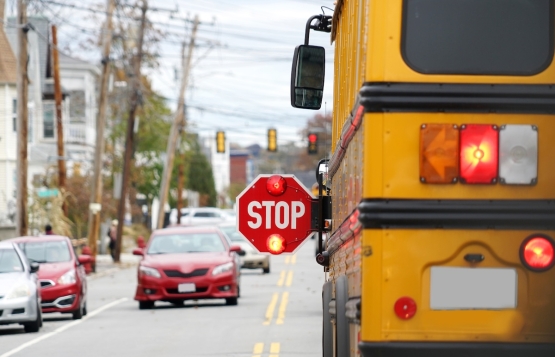
School bus
High Expectations

When school boards act like the PTA

Fordham’s latest study, "Who’s on Board? School Boards and Political Representation in an Age of Conflict," offers an unvarnished look at the nation’s school board members. The findings confirm that local school boards function less like independent oversight bodies and more like glorified parent-teacher associations.

Robert Pondiscio 10.23.2025
NationalFlypaper

When school boards act like the PTA

Robert Pondiscio
10.23.2025
Flypaper

Rethinking advanced math in high school

Adam Tyner, Ph.D.
10.23.2025
Flypaper

What the military taught me about the education system

Thibaut Delloue
10.23.2025
Flypaper

A better way to do standardized testing?

Jeff Murray
10.23.2025
Flypaper

Who wants to be a teacher?

Robert Chung
10.23.2025
Flypaper

Redesigning school staffing for student success | Episode 991 of The Education Gadfly Show

10.22.2025
Podcast
view
Student doing math in a classroom

Rethinking advanced math in high school

Adam Tyner, Ph.D. 10.23.2025
Flypaper
view
Military personnel writing

What the military taught me about the education system

Thibaut Delloue 10.23.2025
Flypaper
view
Students testing

A better way to do standardized testing?

Jeff Murray 10.23.2025
Flypaper
view
Teacher in a classroom

Who wants to be a teacher?

Robert Chung 10.23.2025
Flypaper
view

Redesigning school staffing for student success | Episode 991 of The Education Gadfly Show

Bryan C. Hassel, Michael J. Petrilli, David Griffith, Ph.D., Adam Tyner, Ph.D. 10.22.2025
Podcast
view
School bus

When school boards act like the PTA

Robert Pondiscio
10.23.2025
Flypaper

School boards rarely make national news unless someone is shouting. A community member reads a passage from a controversial library book; a teacher’s social media post ignites outrage; a member storms out over masks or diversity policies. Skirmishes over culture war issues dominate headlines, giving the impression that the most pressing questions in local education politics are whether the local school board is too conservative or too “woke.” The deeper and more consequential problem is far more banal: Too many school boards don’t govern. They cheerlead.

A new study from the Thomas B. Fordham Institute, Who’s on Board? School Boards and Political Representation in an Age of Conflict, by David M. Houston and Michael T. Hartney, offers an unvarnished look at the nation’s school board members. The findings confirm what I’ve long suspected (and said, including during my own ill-fated run for school board in my upstate New York town): Local school boards function less like independent oversight bodies and more like glorified parent-teacher associations.

Houston and Hartney surveyed more than 5,000 board members across 3,000 districts. The portrait that emerges is of a group that doesn’t always mirror the communities they serve demographically. Nearly nine in ten are white; almost half hold postgraduate degrees; one in four is a current or former teacher. Board members’ partisanship and ideology largely mirror the American public’s and tend to align with local voters on hot-button cultural issues, the pair found. They’re also less supportive of charter schools and teachers unions than their constituents. However (and this, to my mind, is the troublesome bit), school board members give their districts glowing marks. Three-quarters grade their districts an A or B, while the public is much less sanguine.

This is not evidence of corruption or malice. It’s something more subtle and insidious: institutional capture. The same dynamic that makes regulatory agencies too cozy with the industries they oversee makes school boards too loyal to the districts they’re supposed to supervise and hold accountable. Most board elections are low-turnout, off-cycle affairs, dominated by candidates with ties to local education establishments. Once elected, they’re socialized into a culture that prizes collegiality and harmony over honest oversight.

As Mike Petrilli and Adam Tyner note in the report’s foreword, boards “focus more on facilities and labor issues than on academics.” In other words, they devote their energy to maintenance and morale, not to student learning and accountability.

This gap between a school board’s power and authority versus what it actually does is the heart of the problem. The board-district relationship need not be adversarial, but it must be independent. A good board should resemble a corporate board of directors: setting vision, ensuring transparency, holding executives accountable, and asking uncomfortable questions. Instead, too many boards act as if their job is to “support” the superintendent and staff—offering encouragement and deference, not impartial oversight.

When I ran for my local board years ago, I made this point and lost. Voters seemed to prefer candidates who promised to “support our teachers” and “work as a team.” But there’s a difference between working together amicably and being captured by the institution you’re meant to steer. It’s not that boards are too partisan or ideological. The real divide is professional: boards are dominated by people steeped in education’s internal culture, not by independent-minded representatives of the broader community.

The result is a system where even well-intentioned board members measure success by institutional satisfaction rather than student outcomes. They ask whether the superintendent’s budget passed smoothly, not whether third graders can read. They grade their districts generously, while families vote with their feet for charters, microschools, and education savings accounts.

For all the attention paid to angry board meetings and “book bans,” the more serious and enduring crisis is institutional capture. If the American public school system is to regain trust, it needs boards willing to act less like boosters and more like fiduciaries of the public interest. That starts with designing elections that encourage real competition. Ideas that have been proposed include “on-cycle” contests on Election Day in November, recruiting candidates outside the education establishment, and even making school board elections partisan affairs; adding candidates’ political affiliation to the ballot has been shown to increase voter turnout. After the election, it means training board members to understand student learning—not just budgets and buses.

Local control of education doesn’t mean uncritical support for the status quo. The job of a school board is to represent citizens, not staff; to serve students, not systems. The culture wars will come and go. The question is whether our local boards will ever learn to govern like boards—and not like PTAs with a bigger budget.

Editor’s note: This was first published by AEI.

view
Student doing math in a classroom

Rethinking advanced math in high school

Adam Tyner, Ph.D.
10.23.2025
Flypaper

For decades, high-achieving high school students have been told the surest way to impress selective colleges is to take calculus. In a recent national survey of 133 admissions officers, 74 percent said the College Board’s Advanced Placement calculus course is among the math classes that “carry the most weight” in admissions decisions. And yet, once a student is in college, statistics is a more common course requirement than calculus. In fact, most college students will graduate without ever taking calculus.

Despite these facts, a study I co-authored on schools in high schools in the New England region found that 40 percent don’t offer AP statistics. I was curious about what appears to be a disconnect between standard math pathways and math in practical applications. And further, what might be done to create more rigorous math opportunities for a wider number of students?

I collaborated with University of Texas researchers on another study that followed millions of students in the state. We found that those who pursued calculus were more likely to major in science, technology, engineering, or math and enroll in highly selective colleges. For classmates who were not pursuing STEM majors, taking calculus had minimal long-term effects on their future careers. There were no significant differences in degree completion or wages for those who studied calculus and those who took other math classes.

Our research doesn’t dispute that students who take calculus often go on to earn higher salaries than those who don’t, but the cause and effect is more nuanced. Calculus itself doesn’t necessarily lead to bigger paychecks; rather, students aiming for high-earning fields like engineering or computer science tend to take it because those careers require it.

In fact, based on our research, after accounting for students’ academic preparation, those who took statistics earn just as much money in the long run as those who studied calculus. This further supports the conclusion that while calculus remains essential for STEM-bound students, it shouldn’t be the only marker of rigor.

Forcing students not planning a STEM career to take calculus because it’s the only rigorous math option may discourage and frustrate them, while a different math course such as statistics might better prepare them for high-earning careers in other fields that better align with their interests. For example, statistics and data science courses can build skills that are applicable in areas ranging from business to public policy, health care, and the social sciences.

That’s why high schools and colleges should offer—and recognize—multiple rigorous math options. Rather than making calculus the only advanced math class, schools should provide choices that match students’ aspirations, and colleges should value these on par with AP calculus.

What should matter is giving every student the opportunity to tackle challenging, relevant subjects such as calculus, statistics, computer science, and data science. Those courses should be backed by robust standards, curricula, and assessments, like those established by the AP program, to ensure the courses will be recognized by colleges for their academic rigor that is also aligned with students’ career paths.

The AP program is widely recognized and accepted by colleges for its standards, curriculum, and comprehensive end-of-course exam. Districts that offer a wider variety of AP math options will provide more students with access to rigorous relevant math. Other emerging options, like AP computer science courses or perhaps a future AP data science class, could also serve as rigorous alternatives, giving students a choice of advanced math that connects directly to their aspirations.

In the longer term, state education officials wishing to develop data science or quantitative computing opportunities would be wise to follow the AP recipe that has made the program the gold standard for high school education. And high schools should make AP statistics itself more broadly available, especially for those considering non-STEM majors. More students are likely to discover relevance and career opportunities in collecting, analyzing, visualizing, and interpreting data. It’s time to build and strengthen high school math pathways that better reflect that reality.

Editor's note: This was first published by The 74. 

view
Military personnel writing

What the military taught me about the education system

Thibaut Delloue
10.23.2025
Flypaper

During my second tour as a U.S. Navy officer, I served as a navigator aboard a test warship in San Diego. In port, navigators often have little to do other than prepare for the next deployment. But not every military job is created equal.

On warships, even when tied to a pier, something always breaks, and it’s the Navy’s enlisted men and women who are called upon to fix it. The Navy’s most impressive asset isn’t aircraft carriers, it’s these young servicemembers who, often barely out of high school, roll up their sleeves in the middle of the night to repair a gas turbine, install a new pump, or less heroically, unclog a sewage line. The Navy has mastered the formidable task of turning fresh-faced teenagers into engineers, technicians, radar operators, information systems specialists, chefs, and logisticians.

After completing my military service, I worked for some years as a public school administrator, looking after young people who weren’t too far removed in age from my previous Navy shipmates. Though I entered education with a renewed mission of “making a difference for these kids,” my optimism crashed head-on into the stark realization that school remains a place utterly inept at preparing young people for the world. It’s worth asking why our public education system, which is better funded on average than in nearly every other developed country, isn't capable of doing in 12 years what the military does in a few months.

By the time they complete their initial training, service members have a keen sense of their purpose within the organization they have just joined. When they graduate from high school, however, young people have little understanding of how the system they’ve just been funneled through will prepare them for the job market they are now expected to enter. It’s no wonder our public schools don’t seem to be doing a good job when it’s not clear what their graduates should be able to know or do.

It’s a tired refrain, in fact, to remark that our education system is broken. Our kids’ academic achievement has hit all-time lows, and they’re reporting higher struggles with mental health than ever before. Public confidence in our schools has dropped precipitously since the pandemic. Meanwhile, employers are struggling to hire qualified employees, and college graduates are increasingly finding themselves unemployed. If you only looked at their test scores, you would conclude the average Gen Zer was barely able to tie their shoelaces together. Give them some time aboard a Navy ship, however, and they suddenly become technical experts. The Navy alone trained over 40,000 sailors last year, many newly out of high school, in hundreds of specialties.

Reshaping public schooling to equip young people with the skills and incentives to enter the job market is a potent path to reforming this wayward institution. There is a growing movement in public education, sometimes called opportunity pluralism, to reverse the “college for all” mentality with a system that more meaningfully connects students with employment. As Michael B. Horn and Daniel Curtis have pointed out, despite the decades-long push to increase access to higher education, “many American students have little sense of what jobs and careers are even possible and no concrete understanding of how college might help.”

Career technical education programs, while common in public school districts, generally fail to emphasize school-business partnerships that allow employers to provide mentorship and real-world learning opportunities for students. Apprenticeships, meanwhile, once a common system for upward mobility, have been supplanted by the ballooning college industrial complex. Every year, we invest over $500 billion of taxpayer money in colleges and universities and under $400 million in apprenticeship programs.

Not every high school graduate should have the same credentials or abilities. Specialization is prized in the job market, like in the Navy, because that is what employers want. While many young people leave the school system feeling inadequate, in the military, everyone becomes an expert in his or her trade. Associating “ability” solely with academic proficiency remains one of the most baffling features of our education system.

This is not to minimize the importance of academics or to suggest that “getting a job” ought to be the only function of public schools. Academic knowledge is not only crucial in many occupations, but it’s worthy in itself. Yet research shows that the academic achievement gap is predictable from the moment students enter school, and that instilling academic knowledge in students is best done early. We can both reform the lack of academic preparation in earlier grades while also allowing older learners, as they enter high school, to specialize in more varied types of knowledge and skills that have more direct application to entry-level jobs. And for anyone who assumes that technical trades are beneath academics, I would argue a 19-year-old who can fix a centrifugal pump has a better understanding of physics than his peer who has just completed his high school science requirement.

Because most sailors do not serve past their initial enlistment—generally four years—the Navy must maintain a well-tuned system of job training. Connecting young people with a profession, and even a purpose, may just be the cure to the “anxious generation.”

There are bright spots to follow. The nonprofit organization The Urban Assembly has established a network of career-themed high schools in New York City that focus not only on college readiness but on connecting young people with career fields as varied as health care, software engineering, and the performing arts. And P-TECH, or Pathways in Technology Early College High Schools, is a pioneering school model that allows students to earn both a high school diploma and a two-year postsecondary degree in STEM fields at no cost. There are over 300 P-TECH schools internationally, partnering with 600 companies in sectors like IT, advanced manufacturing, and energy. These models, however, are exceedingly rare and very much alternatives to traditional schooling.

Schools cannot do it alone. They do not direct education policy. It is up to policymakers and education leaders to refocus the function of schools toward what young people will actually do with their education. While the military excels at running its own education system, families are fleeing our actual education system in droves. That benefits military recruiters, but it’s a troubling state of affairs for our schools.

Editor’s note: This was first published by Real Clear Education.

view
Students testing

A better way to do standardized testing?

Jeff Murray
10.23.2025
Flypaper

The types, amounts, and modes of testing done in our schools are subject to debate and analysis, with “too much,” “too often,” “too complex,” and “not helpful” among the many complaints. A new report looks to address these questions by focusing on optional assessments called “benchmark modules.” They appear to counter some of the criticisms of testing—proving popular with teachers and seeming to provide positive impact on students’ end-of-year exam scores.

Data come from Utah, where the state board of education launched benchmark modules for instructional use in 2016. These are available for grades 3–8 in English language arts (ELA), math, and writing, and for grades 4–8 in science. Use was—and remains—optional from the state’s perspective and is typically determined at the school or classroom level. (Parents can also opt students out of these or nearly any test in Utah.) While the state doesn’t report who uses them, that information is collected, and researchers were given access to it down to the classroom level. State policymakers see the modules as a “productivity tool”: short, targeted interim assessments for teachers to understand how students are performing in relation to Utah’s state standards during the course of instruction.

Researcher Kyla McClure of the University of Colorado Boulder looks at administrative data for all benchmark modules assigned by Utah teachers from the 2020–21 through the 2022–23 school years in grades 3–8. Each observation identifies the student, teacher, class, and school, as well as scores on every module, thus allowing those results to be linked to end-of-year test scores. McClure runs fixed effects regressions to estimate the effect of completing benchmark modules on end-of-year outcomes.

Use of benchmark modules more than doubled during the relatively brief period under study, from 486,000 in 2020–21 to 1.3 million in 2022–23. The number of students in Utah also increased over this period, as did the percentage of eligible classrooms and teachers assigning modules (from 26 percent to 50 percent), which accounted for some of that growth. Also relevant was that teachers assigned a growing number of benchmark modules per student per class.

In 2022–23, most teachers who used the modules did not begin assigning them until March, indicating primary usage as preparation for end-of-year state testing. The second largest group included teachers who only assigned modules at or near the start of the school year, perhaps as diagnostic tools. The third largest group comprised teachers who used modules continuously through the year—and the number of such users increased by over 400 percent since 2020–21. Across all three years of the study, teachers gave an average of 2.4 to 4.2 benchmark modules per student, with end-of-year users giving the fewest. Continuous users gave almost triple the number of benchmark modules as the other groups, on average.

McClure finds a small, positive, and statistically-significant relationship between having taken a benchmark module and end-of-year summative test scores. Students who took at least one module in a grade and subject scored about 0.02 to 0.05 standard deviations higher than their peers in the same school or with the same teacher. Students who took an additional benchmark module scored about 0.006 to 0.012 standard deviations higher, on average, compared to students who took one fewer module—a smaller but still statistically significant impact as the number of modules rose. The effect was higher on end-of-year math tests than on ELA tests but near zero on science tests. Scores were higher in classes where modules were assigned continuously throughout the year, versus start-of-year and end-of-year classes.

In the end, this report presents an interesting snapshot. No causal effects can be determined, and mechanisms to explain the observations can only be conjectured at. Are kids responding to the feedback they get via benchmark modules? Do teachers make changes in their instructional approach based on module scores? Does experiencing multiple modules sharpen a student’s test-taking ability? Do school leaders review and address module data with teachers? Utah’s schools and classrooms remain black boxes, but the data emanating from them—especially in terms of this optional interim testing regime—are intriguing.

SOURCE: Kyla N. McClure, “Benchmark Modules: A Better Interim Assessment? Evidence From Statewide Use of Benchmark Modules in Utah,” AERA Open Journal (October 2025).

view
Teacher in a classroom

Who wants to be a teacher?

Robert Chung
10.23.2025
Flypaper

Although teacher quality policies involving salaries, working conditions, performance evaluations, and professional development play important roles across the profession, such factors only matter once one enters the classroom. At least as consequential is who enters the classroom in the first place and their experiences prior to being a teacher: What types of individuals does the teaching profession attract? Do careers such as nursing and social work attract students with the same demographic and academic characteristics as those interested in K–12 teaching? And what types of higher education institutions tend to draw students interested in teaching?

A new study aims to address these questions by looking at the demographics of college applicants interested in teaching in America. It analyzes potential reasons why some groups who enter other fields steer clear of the classroom. Researchers merged eleven years of Common Application data with publicly available information from the National Center for Education Statistics (NCES), the Common Core of Data (CCD), the Private School Universe Survey (PSS), and the Integrated Postsecondary Education Data System (IPEDS) to develop a detailed picture of applicants’ academic and personal characteristics. If one checks a box on the Common App saying that teaching is something they’d consider, the researchers define that as “interest” in the profession.

The authors employ a logistic regression model that compares applicants’ interest in teaching to characteristics like race, gender, and SAT composite score. They also compare the demographic and academic characteristics of applicants interested in teaching and other careers, such as nursing and social work. Finally, they examine which types of postsecondary institutions tend to draw prospective educators, looking at Carnegie classification (school type), distance from home, applicants’ test scores, and other features, such as whether the school is a HBCU or a Hispanic-Serving Institution.

Consistent with prior research and much real-world evidence, they find that women and White students are more likely to be interested in teaching than men and other racial and ethnic groups. The odds of Asian students expressing interest in teaching are approximately 54 percent lower than White students. For Black students, the odds drop further to 60 percent less. Applicants who applied to more selective colleges (and submitted more applications) were also less likely to be interested in teaching, echoing previous studies that found a negative correlation between interest in teaching and such measures as SAT and ACT scores. The authors also examine whether family background and income affect applicants’ desire to go into teaching but find a weaker connection.

While interest in K–12 teaching varies across groups, interest in the profession as a whole has seen a steady decline, dropping 20 percent from 2015 to 2025 (with similar trends seen in school counseling, social work, and therapy). In contrast, careers such as law, business, and nursing have seen mounting interest. Nursing, in particular, saw a 25 percent increase over the same ten-year period. The authors note that, because racial and ethnic disparities in teaching interest are more stark than for other career fields, factors exclusive to K–12 education may help explain the long-standing racial representation gaps seen in the country’s teacher workforce.

College applicants interested in teaching are 45 percent more likely to apply to a less selective college and to one close to home. Students applying to colleges within 50 miles of their homes are nearly 40 percent more likely to flag teaching as a career interest than those applying to colleges more than 500 miles away.

Who wants to be a teacher? Certainly not everyone. Women, White students, and those who pursue less selective colleges seem to show the most interest. Education policymakers and practitioners hoping to alleviate teacher shortages and improve teacher quality would do well to familiarize themselves with the findings of this study, some of which confirms prior knowledge on the teacher workforce. Meanwhile, schools and classrooms across the U.S. can certainly use all the help they can get from prospective teachers.

SOURCE: Brendan Bartanen, Andrew Avitabile, and Andrew Kwok, “Who Wants to Be a Teacher in America?” EdWorkingPapers (September 2025).  

view

Redesigning school staffing for student success | Episode 991 of The Education Gadfly Show

10.22.2025
Podcast
 

This week, we’re joined by Bryan Hassel, co-president of Public Impact, to discuss how redesigning school staffing—through models like Opportunity Culture—can boost both teacher retention and student success.

Then, on Adam Tyner’s final Research Minute, he shares a study on how ending compulsory religious education in German schools shaped students later in life—making them less religious, but more likely to work and earn higher incomes as adults.

Recommended content: 

  • Opportunity Culture —Public Impact
  • Think Again: Do the returns to teacher experience fizzle out? —Anne Podolsky and Linda Darling-Hammond for the Thomas B. Fordham Institute
  • Here’s how we hold on to experienced teachers: Give them the support they need —Linda Darling-Hammond and Michael J. Petrilli for the Hechinger Report
  • Can Schools Change Religious Attitudes? — Benjamin W. Arold, Ludger Woessmann and Larissa Zierow, The Journal of Human Resources (2025)

Feedback Welcome: Have ideas for improving our show? Send them to [email protected]

Fordham Logo

© 2026 The Thomas B. Fordham Institute
Privacy Policy
Usage Agreement

National

P.O. Box 110
Burke, VA 22009

202.223.5452

[email protected]

Ohio

P.O. Box 82291
Columbus, OH 43202

614.223.1580

[email protected]

Sponsorship

130 West Second Street, Suite 410
Dayton, Ohio 45402

937.227.3368

[email protected]