

Reforming ed schools from within
Deans for Impact seeks to organize teacher training around the “science of learning.” Robert Pondiscio and Kate Stringer
Deans for Impact seeks to organize teacher training around the “science of learning.” Robert Pondiscio and Kate Stringer

“The problem in American education is not dumb teachers. The problem is dumb teacher training,” University of Virginia cognitive scientist Dan Willingham recently wrote in the New York Times. Indeed, if there’s any part of the education pipeline that’s ripe for retooling, it’s the way we prepare teachers. Complaints are legion, long-standing, and not unique to policy wonks. Teachers themselves routinely bemoan how poorly prepared their training left them for the realities of classroom life. Fewer than half of new teachers described their training as “very good” in a 2012 survey by the American Federation of Teachers, while one in three new teachers reported feeling unprepared on his first day.
Thus, it can only be viewed as a great good thing that two dozen deans of education schools have come together under the banner of “Deans for Impact” and committed themselves to a common set of principles, including data-driven improvement, common outcome measures, empirical validation of teacher preparation methods, and accountability for student learning. They’re also persuading other teacher preparation programs to do the same.
At a Tuesday event at the National Press Club, the group unveiled a new report, “The Science of Learning,” which summarizes existing research from cognitive science and applies it to classroom practice. It’s familiar stuff to those teachers—still far too few—who follow Willingham’s work (along with lead author Paul Bruno, he helped produce the report and spoke at the event) but it’s a refreshing statement aimed at preparation programs that too often fetishize theory, teachers’ dispositions toward learners, or soft pedagogical skills at the expense of subject matter depth.
It’s a good marker to put down. “Too often, people are inclined to go with their gut when it comes to education. The more we can elevate robust and empirical education, the better,” said Benjamin Riley, executive director of Deans for Impact, which launched in January with a $1 million grant from the Charles and Lynn Schusterman Family Foundation.
Schools of education have largely received a pass in our accountability-mad era. Attempts at even modest reform typically bring howls of protest. That reality prompted Robert Pianta, the head of UVA’s education school and one of the Deans for Impact, to write recently that he was “embarrassed that professionals responsible for the preparation of teachers seem to oppose so adamantly efforts to evaluate the competence of the workforce they produce.”
The fact that at least some education school deans seem eager to hold themselves responsible for turning out teachers who can advance student achievement is encouraging. That said, this is not the first time these institutions have tried to raise their game. Nearly thirty years ago, the Holmes Group sought to enhance the standing of education schools within their host universities, burnish their reputation within the field, and create a “true profession of teaching.” At its zenith, nearly one hundred schools were part of the effort to “make the education of teachers intellectually more solid” and create standards of professional entry that would be “professionally relevant and intellectually defensible.” The effort petered out within a decade but those goals remain necessary. And elusive.
There’s already at least one encouraging bit of evidence that Deans for Impact is having an impact on the deans themselves. Two years ago, just 10 percent of the nation’s education schools fully cooperated with the National Council on Teacher Quality’s sometimes-controversial annual assessment of the nation's 2,400 teacher preparation programs. For the upcoming 2016 report, fifteen of the twenty-four Deans for Impact schools are cooperating—with responses “pending” from most of the others, according to NCTQ. Only one, Temple University, is declining to participate. A small thing, perhaps, but it suggests that the deans’ commitment to transparency and accountability might be more than happy talk. As a group, NCTQ confirms, the Deans for Impact schools are participating at an above-average rate.
A thornier question is whether deans can change the habits and beliefs of their own tenured faculties. The old joke holds that science advances one funeral at a time. Perhaps nowhere is that more true than among education school faculties. “When you ask academics to think critically about their curriculum or about their courses…there’s usually is resistance,” acknowledged Greg Anderson, dean of the Temple University College of Education, at Tuesday’s event. He noted that education school faculties believe that they’re doing a good job. “But when you ask them, ‘What is the evidence? What evaluations have you done?’ often there’s silence, which is ironic,” he noted. “We’re academics. We do research. But we don’t often do it in our own institutional context, which is a problem.” In short, while Deans for Impact is a fine idea with laudable goals, a sister organization may also be needed: Professors for Impact.
Riley hopes the research findings catalogued in “The Science of Learning” can lead to a broader discussion at education schools and in the field at large about the role of cognition and how it plays out in classrooms. “We’re very much interested in moving to this next phase to figure out what education prep programs can do to provide meaningful opportunities for future teachers to grapple with these principles,” he says.
“We put the document out, but what makes this different is that we tried to build a bit of coalition around it as well. A broad list of stakeholders on both sides of the political spectrum said this is important. We’re hoping to change the conversation that takes place around teacher prep and signal a movement past sniping—and to solutions and scientific inquiry,” Riley concluded.
Setting a baseline that science—not personal preference or philosophy—should drive effective teaching practice is a good place to start. Here’s wishing these deans well—and hoping they make an impact.
Ingram Publishing/Thinkstock
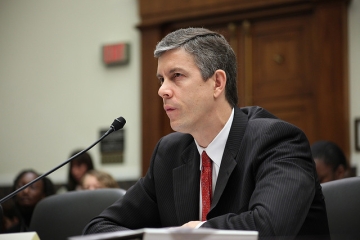
Secretary of Education Arne Duncan deserves the many plaudits he received on Friday from President Obama and his friends in the reform community—and even from his sometime-foes in the teachers’ unions. As everyone remarked, he’s a good and decent man, a fighter for disadvantaged kids who’s passionate about his work and loyal to his team. That was certainly my personal experience with him; he was more gracious toward me than I probably deserved, considering the many swipes I’ve taken at his policy decisions over the years.
So please bear with me one more time: Even at this moment of celebration, congratulation, and reflection regarding Arne’s time at the helm, the Obama administration can’t seem to help itself. It almost seems determined to poison the well with Congress and play to the stereotype of a government unwilling to abide by constitutional limits.
I’m referring, of course, to the decision to appoint John King (another smart, committed reformer and all-around great guy) as “acting” education secretary for an entire year rather than putting him through the Senate confirmation process.
It’s certainly true that the confirmation process has slowed to an agonizing pace over the past few decades. And the Bush 43 administration also opted to avoid some confirmation battles in its waning days. But not, as far as I know, for cabinet-level officials. There’s reasonable debate about whether, say, the assistant secretary for planning, evaluation, and policy development needs to be confirmed by the Senate. But there’s no debate that heads of cabinet agencies are subject to the Constitution’s advice and consent clause. They (along with federal judges) are arguably the main reason the clause is there. It’s part of what we quaintly term the “separation of powers.”
I’m hoping that reporters press the White House for answers. Why does it think it can ignore the Senate’s role in confirming cabinet members? And why is it afraid to put John King, a strong candidate who backs many Republican principles and is likely to have GOP supporters, through the process?
To be sure, a confirmation hearing these days is never a picnic. Some Republicans would complain about the Common Core. Some Democrats would complain about testing and teacher evaluations. But so what? That’s the process, and King can take it. He dealt with angry mobs in New York; surely he can survive the Senate HELP committee. (Lamar Alexander and Patty Murray are among the most decent human beings left on Capitol Hill.)
Perhaps the administration is worried that Senate Republicans would use the confirmation as leverage to get something else it wants. But that’s politics. What happened to basic respect for the political process? What about the Constitution?
***
All of us know that we’re living through painfully polarized times. We tend to blame the other side for our ideological rigidity and the resulting gridlock. I know that people inside the current administration—and their friends inside the reform movement—see Congress as broken, hopeless, and intransigent. And there’s clearly some truth in that.
But Team Obama needs to understand that it’s contributing to the problem. Again and again, it has refused to show restraint, constitutional deference, or sincere interest in compromise. With Race to the Top, it could have invited states to submit their best ideas. Instead, it asked them to swear allegiance to a prescriptive reform agenda. With No Child Left Behind waivers, it could have provided regulatory relief to fix a law that was badly out of date and not working very well. Instead, it added conditions that went far beyond statutory limits and forced states to commit to half-baked teacher evaluation policies—planting the seeds for a widespread backlash against the bigger reform agenda, including Common Core. And with the reauthorization of the Elementary and Secondary Education Act (ESEA), it could have worked in good faith with congressional Republicans to find a reasonable compromise on the appropriate federal role going forward. Instead, it has demonized conservatives as insufficiently committed to poor and minority children, incidentally going a considerable way to derail the reauthorization process. (It’s also true that John Boehner’s exit pushes another car or two off the track.)
John King’s appointment could be (or could have been) an opportunity to turn the page. He should ask to go through the Senate confirmation process. He should, perhaps, insist on it. But that’s not all. He should also provide real leadership in getting an ESEA revamp across the finish line by embracing the bill that the Senate already passed in overwhelmingly bipartisan fashion. He should make clear that he views that bill as far from perfect. But he should support it anyway, fight for it, ask House Democrats to vote for it, and urge President Obama to sign it—because he understands that in a democracy, especially at a time of deep political polarization, compromise is the only alternative to stasis.
Arne Duncan wasn’t willing to support a Senate bill that had huge bipartisan support because the bill stripped him of too much authority. He wasn’t willing to practice relinquishment.
Now it’s John King’s turn to wear the crown. Let’s hope he’s willing to share power with other people, recognize his own constitutional obligations, exert his own political good sense, and urge the White House to do likewise.
House Committee on Education and the Workforce Democrats/Flickr

Editor's note: This post was originally published in a slightly different form by the Seventy Four; click to see Antonucci’s deeper analysis of Friedrichs v. California Teachers Association.
In its 2015–16 term, the U.S. Supreme Court will consider a case that weighs the respective rights of teachers’ unions and the individuals who choose not to join them. If the court’s decision goes as expected, it will inflict a significant financial blow on teachers’ unions, even while improving the financial lot of many teachers themselves.
In Friedrichs v. California Teachers Association, the court will examine the legality of “agency fees”—payments that public sector unions in twenty-one states are allowed to charge workers who decline to join their ranks. The unions call them “fair-share fees,” arguing that every teacher in a bargaining unit benefits from collective bargaining, so every teacher should chip in to cover the costs.
Public school teacher Rebecca Friedrichs and her fellow plaintiffs beg to differ. They maintain that the compulsory fees violate their First Amendment rights to free speech and free association. Supreme Court watchers on the Left and Right agree that the court is likely to decide for the plaintiffs on these grounds.
No one can be forced to join a teachers’ union or contribute to its political activities, so unions can only compel nonmembers to help pay for non-political activities. But there’s the rub: It’s the unions themselves that define what’s “non-political” and thus “chargeable” to fee payers. According to the National Education Association (NEA), these activities include collective bargaining, preparations for strikes, grievance processing, relevant communications with bargaining unit members, and costs associated with the union’s representative bodies.
The plaintiffs counter that collective bargaining itself is intrinsically political. Furthermore, many of the activities the NEA defines as non-political could be construed as quite the opposite.
Consider, for instance, the expenses “associated with the unions’ representative bodies,” which are chargeable to fee payers because they cover activities related to the governance and administration of the unions. However, conducting union business—some of which is political in itself—is not the only activity that takes place during a meeting of union representatives. At the annual NEA Representative Assembly, delegates are solicited for contributions to the union’s political action committee (PAC). In fact, the NEA collects the bulk of its national PAC money during that four-day event. Fundraising is constant, auctions and raffles are held, and the most generous contributors are lauded from the podium. So while fee payers do not contribute to the PAC, their fees help make this PAC fundraising possible.
Fee payers do have an opportunity to contest what the union decides is chargeable—by participating in a hearing before an arbitrator who is paid by the union. The documents related to the union’s calculations are presented to the objecting teachers on the day of the hearing. The complainants have no independent means to verify the data, and arbitrators rule in favor of unions in nearly every instance.
Non-members can then take the union to court, on their own dime and their own time. As the unions will attest, public school teachers are short on both.
A decision for the plaintiffs in Friedrichs won’t give teachers more time, but it may well lead to better pay, at least for many. That’s because collective bargaining does not in fact benefit all workers in a bargaining unit: Many individuals make tangible sacrifices under union contracts. Math teachers might make less than they could because the union insists they be paid the same as physical education teachers—even if there is a scarcity of math teachers and a glut of PE teachers. A teacher with seven years of experience makes less than a teacher with ten years on the job, regardless of relative skills, performance, or any other factor directly related to student learning. A teacher with a bachelor’s degree makes less than a teacher with graduate credits, even if those credits don’t measurably apply to the work they do.
An individual who eschews union membership might well ask: If I am getting a bum deal as a public school teacher, should I be forced to pay the organization that negotiated that deal—and which was elected years ago by people who no longer work here?
In the coming months, the Supreme Court will effectively answer that question. And if the justices side with Friedrichs, teachers won’t only have their political rights back. They will also have more leverage and flexibility to push for a new deal—one that is fair to them, and not just to union leaders.
trekandshoot/iStock/Thinkstock

The National Committee for Responsive Philanthropy (NCRP) sees itself as an “independent watchdog of foundations.” But is clearly an organization with a strong “social justice” bent. It should surprise no one that this report from its Philamplify unit looks largely askance at the Walton Family Foundation’s grant making in education. WFF and NCRP may both get out of bed each morning resolved to advance the cause of social justice, but they operate on very different theories of action. Everything that follows is a function of these differences.
For example, the report criticizes WFF’s “overreliance” on market-based reform vehicles. This is a bit like criticizing a fish for its overreliance on water. Walton’s support of charter schools and choice does not “hinder the transformative potential of the foundation’s education program”; it is the transformative potential of its program. Similarly, the report holds that the expansion of high-quality charter schools and related advocacy have created “meaningful benefits for individual students and families, but have not achieved far-reaching, sustainable and equitable system-wide improvement”—a finding that is a mere two or three generations premature (and elides the utter failure of much longer-standing democratic institutions to bring about those same ends).
Affluent Americans, by dint of their ability to pay tuition or move to communities with excellent schools, have always enjoyed a substantial degree of choice when it comes to educating their children. It seems lost upon Gita Gulati-Partee, author of the Philamplify report, that increasing choice in disadvantaged communities might be the very definition of “prioritizing equity as part of sustainable social change” or “maximizing social justice outcomes with greater strategic thinking, transparency and accountability,” two of Philamplify’s recommendations. Walton will be forgiven for wondering if that’s not precisely what they’ve long been doing.
The evaluation is not hostile or dismissive, merely obtuse. Its criticisms are earnest and unfailingly polite, rendered in respectful, collegial tones that only occasionally veer into condescension. “WFF expresses a genuine concern for and commitment to opportunity for people living in poverty,” the report notes. That the authors felt compelled to say so explicitly says much about how their audience views Walton and its grant making.
There are many other particulars I’d take exception to. A long section of the report insists that, “on the whole, charters do no better than traditional public schools and many do worse.” This is a claim that is becoming increasingly difficult to support in light of the 2015 CREDO report (also funded by Walton), which found that urban charters are making real, measurable differences for low-income kids of color. This information somehow leads Philamplify to make the claim that “charters only perform less badly than traditional district schools without actively changing conditions for the affected communities.”
Ah. I see.
The bottom line is that Walton’s vision of market-driven change is not NCRP’s. This report tells us more about NCRP’s preferred social justice means that Walton’s social justice ends.
SOURCE: Gita Gulati-Partee, “How can this market-oriented grantmaker advance community-led solutions for greater equity,” Philamplify (May 2015).
Researchers from the National Bureau of Economic Research recently examined whether financial incentives can increase parental involvement in children’s education and subsequently raise cognitive and non-cognitive outcomes. The analysts conducted a randomized field experiment during the 2011–12 school year in Chicago Heights, a low-performing urban school district where 90 percent of students receive free or reduced-price lunch. The 257 parent participants were randomly assigned to one of three groups: a treatment group in which parents were paid immediately; a second treatment group in which parents were paid via deposits into a trust fund that could only be accessed when their children enrolled in college; and a control group that received no payment. Parents in both treatment groups could earn up to $7,000 per year for their attendance at parent academy sessions (eighteen sessions, each lasting ninety minutes, that taught parents how to help children build cognitive and non-cognitive skills), proof of parental homework completion, and the performance of their child on benchmark assessments.
To measure cognitive outcomes, the analysts averaged results along the Peabody Picture Vocabulary Test and the Woodcock Johnson III Test of Achievement; to measure non-cognitive outcomes, they averaged results from the Blair and Willoughby Measures of Executive Function and the Preschool Self-Regulation Assessment. These assessments were given to students at the beginning of the program and the end of each semester.
The effect of the financial incentive on children’s cognitive test scores was statistically insignificant. The incentive’s impact on non-cognitive skills, however, was larger and statistically significant—approximately .203 standard deviations. Interestingly, in both cognitive and non-cognitive measures, the two treatment groups yielded identical results.
The researchers broke the results down based on race and pre-treatment test scores. Hispanic children (48 percent of the sample) and white children (8 percent of the sample) showed large and significant increases in both cognitive and non-cognitive domains. Black children, on the other hand, demonstrated a negative but statistically insignificant impact on both cognitive and non-cognitive dimensions. The researchers explored several hypotheses for these differences, including the extent of engagement, demographics, English language proficiency, and pre-treatment scores, but they could find no “convincing explanations” for the differences between racial groups.
Overall, the results seem to raise more questions than answers. Is $7,000 per year for parental incentives cost-effective? Do the cognitive and non-cognitive gains persist, or do the effects wear off after a few years? And why are there such large differences between racial groups? While parental involvement is undoubtedly critical, particularly for young children, the question of how to genuinely engage parents—particularly those from disadvantaged circumstances—remains very much an open one.
SOURCE: Roland G. Fryer, Jr., Steven D. Levitt, and John A. List, “Parental Incentives and Early Childhood Achievement: A Field Experiment in Chicago Heights,” National Bureau of Economic Research, Working Paper 21477 (August 2015).
Since the civil rights era, the United States has struggled with how best to integrate schools—and today is no different, as concerns mount over signs of school re-segregation. This report by the Century Foundation’s Halley Potter argues that charter schools might have a role to play, by using their “flexibility, funding, and political viability” to solve various integration problems.
Charter schools can prove helpful in at least five ways: available funding, the ability to enroll children across district lines, program and curricular autonomy, independent leadership and management, and battle-hardened political effectiveness. As integration programs continue to struggle against political barriers (frequently about funding), school choice leaders could prove to be valuable allies.
Two examples of successful and charter-backed inter-district integration are the Rhode Island Mayoral Academies and Connecticut’s Interdistrict School for Arts and Communication (ISAAC). The Mayoral Academy schools draw their students from four districts, two urban and two suburban, which encompass a broad socioeconomic range. The schools use a weighted lottery system to ensure that they admit an equal number of students from the urban and suburban areas and that at least half of their enrolled students are eligible for free or reduced-price lunch. Not only has the school fostered a diverse and accepting environment—it has narrowed the achievement gap.
Likewise, ISAAC admits students from a socioeconomically diverse collection of twenty school districts and uses similar techniques of weighted admission to ensure that all districts are fairly represented in the student population. In 2014, the school was recognized by Connecticut Voices for Children as one of the only charter schools to meet their high standards for integration.
Unfortunately, these two examples exceptions. The report argues that, too often, myriad obstacles stand between charter schools and integration. State law sometimes prohibits out-of-district enrollment. Elsewhere, impediments like limitations on weighted lotteries and a lack of transportation funding combine to make charters an infrequent tool for desegregation.
Potter views these obstacles as surmountable. The report includes recommendations for state and federal governments, charter authorizers, and communities. She advises lawmakers to rethink and clarify the vague or lenient laws mentioned above, which will give charters more flexibility and, in some cases, more funding. And authorizers and community members should not only give priority to creating schools with integration-centric missions, but also make efforts to continually foster the diversity within schools.
In the end, the report makes a convincing argument that charters can facilitate integration across districts. But myriad obstacles mean that any such trek will be lengthy and politically challenging.
SOURCE: Halley Potter, “Charters Without Borders: Using Inter-District Charter Schools as a Tool for Regional School Integration,” the Century Foundation (September 2015).