Mobile Navigation

  • National
    • Policy
      • High Expectations
      • Quality Choices
      • Personalized Pathways
    • Research
    • Commentary
      • Gadfly Newsletter
      • Flypaper Blog
    • Events
    • Scholars Program
  • Ohio
    • Policy
      • Priorities
      • Media & Testimony
    • Research
    • Commentary
      • Ohio Education Gadfly Biweekly
      • Ohio Gadfly Daily
  • Charter Authorizing
    • Application
    • Sponsored Schools
    • Resources
  • About
    • Mission
    • Board
    • Staff
    • Career
Home
Home
Advancing Educational Excellence

Main Navigation

  • National
  • Ohio
  • Charter Authorizing
  • About

National Menu

  • Topics
    • Accountability & Testing
    • Advanced Education
    • Career & Technical Education
    • Charter Schools
    • Curriculum & Instruction
    • ESSA
    • Evidence-Based Learning
    • Facilities
    • Governance
    • Personalized Learning
    • Private School Choice
    • School Finance
    • Standards
    • Teachers & School Leaders
    • Think Again
  • Research
  • Commentary
    • Gadfly Newsletter
    • Flypaper Blog
    • Gadfly Podcast
  • Events
  • Scholars Program

The Education Gadfly Weekly

Sign Up to Receive Fordham Updates

We'll send you quality research, commentary, analysis, and news on the education issues you care about.
Thank you for signing up!
Please check your email to confirm the subscription.

The Education Gadfly Weekly: Unsolicited advice for discipline reformers

Volume 19, Number 2
1.9.2019
1.9.2019

The Education Gadfly Weekly: Unsolicited advice for discipline reformers

Volume 19, Number 2
view

Unsolicited advice for discipline reformers—from a wannabe

Just before Christmas (or about ten thousand news cycles ago) the Trump administration took the widely anticipated step of reversing the Obama administration’s much-debated guidance on school discipline, the essential goal of which was to pressure school districts to address the well-documented and longstanding r

David Griffith, Ph.D. 1.9.2019
NationalFlypaper

Unsolicited advice for discipline reformers—from a wannabe

David Griffith, Ph.D.
1.9.2019
Flypaper

How to get schools to use practices that work

Michael J. Petrilli
1.9.2019
Flypaper

Rekindling moral education: A worthy challenge for schools of choice

Chester E. Finn, Jr.
1.9.2019
Flypaper

The effects of Pittsburgh's new restorative justice program

Jessie McBirney
1.9.2019
Flypaper

The Education Gadfly Show: Federal education policy in 2019

1.9.2019
Podcast
view

How to get schools to use practices that work

Michael J. Petrilli 1.9.2019
Flypaper
view

Rekindling moral education: A worthy challenge for schools of choice

Chester E. Finn, Jr. 1.9.2019
Flypaper
view

The effects of Pittsburgh's new restorative justice program

Jessie McBirney 1.9.2019
Flypaper
view

The Education Gadfly Show: Federal education policy in 2019

Michael J. Petrilli, David Griffith, Ph.D., Amber M. Northern, Ph.D. 1.9.2019
Podcast
view

Unsolicited advice for discipline reformers—from a wannabe

David Griffith, Ph.D.
1.9.2019
Flypaper

Just before Christmas (or about ten thousand news cycles ago) the Trump administration took the widely anticipated step of reversing the Obama administration’s much-debated guidance on school discipline, the essential goal of which was to pressure school districts to address the well-documented and longstanding racial disparities in suspensions and expulsions.

The context for that decision—and in particular, the spurious link between federal policy and the tragic Parkland massacre—put yours truly in an unusually tight spot, even for a guy who splits his time between liberal politics and a conservative education think tank. Yet despite the nightmarish politics, I agree with the decision more than I disagree with it. At best, pressuring districts to equalize their suspension rates is a recipe for gamed data and an overly politicized debate. And at worst, it could have unintended and potentially serious consequences for students (though the latter are speculative).

Regardless, the decision is a setback for discipline reformers, a group I would be happy to join if it would get its act together. So where should reformers go from here? What strategy should they pursue in a country that somehow elected both Barack Obama and Donald Trump?

Herewith is my unsolicited advice for the folks who ought to be winning me over.

1. Be honest about the problem

In my personal experience, almost nobody really believes that African American, Hispanic, and low-income students, or students with disabilities, exhibit the same rates of misbehavior as wealthy, white, or Asian students, or students without disabilities. However, a significant number of well-meaning people do believe that publicly acknowledging such differences does more harm than good.

Doubtless that belief is well-founded when it comes to cable TV and print media, which routinely traffic in problematically reductive imagery. But it’s a dubious foundation for public policy, where reality bites.

Is it really so hard to admit that—thanks to our nation’s tragic history and an extraordinarily complex set of risk factors—including but not limited to poverty, family structure, mass incarceration, lead paint, teen culture, et cetera, et cetera, and so forth—black students are on average more likely to misbehave than white students? Would America really be more broken if discipline reformers admitted as much?

The term “politically incorrect” has gotten a bad rap in recent years, thanks to its increasingly close association with bona fide examples of the various “isms.” But the debate over school discipline shows why it’s worth reclaiming: Politically correct problems lead to politically correct solutions, which are nearly always suboptimal.

2. Don’t make it about racism

Like many observers, I suspect that some portion of the disparities in observed suspension rates reflects the implicit or explicit biases of America’s teachers and administrators. But unfortunately, proving as much is basically impossible. And of course, actually correcting such bias is extraordinarily difficult, since the mental heuristics underlying it are essentially hardwired.

Obviously, the Office of Civil Rights has a duty to vigorously investigate complaints. But we can’t use “big data” to systematically identify—and then eliminate—suspensions that are the result of bias. Hence, the by-now-well-oiled pivot to the “disparate impact" theory of discrimination enforcement—under which administrators could be subject to a civil rights investigation if their data showed significant racial disparities in the use of suspensions or expulsions, and could theoretically be found guilty of violating federal law even if they had race-neutral discipline policies that were being applied even-handedly.

Although I’m sympathetic to the logic of disparate impact in other circumstances, I don’t think it’s a very useful way of thinking about school discipline. For example, there’s a huge difference between voter fraud (which is incredibly rare) and student misbehavior, which is an invisible crisis. Furthermore, because our education system is highly segregated, well-meaning teachers in predominantly black schools must often balance the interests of their most challenging students against those of the black majority. So a disparate impact approach to school discipline just doesn’t have the same moral implications as it does for housing, where the economic “benefits” of discrimination flow to mostly white homeowners.

Suppose, for the sake of argument, that at least some black students receive unnecessary suspensions due to individual or institutional biases, and that suspensions have at least some negative impact on suspended students (as seems likely). Clearly it follows that “too many” black kids are suspended. But it doesn’t follow that we should equalize suspension rates unless we believe racism explains most or all of the suspension gap, or we think suspensions are unambiguously bad—meaning there are no potential benefits or unintended consequences to consider.

And of course, if we really think suspensions are unambiguously bad, we should eliminate them entirely.

3. Don’t be utopian

Why not eliminate suspensions entirely? After all, we know that kids need stability, that most suspended students don’t spend their time away from school reflecting on their misbehavior, and that such students are very likely to misbehave again when they return to the classroom—and then get suspended again. All of which suggests that suspensions are an unsatisfactory solution to the problem of serious misbehavior.

One common response is that we need to get disruptive students out of classrooms. But that’s an argument for “in school suspensions,” or perhaps for more “Alternative Learning Centers,” or expulsions for chronic offenders. Similarly, many defenders argue that suspensions send a message to parents and other students that certain behavior is unacceptable. And there’s something to that, according to teachers. But suspensions aren’t the only way to send such a message either. So why use them?

One fundamental problem is that it’s hard to construct a legal framework that appropriately prioritizes the majority’s right to an education without sacrificing the rights of individual students. So we tend to err on the side of individuals, leaving despairing teachers and principals with little alternative to kicking the can down the road in the absence of a long-term solution.

Another fundamental problem is that public resources are limited, and adequately supervising the most disruptive students is expensive. So in practice, some schools just don’t have the resources to make “in-school suspension” or “ALC” a tenable destination for every occasional or serial disruptor, much less a meaningful form of rehabilitation.

In short, the average low-income school’s discipline policy is a classic kludge—part workaround, part triage, and about as “effective” as each of those labels implies.

4. Fund that mandate—or better yet, don’t have one

Unsurprisingly, rates of in-school suspension (ISS) have spiked in many districts that have reduced their rates of out-of-school suspension (OSS). However, because of the aforementioned utopianism, we don’t seem to talk about it very much. (Where are the detailed explanations of how ISS should be organized and staffed?)

Even more taboo are the more unsavory “alternatives” that keep popping up in major urban districts where reform has been attempted. So sure, revise district policy to reduce the number of suspensions. But don’t be surprised if, absent additional resources commensurate with that ambition, they are subsequently underreported or reclassified, or if the length of the average suspension increases, or if there’s a mysterious spike in serious incidents or expulsions.

Better yet, given the difficulty of determining how much funding is “enough,” and the very real possibility that no amount will be enough in the toughest schools, just use all that new money voters have entrusted you with to hire a bunch of teaching assistants, or ISS or ALC coordinators, or mental health counselors in the most underserved or underfunded schools without mandating that they lower their suspension rates—and then see how much those rates decline organically, when the teachers in those schools are given a fighting chance.

I know that last paragraph will rub some die-hard reformers the wrong way. But if you’re concerned about equity, the thing to do is soak the rich, not implicitly tax the almost-as-poor. So given the choice between another unfunded and arguably unenforceable mandate and just throwing some more money at the problem, I choose the latter—at least for higher grade levels.

5. Stop free-associating, get specific, and proceed with caution in grades six through twelve.

As experienced readers know, most real progress is incremental. Most active policy debates revolve around painful trade-offs. And most new ideas don’t work. So in general, we should resist the urge to do “something” because if feels like we’re not doing enough.

Consider the standard list of “restorative” practices, which includes both “proactive circles” that let students “share their feelings and build trust” and “reactive circles” that aim to piece things back together, neither of which are to be confused with “restorative conferences” that may or may not include friends and family, in addition to the affected students.

That’s at least three different somethings by my count, the preferred combination of which doesn’t seem to work very well, according to a recent study by the RAND Corporation, which found that Pittsburgh’s restorative practices initiative had no discernible effect on arrest rates or suspensions for violent offenses, and a negative impact on students’ perceptions of school climate, as well as the academic achievement of middle school students, black students, and students in mostly black schools. (But hey, at least we did something.)

Similarly, consider the nebulousness of Positive Behavior Interventions and Supports (PBIS), the only “alternative to suspension” for which there is reasonably strong evidence of effectiveness. But only at the elementary level. Spend some quality time with the PBIS website, and you will quickly realize that it’s at least twenty-seven different somethings—from positive reinforcement, to “pre-correction,” to daily behavioral report cards, to mental health and family support counseling. Resources permitting, some of those sound promising. But which are genuinely effective at scale? And at what opportunity cost?

Honestly, I have no idea. And the PBIS website has zero interest in enlightening me, much less the thousands of overburdened principals and teachers who are even now trying to make “it” work.

***

As a self-identified liberal and a two-time Obama voter, I hate what’s happening to America right now. But between the surplus of wishful thinking and the widespread refusal to confront the obvious tradeoffs, y’all are in real danger of losing me on this one.

Obviously, discipline reform is good. But it’s also bad. And perhaps most importantly, with a little more patience and realism, it could be better.


view

How to get schools to use practices that work

Michael J. Petrilli
1.9.2019
Flypaper

Before the holiday break, I wrote a series of posts discussing how we might turn the “End of Education Policy” (as I see it) into a Golden Age of Educational Practice. It’s time to pick up where I left off.

To be honest, much of what I published in late 2018 amounted to throat-clearing, a warm-up before the main event. My basic (and hardly brilliant) argument was this:

  • It’s possible to identify instructional practices and materials that are more effective than others at improving student outcomes, tapping the tools of science.
  • To do so, we need to collect lots more information about what’s going on in America’s classrooms, and be willing to experiment with new approaches.
  • Then smart people with credibility with educators need to separate the wheat from the chaff, developing practitioner guidance based on the best currently available evidence.

Not that any of this is simple, as it takes serious investment in R&D, tackling tough student privacy issues, and dealing with the inherent complexity and heterogeneity of our schools. But it’s way more doable than the next phase of the research-to-practice cycle: getting schools to actually use the stuff that works.

This of course has been the point of more than three decades of education reform. We accountability hawks, hoped that by holding schools and their leaders accountable—with school ratings, threats of painful interventions, and so forth—they would work harder and smarter to find evidence-based solutions to their problems. That’s also been an important goal of the school-choice movement—to pressure traditional public schools via competition to get better, or at least better at serving their customers.

There’s some evidence that it worked, at least a little. The test-based accountability reforms of the late 90s and early 2000s appear to have boosted the math scores of low-income and low-performing students significantly; NAEP scores also show a bump in reading for the same students in the early grades. Meanwhile, many school-choice studies show positive findings with respect to “competitive effects.”

But as everyone knows, how schools achieved those better results has raised a lot of questions. Did they actually improve teaching and learning, adopt proven curricula, and provide better training and support to teachers? Or did they just narrow the curriculum, focus on test-prep in its several guises, and tighten the screws on overburdened teachers? The honest answer is probably “both” or “it depends on the school”—but I sure can’t spot any signs that schools nationwide suddenly got religion about finding proven curricula and evidence-based practices and implementing them faithfully in large numbers of their classrooms.

Back to today and the main event. How might we do better going forward? Let’s assume that our lighter-touch accountability systems and slow-growing choice sectors are here to stay. And that there are at least a few examples of “evidence based practices” that could make a significant difference in improving student outcomes if implemented well in our schools. (Though let’s also be humble—there may not be more than just a few.) How might we dramatically increase the chances that our schools scale up the most effective practices, resulting in significantly better outcomes for students?

There are a few actions that would make sense in a sane world—but seem unlikely to happen in the world we actually inhabit. At the top of the list would be convincing schools of education to teach evidence-based practices and a respect for the science of learning. Maybe various efforts to reform ed schools will succeed where others have failed, but I’m not holding my breath.

I’m also not expecting the ESSA requirements for schools to use “evidence-based practices” to add up to much. That term is plenty elastic, so our institutions can do pretty much anything they want and still claim to be in compliance with the law.

So what might actually work? I see six plausible approaches that might be embraced by local communities, state education agencies, and/or philanthropists, under two categories:

A Culture of Improvement

  • Develop school improvement networksdedicated to searching for evidence-based solutions to problems of practice.
  • Expand high-quality charter schools with a proven record of respect for evidence and a culture of continuous improvement.
  • Scale up instructional coaching to help teachers implement evidence-based practices in their classrooms.

Tools and Technologies

  • Develop and market tools, such as curricular products, that are teacher-friendly and have a strong evidence base.
  • Develop and scale up new school modelsthat bring several evidence-based tools or practices into a coherent whole, along with new, innovative approaches.
  • Clear the policy barriers that make it hard for schools to purchase the best tools and technologies, especially outdated procurement procedures.

In coming weeks I’ll unpack these various options, but it’s worth acknowledging up front that most of them can work well in tandem. Several high-quality charter school networks, for example, embrace the “improvement science” approach popularized by Tony Bryk and his colleagues at the Carnegie Foundation. And of course, new school models are often easiest to implement in the charter sector, given their opportunity to start fresh. Likewise, we’re learning that instructional coaching can be a powerful improvement lever—but especially if connected to a well-designed, standards-aligned, and teacher-friendly curriculum.

***

Am I forgetting some other ways to scale up evidence-based practices? And do you think that some of these approaches are clearly superior to others? Let me know, and stay tuned for more discussion about their various pros and cons.

view

Rekindling moral education: A worthy challenge for schools of choice

Chester E. Finn, Jr.
1.9.2019
Flypaper

Late December brought not one but two excellent disquisitions on moral education, both the importance of rekindling an emphasis on it in American schools and some thoughtful advice as to how to go about it. Each does a nice job of explaining why such rekindling is needed at this time—though unless you’re completely off the grid you already know why: not so much because of troubles with private morality (teenage pregnancy rates are down, etc.) but because of manifest failures in the public and semi-public squares: with honesty, integrity, and trustworthiness, both on the part of elected officials and in the small venues where we observe an excess of selfishness, cheating, laziness, and willingness to be a burden on others.

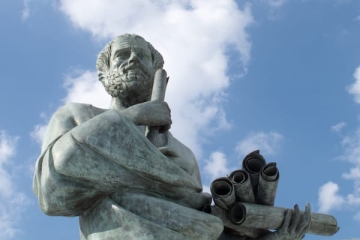
The moral and ethical renewal that American society needs, and that our schools have an obligation to do their best to infuse into their pupils, is the Aristotelian kind, nicely defined by Washington Post columnist Michael Gerson as human beings “exercising their reason and habituating certain virtues, such as courage, temperance, honor, equanimity, truthfulness, justice and friendship.” Gerson deplores—correctly in my view—today’s tendency among our public officials and many others to disregard Aristotle and instead embrace the version derived from Rousseau, which prizes authenticity and self-expression rather than virtue. As he writes:

At the root of the Aristotelian approach is the premise that the human person is originally in need of formation. At the root of the other approach is the premise that the human person is only in need of liberation. This has marked a long-standing difference between right and left, with conservatism often on the side of character building and progressivism often on the side of personal expression. But with Trump, something remarkable has happened: The right is increasingly on Rousseau’s side as well.

It's high time we—and our schools—refocus on character building, and the two December articles suggest ways of doing that. I’ll get to them in a moment, but first want to flag what an important opportunity—and perhaps obligation—this is for schools of choice, both public and private. Compulsory-attendance public schools, especially when operated by large political bureaucracies, are pretty much obligated to seek a broadly acceptable “common denominator” when it comes to values, ethics, character, even civic education. They can do a fine job (though few do) of teaching the Declaration of Independence, the Bill of Rights, and such universal values as tolerance. But they don’t dare fly too close to the sun of “habituating certain virtues” lest they offend some part of their constituency, get their wax melted, and fall into the sea.

Schools of choice are different. Because nobody is forced to attend them, their curricula and pedagogy can be distinctive, even idiosyncratic, and specially designed to appeal to particular constituencies.

Parochial schools have done this forever—not just the Roman Catholic kind, but also Jewish schools, evangelical Christian schools, Lutheran schools, Islamic schools, and more. They openly and eagerly embrace virtue and morality, often in the context of religious formation, and the values, mores, and practices associated therewith. This, of course, causes some people to fret that such schools may not provide their students with a broad-enough education and may not be teaching kids to accept others who are different. These are legitimate concerns, somewhat ameliorated by state licensure requirements for private schools, accreditation norms, and the parent marketplace—as well as additional obligations that bear on schools taking publicly-funded voucher recipients in various places.

Charter schools and other public schools of choice also have considerable latitude in this realm, save for religion. Due to First Amendment considerations and the “Blaine Amendments” in many states, they mustn’t engage in direct religious instruction (though there can be work-arounds) and must satisfy applicable state academic standards and subject their pupils to statewide assessments. Within those limits, however, they can be very distinctive indeed, which leads to the remarkable diversity we see in today’s charter-school sector: from Montessori to “no excuses,” from classical academies to agricultural education, from great books curricula to discovery learning—and from sit-in-rows-and-wear-uniforms-and-speak-only-when-spoken-to to online learning and the most casual classroom atmosphere imaginable.

So long as they’re careful about the church-state barrier, public schools of choice also have wide-ranging freedom to engage in character education, values-centric education, civic education, and more. Many have built this into their “brands.” All are most certainly free to embrace Aristotle! Which brings me back (at last) to the dual essays of December 28, both of which end up recommending much the same approach to moral education, and both of which are easily adapted and applied to all schools of choice, both public and private.

Writing for the relatively low-profile History News Network, Eastern Michigan University emeritus history professor Walter Moss recalls the founders’ conviction that education in morality and virtue are indispensable elements of a proper curriculum, touches on key developments in the ensuing centuries, underscores the urgency in today’s America of developing citizens who take virtue seriously, and warns against the utilitarian impulse that leads many to focus only on preparing young people for remunerative careers. Then, citing psychologist Robert Sternberg’s article, “It's Not What You Know, but How You Use It: Teaching for Wisdom,” he goes on to advocate an approach to K–12 education that “teach[es] students to see ‘things from others' perspectives as well as one's own,’ [and] to tolerate ‘other people's points of view, whether or not one agrees with such views.’”

Hear, hear, say I.

In the second article, this one in the high-profile Wall Street Journal, Drexel English professor Paula Marantz Cohen invokes the eighteenth-century philosopher Immanuel Kant—and ends up with almost exactly the same advice for educators. Kant’s celebrated “Categorical Imperative” has “three formulations, two of which are relevant here.” The first resembles the Golden Rule: “Act only according to that maxim whereby you can at the same time will that it should become a universal law.” But that alone, Cohen explains, doesn’t get us out of “our current moral morass.” Taken alone, in fact, she views it as part of the problem, for “[I]t suggests that how you want to be treated should be generalized for everyone,” which is “precisely what the right and the left are attempting to do now: Each side has its own concept of moral righteousness and no ability to find common ground.”

That problem is solved, at least in part, by invoking Kant’s second formulation: “Act in such a way that you treat humanity, which in your own person or in the person of any other, never merely as a means to an end but always at the same time as an end.” In other words, “never treat people as objects” and never treat “others as the means to impose our own ideals on the world.”

It’s not simple, but what Cohen calls “Kant in kindergarten” as a “litmus test for good behavior seems the only way back to sanity and civility.” Kant himself offered a path in an 1803 treatise (not previously known to me): “On Education.” As Cohen summarizes it:

What he termed “negative education” is associated with a child’s earliest training. It involves teaching that there is an authority beyond the self. This idea—which could, but need not, dovetail with religious instruction—lays the groundwork for a later “positive education,” which employs reason to examine and judge difficult situations in life….Parents would begin this process of moral training, and teachers would continue it from kindergarten onward, following a curriculum that inculcates the Categorical Imperative and analyzes situations in light of its two formulations. This would require teacher education programs to develop case studies, geared to different age groups, in which students would practice and hone moral judgment. It would mean inserting moral education into the training of teachers at all grade levels. This would help promote ideas traditionally covered by religion in a society in which religious exposure has diminished.

That would be a big challenge for compulsory-education schools, yes. But whether you get there via Sternberg or Kant, it’s something that schools of choice could do—and in my view should take very seriously. As Cohen says, “a society that abandons moral education…will be a debased and untrustworthy one.” Which sounds painfully akin to the one we’re seeing emerge in today’s America.

view

The effects of Pittsburgh's new restorative justice program

Jessie McBirney
1.9.2019
Flypaper

“Restorative practices” are an increasingly popular alternative to suspensions. To examine the effectiveness such practices, researchers at the RAND Corporation studied Pittsburgh’s new restorative justice program. It’s the largest study of its kind, and the first randomized control trial of this disciplinary strategy—and unfortunately, the results are decidedly mixed.

RAND worked with Pittsburgh Public Schools (PPS) and the International Institute for Restorative Practices (IIRP) to evaluate a new restorative justice program, Pursuing Equitable and Restorative Communities (PERC), over two years. The program aims to help students build better relationships with their peers and teachers and understand how their actions affect others. This should, researchers posit, lead to fewer punishable behaviors, more instructional time, and improved academic outcomes. PERC includes eleven restorative practices staff can implement, for example:

  • Affective Statements: “Personal expressions of feeling in response to specific positive or negative behaviors of others.”
  • Proactive Circles: “Meetings with participants seated in a circle…for students to share feelings, ideas, and experiences in order to build trust.”
  • Responsive Circles: “Meetings with participants seated in a circle…[for] the management of conflict and tension.”

Restorative practices are not meant to replace more serious consequences like suspension for serious offenses, but to remind the student that their punishment does not imply permanent exclusion from the community.

Of Pittsburgh’s forty-four eligible schools, half were randomly selected as “treatment schools,” where staff received training and ongoing professional development on how to implement restorative practices in the classroom. The other twenty-two did not participate in the program, but researchers did not look into what disciplinary strategies they do use. RAND experts monitored implementation efforts through classroom observation and teacher surveys and interviews. They tracked PERC’s effects using administrative data on student performance and behavior from schools and county law enforcement. After two years of data collection, they found mixed results from the program.

PERC did decrease the number and duration of suspensions, particularly in elementary schools and for nonviolent infractions. However, researchers note that it is unclear whether students committed fewer infractions or teachers simply favored non-exclusionary discipline options. They note elsewhere in the study that teachers reported no change in overall student behavior. PERC also decreased the gap in suspension rates between races, and overall school climate improved according to teacher surveys (the researchers did not survey students on this question). Behavioral results were most positive at the elementary school level.

PERC had no impact on student arrest rates, which were already low, and had almost no impact on daily attendance.

But alarmingly, test scores in PERC schools dropped for both middle schoolers and African American students. Even overall, academic performance in PERC schools remained flat.

The study has some limitations that may affect its findings. First, RAND only studied implementation over two years. It is possible that stronger results will take longer to show. Second, they do not have any direct measures of student experiences with PERC, such as student interviews or the number of student referrals to the office. And finally, researchers had little insight into how each restorative practice was used daily at the classroom level.

Despite these limitations, the results of PERC are underwhelming. A drop in suspensions is good as far as it goes, but researchers could not identify a cause for the change, and teachers expressed confusion as to whether restorative practices were supposed to take the place of other disciplinary actions. Additionally, to see no effect on arrest rates and potentially negative academic effects is concerning, especially since RAND does not include any information about the cost of the program. We can’t shake a stick at wanting struggling students to feel like part of the community, but as a comprehensive approach to discipline reform, restorative justice does not seem promising.

SOURCE: Catherine H. Augustine et. al., “Can Restorative Practices Improve School Climate and Curb Suspensions? An Evaluation of the Impact of Restorative Practices in a Mid-Sized Urban School District.” RAND Corporation, 2018.

view

The Education Gadfly Show: Federal education policy in 2019

1.9.2019
Podcast

On this week’s podcast, Andrew Ujifusa, an assistant editor for Education Week, and one-half of the Politics K-12 team, joins Mike Petrilli and David Griffith to explain why we wonks shouldn’t completely ignore Washington in the coming year. On the Research Minute, Amber Northern counts down the five most influential education studies of 2018.

Amber’s Research Minute

Amber Northern highlights the best research studies of 2018.

Fordham Logo

© 2026 The Thomas B. Fordham Institute
Privacy Policy
Usage Agreement

National

P.O. Box 110
Burke, VA 22009

202.223.5452

[email protected]

Ohio

P.O. Box 82291
Columbus, OH 43202

614.223.1580

[email protected]

Sponsorship

130 West Second Street, Suite 410
Dayton, Ohio 45402

937.227.3368

[email protected]