Mobile Navigation

  • National
    • Policy
      • High Expectations
      • Quality Choices
      • Personalized Pathways
    • Research
    • Commentary
      • Gadfly Newsletter
      • Flypaper Blog
    • Events
    • Scholars Program
  • Ohio
    • Policy
      • Priorities
      • Media & Testimony
    • Research
    • Commentary
      • Ohio Education Gadfly Biweekly
      • Ohio Gadfly Daily
  • Charter Authorizing
    • Application
    • Sponsored Schools
    • Resources
  • About
    • Mission
    • Board
    • Staff
    • Career
Home
Home
Advancing Educational Excellence

Main Navigation

  • National
  • Ohio
  • Charter Authorizing
  • About

National Menu

  • Topics
    • Accountability & Testing
    • Advanced Education
    • Career & Technical Education
    • Charter Schools
    • Curriculum & Instruction
    • ESSA
    • Evidence-Based Learning
    • Facilities
    • Governance
    • Personalized Learning
    • Private School Choice
    • School Finance
    • Standards
    • Teachers & School Leaders
    • Think Again
  • Research
  • Commentary
    • Gadfly Newsletter
    • Flypaper Blog
    • Gadfly Podcast
  • Events
  • Scholars Program

The Education Gadfly Weekly

Sign Up to Receive Fordham Updates

We'll send you quality research, commentary, analysis, and news on the education issues you care about.
Thank you for signing up!
Please check your email to confirm the subscription.

The Education Gadfly Weekly: School choice need not mean an expensive windfall for the rich

Volume 24, Number 14
4.4.2024
4.4.2024

The Education Gadfly Weekly: School choice need not mean an expensive windfall for the rich

Volume 24, Number 14
view
Hammer piggy bank
Quality Choices

School choice need not mean an expensive windfall for the rich

The school choice movement continues to rack up dramatic wins nationwide. This growth in “educational freedom,” as many advocates now call it, is a fantastic development. But under the surface of these victories, an important debate is brewing: how to balance the drive for maximum choice with other values, including fiscal responsibility and fairness.

Michael J. Petrilli 4.4.2024
NationalFlypaper

School choice need not mean an expensive windfall for the rich

Michael J. Petrilli
4.4.2024
Flypaper

We’ve made teaching impossible or: What I learned talking to 200 teachers

Daniel Buck
4.4.2024
Flypaper

Cross-partisanship vs. bipartisanship in education

Chester E. Finn, Jr.
4.4.2024
Flypaper

Can an upfront cash incentive improve teacher recruitment and retention?

Amber M. Northern, Ph.D.
4.4.2024
Flypaper

What TIMSS and PISA have in common

Jeff Murray
4.4.2024
Flypaper

Cheers and Jeers: April 4, 2024

The Education Gadfly
4.4.2024
Flypaper

What we're reading this week: April 4, 2024

The Education Gadfly
4.4.2024
Flypaper
view
Overwhelmed school teacher

We’ve made teaching impossible or: What I learned talking to 200 teachers

Daniel Buck 4.4.2024
Flypaper
view
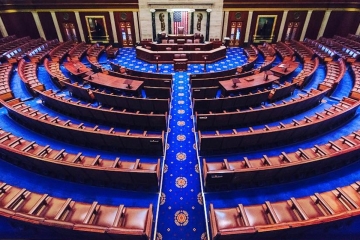
House Chamber US Capitol

Cross-partisanship vs. bipartisanship in education

Chester E. Finn, Jr. 4.4.2024
Flypaper
view
Happy school teacher

Can an upfront cash incentive improve teacher recruitment and retention?

Amber M. Northern, Ph.D. 4.4.2024
Flypaper
view
Test scantron

What TIMSS and PISA have in common

Jeff Murray 4.4.2024
Flypaper

view
Fordham Gadfly image

Cheers and Jeers: April 4, 2024

The Education Gadfly 4.4.2024
Flypaper
view
Fordham Gadfly image

What we're reading this week: April 4, 2024

The Education Gadfly 4.4.2024
Flypaper
view
Hammer piggy bank

School choice need not mean an expensive windfall for the rich

Michael J. Petrilli
4.4.2024
Flypaper

The school choice movement continues to rack up dramatic wins in states nationwide, with particular strength this year in the South. The most recent victories came in Georgia, where Governor Brian Kemp persuaded his legislature to create a program targeting students at the state’s worst-performing public schools, and in Alabama, where Governor Kay Ivey signed a bill to create education savings accounts worth up to $7,000 per child. Legislators in Mississippi, Tennessee, and Louisiana are all working on kindred bills that should get across the finish line within weeks. Meanwhile, Texas Governor Abbott took down several anti-school choice Republican lawmakers during Super Tuesday’s primaries, dramatically increasing the likelihood that the Lone Star State will soon pass a Texas-size private school choice plan. Add to that tally new programs enacted in recent years in Arizona, Iowa, and West Virginia, as well as expansions in Ohio, Indiana, and Florida.

No doubt, the growth of “educational freedom,” as many advocates now call it, is a fantastic development. We take consumer choice for granted in practically every aspect of American society except K–12 education. It’s long past time for schools to be subjected to the same competitive forces that almost every other organization in America. And in our huge, diverse society, it makes sense to embrace a pluralistic school system that allows families to find educational institutions that match both their values and their hopes and dreams for their children.

Under the surface of these victories, however, an important debate is brewing: how to balance the drive for educational freedom with other essential values, including fairness and fiscal responsibility. Simply put: Must the expansion of school choice result in windfalls for America’s wealthiest families, particularly those that already send their children to fancy private schools? Especially when that means blowing big holes in state budgets?

Back when a coalition of conservatives and Black liberals successfully pressed for America’s first school voucher program in Milwaukee in the early 1990s, the focus was on low-income students of color. Their argument was clear and morally compelling: We needed to level the field by allowing disadvantaged kids trapped in the then-atrocious Milwaukee Public Schools to access the city’s high-quality private schools, including Catholic and Lutheran ones. After all, as we used to say, “rich families already have school choice—it’s time that poor families do, too.” Similar (and similarly successful) arguments were made in Cleveland and Washington, D.C.

As the school choice movement matured, advocates pushed for ever-larger swathes of families to qualify for private school scholarships courtesy of taxpayers. It wasn’t hard to argue that working-class families should have these options, given that the tuition in most private schools, even less expensive ones like Catholic schools, was out of reach for them, too—or, at least, seriously oppressive to family budgets, possibly meaning that only one child could attend. But some advocates made the case that expanding eligibility to more and more families, regardless of their wealth, would help build long-lasting support for school choice. It’s no secret that affluent families have more political juice than poor folks. Many school choice supporters even adopted the adage, long embraced by progressive Democrats, that “a program for the poor is a poor program.”

Perhaps so, but the drive for “universal school choice” presents a fiscal challenge while also triggering a different sort of “fairness” dilemma. When school choice programs allow students to move from public to private schools, they generally save taxpayers money because the publicly-funded scholarships are worth less per pupil than what the public spends on public schools. But when the government starts to subsidize students already enrolled in private schools, it’s effectively a brand-new public expense. Those kids weren’t already attending school with taxpayer assistance. And with about 9 percent of students in most states attending private schools—and those children coming disproportionately from wealthy families—adding them to the public rolls can add up fast. Maybe bringing these families into the school choice coalition helps politically—but surely it also hurts for taxpayers to see millions of dollars flow to prosperous elites who don’t need the money.

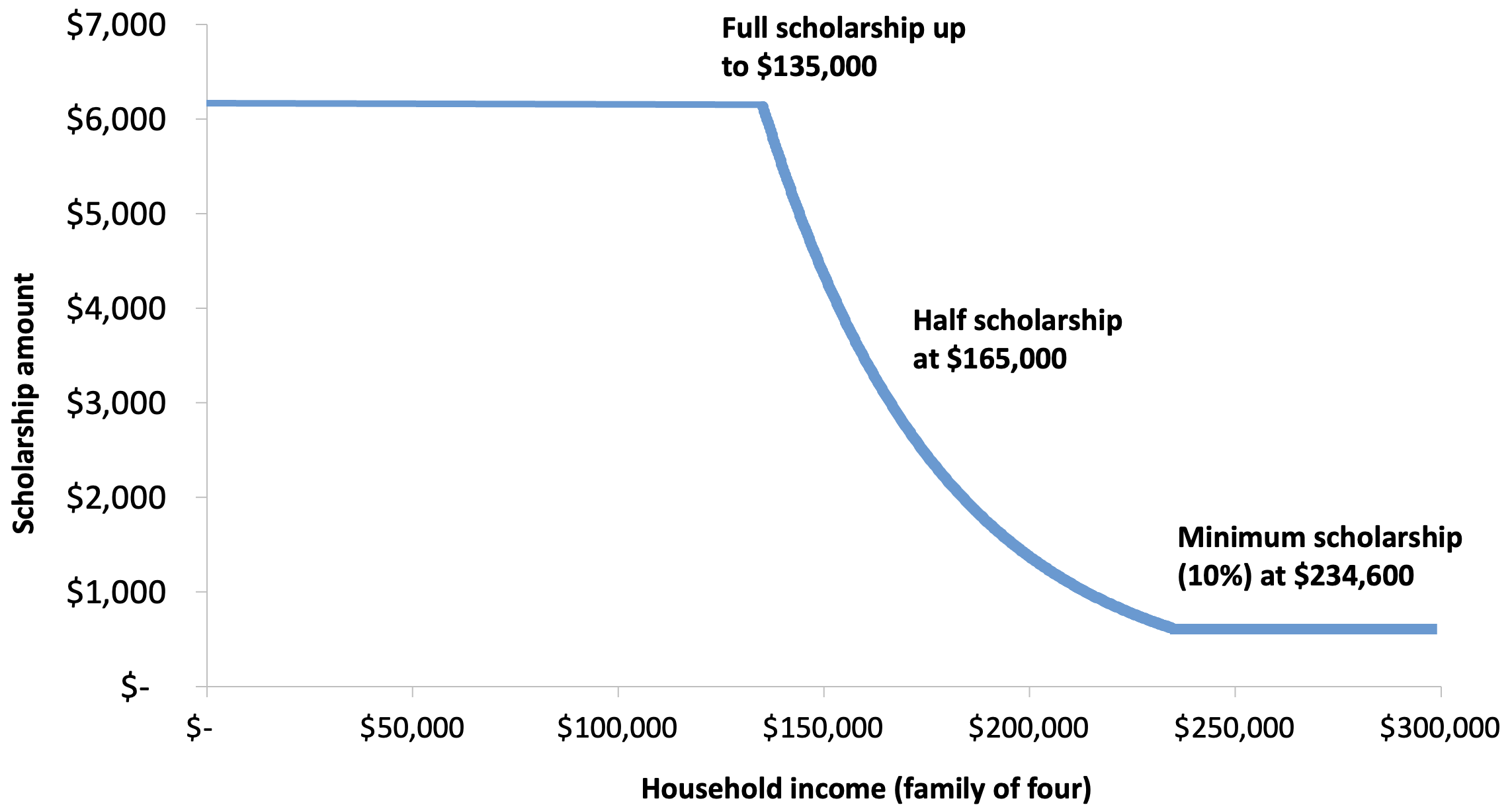
Now for the good news: A handful of states have found a way to champion both educational freedom and fiscal conservatism. In Ohio, Governor Mike DeWine and his Republican legislative allies dramatically expanded school choice in the Buckeye State last summer, making all families eligible for scholarships—i.e., universal school choice. However, they also adopted a sliding scale to link scholarship amounts to family incomes. Those making up to about $135,000 for a family of four receive the full scholarship amounts (between about $6,000 and $8,500 per student, depending on grade level). Above that level, scholarships are gradually reduced, up to incomes around $235,000. Families earning more than that may still receive scholarships, but they are much smaller—about $600 for an elementary student.

Figure 1: Ohio EdChoice scholarship amounts (grades K–8) for a family of four, by household income

1

Note: This figure is based on projections by the Ohio Legislative Service Commission that the full scholarship amount for grades K–8 will be $6,165. Though not displayed, the sliding scale works similarly in high school.

By sharply reducing scholarship amounts for the most affluent families, Ohio policymakers saved taxpayers a ton. That’s because the richest families in Ohio, as elsewhere, are the ones most likely to already have their kids in private schools, paying tuition out of their own pockets. Adding all of those students to the state’s balance sheet, at full freight, would be a sizable expense.

My colleague Aaron Churchill has calculated that, by instituting a sliding scale and limiting the wealthiest families to partial scholarships (rather than providing full scholarships to everyone), Ohio lawmakers saved the state about $300 million—this on a $440 million program. In other words, a universal school choice program without a sliding scale leading to partial scholarships would have been about 68 percent more expensive.

Oklahoma also uses a sliding scale for its private school choice program, and the pending bill in Louisiana would do the same. Other states should follow suit. Conservative lawmakers can still move toward universal school choice, but by using a sliding scale, they can avoid blowing big holes in state budgets, while also fending off the charge that they’re giving juicy windfalls to the rich, replacing private tuition dollars, with public and introducing a new sort of unfairness.

By all means, conservatives, keep fighting for school choice. But don’t give up on fiscal responsibility while you do it.

view
Overwhelmed school teacher

We’ve made teaching impossible or: What I learned talking to 200 teachers

Daniel Buck
4.4.2024
Flypaper

Last week, I did something unorthodox. I asked teachers to message me directly via X (formerly known as Twitter) to vent their frustrations. Within hours, I received almost 200 messages expressing not only frustration, but also hope, humor, fatalism, and quite a bit of hesitancy to converse with a complete stranger on the internet. Without a doubt, these messages represent a very thin slice of the teaching workforce, but a thin slice supplies at least a taste of the whole pie.

Responses ranged from expected complaints about low pay to idiosyncratic observations about processed school breakfasts. Teachers have a lot on their minds. That few mentioned politics surprised me. Considering I aimed my invitation to conservative teachers specifically, I expected laments over liberal dogma and progressive pieties to abound. And certainly, some teachers mentioned such things, but these were a minority.

Instead, one theme surfaced over and again, illustrated by these two examples:

  • “Our school isn’t safe. The energy in the hallways feels like something is going to happen at any moment. Fights are constant with little consequence.”
  • “We allow behavior that would not be acceptable in any public square. Teachers are cussed out, threatened, disrespected with no consequences. The general public doesn’t understand the crisis we are in. It’s embarrassing. It’s tragic.”

After hours spent reading through these lamentations and conversing with some of the teachers who sent them, it seems there’s a deeper issue here than a mere lack of consequences. Students lack accountability of any kind. Teachers face an ever-mounting list of responsibilities and pressures, while students face ever fewer.

Lenient grading was the second most common complaint. Teachers cannot assign failing grades, administer penalties for late work, or grade students’ homework. Districts adopt these policies with good intentions, of course, including trying to be understanding of students from difficult backgrounds. And surely, some students run afoul of these standards because they’re from abusive homes or have unfair disadvantages such as learning English as their second language.

But many students failed to read their assigned passage of Shakespeare or finish their math homework because they were too busy playing Call of Duty and eating Cheetos with their friends. Kids will generally try to meet a standard to which we hold them accountable. If they’re allowed to turn in work late or complete half of assignments, that’s precisely what they’ll do.

Meanwhile, many teachers complained to me of the increased work load that these lenient policies have created for them. Administration expects endless communications with parents, an infinite number of differentiated tasks, and copious record keeping to justify every failing grade. At semester’s end, if that teacher still feels like assigning an F, one question invariably crops up: What could the teacher have done to prevent this failure? The student bears no culpability.

This dynamic is all the more pronounced regarding behavior. If a teacher hopes administration will assign a detention after their student cussed them out, they face a barrage of questions: Have they documented sufficient low-level disruptions to warrant a consequence? How many times have they communicated with parents? Had they built relationships? Is their class engaging enough or the material “relevant” to the student? Had they sweat enough while struggling to engage all 150 of their students?

Teachers faced accountability while students faced none. What had the teacher done or not done to foster misbehavior? Never was a student responsible for rudeness or an administrator for ineffective systems. And don’t even think about kicking the hornet’s nest of parental responsibility.

Throughout the messages, many teachers complained less about student behavior itself than the fault that was implicitly placed on them. They all expect children to misbehave. It’s in the job description. That’s not the point, even. What frustrated them most was being blamed for scenarios that weren’t their fault.

I can relate. One day before school started, one of my students caught word that another had spread a rumor about her on the bus. She ran out of my room to accost the gossiper. In follow-up conversations, administration castigated, not the students, but myself and the other teacher for supposedly allowing this dynamic. Administration assigned no consequence to either student, implicitly communicating to them—and their parents—that we adults were at fault, not the kids.

Recently, the Hechinger Report ran a misguided criticism of the ambiguity of common referral codes such as “insubordination” or “disrespect.” Suspensions must be reserved for only the most serious of infractions, the argument runs. The authors overlook how a consequence for “talking” often means that this student has talked out of turn many times, received detention or parent meetings previously, provides a contemptuous snort when a teacher tries to correct the behavior, and leaves a class difficult to both teach and learn in.

One teacher mentioned how such leniency “has created a spiraling, out-of-control situation in my building. Students consider themselves to be the authority. I have been called more names and gotten more threats this year than the previous twenty-six.” Permitting insubordination is the mold in the foundation that causes school culture to collapse. If administrators focus exclusively on significant misbehavior, they’ll impotently rebuild crumbling walls while the foundation continues to rot.

Permitting low-level defiance—defining deviancy down in this way—facilitates and fosters more severe misbehavior. If a student comes to learn that adults can be ignored and rules flaunted, behavior escalates. A balled piece of paper is thrown, a teacher asks the offender to move seats, but he refuses. The next day, he’s wandering around the classroom singing. The teacher asks him to sit, but he refuses. Eventually, he’s wandering the halls, telling teachers to “fuck off” if they ask him to return to class, so most don’t. Many other students have joined in the fun, and now there’s cacophony in the halls. Students in class question why they must listen to adults if they don’t want to when other kids get to flaunt the rules. Rowdy, unmonitored halls mean more chances for student conflict and fights.

Another teacher I spoke to finally quit after getting hurt “trying to break up a fight” only to find the perpetrator “was back in class the next day along with the boy she fought.” There are still consequences in schools without discipline, but staff and behaving children have to bear them.

Conversely, in one violent school, I had a stand-in assistant principal, who pressed for clear hallways and timely class attendance. When fights in the lunchroom, tanking reading scores, and chaotic classrooms called for attention, he focused entirely on attendance. It may have seemed like there were bigger fish to fry, but when we concentrated on attendance, the very culture of the school began to change. When the bell for class rang, administrators patrolled every hall and sent every tardy student to our building’s theater to check in. Three tardies earned a suspension, and rowdiness in the suspension room got them kicked out for the day. (I’m sure they complained about being kicked out for “talking.”)

Quickly, other areas of school began to change. When teachers could begin in a timely fashion, classrooms developed smoother routines. When the hallways were clear, it changed the atmosphere inside and outside classrooms. This was no longer a place for play but one for learning. Students who usually spent hours ambling the hallways attended class, developed new goals, rubbed shoulders with their more academically-minded peers, and developed relationships with teachers. Unfortunately, this administrator was only with us for a short time. His replacement lectured us about the ambiguity of “insubordination,” and the school returned to chaos.

Fundamentally, our efforts to understand the various systemic causes of misbehavior—insufficient food, weak parental guidance, cultural conflict—strips students of agency. It allows them much liberality, yes—it seems they can do whatever they damn well please—but imbues them with no empowerment or sense of control as self-willed agents. All of their actions have external causes. They are particles bouncing around with no power to act or choose for themselves.

Conversely, consequences and accountability communicate something important to students: They have the power to succeed or fail, they have the agency to choose right and wrong, and with their actions, they can better themselves and rise above their circumstances. Holding a child to account is an empowering act.

I began this column sympathetic to teachers, and still am, but by its conclusion I almost pity the students more. Everything a school does communicates implicit messages to them. Right now, schools tell too many students that their ZIP code is in fact their destiny, that the adults in their lives expect nothing better from them, and that they’re powerless to change their life for the better.

It’s fatalistic. It’s nihilistic. It’s unethical. And it’s creating an education system that’s unsustainable for teachers and failing our students.


view
House Chamber US Capitol

Cross-partisanship vs. bipartisanship in education

Chester E. Finn, Jr.
4.4.2024
Flypaper

In last week’s Gadfly, Karen Nussle and Lorén Cox penned a thoughtful piece on “cross-partisanship,” a concept they explore at greater length in a very nice paper for the Aspen Institute’s Education & Society Program. Both repay attention.

In the short (Gadfly) version, they also purport to disagree with my own assertion in this space a few weeks earlier titled “Education reform is a bipartisan endeavor.” That piece was a response to an essay that Rick Hess and Mike McShane had derived from their excellent new book—and I delved deeper into the book in yet another Gadfly piece a little later. The line that I suspect caught Karen’s and Lorén’s eye was my assertion that “pretty much everything of lasting value in the ed-reform space has been bipartisan,” immediately followed by the caution that “while it’s surely worth striving for that kind of unity going forward, it’s not going to be simple.” 

Karen and Lorén mostly agree with me that bipartisanship in education policy has historically been important and remains desirable but is increasingly hard to attain. Then they go on to suggest a quasi-alternative strategy that they term “cross-partisan,” which they believe is easier to attain in today’s schismatic and siloed climate. Their Aspen paper offers a number of recent examples that they take as illustrating the feasibility of cross-partisanship, including the widespread embrace by policymakers of all stripes of the “science of reading” and similar attention across party lines to the teacher shortage—though it might be added that the former is more like a solution, the latter more like recognition of a problem.

How big a deal is the distinction between bi- and cross-partisan policymaking? As I reflect on this seeming disagreement, it’s closer to hair-splitting, a sort of strategic accommodation to contemporary realities that may, in the end, be more like a shift of terminology than a fundamental change.

Here’s the key bit from their Aspen paper:

In our analysis of the state policy landscape over recent years, we found numerous policy initiatives that have garnered bipartisan, or more aptly, cross-partisan support. The term “cross-partisan” is employed to reflect a contemporary understanding of political collaboration, as the traditional notion of bipartisanship has evolved. Historically, bipartisanship was highly regarded, symbolizing a commendable compromise and a collective victory. However, the current political climate often interprets bipartisanship as a capitulation to opposing views, diminishing its value for some. While we remain hopeful for a shift back to a more positive perception of bipartisan efforts, the present reality necessitates a different perspective. Despite these changes, it is noteworthy that various policy proposals continue to receive backing from diverse political spheres. These instances of support, though possibly stemming from varied motivations, exemplify what we now describe as “cross-partisan”—a term denoting support that transcends traditional partisan boundaries, resulting in either a public demonstration of support from people with differing political philosophies or a tangible policy accomplishment.

A welcome insight within that quote is that, because “bipartisanship” these days may connote compromise, each side “giving up” something it wants in pursuit of a “deal” all can agree on, it can be viewed as “capitulation,” thus something your “base” won’t like and is therefore to be shunned.

I suppose that’s so, which will certainly tend to taint the term “bipartisan.” But is “cross-partisan” substantively different or just a different term for old-fashioned horse-trading and deal-making in pursuit of getting something done that needs doing for the betterment of one’s community, state, or nation? Is “transcends traditional partisan boundaries” really different from “working together across party lines” or “working in bipartisan fashion”? I’m not so sure. And some of their discussion of the circumstances that make cross-partisan possible sound awfully like bipartisan, such as “both sides get a win.”

Still, my main point was more historical: Pretty much every important education policy event in memory that’s had any staying power has had a measure of support from both Democrats and Republicans in the relevant jurisdiction, whether upon enactment or gradually, as the “other team” came to accept it, tweak it, sustain it. If policies don’t have staying power, they get very little traction. The next election leads to them being undone or reversed—and practitioners, knowing this, can slough them off with a “this too shall pass” attitude. We can point to innumerable examples of things not enduring because the next team hadn’t bought into them and didn’t agree with them. (Consider New York City education post-Bloomberg, now partly reversed again under Eric Adams.) Things that had broad-based political support—think MCAS up to this point in Massachusetts—have stuck around and thus had impacts. (Speaking of which, this oft-controversial test, first enacted in 1993 during the administration of Republican-libertarian Bill Weld, hated by the teachers union and now on the ballot for possible repeal by Bay State voters, has just gained the support of the most liberal Democratic governor Massachusetts has had in ages.)

I can certainly see exceptions emerging in places that are deep red or deep blue (today’s Ohio, Texas, California, New York, etc.), where the policy reins never pass to the other party. In those situations, one might have policy stability without bipartisanship. But I don’t think that’s ever happened in education at the federal level, and there are a lot of purplish states and localities where one-party support augurs policy instability.

If you prefer “cross-partisan,” fine. Maybe it’s more macho, better for appealing to crazed political bases. But it’s really not all that different.

view
Happy school teacher

Can an upfront cash incentive improve teacher recruitment and retention?

Amber M. Northern, Ph.D.
4.4.2024
Flypaper

A recent study in the Economics of Education Review Journal looks at one promising effort to recruit and retain teachers: providing upfront grants and loans to financially-strapped potential teachers to encourage them to become and remain educators.

The study focuses on Teach For America (TFA) candidates and extends an earlier randomized study that found that upfront liquidity—cash and loans—made it more likely that low-income young people could overcome entry barriers to teaching. In other words, with a significant-enough financial boost, low-income folks who applied to TFA were more likely than their higher-income peers to follow through and join—and ultimately show up for their first day in the classroom. This new study looks longer term, continuing to track the same teachers to see if they made it through their two-year TFA commitment and were more likely to remain in the field afterwards.

Some quick background: TFA offers transitional grants and loans (or TGL) to help cover the costs of joining the teaching profession—which in this context is essentially the cost of moving to the city where they have been assigned to teach. The study sample includes the highest-need applicants who applied for the grants, were accepted into TFA, and agreed to join, at which point they can receive TGL. The organization collects mucho financial information on TGL applicants and calculates how much grant versus loan money they qualify for. TFA estimates how much is needed to move a particular applicant to a particular city (expected expense) and how much the candidate can afford to pay toward that expense, then subtracts the latter from the former to determine the grant/loan amount. Any required repayments typically become due in January of their first year of teaching and often get repaid over eighteen months.

The average applicant has $6,500 in credit card debt, $20,000 in federal student loan debt, and just $241 in her bank account. The methodology from the initial study—which they stick with here—called for high-need applicants intending to teach in 2015 through 2017 to be randomized into three groups: a baseline grant package for each individual, using a modified version of the TGL formula (the control group); a treatment group receiving the baseline package plus a $600 grant; and a second treatment group receiving the baseline package and a $600 loan. In the second year, they added another arm to the study, giving applicants an additional $1,200 (in grant form) beyond the baseline package. Ultimately, the new design combines the outcomes from all treatment conditions and estimates the impact of extra funding in $100 increments. Analysts chose to combine loans and grants because they initially found that the total award mattered most, not how it was distributed. The mean total award for the sample was $4,000 (for the first decile of need, it was $5,000 total, and for the tenth decile, $2,200 total).

After digging into TFA tracking data (and LinkedIn for some details not in their database), analysts managed to get information on 85 percent of the applicants. The original study found that the highest need individuals were 1.8 percentage points more likely to begin teaching with TFA for every $100 dollars in additional “liquidity.” This new study shows that the previously-observed impact extended over a longer term, increasing the rate at which teachers persist in year one and ultimately complete year two. What’s more, the effect persists over time, as there is still a 1.53 percentage point impact on completing the two-year program for every $100 in additional monies that a prospective teacher was offered, which represents 85 percent of the original effect. Unfortunately, longer-term outcomes in year three are not reliable enough to report due to data quality issues.

The bottom line is that offering financially-strapped prospective teachers funds in the months before they would enter the classroom appears to increase the number of educators in the short- and mid-term. Admittedly, the Teach For America context is unique due to its non-traditional recruitment and training paradigms, so these results cannot be extrapolated to other programs. However, financial nudges have been moderately effective in many other education-related contexts, so it’s not beyond the realm of possibility that pre-employment “liquidity boosts” could work for other potential entrants to teaching—especially when the boosts aren’t that cost prohibitive, as is the case here.

SOURCE: Lucas C. Coffman et al., “Liquidity for teachers: Evidence from Teach For America and LinkedIn,” Economics of Education Review (September 2023).

view
Test scantron

What TIMSS and PISA have in common

Jeff Murray
4.4.2024
Flypaper

The Trends in International Mathematics and Science Study (TIMSS) and the Program for International Student Assessment (PISA) are arguably the most important international tests in education. Both have been administered for decades in dozens of countries. Each new set of student outcomes is tracked, analyzed, and endlessly written about. Because they are distinct assessments whose data often appear to provide contradictory messages about student academic health, most advocates and policymakers assume that TIMSS and PISA measure different types of educational inputs and outcomes. But a trio of researchers from Umeå University in Sweden recently pared down the two tests’ data to their most basic commonalities and analyzed the results to find some correspondence among the contradictions.

The researchers utilize data from the 2015 administration of both tests, which is the most recent year in which they coincided (TIMSS tests are given every four years, PISA every three years). Additionally, they had a tested topic in common that year. While TIMSS assesses the same subjects in every round (math and science), PISA varies one of its three subjects in each round (also including reading, financial literacy, and a number of other subjects), and most students are assessed in only two of the subjects in any given administration. Thus there isn’t much overlap in tested topics. However, both exams featured science questions in 2015, and this was synchronicity enough for the researchers. They further enhance the similarities by focusing on test takers in Sweden and Norway only, as the two countries’ education systems were felt to be similar enough to reduce noisy input variables.

TIMMS science results in 2015 came from 4,800 Swedish eighth graders and 4,100 Norwegian ninth graders; PISA science results arose from a nearly-even split of approximately 5,460 fifteen-year-olds in each country. Each testing round also includes a number of questionnaires (including surveys of parents, students, school leaders, and teachers), but these vary greatly between the two test types. School-level and student-level surveys were common between them and thus were the only ones analyzed for this report. The researchers whittled the survey data further down into a set of factors that could influence students’ academic performance. Home-related factors common to both tests/surveys include such things as number of books at home and the study resources available at home (desk, laptop, internet, etc.). School-related factors common to both tests/surveys include such things as staffing levels and homework help offerings.

Overall, the number of books reported in the home and an aggregate measure of school resources were the only common factors significantly positively related to science achievement on both tests in both countries. A mélange of test-specific and country-specific factors showed minimal levels of significance to student achievement (think rural versus urban schools or native versus immigrant parents) on their respective tests and students overall. However, breaking down the results by country, test, and school, various factors were found to be significant in limited contexts. For just two examples: Overall school staffing levels (including a measure of teacher quality) were positively and significantly associated with student performance in low-performing schools, but not significant in high-performing schools; and the “discipline of students” factor (think, school culture) was only a significant influence on Swedish students.

So does this smörgåsbord of data simply reinforce the initial idea that TIMSS and PISA are too different in their intent and construction to render any commonalities, even when served up on the same platter like this? The report’s authors say no: TIMSS and PISA assessments provide “partially complementary information.” The common thread is that school- and home-related inputs are correlated with boosts to (or hindering, if missing) student outcomes, even if the determinations of what inputs matter, how important they are, and when they exert influence are, as yet, unclear. Further research, they conclude, should work to more clearly define these input factors—what, for example, is “having books in the home” a proxy for—and examine their impacts on specific academic outcomes with additional clarity and detail.

SOURCE: Inga Laukaityte, Ewa Rolfsman, and Marie Wiberg, “TIMSS vs. PISA: what can they tell us about student success?—a comparison of Swedish and Norwegian TIMSS and PISA 2015 results with a focus on school factors,” Frontiers in Education (February 2024).

view
Fordham Gadfly image

Cheers and Jeers: April 4, 2024

The Education Gadfly
4.4.2024
Flypaper

Cheers

  • Thanks to the state’s school choice program, Catholic schools in Southern Florida are seeing significant enrollment growth. —Miami Herald
  • If approved, new diploma pathways in Indiana would allow students to count internships, apprenticeships, and other work experience towards graduation. —Indiana Capital Chronicle
  • Skepticism of traditional universities and a changing labor market is leading to an upswell of enrollment in technical schools. —Wall Street Journal
  • A new poll of parents, students, and voters in L.A. found that over 80 percent of respondents support more trade classes in high school. —The 74

Jeers

  • Jo Boaler, the academic who most-influenced California’s new math framework, is facing allegations of academic fraud. —Pirate Wires
  • A district in Michigan is choosing to bulldoze an unused school building rather than risk its acquisition by a charter or private school. —Molly Macek, Wall Street Journal
  • Families are asking for dubious ADHD diagnoses so their children can get extra time to complete the SAT and ACT. —Rikki Schlott, New York Post
view
Fordham Gadfly image

What we're reading this week: April 4, 2024

The Education Gadfly
4.4.2024
Flypaper
  • Chronic absenteeism remains one of the most persistent problems facing schools post-pandemic. —New York Times
  • “What’s missing from states’ reading laws? The role of content knowledge.” —Education Week
  • New metrics to measure poverty mean that four Montgomery County (MD) schools are losing Title I eligibility. —Washington Post
Fordham Logo

© 2026 The Thomas B. Fordham Institute
Privacy Policy
Usage Agreement

National

P.O. Box 110
Burke, VA 22009

202.223.5452

[email protected]

Ohio

P.O. Box 82291
Columbus, OH 43202

614.223.1580

[email protected]

Sponsorship

130 West Second Street, Suite 410
Dayton, Ohio 45402

937.227.3368

[email protected]