Mobile Navigation

  • National
    • Policy
      • High Expectations
      • Quality Choices
      • Personalized Pathways
    • Research
    • Commentary
      • Gadfly Newsletter
      • Flypaper Blog
    • Events
    • Scholars Program
  • Ohio
    • Policy
      • Priorities
      • Media & Testimony
    • Research
    • Commentary
      • Ohio Education Gadfly Biweekly
      • Ohio Gadfly Daily
  • Charter Authorizing
    • Application
    • Sponsored Schools
    • Resources
  • About
    • Mission
    • Board
    • Staff
    • Career
Home
Home
Advancing Educational Excellence

Main Navigation

  • National
  • Ohio
  • Charter Authorizing
  • About

National Menu

  • Topics
    • Accountability & Testing
    • Advanced Education
    • Career & Technical Education
    • Charter Schools
    • Curriculum & Instruction
    • ESSA
    • Evidence-Based Learning
    • Facilities
    • Governance
    • Personalized Learning
    • Private School Choice
    • School Finance
    • Standards
    • Teachers & School Leaders
    • Think Again
  • Research
  • Commentary
    • Gadfly Newsletter
    • Flypaper Blog
    • Gadfly Podcast
  • Events
  • Scholars Program

The Education Gadfly Weekly

Sign Up to Receive Fordham Updates

We'll send you quality research, commentary, analysis, and news on the education issues you care about.
Thank you for signing up!
Please check your email to confirm the subscription.

The Education Gadfly Weekly: Penny Schwinn: The next Deputy Secretary of the U.S. Department of Education

Volume 25, Number 3
1.23.2025
1.23.2025

The Education Gadfly Weekly: Penny Schwinn: The next Deputy Secretary of the U.S. Department of Education

Volume 25, Number 3
view
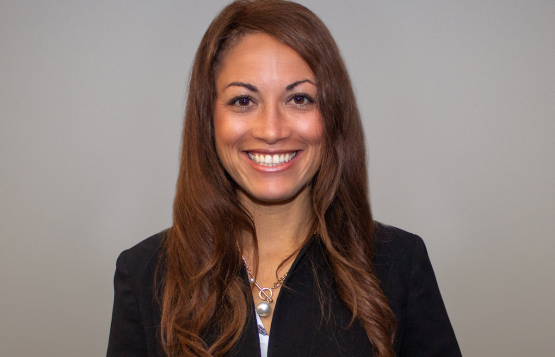
Penny Schwinn
High Expectations

Penny Schwinn: The next Deputy Secretary of the U.S. Department of Education

The education world was greeted with encouraging news over the weekend when President Trump announced that former Tennessee education commissioner Penny Schwinn would serve as the next U.S. Deputy Secretary of Education. Schwinn’s track record should complement Secretary-designate Linda McMahon’s skill set, and augurs well for a new administration that is being pulled in different directions on education policy.

Dale Chu 1.23.2025
NationalFlypaper

Penny Schwinn: The next Deputy Secretary of the U.S. Department of Education

Dale Chu
1.23.2025
Flypaper

The knowledge revival

Robert Pondiscio
1.23.2025
Flypaper

Four principles to re-energize the charter school movement

Derrell Bradford
1.23.2025
Flypaper

Is the new way to remediate community college students working?

Amber M. Northern, Ph.D.
1.23.2025
Flypaper

Can an evaluation system improve the practice of novice teachers? Evidence from Tennessee

Jeff Murray
1.21.2025
Ohio Gadfly Daily

#953: From Biden to Trump: Rank punditry, with Rick Hess

1.22.2025
Podcast

Cheers and Jeers: January 23, 2025

The Education Gadfly
1.23.2025
Flypaper

What we're reading this week: January 23, 2025

The Education Gadfly
1.23.2025
Flypaper
view
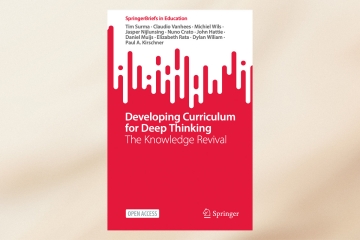
Developing Curriculum for Deep Thinking: The Knowledge Revival

The knowledge revival

Robert Pondiscio 1.23.2025
Flypaper
view
Students walking into school

Four principles to re-energize the charter school movement

Derrell Bradford 1.23.2025
Flypaper
view
College student studying in library

Is the new way to remediate community college students working?

Amber M. Northern, Ph.D. 1.23.2025
Flypaper
view
Teacher skill development SR image

Can an evaluation system improve the practice of novice teachers? Evidence from Tennessee

Jeff Murray 1.21.2025
Ohio Gadfly Daily
view

#953: From Biden to Trump: Rank punditry, with Rick Hess

Frederick M. Hess, Michael J. Petrilli, Amber M. Northern, Ph.D., David Griffith, Ph.D. 1.22.2025
Podcast
view
Fordham Gadfly image

Cheers and Jeers: January 23, 2025

The Education Gadfly 1.23.2025
Flypaper
view
Fordham Gadfly image

What we're reading this week: January 23, 2025

The Education Gadfly 1.23.2025
Flypaper
view
Penny Schwinn

Penny Schwinn: The next Deputy Secretary of the U.S. Department of Education

Dale Chu
1.23.2025
Flypaper

The education world was greeted with encouraging news over the weekend when President Trump announced that former Tennessee education commissioner Penny Schwinn would serve as the next Deputy Secretary of the U.S. Department of Education. A longtime rising star with a career spanning multiple states—including California, Delaware, and Texas—she brings a broad perspective on education governance. Schwinn’s record of implementing data-driven, research-backed strategies in the Volunteer State should complement Secretary-designate Linda McMahon’s skill set, and it augurs well for a new administration that is being pulled in different directions on education policy. As she prepares (pending Senate confirmation) to take on a leadership role in Washington, Schwinn’s prior work provides a roadmap for how she might leverage her position to influence national conversations on education, with a particular emphasis on reading instruction, assessments, teacher quality, and school choice.

Sloganeering aside, calls to “abolish the department” belie the serious issues confronting our nation’s students and educators. If the NAEP results coming out next week are as bad as some predict, Schwinn’s appointment comes none too soon. Priority number one must be halting the achievement slide that the previous administration largely ignored—especially in foundational subjects like reading. In fact, Schwinn called this out in a 2023 interview with AEI’s Rick Hess:

I remain frustrated that approximately only one in three students in this country are proficient readers—and I truly believe this can be different. Ensuring our children are able to read on grade level must be a nonnegotiable goal we set for every single student in this country. The ability to change course is rooted in the science of reading… This requires strong and aligned training in our colleges of education, high-quality instructional materials, exceptional professional development and ongoing supports for teachers, and additional hours of targeted acceleration opportunities for students.

Nonnegotiable is right. Unlike others who give lip service to raising achievement, Schwinn has receipts. With her at the helm, Tennessee saw a nearly 8 percentage point increase in third-grade reading proficiency rates in just two years (on its own state test, at least). The state still has a long way to go, but America’s post-pandemic outlook would be far rosier if more states prioritized academic outcomes commencing with basic literacy.

Central to Schwinn’s success was her belief in using state assessment data to drive decisions, ensuring that progress was both measurable and targeted. When I spoke with her a few years ago, she underscored the importance of using data to identify achievement gaps and allocate resources where they are needed most:

We’ve got to know how our kids are doing... We need to be able to have longitudinal data over time. We need to be able to see how our kids did five years ago, three years ago, this year, and then moving forward... We need to be able to really emphasize how our investments... are aligned to the needs of the students... And that has to be on a consistent measure.

While hesitation on federal testing policies has become troublingly bipartisan, Schwinn’s commitment to standardized, data-driven measures remains admirably resolute.

On efforts to strengthen the teacher pipeline, Schwinn paved the way for Tennessee to have the nation’s first federally recognized teaching apprenticeship—an effort that falls within the realm of CTE (albeit through the Labor Department), an area of interest for her presumptive new boss. While the concept isn’t new, momentum for such programs surged after Schwinn took up the mantle. Now, the Tennessee Grow Your Own Center is a one-stop shop for teacher recruitment and development, and teacher apprenticeship programs have expanded to nearly every state. Schwinn could bring this same forward-thinking approach to the education department, aiming to champion reforms that prioritize results over rhetoric.

At a time of unprecedented state action on school choice, Schwinn—a charter school founder—has navigated the fraught politics and will surely aim to create win-win situations that both devolve power to states while also advancing charter school growth. At the same time, she understands that choice is only meaningful if parents have access to clear, reliable information about school quality. Without it, school choice is little more than a guessing game. To wit, Schwinn told Hess:

For school choice to work, there needs to be understandable, accurate, and accessible information for parents. It requires exceptional customer service for families and tooling that streamlines the process. Fiscal accountability needs to be clear and enforced. Well-defined benchmarks for quality and outcomes must be publicly stated and honestly reported… the surest way to see [school choice] fail is to believe that passing the law is the finish line.

Sage advice for Republicans now poised to pursue a national school choice program.

To be sure, it remains to be seen what the department will push for, but Schwinn has already offered some intriguing possibilities. In an op-ed she co-authored last summer with another education dynamo, current Maryland and former Mississippi state superintendent Carey Wright, Schwinn made the case for more research and development. Specifically, they threw their weight behind an idea that’s been bandied about for decades: creating a “DARPA for education” to tackle ambitious projects such as leveraging advances in artificial intelligence to better measure student learning. House and Senate versions of a bill to establish such a body have repeatedly stalled in Congress. Schwinn could help nudge the process forward.

But seeing any of this through won’t be easy. As Hess has observed, leading the department is more “clean your room” than “king for a day.” The sheer scale of today’s higher education challenges may demand more of Schwinn’s attention than anything in the elementary and secondary space. Which is to say, for all her K–12 experience and savvy, Schwinn could have her hands full picking up after the FAFSA mess, addressing three failed audits, and managing the ongoing upheaval in student lending. She’s all but sure to be pulled into Title IX rulemaking and Title VI violations vis-à-vis antisemitism on college campuses.

Indeed, the day-to-day work of governing rarely lends itself to grand gestures, and even the best intentions can bog down in bureaucracy. That said, Schwinn has shown that results often come from persistence. Shortly after taking the reins in Tennessee, she told a group of community members, “We know that we have a shared commitment to our students. Every single one of the children in every single one of our schools come to us with real assets… This is our moment in time to recommit and redefine expectations.” For too long, the nation’s focus has drifted away from academic achievement, with policymakers seemingly content to meet students where they are rather than pushing them to where they need to be. Schwinn’s nomination offers hope that Uncle Sam could turn his attention back toward evidence and excellence.

view
Developing Curriculum for Deep Thinking: The Knowledge Revival

The knowledge revival

Robert Pondiscio
1.23.2025
Flypaper

Editor’s note: This piece was also published on the author’s new Substack, The Next 30 Years.

If American education understood, not superficially but to its core, the importance of knowledge and its foundational role in human cognition, teaching would look and sound very different. The homilies we repeat to sound knowing and wise would fall into disrepute: “Mere facts aren’t important. We teach critical thinking”; “The goal of education is to learn how to learn”; “Teach students to think. You can Google information.” We’d understand that these ideas are as likely to bear fruit as the search for El Dorado, the Fountain of Youth, or attempts to turn lead into gold.

You want students to “think like a scientist” instead of studying science? You can’t. There is no “thinking like a historian” until or unless you know what the historian knows. The assumption that we can teach, practice, and master all-purpose “skills” like critical thinking, problem solving, even reading comprehension is education’s search for the Northwest Passage—a shortcut to cognitive riches that exists mostly as a wish. Education may not be “the filling of a pail, but the lighting of a fire,” but no fire can be lit in an empty pail.

Deep, transferable learning depends on domain-specific knowledge, and thinking itself is inextricably linked to the content of thought. A robust foundation of knowledge is not merely the raw material for thought, it is the scaffolding that makes higher-order thinking possible.

None of this is news, but neither is it dominant—yet—in education thought or practice. Nor is it, in the main, visible in the plans and policies we make to educate children. A new open access book Developing Curriculum for Deep Thinking: The Knowledge Revival dives deeply into these ideas and makes a case for knowledge-rich curriculum that embraces the role of disciplinary knowledge in education. It’s a collaborative work by a number of boldface international names in education, including Nuno Crato, John Hattie, Dylan Wiliam, and Paul Kirschner. Drawing deeply on research in cognitive science, educational psychology, sociology, and curriculum studies, the brisk and authoritative volume argues that complex cognitive skills like critical thinking, problem-solving, and reading comprehension are not “transferable” skills like learning to ride a bicycle. They are deeply intertwined with domain-specific knowledge. The book outlines principles for designing curricula that prioritize content-richness, coherence, and clarity, emphasizing the importance of building strong foundations of disciplinary knowledge to enable students to engage in meaningful thought and problem-solving.

Those of us who are converts to this vision of education owe an unpayable debt to E.D. Hirsch, Jr. who recognized and sounded the alarm decades ago over the limitations of skills-based approaches and the vital importance of building a strong foundation of shared knowledge. Hirsch, still working and vital at ninety-six (!), contributes the book’s foreword and emphasizes that experimental results consistently demonstrate the power of shared knowledge in education. Hirsch underscores that language itself depends on shared knowledge, which even when only implied but unstated fuels effective communication and understanding. Indeed, it should also be emphasized that the ideals and rhetoric offered in the name of education “equity” would also sound very different if the role of knowledge in cognition were deeply understood: Demands for “culturally relevant” curriculum would matter less than ending stratification of knowledge implicit in offering one kind of curriculum to advantaged students and a different, less effective kind to disadvantaged ones. As Hirsch put it in The Schools We Need and Why We Don’t Have Them (1996), “Public education has no more right to continue to foster segregated knowledge than it has to foster segregated schools.”

Developing Curriculum for Deep Thinking has no end of practical advice for teachers who seek to implement knowledge-rich curricula in their classrooms:

  • Activate Prior Knowledge: Teachers must consciously tap into what students already know before introducing new concepts. This can be achieved through preliminary questions, brainstorming activities, or visual organizers that help students connect new information to existing schema.

  • Focus on Domain-Specific Knowledge: While generic skills are often emphasized, the authors stress the importance of building deep knowledge within specific subject areas. A student’s ability to think critically about history, for example, hinges on their understanding of historical facts, concepts, and contexts.

  • Build Background Knowledge: Reading comprehension, a cornerstone of learning across disciplines, is heavily dependent on background knowledge. Schools should prioritize enriching students’ general knowledge through exposure to diverse subjects and interdisciplinary projects. This is especially important for disadvantaged students who may have limited access to knowledge outside of school.

  • Emphasize Coherence and Clarity: A well-designed curriculum should be both coherent (building upon prior knowledge in a logical progression) and clear in terms of its learning objectives. This clarity enables teachers to assess student understanding effectively and make informed instructional decisions.

  • Specify Content and Sequence: The authors advocate for curricula that specify not only the “what” of learning but also the “when.” A carefully sequenced curriculum ensures that students encounter concepts in a way that builds understanding progressively.

  • Embrace “Big Ideas”: Identifying the “Big Ideas” within a subject helps teachers focus on the most important and enduring understandings. These “Big Ideas” act as conceptual anchors, allowing students to connect specific facts and details to broader frameworks of knowledge.

  • Use Effective Learning Strategies: The book highlights research-backed strategies that promote durable learning. These include using worked examples, spaced practice, retrieval practice, interleaving, and providing effective feedback.

As the above list should make abundantly clear, (and in anticipation of the predictable “bunch o’ facts” critique inevitably vomited up by critics) rote memorization of isolated facts is not the goal. Rather, teachers should strive to cultivate deep understanding by helping students build interconnected networks of knowledge that empower them to think critically, solve problems, and make meaning of the world around them. Curriculum ought to be brimming with a wide range of specific knowledge, providing depth and ample opportunities for students to grapple with and engage in the material. Content should be organized in a logical progression, both within and across subjects, to help students build interconnected knowledge networks. And there should be clear, specific learning goals for teachers and students to ensure everyone is on the same page and to mitigate knowledge gaps, especially for students from disadvantaged backgrounds.

The case for a common, knowledge-rich curriculum is all but unassailable, but the prescription is easier said than done. It invariably runs up against resistance due to philosophical, political, and practical factors. Teachers often express concern over the loss of professional autonomy, assuming that any structured curriculum constrains their ability to adapt lessons to the specific needs and interests of their students. Philosophical disagreements further fuel resistance, with some educators favoring student-centered or inquiry-based methods over curriculum that is commonly (if incorrectly) lampooned as valorizing rote memorization and factual recall. Hirsch has sensibly argued that “to read with understanding, students need to know a lot of the background information that writers and speakers take for granted” (The Knowledge Deficit, 2006). Without it, students struggle to fully understand texts, participate in civic life, or grasp complex ideas. By ensuring that this foundational knowledge is systematically taught, a knowledge-rich curriculum can equip students with the tools necessary to thrive academically and socially. But efforts to apply Hirsch’s democratic notion to curriculum development and implementation invariably invites criticism that curriculum—any curriculum—inadequately reflects the diverse cultural backgrounds of students, potentially alienating them and reducing engagement. Recall, too, the political firestorm over Common Core State Standards, which were not even curriculum but design standards.

The authors do not shy away from these real-world challenges, noting that “a curriculum led by concepts and knowledge might initially seem clear and straight-forward. It is not.”

A number of crucial questions come to the fore quickly, demanding thorough and deep analysis. Which content and concepts should be selected? What knowledge cannot be left to chance? And who decides? The answers to those questions will strongly depend on the purpose and context of the educational system and the specific level at which curriculum is being built. Therefore, a societal debate represented by the stakeholders in education is of utmost importance and must be thoroughly held. It also implies that socio-political factors will influence the answers (Thijs & van den Akker, 2009).

To state it mildly, “societal debates” over curriculum are legion and bruising. Such conflicts mostly convince “stakeholders” to avoid them at all costs, which contributes significantly to the vicious cycle of educational incoherence and low rigor that inevitably occurs when individual teachers, grade-level teams, or subject matter non-experts are put in charge of curriculum, whether they want the burden or not. The authors do not explicitly discourage teachers creating their own curriculum, but an unavoidable implication is that the lack of a structured, shared curriculum raises a significant risk of inconsistency and a lack of clear progression in learning for students, while making time-consuming demands of teachers.

Political resistance to curricular mandates also plays a significant role, particularly in an era of mistrust in centralized decision-making (again, see: Common Core). Teachers may view such directives as politically motivated or disconnected from classroom realities rather than grounded in educational best practices. Memories of past failed reforms exacerbate these challenges, fostering doubts about whether the initiative will be properly supported or sustained.

—

Author’s note: Developing Curriculum for Deep Thinking was made freely available via open access by the Expertise Centre Education and Learning at the Thomas More University of Applied Sciences (Antwerp, Belgium). It is part of a series of SpringerBriefs in Education, “concise summaries of cutting-edge research and practical applications in education.” A note with the book says that Springer, a global publisher of academic, scientific, and corporate research, is seeking manuscripts for future publications in the series–a promising initiative to raise the level of sophistication of the field. Kudos to the authors of this book for making their brief open access Here’s hoping other authors follow their lead.

view
Students walking into school

Four principles to re-energize the charter school movement

Derrell Bradford
1.23.2025
Flypaper

When I graduated from high school, the first charter schools in America were just opening their doors. But I have advocated for, worked with, and supported their right to serve families for more than twenty years now. I remember nearly crying during one of my early visits to North Star Academy in Newark, NJ (where I worked), after seeing its morning college ritual with dozens of little kids dressed as the mascots of some of the nation’s most prestigious colleges and universities. Learning education policy was like drinking from a fire hose, and it was still exhilarating. And meeting many of the Northeast’s leaders on charters (and sometimes choice more broadly) was always like running into a celebrity. I was dumbstruck the first time I met Eva Moskowitz, having read about her exploits on the New York City Council as its education chair before striking off to start a single charter school called Success Academy. There was Geoffrey Canada, Floyd Flake, of course Mike Bloomberg and Joel Klein, Cory Booker, Governors Pataki and Christie, and others in the NYC/New Jersey area who believed deeply in the role charter schools played in providing choice and opportunities to families who had been poorly served by sclerotic district bureaucracies. And there were thousands of teachers who were proud to be a part of a results driven movement to right a historic wrong in how we distribute educational opportunity in this country.

Most importantly, there was a ferocity to it all. A spirit of confrontation; a will to, if not topple the old order of the K–12 establishment, embarrass it so deeply that it would be forced to change or, at the very least, acquiesce. While many right-of-center advocates had always believed in the principles of education choice and supported charter schools as a worthy mechanism on the way to broader forms of educational opportunity, this was principally a center-left fight in New Jersey where I was cutting my teeth. Republican support (particularly at the executive level) was crucial, but most of the time I was talking to democrats about charter schools, as were the school leaders and advocates around me. While it was a slog, it seemed to be one we were winning. I remember vividly Barack Obama telling the NEA’s members, at their convention, that he was a supporter of charter schools. Many states removed charter caps as a condition of Race to the Top, as well. That seemed like a high point for it all.

While I was learning about education policy, I was also learning about something else: politics. More specifically, I was learning about how politics changes the way we talk about what we do in the world, and how that has a profound effect on how we do it and what we believe. While many of us continued to push the edges of the charter debate publicly, privately the discussion had changed. There was broad acknowledgement that charter schools were doing something good from all but the most hardened teacher union supporters (and even some of them were honest about that being the sole reason for their opposition). But there was also a quid pro quo presented; nothing sinister per se, but its effect has been profound over time. In return for greater political support, we took the temperature down on our rhetoric in all but the most extreme instances, and in some cases, we even softened our policy demands. The sharp rallying cries of “freedom, flexibility, funding,” and “autonomy for results” were ablated by district charter compacts, centralized and weighted enrollment systems so charters served “the same kids,” demands to reboot chronically underperforming district schools in return for the right to expand charters, local impact studies before being allowed to open, and a dozen other “requests” to show charters were, ultimately, good actors. Talking about underperformance (or comparative performance), at all became déclassé. Being a pace setter got harder, and falling in line with the broader public schooling ethos became easier.

While each of these things may have seemed a small, tolerable, and necessary concession in the moment, their cumulative effect has been disastrous for charter growth and diversity, miring the sector in much of the same compliance-related regulation charters were meant to avoid. Most perniciously, their acceptance ushered in both an erosion of moral clarity and a crippling doubt that affects many charter staff and leaders, who now whisper what they do at family dinners where once they shouted it from the mountaintops.

A movement that lacks belief is a movement that will stagnate. And indeed, we have stagnated. But now is not the time to retreat. In fact, there has not been a better time to revisit who we are, who we have been, and what is possible than now. But a movement needs principles to do this, as well. Here are four for the movement’s consideration.

“Free, public, and open to all.”

While how we talk about ourselves matters, a simple marketing reboot or rebrand does not address the movement’s current uncertainty or meet its current opportunity. While this isn’t a lost political campaign where one party blames the defeat on bad marketing or messaging and just vows to evince the same principles with more pith next time, how we describe ourselves is important because it shows what we believe is most important. And, at current, the way to do this is to describe charters as “free, public, and open to all.”

To be clear, this language is sticky, and most importantly, it is factually accurate and true in a landscape where charter schools are often derided as not being public enough or outright private. It is worth supporting and saying. It’s also worth noting that charters may be the most “open to all” of public schools given their lack of aptitude testing for entrance like magnet schools and their prohibition against using attendance zones, a proxy for real estate wealth, to determine entrance like most traditional public schools. But this language also reveals something vital—something essential—we have lost since I first visited North Star all those years ago. This is to say that we have let ourselves be defined by the things we have in common with other public schools, not the things that set charter schools, the movement, and the process of chartering distinctly apart from them. And in doing so, it makes the floor the ceiling. Charter schools are different by design and this is working as intended. This truth must be embraced. Moreover, it should be shouted by everyone who believes in charter schooling.

It’s worth noting that many of the attacks on charters center on what is dissimilar about them from traditional public schools. That charter schools don’t “look” like their home districts is one common canard. But consider why charter schools are different by design and what their creation has responded to in the first place. A long history of first race-based and then income-based discrimination in school assignment birthed from the New Deal and locked in with twentieth century redlining. Schools with historic track records of single-digit student performance where dreams and futures went to die. Graduation rates that set no one up for anything. A country where 20 percent of Black fourth graders know how to read, and barely half of all kids do. Teachers throttled by district bureaucracies. A one-size-fits-all approach to learning that prioritizes a child’s address over their aspirations. The list goes on. Authorizers, non-profit governance, parent choice, and freedom to create, hire, and fire were bundled together in “the chartering process” to combat all of these things, not make common cause with them. There is no shame in opposing this and wanting something different for the nation’s families.

Different by design

It’s important to remember that when Ember Reichgott Junge led the effort to pass the first charter school law in Minnesota, she and her allies had an idea of what they thought might happen, but no crystal ball to see the future. This is as it is with all policy and almost four million students, and 200,000 teachers, attend and work in more than 7,000 charter schools now because of her courage.

But every educational innovation suffers friction from a status quo that wants to arrest its progress before it can gain momentum. And charter school supporters of the time, though hopeful that creating excellent schools would build political support, also knew the situation was fragile. Knowing no elected official would want to be seen supporting a “bad school,” (unless it was a traditional public school in need of more money, of course), charter leaders, authorizers, and philanthropists focused on accelerating the growth of those charter schools that routinely helped kids demonstrate their learning on state assessments. Thus, what many now refer to as the “no excuses” CMOs were scaled, and they continue to have an outsized footprint and impact on how charter schools are perceived and, more importantly, whether they are deemed successful.

I remain a staunch supporter of these schools. Many are the best of any type created in this nation. I neither flinch nor blanche when discussing them, and the perpetual long wait lists, college acceptance ceremonies, and grateful parents at graduation are all I need to see to know they continue to deserve our defense and support. But (and as NACSA has examined) the no excuses CMOs have had a pronounced effect on the diversity of the sector, biasing advocates, authorizers, and policymakers to their expansion when considering how to grow charters and how to minimize overall political risk. In retrospect, one could say that we went from authorizing new things to authorizing things we knew. No one is to blame for this.

The CMOs we know will remain key to how the movement continues to grow, but the future cannot lie exclusively with them. More specifically, for a different-by-design movement to grow, in terms of where charter schools are, who attends them, and who supports them, it must not lie exclusively with them. While many states have looked to charter schools to help them close achievement gaps, the power to charter is also one that allows, quite simply, for the creation of different things for different people with different purposes than simply this. Whether a family favors the basics or the classics, college or a career, music or mathematics, diversity or exploring one’s history, there must be a charter school for them. In the city, in the suburbs, and elsewhere. For low-income families and rich ones. For families starved of options and for those with plenty of them. It is the sector’s ability to meet this unique challenge, through difference, that must push it forward now.

A seat for every kid, but not at every school

Spend any amount of time in the dark digital spaces where charter detractors dwell and you’ll see the all-caps axiom “PUBLIC SCHOOLS SERVE ALL KIDS” brandished as an article of faith. This is a lie. It is, however, a prevarication offered so often that people accept it as truth.

Assigning children to schools based on where they live, and by extension how much money their parents make, and prosecuting and jailing citizens when these lines are violated, is perhaps the clearest and most egregious way in which public schools fail to serve all kids. Perhaps less maliciously, the right to private placement for a student with an IEP under federal law acknowledges the same. And more simply, any family knows that even the best public school does not work for every child. Together these give us the proposition that traditional public schools not only do not, but perhaps cannot and should not, serve all kids. This is the reality.

How charter schools internalize this is important. Charter schools have waived the flag of being for all children, and they should be and have the ability to do so. The question that matters is this: Should every charter school be for every child? Here the answer may be unsettling, but it is straightforward: No. By this I don’t mean we should abdicate our responsibility to all children, particularly those with the least opportunity. But it is impossible for any one school to do this for all children. This, too, must be embraced. It is a feature of chartering not a defect.

Again, this is a criticism of sameness offered derisively by those that oppose charters. Because the myth of “serve all kids” exists in traditional public schools (while ignoring test-in magnets), charter schools must strive for it as if it is reality. This is wrong thinking and counter to why charter schools exist and how they enroll students. Only the lowest common denominator school—devoid of expectations and differentiation—could “serve” all kids, and it certainly would not do it well. What is also true is that no school is for every child, and no school of choice ever will be. This is the point. The matching of a family’s values, a child’s interests and aspirations, and a school’s mission and staff—without needing the right address or income to gain entrance—is a special thing under the umbrella of what we call “public education.” And charter schools are perhaps the best example of it. We cannot and should not pretend otherwise.

Charter schools take money from public schools

There is a saying in politics that when you’re explaining, you’re losing. And charter advocates, leaders, and others have spent decades explaining the nuances of how charter schools are funded to skeptics and the opposition—with mixed results. We have detailed hold harmless provisions, sunsets, phase-ins and -outs, facilities and fundraising, count days and payment lags in an effort to make it more understandable and, honestly, more palatable to the powers that be. It’s time to just own what’s real. Charter schools can, do, and should take money from traditional public schools.

In almost any state in America, bar a few that fund charters from a separate line item like Connecticut or Washington (which functions as a de facto cap), charter schools are funded when students choose them and some portion of the money appropriated to support their education follows them to a charter school. You cannot spend a dollar twice, and trying to do so never ends well. Money that follows a child to a charter school won’t be spent in the school they left. It doesn’t matter that there is money left over which will raise overall spending in that school. The money is gone. There is no way to sugarcoat this. In fact, sugarcoating it has been to the movement’s detriment.

To believe in charters is also to believe in funding them. And just as dollars follow children when they move between district-run schools—impacting their budgets and decisions—they move into and out of charter schools the same way. To support charter schools is to support this interaction, not be wary or ashamed of it.

More pointedly, not only should dollars follow the child, but all of them should. The early arguments that embraced the efficiency of charter schools had the unintended consequence of making every charter school student in America a second-class citizen of school finance. This was, and remains, unfair to them and did, and continues to, distract charter founders and leaders from the day-to-day work of creation and education. With some pioneering states changing their education finance laws, and more taking the bold step to write checks directly to families through the growing movement of education savings accounts, the time has never been better to revisit this early concession, along with other regulations that worked to make charter schools more like the schools they were explicitly founded to be different from.

I am a charter school supporter. I don’t want to dance around it, and I don’t want to be meek about it. I do, however, want to be clear about it and what it means to support a family’s right to choose charter schools and what it will take to help the movement continue to grow, diversify, serve students, and build support. Words matter, and we should say what we mean. More importantly, we should accept what it means when we say it.

Editor’s note. This was first published by CharterFolk.

view
College student studying in library

Is the new way to remediate community college students working?

Amber M. Northern, Ph.D.
1.23.2025
Flypaper

Remedial courses can soak up time and money (with often poor results), but federal reports show that up to 65 percent of community college students have taken at least one remedial course within six years of enrolling. A recent study examines the outcomes of a change in the way remedial education in community colleges has been offered in the last decade and whether that change has been beneficial for students who need help getting up to speed.

The traditional remediation model in higher education mandates that students who are below college-ready thresholds—typically measured by ACT, SAT, or Accuplacer scores—pass a sequence of up to three prerequisite courses before they can enroll in college-level, credit-bearing coursework. That is, non-credit-bearing work has to be completed satisfactorily (and at full tuition prices) before students can shed the “remedial” course prefix and begin earning credits toward a degree. This turned out to be an ineffective model, in part because there were high attrition rates (due to lack of preparedness, time, cost, or all three) and many complaints that the remedial courses didn’t actually prepare students all that well for college-level course content.

So, in recent years, more than twenty states have adopted corequisite models, which allow remedial students to take college-level courses at the same time that they are taking courses that provide them with academic support connected to that college-level course. The idea is that the student is getting “just in time” support that may be more beneficial than building up skills through a prerequisite sequence of remedial courses that takes much longer to complete (and comes without the benefit of credit attainment). In the new model, the earning of college credits starts immediately for both the college-level course and the remedial course that is concurrently preparing students for it.  

The study takes place in Tennessee, which was the first higher education system—starting in 2015—to replace a standalone prerequisite sequence with a corequisite model for all incoming students. The analysts mostly use a difference-in-differences model to compare the two types of remediation. They contrast outcomes for remedial-eligible students before and after implementation of the corequisite model, using changes in the outcomes of college-ready students during the same time period to control for general time trends or policy changes that may have affected all students. They apply controls for various student demographics, including placement test scores, high school GPA, race, and age at college entry. They also look at students’ achievement levels coming into college to see which groups of students were more affected by the policy change. Their sample includes almost 200,000 individuals who were first-time college students in the Tennessee Board of Regents system, which includes over thirteen community colleges and twenty-four applied technical colleges. On average, 75 percent of students were assigned to remediation for at least one subject.

The findings are a mixed bag. On the positive side, students placed into corequisite remediation were 20.4 percentage points more likely to complete their gateway math course by the end of year one, compared with similar students placed into prerequisite remedial courses (which makes sense given the additional credit hours it takes to complete the latter). This represents a 76 percent improvement from the baseline average of the prerequisite cohorts. Moreover, corequisite remediation had significant positive effects on first-year gateway completion rates for remedial students below the college-ready threshold, though the effects varied by student group. For example, in math the effect was strongest for the highest-scoring remedial students, while in English the pattern was reversed, with the lowest-scoring students experiencing the greatest improvement (which is difficult to square, but may pertain to the lack of a flagship college reading course). Students in the corequisite cohorts were also significantly more likely to enroll in and pass a second college-level course in math or English by the end of year two. These positive effects on college credit accumulation were primarily the result of structural changes in that the corequisite approach removed the delay in access to college-level credits.

The long-term results, however, weren’t good. The analysts found that remedial students, particularly those with lower placement scores, were more likely to drop out and less likely to earn short-term certificates. Specifically, remedial students under the corequisite approach were 4.3 percentage points more likely to drop out of college. Moreover, the average GPA in college-level math (in gateway and more advanced courses) for remedial students went from 1.91 in the prerequisite era to 1.50 for the corequisite cohorts, and the share of those who failed any of these courses increased from 36.9 percent to 50.2 percent.

The takeaway is that replacing the old model of remedial education with a new one carries its own risks and isn’t a silver bullet for addressing the challenge of unprepared college students. As unpopular as this would surely be with postsecondary institutions already facing enrollment declines, one response is not admitting students who are reading and doing math at a middle school level if the institutions have demonstrable proof (such as findings like these!) that they are unable to support those students to higher levels of performance. Prompting unprepared students to drop out, credential-less and with college debt, is not a business that community colleges should be in.

SOURCE: Florence Xiaotao Ran and Hojung Lee, “Does corequisite remediation work for everyone? An exploration of heterogeneous effects and mechanisms,” Annenberg Institute at Brown University (March 2024).

view
Teacher skill development SR image

Can an evaluation system improve the practice of novice teachers? Evidence from Tennessee

Jeff Murray
1.21.2025
Ohio Gadfly Daily

First-year teachers—especially those who begin on the lower end of the performance scale—tend to improve over time if they remain on the job, according to rigorous research studies. These findings are the same whether the analyses use student test scores or rubric-based classroom observation scores. But little is yet known about what exactly drives their improvement. A new study using data from Tennessee aims to shed some light, combining both types of scoring.

Beginning in 2011–12, Tennessee implemented a new evaluation system that required rubric-based classroom observations for all teachers every year, conducted by a principal or assistant principal. The number of annual observations range from 1 to 4, with newer teachers typically evaluated more often than their veteran peers. Grade level, subject matter, and prior evaluation results also play a part in the number of observations. Teachers are rated from 1 to 5 on each of nineteen rubric items, and evaluators also select one item as an “area of refinement” (AOR) for the teacher. For this study, analysts focused on AORs as a ripe area of comparison to observe teacher performance changes over time.

The choice of AOR is up to each evaluator, but the state offers these guidelines: (a) Which areas on the rubric received the lowest scores? (b) Which of these areas would have the greatest impact on student achievement or other areas of the observation rubric? (c) In which area will the teacher have the most potential for growth? School leaders are then supposed to help the teacher improve in whatever area is chosen.

The research team looked at results from 650,000 classroom observations (including those for about 17,000 novice teachers) conducted from 2012–13 through 2018–19, comprising all rated rubric items and all AOR selections. Students’ value-added scores for teachers over this time period are also analyzed. Empirically, they found that novice teachers and veterans show sizeable differences in which rubric items are chosen by raters as the AOR, with novices substantially more likely to receive an AOR relating to classroom management and the presentation of instructional content—basic teaching skills—whereas veterans are more likely to receive an AOR relating to higher-order aspects of the job, such as activities that teach students problem-solving skills. The lowest-performing novice teachers (based on value-added scores) were also more likely to receive these basic-skill AORs than their high-performing peers. Higher-performing novices and veterans are remarkably similar across most rubric item scores and chosen AORs.

To determine whether identification of an AOR leads to improved practice, the researchers constructed a balanced panel of teachers for whom they could observe the first five years on the job. They mainly focused on the two skills—presenting instructional content and managing student behavior—that showed the biggest novice-veteran gaps. They observe that the lowest-performing quartile of novices become relatively more effective in these areas, judging both from rubric scores and by the decreasing probability that these items are chosen again as the AOR as the novices gain experience. Additionally, there are increases in the probability that higher-order skills will begin to be chosen as the AOR for these teachers over time. However, novices who were higher performing at the outset show far less improvement over their first five years, indicating that they have likely already mastered the basics but still require time to start building the higher-order skills that showed up as their AORs.

In discussion, the researchers assert that their findings show improvement in overall effectiveness of novice teachers in the first few years on the job, driven specifically by improvements in core teaching skills among the lowest initial performers. Evaluators are seeing and noting these basic skills as needing refinement and are likely, as the Tennessee evaluation system expects, working with the novices to improve these specific practices. While the same process is happening with higher-performing novices, the skills they need to improve appear less likely to rise in the first five years, despite whatever assistance is being provided to them.

Overall, these are promising findings, as they provide a tentative roadmap for how school leaders and policymakers can best support new teachers. However, this analysis  includes only individuals who stayed in the classroom for at least five years; nearly half of new teachers head for the exits before then. That could lead to some biasing of results. For example, it’s possible that low-performing teachers who showed little or no improvement were nudged out the door—or exited on their own—and thus did not get included in the study. Additionally, we have no data on what specific supports or development efforts school leaders provided in response to any AOR selections, which somewhat blunts the wider applications of these findings.

SOURCE: Brendan Bartanen, Courtney Bell, Jessalynn James, and James Wyckoff, “‘Refining’ Our Understanding of Early Career Teacher Skill Development: Evidence From Classroom Observations,” Educational Evaluation and Policy Analysis (January 2025).

view

#953: From Biden to Trump: Rank punditry, with Rick Hess

1.22.2025
Podcast
 

On this week’s Education Gadfly Show podcast, Rick Hess, the director of education policy studies at the American Enterprise Institute, joins Mike and David to discuss education reform (or the lack thereof) during former President Biden’s term and what we might expect from President Trump. Then, on the Research Minute, Amber reviews a study on the implementation of college- and career-readiness policies, focusing on the alignment between career and technical education courses and industry-based certifications.

Recommended content:

  • Rick Hess, “Miguel Cardona Is America’s Worst Education Secretary,” American Enterprise Institute (October 25, 2024)
  • Dale Chu, “Fault lines in the MAGA coalition and what they mean for education,” Thomas B. Fordham Institute (January 16, 2025).
  • Matt S. Giani, Madison E. Andrews, Tasneem Sultana, Fortunato Medrano, Curricular-Credential Decoupling: How Schools Respond to Career and Technical Education Policy, Annenberg Institute at Brown University (2025)

Feedback Welcome: Have ideas for improving our podcast? Send them to Stephanie Distler at [email protected].

view
Fordham Gadfly image

Cheers and Jeers: January 23, 2025

The Education Gadfly
1.23.2025
Flypaper

Cheers

  • The U.S. can secure its place as a world economic leader by investing in bold STEM education reforms, modernized immigration policies, and harnessing AI to build a stronger, innovation-driven workforce. —John Bailey, The Hill
  • President Trump selects Penny Schwinn—former teacher, charter school founder, and state commissioner of education with a long record of delivering results for learners, families, and educators – to be deputy secretary of education. —Chalkbeat

Jeers

  • The research remains inconclusive on the effectiveness of Holocaust education in reducing antisemitism and fostering tolerance, but states are still mandating it for those purposes anyway. —Kappan
  • New data from the National Center for Education Statistics shows public schools added 121,000 employees last year, despite student enrollment continuing to fall. —Chad Aldeman, The 74
view
Fordham Gadfly image

What we're reading this week: January 23, 2025

The Education Gadfly
1.23.2025
Flypaper
  • A New York Times analysis finds that top colleges didn’t see major changes in student diversity following the end of affirmative action in 2023. —The New York Times
  • As Trump’s second term begins, experts expect a focus on education issues ranging from LGBTQ student rights and immigration enforcement to private school choice, and more. —The 74
  • “Bridging the divide over critical race theory in America’s classrooms.” —Education Next
  • As declining birth rates, shifting population trends, and regional disparities continue to challenge charter school enrollment, school leaders must adopt smarter growth strategies focused on retention, targeted marketing, and community partnerships. —Lyman Millard, CharterFolk
Fordham Logo

© 2026 The Thomas B. Fordham Institute
Privacy Policy
Usage Agreement

National

P.O. Box 110
Burke, VA 22009

202.223.5452

[email protected]

Ohio

P.O. Box 82291
Columbus, OH 43202

614.223.1580

[email protected]

Sponsorship

130 West Second Street, Suite 410
Dayton, Ohio 45402

937.227.3368

[email protected]