Mobile Navigation

  • National
    • Policy
      • High Expectations
      • Quality Choices
      • Personalized Pathways
    • Research
    • Commentary
      • Gadfly Newsletter
      • Flypaper Blog
    • Events
    • Scholars Program
  • Ohio
    • Policy
      • Priorities
      • Media & Testimony
    • Research
    • Commentary
      • Ohio Education Gadfly Biweekly
      • Ohio Gadfly Daily
  • Charter Authorizing
    • Application
    • Sponsored Schools
    • Resources
  • About
    • Mission
    • Board
    • Staff
    • Career
Home
Home
Advancing Educational Excellence

Main Navigation

  • National
  • Ohio
  • Charter Authorizing
  • About

National Menu

  • Topics
    • Accountability & Testing
    • Advanced Education
    • Career & Technical Education
    • Charter Schools
    • Curriculum & Instruction
    • ESSA
    • Evidence-Based Learning
    • Facilities
    • Governance
    • Personalized Learning
    • Private School Choice
    • School Finance
    • Standards
    • Teachers & School Leaders
    • Think Again
  • Research
  • Commentary
    • Gadfly Newsletter
    • Flypaper Blog
    • Gadfly Podcast
  • Events
  • Scholars Program

The Education Gadfly Weekly

Sign Up to Receive Fordham Updates

We'll send you quality research, commentary, analysis, and news on the education issues you care about.
Thank you for signing up!
Please check your email to confirm the subscription.

The Education Gadfly Weekly: More research on teacher salary freezes, please

Volume 25, Number 34
8.28.2025
8.28.2025

The Education Gadfly Weekly: More research on teacher salary freezes, please

Volume 25, Number 34
view
Teacher in a classroom
High Expectations

More research on teacher salary freezes, please

Teacher salary freezes haven’t gotten much attention in either the mainstream media or in education research. Rigorous studies explore the effects of teacher performance pay, teacher benefits, and much else, but Coffey couldn’t find a single study of pay freezes. Are they pushing teachers out of the profession?

Meredith Coffey, Ph.D. 8.28.2025
NationalFlypaper

More research on teacher salary freezes, please

Meredith Coffey, Ph.D.
8.28.2025
Flypaper

Indiana just removed one of the major barriers to starting a new school

Mike McShane
8.28.2025
Flypaper

The inconvenient success of New Orleans schools

Ravi Gupta
8.28.2025
Flypaper

The factors influencing private school choice enrollment

Jeff Murray
8.28.2025
Flypaper

Managing district budgets during uncertain times, with Jonathan Travers | Episode 983 of The Education Gadfly Show

8.27.2025
Podcast
view
Indiana Statehouse

Indiana just removed one of the major barriers to starting a new school

Mike McShane 8.28.2025
Flypaper
view
New Orleans

The inconvenient success of New Orleans schools

Ravi Gupta 8.28.2025
Flypaper
view
Students entering a school

The factors influencing private school choice enrollment

Jeff Murray 8.28.2025
Flypaper
view

Managing district budgets during uncertain times, with Jonathan Travers | Episode 983 of The Education Gadfly Show

Jonathan Travers, Michael J. Petrilli, Adam Tyner, Ph.D. 8.27.2025
Podcast
view
Teacher in a classroom

More research on teacher salary freezes, please

Meredith Coffey, Ph.D.
8.28.2025
Flypaper

Upon receiving my first high school teaching placement, I carefully studied my district’s teacher salary schedule, anticipating what I would make each year. As you likely know, most American school districts pay teachers based on a “schedule,” or a table with “steps” (rows) for each year of experience and “lanes” (columns) for education level attained. As a first-year teacher with an arguably excessive graduate education, I knew I’d earn the amount listed at the intersection of the first step and the last lane. I noted that the district also made regular cost-of-living adjustments (COLA). The reliable salary schedule, I felt, was a real benefit of teaching. Nothing about my workday was predictable, but I was heartened by a predictable, guaranteed income. And that was exactly my experience at first.

Four years into my teaching career, I moved states but was pleased that my years of experience transferred easily onto my new district salary schedule. So imagine my shock upon learning, at the end of my first year there, that I would not advance to the next step. Due to a districtwide pay freeze, I would be paid again in my sixth year as if I were still in my fifth. And had I stayed in that district, I would’ve been subjected to yet another freeze, meaning that I would’ve been paid in my seventh year as if I were in my fifth.

Other districts might differ, but in mine, I would have remained two years “behind” for the rest of my career. Elsewhere—such as Flint, Michigan—teachers have been “behind” on pay since the early 2010s. That effectively penalizes teachers for longevity in the district!

It’s discouraging stuff, or at least it was to me. But it hasn’t gotten much attention in either the mainstream media or in education research. Rigorous studies explore the effects of teacher performance pay, teacher benefits, and much else, but I couldn’t find a single study of pay freezes. Researchers, look into this, please!

Such freezes are hardly unusual. They can take a few different forms, whether they block advancement to the next step (as happened to me), deny COLA, or introduce “phantom steps” (in which teachers technically advance to the next step, but the salary for that step isn’t any higher; for a jaw-dropping ten years of these, see this North Carolina schedule).

As one might guess, freezes are especially common during times of economic hardship and budgetary stress. In the aftermath of the 2008 recession, for example, 80 percent of the large districts in a National Council on Teacher Quality study adopted pay freezes or cuts. During the height of COVID, districts such as Fairfax County—the country’s ninth-largest, with 13,000 teachers—froze salaries.

Plenty of other jobs don’t offer consistent raises, but the stability of salary schedules was supposed to be a draw for teachers, both in terms of annual earnings and their outdated but oft-touted pensions. A district freezing salaries is going to be less attractive, especially if a teacher is deciding between neighboring districts, where one isn’t as inclined to freeze as the other.

Speaking to my own experience, the hit to my pay wasn’t what ended my teaching career (although a substantially larger paycheck might have offset at least some of my burnout). But even if I’d been inclined to stay in the classroom, I absolutely would have applied to nearby districts that weren’t so quick to freeze. And while many critics and policy analysts denounce the traditional salary schedule, they’re typically arguing for policies that reward performance or fill hard-to-staff positions, not for across-the-board penalties that make teaching less appealing.

Today, what with the end of COVID relief funding and the precariousness of federal support, we’re probably nearing another moment when salary freezes will arise in many districts. (Layoffs are likely, too, but those already receive a good deal of attention.)

As a former teacher, I wish the answer were as easy as “don’t freeze salaries.” In practice, I know that budgets are limited, and difficult choices must happen.

All the more reason for researchers to investigate the effects of freezes. Anecdotally, I can confirm that mine was an unpleasant surprise, and my colleagues’ reactions ranged from annoyed to outraged. And to this day, salary freezes are clearly a source of frustration on teachers’ social media. But we need real data, too. It seems reasonable to hypothesize that freezes would negatively impact teacher morale, engagement, and retention, but so far no rigorous research has analyzed their effects.

The policy implications are real. As districts evaluate their budgets and make those tough decisions, it would be valuable to know: Does a salary freeze risk driving out teachers? Might teachers in harder-to-staff positions, like special education or Title I settings, be at greater risk of leaving? Does a step freeze have a different impact than the imposition of phantom steps? Does a freeze decrease teacher morale, in turn perhaps impacting their attendance, effectiveness, or other outcomes? Having such data would equip district leaders to make better-informed decisions when it comes to allocating limited resources.

My step freeze didn’t drive me out of teaching, but it was another reason to leave. I don’t know whether it had a similar effect on others, but we could certainly find out.

view
Indiana Statehouse

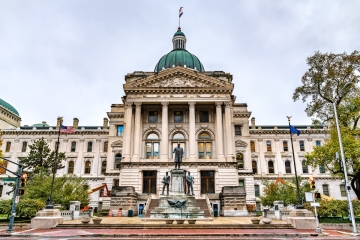
Indiana just removed one of the major barriers to starting a new school

Mike McShane
8.28.2025
Flypaper

With eighteen words tucked into a 37-page education bill, the Indiana state legislature took a major step towards easing the lives of educational entrepreneurs.

Those words?

“A public school, charter school, or nonpublic school shall be considered a permitted use in all zoning districts.”

While that might not seem like much, according to educational entrepreneurs, it removes one of the major barriers to starting a new school.

For some background, an educator cannot simply open a new school anywhere they want. Different plots of land are zoned differently and siting a school on a plot of land can require reaching out to the local planning authority for permission.

In some parts of Indiana prior to this year (and in states all across the country to this day) local municipalities were able to restrict schools from operating in areas under their zoning control. What’s more, as a report about Florida by the Teach Coalition documented, some localities regulate private schools differently than public schools, creating far more hoops for private schools looking to open.

In many municipalities, educators need to file for a “change of use” permit (sometimes called a “variance” or “conditional use permit”) before they are able to operate a school, asking planning authorities to grant them the opportunity to operate there. This requires school leaders to go before a zoning board, city council, or other authorities that do not have to approve their application. These bodies routinely request copious documentation from architects, engineers, traffic analysts, and others in order to win their support. There can be hearings, often with opportunity for public comment, site visits, and more. All of this takes time and money and does not necessarily lead to a yes from the authorities.

And, because the criteria can be so ambiguous, school leaders are at the mercy of boards with lots of reasons to deny an application if they want to. For example, schools can be denied on aesthetic grounds, with their facility deemed “incompatible” by a planning board. But compatibility is in the eye of the beholder, and in practice this gives boards a catchall mechanism to say no.

The incentives of the situation are such that boards are more likely to be punished for saying yes to something that they shouldn’t have than for saying no to something that they should. When a building deemed an eyesore or one that mucks up traffic gets built, people ask “who let that happen?” But if students spread between a bunch of different schools are getting a subpar education because they don’t have better options, there is not one person or body to blame. Thus the risk aversion.

As a result, planners’ scales start tipped towards no, and educators have to push a stone uphill to change their minds.

Indiana did away with all of this.

By moving schools, of all types, into “by right” zoning status, educators don’t need to go through the approval process. Usually by simply filing the appropriate paperwork with planning authorities, schools are able to operate. Boards do not have a veto, so there is no need for hearings, and more certainty for school leaders.

To be clear, “by right” zoning does not suddenly make everything into a free for all. Schools still have to abide by zoning regulations, there is simply an affirmative understanding that they are permitted to do what they are doing until someone can demonstrate otherwise. Rather than having to convince authorities that they are compliant, authorities would have to actively seek out issues to block their progress.

Moving schools to “by right” zoning does not fix all of the issues that educational entrepreneurs, especially those that are looking to start smaller schools, encounter when trying to get started. Many municipalities treat any institution with more than five unrelated children attending them for a regular period of time to be “schools” and subject them to the same regulations as a 1000-student high school. Whether it is fire suppression, parking mandates, fencing, lot size, designated recreation space, or more, there is little flexibility for small school operations looking to use unconventional, but perfectly appropriate, facilities.

Utah took a big step to deal with these issues last year with the passage of SB 13. That legislation allowed for schools of less than 100 students to be classed as businesses permitted to open in all zones in the state. They would be subject to the International Building Code, the standard for commercial properties that does not have the same requirements as the code for school buildings.

What moving schools to “by right” zoning does do is ease confusion and establish a baseline level of certainty. Whereas big property developers have the time and resources to make change of use applications and win some and lose some, educators do not. They do not have the money lying around to conduct traffic studies, let alone to conduct studies that eventually comes to nothing. Add in architectural reports, engineering reports, and more, and one can easily see that the risk is far too great. Indiana made a big step towards changing that.

States like Indiana have made substantial investments in the demand side of school choice, dramatically increasing the supports available to families to choose their child’s school. But, if states do not put the same effort (or possibly more!) into the supply side of school choice, there will not be enough options for those parents to choose.

Editor’s note: This was first published by Forbes.

view
New Orleans

The inconvenient success of New Orleans schools

Ravi Gupta
8.28.2025
Flypaper

Editor’s note: This was first published by The 74.

Twenty years ago, the tragedy of Hurricane Katrina inadvertently created the conditions for one of the most remarkable education experiments in American history. Today, that experiment has quietly produced results that should be making national headlines. Instead, it’s met with a curious indifference that reveals something broken about our politics and media.

To better understand that disconnect, I spent months in New Orleans interviewing more than fifty people about their experience over the past two decades. I heard from both critics and champions of the city’s Katrina recovery reforms: parents, students, teachers, principals, administrators, activists, academics, and common citizens. Their stories are important and illuminating. I even created a whole podcast about them, called Where the Schools Went.

But it’s easy to fall into the tyranny of the anecdote when reporting on fraught education debates like those over the meaning of the New Orleans reforms. So let’s start with the data instead. Hard numbers are more useful than speculation. And the hard numbers from New Orleans are overwhelming.

There’s no one better at parsing the data than Doug Harris, who chairs Tulane’s economics department and directs the Education Research Alliance for New Orleans. Harris has spent years analyzing these outcomes with the kind of methodological rigor that usually prevents education researchers from ever saying anything definitive about anything. His team of advisors includes both reform advocates and skeptics, yet when I spoke with him, Harris offered something virtually unheard of in education research: an unequivocal conclusion. “If you look at any of the typical things that we measure—test scores, high school graduation, college going, college persistence, ACT scores—all of those things are not just better, but quite a bit better than they were before.”

The fine print is striking. When Katrina hit in 2005, roughly 60 percent of New Orleans schools were labeled “failing” by the state. Today, that number is zero. High school graduation rates have soared from 54 percent to 78 percent. College enrollment has jumped by 28 percentage points. Students across all demographics—Black, White, low-income, students with disabilities—have posted dramatic gains that would be the envy of almost any school system in the country.

Harris’s team anticipated and tested the obvious objection: that the student population must have changed after such a massive displacement like Katrina. Perhaps the student body became more affluent? Less needy? They worked with the U.S. Census to track who actually returned, and their finding deflates the skeptics’ favorite excuse: “The demographics of the district changed for families that had school-aged children… almost not at all.” Even more compelling, when they tracked individual students who attended school both before and after Katrina, those same children were learning at faster rates in the new system.

Yet if you scan the national education discourse today, you’d be hard-pressed to find any major elected leaders talking about New Orleans. This represents a dramatic shift. A decade ago, President Barack Obama himself celebrated the city’s progress, telling a New Orleans audience in 2009 that “a lot of your public schools opened themselves up to new ideas and innovative reforms,” and that “we’re actually seeing an improvement in overall achievement that is making the city a model for reform nationwide.”

But that early attention has given way to virtual silence. This silence isn’t accidental—it’s the result of a success story so politically inconvenient that it threatens the foundational beliefs of both sides of America’s education debate.

The battle of Carver High

To understand why this success story became politically radioactive, look no further than George Washington Carver High School. Originally built in the 1950s as one of the city’s first high schools for Black students, Carver embodied the flawed promise of separate-but-equal education. By the 1990s, it had become what historian Walter Stern called an “educational Soweto”—a struggling school in a neglected neighborhood with graduation rates hovering around 50 percent and repeated failing grades from the state.

Then Katrina destroyed both the school and its surrounding Ninth Ward community. Karl Washington, a Carver alumnus, remembered the aftermath: “That area received eight, nine feet of water. It wiped out everything: the community footprint, businesses, spirit.” But the alumni were determined to rebuild Carver.

The state agreed, but then came the question of who would run it. The alumni community had their vision: a return to the Carver they remembered, with its proud traditions of football, marching band, and community connection.

The state had different ideas. Instead of awarding the charter to community leaders, officials chose Collegiate Academies, an organization founded by Ben Marcovitz, a Harvard graduate from Washington, D.C., who had achieved remarkable academic results at his Sci Academy charter school campus. Marcovitz’s schools were data-driven, disciplined, and relentlessly focused on college preparation. They were also run primarily by young, White outsiders through programs like Teach for America.

This staffing approach was particularly inflammatory given what had happened to New Orleans teachers after Katrina. When the district ran out of money, all 7,500 employees—including every teacher in the city—were laid off en masse. Most were never rehired. Many of these teachers were Black women who had been pillars of the city’s middle class for decades. They had deep roots in the communities they served. To see them replaced by young, college graduates, many of them White, with minimal teaching experience (and no union contract) felt like salt in an open wound. I explore this painful history in Episode 3 of Where the Schools Went.

The backlash to the state’s Carver plans was immediate and fierce. Chris Meyer, a state official tasked with explaining the decision, recalled arriving to find “a human chain in front of the building” and protesters blocking the entrance. After managing to get inside, “I get two words, maybe three outta my mouth, and the whole meeting just erupts in chaos.” When Meyer left the meeting, he found his car windows smashed, with glass scattered across his child’s car seat.

Jerel Bryant, the Yale-educated principal chosen to lead the new Carver, walked into this firestorm. His team quickly produced strong academic results, posting some of the best algebra scores in the city. But the achievement felt hollow amid growing community resistance.

The breaking point came in December 2013, when sixty students walked out in protest. They were frustrated by what they saw as excessive discipline: having to walk on taped lines in hallways, getting suspended for chewing gum or wearing the wrong shoes. One student told reporters: “You get suspended for coughing. You get suspended for sneezing out loud.”

The Southern Poverty Law Center criticized the school’s suspension rates. Three parents publicly withdrew their children, though the vast majority stuck with the program. Local newspapers published side-by-side graphics showing Carver’s academic gains alongside its suspension statistics, as if to ask: At what cost?

For critics of education reform, this was the perfect story: test scores rising through harsh discipline and cultural suppression. For supporters, it was proof that change inevitably faces resistance, even when it’s working. The battle lines were clear, the rhetoric heated, and the national media seized on the drama. The Atlantic ran not one but two major pieces on Carver’s discipline policies. The Hechinger Report called it “the painful backlash against ‘no-excuses’ school discipline.”

But then something unexpected happened.

The quiet revolution

Had I visited Carver ten years ago and stopped my reporting there (as many national outlets have), this would be a very different story—one that fit neatly into our national education wars. But over the past decade, something remarkable happened.

By 2014, Carver’s principal and his team began to listen more carefully to their critics. “Even when I didn’t agree with their tone or tactics or priorities,” Bryant reflected, “I didn’t doubt that they wanted the school to be great. And finding that common ground—that’s the challenge, and the opportunity.”

The school began implementing what educators call “restorative practices”—mediations and healing circles instead of suspensions. They trained staff differently, built new programs, funded the marching band, and hired more teachers from the community. Most importantly, they connected these changes to their core mission rather than treating them as distractions from it.

“Strong sports teams help with suspension rates,” Bryant explained. “Engaging lessons help with suspension rates. Connecting before you correct, that helps too. A kid has to really believe: I want to be part of this. Otherwise, we lose a powerful lever to change behavior.”

The results were dramatic. Suspension rates dropped by nearly two-thirds in a single year. But rather than hurting academic performance, the changes seemed to enhance it. Last year, Carver earned an A for academic growth from the state and ranked second among all open-enrollment high schools in New Orleans for students achieving mastery on state exams. The year before, they had the highest academic growth in the state. Oh, and their boys’ basketball team? They’ve been to three straight state championship games and won back-to-back titles in 2022 and 2023.

When I visited the school this spring, the transformation was evident everywhere. The trophy case displayed sports trophies and homecoming photos alongside college acceptance letters. The staff was older, more rooted in the community, and included several Carver alumni who had returned as teachers and coaches. Even Sandra, who works in the cafeteria, glowed when talking about the school: “The teachers? Marvelous. The principal? Excellent. Everybody here is loving and kind.”

Eric French, the band director and Carver alumnus, broke down crying when describing what it meant to return to his alma mater: “It was like a dream come true. When I walked into the interview, I almost broke down. I knew if I could just get my foot in the door, it would be up from there.”

Nell Lewis, the school’s director of culture, had lived through the entire transition: “The community didn’t believe at first. They saw White folks, outsiders, people who didn’t understand. But now they see the results. We didn’t used to have academic success here. We had championships, but not college. Not like now.”

Of course, cafeteria workers praising their workplace and band directors getting emotional about their alma mater don’t generate the same headlines as student walkouts and community protests. Collaboration doesn’t click like conflict. Which helps explain why the current New Orleans story—technocratic problem-solving, gradual improvement, and former adversaries working together—has been largely ignored by those who thrive on drama and division.

The Systemwide Evolution

What happened at Carver was part of a broader evolution occurring across New Orleans. In the immediate aftermath of Katrina, the city had operated what could charitably be called an “anti-system”—dozens of autonomous charter schools with little coordination or oversight. This approach produced impressive academic gains but also created chaos for families trying to navigate wildly different enrollment processes, discipline policies, and academic calendars.

By 2012, state leaders began implementing what they called “systems building.” They created OneApp, a centralized enrollment system that gave families one application for all schools citywide. They established common discipline policies and centralized expulsion hearings to prevent schools from pushing out challenging students. They developed a weighted funding formula that sent more resources to schools serving students with greater needs.

Most importantly, they approached these changes collaboratively. Rather than mandating from above, the Recovery School District convened school operators to build consensus around shared systems. The result was something unprecedented in American education: a system that preserved school-level autonomy while creating citywide coherence around the functions that mattered most for equity and access. Schools could still choose their own curriculum, pedagogical approach, and staffing model. But they couldn’t cherry-pick students, ignore due process for discipline, or operate in isolation from families’ needs.

The uncomfortable truth

This evolution produced a model that should theoretically appeal to both sides of America’s education debates. It delivered the academic results that reformers promised while addressing the equity and community concerns that critics raised. It proved that choice and accountability could coexist with collaboration and local input.

Instead, it has been met with bipartisan silence.

For progressives, acknowledging New Orleans’s success would require confronting some uncomfortable truths. The Katrina recovery transformation was built on the elimination of teacher tenure, the dissolution of union contracts and the replacement of neighborhood school assignments with choice-based enrollment (subjects we cover at length in episodes three and four of Where the Schools Went). These are precisely the policies that national Democratic leaders now oppose.

President Joe Biden has called himself “not a charter school fan.” Sen. Elizabeth Warren warns that charter expansion “strains the resources of school districts and leaves students behind.” The party has increasingly embraced a defensive posture that treats any deviation from the traditional district model or unequivocal support for teachers’ unions as an attack on public education itself.

But the old, pre-Katrina New Orleans had all the elements that progressives now champion as essential: a powerful teachers’ union, centralized administration, neighborhood school assignments, and an elected school board. It also had some of the worst educational outcomes in the country.

For conservatives, the New Orleans model presents an equally uncomfortable problem. The city’s success came not through pure market forces but through a limited but aggressive government intervention. The state stepped in to close failing schools, coordinate enrollment, standardize discipline policies and redistribute resources based on student needs. They also relied heavily on government-mandated standardized testing to gauge school quality. This is hardly the small-government, laissez-faire approach that conservative education reformers typically champion.

Moreover, if more districts could become as responsive and effective as New Orleans, there would be less demand for the private school vouchers and education savings accounts that have become conservative orthodoxy. Why abandon public education if it can actually work?

The media, meanwhile, has moved on to more sensational stories. The current New Orleans narrative doesn’t generate clicks or cable news debates. It’s the educational equivalent of reporting on a well-functioning water treatment plant: critically important but insufficiently dramatic for our attention economy.

The lessons we’re ignoring

This silence comes at a significant cost. New Orleans offers genuine lessons for other cities struggling with educational inequity, not as a perfect model to replicate but as proof that dramatic improvement is possible when leaders are willing to experiment, listen, and adapt.

The city’s approach suggests a middle path between the extremes that have dominated education debates: neither the rigid centralization that characterized many urban districts nor the unchecked autonomy that marked early charter experiments. Rather it demonstrates what former state superintendent John White called “coherence”—clear communication and a well-articulated philosophy around what government should control and what schools should decide for themselves.

“You attracted some great people, many from within the system, many from without,” White explained. “You held them very accountable for doing their jobs. You resourced them proportionate to the challenges, and you set very clear boundaries around what you were gonna be involved with and what you weren’t gonna be involved with.”

This approach could work in districts with or without charter schools, with or without choice programs. It’s fundamentally about governance: being strategic about where to centralize and where to decentralize, building systems that support both equity and excellence, and creating space for both innovation and accountability.

A model for politics

Perhaps most importantly, New Orleans demonstrates something that feels almost impossible in our current political moment: the capacity for opposing sides to actually listen to each other and change course based on what they learn.

The reformers who dismissed community concerns about culture and representation gradually recognized that academic success without community buy-in was unsustainable and immoral. The community leaders who initially rejected any changes to traditional approaches came to appreciate that good intentions weren’t enough if children weren’t learning.

This wasn’t compromise for its own sake but genuine evolution based on evidence and experience. Today, many of the harshest critics of early reform efforts acknowledge the system’s improvements while continuing to push for better. Many reform leaders have become more sophisticated advocates for equity and community engagement.

As education advocate Chris Stewart, who grew up in New Orleans, put it: “We want to be transparent, but not loud. New Orleans should keep doing what they’re doing. They should keep winning and improving. But it doesn’t help to nationalize their story anymore.”

Perhaps Stewart is right that New Orleans benefits from flying under the national radar. But the rest of the country pays a price for ignoring what’s happened there. In an era when Americans seem incapable of finding common ground on any contentious issue, New Orleans offers a rare example of adversaries becoming collaborators, of ideology yielding to evidence, of a community choosing pragmatic progress over perfect ideological purity.

That’s a lesson worth learning, even if it makes everyone a little uncomfortable.

view
Students entering a school

The factors influencing private school choice enrollment

Jeff Murray
8.28.2025
Flypaper

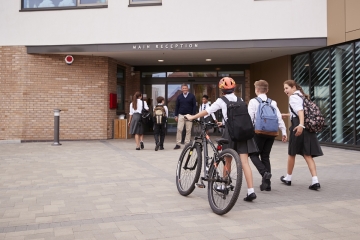
As private school choice policies have proliferated and matured across the country, researchers have looked at the policy side of the process, as well as outcomes for participants and competitive effects on district schools. A new analysis from EdChoice looks at the design and implementation phase, which has been less studied but certainly affects student enrollment as well as school participation.

Analysts Misty Gallo, Colyn Ritter, and Patrick Wolf compiled a near-comprehensive list of private school choice programs from Vermont’s Town Tuitioning Program, established in 1869, to Arizona’s Educational Freedom Account Program established in early 2024—a total of 65 programs comprising standard education savings accounts (ESAs), school vouchers, tax-credit-based ESAs, tax-credit scholarships, and refundable tax-credit programs. They excluded any plans that merely offered a non-refundable individual tax credit/deduction and any that were enacted after March 2024.

They posit two groups of factors that are likely to influence enrollment rates. First is a set of eight program features (which any given program may or may not include): some that are “additive” to the programs (providing transportation to a choice school and allowing private school students to access extracurriculars at their public school, for example), some that serve to limit eligibility (such as IEP status and income limits), state level capacity features (such as total funding caps and enrollment limits), and regulatory features like testing requirements specific to choice-using students. Second is a set of eight statewide factors that indicate the health and quality of public schools and could serve to influence families’ motivation to exercise a non-district choice when it arises: school bullying rates, average NAEP scores in both fourth and eighth grade, levels of parental school choice support (as determined by survey data), poverty rate in public schools, number of participating private schools in a program, a school funding “fairness” grade per state (determined annually by the American Legislative Exchange Council and used here as a proxy for funding support for school choice), and which political party controls legislative and executive branches (a proxy for school choice support at the level of state policy).

In their initial analysis—looking at statewide factors only—the researchers find that levels of school bullying, average NAEP scores, and levels of school choice support are all significant predictors of take-up rates for private school choice programs. These operate in the expected directions for students in year one, year two, or year five after program establishment (the specific time points under examination throughout the report). Bullying rates are the most consistent of these, being highly significant in all benchmark years. Average eighth grade NAEP scores demonstrate a significant association with take-up rates in years two and five, with lower achievement levels predicting increased use of private school choice, as expected. Average fourth grade NAEP scores, however, are positively associated with take-up rates only in year two. All together, these handful of statewide factors seem to be reasonably strong drivers compelling families toward a non-district education choice.

Program features paint a less clear picture, with weak or null significance for most of them, including transportation, requiring a student have an IEP, and requiring accountability testing. Indeed, the analysts actually found negative impacts on enrollment for some factors—including allowing program participants to remain eligible for extracurriculars at their district school, which was expected to boost enrollment but did the opposite in year one across the range of programs that included this facet. The report includes additional breakouts of the results, including by region of the country and by various subsets of the student population in specific states.

This research has a number of limitations, especially on the supply side of the equation. “Number of schools participating,” for example, is an imperfect proxy for availability, especially in ESA-type programs where vendors could just as easily be schools with limited capacity as they could be virtual tutoring companies with no cap on users. It is also noteworthy that an analysis looking at the potential influence of program design features didn’t bother to break out the findings by program type (e.g. ESAs versus tuition vouchers). Nonetheless, the story generally appears to be that the state of public education primarily drives parents to enroll their students in private school choice programs. This tends to reinforce previous research findings that school safety, here measured by rates of bullying, is at the top of their list.

SOURCE: Misty Gallo, Colyn Ritter, and Patrick J. Wolf, “If You Build It This Way, They Will Come,” EdChoice (July 2025).

view

Managing district budgets during uncertain times, with Jonathan Travers | Episode 983 of The Education Gadfly Show

8.27.2025
Podcast
 

ERS president and managing partner Jonathan Travers joins Mike Petrilli on The Education Gadfly Show to talk about school district budgeting during uncertain times.

Then, on the Research Minute, Adam Tyner shares a new report from the National Council on Teacher Quality looking at district policies on pay bumps for teachers with master’s degrees, and how the money could be better spent.

Recommended content:

  • The degree dilemma: School districts spend millions on ineffective master’s degree premiums —Katherine Bowser, National Council on Teacher Quality (August 2025)
  • Close bad schools and expand good ones —Chad Aldeman
  • When—and why—legislated school finance reforms don’t increase state education spending —Amber Northern and Jeff Murray
  • An in-depth look at how Texas makes teacher merit pay work —Jessica Poiner
  • The ESSER hangover is here —Marguerite Roza

Feedback Welcome: Have ideas for our show? Send them to [email protected]

Fordham Logo

© 2026 The Thomas B. Fordham Institute
Privacy Policy
Usage Agreement

National

P.O. Box 110
Burke, VA 22009

202.223.5452

[email protected]

Ohio

P.O. Box 82291
Columbus, OH 43202

614.223.1580

[email protected]

Sponsorship

130 West Second Street, Suite 410
Dayton, Ohio 45402

937.227.3368

[email protected]