Mobile Navigation

  • National
    • Policy
      • High Expectations
      • Quality Choices
      • Personalized Pathways
    • Research
    • Commentary
      • Gadfly Newsletter
      • Flypaper Blog
    • Events
    • Scholars Program
  • Ohio
    • Policy
      • Priorities
      • Media & Testimony
    • Research
    • Commentary
      • Ohio Education Gadfly Biweekly
      • Ohio Gadfly Daily
  • Charter Authorizing
    • Application
    • Sponsored Schools
    • Resources
  • About
    • Mission
    • Board
    • Staff
    • Career
Home
Home
Advancing Educational Excellence

Main Navigation

  • National
  • Ohio
  • Charter Authorizing
  • About

National Menu

  • Topics
    • Accountability & Testing
    • Advanced Education
    • Career & Technical Education
    • Charter Schools
    • Curriculum & Instruction
    • ESSA
    • Evidence-Based Learning
    • Facilities
    • Governance
    • Personalized Learning
    • Private School Choice
    • School Finance
    • Standards
    • Teachers & School Leaders
    • Think Again
  • Research
  • Commentary
    • Gadfly Newsletter
    • Flypaper Blog
    • Gadfly Podcast
  • Events
  • Scholars Program

The Education Gadfly Weekly

Sign Up to Receive Fordham Updates

We'll send you quality research, commentary, analysis, and news on the education issues you care about.
Thank you for signing up!
Please check your email to confirm the subscription.

The Education Gadfly Weekly: J.D. Vance’s views on education

Volume 24, Number 29
7.18.2024
7.18.2024

The Education Gadfly Weekly: J.D. Vance’s views on education

Volume 24, Number 29
view
J.D. Vance
High Expectations

Vance vs. Pence: How Trump’s VP picks compare on education

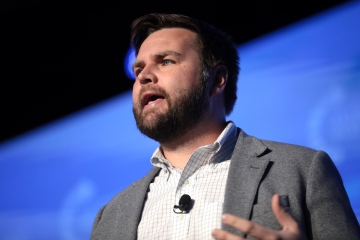
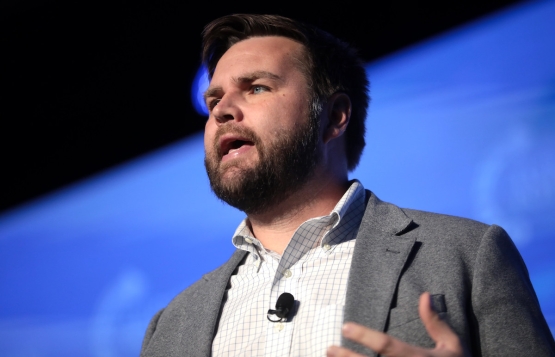
On Monday, Donald Trump chose Senator J.D. Vance as his running mate, signaling a doubling down on his MAGA brand. As far as education is concerned, this means tapping into broad parental discontent over educational and education-related issues, many of which were turbocharged by the pandemic.

Dale Chu 7.18.2024
NationalFlypaper

Vance vs. Pence: How Trump’s VP picks compare on education

Dale Chu
7.18.2024
Flypaper

Five ways to ensure that charter schools have a political future

Brandon Brown
7.18.2024
Flypaper

The “science of reading” is on a winning streak—and that’s a problem

Robert Pondiscio
7.18.2024
Flypaper

Comparing Waldorf-based pedagogy to other public school models

Jeff Murray
7.16.2024
Ohio Gadfly Daily

Can higher student-tutor ratios make tutoring more affordable without sacrificing effectiveness?

Devon Nir
7.18.2024
Flypaper

Cheers and Jeers: July 18, 2024

The Education Gadfly
7.18.2024
Flypaper

What we're reading this week: July 18, 2024

The Education Gadfly
7.18.2024
Flypaper
view
Student raising hand

Five ways to ensure that charter schools have a political future

Brandon Brown 7.18.2024
Flypaper
view
Proceed with caution road sign

The “science of reading” is on a winning streak—and that’s a problem

Robert Pondiscio 7.18.2024
Flypaper
view
Waldorf vs other public schools SR image

Comparing Waldorf-based pedagogy to other public school models

Jeff Murray 7.16.2024
Ohio Gadfly Daily
view
Tutor and students

Can higher student-tutor ratios make tutoring more affordable without sacrificing effectiveness?

Devon Nir 7.18.2024
Flypaper

view
Fordham Gadfly image

Cheers and Jeers: July 18, 2024

The Education Gadfly 7.18.2024
Flypaper
view
Fordham Gadfly image

What we're reading this week: July 18, 2024

The Education Gadfly 7.18.2024
Flypaper
view
J.D. Vance

Vance vs. Pence: How Trump’s VP picks compare on education

Dale Chu
7.18.2024
Flypaper

On Monday, Donald Trump chose Senator J.D. Vance as his running mate, setting up the Ohio Republican as the future of the party and, in the process, mapping out the potential trajectory of federal education policy in the years ahead. Trump’s pick signals a doubling down on his MAGA brand, which, as far as education is concerned, features a fixation on culture war dogfights and using the issue as a cudgel to continue fanning the flames of populist anger. Specifically, this means tapping into broad parental discontent over educational and education-related issues, many of which were turbocharged by the pandemic.

To wit, Vance once tweeted, “Parents should absolutely be the primary stakeholders in their kids' education, and anyone who disagrees should stay the hell away from our kids” (emphasis added). Using similarly stark and uncompromising terms, the GOP veep nominee has said, “My education policy is that we should stop funding institutions that teach American kids to support terrorist killers.” Abrasive and acidic language like this is red meat for the GOP’s hardcore base, but it differs markedly from the framing used by Trump’s first vice president, Mike Pence, to argue for similar policy prescriptions.

Case in point is school choice, which in recent years has driven a bitter wedge within education reform. When Pence made the case for the issue, he would lead with charter schools as much as with the private and parochial variety, underscoring the benefits of choice largely accruing to poor and minority kids and communities. Trump’s erstwhile sidekick had also staunchly supported both public and private forms of choice while he was Indiana’s governor. Nowadays, however, the GOP is far more likely to view charter schools as a pallid alternative to unfettered school choice, eager to embrace the culture war in order to build momentum to expand vouchers, education savings accounts, and the like.

It wasn’t easy for Pence. Recall that the Trump administration proposed zeroing out federal funding for charter schools during its final year in office. The then-vice president sometimes had to bite his tongue and straddle lines. Vance will face no such complications. If anything, we might expect him to amplify his boss’s grievance-based rhetoric around schooling. In his 2022 Senate campaign website, Vance dutifully went after K–12 education: “As we saw from the radical left’s culture war waged during Covid-19 and the continued [critical race theory] indoctrination in our kids’ schools, it’s clear that we should never let politics drive public health decisions and deprive our kids of a good education.”

It’s a far cry from the pen the rising Republican star had wielded eight years ago, when his bestselling memoir, Hillbilly Elegy, was reviewed in these pages by Robert Pondiscio. Back then, Vance offered a serious and unvarnished assessment of the problems besetting poor kids in low-income neighborhoods:

Watching an episode of The West Wing on television, Vance is struck that “in an entire discussion about why poor kids struggled in school, the emphasis rested entirely on public institutions. As a teacher at my old high school told me recently, ‘They want us to be shepherds to these kids. But no one wants to talk about the fact that so many of them are raised by wolves.’” The characterization is unkind, but Vance is unsparing in his analysis of the people he loves and the culture they have created. It can include “an almost religious faith” in hard work and the American dream; yet he describes his town as one “where 30 percent of the young men work less than twenty hours a week, and not a single person [is] aware of his own laziness.”

A year later, in an event co-sponsored by Fordham, Vance argued that solving the problems related to poverty requires avoiding extreme positions and meeting somewhere in between:

While specifics of education policy were not topics of discussion at the event, the individual journeys of the panelists are heavily defined by education: Vance from a small-town public school to The Ohio State University to the hallowed but bewildering halls of Yale… Vance says we must end the political blame game and stop the polarizing rhetoric that unnecessarily divides us… We must see what success for poor children and families looks like… To do that we must, as J.D. Vance tells us, “come to our senses.”

Boy, could today’s education politics use more of that version of Vance!

So how to make sense of Trump’s new partner? Unlike Pence, who brought a respectable record on education reform from the Hoosier State, Vance has little to show for his limited time in the Senate—or otherwise, save for his first book. For whatever his faults, Pence steered a relatively steady course. He didn’t zig and zag or shift and contradict himself. The former vice president displayed a kind of integrity that Vance lacks, and that’s evident in how each has approached ed reform. It’s possible that Vance will be a supporter of CTE and apprenticeships, given his working-class roots. What seems certain is that he will ignore his own earlier advice and instead will cynically use K–12 schools to sow animosity and discord when it’s expedient to do so. If Vance eventually becomes president or the Republican nominee for president at some point, we can only hope that circumstances will be different and an interest in sound education policymaking restored.

view
Student raising hand

Five ways to ensure that charter schools have a political future

Brandon Brown
7.18.2024
Flypaper

Perhaps no modern American education reform has enjoyed the success and staying power of charter schools. Three-plus decades after Minnesota passed the first charter law, 3.7 million students now attend charters, the majority of whom are children of color and come from low-income families.

Unlike other education reforms, charters have improved their performance over time even as they’ve scaled. Students attending them make significantly more academic progress than their peers attending other school types, and this is specifically true for Black, Hispanic, and low-income students. Urban charter schools, in particular, have revolutionized the education landscapes in many of our country’s largest cities, providing pathways to opportunity that for far too long were only available to a select few.

Public support for charter schools remains strong, especially among Black and Hispanic families. And charters have historically enjoyed broad bipartisan political support, ranging from the White House, to Congress, to governors’ mansions, to state legislatures.

Yet today the charter movement faces significant headwinds. The national education reform consensus that spanned the Clinton, Bush, and Obama administrations has eroded. Amid increasing national polarization, Democrats have largely walked away from choice in all its forms, including the public kind, while Republicans have gravitated toward private school choice.

These political shifts have slowed charter growth in many blue states while universal private school voucher and education savings account (ESA) programs sweep across red states at an unprecedented pace. For the first time in the movement’s three decades, charter enrollment slightly declined nationally in 2021–22, partly spurred by the declining school-age population in many parts of the country.

Charter school leaders and advocates are a largely politically progressive group of folks who understandably long to make the case that charters should be a plank in the progressive agenda because they offer clear evidence of leveling playing fields for historically marginalized students. But attempts to win over more Democrats are often unsuccessful today and potentially come with the opportunity cost of ignoring Republicans, who have done much of the heavy lifting for charters in state capitols across the country.

The complicated politics create quite a conundrum for a sector that is largely concentrated in big, progressive cities. As a result, the charter movement finds itself at a crossroads. If it fails to adapt to this rapidly shifting landscape, it risks trading its longstanding bipartisan support for a generation in the political wilderness.

The answer to whether charters can still be a bipartisan project depends as much on geography as it does on anything else. In Indianapolis, for example, Democratic mayors and local elected officials have led the charge for high-quality charters for over two decades, as Republicans in the statehouse strove to make Indiana’s charter law one of the best in the country. But the playbook in Indiana likely can’t work in bluer states, which is why the national charter movement must remain nimble and able to appeal to a broad political cross-section.

To do this effectively, charter advocates should avoid the trap of starting with their partisan leanings and then working to get their preferred “side” to support their priorities. Advocates must instead start with the premise that charters provide life-changing opportunities and should be expanded, identify who holds power where, and then construct a political coalition that accomplishes their policy goals.

This political reality raises a key question: How can a three-decades-old movement continue to innovate and resist being left behind?

For the charter movement to strengthen its influence and serve even more students, it must prove that it is on the vanguard of education innovation. Luckily, the National Alliance for Public Charter Schools recently made a great hire in choosing Starlee Coleman as the organization’s next CEO. So here are five unsolicited ideas for Starlee and her team to consider as they develop the next chapter of the charter movement.

  • The national charter movement comprises many diverse local and statewide movements, but it’s currently missing the connective tissue that can spur collective, intentional action. It would benefit from an audacious and inspiring national goal that energizes people from across the movement. Imagine what aligned action could be spurred if it set a big goal of, say, serving 5 million students by 2030 and 8 million by 2040.

  • Too often, the desire to be seen as public schools makes charter advocates too willing to accept endless regulations and one-size-fits-all accountability systems that hamper the sector’s ability to innovate. As a result, charters too often resemble the very schools that proponents used to claim weren’t working. Leaders should implement a policy agenda that works to strip away needless regulations that promote conformity, while challenging authorizers to improve their increasingly bureaucratic practices that value inputs over outcomes.

  • The National Alliance should consider launching a national R & D initiative that researches, pilots, and scales break-the-mold innovations that place charters back at the forefront of innovation. This should include investing in the growth of microschools, adult high schools, and other innovative school models. It should also mean exploring what it could look like for charters to take advantage of universal ESA laws in red states so the sector can expand its reach and become more relevant in this new reform era.

  • Charter advocates should be unafraid to fiercely defend the sector’s record. Is the movement perfect? Of course not. Has it accomplished more than any other structural reform of the last thirty years? I’d argue yes! If advocates are unwilling to boldly advocate for charters, they should find a different profession. While proponents engage in struggle sessions about the movement’s own faults, opponents never miss an opportunity to attack charters with their set of false talking points. Charter advocates have the facts on their side and should never shy away from trumpeting the life-changing outcomes of charter schools.

  • Leaders should spur the next wave of charter school growth. Local school incubators, such as what The Mind Trust, of which I’m CEO, has implemented in Indianapolis and is planning in Connecticut, must be a key part of the solution. Charter proponents should support the next generation of education entrepreneurs to launch a new wave of schools that are steeped in a community’s context and provide life-changing outcomes for more students. Given America’s fraught politics, these schools won’t magically appear if leaders aren’t more intentional in supporting their development.

These are just a few ideas to start a conversation about what the next decade of charter growth and success could look like, and how advocates can reignite a movement that will transform the lives of the next generation of students. As Andy Rotherham has cautioned, leaders should do everything they can to avoid the possibility of charter schools not having a chair when the music stops.

view
Proceed with caution road sign

The “science of reading” is on a winning streak—and that’s a problem

Robert Pondiscio
7.18.2024
Flypaper

Spend any length of time in education and you can’t help notice pendulum swings as ideas about what constitutes effective practice fall in and out of fashion. There’s no reason to expect the “science of reading” movement to be an exception. The welcome and overdue shift to teach phonics explicitly and to align instruction more broadly with research from cognitive psychology and neuroscience has seen only green lights ahead and tailwinds in the last few years, but an important caution is being offered by one key figure in the movement. Margaret Goldberg, a teacher and co-founder of the Right to Read Project, has expressed concerns that weaknesses in implementation threaten the momentum behind “SoR.” Worse still, those threats are going mostly undiscussed for fear that speaking up will damage, slow, or setback the science of reading.

In a blog post on the Right to Read Project’s website, which hasn’t gotten the attention it deserves, Goldberg paints an all-too-plausible future scenario in which we look back at the science of reading as “a brief movement in education.” Teachers aspired to align their instruction with scientific evidence, “but due to lack of support and misinformation, they failed to implement effective practices. Student achievement remained stagnant and teachers came to believe that factors outside the classroom have a greater influence on student learning than classroom instruction,” she writes.

If Goldberg’s name sounds familiar, it’s because she’s been a key figure in Emily Hanford’s reports and podcasts, which have played a major role in creating momentum for the science of reading movement. Goldberg raises several concerns that could derail the science of reading movement, which she frames as a series of “What ifs.”

What if we’re expecting too much from teachers while underestimating the level of support schools need? What if schools overcorrect and provide explicit instruction at the expense of students reading and enjoying books? What if curriculum developers might continue offering content-focused units instead of the targeted lessons needed to help students comprehend complex texts? What if researchers continue to conduct studies and produce data, but never learn how to actually help teachers improve their practice?

“Anyone knowledgeable about reading research and what’s happening in classrooms has worries like these,” she writes. “But most of us have remained quiet, afraid of seeming unsupportive or of slowing the momentum that’s been building. I worry, though, what will happen if we don’t speak up?”

I share Goldberg’s concern, and painted a similar scenario in an article last year for Commentary. It’s a heavy lift to get teachers to change practices they are committed to and believe to be effective, regardless of what the research says. Moreover, and perhaps most critically, it’s unrealistic to expect every teacher to become an expert in the science of reading; it has to be operationalized in the form of high-quality curriculum, diagnostic tools, and effective training. The burden simply cannot rest solely on the shoulders of individual educators.

After reading Goldberg’s important storm warning, I reached out to ask what she’s hoping the takeaway will be from her savvy caution. “District and school leaders are largely unaware of the implementation science that could help guide their work. So they act fast and without plans,” she said. People don’t know their roles, “so teachers are trying to develop the interventions.” Similarly, school leaders are unsure of how to create the conditions for successful adoption and implementation “so they focus on glossy publications and making fiery speeches,” she observes, instead of actual planning: creating time in the school calendar for collaborative planning and putting coaching in to support implementation, for example. “We need to provide training for principals to be able to know what they’re looking for and how to give good feedback, but people don’t know what their job should be in creating the conditions where implementation can be successful,” she said. Finally, curriculum developers, Goldberg pointed out, “are trying to produce what they think teachers will like, rather than aligning their materials with research and then using them to train teachers on more effective practices.”

The “reading wars” have been waged in our schools longer than current combatants have been alive. That simple historical fact should be enough to convince advocates for research-based reading instruction that the ground they’ve seemingly gained in schools, districts, and statehouses needs to be aggressively defended. Not with cheerleading and “fiery speeches” but with curriculum and instruction, effectively delivered, that moves the needle for kids. Failing that, Goldberg’s warning will become a prophecy, and sooner than we think.

Editor’s note: This was first published by the American Enterprise Institute.

view
Waldorf vs other public schools SR image

Comparing Waldorf-based pedagogy to other public school models

Jeff Murray
7.16.2024
Ohio Gadfly Daily

One reason why parents choose to enroll their children in schools other than their assigned district is the opportunity to access alternative educational models. The question of whether these models benefit students academically is difficult to answer empirically, given the “selection effects” which make apples-to-apples comparisons between non-traditional schools and their traditional district counterparts hard to come by. But a new report from Frontiers in Education tries to cut through some of the differences and directly compare one well-known non-traditional model to its public school counterparts.

The pedagogy in question is Waldorf education. This 100-year-old schooling model is based on the teachings and principles of German artist and scientist Rudolf Steiner. It focuses on the developmental progress of children and their intellectual needs at various stages, with a heaping helping of art, music, and creative exploration built into all subject areas. According to Waldorf precepts, its teachers “are dedicated to generating an inner enthusiasm for learning within every child. This eliminates the need for competitive testing, academic placement, and rewards to motivate learning and allows motivation to arise from within.” Digital technology is also absent.

Waldorf schools in the United States are usually private—thereby facilitating the decreased emphasis on testing—but some of them are public. In fact, sixteen Waldorf institutions in California are public charter schools that must adhere to state testing requirements. Researcher Kimberly Telfer-Radzat of the University of California, Irvine, leverages the existence of these schools to compare their student achievement results to those from two other student groups: non-Waldorf charter schools in the state, and all other public schools combined (which includes the non-Waldorf charters and traditional districts). Achievement is measured by the California Assessment of Student Performance and Progress (CAASSPP) for grades three through eight in both ELA and math. Data come from spring test administrations between 2015 and 2019. In fact, the data here are all “archival” and not part of a specific experiment. The paper uses the terms “treatment” and “control”, but these are not really apt. More on this methodology in a moment.

In the final analysis, compared to the universe of non-Waldorf public schools (both district and charter), the Waldorf charters significantly underperformed in both ELA and math every year between third and sixth grade. For example, while more than three quarters of non-Waldorf third graders met or exceeded state standards in math, only half of Waldorf third graders did so. For third grade ELA, 73 percent of non-Waldorf students met or exceeded state standards, compared to 61 percent of Waldorf students. However, the picture changes in seventh grade, with Waldorf students notching big gains in both subjects and outscoring the non-Waldorf comparison group by a small margin. The observed Waldorf advantage expands to nearly five percentage points in eighth grade, both because the Waldorf student group continues to improve and because the non-Waldorf group’s proficiency declines. When the comparison is restricted to charter schools only—Waldorf versus non-Waldorf—a similar pattern emerges: sizeable lags in both subjects for Waldorf students in the early grades until a reversal begins in seventh grade, though the gaps between groups are generally smaller.

Telfer-Radzat notes several limitations of her methodology, including the fact that there are significantly fewer students in grades seven and eight than in the lower grades at the Waldorf schools. These droppers could easily be the students performing least well in the school, which could skew the results in such a model. More importantly, though, is the model itself. Telfer-Radzat is able to control for classroom size and low-income status of students in her final equations, but that’s the extent to which the widely-varying nature of the schools in question can be compared. For just one likely-relevant example, the Waldorf charters enrolled a mere 4 percent English learners (EL). By comparison, details from EdData show EL students comprising nearly 20 percent of California’s K–12 population in 2019–20. Those are big differences between schools wholly unaccounted for in the math.

Impacts of the unconventional pedagogy could be part of the mechanism driving the observed outcomes, but there’s plenty of room to question the findings. Still, one imagines that Waldorf practitioners, devotees, and inquisitive non-believers will come away from this report feeling positively disposed to the unusual pedagogy. And while it does seem to bear fruit for many of its initiates, the experimental jury is still out on the Waldorf vision of a quality education.

SOURCE: Kimberly Telfer-Radzat, “Exploring alternative education: a comparison on 3 levels—Waldorf charters, non-Waldorf charters, and local public schools, as measured by the California Assessment of Student Performance and Progress,” Frontiers in Education (June 2024).

view
Tutor and students

Can higher student-tutor ratios make tutoring more affordable without sacrificing effectiveness?

Devon Nir
7.18.2024
Flypaper

As policymakers grapple with pandemic-induced learning loss across the country, intensive tutoring has emerged as a promising solution. Studies show that working with a tutor can help students make up three to fifteen months of learning, and that this intervention is especially effective for students from low socioeconomic backgrounds. This explains why policymakers have funneled millions of Covid-19 relief dollars into establishing and maintaining tutoring programs nationwide. But tutoring a handful of students is different than tutoring the masses—and many districts have struggled to scale their programs to meet the unprecedented demand.

That is why now, as pandemic relief funds dry up, researchers have begun evaluating ways to make tutoring a more sustainable endeavor. One such recent analysis comes from Matthew A. Kraft and Virginia S. Lovison of Brown University.

With the hope of reducing the per-pupil costs of tutoring, they investigate whether small-group virtual tutoring sessions can be as effective as working one-on-one with an online tutor. Their data comprise 180 sixth through eighth graders in Grand Forks, North Dakota, who had not yet met grade-level expectations in math. Participating students were randomly assigned to either 1:1 online tutoring sessions or 3:1 sessions with peers who needed support in the same content area. The majority of tutors (58 percent) led both group and individual sessions, while 29 percent conducted individual tutoring only and 13 percent worked only with groups of students. Tutoring was held during school hours and over a ten-week period.

To assess the impacts of the sessions on students, Kraft and Lovison used two evaluative methods: standardized math tests taken by students before and after completing the program and a survey offered to every participating tutor. When reviewing the tests, the researchers looked at both student achievement and growth—and survey data were analyzed within a regression framework with tutor fixed effects to capture average differences in responses regarding 1:1 versus 3:1 tutoring.

Ultimately, their analysis offers little support for small-group tutoring. Students’ test scores showed that individual tutoring accelerated growth in math by an additional 8 percentile points compared to 3:1 tutoring. Tutors’ survey responses reaffirmed this less-than-ideal outlook. Of the eighty-six tutors who completed the questionnaire, 88 percent judged 1:1 to be the most productive student-tutor ratio for online sessions, as tutors can more effectively personalize learning experiences, build relationships, ramp up pacing, and create welcoming environments in this setting.

Some survey responses did note positive attributes of small-group tutoring. For example, certain tutors suggested that these sessions allow for unique instructional strategies—like team activities and collaborative exercises—and that some students benefited from hearing explanations of challenging concepts from their peers.

The study lacked a pure control group, which limits what the researchers can definitively conclude about the efficacy of online tutoring in small groups and its relative cost-effectiveness. But Kraft and Lovison’s findings nevertheless suggest that schools cannot simply increase student-to-tutor ratios without sacrificing some level of student progress—meaning that policymakers hoping for a silver-bullet solution to tutoring’s scalability issues may need to keep searching.

SOURCE: Matthew A. Kraft and Virginia S. Lovison, “The Effect of Student-Tutor Ratios: Experimental Evidence from a Pilot Online Math Tutoring Program,” Annenberg Institute for School Reform at Brown University, EdWorkingPapers (June 2024).

view
Fordham Gadfly image

Cheers and Jeers: July 18, 2024

The Education Gadfly
7.18.2024
Flypaper

Cheers

  • Rochester schools to reintroduce F’s after lenient grading policies encouraged many students to slack off. —Star Tribune
  • Where previous reformers saw their policies rolled back, Superintendent Mike Miles is hoping to implement long-lasting improvements in Houston ISD. —Robert Pondiscio, Education Next
  • Charter schools now make up the majority of the most rigorous high schools in the nation, as measured by the number students to take college-level exams. —Jay Mathews, Washington Post
  • Young people should foster and follow their talents, not their passions. —Scott Galloway, Time
  • “NY students banned from using phones first hated, then loved it.” —Bloomberg

Jeers

  • Dubious questions about how the science of reading informs English language instruction have stymied the movement in California, Massachusetts, and New York City. —The Grade
  • Once the leader in education, Massachusetts has placed its much-lauded graduation exam on the ballot this fall. —The 74
  • Despite paying lip service to vouchers during his campaign, Pennsylvania Governor Josh Shapiro let a school choice bill die for the second year in a row. —Wall Street Journal
view
Fordham Gadfly image

What we're reading this week: July 18, 2024

The Education Gadfly
7.18.2024
Flypaper
  • The overturning of Chevron deference, which placed a high level of trust in federal agencies to interpret ambiguous statutes, could mean sweeping changes in education in the short term alongside more stability long term. —K12 Dive
  • Expansive school choice laws meet rural opposition in Tennessee. —The Tennessean
  • Two documents, the GOP platform and the Project 2025 policy plan from the Heritage Foundation, provide hints for Trump’s education agenda. —Education Week
  • “Democrat-run cities have seen their fertility rates collapse.” —Cullum Clark, City Journal
  • Intended to save money, Arizona’s universal school choice program ballooned far beyond the anticipated price tag. —ProPublica
Fordham Logo

© 2026 The Thomas B. Fordham Institute
Privacy Policy
Usage Agreement

National

P.O. Box 110
Burke, VA 22009

202.223.5452

[email protected]

Ohio

P.O. Box 82291
Columbus, OH 43202

614.223.1580

[email protected]

Sponsorship

130 West Second Street, Suite 410
Dayton, Ohio 45402

937.227.3368

[email protected]